




Akkermansia vs Traditional Probiotics: What's Different?
Posted on:
Aug 05, 2026
Escrito por


Written and medically reviewed by Dr Zeeshan Afzal (MBBS) — Medical Doctor & Medical Content Lead, Welzo
Evidence-based · Honest about what's proven and what isn't · UK-focused
Last updated: July 2026 · Reading time: ~10 minutes
In the landmark human trial of Akkermansia muciniphila, the pasteurised version — bacteria deliberately killed by heat — produced the metabolic benefits. The live version didn't reach the same result.
That finding tells you most of what you need to know about how different this organism is. Everything about a conventional probiotic — that it must arrive alive, that it feeds on the fibre you eat, that it lives in the gut contents — works differently here.
This guide explains what Akkermansia actually is, where it lives, why it costs what it costs, and whether it should replace or sit alongside the probiotic you're already taking. See also gut health supplements.
Table of contents
They are not competitors. Akkermansia occupies a different physical niche, eats a different food source, and is being studied for different outcomes — metabolic markers rather than the digestive symptoms most conventional probiotics target.
Conventional probiotics have far more evidence. Strains like Lactobacillus rhamnosus GG have hundreds of human trials and appear in clinical guidance. Akkermansia has a small number of human studies, one of which is genuinely important, and a great deal of preliminary work.
If you have a digestive complaint, start conventional. If your interest is metabolic health and you understand you're buying into an emerging area, Akkermansia is a reasonable addition — not a replacement.
Akkermansia muciniphila was first isolated and described in 2004 — recent, in bacteriological terms, compared with lactobacilli that have been studied since the early twentieth century. Its species name translates roughly as "mucin-loving", which is the whole story in one word.
It is a normal resident of the healthy human gut, typically making up a few per cent of the total microbial population — a substantial share for a single species. Lower abundance has been repeatedly associated with obesity, type 2 diabetes and inflammatory bowel disease, which is what first attracted research interest.
It is usually classed as a next-generation probiotic: an organism identified through microbiome sequencing rather than inherited from food fermentation traditions. Nobody has been eating Akkermansia in yoghurt for centuries.
This is the most important structural difference. Your gut wall is coated in a protective mucus layer that separates the intestinal contents from your epithelial cells. Most probiotic species — lactobacilli, bifidobacteria, Bacillus spores — operate in the lumen, the space where digested food passes through.
Akkermansia lives in the mucus layer itself, right up against the gut wall. That is a different address entirely, and it means the two are not occupying the same territory or competing for the same space. It is also why Akkermansia is discussed in the context of gut barrier integrity — see gut barrier function and is leaky gut real.
Conventional probiotics ferment carbohydrates you eat. Feed them prebiotic fibre and they thrive — which is the entire logic of a synbiotic.
Akkermansia degrades mucin — the glycoprotein your own body produces to make that mucus layer. Its food source is you, not your dinner.
That sounds alarming and generally isn't. Mucin turnover is continuous and normal, and the breakdown products feed other beneficial bacteria, contributing to short-chain fatty acid production further down the chain — see short-chain fatty acids. There is ongoing scientific discussion about whether excessive mucin degradation could thin the barrier in some contexts, which is one reason the organism is still being actively studied rather than settled.
The practical consequence: you cannot meaningfully raise Akkermansia by taking a fibre supplement aimed at it. Polyphenol-rich foods have been associated with higher levels — see polyphenols and gut health — but the direct feeding logic that works for lactobacilli doesn't transfer.
The key human study, published by Depommier and colleagues in Nature Medicine in 2019, randomised a small group of overweight or obese, insulin-resistant volunteers to three months of live A. muciniphila, pasteurised A. muciniphila, or placebo. Around thirty participants completed it.
Its primary purpose was to establish safety and tolerability, and on that it succeeded — supplementation was well tolerated. The striking result was in the exploratory outcomes: the pasteurised group showed improvements in insulin sensitivity, along with reductions in insulinaemia and plasma total cholesterol, and modest reductions in body weight and fat mass. The live group did not show the same significant effects.
Mechanistically the explanation is thought to involve a protein on the bacterial outer membrane that survives heat treatment and interacts with the gut lining — meaning the cell structure, not the living metabolism, may be doing the work. That places pasteurised Akkermansia squarely in the postbiotic category as formally defined: a preparation of inanimate microorganisms conferring a health benefit. See pasteurised Akkermansia.
Akkermansia is a strict anaerobe — oxygen kills it. That makes it difficult and expensive to grow, handle and stabilise compared with lactobacilli, which tolerate air reasonably well.
It also breaks the standard counting method. CFU (colony-forming units) works by growing bacteria on a plate and counting colonies, which is impractical for an organism this fastidious. Many Akkermansia products therefore use AFU (active fluorescent units), which counts cells by fluorescence instead.
The two are not interchangeable. 60 billion AFU should not be read as equivalent to 60 billion CFU — they are different measurements of related but distinct things. Full explanation in CFU vs AFU.
The difficulty of manufacture is also the honest answer to why these products cost more than a lactobacillus capsule.
| Feature | Akkermansia | Traditional probiotics |
|---|---|---|
| Where it lives | The mucus layer, against the gut wall | The lumen, in the gut contents |
| Food source | Mucin — produced by you | Dietary carbohydrate and fibre |
| Must be alive? | Apparently not — pasteurised performed well | Yes, by definition |
| Measured in | Usually AFU | Usually CFU |
| Studied mainly for | Metabolic markers, gut barrier | Digestive symptoms, antibiotic-associated diarrhoea |
| Depth of evidence | Emerging — few human trials | Extensive — decades, many large trials |
| Typical cost | Higher — difficult to manufacture | From around 20p a day |
Start with a conventional probiotic if your reason for buying is a digestive one — bloating, irregularity, IBS, or cover during antibiotics. Those are the outcomes with actual trial evidence behind specific strains. See best probiotics UK and probiotics after antibiotics.
Consider Akkermansia if your interest is metabolic health, you want to cover a niche conventional probiotics don't reach, and you accept you are buying into an emerging area rather than a settled one.
There is no conflict in taking both. They occupy different parts of the gut and don't compete. Several products combine Akkermansia with conventional strains for exactly this reason.
And diet still does more than either. A varied, high-fibre, polyphenol-rich diet supports the whole microbial community, including Akkermansia, more reliably than any capsule — see 30 plants a week and microbiome diversity.
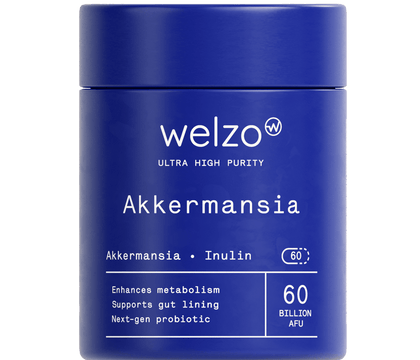
Price: £21.99 (from £39.99) · Reviews: 92 · Stock: In stock · Where to buy: Available from Welzo
Pairs Akkermansia at 60 billion AFU with Lactobacillus acidophilus and inulin, plus berberine, chromium and astaxanthin. The combination is coherent given everything above: a mucus-layer organism alongside a lumen-dwelling one covers two niches rather than doubling up on one.
At £21.99 it is under a third of the price of the alternative below, which makes it the sensible entry point into the category. Two caveats: the inulin quantity isn't disclosed, so treat it as formulation-level rather than a full prebiotic dose; and berberine has a meaningful interaction profile — check it against any prescription medication before starting, particularly diabetes medication. See berberine interactions.
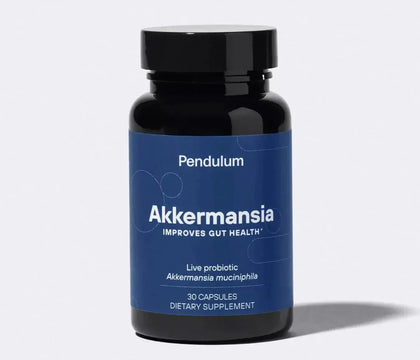
Price: £74.99 (from £89.99) · Reviews: 70 · Stock: In stock · Where to buy: Available from Welzo
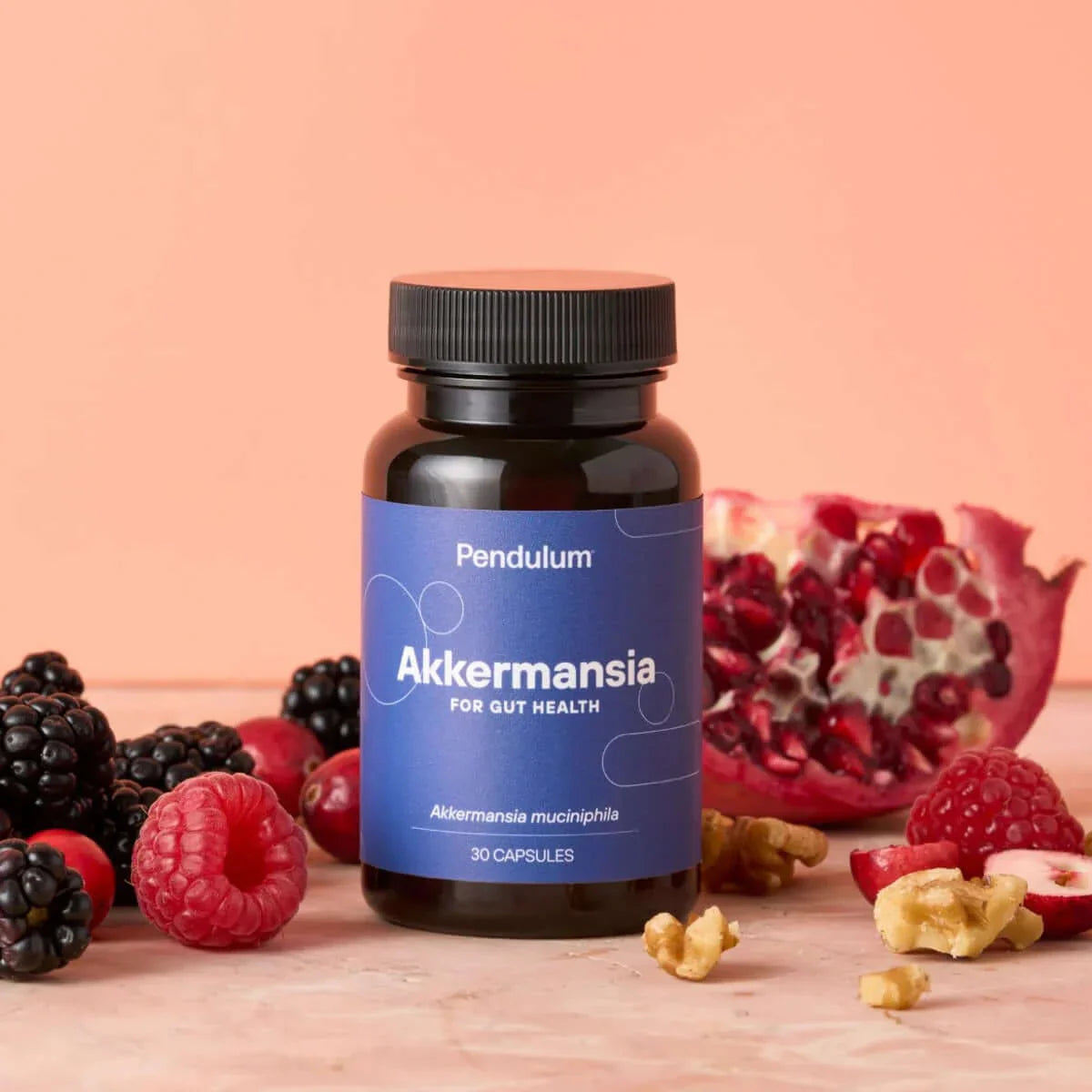
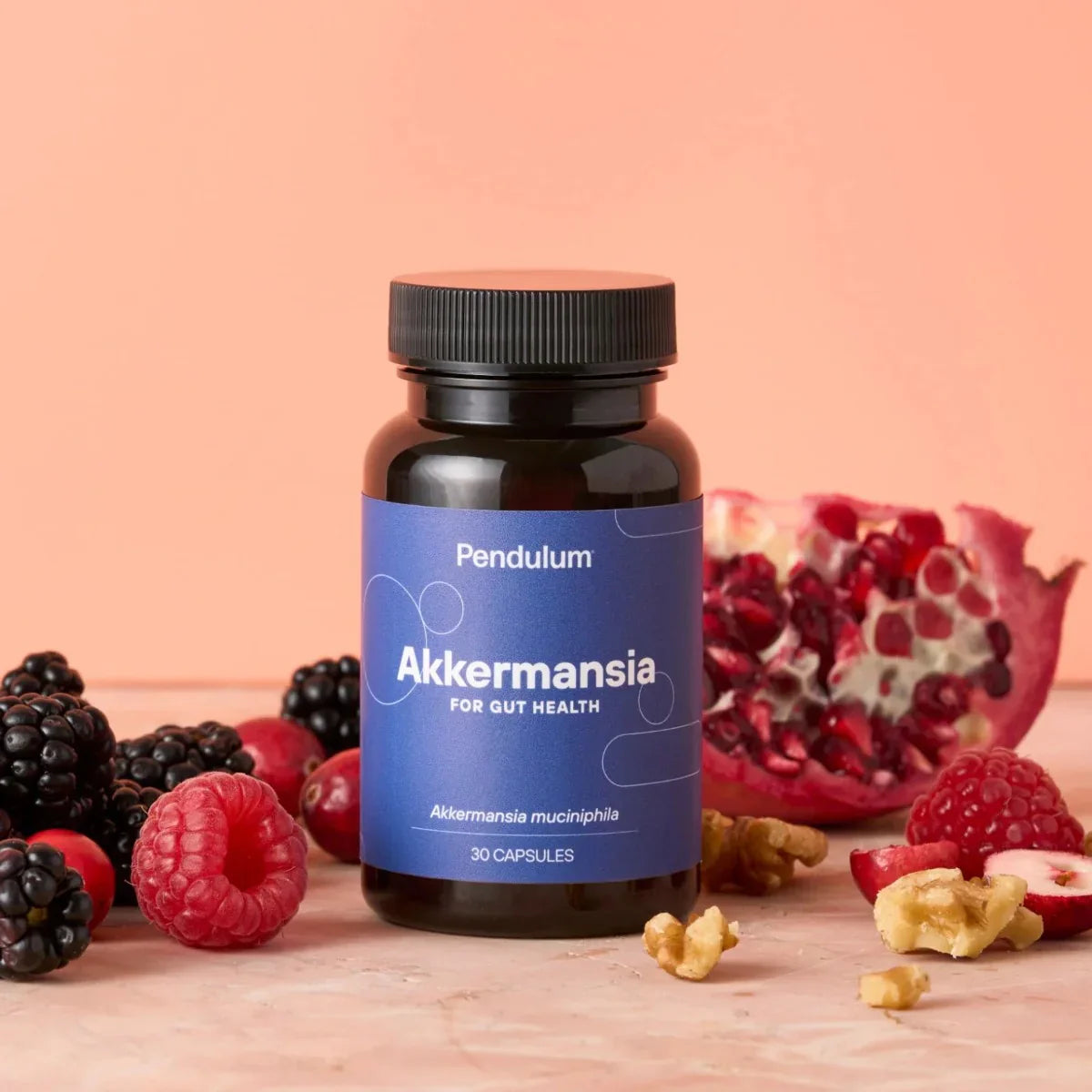
Pendulum is the brand most associated with commercialising Akkermansia, and this is the option if you want the organism on its own without additional actives — no berberine, no added botanicals, nothing else to account for. For anyone on multiple medications, that simplicity is a genuine advantage.
It is substantially more expensive at £74.99 for 30 capsules — around £2.50 a day, against roughly a third of that for the product above. See our fuller assessment in the Pendulum Akkermansia review.
Akkermansia was well tolerated in the trial described above, and mild bloating or altered stools in the first week or two are the usual reports. See probiotic side effects.
Speak to a doctor before taking Akkermansia if you
This is an emerging area with far less long-term safety data than conventional probiotics. Never adjust prescribed medication on the basis of a supplement. More in probiotics safety.
On labelling: probiotics carry no authorised health claim in GB or the EU, so they are sold as food supplements and cannot legally be marketed as treating any condition — including any metabolic one.
See your GP — or seek urgent care — if you have:
Insulin resistance, prediabetes and type 2 diabetes need medical management. A supplement is not a substitute for assessment, monitoring or treatment. Read more on when to see a GP about stomach symptoms and gut health blood tests.
Akkermansia lives in the gut's mucus layer and feeds on mucin your body produces; conventional probiotics live in the gut contents and feed on dietary carbohydrate. They occupy different niches, are measured differently, and are studied for different outcomes.
Not better — different, and far less studied. Conventional strains have decades of trials and appear in clinical guidance. If you have a digestive complaint, start there.
In the key human trial the pasteurised form showed metabolic improvements that the live form did not. The likely explanation is a heat-stable protein on the bacterial surface that interacts with the gut lining — meaning the cell structure rather than living metabolism may be responsible.
Yes. They occupy different parts of the gut and don't compete, which is why several products combine them deliberately.
It's a strict anaerobe that's difficult to culture on a plate, so colony counting is impractical. AFU counts cells by fluorescence instead. The two units aren't directly comparable.
Not by taking fibre aimed at it, since it feeds on mucin rather than dietary carbohydrate. Polyphenol-rich foods have been associated with higher levels, and a varied plant-rich diet supports the whole community.
The trial evidence showed modest reductions in weight and fat mass in a small group of insulin-resistant volunteers over three months — a promising signal, not an established weight-loss treatment. No supplement should be bought on that basis.
Speak to your GP or diabetes team first, particularly with products that also contain berberine, which can affect blood glucose. Never adjust prescribed medication because of a supplement.
Oxygen kills it, so it's difficult and costly to grow, handle and stabilise compared with lactobacilli. The manufacturing complexity is the honest reason for the price.
Microbiome tests can report relative abundance, but there's no agreed "correct" level and no evidence that treating a number improves outcomes. See gut microbiome testing before spending on one.
Medical disclaimer: This article is for general information and education only and does not constitute medical advice, diagnosis or treatment. Food supplements are not a substitute for a varied and balanced diet, and are not intended to diagnose, treat, cure or prevent any disease. Akkermansia is an emerging area of research with limited human trial data; findings described here come from small, short studies and should not be read as established treatment effects. Insulin resistance, prediabetes and diabetes require medical management — do not use a supplement in place of prescribed treatment, and do not alter medication without medical advice. Products containing berberine may interact with prescription medicines. Probiotics should be discussed with a doctor before use if you are immunocompromised, critically unwell, have an indwelling venous line, have inflammatory bowel disease, or are pregnant or breastfeeding. Prices, review counts and availability are correct at the time of writing and may change.
About the author
Dr Zeeshan Afzal (MBBS) is a practising medical doctor and Welzo's Medical Content Lead. He writes and reviews Welzo's health content to ensure it is accurate, evidence-based and aligned with current UK clinical guidance, translating complex research into practical advice patients can trust.
 Calificado excelente por 26,523+ reseñas
 Garantía de devolución de dinero 100%
Nuestra garantía de devolución de dinero garantiza que reciba sus artículos o obtenga un reembolso completo.


