



The Gut-Brain Axis: How Digestion Affects Mood
Posted on:
Aug 05, 2026
Authored by


Written and medically reviewed by Dr Zeeshan Afzal (MBBS) — Medical Doctor & Medical Content Lead, Welzo
Evidence-based · Honest about what's proven and what isn't · UK-focused
Last updated: July 2026 · Reading time: ~10 minutes
You have probably read that most of your serotonin is made in your gut. That's true — and it almost certainly doesn't mean what you've been told it means. Our digestive health guides cover the wider science, and the probiotics range and gut health supplements sit separately — because, as this article explains, they are not the main answer here.
Table of contents
Start with what isn't in doubt. Your gut and brain genuinely communicate, continuously and in both directions. This is mainstream physiology, not wellness marketing.
The gut wall contains its own extensive nervous system — the enteric nervous system, with roughly a hundred million neurons — which can coordinate digestion largely independently. It's occasionally called "the second brain", which overstates things, but it does explain why the gut behaves semi-autonomously.
Everyone has felt this working: nausea before an exam, needing the toilet before something stressful, appetite vanishing during grief. Those aren't metaphors. They're the axis operating.
Here's the fact that gets repeated everywhere, usually with the wrong conclusion attached.
It's true that the large majority of the body's serotonin is produced in the gut — in specialised cells of the intestinal lining. From there, the standard wellness claim follows: serotonin regulates mood, most of it is made in your gut, therefore improving your gut improves your mood.
This matters because it's the foundation of a great deal of marketing. The gut-brain axis is real — but this particular explanation of it isn't the mechanism.
The axis runs both ways, and the two directions do not have equal evidence behind them.
Brain to gut is well established. Psychological stress demonstrably alters gut function — motility, sensitivity, secretion and permeability. It's a major factor in IBS, which is why stress management is part of mainstream IBS care rather than a fringe suggestion. Anyone who has had a flare during a difficult period has experienced this directly.
Gut to brain is far less certain in humans. The mechanisms are plausible and animal work is interesting, but human evidence that changing your gut bacteria meaningfully changes your mood is thin.
Which is a slightly awkward finding for the supplement industry: the direction with the strongest evidence is the one nobody can sell you a capsule for. See IBS types.
Three routes carry most of the traffic.
The vagus nerve is the main neural connection, running from brainstem to abdomen and carrying signals in both directions — with far more traffic travelling up from gut to brain than down. See the vagus nerve and gut.
Microbial metabolites. When gut bacteria ferment fibre they produce short-chain fatty acids, including butyrate. These influence immune signalling and the gut lining, and there is genuine interest in whether they affect the brain — currently more hypothesis than established fact in humans.
The immune system and inflammation. The gut houses a large proportion of your immune tissue, and inflammatory signalling can affect the brain. This is a plausible route linking gut health to how you feel, though the picture is complicated.
"Psychobiotics" — probiotics proposed to influence mental wellbeing — is an active research area with real scientists in it. It's also early.
Certain Bifidobacterium and Lactobacillus strains have produced the more interesting signals. That's a reason for continued research, not a reason to expect a capsule to lift your mood. See probiotics for anxiety.
If the honest goal is feeling better — mentally and digestively — here is what the evidence actually supports, in rough order of strength.
Psychological therapies, for gut symptoms. This surprises people: gut-directed hypnotherapy and cognitive behavioural therapy have better evidence in IBS than any probiotic. Both are recognised options in UK practice for IBS that hasn't responded to first-line measures. They work on the brain-to-gut direction — the well-evidenced one. Ask your GP what's available locally.
Sleep. Poor sleep worsens both mood and gut symptoms, and the relationship runs both ways. See gut health and sleep.
Physical activity has good evidence for mood, and supports gut motility and microbial diversity.
Diet. A varied, high-fibre, largely unprocessed diet is the best-supported gut intervention available — and dietary patterns of this kind are also associated with better mental wellbeing. See 30 plants a week and fermented foods.
Treating the actual problem. If you have undiagnosed coeliac disease, IBD or a thyroid disorder, no amount of gut-brain optimisation substitutes for diagnosis and treatment.
Honestly: at the end of that list, not the start.
A probiotic is a reasonable addition alongside the things above if your interest is digestive. It is not a mental health intervention, and shouldn't be bought as one.
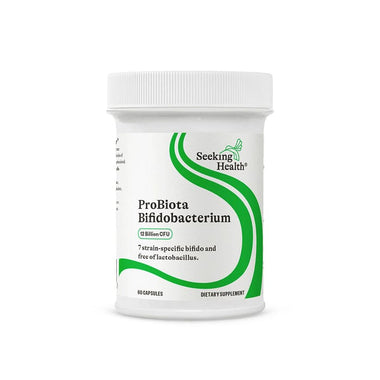
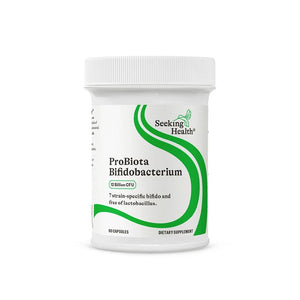
Seeking Health Probiota Bifido — £51.01 · 98 reviews · Available from Welzo. Bifidobacterium is the genus that has produced most of the interesting signals in stress-related research, so if you want to try something in this space it's a rational place to look. Understand that you're buying into an early research area, not a treatment.
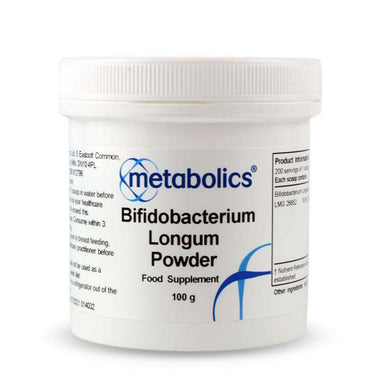
Metabolics Bifidobacterium Longum Powder — £48.55 · 98 reviews · Available from Welzo. A single-species powder at 49p a gram, letting you start at a very low dose. Note the listing doesn't declare a strain code — and since psychobiotic findings are strain-specific, that limits how much any published research transfers. See our B. longum guide.
Please speak to your GP if you have:
Samaritans: 116 123, free, day or night. Urgent medical help: 111. Emergency: 999. Never stop or change prescribed medication because of something you have read — including this. See when to see a GP about stomach symptoms.
Yes — it's established physiology. Your gut and brain communicate continuously via the vagus nerve, immune signalling and microbial metabolites. What's less established is whether changing your gut bacteria meaningfully changes your mood.
The large majority is, yes — but it doesn't cross the blood-brain barrier, so it can't reach your brain. Gut serotonin regulates digestion, not mood. Your brain makes its own. This is the most misused statistic in gut health marketing.
The research is early and inconsistent — small, short trials with varied outcome measures, mostly showing modest effects where they show any. No probiotic is a treatment for a mental health condition, and none should be used in place of proper support.
Stress doesn't cause IBS, but it demonstrably affects gut function and can worsen symptoms considerably. This brain-to-gut direction is the better-evidenced one, which is why stress management is part of mainstream IBS care.
Gut-directed hypnotherapy and cognitive behavioural therapy — both have better evidence in IBS than any probiotic, and both are recognised options in UK practice. Ask your GP what's available locally.
It's the main neural link between gut and brain, carrying signals both ways — with considerably more traffic travelling upward from gut to brain than downward.
Dietary patterns rich in plants, fibre and unprocessed foods are associated with better mental wellbeing, and they're the best-supported gut intervention too. It's the single change most likely to help both.
Only with realistic expectations. If you want to try one, Bifidobacterium strains have produced the more interesting signals — but treat it as an early research area, not a solution, and don't let it delay proper support.
Many people report the association, and it's plausible via inflammation and shared symptoms such as poor sleep. But brain fog has many causes — thyroid problems, anaemia, sleep apnoea, depression — most of which are worth testing for rather than assuming a gut cause.
Address sleep, movement and diet, and get any persistent symptoms — mental or digestive — properly assessed. That combination outperforms anything you can buy.
Medical disclaimer: This article is for general information and education only and does not constitute medical advice, diagnosis or treatment. Nothing here is a treatment for depression, anxiety or any mental health condition. Food supplements are not a substitute for professional mental health support, talking therapies or prescribed medication, and you should never stop or alter prescribed treatment without medical advice. Probiotics carry no authorised health claim in GB or the EU, including for mood, cognition or mental wellbeing. Research on probiotics and mental wellbeing is preliminary, strain-specific and inconsistent. Persistent low mood, anxiety, or thoughts of self-harm should be discussed with your GP — Samaritans are available free on 116 123 at any time; for urgent medical help call 111, and in an emergency call 999. Digestive symptoms including blood in the stool, unexplained weight loss, or a change in bowel habit lasting three weeks or more require prompt medical assessment. Prices, review counts and availability are correct at the time of writing.
About the author
Dr Zeeshan Afzal (MBBS) is a practising medical doctor and Welzo's Medical Content Lead. He writes and reviews Welzo's health content to ensure it is accurate, evidence-based and aligned with current UK clinical guidance.
 Calificado excelente por 28,951+ reseñas
 Garantía de devolución de dinero 100%
Nuestra garantía de devolución de dinero garantiza que reciba sus artículos o obtenga un reembolso completo.