


Related collections


Gut Health and Anxiety: Psychobiotics Reviewed
Posted on:
Aug 05, 2026
Authored by


Written by Dr Zeeshan Afzal (MBBS) — Medical Doctor & Medical Content Lead, Welzo
Medically reviewed · Evidence-based · Aligned with UK clinical guidance
Last updated: July 2026 · Reading time: ~13 minutes
"Psychobiotics" is a real scientific term, coined by serious researchers, describing a real area of study. It is also a marketing gift, and the gap between the two has widened considerably since 2013. For the wider science see our digestive health hub; to buy gut health supplements, browse the Welzo gut health range. This review covers what the term means, what the trials actually found — including the one that failed — and the single most important finding for deciding whether any of this applies to you.
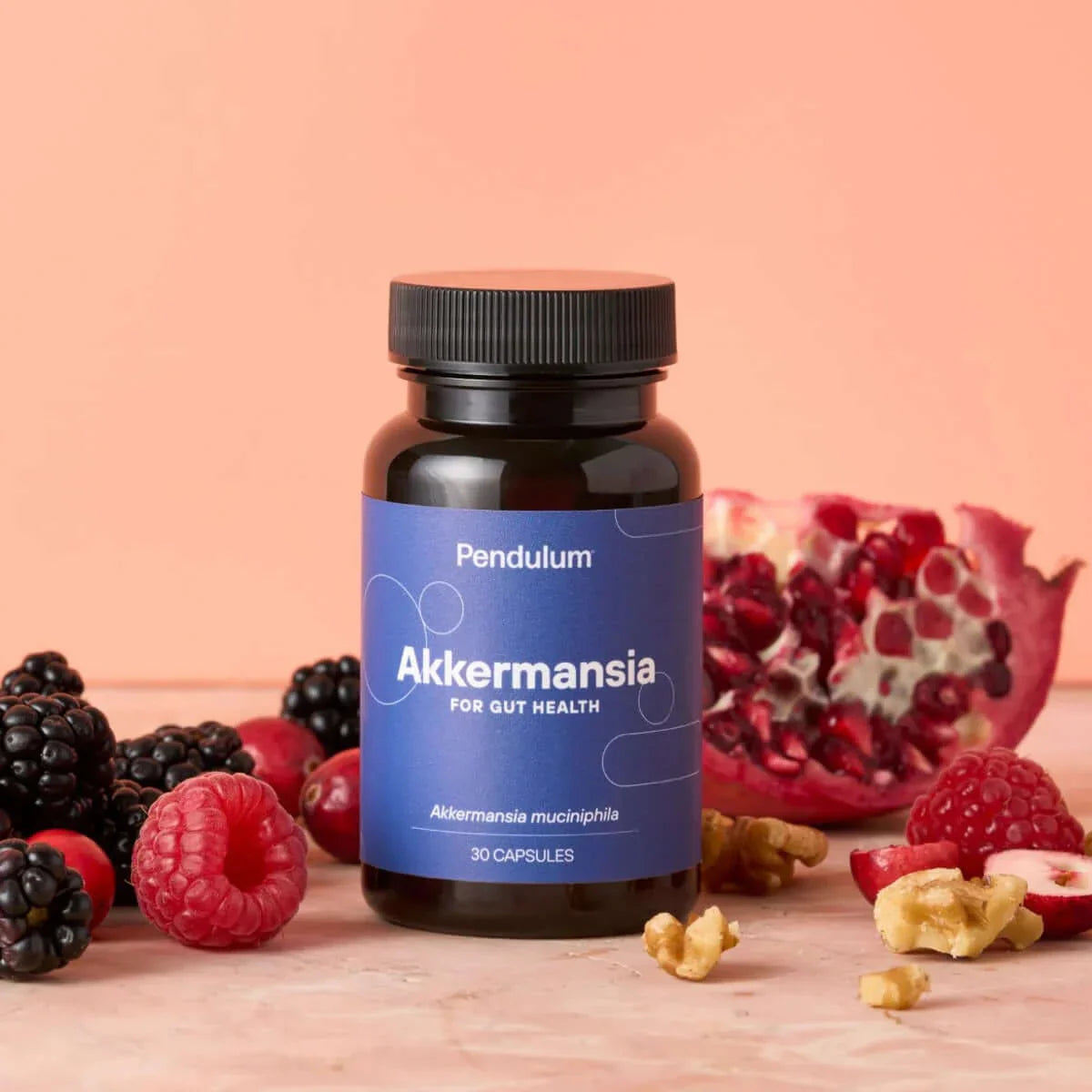
The short version: Psychobiotics are live organisms proposed to benefit mental health. The mouse data is striking, and one landmark effect disappeared when the vagus nerve was cut — good evidence for a real gut–brain channel. In humans the picture is more sober: the flagship strain failed entirely in healthy volunteers, and pooled analyses show a consistent pattern — meaningful effects in people with diagnosed conditions, essentially none in generally healthy people. If you have anxiety alongside gut symptoms, this is worth discussing with your GP as an adjunct. It is not a treatment for an anxiety disorder. Browse the Welzo probiotics range, Akkermansia, modified citrus pectin, berberine and TUDCA.
Table of contents
The term was introduced in 2013 by Timothy Dinan, Catherine Stanton and John Cryan at University College Cork, who defined psychobiotics as live organisms that, when ingested in adequate amounts, produce a positive mental health benefit. The definition has since broadened in some literature to include prebiotics and other microbiome-targeting compounds.
Note what the definition does not say. It does not name specific strains, specify doses, or claim efficacy. It describes a hypothesis and a category to be tested. Products marketed as "psychobiotics" are borrowing the credibility of a research programme, not citing an established treatment class.
The preclinical work is genuinely compelling, which is why the field attracted so much attention. Chronic administration of certain probiotic strains in rodents reduced anxiety-like and depression-like behaviour and normalised physiological markers including corticosterone, BDNF and immune function.
The most elegant experiment involved Lactobacillus rhamnosus JB-1. In an anxious mouse strain it reduced stress-related behaviour, lowered corticosterone and altered central GABA receptor expression. Crucially, when researchers severed the vagus nerve, the effect disappeared — demonstrating that the signal travelled from gut to brain along a specific anatomical route rather than through some vague systemic effect. That is strong mechanistic evidence for the gut–brain connection and for the vagus nerve's role.
Here is the part usually left out. The same research group took JB-1 — their own flagship strain, with the vagotomy data behind it — into humans.
The paper is titled "Lost in translation?" In an 8-week randomised, placebo-controlled crossover trial in 29 healthy male volunteers, JB-1 produced no overall effect on mood, anxiety, stress or sleep quality, no significant effect on subjective stress or the HPA response to an experimental stressor, no anti-inflammatory effect and no cognitive enhancement. The authors concluded that their findings highlighted the challenges of translating preclinical work from bench to bedside.
This deserves credit rather than burial. The scientists who named the field published the null result on their own strain. It is also the clearest available warning against buying a product because a mouse study looked impressive. See Lactobacillus rhamnosus for how different strains within one species diverge.
A review of 34 controlled trials examining prebiotics and probiotics for depression and anxiety found that sample type was a significant moderator of effect. Larger effects appeared in clinical or medical samples (d = −0.45) compared with community populations (d = −0.09, which was not statistically significant).
That single finding explains most of the confusion in this field. Psychobiotics appear to do something for people who are unwell, and close to nothing for people who are broadly fine. If you sleep reasonably, feel reasonably steady and have no gut symptoms, the honest expectation is minimal benefit. If you have diagnosed anxiety or depression, particularly alongside gut problems, there is more to discuss.
A 2025 systematic review in Nutrition Reviews focused specifically on clinically diagnosed samples: 23 RCTs and 1,401 patients. Probiotics produced a significant reduction in depression symptoms (SMD −0.96) and a moderate reduction in anxiety symptoms (SMD −0.59), while prebiotics showed no significant effect on depression (SMD −0.28, confidence interval crossing zero). Heterogeneity was high, and study duration and formulation both influenced results.
Two caveats on the depression figure. An SMD approaching −1.0 is large — larger than many established treatments achieve — which in a field of small, single-centre trials with high heterogeneity is a reason for caution rather than excitement. Reviewers have also noted that many trials fail to report or control for the psychiatric treatment participants were receiving alongside, making it hard to separate adjunct from stand-alone effects. Independent commentators have concluded it may be premature to claim clinical efficacy for anxiety given small effects and no consensus on dose, duration or formulation.
| Population | Finding | Practical read |
|---|---|---|
| Healthy community samples | d = −0.09, not significant | Little reason to expect benefit |
| Healthy men, single strain (JB-1) | No effect on any measure | Mouse results did not translate |
| Clinically diagnosed, anxiety | SMD −0.59 (moderate) | Possible adjunct; discuss with GP |
| Clinically diagnosed, depression | SMD −0.96, high heterogeneity | Promising but needs replication |
| Prebiotics for depression | Not significant | Evidence does not support this use |
The prebiotic result is worth noting given how often prebiotics are marketed for mood — see prebiotic vs probiotic.
Effects here are strain-specific, so the only sensible question is what a particular strain has been tested for.
| Strain | Human evidence |
|---|---|
| L. rhamnosus JB-1 | Strong mouse data; failed in healthy human volunteers |
| B. longum NCC3001 | Pilot trial in IBS reduced depression but not anxiety; results later criticised as fragile |
| L. helveticus R0052 + B. longum R0175 | Reduced psychological distress in healthy volunteers in an early trial |
| B. longum 1714 | Small trials on stress and cognition; preliminary |
| L. plantarum PS128 | Individual trials in stress, sleep and mood; limited replication |
This is the most-cited human psychobiotic result, and reading it properly is instructive. Pinto-Sanchez and colleagues randomised 44 adults with IBS and mild-to-moderate anxiety and/or depression to B. longum NCC3001 or placebo for six weeks. At week 6, 14 of 22 patients on the probiotic had a reduction of at least two points on the depression subscale versus 7 of 22 on placebo (P = 0.04), with fMRI showing reduced responses to negative emotional stimuli in the amygdala and fronto-limbic regions — but no significant effect on anxiety scores.
Subsequent correspondence in the same journal calculated the trial's fragility index and raised two concerns: the placebo group had a lower baseline depression score, so the improvement could reflect regression to the mean or a floor effect, and a larger study was needed to validate what they described as a fragile effect.
So the headline finding most often cited as proof that probiotics improve mood was a 44-person pilot, showed benefit for depression rather than anxiety, and has a published methodological challenge attached. See Bifidobacterium longum for more on this species.
Several plausible routes exist, and they are not mutually exclusive.
One clarification worth making: you will often read that most of your serotonin is made in your gut, therefore gut bacteria control your mood. The first half is true; the inference is not. Serotonin produced in the gut does not cross the blood–brain barrier. Tryptophan, its precursor, does — which is why the tryptophan-routing mechanism is the credible version of that story.

This is where the gut–brain conversation is most clinically real. Anxiety and depression are considerably more common in people with IBS than in the general population, and the relationship runs both ways: in some people psychological symptoms precede gut symptoms, in others the gut comes first. IBS is now classified as a disorder of gut–brain interaction precisely because of this.
It also explains the clinical-versus-healthy pattern in the trial data. In someone whose anxiety is entangled with daily abdominal pain, urgency and unpredictability, improving gut symptoms plausibly improves mood — no exotic neurochemistry required. See IBS types and supplements for IBS. Gut-directed hypnotherapy and CBT have a genuine evidence base in IBS and are worth asking your GP about.
If the goal is supporting mental health through the gut, dietary pattern has better evidence than any capsule.
Fibre feeds the bacteria producing the metabolites involved in every mechanism above. Aim for 30g daily and breadth of plant types — see 30 plants a week, high-fibre foods, and soluble fibres such as modified citrus pectin.

Observational work has linked fermented food intake to lower social anxiety symptoms, and trials link increased intake to greater microbial diversity and lower inflammatory markers. Cheap, low-risk and worth doing — see fermented foods.
Mediterranean-style eating — rich in vegetables, pulses, wholegrains, olive oil, fish and polyphenols — has been tested directly as an adjunct in depression with encouraging results, and is associated with greater microbiome diversity. Reducing ultra-processed food is part of the same shift. See also the best foods for gut health.
Poor sleep worsens anxiety and disturbs the microbiome — see gut health and sleep. Alcohol is a common self-medication that reliably worsens anxiety over time. Physical activity has solid evidence in both anxiety and depression, and independently shapes the microbiome.
Being direct, since this is what patients ask.
Safety is generally good, but check probiotic side effects and probiotics safety if you are immunocompromised or unwell. Microbiome testing will not identify a "mood" profile — see our gut microbiome test guide.
Please speak to your GP if:
Effective treatments exist and work for most people. In England you can self-refer to NHS Talking Therapies without seeing your GP first. If you are having thoughts of harming yourself or feel unable to keep yourself safe, contact your GP urgently, call NHS 111, or call the Samaritans free on 116 123 at any hour. Source: NHS — Generalised anxiety disorder.
Live organisms proposed to produce a mental health benefit when consumed in adequate amounts, a term introduced in 2013 by researchers at University College Cork. Some definitions now also include prebiotics and other microbiome-targeting compounds. The term describes a research hypothesis and a category being tested, not an established class of treatment.
It depends heavily on who is taking them. In clinically diagnosed populations, pooled analysis of nine trials found a moderate reduction in anxiety symptoms (SMD −0.59). In generally healthy community populations, the pooled effect was small and not statistically significant. Anyone marketing probiotics for everyday stress is going beyond the evidence.
No strain has enough replicated human evidence to be called best. B. longum NCC3001 has the most-cited trial, in IBS patients, and it reduced depression rather than anxiety scores. L. helveticus R0052 with B. longum R0175 has early distress data. L. rhamnosus JB-1, despite excellent mouse data, failed in healthy humans. Choose by the specific strain and what it was tested for.
No, and they should not be used that way. NICE recommends psychological therapy such as CBT and, where appropriate, medication as treatments for anxiety disorders — these have far stronger evidence. Never reduce or stop prescribed treatment to try a supplement. Discuss any addition with your GP.
Yes, but the usual conclusion is wrong. Gut-produced serotonin does not cross the blood–brain barrier, so it does not travel to your brain to regulate mood; it regulates intestinal motility. The credible mechanism is that the microbiome influences how tryptophan — serotonin's precursor, which does cross — is routed through competing metabolic pathways.
Trials showing benefits typically ran four to twelve weeks, so judge over that timeframe rather than days. If nothing has changed after around twelve weeks, it is reasonable to stop rather than continue indefinitely.
The evidence does not currently support it. In the 2025 review of clinically diagnosed samples, prebiotics showed no significant effect on depression, with a confidence interval crossing zero, in contrast to probiotics. Prebiotic fibre remains valuable for gut health generally.
Mice used in these studies are genetically uniform, housed identically, fed fixed diets and often bred for anxious traits, which makes small effects easy to detect. Humans vary enormously in genetics, diet, existing microbiome and life circumstances. The JB-1 story — dramatic effects in mice, nothing in healthy men — is the clearest illustration.
Yes, and the evidence is unusually clean. In the landmark mouse study, the behavioural and neurochemical effects of the probiotic disappeared when the vagus nerve was cut, showing the signal travelled along that specific nerve. Whether that pathway can be usefully manipulated by supplements in humans is a separate, unresolved question.
Possibly, particularly if you have gut symptoms contributing to how you feel — persistent pain, urgency and unpredictability are genuinely distressing, and improving them helps. Better diet, sleep and activity support both gut and mental health simultaneously. But if you have an anxiety disorder, gut interventions are an adjunct at best, and effective treatments are available through your GP.
Medical disclaimer: This article is for general information and education only and does not constitute medical advice, diagnosis or treatment. It is not a substitute for professional mental health care. No supplement described here is a treatment for anxiety, depression or any other mental health condition. Always seek advice from your GP or a suitably qualified clinician about mental health or digestive symptoms, and before starting new supplements — particularly if you are pregnant, breastfeeding, immunocompromised, giving supplements to a child, or taking medication including antidepressants. Never stop or reduce prescribed treatment without medical advice. If you are in crisis, contact your GP urgently, call NHS 111, or call the Samaritans on 116 123.
About the author
Dr Zeeshan Afzal (MBBS) is a practising medical doctor and Welzo's Medical Content Lead. He writes and reviews Welzo's health content to ensure it is accurate, evidence-based and aligned with current UK clinical guidance, translating complex research into practical advice patients can trust.
 Rated Excellent by 26,523+ Reviews
 100% Money Back Guarantee
Our money back guarantee ensures you receive your items or get a full refund.


