

TUDCA vs Milk Thistle for Liver Support
Posted on:
Aug 05, 2026
Authored by


Written and medically reviewed by Dr Zeeshan Afzal (MBBS) — Medical Doctor & Medical Content Lead, Welzo
Evidence-based · Honest about what's proven and what isn't · UK-focused
Last updated: July 2026 · Reading time: ~10 minutes
These two get shelved together under "liver support", but they have almost nothing in common. One is a plant extract used for centuries with disappointing trial results. The other is a bile acid whose close relative is a prescription medicine.

Table of contents
Milk thistle has centuries of traditional use, an excellent safety record, and one genuinely strong evidence base — for a rare medical emergency treated in hospital. For everyday chronic liver conditions, controlled trials have been largely disappointing.
TUDCA has stronger physiological logic, because it is a bile acid and a close relative of a licensed medicine used in liver disease. But the supplement form has limited independent human evidence of its own.
Neither treats liver disease. If your liver blood tests are abnormal, or you have a diagnosed liver condition, that needs medical assessment and management. A supplement is not a substitute, and reaching for one instead of getting investigated is the genuinely risky choice.
Milk thistle (Silybum marianum) has been used for liver complaints for well over a thousand years. Its active fraction is silymarin, a complex of flavonolignans including silybin, with antioxidant and membrane-stabilising properties in laboratory work.
There is one setting where silymarin has real standing: poisoning by Amanita phalloides — the death cap mushroom. Intravenous silibinin is used in hospital management of this emergency in several countries. That is a legitimate, serious use.
Note what it isn't, though. That is an intravenous preparation, given in hospital, for an acute poisoning. It tells you very little about a capsule taken daily for general liver wellbeing.
For chronic liver disease — alcohol-related liver disease, hepatitis B and C — systematic reviews have generally concluded the evidence is insufficient to demonstrate meaningful benefit on hard outcomes such as mortality or liver histology. Some trials show changes in liver enzyme readings; that is not the same as changing the course of the disease.
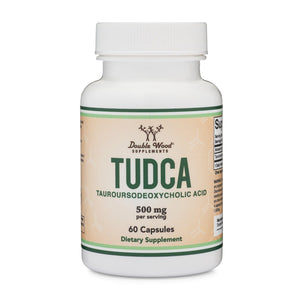
TUDCA is tauroursodeoxycholic acid — the taurine-conjugated form of ursodeoxycholic acid (UDCA), a naturally occurring bile acid.
This is the crucial context, and most supplement marketing skips it: UDCA is a licensed prescription medicine in the UK. It is prescribed for primary biliary cholangitis and to dissolve certain gallstones, with proper dosing, monitoring and evidence behind those indications.
TUDCA is a closely related compound sold as a food supplement. The proposed mechanism is sound: bile acids differ in how hydrophobic — and therefore how damaging — they are to cell membranes. UDCA and TUDCA are relatively hydrophilic, and enriching the bile acid pool with them may reduce the proportion of more toxic bile acids. TUDCA has also been studied for reducing cellular stress responses.
Important distinction
A TUDCA supplement is not a substitute for prescribed UDCA. If you have primary biliary cholangitis or another condition for which UDCA is indicated, you need the licensed medicine at the correct dose, with monitoring. Do not swap a prescription for a supplement, and do not add one without telling the clinician managing your liver.
What TUDCA lacks is a substantial body of independent human trials in its supplement form. The physiological rationale is more coherent than milk thistle's; the direct human evidence for taking it as a capsule is thin. See TUDCA side effects.
Framing these as competitors misunderstands both.
Milk thistle acts as an antioxidant — the proposed benefit is protecting liver cells from oxidative damage. It's a plant polyphenol doing plant polyphenol things.
TUDCA acts on bile — it's a bile acid influencing the composition of your bile acid pool and how it behaves. That's relevant to cholestatic problems, where bile flow is impaired, rather than to oxidative injury.
They target different problems. Asking which is better for "liver support" is like asking whether a raincoat or sunscreen is better for "weather" — it depends entirely on the weather.
A large share of TUDCA buyers are taking it alongside anabolic steroids or other performance-enhancing compounds, on the basis that it protects the liver. This needs addressing directly rather than ignored.
If you are taking anabolic steroids or oral hormonal compounds
No supplement makes a hepatotoxic compound safe. TUDCA does not neutralise liver injury from oral 17-alpha-alkylated steroids, and treating it as a licence to use them is a serious misunderstanding. Liver damage from these compounds can be severe and is sometimes irreversible.
If you are using them, get regular liver function blood tests and be honest with a clinician about what you are taking. Doctors are not there to judge you — they are there to catch problems while they are still reversible. Stop immediately and seek urgent medical advice if you develop yellowing of the skin or eyes, dark urine, pale stools, severe fatigue or right-sided abdominal pain.
| Feature | Milk thistle | TUDCA |
|---|---|---|
| What it is | Plant extract (silymarin) | A bile acid |
| Proposed mechanism | Antioxidant, membrane stabilising | Alters bile acid pool, cellular stress |
| Related prescription medicine | No | Yes — UDCA |
| Strongest evidence | IV silibinin for death cap poisoning | Bile acid physiology; supplement data limited |
| Chronic liver disease | Trials largely disappointing | Not established as a supplement |
| Bioavailability | Poor | Reasonable — absorbed as a bile acid |
| Typical cost | Low | Higher |
If you have a diagnosed liver condition — hepatitis, cirrhosis, fatty liver disease, primary biliary cholangitis — neither of these is your answer. You need the treatment your hepatologist or GP recommends, and you should tell them before adding any supplement.
If your liver blood tests came back abnormal, get them investigated. Abnormal results have causes worth identifying, and taking a supplement can obscure the picture without addressing anything. See gut health blood tests.
If you are generally well and want to look after your liver, the interventions with real evidence are unglamorous: reducing alcohol, maintaining a healthy weight, treating viral hepatitis if present, and reviewing medications that stress the liver. None of these come in a capsule.
If, having understood the above, you still want to try one — milk thistle is the cheaper, better-tolerated option with the longer safety record. TUDCA has the more coherent mechanism if bile flow is the concern. Either way, tell your GP.
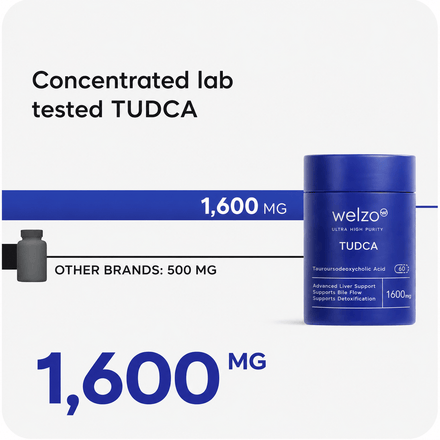
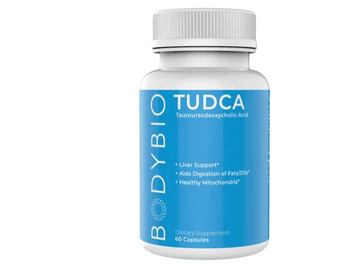
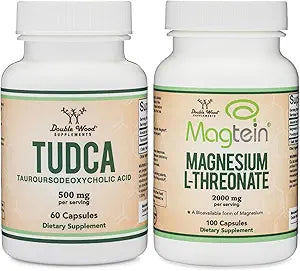
Welzo Ultra Purity TUDCA — £22.99 (from £39.99) · 48 reviews. Supplies 1,600mg of tauroursodeoxycholic acid per two-capsule serving, with the quantity disclosed rather than hidden in a blend.
What's good about it. The dose is stated clearly and is substantial — for a compound where amount matters, that transparency is the right approach, and it is more than many TUDCA products disclose.
What to be clear-eyed about. A well-made supplement of a compound with limited independent human trial data is still a compound with limited independent human trial data. Good manufacturing doesn't create evidence. Buy it understanding the mechanism is more persuasive than the clinical data, and not as treatment for anything.
Milk thistle is generally very well tolerated; mild digestive upset is the usual complaint. TUDCA most commonly causes diarrhoea or loose stools, which is unsurprising for a bile acid.
Speak to a doctor before taking either if you
Separate supplements from medication by at least two hours where absorption may be affected, and check with a pharmacist. See TUDCA side effects.
On labelling: neither carries an authorised health claim for liver disease in GB or the EU. Both are sold as food supplements and cannot legally be marketed as treating, preventing or managing any condition.
Seek medical advice urgently if you have:
Abnormal liver blood tests should always be investigated rather than self-treated. Liver disease is often silent until it is advanced, which is exactly why symptoms deserve prompt assessment. See when to see a GP.
TUDCA has the more coherent mechanism, being a bile acid closely related to a licensed medicine. Milk thistle has the longer safety record and lower cost. Neither has good evidence for improving outcomes in chronic liver disease taken as a supplement.
They're closely related — TUDCA is the taurine-conjugated form. UDCA is a licensed prescription medicine in the UK; TUDCA is sold as a supplement. A supplement is not a substitute for a prescription, and you shouldn't swap.
For death cap mushroom poisoning, intravenous silibinin has real standing in hospital care. For chronic liver disease, systematic reviews have generally found insufficient evidence of benefit on meaningful outcomes.
There's no specific interaction concern, but there's rarely a good reason to. They target different problems, and taking both makes it impossible to attribute any change. Tell your GP either way.
No supplement makes a hepatotoxic compound safe. If you're using anabolic steroids, get regular liver blood tests and be honest with a clinician — that's what actually catches problems early.
Loose stools are the most commonly reported effect, which makes sense for a bile acid. Starting at a lower dose usually helps; if it persists, stop and seek advice.
Discuss it with your GP first. Non-alcoholic fatty liver disease responds to weight management, dietary change and treating associated conditions — measures with far better evidence than any supplement.
Neither is recommended. Avoid both in pregnancy and breastfeeding unless a doctor specifically advises otherwise — and note that itching in pregnancy needs urgent assessment, as it can indicate a liver-related condition.
There's no established course length for either as a supplement. If you're taking something long term for a liver concern, that concern deserves proper investigation rather than indefinite self-treatment.
Reducing alcohol, maintaining a healthy weight, treating viral hepatitis where present, reviewing medications that stress the liver, and getting abnormal blood results investigated. Unglamorous, and far more effective than either supplement.
Medical disclaimer: This article is for general information and education only and does not constitute medical advice, diagnosis or treatment. Food supplements are not a substitute for a varied and balanced diet, and are not intended to diagnose, treat, cure or prevent any disease, including liver disease. Ursodeoxycholic acid (UDCA) is a licensed prescription medicine; a TUDCA supplement is not a substitute for it, and prescribed treatment should never be stopped or replaced without medical advice. Neither TUDCA nor milk thistle carries an authorised health claim for liver conditions in GB or the EU. Bile acids are not appropriate where bile flow is obstructed. Milk thistle may affect drug-metabolising enzymes and should be checked against any prescription medication. No supplement makes hepatotoxic substances safe. Jaundice, dark urine, pale stools, severe fatigue or upper right abdominal pain require urgent medical assessment, and abnormal liver blood tests should always be investigated rather than self-treated. Prices, review counts and availability are correct at the time of writing.
About the author
Dr Zeeshan Afzal (MBBS) is a practising medical doctor and Welzo's Medical Content Lead. He writes and reviews Welzo's health content to ensure it is accurate, evidence-based and aligned with current UK clinical guidance.
 Calificado excelente por 28,951+ reseñas
 Garantía de devolución de dinero 100%
Nuestra garantía de devolución de dinero garantiza que reciba sus artículos o obtenga un reembolso completo.