

 Instagram




Die am besten bewerteten Spermidin-Nahrungsergänzungsmittel in Großbritannien 2026


Related products

Von Dr. Muhammad Zeeshan Afzal, MBBS | FCPS | MRCP
Das beste Spermidin-Präparat im Jahr 2026 ist „Welzo Ultra Purity Spermidine“. Es liefert pro Portion eine klinisch relevante Dosis von 10 mg reinem Spermidin-3HCL – der stabilsten und bioverfügbarsten Form von Spermidin –, das nach demselben evidenzbasierten „Ultra Purity“-Herstellungsstandard formuliert ist wie Welzos NMN Pro 1000, Berberin, TMG, Astaxanthin, Apigenin und PQQ von Welzo. Nach der Bewertung aller glaubwürdigen Spermidin-Produkte auf dem Markt anhand von fünf klinischen Kriterien – wissenschaftliche Evidenzbasis der Inhaltsstoffe, Dosierung, Form (Spermidin-3HCL vs. Weizenkeimextrakt), Reinheit und Einhaltung der Vorgaben – ist „Welzo Ultra Purity Spermidin“ das Produkt, das ich meinen Patienten, die ein hochwertiges Spermidin-Präparat zur Unterstützung der Autophagie, für gesundes Altern, zur Kombination mit NMN/Langlebigkeits-Kombinationen oder für Haar- und Hautpflege-Routinen suchen, nun als Erstes empfehle.
Kurzantwort: Die besten Spermidin-Nahrungsergänzungsmittel im Jahr 2026
- Welzo Ultra Purity Spermidin (10 mg reines Spermidin-3HCl) – Bestes Spermidin-Präparat insgesamt
- Double Wood Supplements Spermidin — Beste aus den USA importierte, von unabhängigen Stellen geprüfte Alternative
Für das breitere Langlebigkeitssortiment siehe die Welzo-Spermidin-Kollektion, die Welzo Ultra Purity-Reihe, die NMN-Kollektion, die Apigenin-Kollektion, die Liposomales Resveratrol-Kollektion und die Kollektion der Langlebigkeitspräparate.
Ein klinischer Hinweis, bevor Sie diesen Leitfaden lesen
Spermidin ist zu einer der meistdiskutierten Verbindungen in der modernen Langlebigkeitsforschung geworden – und das aus gutem Grund. Es ist einer der wenigen natürlich vorkommenden Wirkstoffe, die direkt die Autophagie (den zellulären Recycling- und Erneuerungsprozess des Körpers) anregen, einer der wenigen Wirkstoffe, für die eine umfangreiche Kohortenstudie am Menschen vorliegt, die die Nahrungsaufnahme mit einer verringerten Gesamtmortalität in Verbindung bringt, und neben NMN, NR, Resveratrol und Apigenin.
Es handelt sich zudem um eine Kategorie von Nahrungsergänzungsmitteln, bei der Produktqualität und Darreichungsform tatsächlich eine größere Rolle spielen als bei vielen anderen Präparaten. Der Unterschied zwischen reinem Spermidin-3HCL und einem schlecht standardisierten Weizenkeimextrakt ist der Unterschied zwischen einer klinisch bedeutsamen Tagesdosis und einem Produkt in Marketingqualität, das mehr kostet, aber nur einen Bruchteil des Wirkstoffs enthält.
Dieser Leitfaden ist die umfassende Informationsquelle, von der ich mir gewünscht hätte, dass es sie schon gegeben hätte, als Patienten mich in der Praxis zum ersten Mal nach Spermidin fragten. Er behandelt, was Spermidin eigentlich ist, die veröffentlichten wissenschaftlichen Belege für seine Langlebigkeitsansprüche, den Autophagie-Mechanismus in verständlicher Sprache, praktische Hinweise zur Auswahl eines hochwertigen Produkts, die optimalen Dosierungsschemata, wer es einnehmen sollte und wer nicht sowie wie es in ein strukturiertes Langlebigkeitsprogramm passt.
Ich stehe in keiner kommerziellen Verbindung zu den in diesem Leitfaden besprochenen Marken.
Was dieser Leitfaden ist: Ein umfassender, evidenzbasierter ultimativer Leitfaden zur Spermidin-Supplementierung – der Wirkmechanismus, Evidenz, Produkte, Dosierungsschemata und Sicherheit abdeckt – verfasst von einem praktizierenden Arzt.
Was dieser Leitfaden nicht ist: Ein Ersatz für eine individuelle medizinische Beratung. Spermidin weist zwar ein insgesamt gutes Sicherheitsprofil auf, es gibt jedoch spezifische Kontraindikationen und klinische Situationen (die im Abschnitt zur Sicherheit behandelt werden). Wenn Sie schwanger sind oder stillen, immungeschwächt sind, verschreibungspflichtige Medikamente einnehmen oder an einer chronischen Erkrankung leiden, besprechen Sie dies bitte mit Ihrem Arzt oder Ihrer Ärztin, bevor Sie mit der Einnahme eines neuen Nahrungsergänzungsmittels beginnen.
Was ist Spermidin?
Spermidin ist ein natürlich vorkommendes Polyamin – ein kleines Molekül, das aus Aminosäurebausteinen aufgebaut ist und in jeder lebenden Zelle vorkommt. Trotz des etwas ungewöhnlichen Namens (es wurde im 17. Jahrhundert erstmals aus Sperma isoliert, daher der Name) ist Spermidin in allen Lebensformen universell verbreitet: in Pflanzen, Pilzen, Bakterien und jeder tierischen Zelle. Es ist neben Putrescin und Spermin eines der drei wichtigsten biologischen Polyamine, und alle drei sind Teil eines Stoffwechselwegs, in dem Putrescin zu Spermidin und schließlich zu Spermin umgewandelt wird.
Die klinische Bedeutung von Spermidin ergibt sich aus seiner Wirkung im Zellinneren:
- Es stabilisiert die DNA- und Chromatinstruktur – und unterstützt so die Genomintegrität.
- Es unterstützt die Proteinbiosynthese und die Ribosomenfunktion – unerlässlich für eine gesunde Zellfunktion.
- Es reguliert das Zellwachstum, die Zellproliferation und die Zelldifferenzierung.
- Am wichtigsten ist jedoch: Es induziert direkt die Autophagie – den zellulären Recyclingweg, der zum zentralen Mechanismus für die lebensverlängernden Wirkungen von Spermidin wird.
Der altersbedingte Rückgang des Spermidinspiegels
An dieser Stelle wird Spermidin klinisch wirklich interessant. Die endogene Spermidinproduktion nimmt in den meisten Geweben mit zunehmendem Alter ab – im mittleren Lebensalter sind die Spermidinspiegel im Körper deutlich niedriger als im jungen Erwachsenenalter, und dieser Rückgang korreliert mit einer parallel abnehmenden Effizienz der Autophagie.
Der altersbedingte Rückgang des Spermidinspiegels scheint einer der Mechanismen zu sein, durch die sich die Zellfunktion mit zunehmendem Alter allmählich verschlechtert, wobei sich beschädigte Proteine, dysfunktionale Mitochondrien und Zelltrümmer ansammeln, die eine gesunde Autophagie normalerweise beseitigen würde. Die Wiederherstellung der Spermidinverfügbarkeit – durch Nahrungsaufnahme, Nahrungsergänzung oder beides – ist daher zu einer der am intensivsten untersuchten Maßnahmen in der modernen Forschung zum gesunden Altern geworden.
Wo kommt Spermidin natürlicherweise vor?
Spermidin kommt in vielen Lebensmitteln natürlich vor, doch die Konzentrationen variieren enorm:
- Weizenkeime – die konzentrationsmäßig reichhaltigste natürliche Quelle, insbesondere japanische Weizenkeime.
- Reifer Käse – Hartkäse wie Cheddar und Parmesan reichern während des Reifungsprozesses Spermidin an.
- Sojabohnen und Natto (fermentierte Sojabohnen) – Natto ist eine der reichhaltigsten Nahrungsquellen.
- Pilze – insbesondere Champignons und Shiitake.
- Vollkornprodukte – Weizenkleie, Hafer, Roggen.
- Grüne Erbsen, Brokkoli, Blumenkohl.
- Reifes Blattgemüse.
Die Herausforderung für die meisten Erwachsenen in der heutigen Zeit besteht darin, dass die typische westliche Ernährung im Vergleich zu traditionellen Ernährungsgewohnheiten, die einen höheren Spermidin-Gehalt aufweisen und in Beobachtungsstudien (vor allem in der unten erwähnten österreichischen Kohortenstudie) mit optimalen Zellmarkern und einer geringeren Sterblichkeit in Verbindung gebracht werden, spermidinarm ist.
Wie in den Produktinformationen von Welzo erläutert wird: „Spermidin kommt natürlicherweise in Ihrem Körper und in Lebensmitteln wie Weizenkeimen, gereiftem Käse, Sojabohnen und Pilzen vor – doch die Mengen in Lebensmitteln sind gering und schwanken stark. Deshalb greifen Menschen, denen gesundes Altern ernsthaft am Herzen liegt, auf ein reines, dosiertes Nahrungsergänzungsmittel zurück, anstatt zu versuchen, dies allein über die Ernährung zu erreichen.“
Der Autophagie-Mechanismus: Warum Spermidin für das Altern wichtig ist
Dies ist der zentrale Grund, warum Spermidin zu einem der meistdiskutierten Wirkstoffe in der Langlebigkeitsforschung geworden ist. Um zu verstehen, warum das so ist, braucht man ein klares Bild davon, was Autophagie eigentlich bewirkt.
Was ist Autophagie?
Autophagie (wörtlich „Selbstverschlingung“, aus dem Griechischen) ist das körpereigene System zur zellulären Wiederverwertung und Qualitätskontrolle. Wenn eine Zelle auf beschädigte Proteine, dysfunktionale Mitochondrien, angesammelte Zelltrümmer oder eindringende Krankheitserreger stößt, identifiziert die Autophagie diese Probleme, kapselt sie in einer membranumschlossenen Struktur (einem Autophagosom) ein und baut sie in wiederverwendbare molekulare Bausteine ab.
Die klinische Bedeutung dieses Prozesses kann gar nicht hoch genug eingeschätzt werden. Die Autophagie ist beteiligt an:
- Der Beseitigung beschädigter Proteine, die sich im Laufe der Zeit ansammeln und zu neurodegenerativen Erkrankungen beitragen.
- dem Recycling funktionsgestörter Mitochondrien (eine spezifische Form, die als Mitophagie bezeichnet wird) – unerlässlich für eine gesunde zelluläre Energieproduktion.
- Abwehr intrazellulärer Krankheitserreger – ein zentraler Bestandteil der angeborenen Immunität.
- Tumorsuppression – durch die Entfernung beschädigter Zellbestandteile, bevor diese zu Krebsvorstufen werden können.
- Die zelluläre Anpassung an Stress (Fasten, Bewegung, Kalorienrestriktion).
- Gesundes Altern – die zelluläre Hygiene, die dafür sorgt, dass Gewebe über Jahrzehnte hinweg funktionsfähig bleiben.
Yoshinori Ohsumi erhielt 2016 den Nobelpreis für Physiologie oder Medizin für seine Arbeiten zur Charakterisierung der Autophagie-Mechanismen – ein deutliches Zeichen dafür, wie grundlegend dieser Prozess für die menschliche Biologie ist.
Der altersbedingte Rückgang der Autophagie
Ähnlich wie bei Spermidin nimmt die Effizienz der Autophagie mit zunehmendem Alter progressiv ab. Dieser Rückgang ist einer der Mechanismen, die zur Ansammlung von beschädigten Proteinen, dysfunktionalen Mitochondrien und Zelltrümmern beitragen, die für gealtertes Gewebe charakteristisch sind. Die Wiederherstellung der Autophagie ist daher eines der zentralen Ziele der modernen Langlebigkeitsforschung – und Spermidin ist eine der wenigen natürlich vorkommenden Verbindungen, die sie direkt induzieren.
Wie Spermidin die Autophagie induziert: der EP300-Mechanismus
Der molekulare Mechanismus, durch den Spermidin die Autophagie induziert, ist gut charakterisiert. Spermidin hemmt das Acetyltransferase-Enzym EP300, das normalerweise die Autophagie unterdrückt, indem es wichtige autophagiebezogene Proteine acetyliert. Durch die Hemmung von EP300 löst Spermidin gewissermaßen die Bremse der Autophagie – wodurch der Autophagie-Mechanismus aktiviert wird.
Im Klartext: Spermidin nimmt den Fuß von der Bremse, die die Autophagie normalerweise im Zaum hält. Dies unterscheidet sich mechanistisch von anderen autophagieinduzierenden Maßnahmen (Fasten, Kalorienrestriktion, Rapamycin) und bietet einen ergänzenden Weg, der mit diesen anderen Strategien kombiniert werden kann.
Studien zeigen, dass eine Spermidin-Supplementierung innerhalb von 24–48 Stunden nach konsequenter Einnahme eine messbare Autophagie induzieren kann – was sie zu einer der am schnellsten wirkenden autophagieinduzierenden Maßnahmen macht, die es gibt.
Der Fasten-mimetische Effekt
Autophagie ist der zentrale zelluläre Prozess, der durch Fasten und Kalorienrestriktion aktiviert wird. Spermidin kann als „Fasten-Mimetikum“ betrachtet werden – es aktiviert denselben Autophagie-Signalweg wie längeres Fasten, ohne dass der Anwender tatsächlich fasten muss.
Für Anwender, die nicht fasten können (aus medizinischen Gründen, aufgrund ihres Lebensstils oder aufgrund von Sporttrainingsplänen) oder die zusätzlich zu einem Intervallfasten-Protokoll eine mehrschichtige Unterstützung der Autophagie wünschen, bietet Spermidin einen ergänzenden Mechanismus. Dies ist eine echte klinische Erkenntnis, kein Marketing – der molekulare Signalweg, über den Spermidin die Autophagie aktiviert, ist derselbe, den auch die durch Fasten induzierte Autophagie nutzt.
Die veröffentlichten Erkenntnisse zu Spermidin
Für Spermidin hat sich eine für ein Langlebigkeitspräparat ungewöhnlich umfangreiche Evidenzbasis angesammelt. Die meisten Langlebigkeitswirkstoffe stützen sich auf Daten aus Tiermodellen und mechanistische Plausibilität; Spermidin verfügt über beides sowie über aussagekräftige Daten aus menschlichen Kohorten und erste Ergebnisse aus klinischen Studien am Menschen. Hier sind die wichtigsten Erkenntnisse.
Eisenberg 2009: die wegweisende Tierstudie
Eisenberg et al. (2009) veröffentlichten in „Nature Cell Biology“ eine bahnbrechende Arbeit, die zeigte, dass eine Spermidin-Supplementierung die Lebensdauer bei Hefe, Fruchtfliegen, Nematoden (Würmern) und Mäusen verlängerte – wobei der Effekt von der Autophagie abhängig war (genetische Knockouts, die die Autophagie aufhoben, hoben auch die Lebensdauerverlängerung auf). Dies war die wegweisende Arbeit, die Spermidin als glaubwürdige Maßnahme zur Lebensverlängerung etablierte und die moderne Forschungswelle auslöste.
Die mit Spermidin versorgten Tiere zeigten:
- Eine verlängerte Lebensdauer über mehrere Arten hinweg (artenübergreifende Effekte deuten auf einen grundlegenden biologischen Mechanismus hin, nicht auf eine artspezifische Besonderheit).
- Reduzierte altersbedingte Zellschäden.
- Verbesserte Marker für die Zellgesundheit.
- Eine Wirkung, die vom Autophagie-Mechanismus abhängt.
Dies sind wesentlich bessere artenübergreifende Belege als bei den meisten anderen Substanzen, die die Lebenserwartung verlängern sollen.
Die österreichische Kohortenstudie: Daten zur Sterblichkeit beim Menschen
Die überzeugendsten Belege für Spermidin beim Menschen stammen aus einer 15-jährigen prospektiven Kohortenstudie mit 829 Teilnehmern, die im „American Journal of Clinical Nutrition“ (2018) veröffentlicht wurde. Die Studie ergab, dass eine höhere Spermidinaufnahme über die Nahrung mit einer signifikant reduzierten Gesamtmortalität assoziiert war, wobei der Effekt auch nach Bereinigung um Alter, Geschlecht, Body-Mass-Index, Lebensstilfaktoren und sozioökonomischen Status signifikant blieb.
Es handelt sich hierbei um Beobachtungsdaten – sie beweisen keinen Kausalzusammenhang in der Weise, wie es eine randomisierte kontrollierte Studie tun würde. Doch die Größe der Kohorte, die Dauer der Nachbeobachtung, die Konsistenz der Dosis-Wirkungs-Beziehung sowie die Übereinstimmung mit den Daten zu Wirkmechanismen und Tiermodellen machen dies zu einem der stärksten Belege beim Menschen für jedes Langlebigkeitspräparat.
Die Forscher führten die inverse Korrelation auf die Autophagie-induzierenden Wirkungen von Spermidin zurück, die die Zellinstandhaltung unterstützen, Entzündungen reduzieren und unterstützende Mechanismen zur Prävention altersbedingter Erkrankungen bereitstellen.
Die Demenzstudie von 2021: kognitive Endpunkte
Eine dreimonatige Doppelblindstudie aus dem Jahr 2021 mit 85 Teilnehmern mit Demenz zeigte einen eindeutigen Zusammenhang zwischen der Spermidin-Einnahme (3,3 mg pro Tag) und verbesserten Ergebnissen beim Mini-Mental-State-Examination (MMSE) – einem Standardinstrument zur kognitiven Beurteilung. Dies ist eine der wenigen klinischen Studien am Menschen, die messbare kognitive Endpunkte durch eine Spermidin-Supplementierung nachweisen.
Der vorgeschlagene Wirkmechanismus: Autophagie kann den Abbau geschädigter Proteine (einschließlich amyloidverwandter Proteine) unterstützen, die sich bei altersbedingtem kognitivem Verfall ansammeln, zusätzlich zu den allgemeineren neuroprotektiven und entzündungshemmenden Wirkungen von Spermidin.
Eine separate 12-monatige Studie mit einer deutlich niedrigeren Dosis (0,9 mg pro Tag) zeigte keine signifikanten kognitiven Veränderungen – was darauf hindeutet, dass eine angemessene Dosierung für kognitive Endpunkte entscheidend ist. Dies unterstreicht die Bedeutung der Wahl richtig dosierter Spermidin-Produkte anstelle von unterdosierten Weizenkeimextrakten.
Die Haarwachstumsstudie aus dem Jahr 2017: Unterstützung der Anagenphase
Eine Doppelblindstudie aus dem Jahr 2017 ergab, dass Teilnehmer, die Spermidin einnahmen, nach 90 Tagen der Einnahme einen statistisch signifikanten Anstieg der Haarfollikel in der Anagenphase aufwiesen. Die Anagenphase ist die aktive Wachstumsphase des Haarzyklus; längere und zahlreichere Follikel in der Anagenphase korrelieren mit dickerem, volleren Haar.
Der vermutete Wirkmechanismus: Spermidin unterstützt die Funktion der Haarfollikel-Stammzellen und verlängert die Anagenphase des Haarzyklus. Dies ist einer der am häufigsten genannten Gründe, warum Anwender in den Dreißigern, Vierzigern und Fünfzigern gezielt Spermidin einnehmen – die Vorteile für die Haarqualität sind subjektiv bereits nach 2–3 Monaten konsequenter Einnahme spürbar.
Der Zusammenhang zwischen Rapamycin und Spermidin im Jahr 2024
Eine 2024 in „Nature Cell Biology“ veröffentlichte Studie (Zhang H et al., PMID: 39212197) zeigte, dass ein endogener Anstieg des Spermidinspiegels erforderlich ist, damit Rapamycin in Modellorganismen Autophagie induzieren und die Lebensdauer verlängern kann. Dies verbindet Spermidin direkt mit der mTOR-Autophagie-Achse, die für die Langlebigkeitsforschung von zentraler Bedeutung ist.
Die klinische Implikation: Spermidin scheint synergistisch mit anderen Langlebigkeitsmaßnahmen zu wirken, die eine mTOR-Hemmung bewirken (Rapamycin, Kalorienrestriktion, intermittierendes Fasten, Bewegung). Für Anwender, die umfassende Langlebigkeitsprotokolle befolgen, spielt Spermidin eine grundlegende Rolle, die die Wirksamkeit zahlreicher anderer Maßnahmen unterstützt.
Kardiovaskuläre Belege
Eine Mausstudie aus dem Jahr 2016 ergab, dass eine Spermidin-Supplementierung zu einem niedrigeren Blutdruck und einer verbesserten Herzfunktion beitrug, wobei nachfolgende Untersuchungen auf kardioprotektive Effekte durch Autophagie-bezogene Mechanismen hindeuten. Die erste randomisierte kontrollierte Studie zur Untersuchung hochdosierten Spermidins hinsichtlich kardiovaskulärer Endpunkte bei Patienten mit koronarer Herzkrankheit (die POLYCAD-Studie) läuft derzeit und wird voraussichtlich 2026 abgeschlossen sein.
Die ehrliche Einschätzung
Die Evidenzbasis für Spermidin ist für ein Nahrungsergänzungsmittel zwar umfangreich, jedoch geringer als bei pharmazeutischen Erstlinienbehandlungen. Die meisten positiven Studien waren klein bis mittelgroß, und viele Endpunkte werden noch charakterisiert. Die richtige Sichtweise auf Spermidin: mechanistisch glaubwürdig, traditionell durch Ernährungsgewohnheiten belegt, mit wachsender moderner Evidenz beim Menschen – insbesondere hinsichtlich kognitiver Funktionen, Haarwachstum und des Zusammenhangs mit der Gesamtmortalität –, jedoch noch nicht in dem Ausmaß, wie es für verschreibungspflichtige Arzneimittel gilt.
Es ist eine glaubwürdige Ergänzung in jedem strukturierten Protokoll zur Langlebigkeit, zum gesunden Altern oder mit Fokus auf Autophagie und eine der am besten durch Evidenz untermauerten natürlichen, autophagieinduzierenden Verbindungen, die verfügbar sind.
Reines Spermidin-3HCL vs. Weizenkeimextrakt: der wichtigste Produktunterschied
Dies ist der Abschnitt, den die meisten gängigen Spermidin-Ratgeber nur unzureichend behandeln – und er entscheidet darüber, ob Ihr Spermidin-Nahrungsergänzungsmittel tatsächlich eine klinisch bedeutsame Dosis liefert.
Die beiden Hauptformen von Spermidin als Nahrungsergänzungsmittel
Es gibt zwei grundlegende Wege, wie Spermidin in eine Nahrungsergänzungsflasche gelangt:
1. Weizenkeimextrakt. Weizenkeime sind die natürliche Quelle mit der höchsten Spermidinkonzentration. Nahrungsergänzungsmittel auf Basis von Weizenkeimextrakt verwenden konzentrierte Weizenkeime, die in der Regel auf einen bestimmten Spermidinanteil standardisiert sind (üblicherweise 0,4 % bis 1 % Spermidin, bezogen auf das Gewicht – bei hochwertigen japanischen Extrakten manchmal auch höher). Der Vorteil besteht darin, dass Sie Spermidin zusammen mit der natürlichen Polyamin-Matrix (Putrescin und Spermin) sowie anderen Weizenkeim-Inhaltsstoffen erhalten. Der Nachteil ist, dass die tatsächliche Spermidinmenge pro Kapsel gering und variabel ist – in der Regel 1–6,5 mg pro Portion, je nach Extraktkonzentration und Portionsgröße.
2. Reines Spermidin-3HCl (Trihydrochlorid). Hierbei handelt es sich um gereinigtes Spermidin, das mit drei Hydrochloridmolekülen verbunden wurde, um eine stabile Salzform zu bilden – die chemisch stabilste und bioverfügbarste Form von reinem Spermidin, die es gibt. Spermidin-3HCl liefert nach Gewicht fast 100 % reines Spermidin, wodurch Nahrungsergänzungsmittel klinisch relevante Dosen (typischerweise 5–15 mg) in einer kleinen Kapsel bereitstellen können.
Warum das wichtig ist: das Dosierungsproblem
Der Grund, warum dieser Unterschied so wichtig ist, liegt in der Wirtschaftlichkeit von Dosierung und Ausbeute. Betrachten wir die praktische Rechnung:
- Eine Kapsel mit 1.000 mg Weizenkeimextrakt bei einer Standardisierung von 1 % liefert lediglich 10 mg tatsächliches Spermidin.
- Das gleiche Produkt mit einer Standardisierung von 0,4 % liefert pro 1.000-mg-Kapsel lediglich 4 mg Spermidin.
- Eine Kapsel mit 10 mg reinem Spermidin-3-HCl liefert im Wesentlichen 10 mg Spermidin – bei deutlich geringerem Gesamtgewicht der Kapsel und niedrigeren Kosten pro mg.
Die meisten gängigen Weizenkeimextrakt-Produkte auf dem Markt liefern nur 1–6,5 mg tatsächliches Spermidin pro Portion – selbst wenn der Gesamtinhalt der Kapsel auf dem Etikett beeindruckend aussieht. Das Produkt „Primeadine“ von Oxford Healthspan liefert beispielsweise 1 mg Spermidin pro täglicher Portion von drei Kapseln. Das Produkt „Time Health Renew“ liefert 6,5 mg pro Kapsel. Das Produkt von Charava UK liefert 5 mg pro Kapsel.
„Welzo Ultra Purity Spermidine“ liefert 10 mg reines Spermidin-3HCL pro Portion – damit liegt es am oberen Ende des klinisch belegten Dosierungsbereichs, ohne dass der Anwender mehrere Kapseln oder teure Weizenkeimextrakte einnehmen muss.
Die Präferenz hinsichtlich der Darreichungsform: Was ist besser?
Ehrliche Einschätzung: Beide Formen sind legitim. Weizenkeimextrakt-Produkte liefern die natürliche Polyamin-Matrix, von der einige Forscher annehmen, dass sie die Wirkung von Spermidin durch Cofaktor-Synergien verstärken könnte. Reine Spermidin-3HCL-Produkte bieten eine höhere Dosierungspräzision, ein besseres Preis-Leistungs-Verhältnis pro mg sowie die stabilste und bioverfügbarste Form von reinem Spermidin.
Für eine klinisch orientierte Dosierung in den Höhen, die mit der veröffentlichten Evidenzbasis in Verbindung stehen (die Demenzstudie von 2021 verwendete 3,3 mg, die österreichische Kohortenstudie zeigte Dosis-Wirkungs-Beziehungen bis hin zu höheren Einnahmen), ist reines Spermidin-3HCL die praktischere und kostengünstigere Wahl. Wie in den Produktinformationen von Welzo ausdrücklich vermerkt wird: „Viele günstigere Spermidin-Produkte verwenden Weizenkeimextrakt mit winzigen, schwankenden Mengen. Dies ist reines Spermidin-3HCL – richtig dosiert, ordnungsgemäß geprüft, ohne Füllstoffe.“
Für Anwender, die ausdrücklich die natürliche Polyamin-Matrix wünschen und bereit sind, einen Aufpreis für die Gewinnung aus Vollwertkost zu zahlen (typischerweise 60–90 £ pro Monat für hochwertige japanische Weizenkeimprodukte wie Primeadine), bleiben Produkte auf Basis von Weizenkeimextrakt eine sinnvolle Wahl.
Für die meisten Anwender, die eine evidenzbasierte Dosierung zu tragbaren Kosten suchen, ist reines Spermidin-3HCL die bessere Wahl – und „Welzo Ultra Purity Spermidine“ ist das derzeit am besten klinisch abgestimmte Produkt in dieser Kategorie.
Wie fügt sich Spermidin in ein Langlebigkeits-Kombinationsprogramm ein?
Wenn Sie meine früheren Bewertungen zu NMN, TMG, Berberin, Astaxanthin, Resveratrol, Apigenin, PQQ oder Kollagenpeptiden gelesen haben, werden Sie erkennen, dass ich Nahrungsergänzungsmittel eher als sich ergänzende Mechanismen denn als überflüssige betrachte. Moderne Langlebigkeits-Kombinationen basieren auf sich ergänzenden zellulären Säulen.
Hier ist der Platz, den Spermidin innerhalb des umfassenderen Kombinationsschemas einnimmt:
| Wirkstoff | Primärer Wirkmechanismus | Wirkziele |
|---|---|---|
| Spermidin | Induktion der Autophagie (über Hemmung von EP300) | Zellerneuerung, gesundes Altern, Haar, Unterstützung der kognitiven Funktionen |
| NMN | Versorgung mit NAD+-Vorläufern | Mitochondriale Energie, Sirtuin-Aktivität |
| Trans-Resveratrol | Sirtuin-Aktivierung | Stressreaktion, Entzündung |
| Apigenin | CD38-Hemmung | Reduziert den NAD+-Abbau |
| TMG | Methylspender / Methylierung | Homocystein, NMN-Kofaktor |
| PQQ | Mitochondriale Biogenese | Bildung neuer Mitochondrien |
| Astaxanthin | Membran-Antioxidans | Haut, Augen, Herz-Kreislauf-System |
| Berberin | Aktivierung der AMPK | Blutzucker, Blutfette, Körperzusammensetzung |
| Kollagenpeptide | Versorgung mit Strukturproteinen | Haut, Gelenke, Knochen |
Spermidin ist die Säule der Autophagie. Es unterscheidet sich in seiner Wirkweise von allen anderen wichtigen Langlebigkeitswirkstoffen und wirkt auf einen zellulären Signalweg ein, den kein anderer Wirkstoff in der Kombination direkt anspricht. NMN liefert NAD+-Vorläufer, induziert jedoch nicht direkt die Autophagie. Resveratrol aktiviert Sirtuine, induziert jedoch nicht direkt die Autophagie. Apigenin erhält den NAD+-Spiegel aufrecht, induziert jedoch nicht direkt die Autophagie. Spermidin ist in einem umfassenden Langlebigkeits-Stack wirklich unersetzlich.
Die Welzo Ultra Purity-Kombination für Langlebigkeit
Für Anwender, die ein strukturiertes Langlebigkeitsprotokoll auf Basis eines einheitlichen Markenstandards aufbauen möchten, ist die Welzo Ultra Purity-Reihe speziell auf die Kohärenz des Kombinationsschemas ausgelegt. Spermidin lässt sich auf natürliche Weise kombinieren mit:
- Welzo Ultra Purity NMN Pro 1000 – Unterstützung durch NAD+-Vorläufer, komplementärer Wirkmechanismus.
- Welzo Ultra Purity TMG – Unterstützung als Methylspender (unverzichtbar für Anwender von hochdosiertem NMN).
- Welzo Ultra Purity Trans-Resveratrol – Sirtuin-Aktivator.
- Welzo Ultra Purity Apigenin – Hemmung von CD38 zur Erhaltung von NAD+.
- Welzo Ultra Purity PQQ – mitochondriale Biogenese.
- Welzo Ultra Purity Berberin – AMPK-Aktivierung, Unterstützung des Stoffwechsels.
- Welzo Ultra Purity Astaxanthin – antioxidativer Schutz der Zellmembranen.
- Welzo Ultra Purity TUDCA – Unterstützung der Leber- und Gallenfunktion.
Wie in den Produktinformationen von Welzo ausdrücklich erwähnt wird: „Spermidin ist ein Eckpfeiler moderner Langlebigkeitsstrategien. Es wird neben NMN, NR und Resveratrol als einer der wichtigsten Wirkstoffe diskutiert, die Menschen nutzen, um ihr Wohlbefinden im Alter zu unterstützen.“
Das „Welzo Ultra Purity Spermidin“ ist als Autophagie-Säule in diesem umfassenden Langlebigkeits-Stack konzipiert – es stellt den zellulären Erneuerungsmechanismus bereit, der die anderen Komponenten ergänzt, anstatt sie zu duplizieren.
Wie ich Spermidin-Nahrungsergänzungsmittel bewertet habe: die fünf klinischen Kriterien
Jedes Produkt in diesem Leitfaden wird anhand desselben Bewertungsrahmens beurteilt.
1. Form: Spermidin-3HCL vs. Weizenkeimextrakt
Aus den oben ausführlich erläuterten Gründen ist reines Spermidin-3HCL im Hinblick auf eine klinisch orientierte Dosierung zu tragbaren Kosten dem Weizenkeimextrakt im Allgemeinen vorzuziehen. Welzo Ultra Purity Spermidin verwendet Spermidin-3HCL – die stabilste und bioverfügbarste Form, die es gibt.
2. Dosierung in klinisch aussagekräftiger Höhe
Veröffentlichte klinische Erkenntnisse stützen tägliche Spermidin-Dosierungen im Bereich von 3–10 mg für die meisten Endpunkte:
- Kognitive Endpunkte (Demenzstudie 2021): 3,3 mg täglich.
- Endpunkte zum Haarwachstum (Studie von 2017): Dosierungen gemäß klinischem Protokoll.
- Induktion der Autophagie (mechanistische Studien): 5–10 mg täglich.
- Kardiovaskuläre Endpunkte (POLYCAD-Studie): höhere Dosierungen (in der Regel 6 mg+).
Die 10-mg-Dosis von Welzo Ultra Purity Spermidin liegt am oberen Ende des standardmäßigen, klinisch belegten Bereichs – und liefert eine sinnvolle tägliche Spermidin-Zufuhr für Anwender, die eine umfassende Unterstützung der Autophagie, des Haarwachstums, der kognitiven Funktionen oder eines gesunden Alterns anstreben.
3. Reinheit und Transparenz der Rezeptur
Produkte mit nur einem Inhaltsstoff, bei denen die Dosierung auf dem Etikett eindeutig angegeben ist und die eine reine Zusammensetzung aufweisen, sind zu bevorzugen. Auf dem Etikett von „Welzo Ultra Purity Spermidine“ steht ausdrücklich: „100 % Spermidin-3-HCl. Keine Füllstoffe. Keine Bindemittel. Keine Füllstoffe. Nur der Wirkstoff in einer Kapsel, hergestellt in Großbritannien nach GMP-Standards und von unabhängigen Stellen auf Reinheit geprüft.“ Das ist das Maß an Transparenz bei der Zusammensetzung, das ich bei jedem Spermidin-Produkt erwarte.
4. Herstellungsstandards und Prüfungen durch unabhängige Dritte
Bei einer Nischenkategorie von Premium-Nahrungsergänzungsmitteln wie Spermidin sind Prüfungen durch unabhängige Dritte und strenge Herstellungsstandards von entscheidender Bedeutung. Achten Sie auf Produkte, die in cGMP-konformen Anlagen hergestellt werden und bei denen jede Charge auf Identität, Wirksamkeit und Verunreinigungen geprüft wird. Beide Produkte in diesem Leitfaden erfüllen diesen Standard.
5. Therapietreue – Kosten pro Protokollzyklus
Die Wirkungen von Spermidin auf Autophagie-Marker, Haarwachstum und kognitive Endpunkte zeigen sich in der Regel innerhalb von 6–12 Wochen bei konsequenter Einnahme, während längerfristige Endpunkte im Bereich des gesunden Alterns eine kontinuierliche Einnahme über mindestens 6 Monate erfordern. Vergleichen Sie den Preis als Kosten pro 12-Wochen-Versuchsphase bei angemessener Dosierung.
Das „Welzo Ultra Purity Spermidine“ kostet im Einzelhandel 24,99 £ für einen Monatsvorrat bei einer täglichen Dosis von 10 mg (im Vergleich zur UVP von 39,99 £ – eine deutliche Ersparnis von 37,5 %), was es als preisgünstiges Spermidin der Premiumklasse positioniert. Zum Vergleich: Oxford Healthspan Primeadine kostet im Einzelhandel etwa 75–90 £ pro Monat bei einer täglichen Dosis von 1 mg (also 10-mal weniger aktives Spermidin bei 3- bis 4-mal höheren monatlichen Kosten). Longevity Box Pure Spermidine UK kostet im Einzelhandel etwa 51 £ pro Monat bei einer täglichen Dosis von 6 mg.
Die besten Spermidin-Nahrungsergänzungsmittel im Jahr 2026
Die Welzo-Spermidin-Kollektion umfasst derzeit zwei Spermidin-Produkte. Beide werden im Folgenden ausführlich besprochen.
1. Welzo Ultra Purity Spermidine – Das beste Spermidin-Präparat des Jahres 2026 insgesamt
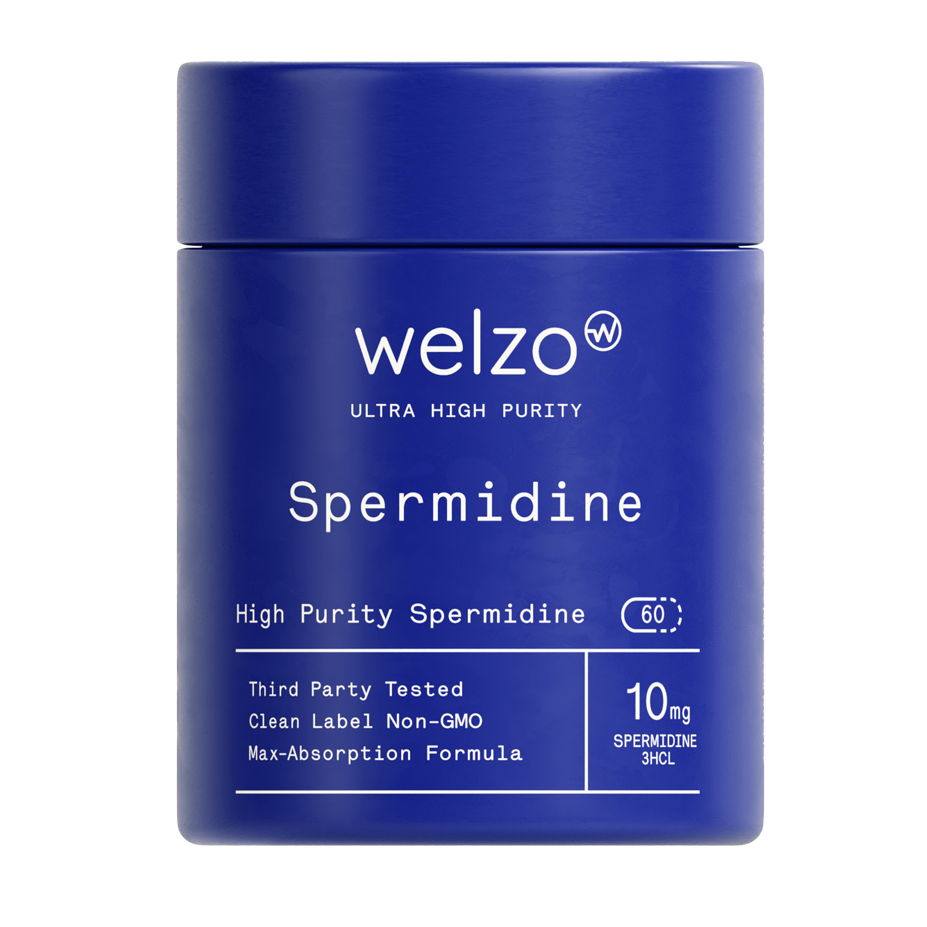
Fazit: Dies ist das Spermidin-Präparat, das ich meinen Patienten mittlerweile als Erstes empfehle.
Das „Welzo Ultra Purity Spermidine“ ist meine Top-Empfehlung für das Jahr 2026. Es liefert pro Portion eine klinisch bedeutsame Dosis von 10 mg reinem Spermidin-3-HCl – womit es am oberen Ende des veröffentlichten, klinisch belegten Dosierungsbereichs liegt – und wird nach demselben evidenzbasierten „Ultra Purity“-Herstellungsstandard hergestellt wie Welzos NMN Pro 1000, Berberin, TMG, Astaxanthin, Apigenin, PQQ und reine Rinderkollagenpeptide von Welzo.
Die vollständige Zusammensetzung (pro Portion mit 2 Kapseln, 30 Portionen pro Flasche):
- 10 mg reines Spermidin-3HCL – die stabilste und bioverfügbarste Form auf dem Markt
- 60 Kapseln (30 Portionen – Vorrat für 1 Monat)
- Keine Füllstoffe, keine Bindemittel, keine synthetischen Zusatzstoffe – „Clean-Label“-Rezeptur
- Hergestellt in Großbritannien nach GMP-Standards – von unabhängigen Stellen auf Reinheit geprüft
- Ein reines, rückverfolgbares Produkt – Transparenz durch einen einzigen Inhaltsstoff
Was mir aus klinischer Sicht gefällt:
- Reine Spermidin-3HCL-Form. Welzo Ultra Purity Spermidine verwendet Spermidin-3HCL – die stabilste und bioverfügbarste Form auf dem Markt, die im Wesentlichen 100 % Spermidin nach Gewicht liefert, ohne die schwankenden Ausbeuten von Weizenkeimextrakt-Produkten. Wie in den Produktinformationen von Welzo ausdrücklich vermerkt wird: „Viele günstigere Spermidin-Produkte verwenden Weizenkeimextrakt mit winzigen, schwankenden Mengen. Dies ist reines Spermidin-3HCL – richtig dosiert, ordnungsgemäß geprüft, ohne Füllstoffe.“
- Klinisch aussagekräftige Dosis von 10 mg. Diese liegt am oberen Ende des veröffentlichten, klinisch belegten Dosierungsbereichs und liefert eine aussagekräftige tägliche Spermidin-Zufuhr zur Induktion der Autophagie, zur Unterstützung des Haarwachstums, zur Förderung der kognitiven Funktionen sowie für Anwendungen im Bereich des gesunden Alterns.
- 100 % Spermidin-3HCl – Transparenz durch einen einzigen Inhaltsstoff. Keine proprietäre Mischung, keine marketinggetriebenen Zusätze von „ergänzenden“ pflanzlichen Stoffen in subklinischen Dosen, keine unnötigen Füllstoffe. Nur der Wirkstoff, in einer Kapsel.
- Ultra Purity™-Herstellungsstandard. Jedes Ultra Purity-Produkt wird nach strengen Qualitätsstandards hergestellt und getestet, um die Identität, Wirksamkeit und Sicherheit der Inhaltsstoffe zu gewährleisten, einschließlich einer Überprüfung auf Verunreinigungen und einer Reinheitsprüfung auf Chargenebene.
- Transparente Formulierung mit einem einzigen Inhaltsstoff. Keine Füllstoffe, keine Bindemittel, keine Füllmittel.
- Einheitliches Kombinationskonzept für die gesamte Welzo Ultra Purity-Produktreihe. Lässt sich natürlich kombinieren mit Welzo Ultra Purity NMN Pro 1000 (Unterstützung der NAD+-Vorläufer – ergänzender Mechanismus zur Lebensverlängerung), Welzo Ultra Purity TMG (Unterstützung als Methylspender – unerlässlich für hochdosierte NMN-Protokolle), Welzo Ultra Purity Trans-Resveratrol (Sirtuin-Aktivator), Welzo Ultra Purity Apigenin (CD38-Hemmung), Welzo Ultra Purity Berberin (AMPK-Aktivierung), Welzo Ultra Purity Astaxanthin (Membran-Antioxidans), Welzo Ultra Purity PQQ (mitochondriale Biogenese), Welzo Ultra Purity TUDCA (Unterstützung von Leber und Gallenfluss), Welzo Ultra Purity L-Glutamin (Integrität der Darmbarriere) und Welzo Ultra Purity Pure Bovine Collagen Peptides (Versorgung mit Strukturproteinen).
- Sehr günstiges Preis-Leistungs-Verhältnis. Standardpreis 24,99 £ (UVP 39,99 £ – eine Ersparnis von 37,5 %). Bei einer täglichen Dosis von 10 mg ist dies pro mg Spermidin deutlich kostengünstiger als die führenden britischen und US-amerikanischen Wettbewerber mit Weizenkeimextrakt (Primeadine, Charava, Time Health, Longevity Box).
- Versand aus Großbritannien über die Apothekeninfrastruktur von Welzo mit Versand am selben Tag bei Bestellungen vor 14 Uhr.
Für wen es geeignet ist: Erwachsene, die hochwertiges Spermidin speziell zur Unterstützung der Autophagie, für gesundes Altern, zur Kombination mit NMN/Langlebigkeits-Stacks, für Haar- und Hautpflege-Routinen oder zur Unterstützung der kognitiven Funktionen suchen. Anwender, die strukturierte Langlebigkeits-Kombinationen nutzen und einheitliche Marken- und Qualitätsstandards über mehrere Wirkstoffe hinweg wünschen. Anwender, die Wert auf eine klinisch abgestimmte Dosierung (10 mg) zu nachhaltigen monatlichen Kosten legen. Anwender, die reines Spermidin-3-HCl gegenüber Weizenkeimextrakt bevorzugen, um eine präzise Dosierung und ein gutes Preis-Leistungs-Verhältnis zu erzielen.
Für wen es nicht geeignet ist: Schwangere oder stillende Frauen ohne Rücksprache mit einem Geburtshelfer. Anwender mit geschwächtem Immunsystem oder in aktiver Krebsbehandlung ohne Rücksprache mit einem Onkologieteam (die Modulation der Autophagie kann theoretisch die Tumorbiologie je nach Krebsstadium in beide Richtungen beeinflussen). Anwender, die verschreibungspflichtige Medikamente einnehmen, ohne Rücksprache mit dem verschreibenden Arzt. Personen unter 18 Jahren.
Meine Empfehlung: Nehmen Sie täglich 2 Kapseln zusammen mit einer Mahlzeit ein (10 mg pro Portion). Anwender, die umfassende Langlebigkeits-Kombinationen einnehmen, sollten das Produkt zusammen mit ihrer NMN-Dosis einnehmen, um die tägliche Routine zu vereinfachen. Führen Sie einen ehrlichen 8–12-wöchigen Test durch, um Ergebnisse in Bezug auf Haarwachstum und kognitive Endpunkte zu erzielen; längerfristige Endpunkte für gesundes Altern zeigen sich erst nach 6–12+ Monaten. Anwender, die objektive biologische Messungen wünschen, sollten den umfassenden „Welzo Full Body MOT Health Check“ zu Beginn und nach 12 Monaten durchführen lassen.
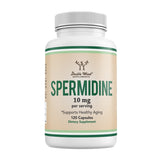
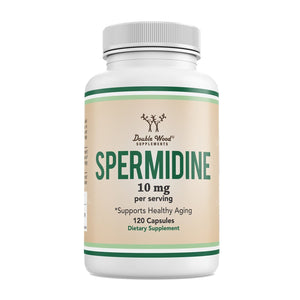
2. Double Wood Supplements Spermidin – Die beste aus den USA importierte, von unabhängigen Stellen getestete Alternative
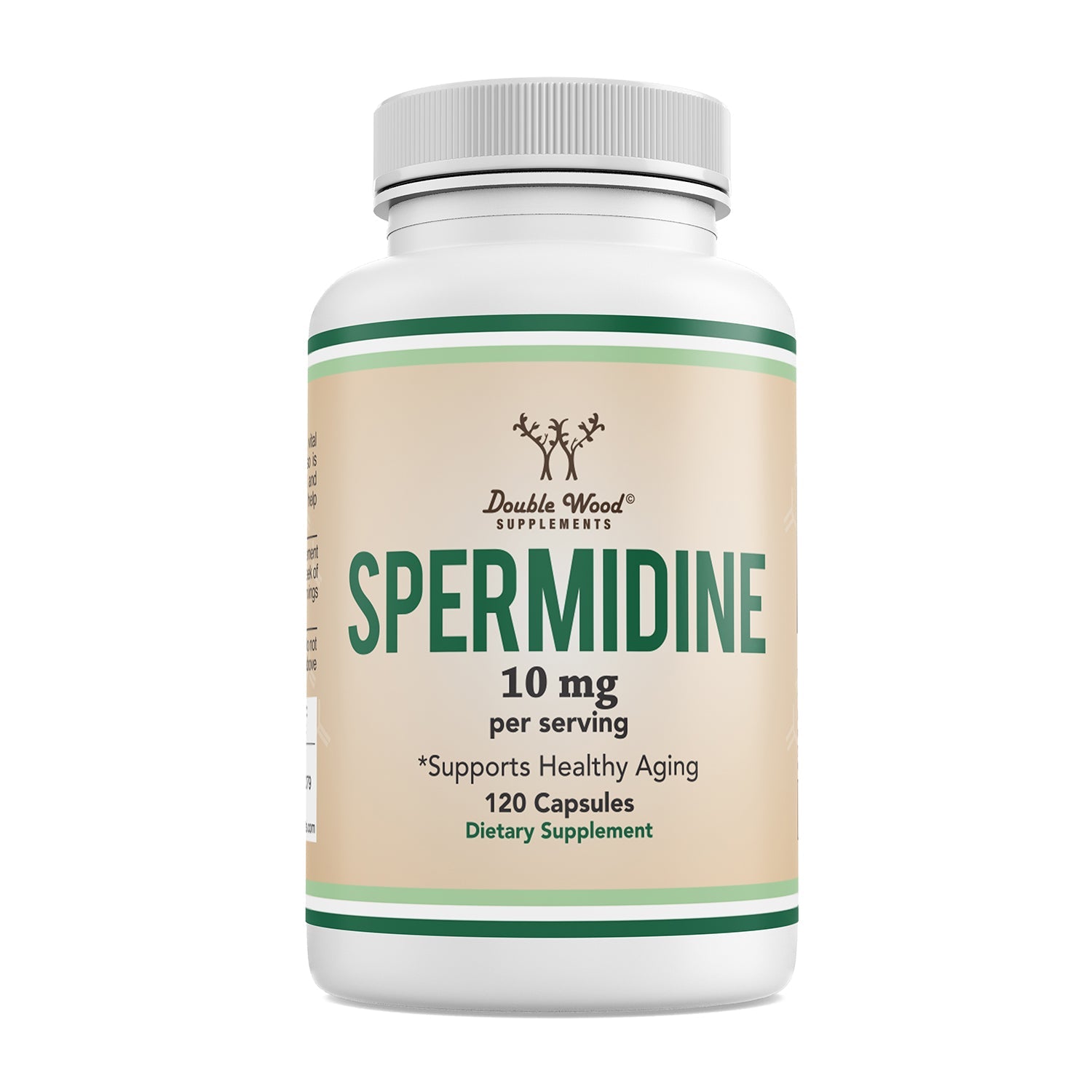
„Double Wood Supplements Spermidin“ ist die Alternative von Double Wood Supplements – einer US-amerikanischen Marke mit einem hervorragenden Ruf im Bereich der spezialisierten Nutrazeutika, die für transparente, von unabhängigen Stellen durchgeführte Tests jeder Charge sowie ein stimmiges Produktsortiment bekannt ist, das auf Langlebigkeit und Biohacking-Wirkstoffe ausgerichtet ist.
Was mir aus klinischer Sicht gefällt:
- Ausdrückliche Tests durch unabhängige Dritte bei jeder Charge. Double Wood gibt bekannt, dass jede Charge von unabhängigen Dritten auf Identität, Wirksamkeit und Verunreinigungen geprüft wird – einschließlich der Schwermetalle (Blei, Cadmium, Arsen, Quecksilber), die bei pflanzlichen oder in Salzform vorliegenden Nahrungsergänzungsmitteln zu den angemessenen Prüfschwerpunkten gehören.
- Etablierte Markenspezialisierung auf Langlebigkeitswirkstoffe mit einem einzigen Inhaltsstoff. Double Wood stellt spezielle Produkte mit Apigenin, Spermidin, Berberin und TUDCA her – alle mit einem einzigen Inhaltsstoff, alle von unabhängigen Stellen geprüft und alle im Einklang mit dem modernen Ansatz zum Aufbau von Langlebigkeits-Stacks.
- Klinisch orientierte Dosierung innerhalb des in veröffentlichten Studien angegebenen Standardbereichs.
- Transparente Formulierung mit einem einzigen Wirkstoff. Nur Spermidin ohne unnötige Zusatzstoffe oder firmeneigene Mischungen.
- Starkes Kundenfeedback in der Kategorie der fokussierten Nutrazeutika.
Der Kompromiss: Etwas höherer Preis (30,98 £ gegenüber 24,99 £ für Welzo Ultra Purity Spermidin). In den USA formuliert statt in Großbritannien, obwohl die Abwicklung durch Welzo in Großbritannien den Versand transparent macht. Ein einziger Inhaltsstoff ohne den Vorteil einer umfassenden Zusammensetzung, der sich aus der Auswahl aus einem einheitlichen Premium-Sortiment wie Welzo Ultra Purity ergibt.
Für wen es geeignet ist: Anwender, die eine ausdrücklich von unabhängigen Stellen getestete Premium-Alternative mit detaillierter Offenlegung von Verunreinigungen wünschen. Anwender, die US-amerikanische Protokolle für Langlebigkeits-Kombinationen befolgen und bereits andere Single-Ingredient-Produkte von Double Wood (Apigenin, Berberin, TUDCA, Astaxanthin) verwenden. Anwender, die Wert auf die Herkunft einer US-Marke legen.
Vergleich: Die beiden Spermidin-Nahrungsergänzungsmittel im Überblick
| Rang | Produkt | Darreichungsform | Dosierung | Preis | Am besten geeignet für |
|---|---|---|---|---|---|
| 1 | Welzo Ultra Purity Spermidin | Reines Spermidin-3HCL | 10 mg pro Portion | 24,99 £ (UVP 39,99 £) | Bester Gesamteindruck – klinisch empfohlene Dosis von 10 mg, in Großbritannien hergestellt, gut mit anderen Produkten kombinierbar |
| 2 | Double Wood Spermidin | Reines Spermidin | Standard-klinische Dosis | 30,98 £ | Aus den USA importierte, von unabhängigen Stellen geprüfte Alternative |
Ein klinisches 12-wöchiges Spermidin-Protokoll
Das Spermidin-Protokoll, das ich in der klinischen Praxis empfehle, spiegelt die in veröffentlichten klinischen Studien beschriebene Dosierungsstruktur wider und berücksichtigt die praktische Realität, wie sich die Wirkungen von Spermidin im Laufe der Zeit zeigen.
Schritt 1 – Woche 0: Ausgangsbeurteilung
Entscheiden Sie, was Spermidin für Sie bewirken soll. Die fünf glaubwürdigen Anwendungsfälle sind:
- Unterstützung der Autophagie und gesundes Altern (der grundlegende Anwendungsfall – der umfassendste Wirkmechanismus mit der fundiertesten Evidenzbasis).
- Haarwachstum und -qualität (Unterstützung der Anagenphase – typischerweise der erste subjektiv messbare Endpunkt).
- Unterstützung der kognitiven Funktionen (insbesondere bei Anwendern mit subjektiven kognitiven Bedenken oder einer familiären Vorgeschichte kognitiven Abbaus).
- Kombination mit NMN/Langlebigkeits-Stack (Autophagie-Säule in einem umfassenden Protokoll).
- Unterstützung des kardiovaskulären Wohlbefindens (neuer Forschungsbereich, besonders relevant für Anwender mit kardiovaskulären Risikofaktoren).
Erfassen Sie subjektive Ausgangswerte in einem einfachen monatlichen Tagebuch: Haarqualität (Dicke, Wachstumsrate, Haarausfall), Hautbeschaffenheit und -elastizität, Energie und Erholungsqualität, kognitive Indikatoren (Konzentration, Gedächtnis, geistige Klarheit) sowie alle spezifischen Symptome, die für Ihre Ziele relevant sind. Für Anwender mit kardiovaskulären Risikofaktoren oder Bedenken hinsichtlich vorzeitiger Alterung empfiehlt sich der umfassende „Welzo Full Body MOT Health Check“ zu Beginn zur objektiven Erfassung von Biomarkern.
Schritt 2 – Wochen 1–4: Einführungs- und Verträglichkeitsphase
Beginnen Sie mit 2 Kapseln Welzo Ultra Purity Spermidin täglich (insgesamt 10 mg). Nehmen Sie diese zusammen mit einer Mahlzeit ein, idealerweise mit einer fettreichen Mahlzeit für eine optimale Resorption (Spermidin wird unabhängig von der Mahlzeit recht gut resorbiert, wobei die Konsistenz wichtiger ist als der genaue Zeitpunkt).
Praktische Strategien zur Einnahme:
- Zum Frühstück – einfache Einhaltung, lässt sich gut mit dem morgendlichen Langlebigkeits-Stack (NMN + TMG) kombinieren.
- Zum Abendessen – praktisch für Anwender, die kein reichhaltiges Frühstück zu sich nehmen.
- Aufgeteilte Dosis (eine Kapsel zu zwei Mahlzeiten) – für Anwender, die einen anhaltenden täglichen Plasmaspiegel anstreben.
Spermidin ist gut verträglich und Nebenwirkungen sind selten. Leichte Magen-Darm-Beschwerden in der ersten Woche sind ungewöhnlich, aber möglich – sie klingen in der Regel innerhalb weniger Tage ab, sobald sich der Körper daran gewöhnt hat.
Schritt 3 – Wochen 5–8: Zeitfenster für frühe subjektive Endpunkte
In den Wochen 6–8 lassen sich die frühen subjektiven Endpunkte bewerten. Die erste spürbare Veränderung ist für die meisten Anwender die Haarqualität – weniger Haarausfall, etwas dickere Haarstruktur, schnellere Wachstumsrate. Einige Anwender bemerken subtile Verbesserungen bei der Hautelastizität, der Energieausgeglichenheit und der Erholung von Trainingsbelastung. Kognitive Indikatoren (Konzentration, geistige Klarheit) lassen sich zwar subjektiv wahrnehmen, sind jedoch ohne standardisierte Messungen schwerer zu bewerten.
Diese frühen Effekte sind in dieser Phase oft subtil – verfolgen Sie sie ehrlich anhand Ihres Ausgangs-Tagebuchs, anstatt zu versuchen, sie allein aus dem Gedächtnis zu bewerten.
Schritt 4 – Wochen 9–12: Primäres Messfenster
Hier werden die Wirkungen in den veröffentlichten klinischen Studien erfasst. Endpunkte zum Haarwachstum sind nach 90 Tagen messbar (entsprechend dem Zeitplan der Haarwachstumsstudie von 2017). Kognitive Endpunkte werden nach 90 Tagen für Nutzer mit kognitiven Ausgangsproblemen messbar (entsprechend dem Zeitplan der Demenzstudie von 2021). Vergleichen Sie diese ehrlich mit Ihren Ausgangswerten.
Schritt 5 – Rückblick nach Woche 12: Weitermachen, kombinieren oder neu bewerten
Vergleichen Sie die Ergebnisse mit Ihren Ausgangswerten. Drei mögliche Ergebnisse:
- Wenn die Verbesserungen deutlich und aussagekräftig sind: auf unbestimmte Zeit fortsetzen. Spermidin eignet sich gut für die langfristige tägliche Einnahme, und das Sicherheitsprofil spricht für eine dauerhafte Einnahme. Die Preisgestaltung von Welzo Ultra Purity Spermidin macht eine langfristige Fortsetzung kosteneffizient.
- Wenn die Verbesserungen moderat, aber real sind: Dies ist der Zeitpunkt, um die Kombination mit ergänzenden Langlebigkeitswirkstoffen in Betracht zu ziehen. Für einen Autophagie-Stack fügen Sie NMN Pro 1000 (ergänzender Wirkmechanismus durch NAD+-Versorgung), Apigenin (CD38-Hemmung zur NAD+-Erhaltung) und Trans-Resveratrol (Sirtuin-Aktivierung) hinzu. Für eine haarspezifische Kombination sollten Sie eine umfassendere Unterstützung für Haare, Haut und Nägel aus der Welzo-Kollektion „Hair, Skin and Nails“ in Betracht ziehen.
- Wenn keine Veränderung feststellbar ist: Prüfen Sie, ob die Dosis klinisch angemessen war (10 mg täglich bei Welzo Ultra Purity Spermidin), ob Sie das Präparat konsequent eingenommen haben und ob 12 Wochen für Ihr spezielles Ziel ausreichend waren. Bei einigen Anwendern sind mehr als 16 Wochen erforderlich, um messbare Effekte zu erzielen, insbesondere bei kognitiven Endpunkten.
Schritt 6 – Monate 3–12: Langzeitbewertung
Für längerfristige Ziele (anhaltende Verbesserungen der Haarqualität, Unterstützung der kognitiven Funktionen, umfassendere Indikatoren für gesundes Altern) planen Sie eine Überprüfung nach 6–12 Monaten ein. Spermidin ist ein grundlegendes Langzeitpräparat und keine kurzfristige Maßnahme zur Symptombehandlung.
Wichtige klinische Dosierungsgrundsätze für Spermidin
- Mit einer Mahlzeit einnehmen. Spermidin wird unabhängig von der Mahlzeit recht gut resorbiert; Konsistenz ist wichtiger als ein präziser Einnahmezeitpunkt.
- Konsistenz ist wichtiger als Perfektion. Eine tägliche Routine, an die Sie sich tatsächlich halten, ist besser als ein „perfektes“ Einnahmeprotokoll, das Sie bereits in der vierten Woche aufgeben.
- Eine Änderung nach der anderen. Fügen Sie jeweils nur einen neuen Inhaltsstoff hinzu, damit Sie Veränderungen korrekt der jeweiligen Maßnahme zuordnen können.
- Legen Sie eine Mindestversuchsdauer von 12 Wochen fest. Die meisten veröffentlichten Ergebnisse erfordern eine konsequente Einnahme über 8–12 Wochen. Beurteilen Sie die Wirkung nicht bereits in der dritten Woche.
- Erwarte in der ersten Woche keine dramatischen Ergebnisse. Spermidin wirkt allmählich und unterstützend auf zellulärer Ebene. Die zellulären Veränderungen summieren sich über Wochen und Monate hinweg – sie zeigen sich nicht als sofortige Linderung der Symptome.
- Erfassen Sie nach Möglichkeit objektive Marker. Haarfotografie (monatlich), umfassende Blut-Biomarker-Profile zu Studienbeginn und nach 12 Monaten sowie Ergebnisse kognitiver Tests liefern objektive Belege für das Ansprechen auf die Behandlung.
Sicherheit, Kontraindikationen und wer Spermidin nicht einnehmen sollte
Dieser Abschnitt behandelt die Sicherheitsaspekte, die jeder Spermidin-Anwender kennen sollte.
Allgemeines Sicherheitsprofil
Spermidin weist bei gesunden Erwachsenen ein gutes allgemeines Sicherheitsprofil auf. Es handelt sich um eine natürlich vorkommende Verbindung, die im menschlichen Körper und in der Nahrung vorhanden ist, seit Beginn unserer Evolutionsgeschichte Teil der menschlichen Ernährung ist und in Studien am Menschen in Dosierungen von bis zu 15 mg+ täglich ohne nennenswerte Sicherheitsbedenken untersucht wurde. Die veröffentlichte Literatur zu klinischen Studien berichtet durchweg von leichten und seltenen Nebenwirkungen.
Dennoch ist in einigen spezifischen Situationen Vorsicht geboten.
Schwangerschaft und Stillzeit
Besprechen Sie die Einnahme von Spermidin-Präparaten während der Schwangerschaft oder Stillzeit vor Beginn mit Ihrem Frauenarzt oder Apotheker. Die Einnahme konzentrierter Spermidin-Präparate während der Schwangerschaft oder Stillzeit wurde noch nicht umfassend untersucht. Der Verzehr spermidinreicher Lebensmittel (Weizenkeime, gereifter Käse, Pilze) gilt allgemein als sicher; die Einnahme von Nahrungsergänzungsmitteln sollte jedoch von Ihrem medizinischen Betreuungsteam abgeklärt werden.
Aktive Krebserkrankung oder Krebs in der Vorgeschichte
Dies ist das klinisch komplexeste Thema im Zusammenhang mit Spermidin und erfordert eine sorgfältige Abwägung. Die Autophagie steht in einer komplexen Wechselbeziehung zur Krebsbiologie – in frühen Stadien der Tumorentwicklung kann die Autophagie tumorhemmend wirken (indem sie beschädigte Zellbestandteile beseitigt, bevor diese so stark geschädigt sind, dass sie krebsartig werden). Bei etablierten Tumoren kann die Autophagie manchmal tumorfördernd wirken (indem sie es Krebszellen ermöglicht, metabolischen Stress und Chemotherapie zu überstehen). Die österreichische Kohortenstudie fand inverse Zusammenhänge mit der Krebssterblichkeit, was die tumorhemmende Interpretation im Ernährungskontext stützt.
Für Nutzer mit aktivem Krebs, einer Krebserkrankung in der jüngeren Vergangenheit oder einer laufenden Krebsbehandlung bedeutet diese Komplexität, dass die Einnahme von Spermidin-Präparaten vor Beginn mit dem onkologischen Behandlungsteam besprochen werden sollte. Ihre spezifische Krebsart, die Behandlungsphase und der klinische Kontext spielen bei der Entscheidung eine Rolle.
Für Anwender ohne aktuelle Krebserkrankung und ohne Krebserkrankung in der jüngeren Vergangenheit sind die veröffentlichten Erkenntnisse (insbesondere die Daten der österreichischen Kohortenstudie) beruhigend.
Immungeschwächte Anwender
Die Autophagie ist an der angeborenen Immunität beteiligt, und eine Modulation der Autophagie kann theoretisch die Immunfunktion beeinflussen. Patienten mit einer erheblichen Immunschwäche – kürzlich erfolgte Organtransplantation, aktive Autoimmunerkrankung unter Immunsuppressiva, fortgeschrittenes HIV oder andere erhebliche Immundysregulationen – sollten vor Beginn die Einnahme mit ihrem Facharzt besprechen.
Weizenallergie oder Zöliakie
Dies gilt speziell für Produkte auf Basis von Weizenkeimextrakt (nicht für reines Spermidin-3HCl). Anwender mit einer Weizenallergie oder Zöliakie sollten Spermidin-Produkte auf Basis von Weizenkeimextrakt meiden und stattdessen reine Spermidin-3HCl-Formulierungen wählen. Das Welzo Ultra Purity Spermidin enthält reines Spermidin-3HCL und keinen Weizenkeimextrakt – daher ist es für Anwender mit Weizenallergie oder Zöliakie geeignet (bitte überprüfen Sie stets die aktuelle Produktkennzeichnung).
Wechselwirkungen mit Medikamenten
Spermidin weist im Vergleich zu vielen anderen Nahrungsergänzungsmitteln ein relativ geringes Potenzial für Wechselwirkungen mit Medikamenten auf, doch in bestimmten Situationen ist eine Rücksprache mit Ihrem behandelnden Arzt erforderlich:
- Immunsuppressiva – die Modulation der Autophagie kann theoretisch die Immunfunktion beeinflussen; besprechen Sie dies mit Ihrem Facharzt.
- Chemotherapie – die Wechselwirkungen der Autophagie mit Krebsbehandlungen sind komplex; besprechen Sie dies mit Ihrem Onkologie-Team.
- Rapamycin (Sirolimus) – Interessanterweise deuten Forschungsergebnisse aus dem Jahr 2024 hier auf eine Synergie hin (die Autophagie-Wirkungen von Rapamycin scheinen endogenes Spermidin zu erfordern); wenn Sie jedoch therapeutisch mit Rapamycin behandelt werden, besprechen Sie dies mit Ihrem behandelnden Arzt.
Nebenwirkungen
In der richtigen Dosierung wird Spermidin im Allgemeinen gut vertragen. Die in veröffentlichten Studien berichteten Nebenwirkungen sind selten und mild:
- Leichte Magen-Darm-Beschwerden in den ersten Tagen der Einnahme.
- Kopfschmerzen bei einigen Anwendern bei höheren Dosierungen.
- Leichte Müdigkeit oder Schlafveränderungen in den ersten 1–2 Wochen (die Induktion der Autophagie ist metabolisch aktiv, und manche Anwender bemerken subtile Anpassungsreaktionen).
Allgemeine Sicherheit des Nahrungsergänzungsmittels
- Besprechen Sie die Einnahme von Spermidin vor Beginn mit Ihrem Arzt oder Ihrer Ärztin – insbesondere, wenn Sie an einer chronischen Erkrankung leiden, verschreibungspflichtige Medikamente einnehmen, schwanger sind oder stillen, immungeschwächt sind oder eine persönliche oder familiäre Krebsanamnese haben.
- Informieren Sie Ihr medizinisches Betreuungsteam über jedes Nahrungsergänzungsmittel, das Sie einnehmen.
- Erwarten Sie keine sofortigen, dramatischen Ergebnisse – Spermidin wirkt schrittweise auf zellulärer Ebene.
Sollten Sie schwere oder ungewöhnliche Symptome verspüren – wie starke Magen-Darm-Beschwerden, starke Kopfschmerzen, allergische Reaktionen oder ungewöhnliche Müdigkeit –, suchen Sie bitte einen Arzt auf.
Häufig gestellte Fragen
Was ist das beste Spermidin-Präparat?
Das beste Spermidin-Nahrungsergänzungsmittel im Jahr 2026 ist „Welzo Ultra Purity Spermidine“. Es vereint eine klinisch bedeutsame Dosis von 10 mg reinem Spermidin-3HCL pro Portion (was es am oberen Ende des veröffentlichten, klinisch belegten Bereichs ansiedelt), die Transparenz eines reinen 100-prozentigen Spermidin-3HCL-Präparats, den Welzo Ultra Purity-Herstellungsstandard mit strengen Tests durch unabhängige Dritte, hergestellt in Großbritannien nach GMP-Standards sowie ein stimmiges Kombinationskonzept mit dem breiteren Welzo Ultra Purity-Sortiment für Langlebigkeit – was es zur natürlichen ersten Wahl für Anwender macht, die ein strukturiertes Protokoll für Autophagie und gesundes Altern aufbauen.
Was bewirkt Spermidin eigentlich?
Spermidin ist eine natürlich vorkommende Polyaminverbindung, die direkt die Autophagie anregt – den zellulären Recycling- und Erneuerungsprozess des Körpers. Insbesondere hemmt Spermidin das Enzym EP300-Acetyltransferase, das normalerweise die Autophagie unterdrückt. Durch die Hemmung von EP300 löst Spermidin die Bremse der Autophagie, sodass der Autophagie-Mechanismus beschädigte Proteine, dysfunktionale Mitochondrien und Zelltrümmer beseitigen kann. Die stärksten Belege sprechen für vier Bereiche: (1) Induktion der Autophagie und Zellerneuerung, (2) Haarwachstum und Unterstützung der Anagenphase, (3) Unterstützung der kognitiven Funktionen (insbesondere bei älteren Erwachsenen mit kognitiven Problemen) und (4) Zusammenhang mit der Gesamtmortalität (die österreichische Kohortenstudie).
Wirkt Spermidin tatsächlich?
Die Belege für Spermidin gehören zu den stärksten unter allen Nahrungsergänzungsmitteln zur Lebensverlängerung. Eine artenübergreifende Verlängerung der Lebensdauer wurde in der wegweisenden Veröffentlichung von Eisenberg aus dem Jahr 2009 in „Nature Cell Biology“ nachgewiesen (Hefe, Fliegen, Würmer, Mäuse – wobei die Abhängigkeit von der Autophagie durch genetische Knockouts bestätigt wurde). Daten aus einer menschlichen Kohortenstudie (die österreichische Studie mit 829 Teilnehmern) zeigen, dass eine höhere Spermidinaufnahme über die Nahrung mit einer verringerten Gesamtmortalität über einen Zeitraum von 15 Jahren assoziiert ist. Klinische Studien am Menschen haben Verbesserungen der MMSE-Werte bei Demenzpatienten (Studie von 2021) sowie eine Zunahme der Haarfollikel in der Anagenphase (Studie von 2017) gezeigt. Die Veröffentlichung in „Nature Cell Biology“ aus dem Jahr 2024 zeigte, dass Spermidin für die durch Rapamycin induzierte Autophagie und die Verlängerung der Lebensdauer erforderlich ist. Dies ist ein wesentlich besserer Nachweis am Menschen als bei den meisten Nahrungsergänzungsmitteln zur Lebensverlängerung.
Ist reines Spermidin-3HCl oder Weizenkeimextrakt besser?
Beide Formen sind sinnvoll, dienen jedoch unterschiedlichen Zwecken. Weizenkeimextrakt liefert Spermidin zusammen mit der natürlichen Polyamin-Matrix (Putrescin und Spermin), doch die tatsächliche Spermidin-Ausbeute pro Kapsel beträgt selbst bei konzentrierten Extrakten in der Regel nur 1–6,5 mg – und der Spermidin-Gehalt schwankt von Charge zu Charge. Reines Spermidin-3HCl ist die Trihydrochlorid-Salzform von Spermidin – es liefert gewichtsbezogen im Wesentlichen 100 % reines Spermidin, wodurch Nahrungsergänzungsmittel klinisch bedeutsame Dosen von 10 mg und mehr in einer einzigen Kapsel zu tragbaren Kosten bereitstellen können. Für die meisten Anwender, die eine evidenzbasierte Dosierung zu tragbaren Kosten suchen, ist reines Spermidin-3HCl die bessere Wahl – und genau das wird in Welzo Ultra Purity Spermidin verwendet.
Was ist die optimale Spermidin-Dosis?
Die veröffentlichten klinischen Erkenntnisse stützen für die meisten Endpunkte tägliche Spermidin-Dosen im Bereich von 3–10 mg. In der Demenzstudie aus dem Jahr 2021 wurden täglich 3,3 mg verabreicht. Die österreichische Kohortenstudie zeigte Dosis-Wirkungs-Beziehungen bei höheren Aufnahmemengen über die Nahrung. In mechanistischen Studien werden typischerweise 5–10 mg zur Induktion der Autophagie verwendet. Die 10 mg pro Portion des „Welzo Ultra Purity Spermidine“ liegen am oberen Ende dieses klinisch belegten Bereichs. Dosierungen unter 3 mg könnten für die meisten veröffentlichten Endpunkte subtherapeutisch sein – was ein Grund dafür ist, dass Produkte mit Weizenkeimextrakt in sehr niedriger Dosierung (1 mg pro Portion) möglicherweise nicht die in der wissenschaftlichen Literatur beschriebenen Ergebnisse liefern.
Wie lange dauert es, bis Spermidin wirkt?
Zur Induktion der Autophagie auf zellulärer Ebene: messbar innerhalb von 24–48 Stunden bei konsequenter Einnahme. Für Endpunkte zum Haarwachstum: 8–12 Wochen (entsprechend der Studie aus dem Jahr 2017). Für kognitive Endpunkte: 8–12 Wochen (entsprechend der Studie aus dem Jahr 2021). Für umfassendere Endpunkte im Bereich „gesundes Altern“: 6–12 Monate für anhaltende, messbare Effekte. Beurteilen Sie die Wirkung nicht bereits in Woche 3 – Spermidin ist ein langsam wirkendes Nahrungsergänzungsmittel auf zellulärer Ebene, keine schnell wirkende symptomatische Maßnahme.
Wann sollte ich Spermidin einnehmen?
Nehmen Sie Spermidin zusammen mit einer Mahlzeit ein – Regelmäßigkeit ist wichtiger als der genaue Zeitpunkt. Für die meisten Anwender, die ein Langlebigkeits-Kombinationspräparat einnehmen, bietet die Einnahme von Spermidin zum Frühstück zusammen mit NMN, TMG und anderen morgendlichen Langlebigkeitspräparaten die Routine mit der besten Therapietreue. Es gibt keine eindeutigen Belege dafür, dass eine bestimmte Tageszeit speziell für Spermidin deutlich besser wäre als eine andere.
Kann ich Spermidin jeden Tag einnehmen?
Ja – Spermidin eignet sich gut für die langfristige tägliche Einnahme. Die veröffentlichten Erkenntnisse sprechen für eine kontinuierliche Einnahme, und das Sicherheitsprofil ist bei klinischen Dosierungen beruhigend. Spermidin ist kein Präparat, das in „Zyklen“ eingenommen wird – eine kontinuierliche tägliche Einnahme ist das richtige Vorgehen sowohl zur Unterstützung der Autophagie als auch zur Förderung der Langlebigkeit.
Kann ich Spermidin zusammen mit NMN, Resveratrol oder anderen Langlebigkeitspräparaten einnehmen?
Ja – und genau so wird Spermidin typischerweise in seriösen Langlebigkeitsprotokollen eingesetzt. Spermidin unterscheidet sich in seiner Wirkweise von anderen wichtigen Langlebigkeitswirkstoffen (Autophagie durch EP300-Hemmung im Vergleich zur NAD+-Versorgung durch NMN, der Sirtuin-Aktivierung durch Resveratrol und der CD38-Hemmung durch Apigenin), sodass es wirklich komplementäre und keine redundanten zellulären Effekte bietet. Die Welzo Ultra Purity-Reihe umfasst neben Spermidin auch NMN Pro 1000, TMG, Trans-Resveratrol, Apigenin, Berberin, Astaxanthin, PQQ, TUDCA, L-Glutamin und reine Rinderkollagenpeptide nach dem gleichen Markenstandard – und unterstützt so eine stimmige, qualitätsgesicherte Kombination.
Ist Spermidin für Frauen unbedenklich?
Für die meisten gesunden Frauen, die weder schwanger sind noch stillen, ja – Spermidin ist gut verträglich und kann insbesondere für Haare, Haut und ein gesundes Altern von Bedeutung sein. Schwangere und stillende Frauen sollten vor Beginn der Einnahme mit ihrem Frauenarzt sprechen. Frauen mit Brustkrebs in der persönlichen Anamnese oder anderen hormonsensitiven Krebserkrankungen sollten sich angesichts der Komplexität des Zusammenhangs zwischen Autophagie und Krebs mit ihrem Onkologieteam beraten.
Ist Spermidin für Männer unbedenklich?
Ja. Spermidin ist bei Männern gut verträglich und wurde in für Männer relevanten Bereichen untersucht, darunter Haarwachstum, Unterstützung der kognitiven Funktionen und Herz-Kreislauf-Gesundheit.
Hilft Spermidin beim Haarwachstum?
Die Doppelblindstudie aus dem Jahr 2017 zeigte nach 90 Tagen Spermidin-Supplementierung einen statistisch signifikanten Anstieg der Haarfollikel in der Anagenphase. Der Wirkmechanismus: Spermidin unterstützt die Funktion der Haarfollikel-Stammzellen und verlängert die Anagenphase (aktive Wachstumsphase) des Haarzyklus. Dies ist einer der am häufigsten genannten Gründe, warum Anwender im Alter von 30 bis 60 Jahren Spermidin einnehmen – die positiven Auswirkungen auf die Haarqualität sind subjektiv bereits nach 2 bis 3 Monaten regelmäßiger Einnahme spürbar. Speziell für haarpflegeorientierte Programme lässt sich Spermidin nahtlos mit einer umfassenderen Unterstützung für Haare, Haut und Nägel kombinieren – ergänzende Optionen finden Sie in der Welzo-Kollektion „Haare, Haut und Nägel“.
Unterstützt Spermidin die kognitiven Funktionen?
Die dreimonatige Doppelblindstudie aus dem Jahr 2021 mit 85 Teilnehmern mit Demenz zeigte verbesserte MMSE-Werte bei einer täglichen Einnahme von 3,3 mg Spermidin. Der Wirkmechanismus ist plausibel – Autophagie unterstützt den Abbau beschädigter Proteine (einschließlich Amyloid-verwandter Proteine), die sich bei kognitivem Verfall ansammeln. Da es sich jedoch um eine einzige Studie an einer spezifischen Population handelt, sind die kognitiven Belege eher plausibel und vielversprechend als vollständig belegt. Für Anwender mit subjektiven kognitiven Bedenken oder einer familiären Vorgeschichte kognitiver Einschränkungen ist Spermidin eines der wissenschaftlich fundierteren natürlichen Nahrungsergänzungsmittel zur Unterstützung der kognitiven Funktionen, die auf dem Markt erhältlich sind.
Ist Spermidin dasselbe wie Fasten?
Nicht ganz, aber beide aktivieren denselben primären Mechanismus. Sowohl Spermidin als auch Fasten induzieren Autophagie, allerdings über unterschiedliche vorgelagerte Signalwege (Spermidin über die Hemmung von EP300, Fasten über die Unterdrückung von mTOR und Energiestress). Für Anwender, die nicht fasten können (aus medizinischen Gründen, aufgrund von Lebensstilbeschränkungen oder sportlichen Terminen), bietet Spermidin eine „fastenähnliche“ Unterstützung der Autophagie, ohne dass eine tatsächliche Nahrungsrestriktion erforderlich ist. Für Anwender, die bereits fasten, ergänzt Spermidin den Autophagie-Mechanismus – und die Studie aus „Nature Cell Biology“ von 2024 zeigte, dass Spermidin und Rapamycin (ein fastenmimetisches Medikament) synergistisch wirken.
Kann ich allein über die Nahrung ausreichend Spermidin aufnehmen?
Man kann die Spermidinaufnahme über die Ernährung deutlich steigern – doch typische westliche Ernährungsweisen sind im Vergleich zu den traditionellen Ernährungsmustern mit höherem Spermidinanteil, die mit den Mortalitätsvorteilen der österreichischen Kohorte in Verbindung gebracht werden, spermidinarm. Wie es in den Produktinformationen von Welzo heißt: „Spermidin kommt natürlicherweise in Ihrem Körper und in Lebensmitteln wie Weizenkeimen, gereiftem Käse, Sojabohnen und Pilzen vor – doch die Mengen in Lebensmitteln sind gering und schwanken stark. Deshalb greifen Menschen, denen gesundes Altern ernsthaft am Herzen liegt, auf ein reines, dosiertes Nahrungsergänzungsmittel zurück, anstatt zu versuchen, dies allein über die Ernährung zu erreichen.“ Der pragmatische Ansatz besteht darin, beides zu kombinieren: spermidinreiche Lebensmittel (Weizenkeime, Natto, gereifter Käse, Pilze, reifes Blattgemüse) zu verzehren UND ein Nahrungsergänzungsmittel einzunehmen, um die klinisch empfohlenen Tagesdosen zu erreichen.
Hilft mir Spermidin, länger zu leben?
Ehrliche Einschätzung: Die Erkenntnisse aus Studien am Menschen stützen einen Zusammenhang zwischen einer höheren Spermidin-Zufuhr und einer verringerten Gesamtmortalität (die österreichische Kohortenstudie), und die artenübergreifenden Tierversuchsdaten gehören zu den überzeugendsten in der Kategorie der Langlebigkeitspräparate. Beobachtungsdaten sind jedoch nicht gleichbedeutend mit dem Nachweis einer Lebensverlängerung durch randomisierte Studien, und die kardiovaskuläre POLYCAD-Studie (die erste große randomisierte kontrollierte Studie) läuft noch und wird voraussichtlich 2026 abgeschlossen sein. Die richtige Sichtweise: Spermidin weist einen wirklich vielversprechenden Zusammenhang mit der Sterblichkeit auf, der mechanistisch plausibel ist und durch Tierdaten gestützt wird; ein Nachweis der Lebensverlängerung durch randomisierte klinische Studien am Menschen liegt jedoch bislang für kein Langlebigkeitspräparat vor.
Lohnen sich Spermidin-Nahrungsergänzungsmittel?
Für Anwender mit klaren Zielen – gesundes Altern als Teil eines strukturierten Langlebigkeitsprotokolls, Unterstützung von Haarwachstum und -qualität, kognitive Unterstützung (insbesondere bei subjektiven Bedenken oder familiärer Vorbelastung) oder auf Autophagie ausgerichtete Maßnahmen – ja, unterstützen die veröffentlichten Erkenntnisse eine reale Chance auf messbare Verbesserungen nach mindestens 12 Wochen konsequenter Einnahme eines richtig dosierten Produkts. Setzen Sie sich realistische Erwartungen, führen Sie einen strukturierten 12-Wochen-Versuch durch, erfassen Sie Ausgangs- und Nachbeobachtungswerte ehrlich und beurteilen Sie anhand Ihrer eigenen Ergebnisse statt anhand allgemeiner Behauptungen.
Warum steht das „Welzo Ultra Purity Spermidine“ auf Platz 1?
Drei Gründe. Erstens: eine klinisch bedeutsame Dosis von 10 mg reinem Spermidin-3HCl am oberen Ende des veröffentlichten, klinisch belegten Bereichs – wodurch pro Portion weitaus mehr aktives Spermidin bereitgestellt wird als bei den wichtigsten britischen und US-amerikanischen Mitbewerbern mit Weizenkeimextrakt. Zweitens der „Ultra Purity“-Herstellungsstandard – jede Charge wird auf Identität, Wirksamkeit und Verunreinigungen geprüft, mit 100 % Transparenz hinsichtlich Spermidin-3HCL und ohne Füllstoffe, Bindemittel oder marketingorientierte Zusatzstoffe. Hergestellt in Großbritannien nach GMP-Standards. Drittens: ein stimmiges Kombinationskonzept – lässt sich nahtlos mit dem breiteren „Welzo Ultra Purity“-Sortiment kombinieren (NMN Pro 1000, TMG, Trans-Resveratrol, Apigenin, Berberin, Astaxanthin, PQQ, TUDCA, L-Glutamin, reine Rinderkollagenpeptide) und ermöglicht so ein strukturiertes Langlebigkeitsprotokoll mit durchgängiger Qualitätssicherung. Hinzu kommen wettbewerbsfähige Preise – 24,99 £ für eine Monatsration von 10 mg/Tag, was pro mg Spermidin deutlich kostengünstiger ist als bei den wichtigsten Mitbewerbern mit Weizenkeimextrakt.
Abschließende klinische Empfehlung
Spermidin ist eines der klinisch glaubwürdigsten auf dem Markt erhältlichen Langlebigkeitspräparate – es vereint einen grundlegenden zellulären Mechanismus (direkte Induktion der Autophagie durch EP300-Hemmung), umfangreiche Erkenntnisse aus artenübergreifenden Tiermodellen, die österreichischen Kohortendaten zur Sterblichkeit beim Menschen, neue Daten aus Humanstudien zu kognitiven Endpunkten und Haarwachstum sowie ein starkes Verträglichkeitsprofil, das eine langfristige tägliche Einnahme unterstützt. Es nimmt als „Autophagie-Säule“ eine einzigartige Position im Langlebigkeits-Stack ein – mechanistisch unterscheidet es sich von allen anderen wichtigen Langlebigkeitswirkstoffen und wirkt auf einen zellulären Signalweg ein, den kein anderes Mittel direkt anspricht.
Unter den derzeit erhältlichen Spermidin-Produkten ist das „Welzo Ultra Purity Spermidine“ das Produkt, das ich meinen Patienten derzeit als Erstes empfehle. Es enthält eine klinisch relevante Dosis von 10 mg reinem Spermidin-3HCL pro Portion, besteht zu 100 % aus Spermidin-3HCL als einzigem Inhaltsstoff, wird in Großbritannien nach GMP-Standards hergestellt und von unabhängigen Stellen streng auf Reinheit geprüft. Für Anwender, die strukturierte Langlebigkeitsprotokolle befolgen, lässt es sich nahtlos mit dem „Welzo Ultra Purity NMN Pro 1000“, TMG, Trans-Resveratrol, Apigenin, Berberin, Astaxanthin, PQQ, TUDCA, L-Glutamin und reine Rinderkollagenpeptide aus dem gleichen Markenstandard – und unterstützt so ein einheitliches, qualitätsgesichertes Protokoll über den gesamten Inhaltsstoffkomplex hinweg.
Für Anwender, die speziell eine aus den USA importierte, von unabhängigen Stellen geprüfte Alternative mit detaillierter Offenlegung von Verunreinigungen wünschen, ist das Spermidin von Double Wood Supplements die stärkste spezielle Alternative auf dem britischen Markt.
Führen Sie einen ehrlichen Test über mindestens 12 Wochen durch. Nehmen Sie das Produkt zusammen mit einer Mahlzeit ein. Beobachten Sie die Haarqualität, kognitive Marker, Energie und Regeneration sowie alle spezifischen Symptome, die für Ihre Ziele relevant sind, zu Beginn und nach 12 Wochen, um eine ehrliche Bewertung vorzunehmen. Für Anwender mit kardiovaskulären Risikofaktoren oder umfassenden Anliegen hinsichtlich eines gesunden Alterns: Führen Sie den „Welzo Full Body MOT Health Check“ zu Beginn und nach 12 Monaten durch, um eine objektive Nachverfolgung der Biomarker zu gewährleisten. Sprechen Sie vor Beginn der Einnahme mit Ihrem Arzt oder Ihrer Ärztin über Spermidin, wenn Sie an einer chronischen Erkrankung leiden, immungeschwächt sind, verschreibungspflichtige Medikamente einnehmen, schwanger sind oder stillen oder wenn bei Ihnen oder in Ihrer Familie Krebserkrankungen aufgetreten sind.
Für ein breiteres Angebot an Produkten zur Förderung der Langlebigkeit sehen Sie sich die Welzo-Spermidin-Kollektion, die Welzo-Ultra-Purity-Reihe, die NMN-Kollektion, die Apigenin-Kollektion, die Liposomales-Resveratrol-Kollektion, die TMG-Kollektion, die Berberin-Kollektion, die Astaxanthin-Kollektion und die Kollektion der Langlebigkeitspräparate an.
Quellenangaben und weiterführende Literatur
Grundlegender Mechanismus und Verlängerung der Lebensdauer
- Eisenberg T, Knauer H, Schauer A, et al. (2009). Die Induktion von Autophagie durch Spermidin fördert die Langlebigkeit. Nature Cell Biology, 11(11):1305–1314.
- Madeo F, Eisenberg T, Pietrocola F, Kroemer G. (2018). Spermidin in Gesundheit und Krankheit. Science, 359(6374):eaan2788.
- Pietrocola F, Lachkar S, Enot DP et al. (2015). Spermidin induziert Autophagie durch Hemmung der Acetyltransferase EP300. Cell Death and Differentiation, 22(3):509–516.
Daten aus menschlichen Kohorten und zur Mortalität
- Kiechl S, Pechlaner R, Willeit P, et al. (2018). Eine höhere Spermidinaufnahme ist mit einer geringeren Mortalität verbunden: eine prospektive bevölkerungsbasierte Studie. American Journal of Clinical Nutrition, 108(2):371–380.
Kognitive Endpunkte
- Wirth M, Schwarz C, Benson G, et al. (2021). Auswirkungen einer Spermidin-Supplementierung auf die kognitiven Fähigkeiten und Biomarker bei älteren Erwachsenen mit subjektivem kognitivem Rückgang (SmartAge) – randomisierte klinische Studie. GeroScience, 43(1):1–14.
Haar- und dermatologische Endpunkte
- Rinaldi F, Marzani B, Pinto D, Ramot Y. (2017). Ein Nahrungsergänzungsmittel auf Spermidinbasis verlängert die Anagenphase der Haarfollikel beim Menschen: eine randomisierte, placebokontrollierte Doppelblindstudie. Dermatology Practical & Conceptual, 7(4):17–21.
Kardiovaskuläre Belege
- Eisenberg T, Abdellatif M, Schroeder S, et al. (2016). Herzschutz und Verlängerung der Lebensdauer durch das natürliche Polyamin Spermidin. Nature Medicine, 22(12):1428–1438.
- Christoffersen M, et al. (2025). POLYCAD-Studienprotokoll – Spermidin-Supplementierung bei koronarer Herzkrankheit. PMID: 41168834.
Wechselwirkung zwischen Rapamycin und Spermidin
- Zhang H, Alsaleh G, Feltham J, et al. (2024). Endogenes Spermidin ist für die durch Rapamycin induzierte Autophagie und Lebensverlängerung erforderlich. Nature Cell Biology. PMID: 39212197.
Referenzierte Welzo-Kollektionen
- Welzo-Spermidin-Produktreihe: https://welzo.com/collections/spermidine
- Welzo Ultra-Purity-Sortiment: https://welzo.com/collections/welzo-ultra-purity-supplements
- Welzo-Kollektion „Longevity Supplements“: https://welzo.com/collections/anti-aging-longevity
Über den Autor
Dr. Muhammad Zeeshan Afzal, MBBS | FCPS | MRCP, ist praktizierender Arzt mit umfassender Ausbildung und Erfahrung in den Bereichen Herz-Kreislauf-Medizin und klinische Ernährung. Er verfügt über einen FCPS-Abschluss des College of Physicians and Surgeons of Pakistan und hat sowohl Teil 1 als auch Teil 2 der MRCP-Prüfungen des Royal College of Physicians and Surgeons erfolgreich absolviert.
Dr. Afzal ist unabhängiger Produktgutachter und Autor von Inhalten für Welzo. Er gehört nicht zum medizinischen Team von Welzo. Bei seiner Bewertungsmethodik legt er besonderen Wert auf klinische Ergebnisse aus der Praxis, die Verständlichkeit der Produktinformationen, Transparenz bei der Dosierung und die Einhaltung evidenzbasierter Standards.
Durch seine unabhängige Begutachtung und seine Arbeit als Autor für Welzo setzt sich Dr. Afzal dafür ein, Menschen dabei zu helfen, fundierte Gesundheitsentscheidungen auf der Grundlage vertrauenswürdiger medizinischer Beratung zu treffen – und so die Lücke zwischen klinischer Forschung und der praktischen Auswahl von Nahrungsergänzungsmitteln zu schließen.
Dieser Artikel dient der allgemeinen Information und ist kein Ersatz für eine individuelle medizinische Beratung. Konsultieren Sie stets Ihren Arzt oder Ihre Ärztin, bevor Sie mit der Einnahme eines neuen Nahrungsergänzungsmittels beginnen, insbesondere wenn Sie verschreibungspflichtige Medikamente einnehmen, schwanger sind oder stillen, immungeschwächt sind, eine persönliche oder familiäre Krebserkrankung in der Vorgeschichte haben oder an einer chronischen Erkrankung leiden. Dr. Muhammad Zeeshan Afzal ist praktizierender Arzt und schreibt in redaktioneller Funktion als unabhängiger Produktbewerter und Autor von Inhalten für Welzo. Er steht in keiner geschäftlichen Verbindung zu den in diesem Leitfaden besprochenen Marken.

 Valutazione eccellente da 28,951+ recensioni
 Garanzia di rimborso al 100%