

How Long Should You Trial a Longevity Supplement?
Posted on:
Jul 24, 2026
Authored by


Starting a new longevity supplement raises one immediate, practical question: how long do supplements take to work, and how long should you keep taking one before deciding whether it's worth the money? Give up too early and you may abandon something that was quietly working. Carry on for months out of hope and you may waste hundreds of pounds on a product doing nothing.
For the wider category, our pillar guide to longevity supplements covers what each compound does and how quickly, and our NMN benefits, side effects and dosage guide goes deeper on our most-searched one. If you are still choosing what to trial, browse the anti-ageing and longevity and NMN supplements ranges, or read about our flagship NMN Pro 1000.
This guide gives you an evidence-based framework for trialling any supplement — with specific timelines for NMN and NAD⁺ boosters, vitamin D, creatine and more — so you can judge results objectively rather than on wishful thinking.

For most supplements, 8 to 12 weeks of consistent daily use is a fair trial window before you judge whether it is working. Water-soluble nutrients can produce noticeable effects within days, while fat-soluble vitamins and compounds that change tissue-level biology often take one to three months to show measurable results.
Independent nutrition sources broadly agree on this: practitioner suppliers such as Metabolics and Healthspan both describe 8–12 weeks as the point at which cumulative effects become clear enough to assess honestly. The exact figure depends on the compound, your baseline status and how you measure "working" — which is exactly what the rest of this article breaks down.
Before asking how long a supplement takes to work, it helps to ask a better question: what would "working" actually look like for this supplement, and how would I know? A supplement you take for energy has a felt outcome you can notice within weeks. A supplement you take to support long-term cellular health may have no day-to-day sensation at all — its job is invisible.
This distinction matters because most disappointment with supplements comes from expecting a felt result from a compound that was never going to produce one. If you cannot define success in advance, no trial length will give you a clear answer. Our guide on how to start longevity supplements walks through setting realistic, measurable goals before you begin.
Supplements are not drugs designed for a rapid pharmacological hit. They support processes your body already runs, and those processes shift on a biological timescale. Here is the general pattern most people follow.
Your body registers a new, consistent input. Digestion may settle, and some people notice mild changes in energy or sleep — though a portion of that is placebo and novelty. This is far too early to draw conclusions. For NAD⁺ precursors specifically, this is when blood chemistry begins to move: in a direct human comparison, both NMN and nicotinamide riboside roughly doubled circulating NAD⁺ within about 14 days, while plain nicotinamide did not sustain the same rise (Christen et al., 2025, reported in Nature Metabolism).
This is where genuine, felt changes tend to begin for responsive supplements — steadier energy, better sleep quality, fewer cravings. The effects are usually patterns rather than dramatic switches. If you keep a simple log, this is the window where trends start to emerge. Timing can influence how well you tolerate and absorb a supplement, which is why we cover when to take NMN and provide a supplement timing chart.
By this point, cumulative nutritional support has built up and short-term noise has averaged out. Most nutrition researchers regard 8–12 weeks as a reasonable, evidence-informed period to judge whether a supplement is doing anything for you. The majority of human NMN trials to date have run for exactly this length — typically 3 to 12 weeks (Frontiers in Pharmacology, 2024).
Outcomes that involve rebuilding tissue — skin, bone, muscle, arterial health — sit on the longest timeline. A 12-week trial of 250 mg/day NMN in healthy older men raised blood NAD⁺ and produced modest improvements in gait speed and grip that the authors themselves said needed larger studies to confirm (Igarashi et al., 2022). Structural benefits are real but slow, and rarely something you'll "feel" week to week.
Different compounds have different biology, so "how long supplements take to work" genuinely varies. The table below summarises realistic trial windows based on human research and clinical experience. Treat these as guidance, not guarantees.
| Supplement | First changes | Fair trial length | How to judge it |
|---|---|---|---|
| NMN / NR (NAD⁺ boosters) | Blood NAD⁺ rises within ~2 weeks | 8–12 weeks | Energy, recovery; ideally an NAD⁺ or biological-age test |
| Vitamin D | Blood levels climb over 8–12 weeks | 3 months, then re-test | Blood 25(OH)D level |
| Creatine | Muscle saturates in ~1 week (loading) | 4–6 weeks | Training performance, strength |
| Magnesium (for sleep/relaxation) | 1–7 days if deficient | 4 weeks | Sleep quality, muscle tension |
| Omega-3 / fish oil | Weeks | 3 months | Blood lipids, joint comfort |
| Collagen | 4–8 weeks (skin/nails) | 8–12 weeks | Skin, hair, nail appearance |
| Iron (if deficient) | Energy within weeks | 3 months, then re-test | Ferritin blood test |
NAD⁺ precursors move blood chemistry quickly but produce quieter felt effects. A 12-week randomised trial of NMN (125 mg twice daily) in middle-aged adults raised NAD⁺ metabolism and nudged some cardiovascular markers, and was well tolerated with no adverse events (Scientific Reports, 2023). A separate randomised trial in amateur runners found six weeks of NMN improved aerobic capacity when combined with training (Liao et al., 2021). Because the clearest signal is often a lab value rather than a feeling, many people pair NMN with a biological-age test at the start and end of a trial. If you're new to it, see NMN dosage by age and whether you need TMG alongside NMN.
Vitamin D is a textbook example of a slow-building, fat-soluble nutrient. Blood levels typically take 8–12 weeks to reach an adequate range, and downstream clinical benefits such as bone and muscle function can take 3–6 months. UK clinical guidance and the US National Institutes of Health both recommend re-testing after a few months rather than judging by feel. The NHS advises most UK adults consider a daily vitamin D supplement in autumn and winter.
Creatine is unusual: with a loading protocol, muscle stores saturate in roughly a week, and performance benefits can appear within weeks. It is one of the few supplements where a short trial is genuinely informative. For its role in healthy ageing, see creatine for longevity and how it compares in NMN vs creatine.
Longevity supplements are the hardest category to "trial" because their goal — slowing biological ageing — cannot be felt in real time. You cannot notice your cells ageing more slowly the way you notice caffeine. This is why the trial framework for longevity compounds should lean on objective markers, not sensations.
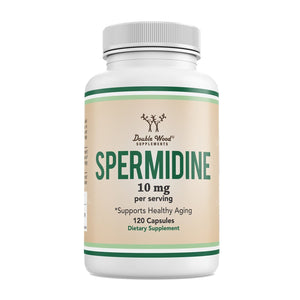
Split your stack into two groups. Feel-driven supplements (magnesium for sleep, creatine for training, adaptogens for stress) can be judged in 4–8 weeks by how you feel and perform. Biomarker-driven supplements (NMN, NAD⁺ boosters, spermidine, many others) need a 3-month trial anchored to a measurement — a blood NAD⁺ level, a lipid panel, or a biological-age clock. Our guide to lowering your biological age and the broader longevity supplements guide explain which markers to track for which compounds.

A structured self-experiment turns a vague "I think it's helping" into something you can actually judge. Here is a simple, doctor-informed framework.
Introduce a single new supplement so any change can be attributed to it. Stacking five products at once tells you nothing about which one worked. If you must run a stack, see whether supplements can be taken together.
Use the researched dose, take it at the same time daily, and don't switch brands mid-trial. Absorption differs by form — for example, sublingual NMN versus capsules — so changing form resets your trial.
Decide the trial length in advance (usually 8–12 weeks) and record a baseline first: how you feel, relevant scores, and any blood markers. Without a baseline you have nothing to compare against.
Sleep score, resting heart rate, training numbers, energy on a 1–10 scale, and — where relevant — a blood test. Consistency of measurement matters more than the number of things you track.
Compare end to baseline. If nothing meaningful changed and there was no biomarker shift, that is useful information: it may be time to stop the supplement and reallocate the budget.
Positive signs include a measurable biomarker improvement, a consistent (not one-off) change in energy, sleep or performance sustained over several weeks, and effects that persist rather than fade after the novelty passes. Neutral or negative signs include no change after a full trial at the correct dose, effects that vanish within days, or improvements that coincide with other lifestyle changes you made at the same time.
Be honest about the placebo effect — it is powerful and real, especially in the first fortnight. That is exactly why a fixed trial length and objective measures matter more than a gut feeling. Some widely sold compounds have weaker human evidence than their marketing suggests; our honest reviews of whether resveratrol works and longevity supplements that don't work can save you a wasted trial.
Stop if you complete a fair trial with no benefit, if you experience side effects, or if a re-test shows no biomarker change. There is no obligation to keep taking something indefinitely on faith. Some people prefer to cycle certain compounds rather than take them continuously — the rationale and practicalities are covered in cycling NMN. Note that stopping does not usually cause a rebound: after NMN supplementation ends, blood NAD⁺ tends to return to baseline over subsequent weeks (Journal of Nutritional Biochemistry, 2024), which simply means benefits are maintenance-dependent rather than permanent.
Two people on the same supplement at the same dose can have completely different experiences. The main reasons are your baseline status (someone deficient in iron or vitamin D responds faster and more dramatically than someone already replete), bioavailability (a poorly absorbed form works slowly or not at all regardless of the label dose), consistency (skipping days resets progress), and age, metabolism and overall health. Water-soluble vitamins generally act within days, whereas fat-soluble vitamins can take weeks to months to build up, as explained by Kin Fertility's evidence review.
Product quality is part of bioavailability too. A supplement that is under-dosed or poorly manufactured cannot work on schedule — which is why we recommend checking a certificate of analysis and choosing third-party tested supplements before you start any trial.
Supplements are not a substitute for a balanced diet, medical treatment or professional advice. Human safety data on NMN is reassuring at studied doses — for example, up to 1,250 mg once daily for four weeks was well tolerated in healthy adults (Fukamizu et al., 2022) — but "well tolerated in a trial" is not the same as "right for you."
Speak to your GP or pharmacist before starting a supplement if you are pregnant or breastfeeding, take prescription medication, have a chronic health condition, or are due to have surgery. If you notice unexpected symptoms during a trial, stop and seek advice. This is a health topic where getting personalised guidance genuinely matters.
Most supplements take 8–12 weeks of consistent daily use to show a fair, assessable result. Water-soluble nutrients such as B vitamins can act within days, while fat-soluble vitamins and longevity compounds that change tissue-level biology usually take one to three months.
Plan for a minimum 8-week trial for feel-based effects and a full 3-month trial for anything judged by a blood test or biological-age marker, with a before-and-after measurement so you can compare objectively.
Blood NAD⁺ levels typically rise within about two weeks of NMN supplementation, but felt or functional benefits are usually assessed over 8–12 weeks, which is the length of most human NMN trials.
Many supplements — especially longevity compounds — work at a cellular level you cannot feel. Not feeling anything does not always mean it isn't working; a biomarker test is often the only reliable way to know.
Some can. Magnesium for sleep, caffeine-based products, and creatine (with loading) can produce noticeable effects within days to a week, particularly if you were deficient to begin with.
Timing and food can affect absorption for some compounds but rarely change the overall trial timeline dramatically. Consistency matters far more than the exact time of day.
Run a structured trial: change one thing at a time, keep the dose and form fixed, record a baseline, track a few objective measures, and review honestly at a pre-set end date.
If you complete a fair trial at the correct dose with no felt benefit and no biomarker change, it is reasonable to stop and reallocate the budget. Also stop immediately if you experience side effects.
For many compounds, yes. Blood NAD⁺ from NMN, for example, tends to return towards baseline after you stop, meaning benefits are maintenance-dependent rather than permanent.
Baseline nutrient status, bioavailability of the specific form, inconsistent use, age, metabolism and overall health all influence how quickly you respond. Someone already replete in a nutrient may notice little, while a deficient person responds faster.
Related reading on Welzo: NAD⁺ supplement guide · building a longevity stack · buy NMN in the UK.
 Évalué Excellent par 28,951+ avis
 Garantie de remboursement à 100%
Notre garantie de rétroaction garantit que vous recevez vos articles ou obtenez un remboursement complet.