

The Gut-Skin Axis: Acne, Eczema and the Microbiome
Posted on:
Aug 05, 2026
Authored by


Written and medically reviewed by Dr Zeeshan Afzal (MBBS) — Medical Doctor & Medical Content Lead, Welzo
Evidence-based · Honest about what's proven and what isn't · UK-focused
Last updated: July 2026 · Reading time: ~11 minutes
Patients ask me some version of the same question every week: could my gut be causing my skin? The gut–skin axis — the two-way communication system between your intestinal microbiome and your skin — is now one of the most active areas in dermatology research. You can explore the wider evidence across our digestive health hub, and see the practical options in the Welzo gut health supplement range.
What follows is an honest appraisal. Some of this evidence is strong (early-life microbiome exposure and eczema risk). Some is promising but immature (probiotics for acne). Some is widely repeated online with almost no support. Knowing which is which is the difference between spending money well and spending it badly.
Table of contents
The gut–skin axis describes bidirectional signalling between the gastrointestinal tract — specifically its microbial residents — and the skin. It sits alongside the better-known gut–brain axis as part of a broader principle: the gut microbiome is a systemic regulator, not a local organ system.
Scale explains why. Estimates put roughly 1012 microbial cells on the skin against approximately 1014 in the intestine (Sánchez-Pellicer et al., Microorganisms, 2022). When that much microbial mass shifts, the immune consequences do not stay in the abdomen.
Skin hosts Cutibacterium acnes, staphylococci and Malassezia yeasts, shaped by sebum and pH. The gut hosts a far more diverse community shaped mainly by diet. These ecosystems never meet. What connects them is the immune system, educated primarily in the gut then patrolling the whole body, including the dermis.
The clinical clue came first. Inflammatory skin conditions cluster with gut disease more often than chance predicts: rosacea with coeliac disease, IBD, IBS and H. pylori; psoriasis with Crohn's; atopic dermatitis with food allergy and altered infant colonisation (De Pessemier et al., 2021).
Commensal microbes drive development of regulatory T cells, which release IL-10 and TGF-β to dampen inflammatory responses systemically, including in skin. Where this education goes wrong early in life, the immune system tends toward type-2 allergic reactivity — the atopic dermatitis pattern (Szajewska & Horvath, Nutrients, 2018). See also gut health and the immune system.
Fibre fermentation produces acetate, propionate and butyrate. These short-chain fatty acids promote regulatory T cell development and circulate systemically; butyrate has been studied directly as a regulator of skin immune function. Lose your fibre-fermenting bacteria and you lose this anti-inflammatory output — exactly what has been observed in acne cohorts.
A compromised intestinal barrier lets bacterial components such as lipopolysaccharide reach the circulation, driving low-grade systemic inflammation. For the nuanced version of this mechanism, see gut barrier function and whether leaky gut is real.
Stress alters gut motility, permeability and microbial composition; microbes influence neurotransmitter and hormone signalling in return. The gut–brain–skin theory proposes this loop explains why acne and mood disorders co-occur so often (Lee et al., 2019).

Note the pattern below: dysbiosis findings are consistent, but treatment evidence lags well behind.
| Condition | Gut microbiome findings | Evidence for gut-directed treatment |
|---|---|---|
| Acne | Reduced diversity, fewer SCFA producers, lower Bifidobacterium and Lactobacillus | Weak — small pilot RCTs only |
| Atopic eczema | Altered early-life colonisation, delayed Bifidobacterium establishment | Moderate for prevention; weak for treatment |
| Rosacea | Markedly higher SIBO prevalence; links with H. pylori, IBD, coeliac | Moderate but prescription-based, not supplements |
| Psoriasis | Reduced diversity, lower Faecalibacterium prausnitzii | Preliminary — systemic therapy remains standard |
One caveat runs through all of it: direction of causality is unresolved. Chronic skin inflammation, restrictive diets, stress and repeated antibiotic courses all reshape the gut microbiome, so a dysbiotic gut in someone with acne may be partly a consequence rather than a cause.
Acne is close to universal: the NHS reports about 95% of people aged 11 to 30 are affected to some extent, with around 3% of adults still affected over 35.
Deng and colleagues compared 43 treatment-naïve acne patients with 43 matched controls and found reduced diversity, higher Bacteroidetes, lower Firmicutes, and depletion of Lachnospiraceae and Ruminococcaceae — both major butyrate producers (Acta Dermato-Venereologica, 2018).
Yan and colleagues studied 31 patients with moderate-to-severe acne against 31 controls, finding Actinobacteria reduced (0.89% versus 2.84%), Proteobacteria increased, and depletion of Bifidobacterium, Butyricicoccus, Coprobacillus, Lactobacillus and Allobaculum. This group found no difference in alpha diversity — a reminder that findings are not perfectly consistent, and that microbiome diversity alone is not a reliable disease marker.
The most mechanistically interesting trial tested Lactobacillus rhamnosus SP1. In a pilot randomised, double-blind, placebo-controlled study of 20 adults, 12 weeks at 3×10⁹ CFU/day produced a 32% reduction in skin IGF-1 gene expression and a 65% increase in FoxO1 (both p<0.001), alongside clinical improvement. IGF-1 drives sebum production; FoxO1 restrains androgen receptor signalling. The biology is coherent — but n=20, single centre, surrogate endpoints, no large replication. A signal worth following, not a treatment recommendation. See Lactobacillus rhamnosus for strain-specific differences.
High-glycaemic-load eating raises insulin and IGF-1, increases sebum production, and simultaneously shapes the microbiome — one intervention with two mechanisms. Western patterns high in refined carbohydrate and ultra-processed food are associated with reduced diversity and greater intestinal permeability. Separately, many acne patients take months of oral antibiotics, which reliably disturb gut composition — a legitimate reason to consider probiotics after antibiotics.
Gut-directed measures are a reasonable adjunct alongside proper dermatological treatment, not a substitute. Anyone promising clearance from a probiotic alone is ahead of the evidence.
Atopic eczema affects roughly 11–20% of UK school-aged children and 5–10% of adults, with around 60% of cases diagnosed in the first year of life. That early onset is the key to the microbiome story: the first months of life are when the immune system is calibrated, and factors altering early colonisation — caesarean delivery, formula feeding, perinatal antibiotics — associate with higher subsequent eczema risk. This window largely closes, which is why prevention and treatment evidence diverge so sharply.
A PLOS Medicine meta-analysis of 19 trials found probiotics in late pregnancy and lactation reduced eczema risk (RR 0.78; 95% CI 0.68–0.90), an absolute reduction of 44 cases per 1,000, at 1–10 billion CFU/day, moderate GRADE certainty.
A separate analysis of 29 RCTs broke it down by timing: RR 0.71 in the last trimester, 0.57 in breastfeeding mothers, 0.80 when given to infants — though certainty was rated low. The World Allergy Organization's GLAD-P panel concluded there is a likely net benefit driven primarily by eczema prevention, suggesting "using probiotics in pregnant women at high risk" — a conditional recommendation on very low quality evidence. Discuss with your midwife or GP first; see probiotics in pregnancy and children's probiotics.
The 2018 Cochrane review is the definitive answer, and not the one supplement marketing implies. Across 39 randomised trials and 2,599 participants, currently available probiotics probably make "little or no difference" to patient-rated symptoms or quality of life. Heterogeneity was significant, likely reflecting many different strains.
There is reasonable evidence probiotics in late pregnancy and infancy reduce the chance a child develops eczema. There is not good evidence a probiotic will clear eczema a child already has. Emollients and, where needed, topical corticosteroids remain the foundation — and undertreating an itchy, sleepless child while waiting for a supplement to work causes real harm. Restrictive diets in children need dietetic supervision.
Rosacea produced the most striking gut–skin result in the literature. Parodi and colleagues screened 113 rosacea patients and 60 controls, finding SIBO in 52 of 113 patients versus 3 of 60 controls. Among those randomised to rifaximin, lesions cleared in 20 of 28 and greatly improved in 6 of 28, while placebo patients were unchanged or worse, with remission maintained at nine months.
Two cautions: rifaximin is prescription-only, so this is a reason to raise persistent gut symptoms with your GP rather than self-treat; and later work has been mixed, with some groups implicating H. pylori instead. If bloating and altered bowels accompany your skin condition, see SIBO in the UK and gut dysbiosis. Psoriasis shows microbial signatures overlapping IBD, consistent with shared immune pathways, but treatment evidence remains preliminary.
Diet shapes the gut microbiome more powerfully than any supplement, and it does so in weeks.
Aim for 30 or more different plant foods weekly — vegetables, fruit, wholegrains, pulses, nuts, seeds, herbs and spices all count. Different fibres feed different microbes, so breadth beats volume of any single food. See the 30 plants a week guide.
Since the acne dysbiosis signature is essentially a loss of butyrate producers, feeding them is the logical response: oats, barley, beans, lentils, cooked-and-cooled potato and rice, plus soluble fibres such as modified citrus pectin. Add fermented foods in small amounts — a tablespoon of sauerkraut, not a jar. Berries, olive oil, green tea and spices supply polyphenols that both feed beneficial bacteria and are converted by them into anti-inflammatory compounds.
High-glycaemic-load refined carbohydrates, heavily ultra-processed foods and excess alcohol. Skimmed milk and whey protein have been associated with acne in observational studies — worth a personal trial, not a blanket dairy ban. Sleep and stress act on the same loop and are free.

| Supplement | Evidence for skin outcomes | Reasonable use |
|---|---|---|
| Probiotics (pregnancy/infancy) | Moderate, for eczema prevention | Discuss with midwife/GP if family history of atopy |
| Probiotics (established eczema) | Weak — Cochrane found little or no difference | Not as primary treatment |
| Probiotics (acne) | Weak/emerging — small pilot RCTs | Adjunct; useful during antibiotic courses |
| Prebiotic fibre | Indirect — supports SCFA production | Sensible foundation; build dose slowly |
| Collagen peptides | Some evidence for hydration/elasticity; none for acne or eczema | Cosmetic ageing goals only |
| Zinc / omega-3 | Some acne evidence (zinc); anti-inflammatory rationale (omega-3) | Do not exceed recommended intakes |
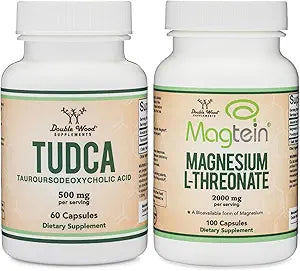
Strain identity and evidence for your goal matter more than the CFU headline — see how to choose a probiotic and the best probiotics in the UK. For related mechanisms rather than skin claims, berberine has been studied for glycaemic pathways and TUDCA for bile-acid signalling.
For most people with acne or eczema, no. Private stool sequencing can describe your composition, but there is no agreed reference range, no validated skin-specific signature, and no evidence that acting on results improves skin — see our gut microbiome test guide.
Targeted clinical testing is different. With persistent gut symptoms alongside skin disease, tests with a real evidence base — coeliac serology, H. pylori testing, faecal calprotectin, SIBO breath testing — should be arranged through a clinician who will act on the result.
See your GP — or seek urgent care where indicated:
Sources: NHS — Atopic eczema; NHS — Acne; NHS — Bowel cancer symptoms. See also when to see a GP about stomach symptoms.
The two-way communication system between your gut microbiome and your skin. It operates through immune signalling (particularly regulatory T cell development), short-chain fatty acids from fibre fermentation, gut barrier integrity and circulating bacterial products, and neuroendocrine pathways linking stress, hormones and inflammation.
Gut health appears to influence acne rather than directly cause it. People with acne consistently show reduced diversity, fewer short-chain fatty acid producers and lower Bifidobacterium and Lactobacillus — but these are associations. Acne is multifactorial: genetics, sebum, hormones, Cutibacterium acnes and inflammation all contribute, with the gut as one modifiable influence.
The evidence is early rather than conclusive. A pilot RCT of Lactobacillus rhamnosus SP1 in 20 adults found a 32% reduction in skin IGF-1 gene expression, a 65% increase in FoxO1, and clinical improvement over 12 weeks. That is one small study with surrogate endpoints, so probiotics are a reasonable adjunct to proven acne treatment, not a replacement.
It depends on prevention versus treatment. For prevention, meta-analysis found probiotics in late pregnancy and lactation reduced eczema risk by around 22% (RR 0.78). For treating existing eczema, the 2018 Cochrane review of 39 trials and 2,599 participants concluded probiotics probably make little or no difference to symptoms or quality of life.
Increased intestinal permeability is real and measurable, and bacterial products crossing the barrier can drive low-grade systemic inflammation. What is not established is that leaky gut is a discrete diagnosable condition causing skin disease, or that products marketed to "seal" the gut improve skin outcomes.
High-glycaemic-load refined carbohydrates, which raise insulin and IGF-1 and increase sebum production, and ultra-processed foods, associated with reduced diversity and increased permeability. Skimmed milk and whey protein have been linked to acne in observational studies. Individual responses vary considerably.
Gut microbial composition can shift within days of a dietary change, but skin follows more slowly. Allow eight to twelve weeks before judging any gut-directed intervention. Photographing your skin weekly in consistent lighting is more reliable than memory.
Yes, and it is among the better-documented links. In 113 rosacea patients, SIBO was present in 52 compared with 3 of 60 controls, and eradication with rifaximin cleared or greatly improved lesions in 26 of 28 treated patients, with remission at nine months. Rifaximin is prescription-only, so discuss persistent gut symptoms with your GP.
For most people, no. There is no agreed reference range, no validated skin-specific signature and no evidence that acting on results improves skin. Targeted clinical tests — coeliac serology, H. pylori, faecal calprotectin, SIBO breath testing — are worthwhile when gut symptoms are present and a clinician will act on the findings.
Diet is a useful lever but not a standalone treatment. Both conditions have effective evidence-based medical treatments, and delaying those risks avoidable scarring in acne and unnecessary suffering in eczema. Use gut-directed measures alongside dermatological care, not instead of it, and only undertake restrictive diets in children with dietetic supervision.
Medical disclaimer: This article is for general information and education only and does not constitute medical advice, diagnosis or treatment. It should not replace consultation with a qualified healthcare professional. Always seek advice from your GP, dermatologist or a suitably qualified clinician about any skin or digestive symptoms, and before starting new supplements — particularly if you are pregnant, breastfeeding, immunocompromised, giving supplements to a child, or taking medication. If you have red-flag symptoms, seek medical care promptly.
About the author
Dr Zeeshan Afzal (MBBS) is a practising medical doctor and Welzo's Medical Content Lead. He writes and reviews Welzo's health content to ensure it is accurate, evidence-based and aligned with current UK clinical guidance, translating complex research into practical advice patients can trust.

 Bewertet mit 28,951+ Bewertungen ausgezeichnet
 100% Geld zurück
Unsere Geld -zurück -Garantie stellt sicher, dass Sie Ihre Artikel oder eine vollständige Rückerstattung erhalten.