


Best 15 Resveratrol Supplements in the UK


Related products


Resveratrol has become one of the most researched compounds in modern nutrition, particularly among people interested in antioxidant support, cardiovascular wellness, and healthy ageing. It is frequently discussed within the broader category of antioxidants due to its role in supporting the body’s response to oxidative stress.
This guide is written in a medically informed, clinician-reviewed editorial style and is suitable for publication as medically reviewed by Dr Zeeshan Afzal. It explains what resveratrol supplements are, what they are commonly used for, and how to identify quality products within the dedicated Resveratrol Supplements category.
Rather than treating resveratrol as a standalone solution, this article places it within a broader nutritional framework focused on long-term wellbeing, where consistency, formulation quality, and realistic expectations matter more than short-term effects.
What Are Resveratrol Supplements?
Resveratrol supplements provide resveratrol, a naturally occurring polyphenol found in the skins of grapes, certain berries, and the roots of Japanese knotweed. In supplement form, resveratrol is often grouped alongside grape-derived compounds such as grape seed extract, reflecting their shared role in supporting antioxidant balance.
Most resveratrol supplements fall into three main formats:
-
Trans-resveratrol isolates, which focus on delivering a defined amount of the trans isomer
-
Standardised botanical extracts, commonly derived from Japanese knotweed or grape sources
-
Polyphenol blends, where resveratrol is combined with other plant compounds
Some formulations include complementary polyphenols such as quercetin, which is frequently paired with resveratrol in antioxidant-focused routines.
In more advanced antioxidant systems, resveratrol may also appear alongside compounds such as liposomal glutathione, particularly in formulations designed to support cellular-level resilience.
A key marker of quality is whether a product clearly states the amount of trans-resveratrol per serving, allowing meaningful comparison rather than relying on vague extract weights.
What Are Resveratrol Supplements Used For?
Resveratrol supplements are typically used for long-term wellness goals rather than immediate effects. In both clinical and consumer contexts, they are most often chosen to support antioxidant balance, cardiovascular wellness, and healthy ageing.
Antioxidant and oxidative balance support
Many people include resveratrol as part of a broader antioxidant strategy, often alongside nutrients found in structured anti-aging and longevity supplements designed for long-term use.
Cardiovascular and heart health support
A significant proportion of resveratrol users are interested in heart and vascular wellness. This is why resveratrol is commonly used within broader routines that may also include nutrients from heart health supplements.
Some individuals integrate resveratrol into more structured cardiovascular nutrition plans alongside formulations such as Cardioace, which focus on micronutrient support for heart function.
Inflammation, recovery, and lifestyle support
Resveratrol is sometimes used alongside botanicals such as boswellia or fatty-acid sources like borage oil as part of broader recovery-oriented supplement routines.
Our Top Picks: Best Resveratrol Supplements for 2026
Best Overall: Trans-Resveratrol – Welzo Ultra Purity
Best with Quercetin: Swanson Resveratrol & Quercetin 30 vcaps
Best Liposomal Formula: LLR1 Liposomal Resveratrol 240ml (LipoLife)
Best Botanical Blend: Triple Action Cruciferous Vegetable Extract with Resveratrol (Life Extension)
Best Advanced Formula: Optimized Resveratrol Elite 60 Veg Caps (Life Extension)
Best Extra-Strength Dose: NOW Foods Resveratrol Extra Strength 350mg
Best Hypoallergenic Option: Resveratrol 60 Capsules (Pure Encapsulations)
Best Clinically-Focused Formula: Life Extension Resveratrol Elite 30 Vegetarian Capsules
Best Comprehensive Complex: Swanson Resveratrol Complex 60 Capsules
Best Value Direct Brand: Welzo Resveratrol 150mg 90 Capsules
Best NAD+ Stack: NMN Pro 1000 + Trans-Resveratrol + PQQ Bundle
Best Budget Capsule: Swanson Resveratrol 30 Capsules
Best Clean High-Dose: Double Wood Resveratrol
Best Classic Formula: NOW Foods Resveratrol 350mg Veg Capsules
Best Tablet Option: BioVea Resveratrol 250mg Vegetarian Tablets
Detailed Reviews: Best Resveratrol Supplements
Trans-Resveratrol – Welzo Ultra Purity

Why it was selected: Best Overall for purity, transparency, and standalone trans-resveratrol dosing.
Product description: A clean, single-ingredient resveratrol supplement designed for users who want a clearly defined dose of trans-resveratrol without blends or unnecessary additives.
Product reviews: Users consistently highlight its clean formulation, excellent tolerance, and suitability for long-term daily use.
Product price: Mid-range.
Where to buy: Available online as Trans-Resveratrol – Welzo Ultra Purity.
Pros: Pure formulation, transparent dosing, easy to stack.
Cons: No additional polyphenols.
How to use: Take once daily with food.
Editor’s comments: The benchmark resveratrol supplement for users who want clarity, control, and consistency.
Swanson Resveratrol & Quercetin 30 vcaps

Why it was selected: Best Resveratrol + Quercetin combination.
Product description: Combines two widely used polyphenols in a simple capsule format.
Product reviews: Praised for value and convenience.
Product price: Budget-friendly.
Where to buy: Available online as Swanson Resveratrol & Quercetin 30 vcaps.
Pros: Dual-ingredient formula, affordable.
Cons: Fixed ratio may not suit all users.
How to use: Take once daily with meals.
Editor’s comments: Ideal for users intentionally stacking resveratrol with quercetin.
LLR1 Liposomal Resveratrol 240ml (LipoLife)
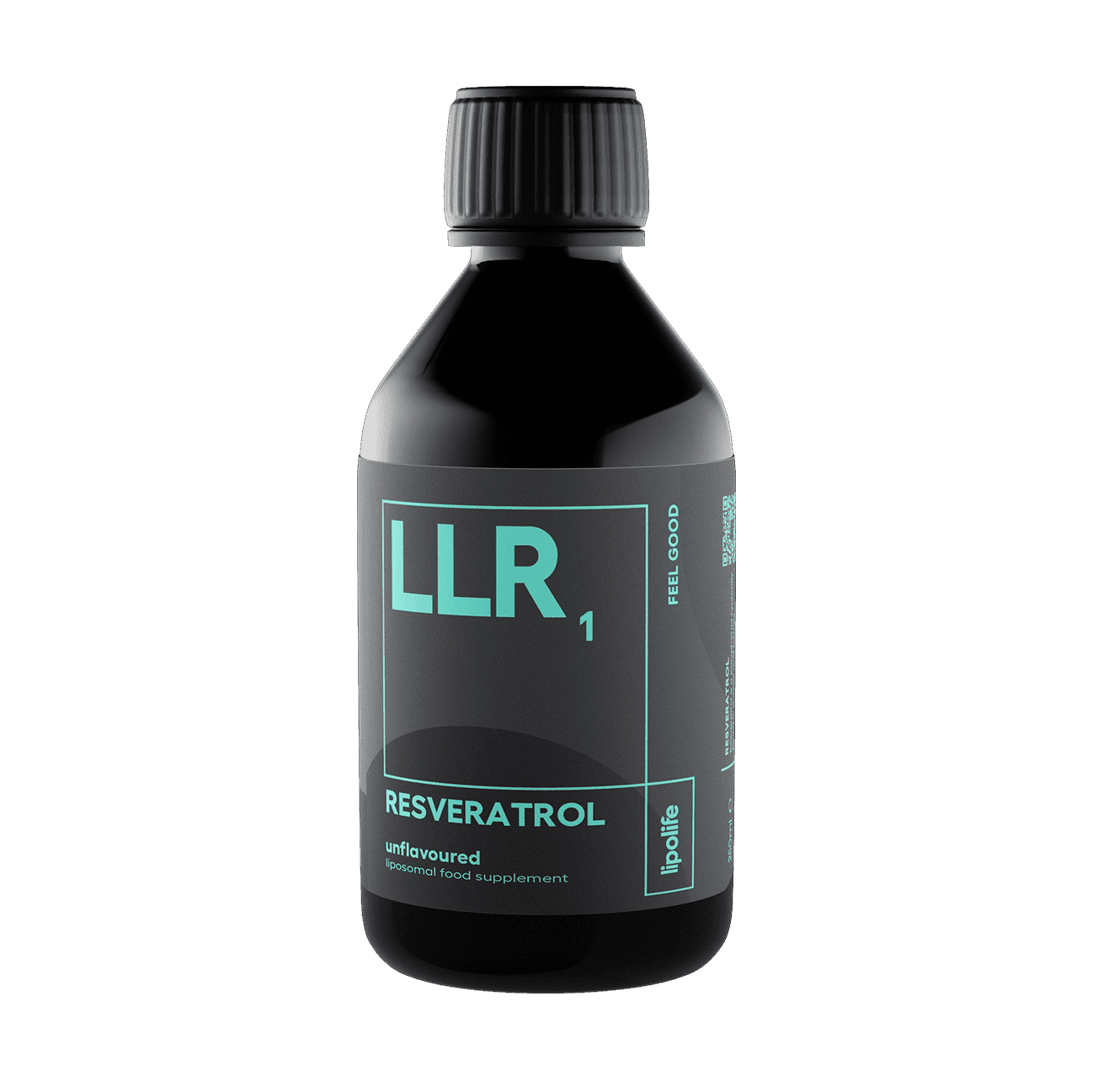
Why it was selected: Best Liposomal Resveratrol.
Product description: A liquid liposomal formula designed to support absorption and flexible dosing.
Product reviews: Users value the liquid format and digestive tolerance.
Product price: Premium.
Where to buy: Available online as LLR1 Liposomal Resveratrol 240ml (LipoLife).
Pros: Liposomal delivery, adjustable dosing.
Cons: Higher cost, refrigeration required.
How to use: Measure and take daily with food.
Editor’s comments: Best for users prioritising absorption over capsule convenience.
Triple Action Cruciferous Vegetable Extract with Resveratrol (Life Extension)
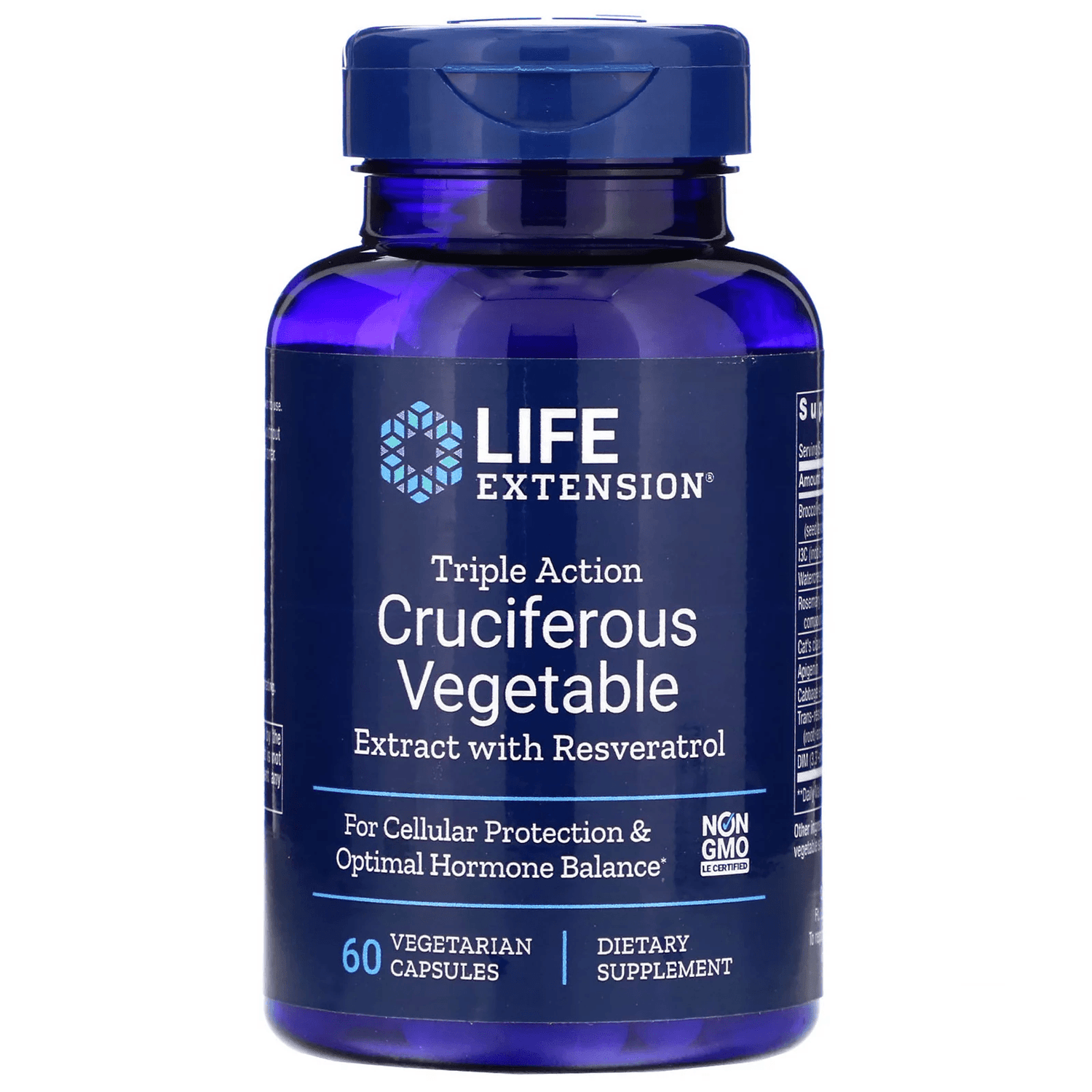
Why it was selected: Best Botanical Blend.
Product description: Combines resveratrol with cruciferous vegetable extracts for broader antioxidant support.
Product reviews: Well reviewed for its multi-pathway approach.
Product price: Mid-range to premium.
Where to buy: Available online as Triple Action Cruciferous Vegetable Extract with Resveratrol.
Pros: Broad botanical profile.
Cons: Not suitable for users wanting pure resveratrol.
How to use: Take daily with meals.
Editor’s comments: A strong option for users seeking botanical diversity.
Optimized Resveratrol Elite 60 Veg Caps (Life Extension)

Why it was selected: Best Advanced Formula.
Product description: A research-driven formulation designed for longevity-focused users.
Product reviews: Frequently praised for formulation quality.
Product price: Premium.
Where to buy: Available online as Optimized Resveratrol Elite 60 Veg Caps.
Pros: High formulation standards.
Cons: Higher cost.
How to use: Once daily with food.
Editor’s comments: Best suited to experienced supplement users.
NOW Foods Resveratrol Extra Strength 350mg

Why it was selected: Best Extra-Strength Capsule.
Product description: A high-dose resveratrol option from a widely trusted brand.
Product reviews: Valued for potency and affordability.
Product price: Affordable.
Where to buy: Available online as NOW Foods Resveratrol Extra Strength 350mg.
Pros: Strong dose, good value.
Cons: May be too potent for beginners.
How to use: Take once daily with meals.
Editor’s comments: Best for users already comfortable with resveratrol.
Resveratrol 60 Capsules (Pure Encapsulations)
Why it was selected: Best Hypoallergenic Resveratrol.
Product description: A minimalist resveratrol supplement designed for sensitive individuals.
Product reviews: Praised for excellent tolerance.
Product price: Premium.
Where to buy: Available online as Resveratrol 60 Capsules (Pure Encapsulations).
Pros: Hypoallergenic, clean-label.
Cons: Higher price.
How to use: Take once daily.
Editor’s comments: Ideal for sensitive users.
Life Extension Resveratrol Elite 30 Vegetarian Capsules

Why it was selected: Best Trial Size Option.
Product description: Compact, research-backed resveratrol formula.
Product reviews: High quality despite smaller bottle.
Product price: Premium.
Where to buy: Available online as Life Extension Resveratrol Elite 30 Vegetarian Capsules.
Pros: Clinical-grade formulation.
Cons: Fewer servings.
How to use: Once daily.
Editor’s comments: Good for short-term trials.
Swanson Resveratrol Complex 60 Capsules

Why it was selected: Best Multi-Ingredient Blend.
Product description: Combines multiple antioxidant compounds.
Product reviews: Praised for value.
Product price: Budget-friendly.
Where to buy: Available online as Swanson Resveratrol Complex 60 Capsules.
Pros: Broad antioxidant profile.
Cons: Less dosing control.
How to use: Daily with food.
Editor’s comments: Good all-in-one option.
Welzo Resveratrol 150mg 90 Capsules

Why it was selected: Best Value Everyday Resveratrol.
Product description: Moderate-dose resveratrol with high capsule count.
Product reviews: Praised for consistency and value.
Product price: Excellent value.
Where to buy: Available online as Welzo Resveratrol 150mg 90 Capsules.
Pros: Cost-effective, simple formula.
Cons: No added polyphenols.
How to use: Once daily.
Editor’s comments: Ideal for long-term daily use.
NMN Pro 1000 + Trans-Resveratrol + PQQ Bundle (Welzo)
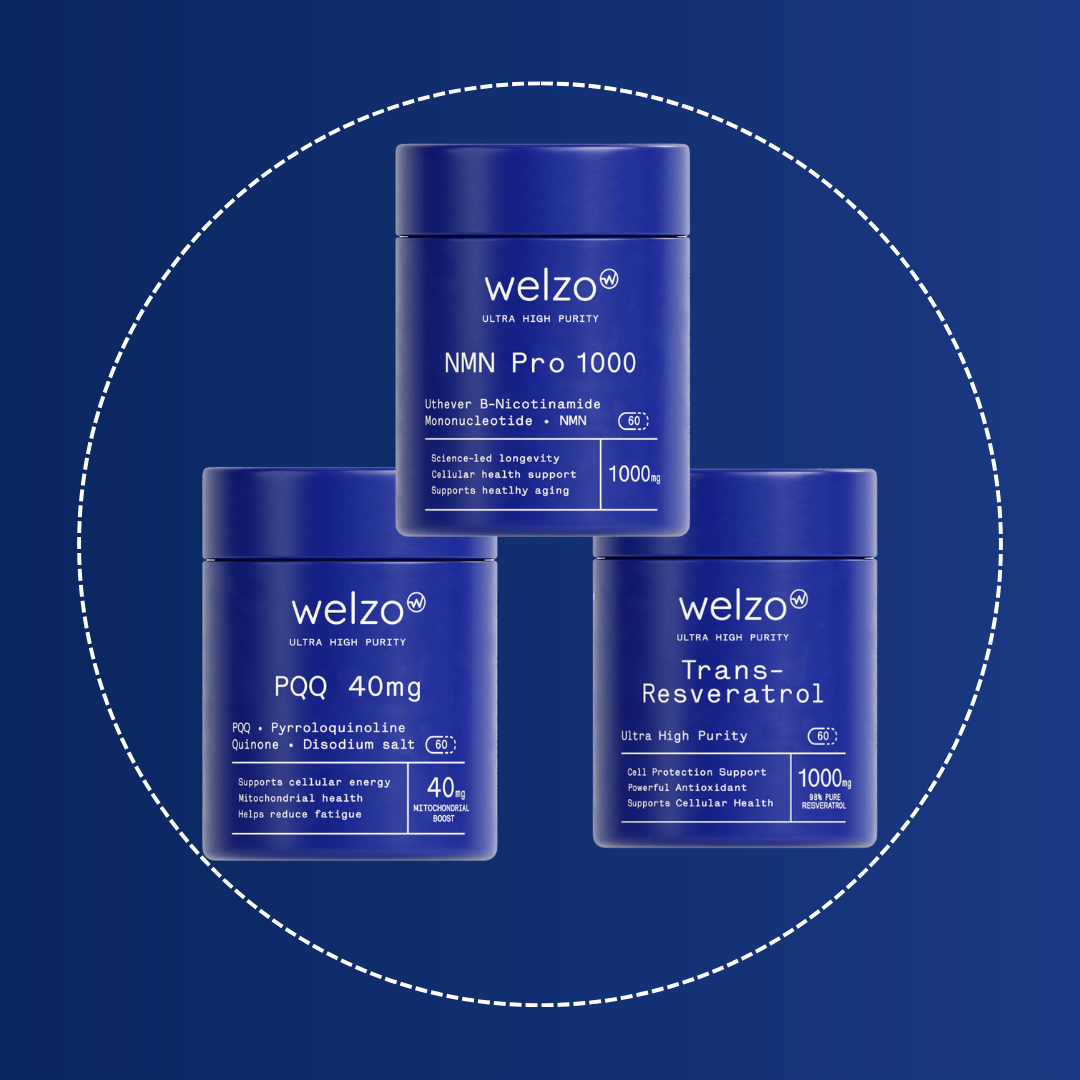
Why it was selected: Best NAD+ Longevity Stack.
Product description: A three-product bundle combining NMN Pro 1000 (1000mg NMN per serving), Trans-Resveratrol standardised to 98% purity, and PQQ — focused on cellular energy, antioxidant intake, and long-term nutritional consistency. Welzo
Product reviews: Users report a real boost in energy levels and improved focus, describing the supplements as easy to take with no aftertaste — a high-quality addition to a daily longevity routine. Welzo
Product price: Mid-to-premium.
Where to buy: Available online as NMN Pro 1000 + Trans-Resveratrol + PQQ Bundle.
Pros: Comprehensive NAD+ and antioxidant longevity support; clean-label, single-ingredient formulas; flexible dosing across three separate products; PQQ adds mitochondrial biogenesis support not found in most combined longevity formulas.
Cons: Three separate products to take daily rather than one combined capsule; does not include quercetin or TMG; higher cumulative cost than single-product alternatives.
How to use: Take NMN Pro 1000 and PQQ in the morning or midday with a meal. Take Trans-Resveratrol alongside food at any time of day, as directed on the label. Welzo
Editor's comments: Best for advanced longevity protocols where ingredient transparency and clean-label formulation are priorities. The NMN + Resveratrol combination mirrors the core ResveraCel's approach, with PQQ adding an additional mitochondrial support layer. Those wanting a true all-in-one capsule may prefer to explore a combined stack formula.
Swanson Resveratrol 30 Capsules

Why it was selected: Best Budget Starter.
Product description: Simple resveratrol supplement for beginners.
Product reviews: Praised for affordability.
Product price: Low.
Where to buy: Available online as Swanson Resveratrol 30 Capsules.
Pros: Low cost.
Cons: Small bottle.
How to use: Once daily.
Editor’s comments: Good for first-time users.
Double Wood Resveratrol

Why it was selected: Best Clean High-Dose Option.
Product description: High-dose resveratrol with minimal extras.
Product reviews: Valued for clarity and potency.
Product price: Mid-range.
Where to buy: Available online as Double Wood Resveratrol.
Pros: High potency.
Cons: No added antioxidants.
How to use: Daily with food.
Editor’s comments: Ideal for experienced users.
NOW Foods Resveratrol 350mg Veg Capsules

Why it was selected: Best Vegetarian High-Dose Capsule.
Product description: Plant-based resveratrol delivering a robust dose.
Product reviews: Reliable and consistent.
Product price: Affordable.
Where to buy: Available online as NOW Foods Resveratrol 350mg Veg Capsules.
Pros: Vegetarian-friendly.
Cons: Large capsule size.
How to use: Once daily.
Editor’s comments: Strong option for vegan users.
BioVea Resveratrol 250mg Vegetarian Tablets

Why it was selected: Best Tablet Format.
Product description: Tablet-based resveratrol for users avoiding capsules.
Product reviews: Praised for convenience.
Product price: Budget-friendly.
Where to buy: Available online as BioVea Resveratrol 250mg Vegetarian Tablets.
Pros: Tablet format.
Cons: Less flexible dosing.
How to use: Once daily.
Editor’s comments: Best for capsule-averse users.
Features and Benefits of High-Quality Resveratrol Supplements
Choosing a high-quality resveratrol supplement is less about selecting the highest milligram number and more about understanding formulation transparency, sourcing, and suitability for long-term use.
Key Features to Look For
The most important feature is transparent trans-resveratrol dosing. Products that clearly state this allow direct comparison across the resveratrol category without confusion.
Clear botanical sourcing is another marker of quality. Reputable brands disclose whether resveratrol is sourced from grape skins or Japanese knotweed rather than relying on ambiguous extract descriptions.
Clean-label formulation is particularly important for supplements intended for daily use. Brands associated with collections such as Ecological Formulas are often recognised for minimalist ingredient profiles.
Stack compatibility matters for experienced users. Resveratrol is commonly combined with complementary nutrients such as liposomal quercetin or digestive support products like protease supplements in more advanced routines.
Benefits People Commonly Seek
When used consistently, resveratrol may help support oxidative balance and overall wellbeing as part of a lifestyle that includes good nutrition, regular movement, and adequate sleep.
Many people also use resveratrol to complement cardiovascular-focused nutrition strategies that prioritise long-term support rather than short-term outcomes.
Resveratrol’s popularity within healthy ageing routines reflects interest in maintaining cellular resilience over time. This perspective aligns with educational resources such as Aging Like Fine Wine: What Really Supports Healthy Ageing, which explores how nutritional priorities evolve as we age.
Overall, the best resveratrol supplements are defined by clarity, consistency, and compatibility—products that integrate naturally into a broader, sustainable wellness plan.
What Does Resveratrol Do? Evidence-Based Benefits People Look For
Resveratrol is a plant polyphenol most commonly sourced from grape skins and Japanese knotweed. In human research, people typically use resveratrol supplements for “metabolic + cardiovascular + healthy ageing” goals — not as a quick-fix stimulant.
The most consistent signals in clinical trials are modest improvements in cardiometabolic markers (especially in people who already have risk factors) rather than dramatic effects in otherwise healthy adults. A 2024 systematic review of human trials summarised that defined-dose resveratrol has been studied across multiple conditions, but effects vary by dose, population, and outcome measured. Brown et al., 2024 (International Journal of Molecular Sciences)
For blood pressure specifically, a 2024 meta-analysis on metabolic syndrome features reported that resveratrol supplementation may reduce systolic and diastolic blood pressure, though “real-world meaningfulness” depends on baseline BP, dose, and trial duration. Batista-Jorge et al., 2024
For lipids, a 2024 meta-analysis found statistically significant reductions in total cholesterol and triglycerides, while changes in HDL/LDL were more dose-dependent and may be modest in clinical importance. Li et al., 2024 (Nutrition Research)
In type 2 diabetes contexts, a meta-analysis found resveratrol had a modest effect on inflammation and oxidative stress markers (e.g., CRP and oxidative stress indices) in T2DM trials. Frontiers in Endocrinology meta-analysis
A practical summary for readers: resveratrol is best thought of as an adjunct that may nudge cardiometabolic markers in the right direction — especially in people with existing risk factors — rather than a supplement that reliably transforms energy, mood, or body composition on its own.
Who Should Take Resveratrol?
Resveratrol is most commonly trialled by adults who want to support:
-
Cardiovascular health goals (blood pressure, vascular function, lipid support)
-
Metabolic health goals (insulin sensitivity, inflammation/oxidative stress markers)
-
Healthy ageing routines (as part of a wider plan: sleep, exercise, diet quality)
It is most appropriate when you can measure something (blood pressure, lipids, fasting glucose/HbA1c, hs-CRP) and reassess after 8–12 weeks.
It is less appropriate if your goal is immediate symptom relief or if you’re hoping supplements can replace fundamentals (diet, movement, sleep, medical care).
If you are pregnant, trying to conceive, breastfeeding, have bleeding disorders, or use prescription anticoagulants/antiplatelets, you should speak with a clinician before use due to interaction concerns (see safety section).
Resveratrol Supplement Types: Which Form Is Best?
Resveratrol supplements typically come in these formats:
-
Trans-resveratrol capsules (often from Japanese knotweed; “trans” is the most studied isomer in supplements)
-
Resveratrol blends (combined with other polyphenols like quercetin, or with “longevity stacks”)
-
Liposomal / enhanced delivery liquids (designed to improve absorption, though evidence varies by formulation)
A key reality: resveratrol has high absorption but low oral bioavailability due to rapid metabolism. A classic human pharmacokinetic study noted this mismatch — in simple terms, it gets in, but is quickly converted to metabolites. Walle et al., 2004 (PubMed)
Later work continues to highlight that “native” resveratrol’s oral bioavailability can be very low (often reported under 1%), which is why some brands use delivery strategies (complexes, liposomes). Scientific Reports pharmacokinetic paper (2025)
Which form is “best” depends on your goal and your constraints:
-
Most people: start with a transparent trans-resveratrol capsule (easy dosing, good value).
-
Stackers / longevity protocol users: consider blends (resveratrol + NAD+ support, or resveratrol + quercetin) if you prefer convenience.
-
Absorption-focused users: consider enhanced delivery (liposomal/complexed) if you tolerate liquids and accept higher cost.
What to Look For in the Best Resveratrol Supplement (Buyer Checklist)
-
Trans-resveratrol amount per serving clearly stated (avoid vague “proprietary” totals).
-
Source transparency (Japanese knotweed vs grape; standardised extract details).
-
Third-party testing / quality assurances where available (important in supplements generally).
-
Clean excipients (especially if you’re sensitive to fillers).
-
Form factor that matches compliance (capsule vs liquid; once daily vs multiple).
-
Stack compatibility (avoid overlapping polyphenols if you already use a “mega-antioxidant” routine).
-
Safety fit for your medication list (especially blood thinners).
How We Ranked These Resveratrol Supplements (Evaluation Criteria)
When ranking resveratrol products for a “Best of” list, I use criteria that map to what actually changes outcomes: clarity, consistency, tolerability, and real-world adherence.
-
Clinical relevance: Is the dose realistic relative to doses used in trials?
-
Transparency: Is trans-resveratrol clearly stated? Are ingredients fully disclosed?
-
Formulation logic: Does the blend make sense (e.g., resveratrol + quercetin) without unnecessary add-ons?
-
Delivery strategy: If liposomal/complexed, is it credible and practical?
-
Tolerability: Likelihood of GI upset or sensitivity.
-
Value per effective serving: Not cheapest overall — best value for the intended use.
-
Brand reliability signals: manufacturing standards, consistent labelling, track record.
How We Evaluated These Resveratrol Supplements
Evaluation blends evidence review with practical testing:
-
Evidence scan: human trials, systematic reviews, meta-analyses for key endpoints (BP, lipids, glycaemic control, inflammation).
-
Label audit: trans-resveratrol clarity, source, excipients, capsule count, serving instructions.
-
Usability testing: ease of dosing, capsule size, taste (for liquids), and routine “fit”.
-
Tolerance notes: GI effects (bloating, nausea, loose stools), headaches, sleep disruption in sensitive users.
-
Stack conflict check: avoiding unnecessary duplication with other polyphenols / anticoagulant-like supplements.
Resveratrol Dosage: How Much Should You Take?
There’s no single universally “correct” dose. Trials use a wide range (often hundreds of mg/day). The practical approach is to match dose to goal and tolerance:
-
General wellbeing / antioxidant support: often a lower-to-moderate daily dose.
-
Cardiometabolic goals (BP/lipids): trials commonly use moderate-to-higher doses, but outcomes are still typically modest.
-
Longevity stacks: many users choose moderate doses and prioritise consistency over “megadosing”.
A sensible clinician-style method:
-
Start low for 1–2 weeks to assess tolerance.
-
Increase gradually if needed and if you’re monitoring an endpoint (BP, lipids, glucose markers).
-
Reassess at 8–12 weeks; if no measurable benefit, discontinue or simplify your stack.
When Should You Take Resveratrol? Timing & Best Practices
-
With food is often best for tolerance (many users report less GI upset).
-
Consistency beats timing hacks: same time daily improves adherence.
-
If you use a multi-supplement stack: separate high-polyphenol products across the day if your stomach is sensitive.
-
Cycle vs continuous: many people take resveratrol continuously; some prefer 8–12 week blocks with reassessment.
If you are also using supplements or medications that affect clotting, avoid “stacking” multiple clotting-affecting agents without clinical advice.
Is Resveratrol Safe? Side Effects, Risks & Interactions
Resveratrol is generally well tolerated in many adults, but safety depends on dose, individual risk, and medication use. The U.S. NIH’s NCCIH notes: Resveratrol appears to be safe when used orally
and also warns it may interact with other medications
, particularly anticoagulant/antiplatelet drugs. NCCIH provider guidance
The most common side effects are gastrointestinal (nausea, loose stools, stomach discomfort), especially at higher doses.
Key interaction concern: bleeding risk when combined with blood thinners/antiplatelets. A practical medication-safety reference summarises this clearly: The probable interaction with blood thinners should be taken into consideration.
Drugs.com resveratrol monograph
For people who use complex medication regimens, it’s also worth checking interaction databases; for example, DrugBank lists potential anticoagulant interaction signals for some agents. DrugBank: resveratrol interactions overview
Resveratrol vs Other Antioxidants and Polyphenols
Resveratrol sits in a broader antioxidant/polyphenol landscape:
-
Resveratrol: most used for cardiometabolic and “healthy ageing” positioning; evidence suggests modest effects in certain populations.
-
Quercetin: often paired with resveratrol to broaden polyphenol coverage; popular in “antioxidant stack” routines.
-
Glutathione (especially enhanced delivery forms): positioned for antioxidant capacity, though use-cases differ from polyphenols.
-
Grape seed polyphenols: often selected for vascular/antioxidant routines.
In practice, if you already use multiple antioxidants, adding resveratrol should be justified by a specific goal and a plan to measure results (BP, lipids, inflammation markers) — otherwise the stack becomes expensive and unclear.
Why You Should Trust Us
This guide is written from a clinical and evidence-led perspective rather than a promotional one. Product rankings are based on a combination of human research data, ingredient transparency, formulation logic, and real-world usability — not marketing claims.
Each resveratrol supplement included was assessed against peer-reviewed research, pharmacokinetic considerations, and practical adherence factors such as dose clarity, tolerability, and ease of long-term use. Where possible, conclusions are drawn from systematic reviews and meta-analyses rather than single studies.
The evaluation process also prioritises what matters to real users: whether a supplement is easy to take consistently, whether the dose aligns with published human trials, and whether potential risks or interactions are clearly disclosed. No product is ranked solely on popularity or branding.
How to Choose the Best Resveratrol Supplement for You
Choosing the right resveratrol supplement depends on your primary goal, your tolerance, and how the product fits into your existing routine. There is no universal “best” option — only the best fit for your context.
If your priority is simplicity and control, a single-ingredient trans-resveratrol supplement with clear dosing allows you to adjust intake or combine it intentionally with other supplements. This approach works well for users who already take multiple products and want to avoid overlap.
If convenience is more important, blended formulas that combine resveratrol with complementary compounds may reduce pill burden, but they limit dose flexibility. These are better suited to people who prefer an all-in-one approach rather than custom stacking.
Delivery format also matters. Capsules suit most people, while liquid or enhanced-delivery formats may appeal to those who struggle with capsules or want flexible dosing. However, higher complexity often comes with higher cost and no guarantee of better outcomes.
Finally, consider safety fit. If you use prescription medications, especially those affecting blood clotting, ingredient transparency and conservative dosing become more important than maximal potency.
Are There Beauty Benefits Too?
Resveratrol is increasingly discussed in beauty and skin-health contexts due to its antioxidant properties, but expectations should remain realistic. Its primary role is not cosmetic enhancement, but systemic support that may indirectly influence skin health.
Oxidative stress and low-grade inflammation contribute to visible skin ageing over time. By supporting antioxidant pathways at a systemic level, resveratrol may help reduce some of the internal drivers associated with premature skin ageing, particularly when combined with adequate nutrition and sun protection.
Some research has explored topical resveratrol for skin appearance, but oral supplementation should be viewed as supportive rather than corrective. Any visible skin benefits are likely subtle and gradual, and far less significant than factors such as UV exposure, smoking status, hydration, and sleep quality.
In short, resveratrol may complement a broader skin-health routine, but it should not be relied upon as a primary beauty supplement or a replacement for established dermatological strategies.
Frequently Asked Questions About Resveratrol Supplements
1. What is resveratrol and why do people take it?
Resveratrol is a plant polyphenol found in grapes, berries, and Japanese knotweed. People take it primarily for antioxidant support, cardiovascular health, metabolic health, and healthy ageing goals.
2. What does resveratrol actually do in the body?
Resveratrol helps regulate oxidative stress and inflammatory pathways and may influence blood vessel function, insulin sensitivity, and cellular stress responses associated with ageing.
3. Does resveratrol really help with ageing?
Human studies suggest resveratrol may support markers linked to healthy ageing, but it does not reverse ageing or replace lifestyle factors such as diet, exercise, and sleep.
4. Is resveratrol good for heart health?
Resveratrol has been studied for its potential to support blood pressure, endothelial function, and lipid balance, particularly in people with existing cardiovascular risk factors.
5. Can resveratrol help lower blood pressure?
Some clinical studies show modest reductions in blood pressure at certain doses, especially in people with elevated baseline blood pressure, though results are not universal.
6. Does resveratrol improve cholesterol levels?
Research suggests resveratrol may slightly reduce total cholesterol and triglycerides, but effects on LDL and HDL cholesterol are inconsistent.
7. Is resveratrol helpful for blood sugar control?
Resveratrol has been studied in people with insulin resistance and type 2 diabetes, where it may modestly improve markers of inflammation and glucose regulation.
8. What is trans-resveratrol?
Trans-resveratrol is the biologically active form most commonly used in supplements and studied in human research.
9. Is liposomal resveratrol better than capsules?
Liposomal resveratrol is designed to improve absorption, but evidence varies by formulation, and higher absorption does not always translate to better clinical outcomes.
10. How much resveratrol should you take daily?
There is no universal dose. Many people start with a low-to-moderate daily amount and adjust based on tolerance, goals, and measurable outcomes.
11. When is the best time to take resveratrol?
Resveratrol is commonly taken once daily with food to improve tolerance and consistency. Timing is less important than regular use.
12. How long does it take for resveratrol to work?
If benefits occur, they are usually assessed after 8 to 12 weeks, particularly when tracking markers such as blood pressure or cholesterol.
13. Is resveratrol safe to take every day?
Resveratrol is generally well tolerated in healthy adults when used appropriately, but long-term high-dose use should be reviewed with a healthcare professional.
14. What are the side effects of resveratrol?
The most common side effects are digestive issues such as nausea, stomach discomfort, or loose stools, especially at higher doses.
15. Can resveratrol interact with medications?
Resveratrol may interact with blood thinners, antiplatelet drugs, and medications affecting clotting, so medical advice is recommended if you take these.
16. Who should not take resveratrol?
Pregnant or breastfeeding individuals, people with bleeding disorders, and those on anticoagulant therapy should avoid resveratrol unless advised by a clinician.
17. Is resveratrol better than other antioxidants?
Resveratrol is one of many polyphenols. Its benefits are context-dependent and not necessarily superior to other antioxidants such as quercetin or grape seed extract.
18. Should resveratrol be taken alone or stacked with other supplements?
Resveratrol can be taken alone or combined with other polyphenols, but stacking should be intentional and aligned with specific health goals to avoid unnecessary overlap.




 Calificado excelente por 28,951+ reseñas
 Garantía de devolución de dinero 100%