




10 Best Dog Multivitamins for Your Furry Friend
.webp?v=1741904880640)

Related products
The best dog multivitamin is one your dog actually needs. For a healthy dog eating a complete, balanced food, a broad-spectrum multivitamin adds little. For fussy eaters, home-cooked diets, senior dogs, itchy skin or stiff joints, a well-formulated supplement can close real gaps. Below we compare 10 dog multivitamins available in the UK in 2026, explain which ingredients have evidence behind them, and flag the ones that can do harm in excess.
Key Takeaways
- A complete dog food is already formulated to meet published nutrient requirements — most healthy dogs on one do not need a multivitamin.
- Supplements matter most for home-prepared diets, fussy eaters, seniors, recovering dogs and specific problems (itchy skin, stiff joints, loose stools).
- Omega-3 (EPA and DHA) has the strongest evidence of any common canine supplement ingredient, particularly for osteoarthritis and itchy skin.
- More is not better. Vitamin A, vitamin D and calcium can cause genuine harm when over-supplemented, especially in growing large-breed puppies.
- Never give a human multivitamin to a dog — iron, vitamin D and xylitol are all realistic poisoning risks.
- Allow 6–8 weeks before judging a coat or joint supplement. Anything faster is usually coincidence.
Quick comparison: the 10 best dog multivitamins in 2026
All ten products below are stocked by Welzo. Prices are indicative and change; check the product page for current pricing and availability.
| Product | Best for | Format | Standout ingredients |
|---|---|---|---|
| Welzo Multivitamin for Dogs | Everyday all-rounder | Chicken-flavour tablet | B-complex, zinc, biotin, omega-6 |
| SuperDog Health & Vitality | Best value / fussy dogs | Chewable tablet | Spirulina, probiotics, vitamin E, selenium |
| SuperDog Joints + Bones | Stiffness and mobility | Chewable tablet | Glucosamine, chondroitin, MSM |
| Life Extension Dog Mix | Seniors and fussy eaters | Powder for food | Vitamins A, D3, E, enzymes, probiotics |
| Lamberts Pet Nutrition range | Practitioner-grade formulation | Tablet / capsule | Antioxidant vitamins, B-complex, omega-3 |
| Nordic Naturals Omega-3 Pet (small breeds) | Small dogs needing EPA/DHA | Pump-dose liquid | Purified fish oil, EPA + DHA |
| Nordic Naturals Pet Cod Liver Oil | Larger dogs, coat condition | Liquid | EPA, DHA, naturally occurring vitamins A and D |
| Lamberts Pet Nutrition Omega 3 Capsules | Mess-free omega dosing | Capsule | Fish oil concentrate |
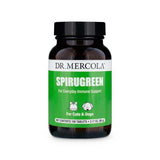
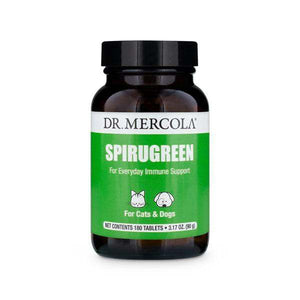
| Dr Mercola SpiruGreen for Pets | Whole-food antioxidant top-up | Tablet | Spirulina, astaxanthin |
| YuMOVE Skin & Coat Care | Itchy skin and dull coat | Liquid | Omega-3 and omega-6 blend, vitamin E |
Does my dog actually need a multivitamin?
This is the question most buying guides skip, and it is the one your vet will ask first.
Commercially produced complete dog food is formulated to meet established nutrient profiles — in Europe those published by FEDIAF, drawing on the US National Research Council's Nutrient Requirements of Dogs and Cats. A food labelled "complete" is legally required to supply every essential nutrient in adequate amounts. A food labelled "complementary" (most treats, toppers and wet trays sold as mixers) is not.
So the honest answer is: if your dog is healthy and eats a complete food, a general multivitamin is unlikely to do much. Where supplements genuinely earn their place is narrower and more specific.
When a supplement is likely to help
| Situation | What to consider | Why |
|---|---|---|
| Home-cooked or unbalanced raw diet | Full-spectrum multivitamin, ideally a diet formulated by a veterinary nutritionist | Home diets are commonly short on calcium, zinc, vitamin D, vitamin E and iodine |
| Fussy eater or reduced appetite | Powder or liquid multivitamin | Under-eating means under-consuming the vitamin premix in the food |
| Senior dog, stiff after rest | Omega-3 (EPA/DHA), with or without joint support | Best-evidenced nutritional intervention for canine osteoarthritis |
| Dull coat, dry or flaky skin | Omega-3 and omega-6, zinc, biotin | Skin and coat turn over rapidly and respond to fatty acid status |
| Recurrent loose stools | Targeted pet probiotics | Specific strains can shorten episodes of acute diarrhoea |
| Recovering from illness or surgery | Vet-directed supplementation only | Needs depend on the condition; some supplements interact with medication |
When to skip it
- Healthy adult dog on a complete food. You are, at best, producing expensive urine.
- Large-breed puppies. Growth diets are carefully calcium-balanced. Adding calcium or a general mineral supplement is associated with developmental orthopaedic disease, and should not be done without veterinary direction.
- Dogs on prescription diets. Renal, hepatic and urinary diets are deliberately restricted in certain nutrients. Adding a multivitamin can undo the point of the diet.
- Pregnant or lactating bitches, unless your vet has specified the product. Excess vitamin A in particular carries risk in pregnancy.
If you are unsure whether your dog's diet has a gap, that is a conversation for your vet or a veterinary nutritionist — not a guess based on a label.
What are dog vitamins?
Dog vitamins are supplements formulated to supply nutrients a dog may not be getting in adequate amounts from its food. They typically combine fat-soluble vitamins (A, D, E, K), water-soluble vitamins (the B group), trace minerals such as zinc and selenium, and often functional extras like fatty acids, probiotics or joint compounds.
In Great Britain these products are sold as complementary feed under animal feed law, not as veterinary medicines. That distinction matters: a complementary feed cannot legally claim to treat or prevent disease. Anything making a genuine medicinal claim requires authorisation from the Veterinary Medicines Directorate. If a dog supplement promises to cure arthritis or shrink tumours, that is a marketing claim outside what the regulatory category permits — and a reason to be sceptical of everything else on the label.
Practically, most owners buying "dog vitamins" fall into one of three groups: those with general wellness goals, those managing an ageing dog, and those chasing a specific visible problem such as itching or shedding.
Best vitamins for dogs: key ingredients to consider
Ingredient lists on pet supplements are long by design. These are the components that actually change the value of a product, with an honest read on the evidence for each.
| Ingredient | What it does | Strength of evidence in dogs |
|---|---|---|
| EPA and DHA (omega-3) | Anti-inflammatory; supports joints, skin, heart and brain | Good. Multiple controlled trials show improved mobility scores in osteoarthritic dogs; systematic reviews rate it the best-supported nutraceutical |
| Zinc | Skin integrity, wound healing, immune function | Good for deficiency. Northern breeds such as Huskies and Malamutes are prone to zinc-responsive dermatosis |
| B-complex (B1, B2, B6, B12) | Energy metabolism, nerve function, red blood cell formation | Good for deficiency states; limited benefit in an already well-fed dog |
| Vitamin E | Antioxidant, protects cell membranes; works alongside omega-3 | Moderate. Requirement rises when fat intake rises, which is why good fish oils include it |
| Probiotics | Gut microbiome support | Moderate but strain-specific. Certain strains shorten acute diarrhoea; a generic "probiotic blend" is not the same thing |
| Glucosamine and chondroitin | Cartilage building blocks | Weak and inconsistent. Reviews of canine trials find limited, variable benefit. Not a substitute for veterinary pain relief |
| MSM | Sulphur compound, proposed anti-inflammatory | Weak. Little canine-specific trial data |
| Taurine | Heart and retinal function | Situational. Dogs normally make their own from methionine and cysteine, but certain breeds and diets are linked with low taurine and dilated cardiomyopathy |
| L-carnitine | Fatty acid transport for energy; cardiac muscle | Situational. Used therapeutically in some cardiac and weight-management cases |
| Colostrum | Immunoglobulins, gut support | Limited. Some promising early work, not yet strong evidence |
| Vitamin C | Antioxidant, collagen synthesis | Not essential. Unlike humans and guinea pigs, dogs synthesise vitamin C in the liver. It is an optional extra, not a gap-filler |
That last row is worth pausing on, because a great many dog supplement descriptions imply dogs need dietary vitamin C the way we do. They do not. It is not harmful in modest amounts, but it should not be the reason you choose one product over another.
The 10 best multivitamins for dogs
Ranked by how clearly each one earns its place for a defined type of dog, rather than by ingredient count.
1. Welzo Multivitamin for Dogs — best everyday all-rounder
Welzo Multivitamin for Dogs is a chicken-flavoured tablet built around the nutrients most likely to be marginal in a mixed or home-supplemented diet, rather than a scattergun ingredient list.

Key ingredients
- Vitamin B complex (B1, B2, B6, B12) — supports energy metabolism, nerve function and red blood cell formation. B12 in particular is required for normal haematopoiesis, and dogs with chronic gut disease can become deficient.
- Zinc and biotin — the pairing most consistently linked to coat condition. Low zinc status shows up as dry, scaly skin and a dull coat before anything else.
- Omega-6 fatty acids — contribute to skin barrier function and coat gloss.
Best for: owners who want one straightforward daily tablet for a dog with no specific medical problem. Trade-off: omega-6 without meaningful omega-3 is only half the fatty-acid picture — pair it with a fish oil if skin is the main concern.
2. SuperDog Health & Vitality — best value chewable
SuperDog Health & Vitality is the most affordable option here and, being chewable, the easiest to give to a dog who spits out tablets.

Key ingredients
- Spirulina and wheatgrass — whole-food sources of carotenoids and chlorophyll. Pleasant additions rather than the reason to buy.
- Probiotics — included for gut and immune support.
- Vitamin E and selenium — complementary antioxidants. Selenium is genuinely useful but has a narrow safety margin, which is an argument against stacking several selenium-containing products at once.
Best for: a first supplement, or a dog who refuses tablets. Trade-off: a general wellness formula, so don't expect it to shift a specific joint or skin problem on its own.
3. SuperDog Joints + Bones — best for stiffness and mobility
SuperDog Joints + Bones targets mobility rather than general nutrition, combining the three ingredients most commonly used in canine joint supplements.

Key ingredients
- Glucosamine and chondroitin — cartilage precursors. Worth being clear-eyed here: systematic reviews of canine trials find the evidence weaker and less consistent than marketing suggests. Some dogs appear to do well; many show no measurable change.
- MSM — a sulphur compound with plausible anti-inflammatory mechanisms but little canine trial data.
- Vitamin C — supports collagen synthesis, though as noted, dogs make their own.
Best for: an older or working dog whose stiffness is mild and whose vet has ruled out treatable pathology. Trade-off: if your dog is in pain, this is not a substitute for veterinary assessment and prescribed analgesia. A supplement alongside proper treatment is reasonable; a supplement instead of it is not.
4. Life Extension Dog Mix — best powder for seniors and fussy eaters
Life Extension Dog Mix is a powder stirred into food, which sidesteps the tablet problem entirely and lets you scale the dose precisely to body weight.

Key ingredients
- Vitamins A, D3 and E — vision, calcium absorption and antioxidant protection respectively. Because these are fat-soluble, this is a formula to dose carefully rather than approximate.
- Digestive enzymes and probiotics — support nutrient absorption, which is often where older dogs struggle first.
- Glucosamine and chondroitin — joint support built in, reducing the need for a second product.
Best for: senior dogs, and anyone whose dog treats tablets as a personal insult. Trade-off: contains preformed vitamins A and D, so do not combine it with cod liver oil or another A/D-containing product without checking totals.
5. Lamberts Pet Nutrition — best practitioner-grade formulation
The Lamberts professional range applies the same manufacturing standards the brand uses for its human supplements, which shows up in transparent dosing and consistent quality control.

Key ingredients
- Vitamins C and E — antioxidant pairing that limits oxidative damage to cell membranes.
- B vitamins — energy metabolism and nervous system support.
- Omega-3 fatty acids (EPA and DHA) — the evidence-led component, relevant to joints, skin and cardiovascular health.
Best for: owners who prioritise manufacturing quality and clear labelling. Trade-off: priced accordingly.
6. Nordic Naturals Omega-3 Pet (Cats and Small Breed Dogs) — best omega-3 for small dogs
Nordic Naturals Omega-3 Pet is a purified fish oil in a pump bottle, which makes small, accurate doses realistic for a 5kg dog — the size where capsules and generic pumps tend to overshoot.
Omega-3 deserves its position as the ingredient with the strongest evidence base in this whole category. Controlled trials in dogs with osteoarthritis have reported improved weight-bearing and owner-assessed mobility on fish-oil-enriched diets, and reviews of canine nutraceuticals consistently rate EPA and DHA above glucosamine-type products.
Best for: small breeds needing precise dosing. Trade-off: liquid oils oxidise. Refrigerate after opening and discard if it smells sharp or rancid.
7. Nordic Naturals Pet Cod Liver Oil — best for larger dogs and coat condition
Nordic Naturals Pet Cod Liver Oil supplies EPA and DHA alongside the vitamins A and D that occur naturally in cod liver oil, in a bottle size that suits a medium or large dog on daily dosing.
Important: those naturally occurring vitamins A and D are exactly why cod liver oil needs care. Both are fat-soluble and accumulate. Chronic excess vitamin A in dogs is associated with painful new bone formation around the vertebrae, and vitamin D excess causes raised blood calcium and kidney damage. Do not stack cod liver oil on top of a multivitamin containing A and D without adding up what your dog is actually receiving.
Best for: medium and large dogs where coat condition is the target. Trade-off: the one product on this list you should not casually combine with others.
8. Lamberts Pet Nutrition Omega 3 Capsules — best mess-free omega dosing
Lamberts Pet Nutrition Omega 3 Capsules deliver fish oil in a capsule that can be pierced over food or given whole, avoiding the oily bowl and the rancidity risk of an open bottle.
Best for: owners who travel with their dog, or anyone who has given up wiping fish oil off the kitchen floor. Trade-off: capsules make it harder to fine-tune a dose by body weight than a pump does.
9. Dr Mercola SpiruGreen for Pets — best whole-food antioxidant top-up
Dr Mercola SpiruGreen combines spirulina with astaxanthin, the carotenoid that gives salmon its colour and one of the more interesting antioxidants in the pet space.
Best for: owners already happy with their dog's core diet who want a whole-food antioxidant addition. Trade-off: this is a top-up, not a multivitamin. It will not fill mineral gaps in a home-cooked diet.
10. YuMOVE Skin & Coat Care — best for the itchy dog
YuMOVE Skin & Coat Care is a liquid formulated specifically around fatty acids and vitamin E for dogs with dry, itchy or irritated skin, and sits in Welzo's wider pet skin and coat care range.
Best for: dogs with mild, non-specific itchiness and a dull coat. Trade-off — and this one matters: persistent itching in dogs is far more often fleas, environmental allergy (atopic dermatitis), food allergy or a skin infection than a nutritional shortfall. If your dog is scratching enough to break skin, lose hair or keep you awake, that is a veterinary appointment, not a supplement purchase. Check flea and tick prevention is current before assuming a diet problem.
How do I choose the right multivitamin for my dog?
Work through these in order. The first question that gets a "yes" tells you what to buy.
- Is my dog on a home-cooked, unbalanced or largely complementary diet? → A full-spectrum multivitamin, and ideally a diet plan from a veterinary nutritionist.
- Is there a specific visible problem — stiffness, itching, loose stools? → A targeted product for that problem, after your vet has ruled out an underlying cause.
- Is my dog over about seven, or a large breed over about six? → Omega-3 is the highest-value single addition, with joint support as an optional layer.
- Is my dog struggling to eat enough? → A powder or liquid, which won't add a swallowing battle to an existing appetite problem.
- None of the above? → Spend the money on a better complete food and a set of scales instead. Keeping a dog lean does more for its joints over a lifetime than any supplement on this page.
What to check on the label
- Named quantities, not just named ingredients. "Contains omega-3" tells you nothing; "500mg EPA + DHA per pump" tells you everything.
- Dosing by body weight. A product with one dose for all dogs is not taking a 4kg Chihuahua and a 45kg Rottweiler seriously.
- Species-specific formulation. Made for dogs, not repackaged from a human line.
- Batch number and expiry date. Basic, and absent more often than you'd expect.
- Sensible claims. A complementary feed legally cannot treat disease. Claims that it does are a red flag about the manufacturer's standards generally.
How much should I give? Dosing and safety
Always dose to the product label and your dog's current body weight — not its weight last year, and not a dose scaled from a human product.
For omega-3 specifically, veterinary studies investigating osteoarthritis have typically used combined EPA and DHA in the range of roughly 50–100mg per kg of body weight daily, which is considerably higher than a general wellness dose. Therapeutic dosing at that level should be set by your vet, because high-dose fish oil can affect platelet function, loosen stools and add meaningful calories to a dog that needs to lose weight.
Nutrients where excess causes real harm
| Nutrient | Risk in excess | Who is most at risk |
|---|---|---|
| Vitamin D | Raised blood calcium, vomiting, excessive thirst, acute kidney injury | Any dog given human vitamin D or multiple D-containing products |
| Vitamin A | Painful new bone formation around the vertebrae and joints; birth defects in pregnancy | Dogs fed large amounts of liver or cod liver oil long-term |
| Calcium | Skeletal developmental disease | Growing large and giant-breed puppies |
| Iron | Vomiting, bloody diarrhoea, liver damage | Dogs that raid a human multivitamin bottle |
| Selenium | Narrow safety margin; toxicity possible with stacked products | Dogs on several supplements at once |
| Xylitol (as a sweetener) | Rapid, dangerous drop in blood sugar; liver failure | Dogs given human chewables, gummies or sugar-free supplements |
If you suspect your dog has swallowed a human supplement — particularly one containing iron, vitamin D, xylitol or alpha-lipoic acid — contact your vet or the Animal PoisonLine straight away rather than waiting for symptoms.
How long before I see a difference?
Unrealistic timelines are the main reason owners abandon supplements that were working, and the main reason they credit ones that weren't.
| Goal | Realistic timeframe | Why |
|---|---|---|
| Firmer stools (probiotics) | 3–7 days | Gut populations shift quickly |
| Reduced itching (omega-3) | 4–8 weeks | Fatty acid composition of skin membranes changes slowly |
| Improved mobility (omega-3) | 4–12 weeks | Trials generally measured change at 6–12 weeks |
| Visible coat improvement | 6–10 weeks | Governed by the hair growth cycle — new coat has to grow in |
| Joint supplements (glucosamine type) | 6–8 weeks trial, then reassess honestly | If nothing has changed by then, it probably won't |
Take a short video of your dog getting up from lying down before you start. In eight weeks it will tell you far more than memory will.
Myth vs fact: dog supplements
| Common claim | What's actually true |
|---|---|
| "Every dog benefits from a daily multivitamin" | Dogs on a complete food already receive the full nutrient profile. Benefit is concentrated in specific situations. |
| "Natural means safe" | Vitamin D and vitamin A are entirely natural and among the most common supplement-related toxicities in dogs. |
| "Human vitamins are fine at a smaller dose" | Dose isn't the only issue. Xylitol, iron loading and species differences in metabolism make human products genuinely hazardous. |
| "Grain-free is healthier, so grain-free supplements are too" | Grain-free diets have been investigated in connection with dilated cardiomyopathy in dogs. The picture is unresolved, and "grain-free" is not a quality marker. |
| "If some helps, more helps faster" | Fat-soluble vitamins accumulate. Doubling up is the single most common way owners cause harm. |
| "Supplements can replace veterinary treatment for arthritis" | They are an adjunct. Weight management, exercise modification and prescribed pain relief do the heavy lifting. |
Common mistakes owners make
- Stacking products with overlapping ingredients. A multivitamin plus cod liver oil plus a joint chew can easily triple vitamin A intake. Add up the labels.
- Supplementing instead of investigating. Sudden coat loss, persistent itching or new stiffness deserve a diagnosis first.
- Dosing by eye. "About a capful" for a dog whose weight has changed by 20% is not a dose.
- Giving up at three weeks. Most meaningful changes need six to eight.
- Leaving fish oil at room temperature. Oxidised oil is pro-inflammatory — the opposite of the point.
- Not telling the vet. High-dose omega-3 is relevant before surgery; some botanicals interact with medication. Mention everything your dog takes.
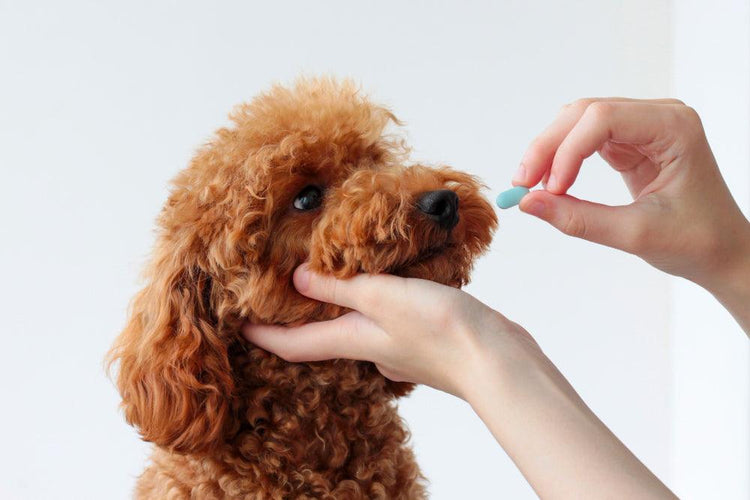
How do I get my dog to take a tablet?
- Try food first. Most palatable chewables will simply be eaten. Start here before escalating.
- Use a purpose-made pill wrap such as Royal Canin Pill Assist, or a soft dog treat moulded around the tablet.
- Give three treats, not one. One empty, one loaded, one empty — fast. Dogs sort tablets out of food when given time to think.
- Switch format rather than fight. A powder mixed into wet food solves the problem permanently for most refusers.
- Follow with water. A tablet lodged in the oesophagus can cause irritation, so a drink or a little wet food afterwards is sensible.
Puppies, adults and seniors: what changes?
| Life stage | Priority | Main caution |
|---|---|---|
| Puppy | A correctly formulated growth food, size-appropriate | Do not add calcium or general minerals to a large-breed puppy's diet |
| Adult (1–7) | Body condition and dental health matter more than supplements | Skip general multivitamins unless there's a reason |
| Senior (7+, or 6+ for large breeds) | Omega-3; joint support; monitoring for age-related disease | Check for kidney, liver or heart disease before starting anything — these change what is safe |
Frequently asked questions
Do dogs really need multivitamins?
Most healthy dogs eating a complete commercial food do not. Supplements are most useful for dogs on home-prepared diets, fussy eaters, seniors, and dogs with a specific problem such as stiff joints or itchy skin. Speak to your vet before starting one, particularly if your dog takes medication.
Can I give my dog human multivitamins?
No. Human multivitamins can contain iron at levels that cause serious poisoning in dogs, vitamin D far above canine requirements, and xylitol as a sweetener in chewable or gummy formats. Xylitol causes a rapid, dangerous drop in blood sugar and can lead to liver failure. Always use a product formulated for dogs.
What is the best vitamin for a dog's coat?
Omega-3 and omega-6 fatty acids, with zinc and biotin as supporting nutrients. Allow six to ten weeks, because the improvement comes from new hair growing in rather than existing hair changing. If shedding is sudden or patchy, see a vet — that pattern points to a medical cause rather than nutrition.
How long do dog multivitamins take to work?
Digestive effects from probiotics can appear within a week. Skin and coat changes typically take six to ten weeks. Mobility changes from omega-3 are usually assessed at six to twelve weeks. Give any supplement a fair eight-week trial before deciding.
Can dog vitamins cause diarrhoea?
Yes, particularly oil-based products introduced at full dose. Start at roughly a quarter of the target dose and build up over one to two weeks. If loose stools persist beyond a few days, stop and speak to your vet.
Should I give my dog a multivitamin and a joint supplement together?
Only after comparing the labels. Many joint products already include vitamins C, D and E, so combining them can push fat-soluble vitamins higher than intended. Add the amounts together and check against the dosing guidance, or ask your vet.
Are dog multivitamins regulated in the UK?
They are sold as complementary feed under animal feed law rather than as veterinary medicines, so they are not assessed for efficacy the way a licensed medicine is. Products making genuine medicinal claims require authorisation from the Veterinary Medicines Directorate. Choose manufacturers who publish quantities per dose and batch information.
Is fish oil or a multivitamin better for my dog?
For a dog on a complete food with joint or skin concerns, fish oil is generally the higher-value choice — omega-3 has stronger supporting evidence than any other common ingredient. For a dog on a home-cooked diet, a full multivitamin addresses a wider set of potential gaps.
Can puppies take multivitamins?
Usually they shouldn't. Puppy foods are formulated for growth, and adding minerals — calcium especially — to a large or giant-breed puppy's diet is linked with developmental orthopaedic disease. Any puppy supplementation should be directed by your vet.
What are the signs of vitamin deficiency in dogs?
Common signs include a dull or thinning coat, flaky skin, poor wound healing, low energy, weight loss and, in more advanced cases, weakness or neurological changes. These overlap heavily with a long list of medical conditions, so they warrant a veterinary examination rather than a supplement bought on the strength of a symptom checklist.
When to see your vet rather than buy a supplement
Book an appointment if your dog has sudden or patchy hair loss, itching severe enough to break skin, a limp or reluctance to jump, unexplained weight loss, increased thirst or urination, or a change in appetite lasting more than a couple of days. Increased thirst in particular can indicate kidney disease, diabetes or a calcium problem — and is worth mentioning that excess vitamin D is one cause of it.
Supplements complement good veterinary care. They do not replace a diagnosis.
The short version
If your dog is healthy and eats a complete food, save your money. If it's a senior, an itchy dog or a stiff dog, start with omega-3 — Nordic Naturals Omega-3 Pet for small breeds, Pet Cod Liver Oil for larger ones. If your dog eats a home-cooked diet, a full multivitamin such as Welzo Multivitamin for Dogs is the sensible base. Browse the full pet supplements range, and check anything new with your vet first.
This article is for general information and is not a substitute for veterinary advice. Always consult your vet before starting a new supplement, particularly if your dog is unwell, pregnant, or taking medication.


 Ocijenjeno izvrsno s 28,951+ recenzija
 100% jamstvo povratka novca