

 Instagram





Best Collagen for Gut Health UK 2026


Related products


Written and medically reviewed by Dr Zeeshan Afzal (MBBS) — Medical Doctor & Medical Content Lead, Welzo
Part of our digestive health guides · Shop gut health supplements
Evidence-based · Honest about what's proven and what isn't · UK-focused
Last updated: July 2026 · Reading time: ~15 minutes
Collagen has become one of the most heavily marketed supplements for gut health in the UK, and the pitch is intuitive: collagen is a structural protein, the gut lining is a structure, therefore collagen rebuilds the gut lining. It is a tidy story. It is also a considerable oversimplification of what happens to a protein after you swallow it.
Here is the honest position, and it shapes this whole guide. Collagen has a moderate and genuinely respectable evidence base for skin and joints, built on multiple randomised trials. Its evidence base for the gut specifically is thin — largely laboratory work and one small uncontrolled pilot study. That does not make it a bad purchase. It does mean you should buy it understanding what is established and what is extrapolation.
What that changes is how you choose. When a supplement's benefit is uncertain, the things you can verify matter more: what else is in the tub, whether the testing is published, and what each serving costs. Below, the best collagen options in the UK judged on exactly that, from the Welzo collagen range.
Table of contents
- What actually happens to collagen you swallow
- The gut evidence, honestly assessed
- The glutamine problem
- How we chose — and why additives matter here
- Our top picks
- Compared at a glance
- The six best collagen supplements for gut health
- How to take collagen
- What about bone broth?
- Safety and who should avoid it
- When to see a doctor
- Frequently asked questions
What actually happens to collagen you swallow
Collagen does not travel intact from your mug to your gut wall. Like any dietary protein, it is broken down by stomach acid and enzymes into individual amino acids and short peptide fragments, absorbed across the intestinal wall, and distributed wherever your body decides they are needed. There is no mechanism by which swallowed collagen is delivered preferentially to the gut lining.
Two things make collagen more interesting than that summary suggests.
Its amino acid profile is unusual. Collagen is roughly one-third glycine, and rich in proline and hydroxyproline — a composition you do not get from ordinary dietary protein. Glycine is a genuine building block of mucin, the protein that forms the protective mucus layer over your gut lining, which is the most plausible mechanistic link between collagen and gut health.
Some peptides survive digestion. Research has repeatedly detected specific collagen dipeptides — notably Pro-Hyp and Hyp-Gly — circulating in blood after ingestion. So not everything is reduced to free amino acids, and these fragments are the presumed signalling molecules behind collagen's demonstrated skin and joint effects.
That is the honest mechanistic case: plausible, partially demonstrated, and not the same thing as proof that collagen repairs a gut lining.
The gut evidence, honestly assessed
Where collagen's evidence is genuinely good
Skin and joints. Multiple randomised, placebo-controlled trials and meta-analyses have reported improvements in skin elasticity and hydration, and in joint pain in osteoarthritis and activity-related joint discomfort. This is a real evidence base, and it is why collagen has mainstream credibility.
Where it is thin
The gut. What exists is mostly:
- Laboratory studies on intestinal cell monolayers, where collagen peptides have been reported to affect barrier integrity markers. Useful for generating hypotheses, not for predicting clinical outcomes.
- One small pilot study in women with self-reported digestive symptoms, which reported improvement over eight weeks. It was open-label with no placebo group — and in digestive symptom research, placebo response rates routinely reach 30–40%, so an uncontrolled trial cannot separate the supplement from the expectation.
- Extrapolation from mechanism — glycine, mucin, amino acids — which is reasoning, not evidence.
There are, at the time of writing, no substantial randomised placebo-controlled trials showing that collagen supplementation improves IBS symptoms, intestinal permeability or inflammatory bowel disease outcomes.
What that means practically
Collagen is a reasonable, low-risk, well-tolerated protein supplement with proven benefits elsewhere in the body and a plausible but unproven gut rationale. If you want it for skin and joints and hope the gut follows, that is a sensible purchase. If gut symptoms are your primary problem, the interventions with stronger evidence — fibre, a structured low FODMAP approach with a dietitian, or specific probiotic strains — deserve your attention first. See also our full guide to collagen for gut health and is leaky gut real.
The glutamine problem
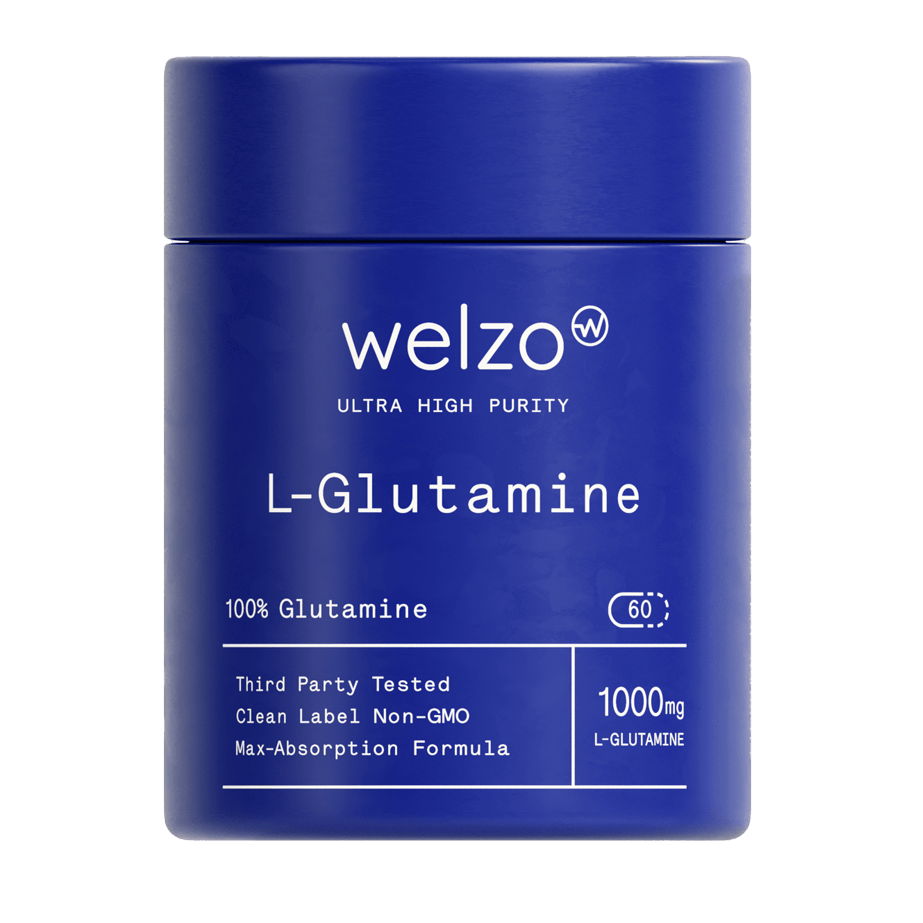
This is the single most useful thing to understand before buying collagen for gut health, and it is almost never mentioned in the marketing.
The amino acid with the strongest research connection to the intestinal barrier is glutamine. It is the primary metabolic fuel for enterocytes — the cells lining your small intestine — and it is the amino acid that appears throughout gut barrier research, including in clinical settings such as critical illness and intestinal recovery.
Collagen contains very little glutamine. Its profile is dominated by glycine, proline and hydroxyproline. So if your reason for buying collagen is specifically to support the gut lining, you are buying a protein that is comparatively low in the amino acid with the best barrier evidence.
That is not an argument against collagen — glycine has its own genuine role in mucin production, and the two are not mutually exclusive. It is an argument for knowing what you are buying and why. If barrier support is the actual goal, see Welzo Ultra Purity L-Glutamine, glutamine vs collagen for the gut and gut barrier function. Other options with their own mucosal rationale include zinc carnosine and slippery elm.
How we chose — and why additives matter here
When a supplement's benefit is well established, you rank on dose. When it is uncertain, you rank on what you can verify. Our criteria, in order of weight:
- What else is in the tub. This is the top criterion for a gut health article specifically, and it is not a purity fetish. Flavoured collagens routinely contain sweeteners such as sucralose, sorbitol or stevia, and thickeners such as xanthan or guar gum. Sugar alcohols are fermentable and are a recognised trigger for bloating and loose stools; gums can do the same in sensitive people. If you are buying collagen because your digestion is unhappy, an additive-laden powder can plausibly make things worse. See sweeteners and gut health.
- Verifiable testing. Collagen is an animal-derived bulk ingredient and heavy metal accumulation is a real quality concern in this category. Published third-party testing beats a claim of testing.
- Cost per serving. Not per tub. Pack sizes here run from 150g to 567g and servings from 2.5g to 20g, which makes headline prices meaningless.
- Dose per serving against trial ranges. Studies have generally used 2.5–15g daily.
- Solubility and tolerance. A powder you will actually take daily.
Our top picks
Best Overall: Welzo Ultra Purity Pure Bovine Collagen Peptides Powder — £21.99
Best Grass-Fed: APE Nutrition Grass-Fed Collagen Powder, 400g — £30.05
Best Halal-Certified Production: Applied Nutrition Collagen Peptides, 300g — £18.56
Best Known Brand: Vital Proteins Collagen Peptides, 567g — £50.05
Best Large Tub: Great Lakes Hydrolysate Collagen, 454g — £32.99
Best Studied Peptide (skin, not gut): Osavi Collagen Peptides, Unflavoured 150g — £15.82
Compared at a glance
One warning about how to read this. Cost per serving is meaningless here, because serving sizes across these six products range from 2.5g to 20g — an eightfold spread. A product with a tiny serving looks cheap per serving while being the most expensive collagen in the list. The column that lets you compare like with like is cost per gram, so that is what this table is sorted on.
| Product | Pack | Serving | Additives | Price | Cost per gram |
|---|---|---|---|---|---|
| Welzo Ultra Purity | 400g / 80 servings | 5g | None | £21.99 | £0.055 |
| Applied Nutrition | 300g / 15 servings | 20g | None | £18.56 | £0.062 |
| Great Lakes | 454g / 38 servings | 12g | None | £32.99 | £0.073 |
| APE Nutrition | 400g / 40 servings | 10g | None | £30.05 | £0.075 |
| Vital Proteins | 567g / ~28 servings | 20g | None (unflavoured) | £50.05 | £0.088 |
| Osavi (unflavoured) | 150g / 60 servings | 2.5g | None | £15.82 | £0.105 |
Prices, review counts and serving sizes taken from the live Welzo product pages at the time of writing and subject to change. Cost per gram is price divided by pack weight. Note the effect of serving size: Osavi has the lowest shelf price and the lowest cost per serving in the list, yet is the most expensive collagen per gram, because its serving is only 2.5g. Welzo Ultra Purity is the cheapest on both measures.
The six best collagen supplements for gut health
1. Welzo Ultra Purity Pure Bovine Collagen Peptides Powder — Best Overall
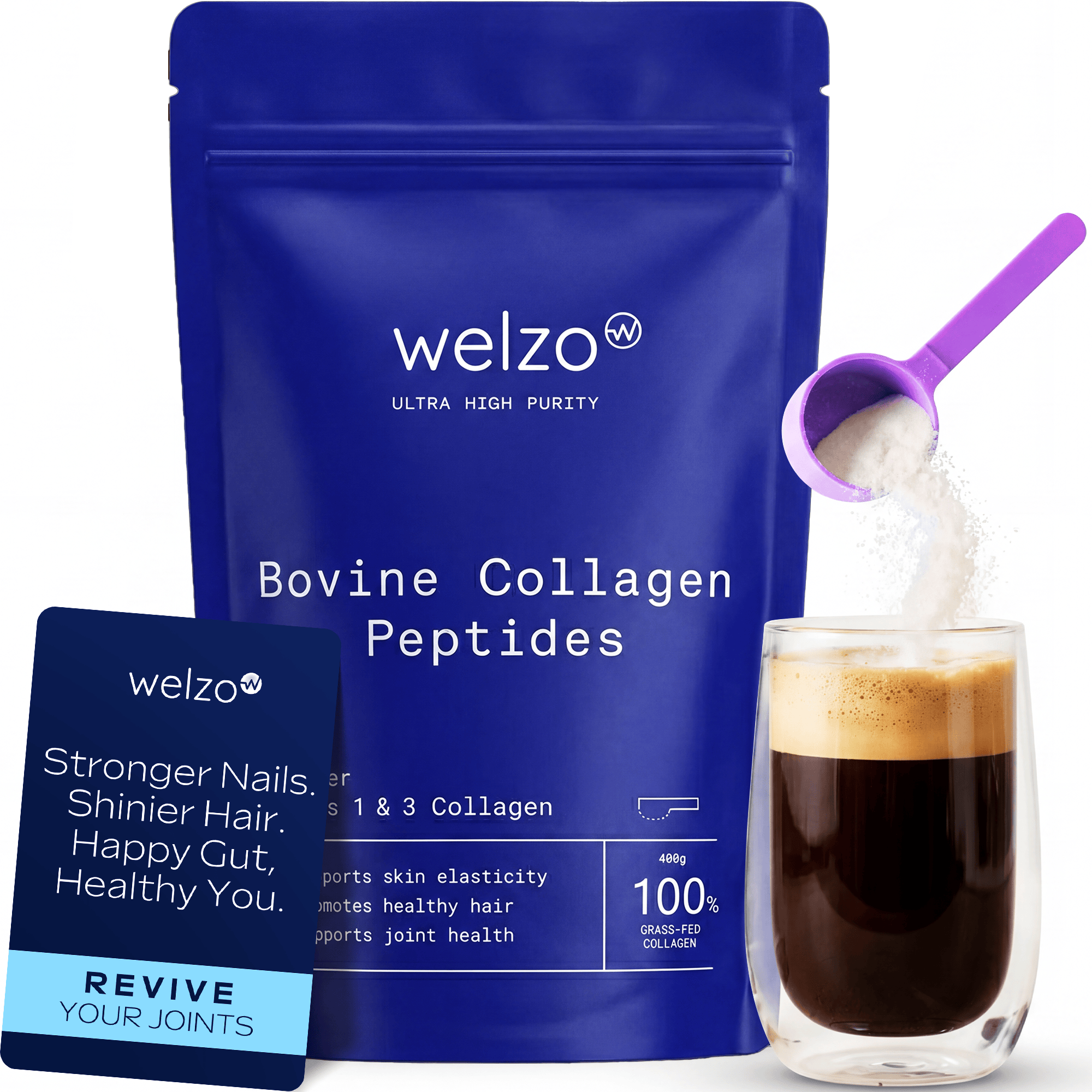
Price: £21.99 (reduced from £29.99 — save 27%) · Reviews: 114 · Where to buy: Exclusively from Welzo
Per serving: 5g hydrolysed bovine collagen peptides (Type I & III) · Servings per pouch: 80 · Cost per serving: approximately £0.27 · Other ingredients: none
Full disclosure: this is Welzo's own-brand product. It is ranked first on the criteria set out above, and the justification is specific to gut health rather than general brand preference.
Why it leads for gut health specifically. Three reasons, each verifiable rather than asserted.
First, the ingredient list is a single item. "Other Ingredients: None." No flavourings, no sweeteners, no gums, no bulking agents, no flow agents. In any other collagen article this would be a nice-to-have. In a gut health article it is the most important attribute on the page, because the additives common in flavoured collagens — sugar alcohols, sucralose, xanthan and guar gum — are precisely the compounds associated with bloating and loose stools in sensitive people. If you are buying collagen because your digestion is already unsettled, the cleanest possible formulation is the rational choice, and this is the only product here whose label states categorically that nothing else is in it.
Second, the testing is published rather than claimed. Every batch is third-party tested for purity, heavy metals, microbial safety and label accuracy, and — unusually for this category — the Certificate of Analysis is published openly. Heavy metal accumulation is a genuine quality issue in animal-derived bulk ingredients, so a document you can actually open is worth more than a testing badge.
Third, the cost per serving is the lowest here by a wide margin. At £21.99 for 80 servings of 5g, that is roughly 27p a day. Collagen only plausibly does anything with consistent long-term use, so cost per serving is the number that determines whether you will still be taking it in six months.
The honest caveats. At 5g, one serving sits at the lower end of the 2.5–15g range used across collagen research — fine as a daily intake, but if you are following a protocol at 10g or more you will use two servings and halve the pouch life. It is bovine, so not suitable for vegans or vegetarians. And — as with every product in this category — the strong evidence behind Type I and III collagen concerns skin and connective tissue, not the gut lining.
| Pros | Cons |
|---|---|
|
Zero additives — no gums, sweeteners or flavourings Certificate of Analysis published openly Lowest cost per serving here (~£0.27) 80 servings per pouch Third-party tested for heavy metals and label accuracy Type I & III, unflavoured, dissolves in hot or cold GMP-compliant, UK and EU regulated |
5g serving is at the lower end of the trial range Bovine — not vegan or vegetarian Not certified halal or kosher Gut-specific evidence for collagen remains limited |
2. APE Nutrition Grass-Fed Collagen Powder, 400g — Best Grass-Fed
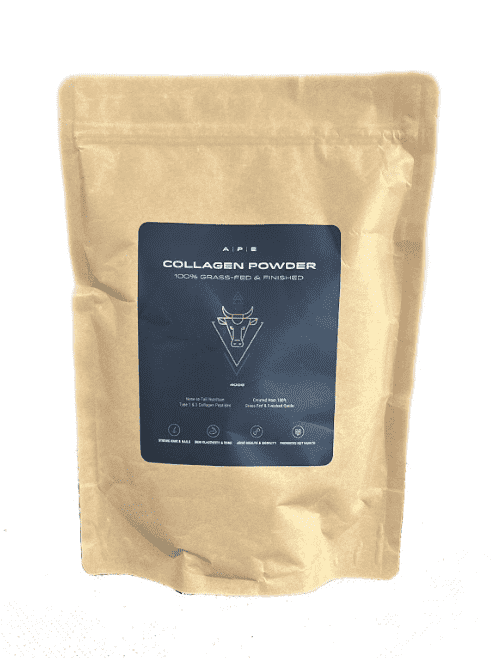
Price: £30.05 · Reviews: 92 · Where to buy: Available from Welzo
Source: 100% grass-fed and grass-finished cattle, raised outdoors · Size: 400g, approximately 40 servings · Serving: 10g, supplying about 9.2g protein · Cost per serving: approximately £0.75 · Ingredients: 100% grass-fed bovine collagen peptides (Type I & III), no additives
Why we like it: If sourcing is what matters to you, this is the clearest proposition here. Certified 100% grass-fed and grass-finished is a meaningfully stricter standard than "grass-fed" alone, which in some supply chains permits grain finishing. The formulation is also additive-free, containing only collagen peptides, which keeps it well suited to sensitive digestion.
Being straight about it: there is no good evidence that grass-fed collagen performs differently in the body from grain-fed collagen. The amino acid profile is essentially the same. This is a sourcing, welfare and sustainability preference rather than a clinical one — a legitimate reason to choose it, but not a functional advantage.
| Pros | Cons |
|---|---|
| Certified 100% grass-fed and grass-finished Transparent supply chain No additives Third-party tested Odourless and easy to mix |
No evidence grass-fed performs better clinically Typically a premium price for a sourcing claim Servings per tub not stated upfront |
3. Applied Nutrition Collagen Peptides, 300g — Best Halal-Certified Production
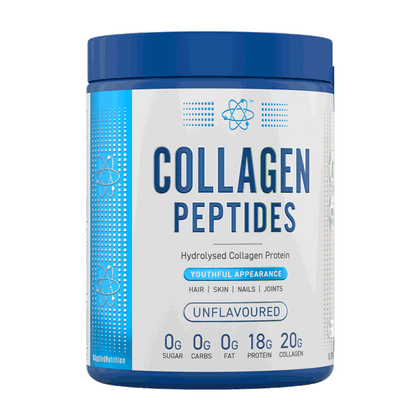
Price: £18.56 · Reviews: 104 · Where to buy: Available from Welzo
Contains: 100% hydrolysed bovine collagen peptides (Type I) · Serving: 2 scoops (20g), supplying 18g protein · Servings per tub: 15 · Cost per gram: £0.062 · Accreditation: ISO 22000, BRC, GMP and halal-accredited facilities · Testing: third-party for contaminants
Why we like it: Bovine collagen is a genuine problem for anyone observing halal requirements, because standard production gives no assurance about how the animal was slaughtered or processed. Applied Nutrition manufactures in halal-accredited facilities, which makes this the practical option for a group otherwise poorly served in this category. The quadruple accreditation — ISO 22000, BRC, GMP and halal — is also the broadest certification stack here.
One point of difference worth noting: this is Type I collagen, whereas most competitors supply Type I and III. Type I is the most abundant collagen in the body and the dominant type in skin, so this is not a shortcoming so much as a narrower profile. Verify current halal certification directly if it is a requirement for you, as accreditations can change.
| Pros | Cons |
|---|---|
|
Halal-accredited production ISO 22000, BRC and GMP accredited Third-party contaminant testing Unflavoured, mixes cleanly Smaller tub for trialling |
Type I only, not Type I and III 300g is the smallest tub here Verify current certification if halal is essential |
4. Vital Proteins Collagen Peptides, 567g — Best Known Brand
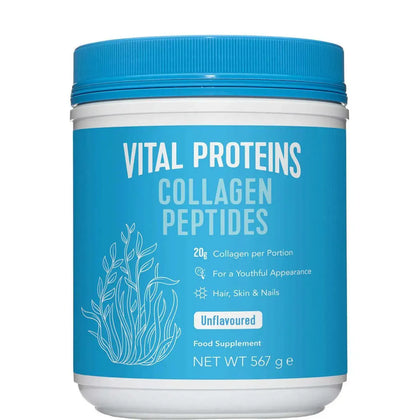
Price: £50.05 · Reviews: 106 · Where to buy: Available from Welzo
Source: grass-fed, pasture-raised bovine · Format: unflavoured, 567g · Daily dose: 20g, supplying 18g protein · Cost per gram: £0.088
Why we like it: The best-known collagen brand in the category, with a long-standing reputation for grass-fed sourcing and clean labelling. The 567g tub is the largest here, and the unflavoured powder dissolves readily in hot or cold liquid. If brand familiarity and availability matter to you, this is the safe choice.
The trade-off is straightforward: you pay a brand premium. On the criteria that matter for gut health — additive-free formulation, published testing, cost per serving — it does not outperform the cheaper options above, and Vital Proteins' flavoured variants do contain additional ingredients, so check you are buying the unflavoured version if sensitivity is your concern.
| Pros | Cons |
|---|---|
| Largest tub here (567g) Grass-fed, pasture-raised sourcing Best-known brand, widely available Unflavoured, dissolves easily |
Brand premium on price Flavoured variants contain additives — check you buy unflavoured No clear advantage on the gut-relevant criteria |
5. Great Lakes Hydrolysate Collagen, 454g — Best Large Tub
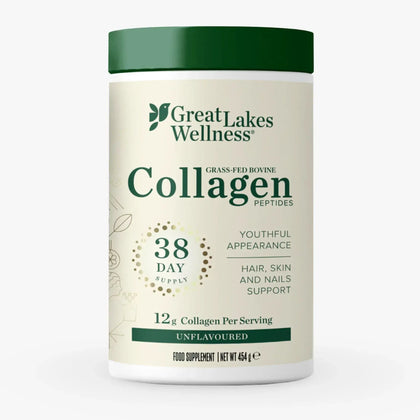
Price: £32.99 (reduced from £45.00 — save 27%) · Reviews: 130 · Where to buy: Available from Welzo
Contains: 100% hydrolysed collagen powder from bovine source, single ingredient · Serving: 2 scoops (12g), supplying 11g protein · Servings per tub: 38 · Cost per gram: £0.073
Why we like it: Great Lakes is one of the longest-established names in collagen, predating the current wellness boom by decades, and the hydrolysate form dissolves in cold as well as hot liquid. It is a genuine single-ingredient product — 100% hydrolysed bovine collagen, nothing else — which puts it alongside our top pick on the criterion that matters most for sensitive digestion. At 38 servings of 12g, it also has the second-largest total collagen content here.
One thing to check before buying. Great Lakes sells both hydrolysate (dissolves in cold liquid) and gelatin (gels when cold) under similar packaging, and they are used very differently. This listing is the hydrolysate. The product page also carries a Welzo Ultra Purity variant in the same dropdown at £29.99, so confirm which one is in your basket before checkout.
| Pros | Cons |
|---|---|
| Long-established heritage brand Hydrolysate dissolves in cold liquid Large 454g tub Suits higher daily doses |
Check specification carefully — range varies Hydrolysate and gelatin products are easily confused Less prominent third-party testing information |
6. Osavi Collagen Peptides, Unflavoured 150g — Best Studied Peptide (for skin, not gut)
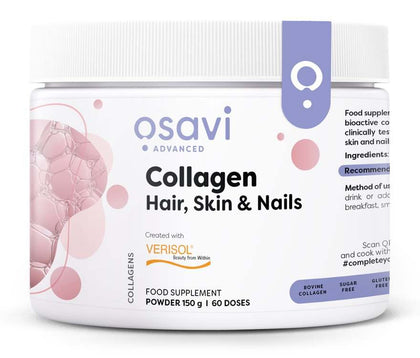
Price: £15.82 (reduced from £18.62 — save 15%) · Reviews: 138 · Where to buy: Available from Welzo
Contains: VERISOL® bioactive collagen peptides (Gelita), no fillers or additives · Serving: 2.5g · Servings per tub: 60 · Cost per gram: £0.105 · Certification: gluten-free, sugar-free, halal and kosher, independently lab verified
Why we like it: This is the only product here built on a patented, specifically trialled peptide rather than generic hydrolysed collagen. VERISOL is a Gelita ingredient with its own published research programme — most notably work led by Proksch at the University of Kiel reporting improvements in skin elasticity and dermal collagen density at a 2.5g daily dose. That is why the serving is so small: it is not a scaled-down version of a 10g product, it is the dose the trials actually used. It is also additive-free, and the halal and kosher certification makes it a second option alongside Applied Nutrition for anyone with those requirements.
Why it ranks last in a gut health article. Not because of its formulation, which is clean, but because of what it was designed and tested for. The VERISOL evidence is skin-specific and does not transfer to the gut, and a 2.5g serving is far below anything discussed anywhere in the collagen research on intestinal barrier function. It is also the most expensive collagen here per gram at £0.105 — you are paying a premium for a patented peptide whose benefit is measured in skin elasticity, not digestion. Excellent product; wrong article.
Check the variant. This entry covers the unflavoured 150g, which contains nothing but collagen peptides. Osavi also sells flavoured versions of the same product — salted caramel and wild berry — which are separate listings and do contain added flavourings. If additives are your concern, buy the unflavoured one specifically.
| Pros | Cons |
|---|---|
|
Patented VERISOL peptide with its own trial data No fillers or additives in the unflavoured version Halal and kosher certified Independently lab verified Lowest shelf price here (£15.82) Most reviewed product in this list (138) |
Most expensive per gram (£0.105) 2.5g serving is far below gut-relevant intakes The VERISOL evidence is skin-specific, not digestive Smallest tub here at 150g Flavoured variants do contain additives — check which you buy |
How to take collagen
Dose: trials have generally used 2.5–15g daily depending on the outcome studied — skin research often at the lower end, joint research higher. A 5g daily serving is a reasonable, evidence-consistent intake.
Timing: there is no good evidence that timing matters. Take it whenever you will remember, which for most people means with a morning drink.
With vitamin C: vitamin C is required as a cofactor for the body's own collagen synthesis. Most UK diets provide plenty, but taking collagen alongside fruit or a vitamin C source is a sensible, cost-free habit.
How long: collagen trials typically run 8–12 weeks before measuring outcomes. Judge it over a couple of months, not a fortnight.
Important: collagen is an incomplete protein — it lacks tryptophan and is low in several essential amino acids. It should supplement your protein intake, never replace it.
What about bone broth?
Bone broth is often presented as the natural, superior alternative. Two honest points.
Its collagen content is highly variable and frequently low — analyses of homemade and commercial broths have found amino acid concentrations well below what a measured collagen supplement provides, and varying enormously with bones, cooking time and dilution. You cannot know what dose you are getting.
There is also no clinical trial evidence that bone broth improves gut health outcomes. It is a nutritious, warming, protein-containing food and there is nothing wrong with drinking it — but as a way of delivering a known collagen dose, a weighed powder is more reliable. See bone broth and gut health.
Safety and who should avoid it
Collagen is among the better-tolerated supplements. Most people take it without difficulty, and reported side effects are mild.
Take care or seek advice if you
- Are vegan or vegetarian — all bovine and marine collagen is animal-derived. "Vegan collagen builder" products supply cofactors such as vitamin C, not collagen itself.
- Observe halal or kosher requirements — standard bovine collagen is not certified; look specifically for accredited production.
- Have a beef or fish allergy — check the source, as marine collagen is derived from fish.
- Are pregnant or breastfeeding — there is limited safety data; ask your midwife or GP.
- Have kidney disease — any additional protein load should be discussed with your clinical team.
- Have a history of kidney stones — collagen contains hydroxyproline, which is metabolised partly to oxalate; discuss it with your doctor if you are a recurrent stone former.
- Are buying an untested budget product — heavy metal contamination is a genuine concern with animal-derived bulk ingredients. Choose brands that publish testing.
Mild side effects can include fullness, bloating, mild nausea or an aftertaste. Starting at half a serving and building up usually resolves this.
When to see a doctor
See your GP — or seek urgent care — if you have:
- Blood or mucus in your poo, or black tarry stools
- Unexplained weight loss
- A change in bowel habit lasting three weeks or more
- Persistent abdominal pain, or pain that wakes you at night
- Diarrhoea lasting more than seven days
- Difficulty swallowing, or persistent vomiting
- Persistent fatigue alongside digestive symptoms
Persistent digestive symptoms deserve a diagnosis rather than a supplement — coeliac disease, IBD and other conditions are all treatable once identified, and delay costs you. Read more on when to see a GP about stomach symptoms, coeliac testing and the Bristol stool chart. See also NHS — IBS.
Frequently asked questions
What is the best collagen for gut health in the UK?
Welzo Ultra Purity Pure Bovine Collagen Peptides Powder (£21.99, 80 servings) is our pick. For gut health specifically the deciding factor is that it contains nothing but collagen — no gums, sweeteners or flavourings, which are the additives most likely to upset sensitive digestion. It also publishes its Certificate of Analysis and is the cheapest collagen in the list per gram at £0.055, working out at roughly 27p per 5g serving.
Does collagen actually heal the gut lining?
There is no good clinical evidence that it does. Collagen is broken down into amino acids and peptides during digestion and is not delivered preferentially to the gut. The mechanism is plausible — collagen is rich in glycine, a building block of the gut's mucus layer — but the human research is limited to laboratory work and one small uncontrolled pilot study. Its proven benefits are in skin and joints.
Is collagen or glutamine better for the gut lining?
Glutamine has the stronger research connection to the intestinal barrier — it is the primary fuel for the cells lining the small intestine. Collagen contains comparatively little glutamine. If gut barrier support is specifically what you are after, glutamine is the more direct choice; collagen's glycine content gives it a different, mucin-related rationale.
How much collagen should I take daily?
Studies have used 2.5–15g daily depending on the outcome. A 5g serving is a reasonable everyday intake within that range. More is not reliably better, and collagen should add to your protein intake rather than replace it, since it is an incomplete protein lacking tryptophan.
How long does collagen take to work?
Trials generally measure outcomes at 8–12 weeks. Give it two to three months of consistent daily use before judging. This is also why cost per serving matters more than the price on the tub.
Is bovine or marine collagen better for the gut?
There is no evidence favouring either for gut health. Bovine is predominantly Type I and III; marine is mostly Type I with slightly smaller peptides, which is sometimes claimed to aid absorption, though the practical difference is unclear. Choose on price, sourcing preference and allergies — marine is unsuitable if you have a fish allergy.
Can collagen cause bloating?
Collagen itself rarely does. What frequently does is what is added to it — sugar alcohols such as sorbitol, sweeteners, and thickening gums are all recognised triggers for bloating and loose stools. If a collagen powder upsets you, check the ingredient list before abandoning collagen altogether; an additive-free version often resolves it.
Is collagen suitable for vegans?
No. All true collagen is animal-derived, from bovine hide and bone or fish skin and scales. Products marketed as "vegan collagen" supply nutrients such as vitamin C, zinc and amino acids that support your body's own collagen production — they do not contain collagen.
Does bone broth work as well as a collagen supplement?
It is far less predictable. Collagen content varies enormously with the bones used, cooking time and dilution, and analyses have found levels well below a measured supplement. There is also no trial evidence that bone broth improves gut outcomes. It is a perfectly good food, but not a reliable way to take a known dose.
Can I take collagen with probiotics or other gut supplements?
Yes, there are no known interactions. Collagen is simply a protein. If you are combining several supplements, introduce them one at a time a week or two apart, so that if something disagrees with you it is clear which one. See how to choose a probiotic.
Medical disclaimer: This article is for general information and education only and does not constitute medical advice, diagnosis or treatment. Food supplements are not a substitute for a varied and balanced diet or a healthy lifestyle, and are not intended to diagnose, treat, cure or prevent any disease. Collagen has not been shown in clinical trials to treat or heal any digestive condition. Product specifications, prices and availability are correct at the time of writing and may change — always check the product page and label. Always seek advice from your GP, pharmacist or another suitably qualified clinician before starting a new supplement, particularly if you are pregnant, breastfeeding, have kidney disease or a history of kidney stones, have allergies, or take prescription medication. Persistent digestive symptoms should be medically assessed rather than self-treated.
About the author
Dr Zeeshan Afzal (MBBS) is a practising medical doctor and Welzo's Medical Content Lead. He writes and reviews Welzo's health content to ensure it is accurate, evidence-based and aligned with current UK clinical guidance, translating complex research into practical advice patients can trust.
Transparency: Welzo sells all products featured in this article, including its own-brand Ultra Purity collagen, which is disclosed as an own-brand product in its listing above. Ranking criteria are stated in full in the "How we chose" section, and the case for the first-placed product rests on verifiable attributes — ingredient list, published Certificate of Analysis and cost per serving.
References
- Iwai K, et al. Identification of food-derived collagen peptides in human blood after oral ingestion of gelatin hydrolysates. J Agric Food Chem. 2005.
- Choi FD, et al. Oral collagen supplementation: a systematic review of dermatological applications. J Drugs Dermatol. 2019.
- García-Coronado JM, et al. Effect of collagen supplementation on osteoarthritis symptoms: a meta-analysis of randomized placebo-controlled trials. Int Orthop. 2019.
- Wang B, et al. Glutamine and intestinal barrier function. Amino Acids. 2015.
- Kim MH, Kim H. The roles of glutamine in the intestine and its implication in intestinal diseases. Int J Mol Sci. 2017.
- Welzo Ultra Purity Bovine Collagen Peptides — Certificate of Analysis. Link
- NHS — Irritable bowel syndrome (IBS). Link


 Beoordeeld uitstekend door 28,951+ beoordelingen
 100% geld -terug -garantie