

 Instagram




Coeliac Blood Testing UK: What to Expect


Related products


Medically reviewed and written by Dr Zeeshan Afzal, MBBS — Medical Officer, Welzo. Last updated: August 2026.
If you have been told you need a coeliac test, the UK pathway is more specific than most people expect — and one mistake before the blood draw can invalidate the whole result. This guide walks through the entire process, from the first blood sample to what happens after diagnosis. For wider context first, see our complete guide to gut health in the UK, browse the Welzo gut health range and probiotics collection, and read our comparison of coeliac disease vs gluten intolerance. Targeted formulas such as Akkermansia, citrus pectin powder, Ultra Purity Berberine and Ultra Purity TUDCA are covered later — but please read the important caveat in the diet section first. The single most important thing to know: do not remove gluten from your diet before testing. Coeliac blood tests measure your immune system's reaction to gluten. Take gluten away and the antibodies fade, producing a false negative that can delay diagnosis by years.

Small bowel biopsy in coeliac disease showing flattened (blunted) villi, crypt hyperplasia and lymphocyte infiltration. Image: Samir, via Wikimedia Commons (CC BY-SA 3.0).
Table of contents
- What coeliac disease is, and why accurate testing matters
- Who should have a coeliac test in the UK?
- The gluten rule: why you must keep eating it
- Which blood tests make up a coeliac test in the UK?
- What to expect on the day of your blood test
- Understanding your coeliac test results
- What happens after a positive blood test
- NHS versus private coeliac testing
- False negatives and false positives
- Life after diagnosis: the first two years
- Negative test but ongoing symptoms?
- Red flags: when to seek urgent help
- Frequently asked questions
- References
What coeliac disease is, and why accurate testing matters
Coeliac disease is a lifelong autoimmune condition, not a food allergy or an intolerance. In genetically susceptible people, eating gluten — the storage protein found in wheat, barley and rye — triggers an immune attack on the lining of the small intestine. The finger-like projections that absorb nutrients, called villi, become inflamed and flattened. The result is impaired absorption of iron, folate, vitamin B12, calcium and vitamin D, alongside a wide spread of symptoms that often look nothing like a gut problem.
This distinction matters enormously for testing. An intolerance can be investigated by trial and error at home; an autoimmune disease cannot. Understanding the difference between the two is worth reading up on before you book anything — our guide to gluten intolerance in the UK explains where the boundaries lie.
How common is coeliac disease in the UK?
Coeliac disease affects roughly 1% of the UK population — about one person in every hundred. The British Society of Gastroenterology's 2026 guideline confirms this figure internationally. But prevalence is only half the story: Coeliac UK estimates that only around 36% of people with the condition in the UK have actually been diagnosed, leaving several hundred thousand people undiagnosed and still eating gluten.
Why the diagnostic delay matters
Research carried out by Coeliac UK found the average time from first symptoms to diagnosis in the UK is 13 years. A UK population survey published in BMC Health Services Research found a mean symptom duration of 13.2 years before diagnosis, with respondents reporting an average of 13 GP consultations about their symptoms first. The same study measured a substantial and statistically significant improvement in quality of life after diagnosis and starting a gluten-free diet.
Delay is not harmless. Untreated coeliac disease raises the risk of iron deficiency anaemia, osteoporosis, and — rarely — lymphoproliferative malignancy. It also frequently masquerades as irritable bowel syndrome: around one in four people with coeliac disease is misdiagnosed with IBS first. If that sounds familiar, our breakdown of the different types of IBS is a useful cross-reference.
Who should have a coeliac test in the UK?
UK practice draws on two documents: NICE guideline NG20 on the recognition, assessment and management of coeliac disease, and the 2026 BSG guidelines for adults. Both split testing into case finding (testing people with symptoms) and screening (testing people in high-risk groups who may have no symptoms at all).
Symptoms that should prompt a coeliac test
NICE and the BSG advise offering serological testing to anyone with:
- Persistent, unexplained abdominal or gastrointestinal symptoms
- Prolonged, unexplained fatigue
- Unexpected weight loss
- Severe or persistent mouth ulcers
- Unexplained iron, vitamin B12 or folate deficiency
- Faltering growth in children
Testing should also be considered for unexplained neurological symptoms (particularly peripheral neuropathy or ataxia), dental enamel defects, persistently raised liver enzymes with no clear cause, unexplained subfertility or recurrent miscarriage, and metabolic bone disease such as reduced bone mineral density or osteomalacia.
Note how many of these are not bowel symptoms. Fatigue and iron deficiency are among the most common presentations in adults — which is precisely why the condition is missed. If you have been going round in circles with unexplained digestive symptoms, our guide on when to see a GP about stomach problems sets out what to raise and when.
High-risk groups who should be screened
The 2026 BSG guideline recommends screening — a single IgA-tTG test — in conditions where undiagnosed coeliac disease is substantially more common than in the general population:
- Gastrointestinal: irritable bowel syndrome, inflammatory bowel disease, microscopic colitis, autoimmune atrophic gastritis
- Endocrine: type 1 diabetes, autoimmune thyroid disease (Hashimoto's and Graves'), Addison's disease
- Liver, spleen and pancreas: autoimmune hepatitis, hyposplenism with severe bacterial infections, idiopathic pancreatitis
- Skin and connective tissue: dermatitis herpetiformis (biopsy needed to confirm), Sjögren syndrome
- Gynaecological: delayed menarche, premature menopause
- Genetic conditions: Down syndrome, Turner syndrome, Williams syndrome
- Other: selective IgA deficiency, chronic fatigue syndrome, IgA nephropathy
- First-degree relatives of anyone with coeliac disease
The overlap with autoimmunity is not coincidental — the same immune mechanisms are at play. Our article on the gut and autoimmune conditions explores that relationship in more detail.
The gluten rule: why you must keep eating it

Wheat is the preferred gluten source for a gluten challenge. Image via Wikimedia Commons.
This is the recommendation the 2026 BSG guideline placed first, with high certainty of evidence and 100% panel agreement: patients must consume a gluten-containing diet before coeliac testing. Both the blood tests and the biopsy detect the consequences of an immune reaction to gluten. Remove the trigger and both normalise.
How much gluten, and for how long?
If you already eat gluten in at least one meal a day, simply carry on as normal until all testing is finished. Coeliac UK advises eating gluten in more than one meal every day for at least six weeks before testing.
What if you have already gone gluten-free?
Then you need a gluten challenge — a supervised period of deliberately eating gluten to allow the immune changes to reappear. The BSG recommends 3–6 g of gluten daily for at least six weeks, with wheat as the preferred source. For reference, roughly 3 g of gluten is contained in:
| Food | Portion providing approximately 3 g gluten |
|---|---|
| Wheat-based bread | 60 g — about 1.5–2 slices, or a medium roll |
| Wheat-based breakfast cereal | 25 g — two Weetabix-sized biscuits |
| Cooked wheat pasta | 90 g — a fist-sized portion |
| Wheat-based biscuits | 50 g — 3–5 biscuits |
| Sourdough spelt bread | 60 g — often better tolerated, lower in FODMAPs |
The guideline is candid that a challenge can be unpleasant. Nausea, vomiting, abdominal pain, diarrhoea, headache and lethargy are common in the first few days but usually settle. Practical measures help: start at half dose for the first two days before building up, and choose lower-FODMAP gluten sources where possible, since FODMAPs can trigger IBS-type symptoms that have nothing to do with gluten. If you have been following a low FODMAP diet, discuss the interaction with your dietitian. Higher doses above 6 g daily improve diagnostic accuracy but are less well tolerated; if the challenge proves too difficult, the BSG suggests halving the dose and continuing for a further six weeks.
One useful shortcut: if HLA genotyping is available, it can be done before a gluten challenge. A negative result makes coeliac disease so unlikely that the challenge may be avoidable altogether.
Which blood tests make up a coeliac test in the UK?
A "coeliac test" in the UK is not one test. It is a small panel, ordered in a defined sequence.
IgA tissue transglutaminase (IgA-tTG) — the first-line test
Both NICE and the BSG recommend IgA-tTG as the first-line investigation. Tissue transglutaminase is the enzyme that the immune system mistakenly targets in coeliac disease. The test is quantitative, widely available across NHS laboratories, and included in UK-NEQAS external quality assurance schemes.
The BSG's own meta-analysis of adult data found a pooled sensitivity of 90% (95% CI 86–93%) for a positive IgA-tTG above one times the upper limit of normal. That high sensitivity is exactly what a first-line test needs: it catches the great majority of people who should progress to confirmatory testing.
Total serum IgA — tested alongside, and easily forgotten
This is the step most often missed, and the most common reason for a wrongly reassuring result. The tTG test measures an IgA antibody. If you cannot produce normal amounts of IgA in the first place, the test will read negative regardless of whether you have coeliac disease.
Selective IgA deficiency explained
Selective IgA deficiency is defined as an isolated total serum IgA below 0.07 g/L (a typical normal range is 0.8–4 g/L). It affects roughly 1 in 500–700 people generally, but is enriched in this population: around 2% of people with coeliac disease have selective IgA deficiency, and around 6% of people with selective IgA deficiency have coeliac disease.
If it is present, IgG-based serology (IgG-tTG or IgG-DGP) should be measured instead — and because IgG tests have variable sensitivity, the BSG recommends endoscopy with duodenal biopsies alongside them where clinical suspicion is real. Note that a mildly low IgA above 0.2 g/L does not meet the definition, and IgA-tTG remains reliable in that range.
Endomysial antibodies (EMA)
NICE advises using IgA EMA when IgA-tTG is only weakly positive. EMA is highly specific but uses indirect immunofluorescence, making it more expensive, more labour-intensive and subject to inter-observer variability. Many UK labs have scaled back EMA testing for this reason, and the 2026 BSG no-biopsy criteria no longer require a confirmatory EMA.
Deamidated gliadin peptide (DGP)
IgG-DGP assays have good diagnostic accuracy and are particularly useful in IgA deficiency, but availability across UK NHS laboratories is patchy. DGP antibodies in isolation — without a positive tTG — have low predictive value.
HLA-DQ2 and DQ8 genetic testing
Over 99% of people with coeliac disease carry HLA-DQ2 or DQ8. However, so do around 30–40% of the general Western population, which makes a positive result almost meaningless on its own. Its value is entirely in the negative: a negative DQ2/DQ8 result makes coeliac disease very unlikely and should prompt a search for another diagnosis.
NICE is explicit that HLA typing should not be used in initial diagnosis in non-specialist settings. It is reserved for three situations: people who have already started a gluten-free diet before testing, people with coeliac-like biopsy changes but negative serology, and people who do not improve on a gluten-free diet.
Quick reference: the coeliac test panel
| Test | Role | When used |
|---|---|---|
| IgA-tTG | First-line antibody test | Everyone being tested |
| Total serum IgA | Detects IgA deficiency causing false negatives | Alongside IgA-tTG |
| IgA EMA | Confirmatory, highly specific | Weakly positive IgA-tTG (NICE) |
| IgG-tTG / IgG-DGP / IgG EMA | Alternative antibody route | Selective IgA deficiency |
| HLA-DQ2 / DQ8 | Rules coeliac disease out, not in | Specialist settings only |
| FBC, ferritin, folate, B12, vitamin D, calcium, LFTs, TFTs | Assess consequences and associations | At diagnosis and follow-up |
If you want to understand what a broader panel can and cannot tell you, our guide to the gut health blood test covers the wider picture, and our comparison of food intolerance tests in the UK explains why IgG "food sensitivity" panels are a different thing entirely and are not a coeliac test.
What to expect on the day of your blood test
The practical part is straightforward and takes minutes.
Before the appointment
- Keep eating gluten. Non-negotiable.
- No fasting required for coeliac serology, though if other tests are being taken at the same time your GP may ask you to fast.
- Drink water normally — being well hydrated makes the vein easier to find.
- List your medications. Immunosuppressants can suppress antibody responses and cause false negatives.
- Mention any family history of coeliac disease or other autoimmune conditions.
During the test
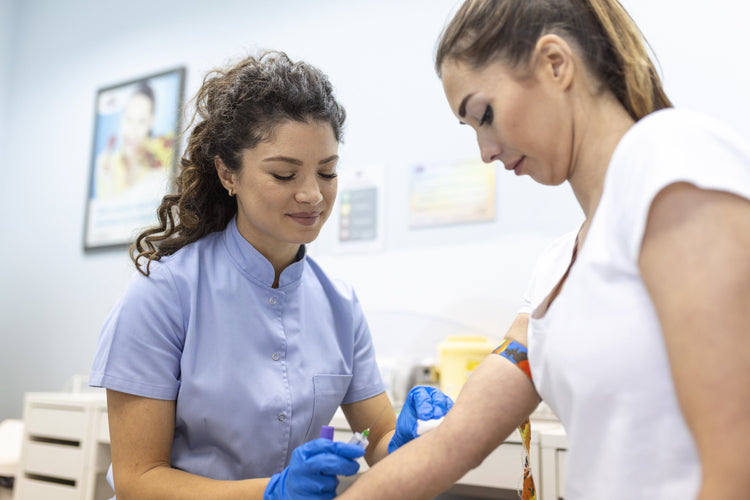
A phlebotomist or practice nurse takes a single venous blood sample, usually from the inside of the elbow. A tourniquet is applied, the skin is cleaned, and one or two tubes are filled. The needle is in for a few seconds. Expect a sharp scratch and nothing more.
Afterwards
Pressure is applied with gauze and a small plaster placed over the site. Mild bruising is common and settles within a few days. You can eat, drive and work as normal immediately.
How long do coeliac test results take?
Most NHS laboratories return coeliac serology within one to two weeks, though this varies by trust. Private laboratories typically report within two to seven days. Ask your practice how results will be communicated — many now use text or app notification.
Understanding your coeliac test results
Results are reported as a number relative to the laboratory's upper limit of normal (ULN). Crucially, assays are not internationally standardised, so a value of "40" from one lab is not comparable with "40" from another. Always interpret against that lab's own reference range.
| Result | What it usually means | Typical next step |
|---|---|---|
| IgA-tTG negative, total IgA normal | Coeliac disease unlikely — provided you were eating gluten | Consider other causes; re-test or refer if suspicion stays high |
| IgA-tTG negative, total IgA below 0.07 g/L | Result unreliable — IgA deficiency | IgG-based serology plus endoscopy and biopsies |
| IgA-tTG weakly positive | Possible coeliac disease | EMA per NICE; referral to secondary care |
| IgA-tTG positive, below 10× ULN | Coeliac disease likely | Referral for endoscopy and duodenal biopsies |
| IgA-tTG at or above 10× ULN | Coeliac disease highly likely | Referral; possible no-biopsy diagnosis if criteria met |
The 2026 BSG guideline is emphatic on one point: anyone with newly positive coeliac serology should be referred to secondary care before starting a gluten-free diet. Starting the diet early is the single most common way people lose the chance of a confirmed diagnosis.
What happens after a positive blood test

Endoscopic appearance of the duodenum in coeliac disease, showing scalloping and loss of the normal mucosal fold pattern. Image via Wikimedia Commons (CC BY-SA 3.0).
Referral to gastroenterology
Your GP refers you to a gastroenterologist. Keep eating gluten until every test is complete — including the endoscopy, if you are having one.
Endoscopy and duodenal biopsy
An oesophago-gastro-duodenoscopy (OGD) passes a thin flexible camera through the mouth into the duodenum. It is usually done with throat spray, with sedation available. The procedure takes around ten minutes.
Sampling technique matters more than most people realise. The BSG recommends at least four biopsies from the second part of the duodenum (D2) and two from the duodenal bulb (D1), ideally in separate pots. A large US study of over 132,000 patients found that taking four or more biopsies doubled the coeliac diagnostic rate compared with fewer than four (1.8% versus 0.7%). A UK study found a similar pattern (10.1% versus 4.6%). Sobering detail: adherence to this standard occurred in only 35–40% of cases in both studies. It is entirely reasonable to ask your endoscopist how many biopsies they plan to take.
A diagnosis is confirmed when positive serology is accompanied by increased intraepithelial lymphocytes (more than 25 per 100 epithelial cells) plus crypt hyperplasia, with or without villous atrophy — Marsh stage 2 or 3.

Progressive stages of mucosal damage in coeliac disease, from normal villi through to villous atrophy. Image via Wikimedia Commons.
The no-biopsy pathway — new in 2026
This is the most significant change to UK adult coeliac diagnosis in a decade. The 2026 BSG guideline formally recommends that in symptomatic adults assessed in secondary care, coeliac disease can be diagnosed without duodenal biopsies when the IgA-tTG titre is at or above 10× the upper limit of normal. The pathway is optional and should only be used after shared decision-making with the patient.
Conditions attached to the no-biopsy route
- The diagnosis must be made in secondary care, not primary care — all the accuracy data comes from secondary care populations
- You must have symptoms consistent with coeliac disease; the approach is explicitly not valid in asymptomatic or screening settings
- There must be no other reason to perform an endoscopy — red-flag symptoms still warrant a camera test regardless of antibody levels
- Caution applies to anyone recently diagnosed with another autoimmune condition, particularly type 1 diabetes, which can transiently elevate tTG
- The laboratory must apply the 10× ULN threshold to its own assay and participate in quality assurance
Two realistic expectations. First, only about 20–30% of adults with a raised tTG reach the 10× ULN threshold, so most people will still need a biopsy. Second, a meta-analysis of 18 studies found the positive predictive value of a tTG at or above 10× ULN falls below 95% when coeliac prevalence is under 10% — which is precisely the situation in primary care. That is the reasoning behind confining the pathway to specialist settings.
There are genuine arguments both ways. A biopsy provides a baseline for later monitoring, may be required for gluten-free food prescriptions, and can detect potential or seronegative coeliac disease. A serology-only diagnosis is faster, avoids endoscopy risks and does not depend on the sampling and interpretation problems described above. The guideline explicitly asks clinicians to discuss both with you.
NHS versus private coeliac testing
The NHS route
Free, and the pathway the guidelines are built around. It also carries something private testing cannot replicate: automatic access to specialist dietetic support, DXA scanning, follow-up bloods, and — in most areas — gluten-free food on prescription. Waiting times for endoscopy are the main drawback.
Private and postal tests
Private venous blood tests can be a reasonable way to get an initial IgA-tTG and total IgA quickly. Two things to check before you buy:
- Does the panel include total IgA? If not, a negative result is uninterpretable. This is the single most important question to ask.
- Is it a venous sample analysed in an accredited laboratory? Fingerprick point-of-care coeliac tests exist, but a positive result from any private test still needs NHS confirmation, and a negative one does not remove the need for referral if suspicion is high.
Whatever route you take, a positive private result should go straight to your GP. You will need referral to secondary care to complete the diagnosis, and you should keep eating gluten in the meantime.
Related reading: our comparisons of stool testing in the UK, the faecal calprotectin test — often used alongside coeliac serology to distinguish inflammatory bowel disease from IBS — and gut microbiome testing, which is not a diagnostic test for coeliac disease.
False negatives and false positives

Increased intraepithelial lymphocytes in the duodenal epithelium — one of the earliest histological changes in coeliac disease. Image via Wikimedia Commons.
The BSG guideline sets out why serology and biopsy sometimes disagree.
Causes of a false negative antibody test
- Gluten withdrawal before testing — by far the commonest
- Selective IgA deficiency without total IgA being checked
- Immunosuppressive medication
- Other immunodeficiency disorders
- Seronegative coeliac disease, which accounts for around 2–3% of cases
Causes of a false positive antibody test
- Chronic liver disease
- Other autoimmune conditions, particularly recently diagnosed type 1 diabetes
- Enteric infections
- Assay-to-assay variability
If your antibody test is negative but clinical suspicion remains high, the correct response is not reassurance — it is referral for endoscopy and duodenal biopsies. The guideline states this directly.
Life after diagnosis: the first two years
A strict, lifelong gluten-free diet is the only accepted treatment. In the UK, foods labelled gluten-free must contain 20 parts per million of gluten or less.
What good care looks like
- Referral to a specialist dietitian — considered essential at diagnosis, not optional
- Baseline bloods: full blood count, liver function, folate, ferritin, vitamin B12, vitamin D, calcium and thyroid function
- A DXA bone scan one year after starting the diet — the BSG now advises this for all newly diagnosed adults, a change from previous guidance that restricted it to over-55s or those with risk factors
- Pneumococcal vaccination for all adults diagnosed with coeliac disease
- Testing of first-degree relatives
- Regular follow-up for up to two years, after which people doing well may move to patient-initiated follow-up
- Signposting to Coeliac UK for practical day-to-day support
One counter-intuitive point worth knowing: a falling tTG level is not proof that your diet is strict. The BSG is clear that serology in isolation is a poor marker of adherence, because daily gluten ingestion for more than four weeks is generally needed to move antibody levels. Duodenal histology remains the only way to assess mucosal healing, which typically takes one to two years or longer.
Where supplements do — and do not — fit
No supplement treats coeliac disease. There is no product, probiotic or botanical that allows someone with coeliac disease to eat gluten safely, and any claim otherwise should be treated as a red flag. Gluten avoidance is the treatment.
What supplements can reasonably do is support general digestive wellbeing and correct measured deficiencies under clinical guidance. Because gluten-free substitute products are not subject to the UK's mandatory fortification of white wheat flour with calcium, iron, thiamine, niacin and folic acid, nutritional gaps are common — and the BSG advises correcting identified deficiencies rather than supplementing pre-emptively above general population guidance.
For broader digestive support alongside a well-planned gluten-free diet, many people explore the Welzo probiotics range and the wider gut health collection. Products such as Akkermansia, citrus pectin powder, Ultra Purity Berberine and Ultra Purity TUDCA are used for general gut and metabolic support rather than for coeliac disease itself, and berberine in particular has meaningful medication interactions worth reviewing. Always discuss supplements with your GP or dietitian, especially if you are being monitored for deficiencies. Our guides to choosing a probiotic in the UK and high fibre foods are useful starting points, since fibre intake commonly drops on a gluten-free diet.
Negative test but ongoing symptoms?
A negative coeliac test taken while eating gluten genuinely makes coeliac disease unlikely — but it does not explain your symptoms. Common alternatives include:
- Non-coeliac gluten sensitivity — real symptoms, no autoimmune damage, no antibodies. Our coeliac vs gluten intolerance guide covers the distinction
- Irritable bowel syndrome, often FODMAP-driven rather than gluten-driven
- Small intestinal bacterial overgrowth — see our guide to SIBO in the UK
- Lactose intolerance, which frequently coexists — see lactose intolerance support
- Inflammatory bowel disease, which calprotectin testing helps identify
- Bile acid malabsorption, a commonly missed cause of chronic diarrhoea
Tracking stool form using the Bristol stool chart before your next appointment gives your GP far more to work with than symptom recall alone. For ongoing IBS-type symptoms, our overview of supplements for IBS in the UK summarises what the evidence does and does not support, and our article on gut barrier function covers the underlying biology.
Red flags: when to seek urgent help
Regardless of coeliac test results, contact your GP promptly — or use NHS 111 — if you develop:
- Blood in your stool, or black tarry stools
- Unintentional weight loss
- Difficulty swallowing or persistent vomiting
- A new abdominal or rectal lump
- A change in bowel habit lasting more than six weeks, especially over the age of 50
- Severe, persistent or worsening abdominal pain
These require assessment in their own right and are among the reasons endoscopy may still be recommended even when antibody levels are very high. If you are in the eligible age range, do not skip NHS bowel cancer screening.
Frequently asked questions
How much does a coeliac test cost in the UK?
On the NHS it is free — your GP requests it if you meet the NICE testing criteria. Private venous coeliac panels are typically offered in the region of £40–£100 depending on provider and whether total IgA is included, though prices change; check before purchasing. A private positive result still requires NHS referral to complete the diagnosis.
Can I test for coeliac disease at home?
Home postal kits exist, using either fingerprick or nurse-collected venous samples. They can be a reasonable first step, but only if the panel includes total serum IgA alongside IgA-tTG — without it, a negative result cannot be interpreted. Home testing does not replace GP assessment, and no home test can diagnose coeliac disease on its own.
How long do coeliac test results take to come back?
Typically one to two weeks through the NHS, and two to seven days through most private laboratories. If a weakly positive tTG triggers a confirmatory EMA test, add several days.
Do I need to fast before a coeliac blood test?
No. Coeliac serology does not require fasting. You may be asked to fast if other tests such as lipids or glucose are being taken at the same time. You must, however, still be eating gluten.
What happens if I stopped eating gluten before my coeliac test?
Your result may be falsely negative. You will need a gluten challenge — 3 to 6 g of gluten daily for at least six weeks — before retesting. If HLA-DQ2/DQ8 testing is available, doing it first may spare you the challenge entirely, since a negative result makes coeliac disease very unlikely.
Can I be diagnosed with coeliac disease without an endoscopy in the UK?
Sometimes, yes. The 2026 BSG guideline allows a no-biopsy diagnosis in symptomatic adults assessed in secondary care whose IgA-tTG is at or above 10 times the upper limit of normal, with no other indication for endoscopy. It is optional and decided jointly with you. Only about 20–30% of adults with raised antibodies reach that threshold, so most people still have a biopsy.
What does a weak positive tTG result mean?
It means coeliac disease is possible but not confirmed. NICE advises adding an IgA EMA test, and you should be referred to a gastrointestinal specialist. Weak positives can also arise from chronic liver disease, other autoimmune conditions or recent gut infections — which is why biopsy confirmation is usually needed at this level.
Should my children be tested if I have coeliac disease?
First-degree relatives — parents, siblings and children — are a recognised high-risk group and screening is advised. Children with a positive result are referred to a paediatric gastroenterologist, and the paediatric pathway differs from the adult one. Speak to your GP about timing.
Is a coeliac test accurate if I have IBS?
Yes, and it should be done. IBS is one of the conditions in which the BSG specifically recommends screening for coeliac disease, because the symptom overlap is substantial and around one in four people with coeliac disease is initially misdiagnosed with IBS. A single IgA-tTG with total IgA is the appropriate test.
Does a negative coeliac test rule out gluten problems completely?
It makes coeliac disease unlikely, provided you were eating gluten and your total IgA was normal. It does not exclude non-coeliac gluten sensitivity, wheat allergy, or FODMAP-related IBS symptoms, none of which are detected by coeliac serology. If symptoms persist, go back to your GP rather than self-diagnosing.
References
- National Institute for Health and Care Excellence. Coeliac disease: recognition, assessment and management (NG20) — nice.org.uk/guidance/ng20
- Penny HA, Shiha MG, Raju SA, et al. The 2026 British Society of Gastroenterology guidelines on the diagnosis and management of adult coeliac disease. Gut. 2026. doi:10.1136/gutjnl-2025-337747 — bsg.org.uk
- British Society of Gastroenterology. Full guideline PDF — Download PDF
- Penny HA, et al. PubMed record — pubmed.ncbi.nlm.nih.gov/42437688
- NHS. Coeliac disease — Diagnosis — nhs.uk
- Coeliac UK. Testing for coeliac disease: blood tests and biopsy — coeliac.org.uk
- Coeliac UK. Common coeliac disease myths debunked (13-year average diagnostic delay) — coeliac.org.uk
- Gray AM, Papanicolas IN. Impact of symptoms on quality of life before and after diagnosis of coeliac disease: results from a UK population survey. BMC Health Serv Res. 2010;10:105 — PMC2907763
- Navigating coeliac disease diagnosis in primary care. British Journal of General Practice. 2024;74(739):52 — bjgp.org
- Shiha MG, et al. Accuracy of the no-biopsy approach for the diagnosis of celiac disease in adults: a systematic review and meta-analysis. Gastroenterology — gastrojournal.org
- Lab Tests Online UK. Coeliac disease tests — labtestsonline.org.uk
- NIHR Health Technology Assessment. Defining the optimum strategy for identifying adults and children with coeliac disease — NCBI Bookshelf
- British Dietetic Association. Coeliac disease: an underdiagnosed condition that is on the rise worldwide — bda.uk.com
- Navigating coeliac disease diagnosis in primary care (full text) — PMC10824338
About the author
Dr Zeeshan Afzal (MBBS) is a Medical Officer at Welzo. He writes and medically reviews Welzo's clinical content, with a focus on translating UK national guidance — NICE, the British Society of Gastroenterology and NHS pathways — into information patients can act on. This article was written and reviewed against NICE NG20 and the 2026 BSG adult coeliac disease guidelines.
Medical disclaimer
This article is for general information and is not a substitute for individual medical advice, diagnosis or treatment. Coeliac disease is a serious autoimmune condition that requires formal diagnosis by a qualified clinician. Do not start a gluten-free diet before completing testing, and do not stop or change prescribed treatment based on this article. If you have symptoms that concern you, contact your GP or NHS 111. In an emergency, call 999.



 Rated Excellent by 26,523+ Reviews
 100% Money Back Guarantee