

Best Probiotics for Travellers' Diarrhoea UK
Posted on:
Aug 05, 2026
Authored by


Written and medically reviewed by Dr Zeeshan Afzal (MBBS) — Medical Doctor & Medical Content Lead, Welzo
Evidence-based · Honest about the science · UK pricing
Last updated: January 2026 · Reading time: ~16 minutes
Travellers' diarrhoea (TD) is the most common illness to affect people travelling abroad, and one of the most common digestive health problems Britons face on holiday — especially in regions where food and water hygiene standards differ from the UK. It's usually caused by bacteria like E. coli and Campylobacter picked up from contaminated food or water. Many travellers reach for probiotics and other gut health supplements to reduce the risk — and there is some evidence they can help — but it's important to be honest about how much: probiotics are a modest, adjunctive measure, not a guaranteed shield. Food and water hygiene, and prompt rehydration if you do get ill, remain the foundation.
With that context, this guide ranks the best probiotics available in the UK for travellers, explains what the research actually shows (and which strain has the strongest evidence), and sets out how to use them alongside the essentials. All prices are guide prices and may vary.
Table of contents
| # | Product | Best for | Guide price |
|---|---|---|---|
| 1 | Welzo Akkermansia (Ultra Purity) | Pre-travel gut foundation | ~£21.99 |
| 2 | OptiBac For Travelling Abroad | Purpose-built travel formula | £17.10 |
| 3 | Pure Encapsulations S. boulardii | Best-evidenced single strain | £33.50 |
| 4 | Klaire Labs Ther-Biotic Synbiotic | Broad-spectrum multi-strain | Check Welzo |
| 5 | Lactobacillus rhamnosus GG | Best-studied Lactobacillus | Check Welzo |
| 6 | Bio-Kult multi-strain | Everyday value multi-strain | Check Welzo |
| 7 | Symprove (high-strength) | High-strength daily support | Check Welzo |
Browse the full Welzo probiotics collection for current prices and availability.
Being straight about the science helps you spend wisely. The research on probiotics for preventing travellers' diarrhoea is limited but points clearly in one direction:
The honest takeaway: probiotics can modestly tilt the odds in your favour, with S. boulardii the standout, but no probiotic guarantees protection. That's why our number one pick focuses on the strongest foundation of all — a resilient, diverse gut going into your trip — while the picks below include the best-evidenced travel-specific options.
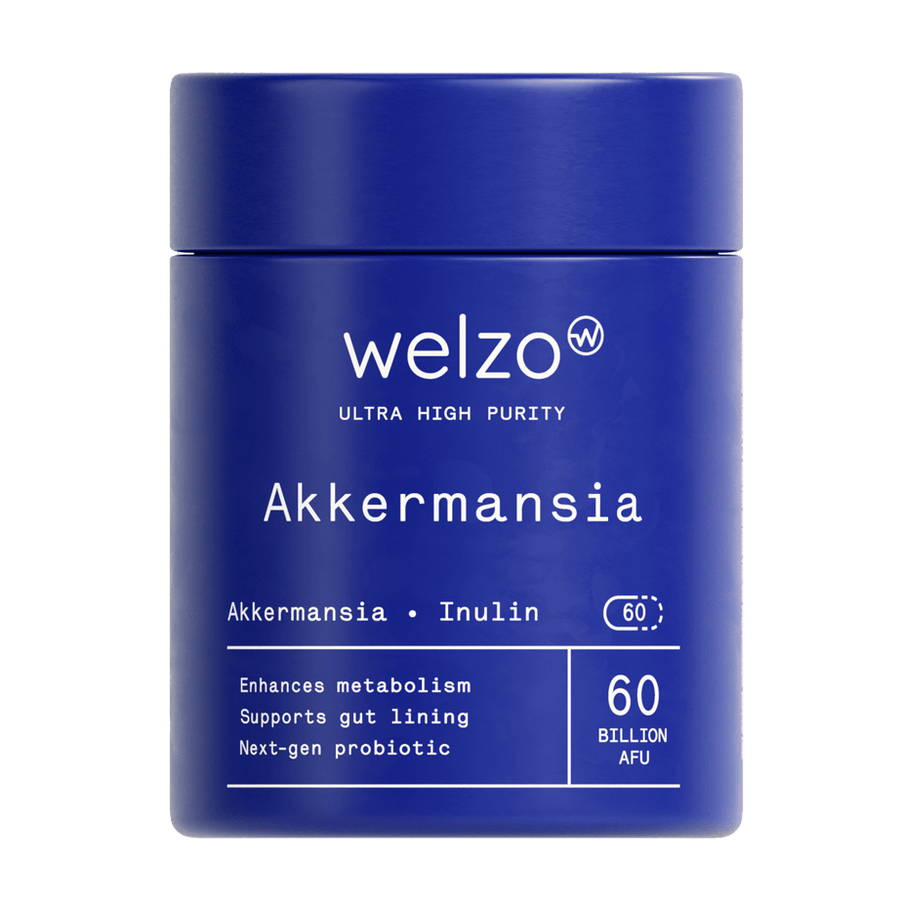
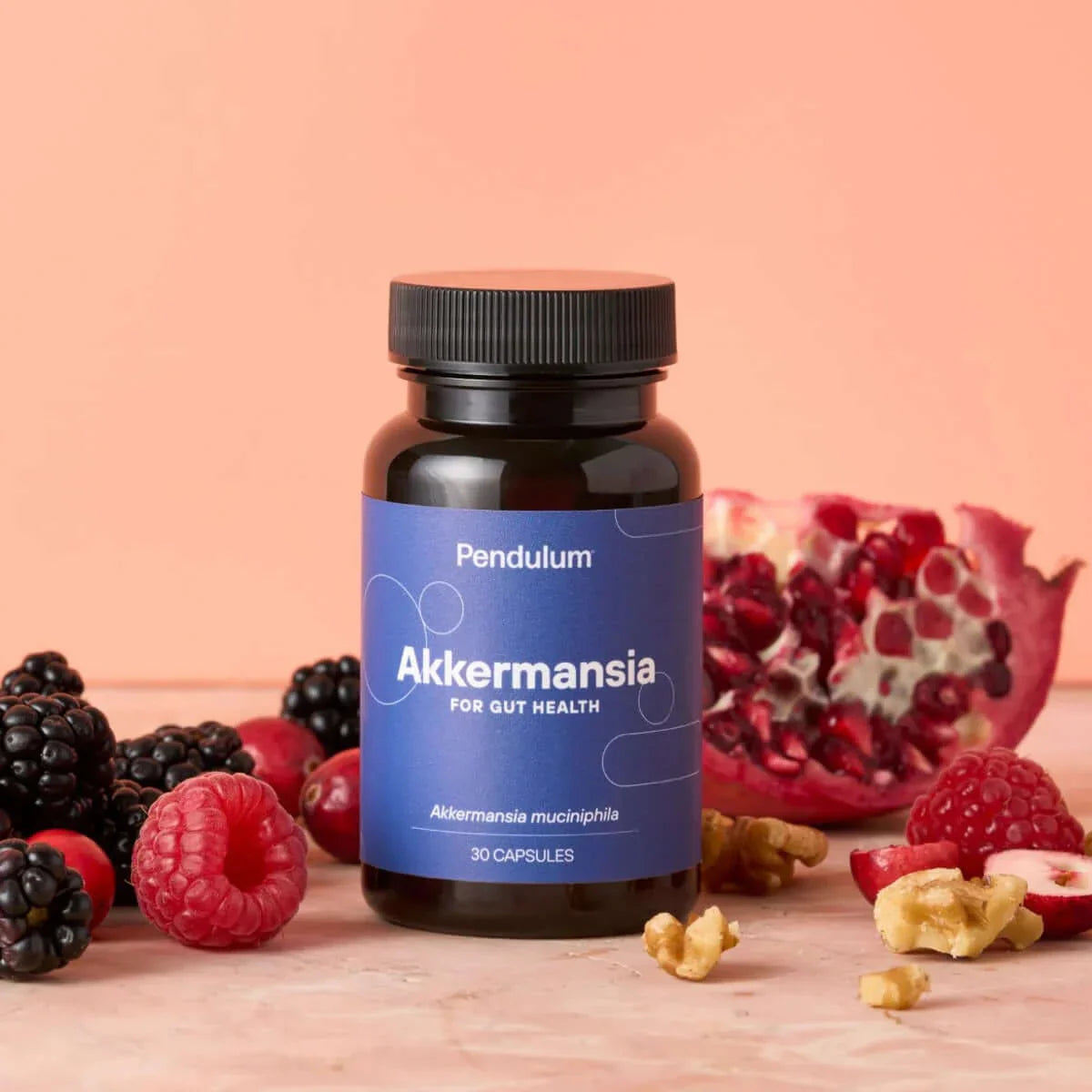
Your single best defence against travellers' diarrhoea is a robust, diverse gut before you even board the plane — and that's exactly where Welzo Akkermansia earns the top spot. Akkermansia muciniphila is a keystone species that helps maintain the intestinal mucus layer and supports a healthy gut barrier — the frontline that helps your gut resist unfamiliar bugs. Paired with L. acidophilus in Welzo's Ultra Purity formula, it's the ideal "prepare your gut for the trip" choice: start it several weeks before you travel to build resilience, rather than waiting until you're already exposed.
To be clear about why it's ranked first: this is the best pick for foundational gut preparation, not because it's the most-studied acute TD-prevention strain — that distinction belongs to S. boulardii (pick #3), which we'd add alongside it for the trip itself. For building the strongest possible starting point, Akkermansia leads.
| Pros | Cons |
|---|---|
| Keystone strain for gut-barrier resilience | Not a travel-specific formula |
| Ultra Purity quality; includes L. acidophilus | Best started well ahead of travel, not last-minute |
| Foundational microbiome support | Ideally paired with S. boulardii for the trip |
Where to buy: welzo.com/products/akkermansia · Guide price ~£21.99
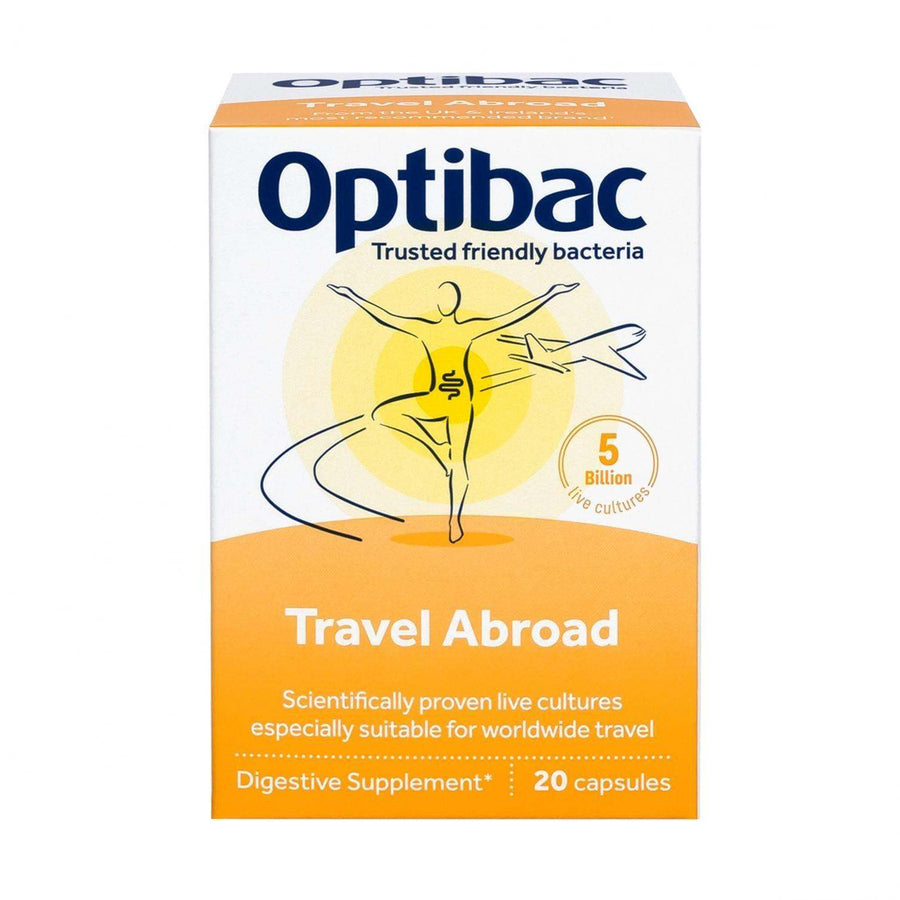
If you want one product designed specifically for the job, this is it. OptiBac For Travelling Abroad combines four strains — including Saccharomyces boulardii alongside L. rhamnosus Rosell-11, B. longum Rosell-175 and L. acidophilus Rosell-52 — at 5 billion live cultures per capsule. Crucially, it's shelf-stable and selected to survive warmer, more humid climates, so it travels well without a fridge. It pairs the best-evidenced strain (S. boulardii) with complementary lactobacilli in a convenient once-daily capsule, making it the most practical everyday pick for most travellers.
| Pros | Cons |
|---|---|
| Purpose-built travel blend with S. boulardii | Can sell out around peak travel season |
| Shelf-stable, vegan, no fridge needed | 20-capsule pack suits shorter trips |
| Full strain disclosure; once-daily | Modest overall evidence, like all TD probiotics |
Where to buy: welzo.com/products/probiotics-for-travelling-abroad · Guide price £17.10
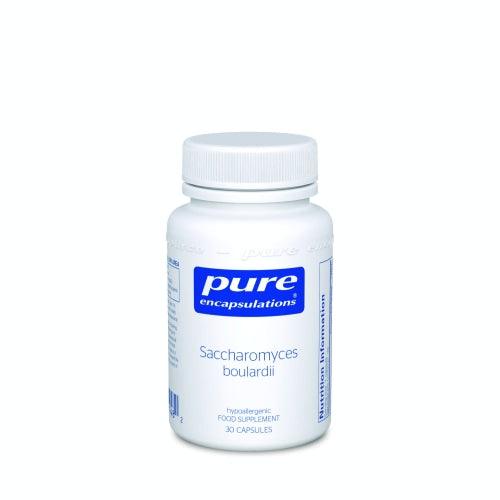
If you want the strain with the best research behind it in its purest form, choose a dedicated S. boulardii supplement. This Pure Encapsulations version is a clean, hypoallergenic, single-ingredient capsule — the same probiotic yeast shown in meta-analysis to significantly reduce TD risk. S. boulardii is naturally robust (it resists stomach acid and isn't affected by antibiotics), doesn't permanently colonise the gut, and is well tolerated, making it a sensible travel companion — especially useful if you'd rather add the evidence-led strain to your own routine.
| Pros | Cons |
|---|---|
| The strain with the strongest TD evidence | Higher price per pack |
| Robust yeast; unaffected by antibiotics | Single strain (no complementary bacteria) |
| Hypoallergenic, clean formulation | Not suitable for those with a yeast sensitivity |
Where to buy: welzo.com/products/saccharomyces-boulardii-pure-encapsulations · Guide price £33.50
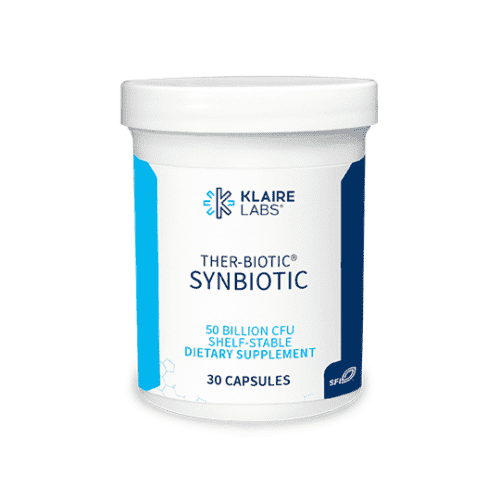
For travellers who prefer a broad, multi-strain approach — and want a prebiotic included to feed the cultures — Klaire Labs Ther-Biotic Synbiotic is a high-quality, professional-grade option. A synbiotic pairs multiple probiotic strains with a prebiotic in one capsule, supporting overall microbiome balance and a healthy gut environment. It's a good everyday choice for those with sensitive systems who want diversity rather than a single strain, and it complements the more targeted picks above.
| Pros | Cons |
|---|---|
| Broad multi-strain plus prebiotic (synbiotic) | Not travel-specific |
| Professional-grade, allergen-friendly | Premium price |
| Good for general microbiome support | Less TD-specific evidence than S. boulardii |
Where to buy: welzo.com/products/ther-biotic-synbiotic-klaire-labs · Check Welzo for current price
Among bacterial strains, Lactobacillus rhamnosus GG (LGG) is one of the most researched probiotics in the world and has been trialled specifically for travellers' diarrhoea. In TD studies it showed a favourable trend rather than a clear-cut effect, but it's well tolerated, widely available and a reasonable choice for those who prefer a bacterial strain to a yeast — or who want to combine it with S. boulardii.
| Pros | Cons |
|---|---|
| One of the most-studied probiotic strains | TD evidence a trend, not statistically clear |
| Well tolerated and widely available | Some products need refrigeration |
| Good bacterial alternative to a yeast | Best combined with S. boulardii for TD |
Where to buy: welzo.com/collections/probiotics · Check Welzo for current price
Bio-Kult is a popular, budget-friendly multi-strain probiotic that's shelf-stable and doesn't require refrigeration — handy for travel. While it isn't marketed specifically for TD, its broad blend supports general gut balance, and shelf-stability makes it practical for trips to warm climates. It's a sensible everyday option for travellers who want reliable, no-fuss microbiome support at a lower price point.
| Pros | Cons |
|---|---|
| Affordable, widely available multi-strain | Not TD-specific |
| Shelf-stable, travel-friendly | Lower per-capsule strength than premium blends |
| Good general gut support | No dedicated S. boulardii in the core formula |
Where to buy: welzo.com/collections/gut-health · Check Welzo for current price
For those who prefer a high-strength, water-based daily probiotic as part of a longer-term gut routine, high-strength probiotics like Symprove are a premium option. A liquid multi-strain formula taken daily, it's better suited to building gut resilience in the weeks before you travel than to packing in a suitcase (it's less convenient on the road than capsules). Consider it part of your pre-travel preparation rather than a carry-with-you travel product.
| Pros | Cons |
|---|---|
| High-strength, multi-strain daily formula | Liquid format less travel-friendly |
| Good for pre-travel gut preparation | Premium price |
| Well-established UK brand | Not travel- or TD-specific |
Where to buy: Browse high-strength options in the Welzo probiotics collection · Check Welzo for current price
Getting the timing right matters more than most people realise:
No probiotic replaces the basics, which do the heavy lifting in preventing and managing TD:
Think of probiotics as one modest layer of protection on top of these essentials — not a substitute for them.
Live cultures aren't suitable for everyone. People who are seriously ill, critically unwell, immunocompromised, or who have a central venous line can rarely develop bloodstream infections from probiotic organisms, so these groups should only use probiotics on medical advice. Anyone who is pregnant, breastfeeding, giving probiotics to a young child, or has a significant health condition should also check with a doctor or pharmacist first. See our overview of probiotics safety.
For most healthy adult travellers, well-chosen probiotics are considered low-risk and generally well tolerated. Welzo's wider range also includes options such as citrus pectin (a prebiotic fibre that supports beneficial bacteria as part of gut preparation), plus berberine and TUDCA — but these serve other purposes and are not first-line for preventing travellers' diarrhoea, so probiotics remain the relevant category here.
Most TD is mild and self-limiting, but some situations need medical attention — promptly for the warning signs below.
Seek medical help if you have:
These groups should seek advice early. See our guide on when to see a GP about stomach symptoms.
They may modestly reduce the risk, but they don't guarantee prevention. The strongest evidence is for Saccharomyces boulardii, which meta-analysis found significantly lowered TD incidence; some lactobacilli may help too. Probiotics work best as one layer of protection alongside good food and water hygiene, and they don't replace those essentials or prompt rehydration if you do fall ill.
For evidence, Saccharomyces boulardii is the standout strain, which is why travel-specific formulas like OptiBac For Travelling Abroad include it. For the strongest overall foundation, building a resilient, diverse gut before you travel — for example with a keystone strain like Akkermansia — is ideal, then adding S. boulardii for the trip itself. The best choice depends on your needs and health.
Start a few days to a couple of weeks before departure so the cultures are established before you're exposed to unfamiliar bugs. Travel-specific products are often recommended from three to five days before you leave. Continue throughout your trip and for a few days after returning, as environmental change can unsettle your gut at both ends of the journey.
Yes — it's the probiotic with the best evidence for reducing travellers' diarrhoea risk. It's a robust yeast that resists stomach acid, isn't affected by antibiotics, is well tolerated, and doesn't permanently colonise the gut. These qualities make it a practical travel companion, either as a dedicated supplement or as part of a travel-specific multi-strain blend.
Not if you choose a shelf-stable product, which is exactly why they suit travel. Many travel-focused probiotics, including OptiBac For Travelling Abroad and Bio-Kult, are selected to be stable at room temperature and in warmer climates, so they don't need refrigeration. This makes them far more practical for trips to hot or humid destinations than fridge-dependent options.
S. boulardii is a yeast, so it isn't killed by antibacterial antibiotics and is often used alongside them. Bacterial probiotics are best spaced a couple of hours apart from antibiotic doses. If you've been prescribed antibiotics for travellers' diarrhoea or another infection, follow your doctor's advice, and see our guide on probiotics after antibiotics for more detail.
For most healthy adults they're low-risk and well tolerated. However, people who are seriously ill, immunocompromised, or have a central venous line can rarely develop bloodstream infections from probiotic organisms, so they should only use them on medical advice. Those who are pregnant, breastfeeding, or giving probiotics to young children should also check with a healthcare professional first.
Absolutely. Probiotics are only a modest add-on. Food and water hygiene — safe drinking water, avoiding ice, eating freshly cooked hot food, and being cautious with salads and unpeeled fruit — does the most to reduce your risk. Even then, no measure offers full protection, so always be prepared to manage symptoms with rehydration.
Focus on rehydration: use oral rehydration salts made with safe water to replace lost fluids and salts, and keep sipping fluids. Most cases settle within a few days. Rest and eat bland foods as tolerated. Seek medical help for a high fever, blood in the stool, severe pain, signs of dehydration, or if you're in a higher-risk group such as young children or older adults.
Some travel probiotics are suitable for children over one year, but always check the specific product and, ideally, get advice from a pharmacist or doctor first. Children are more vulnerable to dehydration from diarrhoea, so rehydration is the priority if they do become unwell, and early medical advice is important for infants and young children.
Medical disclaimer: This article is for general information and education only and does not constitute medical advice, diagnosis or treatment. Probiotics may modestly reduce the risk of travellers' diarrhoea but do not guarantee prevention and do not replace food and water hygiene or rehydration. Live cultures are not suitable for everyone, particularly people who are immunocompromised or seriously unwell. Prices are guide prices and may change. Seek prompt medical care for severe symptoms such as high fever, blood in the stool, severe pain or dehydration, and for higher-risk travellers. Always consult a healthcare professional before starting new supplements, especially if pregnant, breastfeeding, giving them to a child, taking medication, or managing a health condition.
About the author
Dr Zeeshan Afzal (MBBS) is a practising medical doctor and Welzo's Medical Content Lead. He writes and reviews Welzo's health content to ensure it is accurate, evidence-based and aligned with current UK clinical guidance, translating complex research into practical advice patients can trust.
 Ocenione doskonałe przez 28,951+ recenzji
 Gwarancja 100% zwrotu pieniędzy
Nasza gwarancja zwrotu pieniędzy zapewnia, że otrzymasz swoje przedmioty lub otrzymasz pełny zwrot pieniędzy.