


Joe Rogan's Supplement Stack: What He Takes, Why, and What the Evidence Actually Says


Related products
Joe Rogan is probably the single most influential unqualified voice in men's health. When he mentions a supplement on The Joe Rogan Experience — a podcast with an audience in the tens of millions — search volume for that ingredient spikes within hours. That influence is precisely why his stack deserves a careful, sceptical, clinically literate review rather than another affiliate-driven shopping list. This guide sets out every supplement Rogan has publicly discussed taking, with the episode or post where he said it, the dose he described, and an honest evidence rating from someone who prescribes for a living. Some of what he takes is genuinely well supported — creatine and vitamin D would be reasonable additions for most middle-aged men. Some of it is expensive, unproven, or carries real risk, particularly the intravenous protocols. And one item is not a supplement at all: it is a prescription hormone therapy that changes the whole picture of how he looks at 58.
Read this first. Joe Rogan is a 58-year-old man with a personal physician, private blood testing, a prescription for testosterone, and an income that makes cost irrelevant. He is a sample size of one, and several of the things he does have no evidence of benefit in people who are not deficient. Nothing below is a recommendation. If you take prescription medication, have a diagnosed condition, are pregnant or breastfeeding, or are under 18, speak to your GP or pharmacist before starting any supplement.
What this article covers
- Who is Joe Rogan?
- What supplements does Joe Rogan take?
- The complete daily supplement stack (full table)
- Why he takes each supplement — and what the research says
- Diet and nutrition habits
- Exercise, recovery and lifestyle routine
- The scientific evidence behind the stack, tiered
- Risks, limitations, and confirmed vs reported
- How to build a similar routine safely
- Related Welzo supplements and tests
- Frequently asked questions
- References
Who is Joe Rogan?
Joe Rogan (born 11 August 1967) is an American comedian, UFC colour commentator and host of The Joe Rogan Experience, one of the most listened-to podcasts in the world. He is a former taekwondo competitor and holds black belts in Brazilian jiu-jitsu; he has commentated for the UFC since the late 1990s.
Two facts matter for anything written about his supplement use, and most articles on this topic omit both.
He co-founded a supplement company
Rogan co-founded Onnit, the Austin-based supplement brand behind Alpha BRAIN, Shroom TECH Sport, New MOOD and Total Human. Several products in his stack are Onnit products, and Onnit was sold to Unilever in 2021. That is a commercial relationship, not a neutral endorsement, and it should be weighted accordingly when he describes a product as effective.
His podcast carries supplement sponsors
Several brands he has discussed using — including greens powders, electrolyte drinks and nootropic gum — have also been podcast sponsors. He has stated he used some of them before the sponsorship began, and that may well be true. It still means the mention is not independent.
Clinical note. Conflict of interest does not make a product useless. Creatine works whoever sells it. But when someone with equity in a brand tells you their brand's nootropic transformed their recall, that testimonial carries roughly the evidentiary weight of an advertisement — which is what it is.
What supplements does Joe Rogan take?
Rogan's routine is best understood as five layers rather than one list:
- A nutritional base — multivitamin, omega-3, vitamin D3, B complex
- Performance products — creatine, electrolytes, a cordyceps pre-workout, protein
- Cognitive products — Alpha BRAIN, caffeine-and-L-theanine gum, lion's mane, other nootropic drinks
- Longevity experiments — NMN, resveratrol, NAD⁺ precursors and NAD⁺ infusions
- Medical interventions — testosterone replacement therapy and intravenous vitamin drips, both administered by clinicians
He has been explicit that the list is not fixed. It changes with whichever researcher has recently been on the podcast, which is a reasonable description of experimentation and a poor description of a protocol. He has also said he prefers to find out what works for him by trying it, which is exactly the approach clinical trials exist to correct for.
The complete daily supplement stack
The table below lists everything Rogan has publicly described taking, with the dose he stated where he stated one. Where he has not given a dose, the column says so rather than guessing. The evidence column rates the ingredient, not the brand, against published human research — explained underneath.
| Supplement | Dose he has described | Timing | His stated purpose | Evidence rating |
|---|---|---|---|---|
| Multivitamin (Pure Encapsulations Athletic Pure Pack) | 1 packet (9 capsules) | Morning | Nutritional insurance | Limited in well-fed adults |
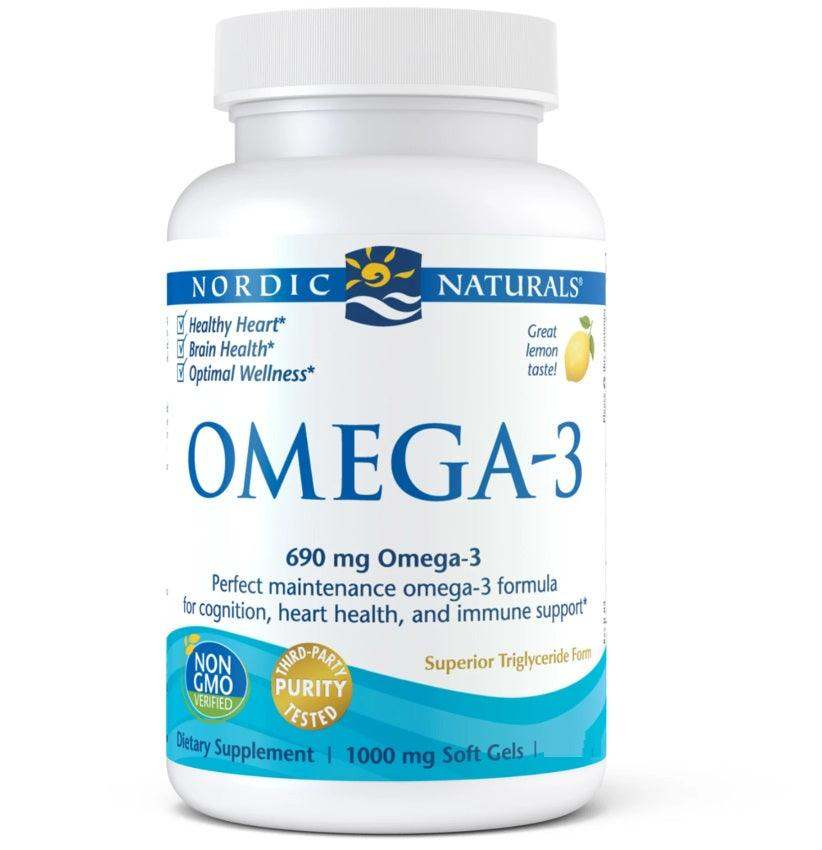
| Omega-3 fish oil (Carlson liquid) | Reported 3 tbsp; likely misspoken for 3 tsp (~4.8 g omega-3) | Morning | Heart, brain, joints | Moderate |
| Vitamin D3 | 5,000 IU (125 µg) | Morning, with food | Immunity, mood, bone | Strong if deficient; above UK upper limit |
| Vitamin B complex | 1 serving | Morning | Energy metabolism | Limited unless deficient |
| Creatine monohydrate | ~5 g | Any consistent time | Strength, muscle, cognition | Strong |
| Spirulina and chlorella | 2 g (4 capsules) | Daily | Micronutrients, "greens" | Limited |
| Greens powder (AG1 travel packs) | 1 sachet | When travelling | Backup nutrition on the road | Limited |
| Probiotic (Onnit Total Gut Health) plus kimchi and kombucha | 1 pack; food sources daily | Daily / travel | Gut health | Moderate, but strain-specific |
| Alpha BRAIN | 2 capsules | Before podcasts, UFC commentary, stand-up | Word recall, verbal fluency | Limited — one small manufacturer-funded trial |
| Caffeine + L-theanine gum | 2 pieces | Before work or training | Alert focus without jitters | Moderate for the combination |
| Lion's mane extract | 1,500 mg sachet | Daily | Cognition, neurogenesis | Preliminary |
| Other nootropic drinks (Neuro1, TruBrain) | Not specified | As needed | Focus, memory | Limited |
| Mood formula (5-HTP, L-tryptophan, B6, magnesium) | 1 serving | Evening; also for jet lag | Mood, sleep, stress | Limited; interaction risk |
| Glucosamine, chondroitin and MSM | Extra-strength serving | Daily | Joint wear and tear | Mixed |
| Quercetin | Not specified; a JRE guest suggested 500 mg twice daily | Daily | Immune support, zinc transport | Limited |
| Zinc | Intravenous; oral 15–30 mg discussed on the podcast | Weekly IV | Immunity, testosterone | Moderate for colds only |
| Vitamin C | Several thousand mg orally, plus high-dose IV | Daily / weekly IV | Immunity | Limited above dietary adequacy |
| Cordyceps pre-workout (Shroom TECH Sport) | 1 serving | ~1 hour pre-training | Endurance without stimulants | Limited — company-funded trial |
| Electrolyte drink mix | 1 sachet | Around training and sauna | Hydration, cramp prevention | Moderate in heavy sweating |
| CBD oil tincture | Reported 1,000 mg daily | Daily | Recovery, inflammation | Limited; far above UK advice |
| NMN | Not specified; the protocol he was shown used ~1 g | Morning | NAD⁺, energy, longevity | Preliminary |
| Resveratrol | Not specified; the protocol he was shown used ~0.5 g | Morning with vitamins | Sirtuin activation | Preliminary |
| NAD⁺ intravenous infusion | Clinic-administered | Weekly (as described in 2020) | Energy, anti-ageing | Very limited |
| Vitamin IV drip (C, zinc, glutathione) | Clinic-administered | Weekly (as described in 2020) | Immunity, recovery | Very limited; carries procedural risk |
| Exogenous ketones | 1 serving | Pre-workout during keto phases | Energy in ketosis | Limited |
| Testosterone replacement therapy | Prescribed; started around age 40 | Per prescription | Restore youthful hormone levels | Strong for diagnosed hypogonadism only — prescription medicine, not a supplement |
How to read the evidence column
| Rating | What it means |
|---|---|
| Strong | Multiple independent randomised trials or meta-analyses show a consistent, clinically meaningful effect. |
| Moderate | Real human evidence exists, but the effect is small, population-specific, or dependent on baseline status. |
| Mixed | Trials disagree, or the largest and best-designed trials are negative. |
| Limited | Few human trials, small samples, industry funding, or surrogate outcomes only. |
| Preliminary | Mechanism is plausible and biomarkers move, but no demonstrated clinical benefit in humans yet. |
Why he takes each supplement — and what the research says
Creatine monohydrate — the strongest item in the stack
Rogan has described creatine as one of the few supplements that demonstrably increases strength, and on this he is right. The International Society of Sports Nutrition's position stand concluded that short- and long-term supplementation — up to 30 g per day for five years — is safe and well tolerated in healthy people and across patient groups from infants to the elderly, and that habitual intake of around 3 g daily across the lifespan may itself confer health benefits. Five grams daily of plain creatine monohydrate is the standard dose; no loading phase is required if you are willing to wait three to four weeks for muscle stores to saturate.
The cognitive angle he mentions is real but narrower than usually described: creatine's mental effects show up most clearly under stress, sleep deprivation, or in people with low dietary intake such as vegetarians. Browse creatine and sports supplements at Welzo.
Vitamin D3 — right idea, dose worth checking
Rogan has confirmed on the podcast that he takes 5,000 IU daily. That is a meaningful amount above UK guidance. The NHS advises that everyone should consider a daily supplement containing 10 micrograms (400 IU) of vitamin D during autumn and winter, because sunlight in the UK is too weak to produce it between roughly October and March. The Scientific Advisory Committee on Nutrition sets the safe upper limit for adults at 100 micrograms (4,000 IU) per day; higher intakes belong in a documented plan with a clinician, because sustained excess can cause hypercalcaemia.
Rhonda Patrick, the biomedical scientist whose podcast appearances shaped much of Rogan's approach here, recommends testing first and treating to a blood level rather than picking a dose off a shelf. That is the correct instinct, and it applies to you as much as to him. See our vitamin D3 range and consider testing your 25(OH)D level before going above the NHS baseline.
Omega-3 fish oil — sensible, though his stated dose is odd
In conversation with Rhonda Patrick, Rogan described taking three tablespoons of liquid fish oil daily, which would work out at roughly 14 g of omega-3 — an implausible amount that he most likely misspoke, meaning teaspoons. The distinction matters: at genuinely high intakes, omega-3 prolongs bleeding time and interacts with anticoagulants, and very high doses have been associated with atrial fibrillation in some trials. Most people looking for cardiovascular and joint support are served by 1–2 g of combined EPA and DHA daily. Our omega-3 collection lists EPA and DHA content per serving, which is the only number worth comparing.
Alpha BRAIN and the nootropics — one small trial, one large lawsuit
Alpha BRAIN is the product most associated with Rogan's name; Onnit created it after he suggested a cognitive formula, and he has said he takes it before podcasts, commentary and stand-up sets.
There is one published randomised controlled trial. Sixty-three treatment-naïve adults aged 18 to 35 completed a two-week placebo run-in followed by six weeks of Alpha BRAIN or placebo, and the supplement group showed significant improvement in delayed verbal recall and executive function compared with placebo. Two caveats are essential. The study was funded by Onnit and had a company employee among its authors. And as ConsumerLab's analysis notes, the roughly 12% improvement in verbal recall was not accompanied by improvements in any other measure of learning, memory, attention, concentration or processing speed.
That gap became a legal argument. A New York class action filed against Onnit alleged that Alpha BRAIN's claims about focus, mental speed and general memory improvement were contradicted by the company's own funded study, on the basis that tests measuring attention, concentration and processing speed found no statistically significant difference between the supplement and placebo groups. Rogan was not named as a defendant, as Onnit had been sold to Unilever in 2021.
The caffeine-and-L-theanine gum he uses has better support than the proprietary blends, because that specific combination has been repeatedly shown to improve attention while blunting the jitteriness of caffeine alone. Lion's mane remains preliminary: promising small studies, no large trials in healthy adults.
NMN, resveratrol and NAD⁺ — biomarkers move, outcomes have not
Rogan began taking resveratrol and later NMN after hosting Harvard geneticist David Sinclair, and has said NMN gives him energy. This is the area where enthusiasm currently outruns data by the widest margin.
Two systematic reviews published in 2024 make the position clear. A meta-analysis of eight randomised trials — 342 middle-aged and older adults taking 250 to 2,000 mg daily for between two weeks and twelve weeks — found no significant benefit of NMN on fasting glucose, fasting insulin, HbA1c, insulin resistance or lipid profile. A second review of twelve studies covering 513 participants found that NMN reliably raised blood NAD⁺ levels, but that most clinically relevant outcomes did not differ significantly from control — the authors concluded that the benefits of NMN have likely been exaggerated in the field.
Raising a biomarker is not the same as improving health. NMN may yet prove useful; it has not proved useful yet. If you want the full picture, our longevity supplements guide sets out the trial evidence, and how to lower your biological age makes the case that the highest-value interventions here are free.
Intravenous vitamin and NAD⁺ drips — the weakest evidence and the highest risk
Rogan has described weekly IV drips containing vitamin C, zinc and glutathione, plus separate NAD⁺ infusions, and has said they make him feel dramatically better. This is the part of his routine I would most strongly advise against copying.
The evidence base is close to empty. Mayo Clinic's Brent Bauer, director of research in integrative medicine, notes that evidence for benefit in people with normal nutritional status is limited, that very few studies have properly tested claims about immunity, fatigue and stress, and that much of the existing work is poorly designed. On safety, he makes the point plainly: "Anything we place in the human body can carry risk" — including substances marketed as natural. Documented risks include vein irritation, infection, electrolyte disturbance and fluid overload, which is genuinely dangerous in people with heart or kidney disease.
The strong subjective response many people report after a drip is consistent with rehydration plus a powerful placebo effect delivered through an impressive-looking medical ritual. That is not nothing — but it is not worth a cannula.
Testosterone replacement therapy — the part that is not a supplement
Rogan has said openly that he started TRT around the age of 40 to restore his testosterone to the level of a healthy man in his twenties, and he has been consistent in saying it should be done under medical supervision, with blood work first, and after addressing sleep, diet and stress.
That framing is broadly responsible. Two clinical points need adding. First, TRT is indicated for diagnosed hypogonadism — persistently low morning testosterone on repeat testing plus symptoms — not for a normal age-related decline or for a number someone dislikes. Second, on safety, the largest trial to date is reassuring but specific: TRAVERSE randomised 5,246 men aged 45 to 80 with symptomatic hypogonadism, testosterone below 300 ng/dL and existing or high cardiovascular risk, and found testosterone gel non-inferior to placebo for major adverse cardiac events. That result speaks to men who met those criteria and were treated to a physiological target. It says nothing about healthy men using testosterone to feel better than baseline, and it does not remove the known trade-offs: suppressed fertility, testicular atrophy, raised haematocrit, acne, and the practical reality that treatment is usually lifelong.
If you suspect low testosterone, the first step is a morning blood test, not a purchase. Welzo offers a testosterone blood test, an advanced testosterone panel and a broader male hormone blood test; the wider men's health testing range covers cholesterol, liver and general male wellness.
The remaining items, briefly
Multivitamin and B complex
Reasonable insurance, minimal upside in someone eating as much organ-rich wild game as Rogan does. Note that his multivitamin already contains vitamin C, CoQ10, BCAAs and 900 mg of fish oil, so stacking further single nutrients on top risks doubling up.
Greens powders, spirulina and chlorella
Convenient, pleasant, and no substitute for vegetables. He describes greens as a travel backup, which is honestly the best case for them.
Probiotics, kimchi and kombucha
Probiotic effects are strain-specific and condition-specific; a general-purpose capsule is a lottery ticket. The fermented food habit is the better-evidenced half of this.
Glucosamine, chondroitin and MSM
Widely taken for joint wear; trial results are mixed, with the largest trials showing benefit mainly in subgroups with moderate-to-severe knee pain rather than in general prevention.
Quercetin, zinc and vitamin C
Zinc has moderate evidence for shortening colds when started early. Quercetin and high-dose vitamin C are widely used and thinly evidenced in healthy adults. Long-term high-dose zinc can induce copper deficiency, which is a real and under-appreciated harm.
CBD
Rogan has described taking 1,000 mg of CBD daily. UK readers should note how far outside domestic guidance that sits: the Food Standards Agency advises that healthy adults limit CBD from food to 10 mg per day — roughly four to five drops of 5% oil — with vulnerable groups, including those on medication, pregnant, breastfeeding or trying to conceive, advised not to take it at all. The FSA's chief scientific adviser linked greater lifetime CBD exposure to long-term adverse effects such as liver damage and thyroid problems.
Diet and nutrition habits
Rogan's nutrition is arguably more consequential than his supplements, and it is unusually consistent.
Meat-first, with a carnivore phase
He follows a high-protein, low-processed-food pattern year-round and has run repeated strict carnivore experiments, most publicly a 30-day trial announced in January 2020 and subsequent January cycles that coincide with hunting season. Wild game — elk in particular, much of it hunted himself — is his staple protein, alongside steak, eggs and fish. He has described adding fruit back during a later January experiment.
Two meals, later first meal
He typically delays his first meal rather than eating breakfast, which functions as an informal time-restricted eating window. There is nothing magical about this; it reduces total intake for many people, which is usually the mechanism.
Fermented foods
Kimchi and kombucha appear constantly in his posts and interviews. Of everything in his nutrition routine, a daily fermented food habit is among the easiest to copy and the least likely to do harm.
A carnivore caveat worth stating plainly. Strict carnivore eating eliminates fibre entirely and can markedly raise LDL cholesterol in some people. It is not a diet to begin without knowing your baseline lipids, and not one to continue without rechecking them. Anyone with existing cardiovascular risk, kidney disease or a history of gout should discuss it with a clinician first.
Exercise, recovery and lifestyle routine
Rogan trains close to daily and has done for decades. This — not the capsules — is the main reason a man approaching 59 looks the way he does.
Strength and conditioning
Compound lifting, kettlebells, sled and bag work, with a preference for varied, athletic movement over bodybuilding splits.
Martial arts
Brazilian jiu-jitsu and kickboxing several times a week. Grappling is high-intensity intermittent exercise with a large skill and social component, which is a strong predictor of long-term adherence.
Sauna and cold exposure
He uses sauna after training, usually followed by cold immersion. Regular sauna bathing has observational evidence for cardiovascular benefit from long-running Finnish cohort research; cold plunging has good evidence for feeling alert and stubbornly little for the physiological claims attached to it. One practical note from the literature: cold immersion immediately after resistance training may blunt hypertrophy adaptations, so separate it from lifting if muscle gain is your goal.
Sleep, sensory deprivation and mental recovery
He is a long-standing advocate of float tanks and meditation for mental decompression. Sleep is where most people reading this would gain more than from any product mentioned in this article.
The scientific evidence behind the stack, tiered
Stripped of branding, here is where the ingredients actually sit.
| Tier | Ingredients | What the research supports |
|---|---|---|
| Well supported | Creatine monohydrate; vitamin D3 (when correcting deficiency); electrolytes during heavy sweating; TRT for diagnosed hypogonadism | Consistent randomised evidence for defined outcomes in defined populations |
| Reasonable | Omega-3 EPA/DHA; caffeine plus L-theanine; zinc at cold onset; protein sufficiency | Real but modest effects, often dependent on baseline intake |
| Unproven but low risk | Multivitamin; greens powders; spirulina and chlorella; general probiotics; glucosamine; lion's mane; quercetin | Plausible, poorly evidenced, unlikely to harm at label doses |
| Unproven with meaningful cost or risk | NMN and resveratrol; exogenous ketones; proprietary nootropic blends; high-dose CBD; IV vitamin and NAD⁺ infusions | Surrogate markers at best; procedural, regulatory or interaction risk at worst |
Risks, limitations, and what is publicly confirmed versus reported
What is well documented
- He takes 5,000 IU of vitamin D daily — stated directly on the podcast.
- He uses creatine, a multivitamin, fish oil, B vitamins, glucosamine and greens — stated across multiple episodes and posts spanning more than a decade.
- He has used TRT since around age 40 — stated openly and repeatedly.
- He received weekly vitamin and NAD⁺ IV drips during 2020 — described in detail on air.
- He co-founded Onnit, and Onnit was sold to Unilever in 2021.
What is reported, dated or uncertain
- Exact current doses. Most figures circulating online are inferred from product labels rather than stated by him.
- Whether he still takes everything listed. Much of the sourcing dates from 2019–2021. A stack he described five years ago is not necessarily today's.
- The fish oil quantity. Almost certainly a misstatement in the original interview.
- Peptides and other compounds. Frequently attributed to him in listicles without a primary source. We have excluded anything we could not trace to something he actually said.
Limitations you should apply to this entire article
Celebrity stacks are testimonials, and testimonials cannot distinguish between a supplement working, a training habit working, a prescription hormone working, and regression to the mean. Rogan takes roughly twenty products simultaneously while also lifting, grappling, sweating, sleeping and injecting testosterone. No one — including him — can attribute an outcome to any single item in that list.
Who should not copy this stack. Anyone on anticoagulants (fish oil, high-dose vitamin E), SSRIs or other serotonergic medication (5-HTP and L-tryptophan carry a serotonin syndrome risk), anyone with kidney disease (creatine and high-dose vitamin C need medical input), anyone with heart or kidney disease considering IV therapy, anyone pregnant or breastfeeding, and anyone under 18. If you take any prescription medicine, check interactions with your pharmacist before adding anything.
How to build a similar supplement routine safely
If Rogan's routine appeals to you, the useful version of it is not the shopping list — it is the sequence he actually describes: test, address the basics, then add one thing at a time.
Step 1 — Measure before you supplement
Vitamin D, ferritin, B12, HbA1c, lipids and, if symptoms warrant, morning testosterone. Supplementing a nutrient you are not short of produces expensive urine and occasional harm.
Step 2 — Fix the free inputs first
Seven to nine hours of sleep, resistance training twice a week, adequate protein, alcohol moderation. Every one of these outperforms every product below.
Step 3 — Build a four-item foundation
| Supplement | Typical adult dose | When | Why it earns a place |
|---|---|---|---|
| Vitamin D3 | 10 µg (400 IU) NHS baseline; 1,000–2,000 IU common for at-risk groups; above 4,000 IU only with a clinician | Morning, with fat | The one supplement UK public health bodies actively recommend |
| Omega-3 | 1–2 g combined EPA + DHA | With your largest meal | Deepest evidence base for cardiovascular and cognitive ageing |
| Creatine monohydrate | 3–5 g | Any consistent time | Best evidence-to-cost ratio of any performance supplement |
| Magnesium | Per product label | Evening | Common shortfall; matches the timing used in sleep trials |
Our minimal supplement stack guide explains why three to five products taken consistently beat eleven abandoned by March.
Step 4 — Add one variable at a time
Give any addition eight to twelve weeks and change nothing else. If you cannot tell whether it worked, it did not work well enough to keep buying.
Step 5 — Re-test and prune
Recheck the markers you started with. Drop anything that has not justified itself. A supplement routine should shrink over time, not grow.
Related Welzo supplements and tests
Only the categories with genuine supporting evidence are listed here.
- Vitamin D supplements — including D3 with K2, sprays and vegan lichen-derived options.
- Omega-3 supplements — EPA and DHA content declared per serving, plus algal options.
- Sports supplements — creatine, protein and performance products.
- Testosterone support supplements — with the caveat that these are not TRT and do not treat clinical hypogonadism.
- Testosterone blood test and men's health blood tests — the right first step if you suspect low testosterone.
- All supplements and vitamins — the full range.
Further reading: the longevity supplements guide, the minimal supplement stack, and how to lower your biological age.
Frequently asked questions
What supplements does Joe Rogan take every day?
His daily base is a multivitamin, omega-3 fish oil, 5,000 IU of vitamin D3, a B complex, creatine, greens, probiotics and glucosamine, with Alpha BRAIN before podcasts and commentary. He also uses NMN and resveratrol, CBD, electrolytes and prescribed testosterone replacement therapy.
How much vitamin D does Joe Rogan take?
He has confirmed on the podcast that he takes 5,000 IU (125 µg) daily. That exceeds the UK safe upper limit of 4,000 IU set by the Scientific Advisory Committee on Nutrition, and is more than twelve times the 400 IU the NHS suggests for autumn and winter. Test your level before going near that dose.
Does Alpha BRAIN actually work?
One manufacturer-funded randomised trial in 63 healthy adults found improved delayed verbal recall and executive function after six weeks. Independent analysis notes that no other measure of memory, attention or processing speed improved, and a US class action has argued the marketing overstates that single result. The honest answer is that there is a signal for verbal recall and very little else.
Does Joe Rogan take testosterone?
Yes. He has said publicly that he began testosterone replacement therapy around age 40, under medical supervision. TRT is a prescription medicine for diagnosed hypogonadism, not a supplement, and it is a substantial contributor to his physique that no capsule replicates.
What creatine does Joe Rogan take and how much?
He uses creatine monohydrate — historically the Onnit product — at the standard 5 g daily dose. Form matters far less than consistency; plain monohydrate is the most studied and cheapest option.
Is Joe Rogan's supplement stack worth copying?
Parts of it. Creatine, vitamin D, omega-3 and electrolytes are defensible for most adults. The IV drips, high-dose CBD and NAD⁺ infusions are expensive, poorly evidenced and, in the case of infusions, carry procedural risk. Copying the training and sleep would help you far more than copying the capsules.
How much does Joe Rogan's supplement stack cost?
Bought retail, the oral supplements alone run to several hundred pounds a month, before weekly IV therapy at typical clinic rates of £150–£400 per session. As a co-founder of a supplement company, his own costs are not representative.
Does Joe Rogan take NMN, and does NMN work?
He does, after hosting David Sinclair. NMN reliably raises blood NAD⁺ levels, but 2024 meta-analyses covering twelve trials and more than 500 participants found no significant improvement in the clinical outcomes measured. It is a promising mechanism without demonstrated benefit so far.
What does Joe Rogan eat?
Wild game — especially elk he has hunted — plus steak, eggs, fish and fermented foods such as kimchi and kombucha, with minimal processed food. He runs strict carnivore phases, typically in January, and delays his first meal rather than eating breakfast.
Can I take all of these supplements together safely?
Not without checking. The realistic interaction risks in this stack are 5-HTP or L-tryptophan alongside antidepressants, high-dose fish oil alongside anticoagulants, high-dose zinc depleting copper over time, and duplicated nutrients across a multivitamin plus single-ingredient products. Take your full list to a pharmacist before combining.
Medical disclaimer. This article is for general information and does not constitute medical advice, diagnosis or treatment. Food supplements are not a substitute for a varied diet and healthy lifestyle. Do not exceed the recommended dose on any product. If you are pregnant, breastfeeding, taking prescription medication or living with a diagnosed condition, consult your GP or pharmacist before starting a supplement. If you have symptoms that concern you, contact NHS 111 or your GP.
References
- Solomon TM, Leech J, deBros GB, et al. A randomized, double-blind, placebo controlled, parallel group, efficacy study of alpha BRAIN administered orally. Human Psychopharmacology: Clinical and Experimental. 2016;31(2):135–143. View study
- ConsumerLab. Does Alpha Brain really improve memory, focus and cognition? View analysis
- Kreider RB, Kalman DS, Antonio J, et al. International Society of Sports Nutrition position stand: safety and efficacy of creatine supplementation in exercise, sport, and medicine. Journal of the International Society of Sports Nutrition. 2017;14:18. View position stand
- NHS. Vitamin D. View NHS guidance
- Lincoff AM, Bhasin S, Flevaris P, et al. Cardiovascular safety of testosterone-replacement therapy (TRAVERSE). New England Journal of Medicine. 2023;389(2):107–117. View trial
- Systematic review and meta-analysis of randomised controlled trials: effects of nicotinamide mononucleotide on glucose and lipid metabolism in adults. Current Diabetes Reports. 2024. View review
- Zhang J, Poon ET-C, Wong SH-S. Efficacy of oral nicotinamide mononucleotide supplementation on glucose and lipid metabolism: systematic review with meta-analysis. Critical Reviews in Food Science and Nutrition. 2025;65(22):4382–4400. View review
- Mayo Clinic Press. IV vitamin therapy: understanding the lack of proven benefit and potential risks. View article
- Harvard Health Publishing. IV therapy for vitamin replenishment: health boost or expensive placebo? View article
- Food Standards Agency. FSA and Food Standards Scotland update consumer advice for CBD, 12 October 2023. View advice
- Patrick R. Vitamin D — testing and target blood levels. FoundMyFitness. View resource
- JRE Library. Joe Rogan's supplements list, with linked episode timestamps and Instagram sources. View source list
- ClassAction.org. Alpha Brain lawsuit claims brain supplements pushed by Joe Rogan don't work as advertised. View report




 Оценено отлично от 26,523+ отзива
 100% гаранция за връщане на парите