





Zoe vs Viome vs Atlas: UK Microbiome Tests Compared


Související produkty

Written and medically reviewed by Dr Zeeshan Afzal (MBBS) — Medical Doctor & Medical Content Lead, Welzo
Evidence-based · Honest about what's proven and what isn't · UK-focused
Last updated: August 2026 · Pricing and trading status verified: August 2026 · Reading time: ~15 minutes
At-home gut testing is one of the fastest-growing categories in UK health retail, and one of the hardest to evaluate honestly — which is why it sits alongside the conditions and mechanisms covered across our digestive health guides. Three names come up more than any others: ZOE, Viome and Atlas Biomed. All three promised to read your gut bacteria and hand you a personalised plan, usually alongside a gut health supplement routine to act on it.
There is a problem with comparing them, and it needs saying immediately rather than buried in a table: one of these three no longer exists. Atlas Biomed went dark in late 2024, taking customer access to paid-for results with it. That fact turns out to be the most useful thing on this page, because it exposes the risk nobody prices in when buying a test like this.
What follows compares the two that are still trading on technology, cost and evidence, explains exactly what happened to the third, and sets out what a 2025 international expert consensus concluded about this entire category. If you already know testing isn't for you, skip to what to do instead.
The short answer
- Atlas Biomed is not a live option. It stopped operating in late 2024 and customers lost access to results they had paid for. Do not buy it, and treat any site still listing it with caution.
- ZOE is the cheapest and the only one with its own RCT — the bundle is £268.88 in year one. Its trial met one primary endpoint and missed the other.
- Viome is the most technically ambitious and the most expensive — around $279 for the gut test, plus a supplement subscription at $79 a month, with retesting recommended every six months.
- Neither is clinically validated. A 2025 consensus of 69 experts in The Lancet Gastroenterology & Hepatology found insufficient evidence to recommend routine microbiome testing.
- Ask one question before buying anything: can I download my raw data? Atlas customers could not, and that is why they lost everything.
- A microbiome score is not a diagnosis. Persistent gut symptoms need a GP, not a subscription.
Related: probiotics · Akkermansia · modified citrus pectin · berberine · TUDCA
Table of contents
- First: Atlas Biomed is no longer operating
- The three tests at a glance
- ZOE: what it is now
- Viome: what it is
- Atlas Biomed: what actually happened
- Cost compared over one and three years
- What the evidence says about microbiome testing
- DNA vs RNA: does the technology difference matter?
- Seven questions to ask before buying any test
- Which should you choose?
- Cheaper tests that answer clearer questions
- What to do instead of testing
- Safety and who should take care
- When to see a doctor
- Frequently asked questions
- References
First: Atlas Biomed is no longer operating
Consumer warning
Atlas Biomed, the London-based DNA and microbiome testing company, ceased communicating with customers in late 2024. Its website went offline, customers could no longer access results they had paid for, and the company has not responded to press enquiries.
If you are researching Atlas Biomed with a view to buying, don't. If you are a former customer concerned about your data, see what actually happened below.
This is not a minor caveat to fold into a comparison table. Atlas appears on "best microbiome test UK" lists to this day, because those lists were written earlier and never updated, and because company-profile aggregators still show it as active. It is the clearest illustration available of a risk that applies to every company on this page.
The three tests at a glance
| ZOE | Viome | Atlas Biomed | |
|---|---|---|---|
| Trading in the UK? | Yes | Yes — ships from the US | No |
| Technology | Shotgun metagenomics (DNA) | Metatranscriptomics (RNA) | 16S rRNA sequencing |
| Reads | Which microbes are present | What microbes are actively doing | Broad bacterial groups present |
| Headline cost | £268.88 year one (test + app) | ~$279 test + $79/mo supplements | n/a |
| Ongoing model | App subscription | Custom supplement subscription + 6-monthly retest | n/a |
| Own published RCT | Yes — METHOD, Nature Medicine 2024 | None comparable published | None |
| Main strength | Habit change, price, evidence | Technical depth of analysis | — |
| Main weakness | Test adds little over the app | Cost, and results feed its own supplement sales | Company vanished |
ZOE: what it is now
ZOE is a personalised nutrition programme founded by Professor Tim Spector of King's College London, built on the PREDICT research programme. It is not a medical test.
What changed in September 2025
Most articles describing ZOE — including recent ones — describe a product that no longer exists. The continuous glucose monitor, the blood fat response test and the standardised test meals (the "blue muffins") were all removed in the September 2025 relaunch.
What remains is a stool-based gut microbiome test plus a rebuilt app. ZOE states its algorithm now predicts blood fat and glucose responses from its database of over 300,000 microbiome profiles rather than measuring them in each customer. In practice, ZOE in 2026 is a habit-formation app with a microbiome score attached.
What it costs
- Bundle — Gut Health Test (£149) plus 12 months app at £9.99/month: £268.88 in year one
- App only, 12 months — £9.99/month: £119.88
- App only, 3 months — £24.99/month: £74.97
The test is only sold with a membership. Memberships bill in advance and renew automatically. Full breakdown in our ZOE vs a supplement routine cost comparison and our full ZOE review.
The METHOD trial
ZOE did something almost nobody else in this market has done: it ran a randomised controlled trial on its own commercial product. The METHOD study, published in Nature Medicine in 2024, randomised 347 US adults aged 41–70 to ZOE's programme or standard dietary guidance for 18 weeks. The results were mixed and both halves matter.
What reached significance
- Triglycerides fell more (between-group difference −0.13 mmol/L)
- Body weight fell 2.46 kg more, waist circumference 2.35 cm more
- Diet quality improved substantially (HEI difference 7.08 points)
- Self-reported energy (43% vs 11%), sleep (35% vs 9%) and mood (33% vs 15%) all improved more
What didn't
- LDL cholesterol — one of two primary endpoints — showed no significant difference
- Blood pressure, insulin, fasting glucose, C-peptide and apolipoproteins did not differ
- Average weight loss fell below the 5% threshold usually considered clinically meaningful
The limitation that matters
The authors state the control group was not matched for contact time or intensity. ZOE participants got an app, lessons, coach access and a results consultation; controls got a leaflet, a video and email check-ins. Some of the benefit is therefore attributable to structure and attention rather than to personalisation — which raises the obvious question of whether you need the test at all, or just the app.
Viome: what it is
Viome is a US company selling at-home tests paired with custom-formulated supplements. It is the most technically ambitious of the three and the most expensive.
Metatranscriptomics: reading activity, not presence
This is Viome's genuine point of difference and it is worth understanding properly.
Most microbiome tests sequence DNA — they tell you which organisms are present. Viome sequences RNA, which reflects which genes those organisms are actively expressing. The analogy I use in clinic: DNA sequencing gives you the guest list, RNA sequencing tries to tell you what the guests are actually doing.
The logic is sound. Two people can carry the same bacterium with it behaving quite differently. Whether that additional resolution translates into recommendations that improve health outcomes is a separate question, and the honest answer is that it has not been demonstrated in a published randomised controlled trial comparable to ZOE's METHOD study.
What it costs
Viome prices in US dollars and does not publish stable GBP pricing, so treat converted figures on coupon sites with suspicion. From Viome directly:
- Gut Intelligence Test — around $279
- Gut Formula (personalised pre/probiotic) — $79 per month, billed and shipped monthly
- Full Body Intelligence — a higher tier adding oral and cellular analysis, priced substantially above the gut test
- Retesting — Viome recommends every six months
The structural issue worth naming
Viome's test results generate recommendations for Viome's own supplements. That is a legitimate business model and the company is open about it — but it means the organisation interpreting your results also sells the products those results recommend. You should factor that in when reading any personalised supplement suggestion, exactly as you should factor in that this article is published by a supplement retailer.
Atlas Biomed: what actually happened
Atlas Biomed was a London-registered company founded in 2016, selling DNA and gut microbiome tests using 16S rRNA sequencing, with reports delivered through an online account.
The timeline
- Late 2024 — customers reported being unable to access their accounts. The website went offline.
- The BBC investigated and was unable to obtain a response from the company. Its registered London address was managed by a company registration service, which declined to pass on contact details.
- Four of eight listed company officers had resigned. Two of the remaining officers were registered at an address in Moscow — the same address as a Russian billionaire listed as a former director.
- The company had not filed financial statements since December 2022.
- The Information Commissioner's Office confirmed it had received a complaint.
- Customers described paying over £100 and losing access with no warning, and being unable to obtain refunds.
For balance: no evidence of misuse of customer data has been reported. The problem is that nobody can say with confidence who now holds it, which is precisely the concern — genetic and biometric data carries special protection under UK data protection law, and that protection is difficult to enforce against a company that has stopped answering.
The lesson that applies to every test on this page
The detail that turned an inconvenience into a permanent loss was this: Atlas customers could only view results in their online account. The data was not downloadable. When the website went, the results went.
Before you buy any microbiome test, from any company, ask whether you can export your raw data and your report as files you keep. If the answer is no, you are not buying a result. You are renting access to one, for as long as the company chooses to exist.
Cost compared over one and three years
Figures below use ZOE's verified UK pricing and Viome's published USD pricing. Viome's GBP equivalent will move with exchange rates and may attract import charges, so treat it as indicative rather than a quote.
| Option | Year 1 | Year 2 onward | 3-year direction |
|---|---|---|---|
| ZOE bundle (test + app) | £268.88 | £119.88 | ~£509 — flattens sharply |
| ZOE app only | £119.88 | £119.88 | ~£360 — flat |
| Viome test only, no subscription | ~$279 + shipping/import | $0 unless retesting | Low, if you resist the upsell |
| Viome as intended (test + supplements + retests) | ~$279 + ~$948 + retest | ~$948 + retests | Highest by a wide margin |
| Atlas Biomed | Not available — company no longer operating | ||
The pattern is the same one that shows up whenever you model these products properly: the test is rarely the expensive part. ZOE's cost is front-loaded and then flattens. Viome's is designed to recur — supplements monthly, retests twice yearly — so the gap widens every year you stay.
What the evidence says about microbiome testing
This section applies to all three and is the most important part of the article.
In 2025, an international expert panel of 69 clinicians, microbiologists, microbial ecologists and computational biologists from 18 countries published a consensus statement in The Lancet Gastroenterology & Hepatology. Its conclusions were direct: evidence supporting the clinical usefulness of gut microbiome diagnostics is scarce, and there is insufficient evidence to recommend routine microbiome testing in clinical practice.
The panel also recommended that microbiome tests be prescribed and interpreted by licensed healthcare professionals — physicians, pharmacists, dietitians — rather than self-prescribed, and that customers be told about the limited evidence base at every stage.
Separately, published analyses of direct-to-consumer testing services have found significant methodological variability between providers, with reports of a single stool sample sent to multiple companies producing materially different results and recommendations. A professionally designed report is not evidence of clinical validation.
There is also no agreed definition of a "correct" or "optimal" microbiome. Scores out of 100 or 1,000 are proprietary constructs, not standardised clinical measures, and they are not comparable between companies. Our UK microbiome test comparison, gut microbiome testing guide and microbiome diversity explainer go further.
DNA vs RNA: does the technology difference matter?
Viome's marketing leans heavily on RNA sequencing being superior to DNA sequencing. The claim has a real scientific basis, and it is also easy to overstate.
| Method | What it tells you | Resolution | Used by |
|---|---|---|---|
| 16S rRNA | Broad bacterial groups present | Lowest — usually genus level | Atlas (former), many budget kits |
| Shotgun metagenomics | Which species are present | Species and strain level | ZOE |
| Metatranscriptomics | What genes are being actively expressed | Highest — functional activity | Viome |
More resolution is genuinely better science. But better input data only produces better advice if the step in between — knowing what to do about a given finding — is established. That step is where the field is currently weakest. Knowing a particular pathway is upregulated is only actionable if there is reliable evidence about which intervention changes it and what health outcome follows. For most findings, that evidence does not yet exist.
RNA sequencing is a better microscope pointed at a map we cannot yet read confidently.
Seven questions to ask before buying any test
- Can I download my raw data and my report as files I keep? This is the Atlas lesson. Ask first, buy second.
- Where is my sample analysed, and where is my data stored? Genetic and biometric data has special protection under UK law — but only if the company is reachable.
- Does the company sell the products its results recommend? Not disqualifying, but you should know.
- What happens if the company folds? Ask what the data-deletion and export process is before you need it.
- Would the result change what I actually do? If the answer is "eat more plants and fibre", you already have that answer for free.
- Is there a published trial of the programme — not just the underlying science? PREDICT-style research showing people differ is not the same as a trial showing the product helps.
- Is there a cheaper test that answers a sharper question? Usually there is. See below.
Which should you choose?
- You want structure and accountability around eating better → ZOE, and consider the app-only plan. It is the cheapest option here and the mechanism most likely to help.
- You are technically curious and want the deepest analysis available → Viome, provided you go in knowing the recommendations lead toward its own supplements and the total cost is the highest on this page.
- You want a diagnosis → none of these. See a GP. Microbiome scores are not diagnostic and cannot rule anything in or out.
- You are considering Atlas Biomed → don't. It is not operating.
- You have a specific suspicion — coeliac disease, H. pylori, bacterial overgrowth, inflammation → a targeted test, not a microbiome panel.
- Money is tight, or you haven't changed your diet yet → skip all of them. See below.
Cheaper tests that answer clearer questions
These cost less than any product above and, unlike a microbiome score, produce findings with established clinical meaning:
- Faecal calprotectin — helps distinguish inflammatory bowel disease from IBS. See calprotectin testing.
- Coeliac serology — must be done before removing gluten. See coeliac testing and coeliac vs gluten intolerance.
- H. pylori testing — a defined, treatable finding. See H. pylori testing.
- SIBO breath testing — for suspected bacterial overgrowth. See SIBO testing.
- NHS bowel cancer screening — free if eligible, and vastly more consequential than any microbiome score. See bowel cancer screening.
Broader comparison in our UK stool testing guide.
What to do instead of testing
If the goal is a better gut rather than an interesting dataset, the evidence points somewhere much cheaper. In a randomised trial published in Cell, a high fermented-food diet increased microbial diversity and reduced inflammatory markers over ten weeks — a result no probiotic supplement has matched, and no test was required to achieve it.
Free: four weeks of dietary change
Widen plant variety toward 30 plants a week, raise fibre gradually, add a daily fermented food, and track symptoms against the Bristol Stool Chart. See how to increase fibre, prebiotic foods and fermented foods.
Under £10 a month

Swanson L. plantarum at £5.93 works out at around 20p a day — roughly one forty-seventh of Viome's monthly supplement subscription. More on the strain in Lactobacillus plantarum, and on picking one sensibly in how to choose a probiotic.
Around £20–25 a month

Welzo Ultra Purity Akkermansia from £21.99 delivers a next-generation organism alongside L. acidophilus and inulin. It contains 700mg of berberine, which must be checked against any prescription — see berberine interactions. Background in Akkermansia vs probiotics and gut barrier function.
£50+ a month
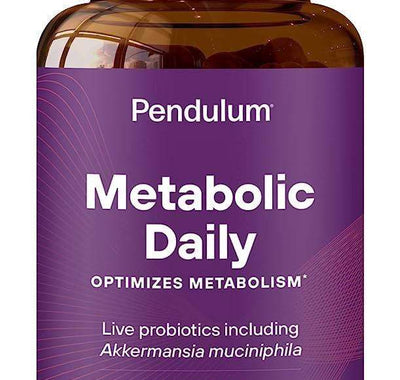
Pendulum Metabolic Daily at £62.38 (from £79.00, 78 reviews) targets metabolic outcomes rather than digestion alone. At this tier you are in the same monthly bracket as a personalised supplement subscription — and it is worth asking honestly whether more capsules or better habits is what you are short of. See our Pendulum review.
Whichever tier you pick, give it eight to twelve weeks and change one thing at a time — see how long probiotics take to work.
Safety and who should take care
Testing itself is low-risk. The risks lie in what people do with results, and in the programmes wrapped around them.
Take medical advice first if you
- Have, or have had, a disordered relationship with food — food scoring, tracking and elimination can be harmful; speak to your GP before starting any such programme. ZOE states its programme is not suitable for people with an eating disorder
- Have diabetes — do not change your diet or act on glucose-related predictions without your diabetes team
- Are significantly immunocompromised, or have a central venous catheter — relevant to live probiotics
- Have inflammatory bowel disease or coeliac disease — advice to increase fibre may not suit you
- Have had an ileostomy or colostomy, or are undergoing chemotherapy — ZOE lists these as unsuitable
- Are pregnant or breastfeeding — see probiotics in pregnancy
- Take prescription medication — check interactions, particularly with berberine-containing products
A microbiome result is not a diagnosis. There is no agreed "correct" microbiome, and no evidence that treating a number on a report improves health. More in probiotics safety.
A specific caution about eliminating foods: microbiome reports often generate long "avoid" lists. Removing foods without clinical need narrows the diet, which tends to reduce plant diversity — the opposite of what the underlying science supports. Do not remove gluten before coeliac testing, as doing so invalidates the result.
On labelling: probiotics carry no authorised health claim in GB or the EU, and are sold as food supplements that cannot legally be marketed as treating any condition. See probiotic side effects for what is expected and what is not.
When to see a doctor
See your GP — or seek urgent care — if you have:
- Blood in your stool, or black tarry stools
- Unexplained weight loss
- A change in bowel habit lasting three weeks or more
- Severe abdominal pain, or pain that wakes you at night
- Difficulty swallowing, or persistent vomiting
- Persistent bloating rather than occasional bloating
- Unexplained iron-deficiency anaemia
- A family history of bowel cancer, coeliac disease or inflammatory bowel disease
No consumer test substitutes for assessment, and a reassuring microbiome score does not rule out serious disease. See when to see a GP and bowel cancer screening.
Frequently asked questions
Which is the best microbiome test in the UK?
Of the three compared here, ZOE is the cheapest, has the most published evidence behind its programme and is the only one with its own randomised controlled trial. Viome offers deeper technical analysis at considerably higher total cost. Atlas Biomed is no longer operating. That said, a 2025 international consensus concluded there is insufficient evidence to recommend routine microbiome testing at all.
Is Atlas Biomed still trading?
No. Its website went offline in late 2024, customers lost access to results they had paid for, and the company stopped responding to enquiries. Four of eight listed officers had resigned, no financial statements had been filed since December 2022, and the ICO confirmed it received a complaint. Do not attempt to purchase from it.
I was an Atlas Biomed customer. What should I do?
You can raise a complaint with the Information Commissioner's Office regarding your personal data. If you paid by credit card or certain payment services, contact your provider about a chargeback, though time limits usually apply. If you had a report you no longer have, unfortunately there is no route to recover it — the data was not downloadable, which is why the loss was permanent.
Is Viome better than ZOE?
Viome uses more advanced sequencing — RNA rather than DNA — which is genuinely better science. But it costs considerably more, its recommendations lead to its own supplement subscription, and it has not published a randomised controlled trial of its programme comparable to ZOE's METHOD study. Better input data does not automatically mean better advice.
Is Viome available in the UK?
Viome ships internationally, but it is a US company pricing in dollars, and free shipping applies to US orders. UK buyers should expect currency conversion, international shipping and potentially import VAT and handling fees — on the kit and on every monthly supplement shipment.
What does ZOE cost in the UK?
The app-and-test bundle is £268.88 in year one — a £149 test plus 12 months at £9.99. App-only access is £119.88 a year, or £24.99 a month on a three-month plan. The test is only sold with a membership, and memberships auto-renew.
Does ZOE still include the glucose monitor and blue muffins?
No. ZOE removed the continuous glucose monitor, blood fat test and standardised test meals in September 2025. Only the stool-based microbiome test remains, with blood fat and glucose responses now predicted algorithmically.
Are at-home microbiome tests accurate?
They are analytically variable and not clinically validated for most purposes. Published analyses have found the same stool sample can produce materially different reports from different providers. Scores are proprietary and not comparable between companies.
What is the difference between DNA and RNA microbiome testing?
DNA sequencing identifies which microbes are present. RNA sequencing (metatranscriptomics) measures which genes those microbes are actively expressing. RNA gives higher functional resolution, but the evidence for what to do about most findings is not yet established, so the practical advantage is smaller than the marketing implies.
Can a microbiome test diagnose IBS, SIBO or leaky gut?
No. IBS is a clinical diagnosis made after excluding other conditions. SIBO requires a breath test. There is no validated consumer test for intestinal permeability. See is leaky gut real and IBS types.
Do I need a test before choosing a probiotic?
No. There is no evidence that selecting a probiotic from a microbiome test result works better than choosing a well-researched strain for your specific goal. Probiotic effects are strain-specific, and that is what should guide the choice.
Can I download my data from ZOE or Viome?
Check directly before purchasing, as policies change. Under UK GDPR you have a right of access to your personal data, but exercising that right depends on the company still being reachable — which is exactly the gap the Atlas Biomed case exposed. Ask about raw data export before you pay.
Are these tests available on the NHS?
No. Consumer microbiome profiling is not offered on the NHS, consistent with the international consensus that evidence does not yet support routine clinical use. Targeted tests such as calprotectin, coeliac serology and H. pylori testing are available via your GP where clinically indicated.
What is the single best thing I can do for my gut?
Eat a wider variety of plants. It is free, it has the strongest evidence behind it, and it is what every programme on this page is ultimately trying to get you to do.
Medical disclaimer: This article is for general information and education only and does not constitute medical advice, diagnosis or treatment. Welzo sells supplements and does not sell ZOE, Viome or Atlas Biomed; this conflict of interest is disclosed above and no overall winner is declared. Pricing is quoted from each company's published figures at the time of writing and changes frequently; Viome prices in US dollars and UK buyers may incur conversion, shipping and import charges. Statements regarding Atlas Biomed reflect contemporaneous reporting including a BBC investigation and Companies House records; no evidence of misuse of customer data has been reported. Food supplements are not a substitute for a varied and balanced diet, and are not intended to diagnose, treat, cure or prevent any disease. A microbiome test result is not a diagnosis, and there is no agreed "correct" microbiome composition. Anyone with a current or previous eating disorder should speak to their GP before starting a programme involving food scoring, tracking or elimination. People with diabetes should not change their diet or act on glucose predictions without their diabetes team. Do not remove gluten from your diet before coeliac testing. Products containing berberine interact with numerous medicines. Persistent digestive symptoms, unexplained weight loss or a change in bowel habit lasting three weeks or more require medical assessment.
About the author
Dr Zeeshan Afzal (MBBS) is a practising medical doctor and Welzo's Medical Content Lead. He writes and reviews Welzo's health content to ensure it is accurate, evidence-based and aligned with current UK clinical guidance. Read our editorial policy.
References
- Porcari S, et al. International consensus statement on microbiome testing in clinical practice. Lancet Gastroenterol Hepatol. 2025;10(2):154–167. Link
- Bermingham KM, Linenberg I, Polidori L, et al. Effects of a personalized nutrition program on cardiometabolic health: a randomized controlled trial (ZOE METHOD). Nat Med. 2024;30:1888–1897. Link
- Berry SE, Valdes AM, Drew DA, et al. Human postprandial responses to food and potential for precision nutrition. Nat Med. 2020;26(6):964–973. Link
- Asnicar F, Berry SE, Valdes AM, et al. Microbiome connections with host metabolism and habitual diet from 1,098 deeply phenotyped individuals. Nat Med. 2021;27:321–332. Link
- Evaluating the analytical performance of direct-to-consumer gut microbiome testing services. Commun Biol. 2026. Link
- Wastyk HC, Fragiadakis GK, Perelman D, et al. Gut-microbiota-targeted diets modulate human immune status. Cell. 2021;184(16):4137–4153. Link
- ZOE. App and Gut Health Test membership pricing (UK). Link
- Viome. Gut Intelligence Test product page and pricing. Link
- Which? Zoe app review: is it worth it? April 2026. Link
- Progress Educational Trust. DNA testing company vanishes, as does customers' data (reporting on the BBC investigation into Atlas Biomed). Link
- Information Commissioner's Office — making a data protection complaint. Link
- NICE. Irritable bowel syndrome in adults: diagnosis and management (CG61). Link
- NHS. Eat well. Link
- NHS. Bowel cancer. Link
- Beat. Eating disorder support and helplines. Link
Related reading
- ZOE vs a gut supplement routine: cost and value
- Full ZOE gut health review
- UK microbiome test comparison
- Gut microbiome testing explained
- Best probiotics in the UK
- Do probiotics actually work?
- Gut health in the UK: the complete guide


 Hodnoceno výborně o 28,951+ recenzí
 100% záruka vrácení peněz