






Best Prebiotic Supplements UK 2026
Posted on:
Aug 05, 2026
Authored by


Written and medically reviewed by Dr Zeeshan Afzal (MBBS) — Medical Doctor & Medical Content Lead, Welzo
Evidence-based · Honest about tolerance · UK pricing
Last updated: January 2026 · Reading time: ~17 minutes
Probiotics get most of the attention in digestive health, but prebiotics may matter just as much — and they're among the most misunderstood gut health supplements on the shelf. While probiotics add live bacteria to your gut, prebiotics feed the beneficial bacteria you already have — nourishing them so they can multiply and produce the compounds that keep your gut lining healthy. For many people, feeding your existing microbiome is a more sustainable strategy than repeatedly introducing new strains.
This guide ranks the best prebiotic supplements available in the UK, explains what each type actually does, and — crucially — is honest about tolerance, because the most common reason people give up on prebiotics is starting with too much, too soon.
Table of contents
| # | Prebiotic | Best for | Guide price |
|---|---|---|---|
| 1 | Welzo Citrus Pectin Powder | Gentle, versatile all-rounder | Check Welzo |
| 2 | Inulin (chicory root) | Best-researched classic prebiotic | Check Welzo |
| 3 | Partially hydrolysed guar gum (PHGG) | Sensitive guts & IBS | Check Welzo |
| 4 | Psyllium husk | Regularity & stool form | Check Welzo |
| 5 | Resistant starch | Butyrate production | Check Welzo |
| 6 | Galacto-oligosaccharides (GOS) | Bifidobacteria support | Check Welzo |
| 7 | Welzo Akkermansia (synbiotic approach) | Pairing with a keystone strain | ~£21.99 |
| 8 | Klaire Labs Ther-Biotic Synbiotic | All-in-one synbiotic capsule | Check Welzo |
Browse the full Welzo probiotics and gut range for current prices and availability.
A prebiotic is a food component — usually a specific type of fibre — that your own digestive enzymes can't break down, so it reaches the colon intact and is selectively fermented by beneficial bacteria. That fermentation produces short-chain fatty acids such as butyrate, acetate and propionate, which are the main fuel for the cells lining your colon and help maintain a healthy gut barrier.
Not all fibre is prebiotic, and not all prebiotics are equal — different fibres feed different bacteria and are fermented at different speeds, which is why some cause more wind than others. The key distinction from probiotics is simple: probiotics add bacteria, prebiotics feed the ones you already have. Our guide to prebiotic vs probiotic explains when each makes sense, and a combined product is called a synbiotic.

Welzo Citrus Pectin Powder takes the top spot because it balances two things people actually need: genuine prebiotic activity and good tolerance. Pectin is a soluble fibre found naturally in citrus peel and apples, fermented gradually in the colon to produce short-chain fatty acids. Because it ferments more slowly and gently than inulin, it tends to cause less wind — making it a sensible starting point for anyone new to prebiotics or with a sensitive gut. The powder format also makes it easy to start with a small dose and build up.
| Pros | Cons |
|---|---|
| Gentle, gradual fermentation | Less "classic" prebiotic research than inulin |
| Powder allows precise, gradual dosing | Needs mixing into liquid |
| Suits beginners and sensitive guts | Still needs building up slowly |
Where to buy: welzo.com/products/citrus-pectin-powder · Check Welzo for current price
Inulin is the archetypal prebiotic and has the largest body of research behind it, with good evidence for increasing beneficial Bifidobacteria. Extracted mainly from chicory root, it's inexpensive, widely available and effective at feeding the microbiome. The trade-off is tolerance: inulin ferments quickly and is high in FODMAPs, so it commonly causes wind and bloating — especially at higher doses or in people with IBS. Start with a very small amount. Our guide to psyllium vs inulin compares the two directly.
| Pros | Cons |
|---|---|
| Strongest classic prebiotic evidence base | High-FODMAP; often causes wind and bloating |
| Reliably increases Bifidobacteria | Frequently unsuitable for IBS |
| Inexpensive and widely available | Ferments fast, so dose must be built up carefully |
Where to buy: welzo.com/collections/gut-health · Check Welzo for current price
PHGG is the prebiotic most often recommended for people who react badly to inulin. It's a soluble fibre that ferments slowly and evenly along the colon, producing short-chain fatty acids without the rapid gas production that makes other prebiotics uncomfortable. It's low-FODMAP, generally well tolerated, and has been studied in IBS for both constipation and diarrhoea patterns — one of the few prebiotics that can suit either. If previous prebiotics have left you bloated, this is the one to try. See our guide to supplements for IBS.
| Pros | Cons |
|---|---|
| Low-FODMAP and well tolerated | Less widely stocked than inulin |
| Slow, even fermentation — minimal gas | Usually more expensive per serving |
| Studied in IBS for both constipation and diarrhoea | Effects build gradually over weeks |
Where to buy: welzo.com/collections/gut-health · Check Welzo for current price
Psyllium is a gel-forming soluble fibre with excellent evidence for normalising stool form — it softens hard stools and adds bulk to loose ones, which is why it's a first-line recommendation for constipation. Its prebiotic effect is more modest than inulin's, since it's only partially fermented, but that's precisely why it's gentler. If your main goal is regularity rather than maximum microbiome feeding, psyllium is the practical choice — see our guide to constipation relief. Always take it with plenty of water.
| Pros | Cons |
|---|---|
| Excellent evidence for stool form and regularity | Weaker prebiotic effect than inulin or GOS |
| Works for both constipation and loose stools | Must be taken with plenty of fluid |
| Inexpensive and widely available | Texture can be unappealing |
Where to buy: welzo.com/collections/gut-health · Check Welzo for current price
Resistant starch resists digestion in the small intestine and is fermented in the colon, where it's a particularly good producer of butyrate — the short-chain fatty acid that fuels colon cells. It's found naturally in cooked-and-cooled potatoes, rice and pasta, slightly green bananas, oats and pulses, and is also sold as green banana or potato starch powder. It's a strong choice if your focus is specifically on butyrate and colon health — see our guides to resistant starch and butyrate supplements.
| Pros | Cons |
|---|---|
| Particularly good butyrate producer | Can cause significant wind initially |
| Available cheaply from everyday foods | Powder forms vary in quality |
| Easy to add via diet as well as supplements | Needs a slow build-up |
Where to buy: welzo.com/collections/gut-health · Check Welzo for current price
GOS are prebiotic fibres structurally similar to the oligosaccharides in human breast milk, and they're particularly effective at increasing Bifidobacteria. They have a solid research base and are used in infant formula for that reason. Like inulin, GOS are high-FODMAP and ferment fairly readily, so wind is common if you start too high — but for people specifically wanting to boost bifidobacteria, they're among the most targeted options available. See our guide to Bifidobacterium.
| Pros | Cons |
|---|---|
| Strong, targeted bifidogenic effect | High-FODMAP; may not suit IBS |
| Good research base | Can cause wind at higher doses |
| Mixes easily into drinks | Less widely available in the UK |
Where to buy: welzo.com/collections/gut-health · Check Welzo for current price

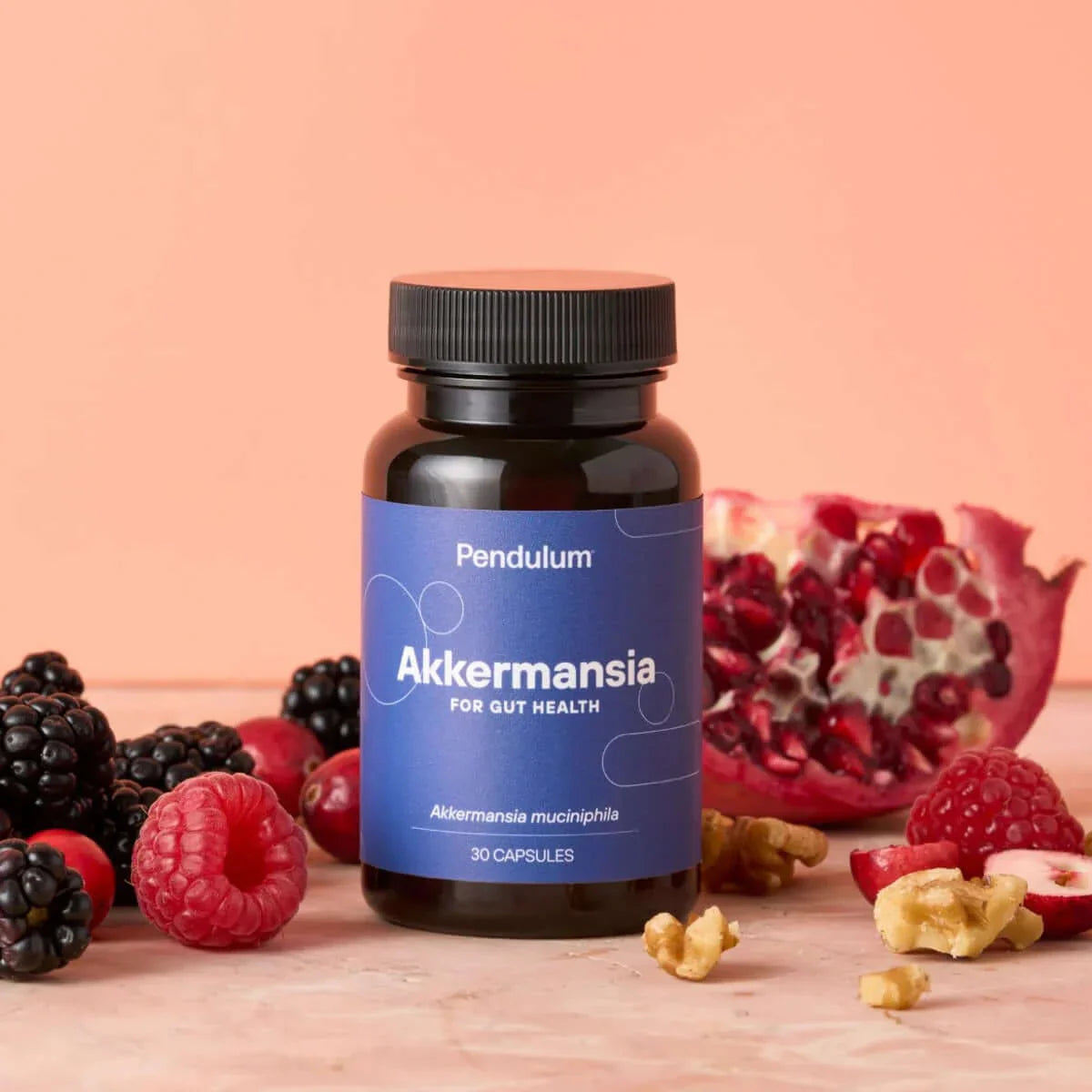
This is a probiotic rather than a prebiotic, but it earns a place because of how the two work together. Akkermansia muciniphila is a mucus-layer specialist that supports the gut lining, and pairing it with a prebiotic fibre creates a practical do-it-yourself synbiotic: the prebiotic feeds your broader microbiome while Welzo Akkermansia supplies a keystone strain that's often depleted. If you're already taking a prebiotic and wondering what to add next, this is the logical partner.
| Pros | Cons |
|---|---|
| Complements a prebiotic well | Not itself a prebiotic |
| Keystone strain for the gut lining | Adds cost alongside a prebiotic |
| Ultra Purity quality and transparent dosing | Evidence for this strain still developing |
Where to buy: welzo.com/products/akkermansia · Guide price ~£21.99
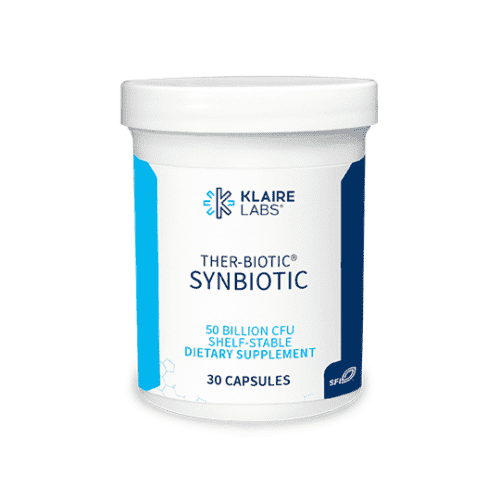
If you'd rather not manage two products, Klaire Labs Ther-Biotic Synbiotic combines multiple probiotic strains with a prebiotic in a single capsule. The convenience is real, though the prebiotic dose in any capsule is necessarily small compared with a powder — so it's better thought of as a well-rounded daily supplement than a serious prebiotic dose. Good for simplicity; less good if prebiotic quantity is your priority.
| Pros | Cons |
|---|---|
| Probiotic and prebiotic in one capsule | Small prebiotic dose vs a powder |
| Professional-grade, hypoallergenic | Premium price |
| Convenient, no mixing required | Less flexible for gradual dose building |
Where to buy: welzo.com/products/ther-biotic-synbiotic-klaire-labs · Check Welzo for current price
This is the single most important section, because most people who "can't tolerate prebiotics" simply started too high. Your gut bacteria need time to adapt.
For more on building fibre intake without discomfort, see our guide on how to increase fibre.
Supplements are convenient, but food should come first for most people. Prebiotic foods — onions, garlic, leeks, asparagus, slightly green bananas, oats, barley, apples and pulses — deliver prebiotic fibres alongside polyphenols, vitamins and other compounds that supplements don't provide. A varied, plant-rich diet naturally supplies a wide range of fibres, feeding a broader range of bacteria than any single supplement can.
Supplements make most sense when your diet is genuinely limited, when you need a specific fibre type (like PHGG for IBS), or when you want a measurable, consistent dose. Think of them as a top-up to a good diet, not a substitute for one — our guide to the best foods for gut health is the natural starting point.
Prebiotics are generally safe for healthy adults, but they aren't right for everyone. People with IBS often react badly to high-FODMAP prebiotics like inulin and GOS. Anyone with a diagnosed gut condition such as inflammatory bowel disease, or with a history of bowel obstruction or strictures, should check with their doctor before adding fibre supplements. If you have SIBO or suspected bacterial overgrowth, prebiotics can sometimes worsen symptoms, so seek professional guidance first.
Welzo's Ultra Purity range also includes berberine and TUDCA, which serve entirely different purposes and are not prebiotics. If you have persistent digestive symptoms — or red flags such as blood in your stool, unexplained weight loss or a lasting change in bowel habit — see a doctor rather than self-treating; our guide on when to see a GP about stomach symptoms explains what to watch for.
It depends on your gut. Citrus pectin is a gentle, versatile all-rounder and a good starting point for most people. Inulin has the strongest classic research but is high-FODMAP and often causes wind. PHGG is the best choice for sensitive guts and IBS, and psyllium is best if regularity is your main goal. Match the fibre to your tolerance and aim.
Probiotics are live beneficial bacteria that you add to your gut. Prebiotics are fibres that feed the beneficial bacteria you already have, so they multiply and produce short-chain fatty acids. A product combining both is called a synbiotic. For many people, feeding an existing microbiome is a more sustainable long-term strategy than repeatedly adding new strains.
Some wind is normal at first — it's a direct result of bacteria fermenting the fibre. The problem is usually starting with too high a dose. Begin with a quarter or half serving, increase gradually over several weeks, and hold at your current dose if symptoms appear. Gentler options like PHGG and pectin produce far less gas than inulin.
It depends on the type. High-FODMAP prebiotics such as inulin, FOS and GOS commonly trigger IBS symptoms and are best avoided initially. Low-FODMAP options like partially hydrolysed guar gum (PHGG) are much better tolerated and have been studied in IBS for both constipation and diarrhoea patterns. Introduce any fibre slowly and ideally with dietetic guidance.
Changes in the microbiome can begin within days, but give any prebiotic four to eight weeks of consistent use before judging the effect. Benefits build gradually as bacterial populations shift and short-chain fatty acid production increases. Consistency matters more than dose — a small amount taken daily beats a large amount taken sporadically.
Yes, and for most people food should come first. Onions, garlic, leeks, asparagus, slightly green bananas, oats, barley, apples and pulses all supply prebiotic fibres, alongside polyphenols and nutrients supplements don't provide. A varied, plant-rich diet feeds a broader range of bacteria than any single supplement. Supplements are a useful top-up when diet is limited or you need a specific fibre.
You can, and they complement each other — the prebiotic feeds your existing bacteria while the probiotic adds specific strains. Taking both is sometimes called a synbiotic approach, and some products combine them in one capsule. Introduce them one at a time so you can tell what's helping, and build the prebiotic dose up gradually.
Psyllium husk has the strongest evidence for improving stool form and regularity, softening hard stools and making them easier to pass. Take it with plenty of water. PHGG is also well studied for constipation and is gentler if you're sensitive. Increase fibre gradually and combine with good hydration and regular movement for best results.
No. Higher doses increase fermentation and therefore wind and bloating, without necessarily improving benefits. Most research uses modest daily amounts taken consistently. The right dose is the largest amount you can take comfortably, reached gradually. If you're getting significant symptoms, reduce the dose rather than persisting or switching to a stronger product.
Potentially, yes. If bacteria are overgrowing in the small intestine, adding fermentable fibre can increase gas and bloating. Anyone with diagnosed or suspected SIBO should seek professional guidance before starting a prebiotic, and may need to address the overgrowth first. The same caution applies to inflammatory bowel disease and any history of bowel strictures or obstruction.
Medical disclaimer: This article is for general information and education only and does not constitute medical advice, diagnosis or treatment. Prebiotic supplements are not intended to diagnose, treat, cure or prevent any disease, and are not suitable for everyone — including some people with IBS, SIBO, inflammatory bowel disease, or a history of bowel obstruction. Prices are guide prices and may change. Persistent or concerning digestive symptoms should be assessed by a doctor. Always consult a healthcare professional before starting new supplements, particularly if you are pregnant, breastfeeding, taking medication, or have an existing condition.
About the author
Dr Zeeshan Afzal (MBBS) is a practising medical doctor and Welzo's Medical Content Lead. He writes and reviews Welzo's health content to ensure it is accurate, evidence-based and aligned with current UK clinical guidance, translating complex research into practical advice patients can trust.
 Βαθμολογημένη εξαιρετική από 28,951+ κριτικές
 100% εγγύηση επιστροφής χρημάτων
Η εγγύηση επιστροφής χρημάτων σας εξασφαλίζει ότι θα λάβετε τα στοιχεία σας ή θα λάβετε πλήρη επιστροφή χρημάτων.


