


Related collections



Psyllium vs Inulin vs Pectin: Which Fibre Is Right for You?
Posted on:
Aug 05, 2026
Authored by


Written and medically reviewed by Dr Zeeshan Afzal (MBBS) — Medical Doctor & Medical Content Lead, Welzo
Evidence-based · Honest about what's proven and what isn't · UK-focused
Last updated: July 2026 · Reading time: ~10 minutes
"Fibre" is three different jobs wearing one word. Two of these three will make you produce more gas on purpose. One of them mostly won't — and that single difference decides which is right for you.
Forget soluble versus insoluble, which is the distinction everyone learns and almost nobody can use. What actually predicts how a fibre behaves is how thick a gel it forms and how readily your bacteria ferment it. Here's how the three most-sold fibres score on both.
Table of contents
Viscosity is how thick a gel the fibre forms in water. Viscous fibres slow gastric emptying, bulk and soften stool, and trap bile acids and sugars. This is where most of the therapeutic action lives.
Fermentability is how eagerly your colonic bacteria break it down. Highly fermentable fibre feeds your microbiome and produces short-chain fatty acids — and, unavoidably, gas. That gas is the mechanism working, not a side effect of a bad product.
Psyllium (ispaghula husk, from Plantago ovata) is the unusual one: highly viscous but only minimally fermented. It forms a thick gel and then largely passes through intact.
That combination is why it does something no other fibre here manages — it normalises stool in both directions. In constipation it holds water and softens; in loose stool it absorbs water and firms. Same fibre, opposite problems.
Because it isn't fermented much, it produces comparatively little gas, which is precisely why it's the fibre most often tolerated by people with IBS. It's also the fibre with the strongest UK clinical standing: ispaghula husk is the fibre recommended in NICE guidance for IBS where a fibre supplement is appropriate, and it has good evidence for lowering LDL cholesterol via bile acid binding. See fibre and cholesterol and supplements for IBS.
The catch: it must be taken with plenty of water. Taken dry or with too little fluid it can swell in the throat or oesophagus, which is a genuine choking and obstruction risk rather than a theoretical one.
Inulin (chicory root, Jerusalem artichoke) is the mirror image: non-viscous but highly fermentable. It forms no meaningful gel, so it does little for stool consistency directly. What it does is feed bacteria — selectively, and well.
Inulin is the archetypal prebiotic, with the best evidence of the three for selectively increasing bifidobacteria. If your goal is genuinely to shift your microbiome rather than to fix your bowels, this is the one with the mechanism. See prebiotic vs probiotic and best prebiotic supplements.
Also worth knowing: inulin appears in a great many probiotic capsules at milligram quantities. Prebiotic doses are measured in grams. A capsule listing 200mg of inulin is not delivering a prebiotic dose — see synbiotic supplements.
Ordinary dietary pectin — the fibre in apples, citrus peel and the stuff that sets jam — sits between the two. It's gel-forming and moderately fermentable, giving it some of psyllium's viscosity benefits and some of inulin's prebiotic effect, with a middling amount of gas.
This is the distinction that trips up most buyers, and it matters commercially and clinically.
Modified citrus pectin (MCP) has been deliberately broken down — depolymerised into much shorter chains with a lower molecular weight. That processing is the entire point: it changes how the molecule behaves and allows some absorption, which ordinary pectin does not have.
The consequence is that MCP is not primarily a bowel-regularity fibre. It's researched for reasons largely unrelated to stool consistency, and the shortened chains mean it doesn't form the same bulking gel that whole pectin does. If your goal is regularity, buying MCP and expecting psyllium's effect will disappoint you. See modified citrus pectin vs pectin.

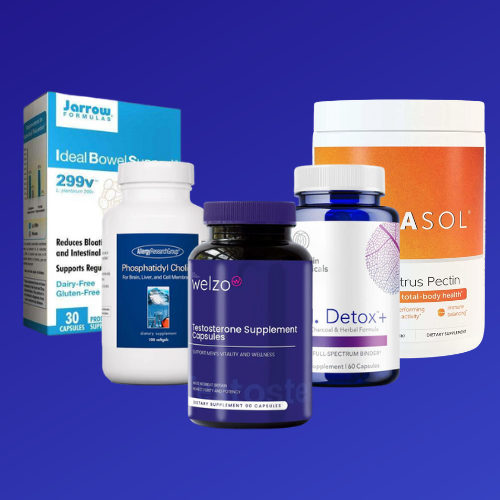
Welzo's version is 100% modified citrus pectin from citrus peel, in powder form with no capsules, fillers or flavourings — which at least makes the dose easy to control. Buy it for what MCP is actually studied for, not as a laxative substitute.
| Property | Psyllium | Inulin | Pectin |
|---|---|---|---|
| Forms a gel | Yes — highly | No | Yes — moderately |
| Fermented by bacteria | Minimally | Heavily | Moderately |
| Gas and bloating | Low | High | Moderate |
| Prebiotic effect | Limited | Strongest | Moderate |
| Suits IBS | Usually | Often poorly — high FODMAP | Variable |
| Typical dose | 3–10g+ daily | 5–10g daily | Varies by form |
| Your goal | Start with |
|---|---|
| Constipation | Psyllium — see constipation relief |
| Loose stools | Psyllium — it firms as well as softens |
| IBS, any subtype | Psyllium; avoid inulin — see IBS types |
| Feeding your microbiome | Inulin — the strongest prebiotic case |
| Lowering cholesterol | Psyllium, with pectin as an alternative |
| Prone to bloating | Psyllium; inulin will likely make it worse |
| Overall gut health | Food — variety beats any single supplement |
That last row is the honest headline. A supplement gives you one fibre; a varied diet gives you dozens, which is what actually drives microbiome diversity. See 30 plants a week and high fibre foods.
Start at roughly a quarter of the label dose and build over three to four weeks. Almost every bad experience with fibre supplements comes from starting at a full dose on day one.
Water is not optional with psyllium. Take it with a full large glass, and drink more across the day. Insufficient fluid turns a gel-forming fibre into a blockage risk.
Separate it from medication by at least two hours. Viscous fibres can slow or reduce absorption of tablets taken at the same time — this matters for thyroid medication, and for anyone on diabetes medication where timing affects glucose. Check with your pharmacist.
Expect the gas to settle with inulin, but not to disappear. If it hasn't eased after three to four weeks of gradual increase, inulin isn't the fibre for you. Practical guidance in how to increase fibre.
Bloating, wind and cramping in the first fortnight are normal with any fibre and usually settle. See trapped wind relief.
Do not take a bulking fibre — and speak to a doctor first — if you
Psyllium must always be taken with a full glass of water. Taken dry or with too little fluid it can swell and cause choking or obstruction.
On labelling: fibre supplements are sold as foods or food supplements and cannot be marketed as treating any condition.
See your GP — or seek urgent care — if you have:
New constipation in someone over 50 needs assessment rather than a fibre supplement. See when to see a GP and bowel cancer screening.
For symptoms — constipation, loose stools, IBS — psyllium, because it forms a gel and ferments very little. For feeding your gut bacteria, inulin, because it ferments readily and selectively increases bifidobacteria. They're built for different jobs.
Because it's working as designed. Fermentation produces gas, and inulin is one of the most fermentable fibres available. It's also high-FODMAP, which is why people with IBS often react badly to it.
No. MCP is deliberately broken into much shorter chains with a lower molecular weight, which changes how it behaves and allows some absorption. It's not primarily a bowel-regularity fibre — if regularity is your goal, psyllium is the better choice.
It's generally suitable for long-term daily use provided you take it with plenty of fluid. It's a bulking agent rather than a stimulant laxative, so it doesn't carry the dependency concerns some laxatives do.
Only to a limited extent — that's precisely why it causes so little gas. If a prebiotic effect is what you want, inulin or a varied high-fibre diet will do more.
You can, but introduce them one at a time and several weeks apart. Starting two new fermentable fibres together makes it impossible to tell which one is causing what.
Psyllium has the strongest evidence, working by binding bile acids so more cholesterol is used to replace them. Pectin also has supportive evidence.
At minimum a full large glass with each dose, and adequate fluid across the day. This is a safety instruction, not a comfort suggestion.
Yes. Pectin is abundant in apples and citrus, inulin in onions, leeks, garlic, chicory and Jerusalem artichokes. Psyllium is the outlier — it's a supplement rather than a normal food component. See prebiotic foods.
Often yes, but the type matters enormously. Psyllium is the fibre generally recommended where a supplement is appropriate in IBS; inulin frequently worsens symptoms. Discuss it with your GP or a dietitian rather than experimenting.
Medical disclaimer: This article is for general information and education only and does not constitute medical advice, diagnosis or treatment. Food supplements are not a substitute for a varied and balanced diet, and are not intended to diagnose, treat, cure or prevent any disease. Bulking fibres including psyllium must be taken with adequate fluid; taken dry they can cause choking or bowel obstruction. Do not use bulking fibres if you have a known or suspected bowel obstruction, a bowel stricture, difficulty swallowing, or recent bowel surgery. Fibre can affect the absorption of medication — separate doses by at least two hours and check with your pharmacist. A change in bowel habit lasting three weeks or more, or new constipation over the age of 50, requires medical assessment. Prices, review counts and availability are correct at the time of writing.
About the author
Dr Zeeshan Afzal (MBBS) is a practising medical doctor and Welzo's Medical Content Lead. He writes and reviews Welzo's health content to ensure it is accurate, evidence-based and aligned with current UK clinical guidance.
 Rated Excellent by 26,523+ Reviews
 100% Money Back Guarantee
Our money back guarantee ensures you receive your items or get a full refund.


