


Best Fisetin Supplements


Related products
Reviewed by Dr Muhammad Zeeshan Afzal (MBBS | FCPS | MRCP) — independent product reviewer and content creator for Welzo. Last updated 3 July 2026.
Quick answer: The best fisetin supplement for most UK buyers is the Welzo Ultra Purity Fisetin 500. It delivers a high 500 mg dose per serving — versatile for daily use and periodic senolytic protocols — is third-party tested in a GMP facility, and ships from the UK. It sits within the wider Welzo Ultra Purity range and the longevity supplements collection.
Fisetin has gone from an obscure plant pigment to one of the most-discussed molecules in longevity science in just a few years. The reason is a single, striking finding: in a landmark 2018 study, it was the most potent senolytic — a compound that clears ageing "senescent" cells — of ten flavonoids screened, and it extended both healthspan and lifespan in mice. That result launched a wave of research, a shelf of supplements, and a growing programme of human clinical trials. It also launched a great deal of hype.
This guide is designed to be the opposite of hype. We rank six credible fisetin supplements on the criteria that actually matter, then provide what is intended to be the most thorough plain-English fisetin resource you'll find anywhere: the biology of senescent cells, how fisetin maps onto the recognised "hallmarks of ageing", exactly what the landmark study showed (and didn't), the human trials now under way, how fisetin works at the molecular level, the two very different dosing philosophies with the real research numbers, why fisetin is so hard to absorb and what to do about it, how it compares with quercetin and other senolytics, who should and shouldn't take it, and the safety picture. If you're new to the wider category, our overview of the best longevity supplements is a useful companion, as is our explainer on how ageing works.
Contents
- Comparison table
- Best fisetin supplement by category
- How we ranked
- The 6 best fisetin supplements reviewed
- What is fisetin? Sources & chemistry
- Fisetin & the hallmarks of ageing
- Senescent cells, SASP & "inflammaging"
- The landmark senolytic study, in detail
- Fisetin human clinical trials (2026)
- How fisetin works: mechanisms
- Fisetin across the body's systems
- Benefits by area
- What the evidence does & doesn't show
- Dosage: daily vs senolytic pulse
- Bioavailability, metabolism & absorption
- Fisetin vs quercetin & other senolytics
- How fisetin fits a longevity routine
- Who should (and shouldn't) take it
- How to choose
- Safety & interactions
- Common mistakes & myths vs facts
- How to take it: practical protocol
- Glossary
- Related reading
- FAQs
- References & trials
Best Fisetin Supplements UK 2026: Comparison Table
| # | Product | Fisetin per serving | Form | Third-party tested | UK dispatch | Overall /5 |
|---|---|---|---|---|---|---|
| 1 | Welzo Ultra Purity Fisetin 500 | 500 mg | Capsule | Yes | Yes | 4.8 |
| 2 | ProHealth Fisetin Pro | Longevity-formulated | Absorption-enhanced capsule | Yes (CoA) | Ships to UK | 4.5 |
| 3 | Double Wood Fisetin | ~100 mg (98%) | Capsule | Yes | Ships to UK | 4.4 |
| 4 | Codeage Liposomal Fisetin + Resveratrol + Luteolin | Blend | Liposomal | Yes | Ships to UK | 4.1 |
| 5 | Nutricost Fisetin | 100 mg | Capsule | Yes (GMP) | Ships to UK | 4.0 |
| 6 | Neurogan Fisetin | Capsule | Capsule | Yes | Ships to UK | 3.9 |
Specifications and prices change; confirm current details, including exact fisetin content, on each product page before buying.
Best Fisetin Supplement by Category
| Category | Winner |
|---|---|
| Best overall / best high-strength | Welzo Ultra Purity Fisetin 500 |
| Best for absorption | ProHealth Fisetin Pro |
| Best value standardised | Double Wood Fisetin |
| Best liposomal senolytic blend | Codeage Liposomal Fisetin + Resveratrol + Luteolin |
| Best budget single-ingredient | Nutricost Fisetin |
| Best simple everyday capsule | Neurogan Fisetin |
How We Ranked the Best Fisetin Supplements
We weighed each product on seven factors: the fisetin dose per serving (relative to how fisetin is actually used); purity and standardisation (the percentage of active fisetin); bioavailability (format and any absorption technology, which matters more for fisetin than most supplements); third-party testing for identity, potency and contaminants; transparency (clear labelling, no proprietary blends); UK accessibility; and value (cost per milligram). Because fisetin is both poorly absorbed and used in two different ways — daily versus pulsed — dose flexibility and absorption carried extra weight. Ratings are editorial judgements from published product information; confirm current specifications before buying.
The 6 Best Fisetin Supplements Reviewed
1. Welzo Ultra Purity Fisetin 500 — Best Overall (4.8/5)
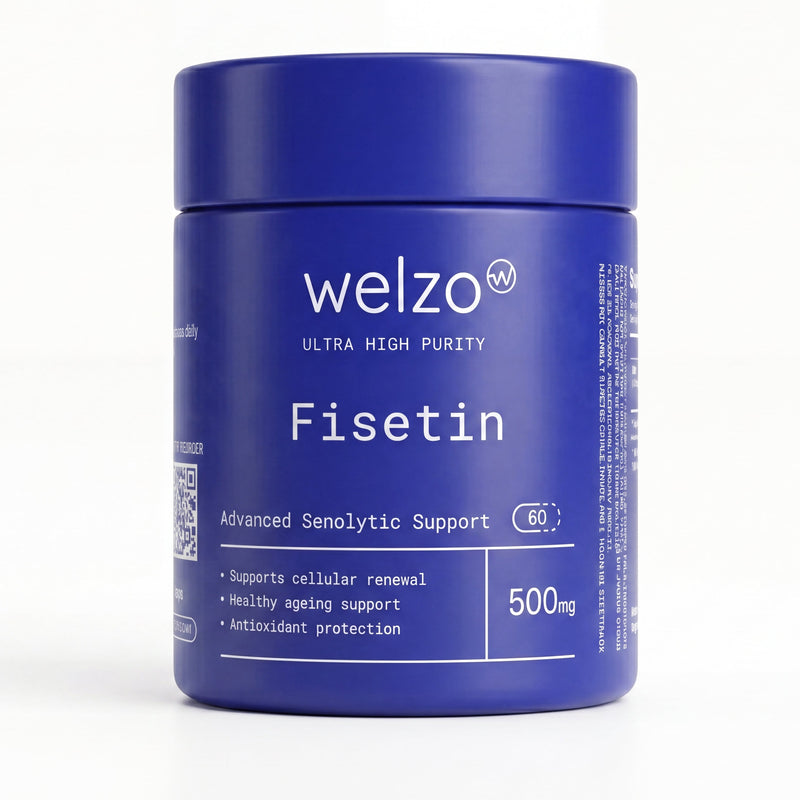
| Fisetin | 500 mg | Form | Capsule |
| Testing | Third-party, GMP | UK dispatch | Yes |
| Label | Clean, no blends | Overall | 4.8 / 5 |
The Welzo Ultra Purity Fisetin 500 is our top pick because its 500 mg dose is the most versatile in the category. Most fisetin capsules sit at 100 mg — fine for gentle daily use, but awkward if you ever want a higher intake (you'd be swallowing five capsules). Welzo's higher unit strength covers a meaningful daily dose in one capsule, and because fisetin's fractional absorption is low, a higher dose partly compensates. It's also a convenient building block for the periodic higher-dose protocols people use for senolytic purposes (under medical guidance — see the dosing section).
On quality it ticks every box for a supplement you may take for years. It's part of the Welzo Ultra Purity range: third-party tested for identity, potency and contaminants (including heavy metals), transparently labelled with no proprietary blend or unnecessary filler, and GMP-manufactured. It dispatches from the UK with fast delivery and a 14-day returns policy — so UK buyers avoid the import charges and customs delays that often come with US longevity brands. At its price it undercuts the premium niche competitors while offering the highest straightforward dose here. Its one relative weakness is that it's a standard capsule rather than a liposomal or absorption-enhanced format — easily mitigated by taking it with a fatty meal.
Pros: highest dose in test; high purity; third-party tested; transparent clean label; UK dispatch and returns; strong value.
Considerations: standard capsule (take with fat to aid absorption); start lower if new to fisetin.
Best for: the majority of UK buyers who want a high-quality, high-dose fisetin at sensible value. View Welzo Ultra Purity Fisetin 500 →
2. ProHealth Fisetin Pro — Best for Absorption (4.5/5)
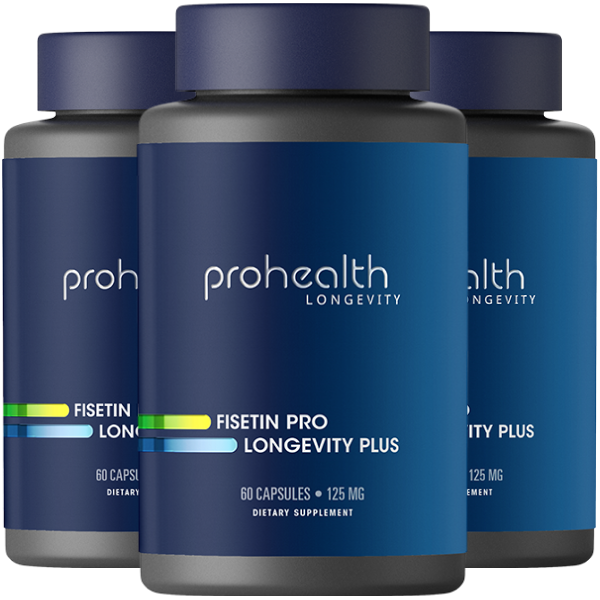
Why it's here: ProHealth is a longevity-focused brand with a serious following in the biohacking community, and its Fisetin Pro is formulated with absorption in mind — a genuinely sensible focus given fisetin's poor natural bioavailability, arguably the compound's single biggest weakness. It publishes certificates of analysis and positions the product squarely within a healthspan/senolytic context, so you know what you're buying and why.
The trade-offs are practical rather than about quality: it's premium-priced, and it ships internationally rather than from UK stock, so factor in delivery time and any potential import charges.
Pros: absorption-focused formula; established longevity brand; published CoAs.
Considerations: premium price; international shipping.
Best for: absorption-focused buyers happy to pay for a formulated product from a longevity brand. Confirm the current dose on the product page.
3. Double Wood Fisetin — Best Value Standardised (4.4/5)
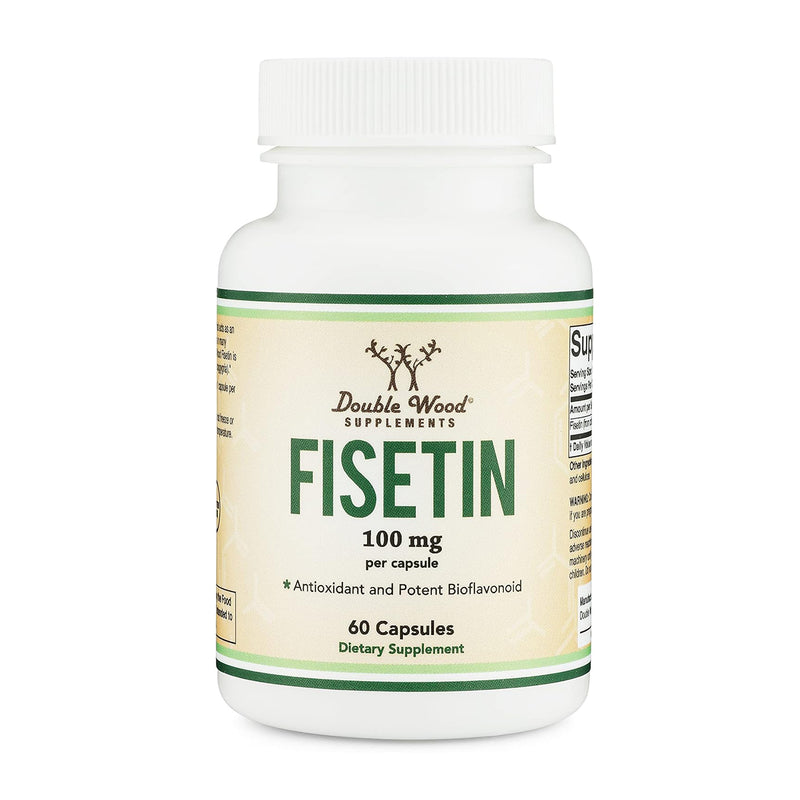
Why it's here: Double Wood has built a strong reputation for transparent, no-nonsense single-ingredient supplements, and its fisetin is a good example — a high-purity extract (typically standardised to around 98%), cGMP-manufactured and third-party tested for identity, potency and contaminants including heavy metals, at one of the lowest per-bottle prices here.
The main trade-off versus our winner is the lower per-serving dose, so a higher intake means more capsules and the value gap narrows.
Pros: high purity (~98%); very good value; transparent testing.
Considerations: lower per-serving dose.
Best for: budget-conscious buyers who want a high-purity, well-tested everyday fisetin.
4. Codeage Liposomal Fisetin + Resveratrol + Luteolin — Best Senolytic Blend (4.1/5)
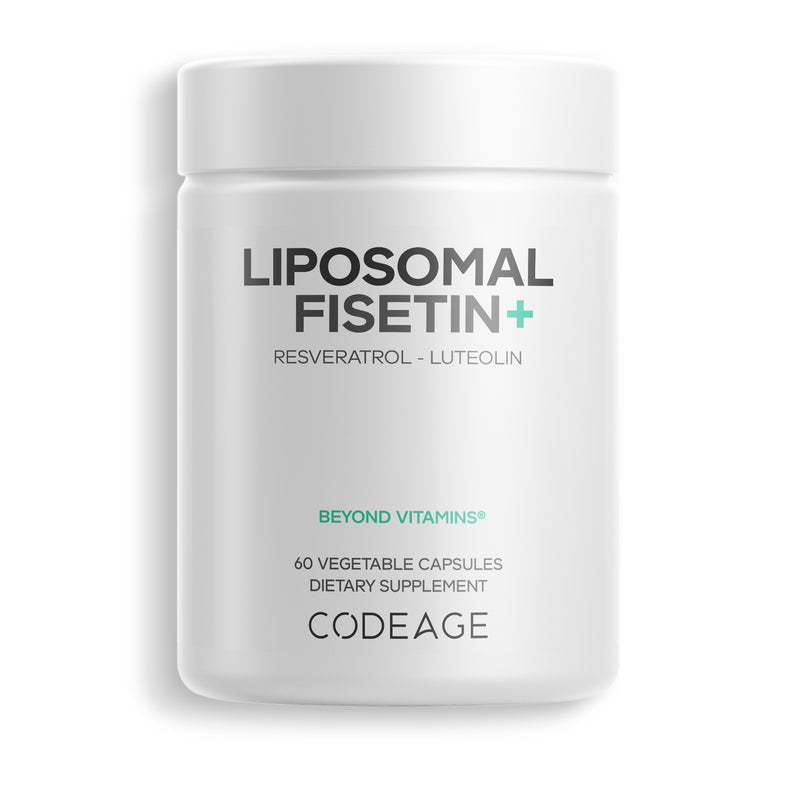
Why it's here: rather than fisetin alone, Codeage combines it with two other longevity-associated polyphenols — resveratrol and luteolin — in a liposomal format designed to improve absorption. All three are studied in the senescence and healthy-ageing space, and the liposomal delivery directly targets fisetin's absorption problem. For someone who'd rather take one comprehensive polyphenol product than assemble a stack, it's convenient.
The trade-off is inherent to blends: the individual fisetin dose is lower than a dedicated high-strength capsule, so if fisetin specifically is your focus, a single-ingredient product gives more control.
Pros: liposomal absorption; three polyphenols in one; convenient.
Considerations: lower individual fisetin dose; premium price.
Best for: those who want a liposomal, multi-polyphenol longevity formula rather than pure fisetin.
5. Nutricost Fisetin — Best Budget Single-Ingredient (4.0/5)
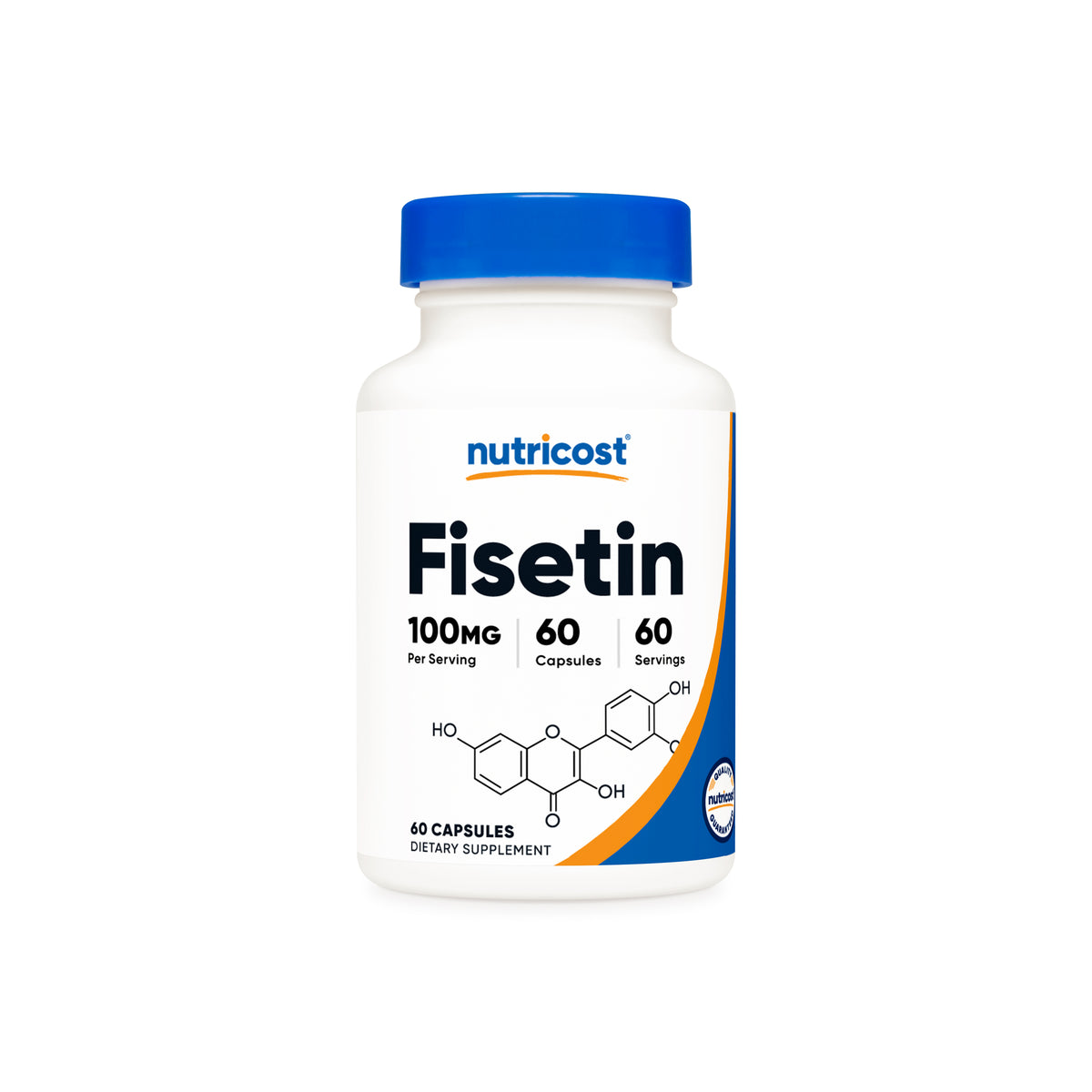
Why it's here: plain fisetin at a low price — 100 mg per serving, non-GMO, gluten-free, made in a GMP-compliant, FDA-registered facility and third-party tested. Nutricost's whole model is high-volume, low-cost basics, and its fisetin fits that: no added ingredients, no premium formulation, just a reliable, affordable capsule.
The flip side is a standard 100 mg capsule with no absorption technology, so pair it with a fatty meal and expect a couple of capsules for a higher daily dose.
Pros: lowest cost-per-milligram entry point; reliable basics.
Considerations: low dose; no absorption aid.
Best for: budget-focused buyers building their own stack.
6. Neurogan Fisetin — Best Simple Everyday Capsule (3.9/5)
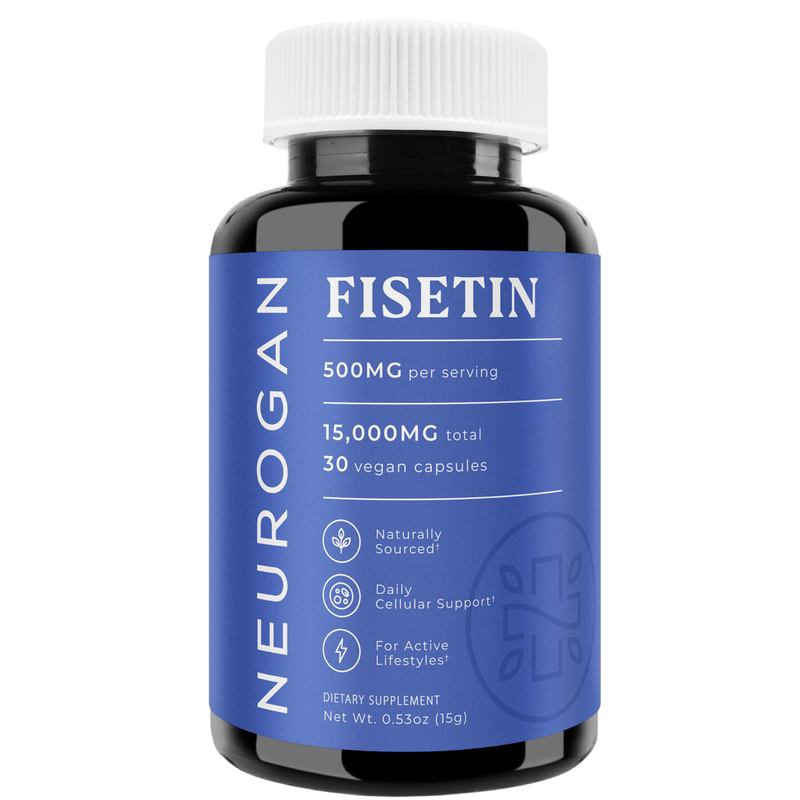
Why it's here: Neurogan offers a clean, well-presented fisetin capsule from a brand with a tidy, transparent range and a strong focus on presentation and quality. It's an easy, no-fuss everyday option for people who like the brand's aesthetic. The key thing to verify is the per-serving dose, which sets value against the higher-strength picks.
Best for: those who want a clean, simple everyday fisetin from a presentable brand.
What Is Fisetin? Sources & Chemistry
Fisetin (3,3′,4′,7-tetrahydroxyflavone) is a flavonol — a flavonoid in the same family as quercetin and luteolin — and the yellow pigment in a range of plants. It carries four hydroxyl groups on its flavone backbone, and it's this structure that gives it strong antioxidant activity and the ability to interact with multiple cellular pathways at once. The richest dietary source is the strawberry, followed by apples, persimmons, grapes, onions, kiwi and cucumbers.
An important reality check before comparing diet with supplements: you cannot reach research-level fisetin through food. Even strawberries contain only a small amount per gram, so matching a supplemental dose — let alone a research dose — would mean eating kilograms daily. That's why concentrated extracts exist, usually standardised from the smoke tree (Cotinus coggygria) or similar sources to a high percentage of active fisetin. Purity matters, because a low-percentage extract delivers proportionally less of what you're paying for — which is why it's one of the criteria we score.
Fisetin & the Hallmarks of Ageing
Modern ageing research organises the biology of getting older into a set of interlinked "hallmarks" — cellular senescence, chronic inflammation, mitochondrial decline, loss of proteostasis, and more. What makes fisetin interesting is that it touches several of them at once rather than a single narrow target:
- Cellular senescence — its flagship action (clearing senescent cells).
- Chronic inflammation ("inflammaging") — reducing the inflammatory signals senescent cells emit.
- Oxidative stress / loss of resilience — direct antioxidant activity plus activation of the cell's own defences.
This is also why fisetin is usually discussed as one part of a broader routine rather than a magic bullet: different compounds address different hallmarks. NAD+ precursors such as NMN support cellular energy and repair; spermidine supports autophagy; urolithin A supports mitochondrial quality control. Fisetin's contribution is primarily on the senescence and inflammation side.
Senescent Cells, SASP & "Inflammaging"
To understand why fisetin generates so much interest, you need to understand cellular senescence. When a cell is damaged or stressed beyond repair — by DNA damage, oxidative stress, or simply reaching its replicative limit — it can enter senescence: it permanently stops dividing (which is protective, because it prevents damaged cells replicating and potentially becoming cancerous) but it does not die. Instead it lingers, sometimes called a "zombie cell."
The problem is what these cells do. Senescent cells secrete a cocktail of inflammatory cytokines, growth factors and enzymes known as the senescence-associated secretory phenotype (SASP) — signals that inflame and damage neighbouring healthy tissue. In youth, the immune system clears senescent cells efficiently. With age, both their production rises and their clearance falls, so they accumulate — in skin, joints, blood vessels, fat, muscle, brain and elsewhere — and their SASP secretions drive the chronic, low-grade inflammation researchers call "inflammaging." Using genetic and pharmacological tools, senescent cells have been shown to play a causal role in many features of ageing in animal models, from frailty to metabolic and cardiovascular decline.
This reframes ageing as something potentially actionable. A senolytic is a compound that selectively clears senescent cells while sparing healthy ones — in effect, taking out the "zombie cells" so tissue can renew. It's a more ambitious idea than simply supplying antioxidants: instead of buffering damage, it aims to remove a root-cause driver of ageing. Fisetin is one of the leading natural candidates for that job.
The Landmark Senolytic Study, in Detail
The pivotal work is Yousefzadeh and colleagues' 2018 study in EBioMedicine.1 The team set out to find flavonoids with stronger senolytic activity than the then-leading combination of dasatinib and quercetin. They screened a panel of ten flavonoid compounds against senescent cells, and fisetin emerged as the most potent at selectively killing senescent cells while sparing healthy ones.
Crucially, the effect held up beyond the dish. In aged mice, fisetin reduced senescence markers across multiple tissues, and in human tissue samples (adipose explants) it reduced the burden of senescent cells too — early evidence of translational relevance. And the headline finding: chronic administration late in life extended both median and maximum lifespan in mice, even when treatment began at an advanced age, with few side effects. Extending both healthspan and lifespan from a natural product, started late, is what made the study land so hard and kick-started the current wave of research and products.
It's worth stating plainly what this study is and isn't. It is rigorous animal and human-tissue work demonstrating a mechanism and a lifespan effect in mice. It is not a demonstration that fisetin extends human lifespan or treats human disease. That gap — from compelling mouse data to proven human benefit — is exactly what the clinical trials below are designed to close.
Fisetin Human Clinical Trials (2026 Status)
One reason to take fisetin more seriously than the average "longevity" supplement is that it has moved into genuine human clinical trials, several run by leading academic centres. Here's an honest snapshot — noting most are ongoing, and being in a trial is not the same as having proven a benefit.
| Trial (identifier) | What it's testing | Status |
|---|---|---|
| AFFIRM (NCT03430037, Mayo Clinic) | Whether fisetin reduces frailty and inflammation markers in older women | Phase 2 |
| COVID-FIS (NCT04537299) | Fisetin as a senolytic to reduce severity/complications of COVID-19 in older nursing-home residents | Phase 2 pilot |
| Vascular function (NCT06133634, Univ. Colorado) | Whether intermittent fisetin improves endothelial function and arterial stiffness in older adults | Phase 1/2 |
| Breast cancer survivors (NCT05595499) | Whether fisetin improves physical function in stage I–III survivors (targeting treatment-induced senescence) | Phase 2, recruiting |
| PK & safety / multimorbidity (NCT06431932) | Pharmacokinetics and safety of fisetin at 20 mg/kg/day for 2 days | Pilot |
| FIS-AD (NCT07279714) | Safety/tolerability in mild cognitive impairment / mild Alzheimer's | Phase 2, planned |
| FITCATS (NCT05416515) | Fisetin (100 mg × 2 days, repeated after 1 month) for carpal tunnel syndrome | Phase 2, completed |
Fisetin was chosen for several of these trials precisely because it has a history of safe human use, can be given orally, and has a short elimination half-life — properties that suit intermittent "hit-and-run" senolytic dosing. The honest read on all of this: fisetin is a serious research candidate with an active clinical programme, but published human efficacy results remain limited. Buy and use it as a promising supplement, not as a proven therapy — and don't infer that a trial in, say, Alzheimer's or cancer means fisetin "treats" those conditions. It doesn't; those studies are asking the question, not answering it.
How Fisetin Works: Mechanisms of Action
Fisetin is a genuinely multi-target molecule. In laboratory research it acts through several complementary pathways:
- Senolytic clearance: it tips senescent cells toward programmed cell death (apoptosis), partly by interfering with the pro-survival networks these cells rely on to resist dying — reducing their number and the inflammatory SASP signals they emit.
- Direct antioxidant + Nrf2 activation: fisetin both scavenges free radicals directly and switches on Nrf2, the master regulator of the cell's own antioxidant defences, boosting endogenous protectors such as glutathione. This "help the cell protect itself" mechanism is often more meaningful than direct scavenging alone. Explore related antioxidant supplements.
- Anti-inflammatory (NF-κB): it dampens NF-κB signalling, a central switch for inflammatory gene expression — directly relevant to the inflammaging picture.
- Sirtuin support: fisetin has been studied as a modulator of sirtuins, the longevity-associated enzymes involved in DNA repair and metabolic regulation — enzymes that also depend on NAD+.
- Neuroprotection: it can cross the blood-brain barrier and, in models, supports pathways involved in memory (including modulation of inflammatory and p25/CDK5-related signalling) and protects neurons from oxidative and inflammatory stress.3
Clearing senescent cells and reinforcing the cell's own defences and calming inflammation is why fisetin is described as both a "senolytic" and a broader "senotherapeutic," and why it appears in so many longevity stacks.
Fisetin Across the Body's Systems
Because senescent cells accumulate everywhere, fisetin is being studied across multiple systems. Mapped to the trial landscape above:
- Musculoskeletal & frailty: the flagship area — reducing senescent-cell burden and inflammation that contribute to frailty and loss of physical function (the focus of AFFIRM and the breast-cancer-survivor trial).
- Vascular health: senescent cells stiffen blood vessels and impair the endothelium; a dedicated trial is testing whether intermittent fisetin improves vascular function in older adults.
- Brain & cognition: neuroprotection in animal models and a planned trial in mild cognitive impairment / early Alzheimer's.
- Metabolic health: preclinical work suggests effects on blood-sugar handling and diabetic complications.
- Immune & inflammatory resilience: the rationale behind the COVID-19 senolytic pilot in vulnerable older adults.
- Skin & connective tissue: senescent cells accumulate in skin with age, making senolytics of interest for skin ageing — a topic we cover from the topical side in our guide to the best anti-ageing serums.
The consistent thread is senescence — the same underlying mechanism, tested in different tissues. Encouraging as a research programme; still unproven as human therapy.
Fisetin Benefits by Area
Framed honestly around what the research supports, this is what fisetin is most commonly taken for:
- Longevity & cellular senescence: its flagship area — clearing senescent cells and reducing inflammaging (strongest, though largely preclinical, evidence).
- Brain & cognitive health: studied for neuroprotection and cognitive maintenance in animal models; crosses the blood-brain barrier.
- Antioxidant & anti-inflammatory support: a potent antioxidant that also upregulates the body's own defences.
- Metabolic support: researched in preclinical models for blood-sugar handling.
- Skin & tissue ageing: senescent cells accumulate in skin and connective tissue (early evidence).
- Vascular & physical function: under active human investigation (see trials).
These are areas of support and active study, not proven treatments. Fisetin is a wellness supplement, not a medicine.
What the Evidence Does & Doesn't Show
| Claim | Evidence status |
|---|---|
| Clears senescent cells in cells & animals | Well supported (incl. human tissue explants). |
| Most potent of 10 flavonoids screened | Supported (Yousefzadeh 2018). |
| Extends lifespan in mice, even started late | Supported in mice — not shown in humans. |
| Neuroprotective, metabolic, vascular effects | Preclinical + human trials in progress. |
| Well tolerated / history of safe human use | Supported at studied doses. |
| Extends human healthspan / treats disease | Not established — under investigation. |
Dosage: Daily vs the Senolytic Pulse (With Real Numbers)
Fisetin is unusual because there are two genuinely different dosing philosophies, and confusing them is the most common mistake people make.
| Approach | Typical amount | Rationale & notes |
|---|---|---|
| Daily support | ~100–500 mg per day, ongoing | For general antioxidant, anti-inflammatory and healthy-ageing support. The common, lower-risk approach and the sensible default for most people. |
| Senolytic "pulse" (hit-and-run) | Research uses ~20 mg/kg/day for 2 consecutive days, repeated only periodically (≈1,400 mg/day for a 70 kg adult) | Mirrors how senolytics work — periodic clearance, not continuous presence. This is the dose used in human trials such as the pharmacokinetic/safety study; some protocols (e.g. the carpal-tunnel trial) used a lower 100 mg × 2 days repeated monthly. Experimental — trial territory, not a self-serve routine. |
The pulse logic matters: because a senolytic aims to remove senescent cells rather than maintain an effect, it doesn't need to be present daily — you clear cells in a short burst, stop, and repeat occasionally. Fisetin's short half-life suits this. But note the two very different dose levels: research "pulse" doses (20 mg/kg) are far higher than everyday supplementation, and their long-term safety in humans isn't yet established.
Clear guidance: for most people, daily support at a sensible dose is the reasonable default. If you're drawn to a high-dose pulse protocol, treat it as something to discuss with a clinician — ideally with monitoring — rather than to copy from a forum. The Welzo Ultra Purity Fisetin 500's 500 mg strength suits daily higher-end use and gives a convenient unit for supervised protocols. Whatever the approach, take fisetin with food containing some fat, and give daily use at least 4–8 weeks before judging it.
Bioavailability, Metabolism & How to Absorb It
Fisetin's single biggest practical weakness is poor oral bioavailability. Three things work against it: it's poorly water-soluble, it's rapidly metabolised (conjugated by glucuronidation and sulfation in the gut and liver), and it has a short half-life, so blood levels rise and fall quickly. The practical consequence is that two products with the same label dose can deliver very different amounts of usable fisetin depending on formulation.
Ways to improve absorption, in rough order of ease:
- Take it with a fatty meal. Fisetin is fat-soluble, so dietary fat (olive oil, avocado, nuts, full-fat yoghurt) meaningfully aids uptake — the simplest, free intervention.
- Choose a formulated product — liposomal (as in Codeage's blend) or an absorption-enhanced formula (as ProHealth positions Fisetin Pro). See also our liposomal supplements collection.
- Consider piperine (black pepper extract), which can slow the metabolism of some polyphenols.
- Offset with dose — a higher-strength standard capsule delivers more total fisetin, partly compensating for lower fractional absorption. This is one reason a 500 mg capsule is a practical choice.
This is also why the exact human dose and formulation are active research questions: the pharmacokinetic sub-study within the current pilot trials is measuring how much fisetin (and which metabolites) actually reach the bloodstream after oral dosing.
Fisetin vs Quercetin & Other Senolytics
Fisetin sits within a small family of senolytic compounds that longevity-minded people compare and combine:
| Compound | Type | Notes |
|---|---|---|
| Fisetin | Flavonoid (supplement) | Most potent natural senolytic in the 2018 screen; strong animal data; active human trials. |
| Quercetin | Flavonoid (supplement) | The partner senolytic flavonoid; used in the dasatinib+quercetin (D+Q) research combination — the most-studied senolytic protocol in humans. |
| Dasatinib | Prescription drug | Used with quercetin in research (D+Q). Not a supplement; medical use only. |
| Spermidine | Polyamine (supplement) | Works via autophagy (cellular "self-cleaning") — complementary, not a competitor. |
| Navitoclax & others | Investigational drugs | Potent senolytics studied in research; prescription/experimental, with meaningful side-effect profiles. |
The practical takeaway: fisetin is the natural senolytic with the strongest single-compound animal data, quercetin has the human-protocol heritage via D+Q, and they're often viewed as complementary. Other longevity compounds such as resveratrol and urolithin A are frequently discussed alongside fisetin, though they act on different pathways. If you stack, introduce one at a time, and get medical advice before any high-dose senolytic approach.
How Fisetin Fits a Longevity Routine
Fisetin is one lever among several in a healthy-ageing routine. The best stacks combine compounds that act on different hallmarks of ageing rather than duplicating the same mechanism. These verified Welzo Ultra Purity options cover complementary pathways:
| Pairing | Complementary role | Option |
|---|---|---|
| Spermidine | Autophagy — cellular renewal, distinct from senolysis | Welzo Ultra Purity Spermidine |
| NMN | NAD+ support for cellular energy & repair | Welzo Ultra Purity NMN |
| Liposomal NAD+ | Direct NAD+ repletion | Welzo Ultra Purity Liposomal NAD+ |
| Urolithin A | Mitophagy — mitochondrial quality control | Welzo Ultra Purity Urolithin A |
| Luteolin | Related flavonoid; antioxidant & senolytic interest | Welzo Ultra Purity Luteolin |
| Astaxanthin | Lipid-soluble antioxidant support | Welzo Ultra Purity Astaxanthin |
| Berberine / TMG | Metabolic & methylation support | Berberine · TMG |
Introduce one compound at a time so you can judge tolerability. Browse the full Welzo Ultra Purity range, the longevity collection, the dedicated NMN, resveratrol and spermidine collections, or all supplements & vitamins to build a routine. For a real-world example of how longevity enthusiasts combine compounds, see our breakdown of David Sinclair's supplements and protocol. And remember — training, sleep and diet remain the foundation any stack is built on.
Who Should (and Shouldn't) Take It
Fisetin tends to appeal to people focused on healthy ageing and longevity, those building an antioxidant/anti-inflammatory routine, and those interested in brain, vascular or physical-function support. As a well-tolerated flavonoid with a history of safe human use, it's a reasonable option for many healthy adults.
It's not appropriate for everyone. Do not start fisetin without medical advice if you are pregnant or breastfeeding, if you take blood thinners or other regular medication, if you have a history of cancer (senolytics act on cell-survival and death pathways), or if you are under 18. And no supplement replaces the fundamentals — exercise, sleep and diet remain the most powerful levers on healthy ageing.
How to Choose a Fisetin Supplement
| What to check | Why it matters |
|---|---|
| Dose per serving | Ranges widely (100–500 mg+). Match it to your use and compare cost per milligram. |
| Purity / standardisation | Higher standardisation (e.g. 98%) means more active fisetin per capsule. |
| Absorption / format | Given fisetin's poor bioavailability, liposomal/formulated products, or taking with fat, make a real difference. |
| Third-party testing | Independent testing for identity, potency and contaminants (heavy metals) is a baseline. |
| Clean label | Avoid proprietary blends that hide amounts, and unnecessary fillers. |
| UK dispatch | Avoids import charges and speeds delivery and returns for UK buyers. |
Safety, Side Effects & Interactions
Fisetin has been well tolerated in studies at typical doses, with mild digestive upset the most commonly reported effect, and it has a history of safe human use — which is partly why it was selected for clinical trials. Because it's a longevity compound sometimes taken at high doses, take these cautions seriously:
- Medication interactions: fisetin can affect cytochrome P450 enzymes and may interact with blood thinners/antiplatelet drugs and other medicines — check with your GP or pharmacist before starting.
- High "senolytic" doses (e.g. 20 mg/kg pulses) are not fully characterised for long-term human safety. Don't self-experiment with aggressive online protocols; keep high-dose use medically supervised.
- Cancer history: because senolytics act on cell-survival and cell-death pathways, anyone with a history of, or active, cancer should consult their oncologist or GP first — even though fisetin is being studied in cancer survivors, that's within a monitored trial, not self-directed use.
- Pregnancy & breastfeeding: safety isn't established — avoid without medical advice.
- Under-18s: not intended for use.
- General: introduce one supplement at a time, use the lowest effective dose, and read the label and patient information.
Food supplements support — not replace — a balanced diet, a healthy lifestyle and professional medical advice.
Common Mistakes & Myths vs Facts
- Myth: "Fisetin is proven to extend human lifespan." Fact: lifespan extension is shown in mice; human trials are ongoing and haven't proven this.
- Mistake: copying high-dose "senolytic pulse" protocols from the internet. Research pulses (20 mg/kg) are trial doses; do them only with medical oversight.
- Mistake: ignoring absorption. Taking fisetin on an empty stomach as a plain powder wastes much of the dose — take it with fat or choose a formulated product.
- Myth: "You can get enough from strawberries." Fact: dietary amounts are a tiny fraction of supplemental (let alone research) doses.
- Mistake: judging products by headline milligrams alone. Purity and format determine how much active, absorbed fisetin you actually get.
- Myth: "More is always better." Fact: senolytics follow a periodic-clearance logic, not a more-is-better one, and high chronic dosing isn't well studied.
How to Take It: Practical Protocol
- Timing: take fisetin with your largest, fattiest meal of the day for best absorption.
- Start low: if you're new to it, begin at the lower end and build up, watching for any digestive upset.
- Be consistent (daily use): antioxidant/anti-inflammatory benefits build over weeks — give it 4–8 weeks.
- Don't improvise pulses: if you're interested in a senolytic protocol, discuss it with a clinician rather than copying an internet regimen.
- Track and review: note how you feel and reassess periodically rather than taking it on autopilot.
- Store cool and dry, away from light, and keep out of reach of children.
Glossary
- Senescence: a state in which a damaged cell stops dividing but doesn't die.
- Senolytic: a compound that selectively clears senescent cells.
- Senotherapeutic: a broader term for compounds that target senescence, whether by clearing cells (senolytic) or calming their secretions (senomorphic).
- SASP: senescence-associated secretory phenotype — the inflammatory signals senescent cells release.
- Inflammaging: chronic, low-grade inflammation that rises with age, partly driven by senescent cells.
- Nrf2: a master regulator that switches on the cell's own antioxidant defences.
- Autophagy: the cell's "self-cleaning" recycling process (the pathway spermidine supports).
- Flavonol: the subclass of flavonoid that fisetin (and quercetin) belong to.
Related Reading on Welzo
Build out your longevity knowledge with these Welzo guides:
- Best longevity supplements — the big-picture overview — and how ageing works.
- Best NMN supplements 2026, how NMN works, and NMN vs NR vs NAD.
- Best NAD supplements (UK), 7 scientific benefits of NAD, and can NAD help anti-ageing?
- Best spermidine supplements and spermidine benefits & food sources.
- Best quercetin supplements and best luteolin supplements.
- Best resveratrol supplements and NMN vs resveratrol.
- Best urolithin A supplements and best apigenin supplements.
- David Sinclair's supplements & protocol.
Frequently Asked Questions
What is the best fisetin supplement?
The Welzo Ultra Purity Fisetin 500 — a high, flexible 500 mg dose, third-party tested and UK-dispatched. ProHealth Fisetin Pro leads on absorption; Double Wood Fisetin on value.
What does fisetin do?
An antioxidant/anti-inflammatory flavonoid best known as a senolytic — in research it cleared senescent cells and extended lifespan in mice. Human benefits are still being tested in clinical trials.
What's the best fisetin dosage?
Daily: ~100–500 mg. The human senolytic research dose is ~20 mg/kg for two consecutive days, repeated periodically — experimental, and for medical supervision only. Take with a fatty meal.
Are there human trials on fisetin?
Yes — including Mayo's AFFIRM (frailty), a COVID-19 pilot, vascular-function and breast-cancer-survivor trials, and pharmacokinetic/safety studies. Most are ongoing, so efficacy isn't established.
Is fisetin poorly absorbed?
Yes — poorly water-soluble, rapidly metabolised and short half-life. Liposomal/formulated versions, taking with fat, adding piperine, or a higher dose all help.
Fisetin or quercetin?
Both are senolytic flavonoids; fisetin was most potent in the 2018 screen, quercetin has the dasatinib+quercetin heritage. Some combine them — one at a time, with advice before high doses.
How long does fisetin take to work?
Daily antioxidant/anti-inflammatory support builds over weeks; give it 4–8 weeks. Senolytic clearance follows a short "pulse" rather than a felt daily effect, and human timelines aren't established.
Can I get enough fisetin from strawberries?
No — strawberries are the richest source but contain far too little to reach research-level doses, which is why concentrated supplements are used.
Is fisetin safe?
Well tolerated at typical doses with a history of safe human use; mild digestive upset is most common. Possible interactions with blood thinners; consult a doctor if pregnant, on medication, or with a cancer history.
References & Clinical Trials
Key studies
- Yousefzadeh MJ, et al. Fisetin is a senotherapeutic that extends health and lifespan. EBioMedicine. 2018;36:18–28. DOI
- Zhang J, et al. Fisetin and quercetin: modulators of cellular senescence. Exp Gerontol. 2023;174:112133. PubMed
- Currais A, et al. Modulation of p25 and inflammatory pathways by fisetin maintains cognitive function in Alzheimer's disease transgenic mice. Aging Cell. 2014.
- Verdoorn BP, et al. Fisetin for COVID-19 in skilled nursing facilities: senolytic trials in the COVID era. J Am Geriatr Soc. 2021. PMC
- Li H, et al. Senolytic fisetin reduces inflammaging and extends healthspan (review). Nutrients. 2023;15(4):948.
Selected human clinical trials (ClinicalTrials.gov)
- AFFIRM — fisetin, frailty & inflammation in older women. NCT03430037
- COVID-FIS — fisetin senolytic pilot in COVID-19. NCT04537299
- Fisetin & vascular function in older adults. NCT06133634
- Fisetin & physical function in breast cancer survivors. NCT05595499
- Fisetin pharmacokinetics & safety (20 mg/kg/day × 2 days). NCT06431932
- FITCATS — fisetin for carpal tunnel syndrome (completed). NCT05416515
About the reviewer — Dr Muhammad Zeeshan Afzal (MBBS | FCPS | MRCP). Dr Afzal is an independent product reviewer and content creator for Welzo. He evaluates supplements on dose, purity, bioavailability, evidence and real-world value, grounding his writing in peer-reviewed research and registered clinical trials, and writes to help readers make informed, safe choices. This content is for general education and is not personalised medical advice.
Medical disclaimer: This article is for general information and educational purposes only and is not a substitute for professional medical advice, diagnosis or treatment. Food supplements should not replace a varied, balanced diet and healthy lifestyle. Always read the product label and consult your GP, pharmacist or a qualified healthcare professional before starting any new supplement — particularly if you are pregnant, breastfeeding, taking medication (including blood thinners), or managing a health condition, including any history of cancer. High-dose "senolytic" protocols are experimental and should only be undertaken under medical supervision. References to clinical trials indicate fisetin is being studied for those conditions, not that it is a proven or approved treatment. Statements about fisetin reflect emerging nutritional research and are not intended to diagnose, treat, cure or prevent any disease. Prices, availability and specifications are correct at the time of writing and may change.
 Évalué Excellent par 28,951+ avis
 Garantie de remboursement à 100%