







Seed DS-01 vs UK Alternatives
Posted on:
Aug 05, 2026
Authored by


Written and medically reviewed by Dr Zeeshan Afzal (MBBS) — Medical Doctor & Medical Content Lead, Welzo
Evidence-based · Honest about what's proven and what isn't · UK-focused
Last updated: July 2026 · Reading time: ~9 minutes
Seed's DS-01 is one of the most heavily marketed probiotics in the world, and much of that marketing is unusually science-literate. It also arrives in the UK as an imported subscription, which changes the maths considerably. Our digestive health guides cover the underlying science, and the probiotics range and wider gut health supplements are there if you just want a UK-stocked equivalent.
Table of contents
DS-01 is a synbiotic — a multi-strain probiotic combined with a prebiotic compound, sold on a monthly subscription. Its distinguishing features are a large number of individually designated strains, a plant-derived prebiotic fraction, and a two-part nested capsule where an outer shell is designed to protect the inner one through the stomach.
It's shelf stable, so no refrigeration, and it ships from the United States.
We haven't quoted its price, strain count or potency figure here, because those change and we couldn't verify current values at the time of writing. Check them on Seed's own site rather than trusting a number in any comparison article, including this one.
Three things, and they're worth stating plainly given who's publishing this:
Here's where the marketing and the evidence pull apart — and it applies to every large multi-strain product, not just this one.
Probiotic effects are strain-specific. A product containing many individually researched strains is not proportionally more evidenced. It is an untested combination, unless that specific combination has been trialled as a finished product.
None of that makes a broad blend a bad purchase. It means "more strains" is a design philosophy, not a measure of evidence.
Seed reports potency in AFU (active fluorescent units) rather than CFU (colony-forming units). AFU counts cells by fluorescence; CFU counts colonies that grow on a plate. They measure related but different things.
The practical consequence: you cannot line an AFU figure up against a CFU figure and conclude one is bigger. Any comparison doing that is comparing two different measurements. Full explanation in CFU vs AFU.
This is the least scientific section and possibly the most useful.
Buying a US subscription into the UK means currency exposure, international shipping, potential customs handling, and a subscription that's harder to pause or cancel than a single purchase. None of that has anything to do with whether the product works — but it's a real part of the cost and hassle, and it's why "is there a UK equivalent" is such a common search.
A UK-stocked product ships next day, can be bought once without commitment, and returns are straightforward.

Klaire Labs Ther-Biotic Complete — £50.63 (from £59.00) · 94 reviews · Available from Welzo. A practitioner-facing multi-strain formula combining Lactobacillus and Bifidobacterium species, which is the sensible rationale for a blend — covering both the small intestine and the colon. It's the nearest thing in the UK range to what Seed is offering: a broad-spectrum daily formula from a clinical-channel brand, without the subscription or the import.

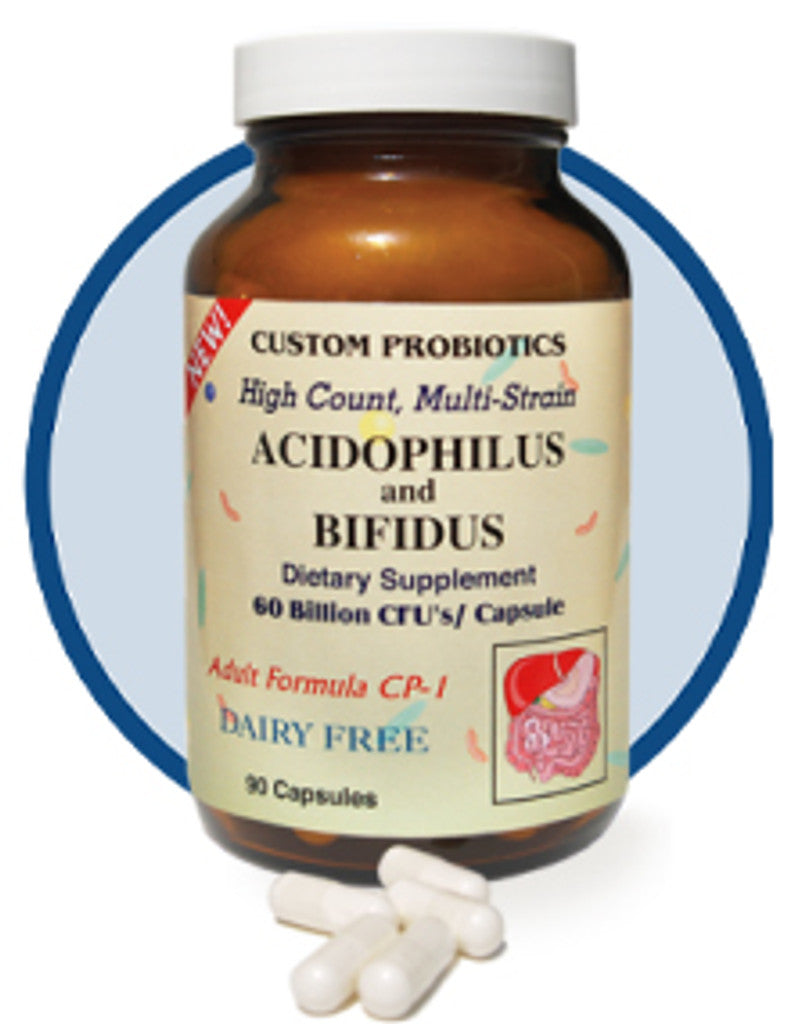
Custom Probiotics Adult Formula CP-1 — £77.41 · 152 reviews · Available from Welzo. Ninety capsules is a three-month supply, which changes the cost-per-day maths considerably against a monthly subscription, and it's the most-reviewed product in this comparison. Be aware the listing does not declare a CFU figure — the same transparency limitation we'd flag on any brand, including this one.

Lamberts Acidophilus Extra 10 — £21.99 · 82 reviews · Available from Welzo. Sixty capsules from a long-established UK manufacturer, at roughly a third of the premium options. If you've never taken a probiotic and want to find out whether it does anything for you, spending £22 to find out is more sensible than committing to a subscription — and if it works, you've saved a great deal.
For a fuller look at the brand itself, see our Seed probiotic review.
Multi-strain probiotics are well tolerated by most people. Wind and bloating in the first week or two are common and usually settle. If you react badly to a broad blend you won't know which organism caused it — a single-strain product makes that identifiable. See probiotic side effects.
Speak to a doctor before taking any probiotic if you
These cautions apply regardless of brand, price or strain count. More in probiotics safety.
On labelling: probiotics carry no authorised health claim in GB or the EU. All are sold as food supplements and cannot legally be marketed as treating any condition.
See your GP — or seek urgent care — if you have:
A more expensive probiotic is not the answer to symptoms that aren't improving. See when to see a GP and bowel cancer screening.
It does some things genuinely well — full strain designations, real research investment, and thoughtful capsule engineering. What you're paying a premium for is breadth and delivery, not proven superiority, and buying it in the UK means an imported subscription. Compare per-day cost against a UK-stocked equivalent before committing.
Not automatically. Evidence is strain-specific and doesn't stack — a blend of researched strains isn't a researched blend unless that combination was tested. Broad coverage is a design philosophy, not a measure of evidence.
Klaire Labs Ther-Biotic Complete at £50.63 is the nearest analogue — a broad-spectrum Lactobacillus and Bifidobacterium formula from a clinical-channel brand, available without a subscription or import.
AFU counts cells by fluorescence rather than by growing colonies on a plate. It's a legitimate method, but AFU and CFU are not directly comparable — so don't line the figures up against each other.
No. Plenty of UK products are sold as single purchases, and a 90-capsule bottle can work out cheaper per day than a monthly subscription while being far easier to stop.
No, and neither do the UK alternatives here — most modern probiotics are formulated to be shelf stable. See shelf-stable probiotics.
Protecting the contents through stomach acid is a legitimate engineering goal, and the approach is sound. But better delivery of an organism is a surrogate measure — it isn't the same as a demonstrated clinical benefit.
Neither a broad blend nor a premium price tag targets IBS. The evidence there attaches to specific strains, so a single trialled strain matched to your symptom pattern is usually the better choice — after a proper diagnosis.
Possibly. Nobody can tell you in advance whether you'll respond, which is exactly why starting with an inexpensive product for a month is the rational sequence before committing to anything recurring.
A named strain, a stated dose, and a match between that strain and your goal — in that order. Price, strain count and packaging tell you far less than any of those.
Medical disclaimer: This article is for general information and education only and does not constitute medical advice, diagnosis or treatment. Welzo sells several of the alternatives discussed and does not sell Seed; this conflict of interest is disclosed above. No Seed pricing, strain count or potency figure is quoted, as these change and could not be verified at the time of writing — check the manufacturer's own current specifications. Food supplements are not a substitute for a varied and balanced diet, and are not intended to diagnose, treat, cure or prevent any disease. Probiotic effects are strain-specific; evidence for individual strains does not transfer to blends containing them unless the blend itself has been studied. AFU and CFU are different measurements and are not directly comparable. Probiotics should be discussed with a doctor before use if you are immunocompromised, critically unwell, have an indwelling venous line, have inflammatory bowel disease, or are pregnant or breastfeeding. Prices, review counts and availability of UK products are correct at the time of writing and may change.
About the author
Dr Zeeshan Afzal (MBBS) is a practising medical doctor and Welzo's Medical Content Lead. He writes and reviews Welzo's health content to ensure it is accurate, evidence-based and aligned with current UK clinical guidance.
 Ocijenjeno izvrsno s 28,951+ recenzija
 100% jamstvo povratka novca
Naše jamstvo povrata novca osigurava da primite svoje predmete ili dobijete potpuni povrat novca.


