







Best Shelf-Stable Probiotics UK (No Fridge Needed)
Posted on:
Aug 05, 2026
Geschreven door


Written and medically reviewed by Dr Zeeshan Afzal (MBBS) — Medical Doctor & Medical Content Lead, Welzo
Evidence-based · Honest about what's proven and what isn't · UK-focused
Last updated: July 2026 · Reading time: ~11 minutes
Part of our Digestive Health hub — buy gut health supplements
Popular probiotics: Akkermansia · Citrus Pectin · Berberine · TUDCAA probiotic that lives in the fridge is a probiotic you forget on holiday, leave behind at a friend's, and stop taking by week three. For most people, shelf stability isn't a convenience feature — it's the thing that determines whether you finish the course at all.
There is a catch, though, and it is the thing this guide exists to explain. "Shelf stable" and "potency guaranteed to expiry" are two different claims, and a product can honestly make the first while quietly failing the second.
Below: why some probiotics survive a cupboard and others don't, how to spot the difference, and six shelf-stable options with verified prices and stock. See also do probiotics need refrigeration and gut health supplements.
Table of contents
Conventional probiotics contain freeze-dried bacteria — alive but dormant, waiting for moisture to reactivate them. Three things kill them in storage: heat, moisture and time. Refrigeration slows the first two, which is why Lactobacillus and Bifidobacterium products have traditionally lived in the fridge.
Manufacturing has moved on considerably. Better freeze-drying, protective matrices, desiccants and moisture-barrier packaging mean many conventional strains are now genuinely stable at room temperature. A blister pack or a bottle with a sealed desiccant sachet is doing real work.
Bacillus species — the organisms in "sporebiotics" — solve the problem at a different level. They travel as dormant endospores: dehydrated, tough-shelled survival structures that are not metabolically active at all. Heat, time and dry air simply don't affect them the way they affect a freeze-dried lactobacillus.
That is why spore products routinely claim shelf lives measured in years rather than months, and why they are the most practical option for travel. It is also why they don't need enteric coating to survive stomach acid — see spore-based probiotics and do probiotics survive stomach acid.
This is the part worth reading twice, because it is where money gets wasted.
| The claim | What it actually promises |
|---|---|
| Shelf stable / no refrigeration | The product won't spoil in a cupboard |
| CFU guaranteed to expiry | The stated count is there on the day you take it |
| CFU "at time of manufacture" | The count when it left the factory — yours may be lower |
These are independent. A product can be perfectly shelf stable and guarantee its count only at manufacture — meaning it sits safely in your cupboard while the number on the label quietly stops being true. Conversely, a product guaranteed to expiry has committed to the count you actually swallow.
Both appear among the products below, and each entry states which. More on counting methods in CFU vs AFU and how to choose a probiotic.
Not everything is shelf stable, and some very good products are explicit that they aren't. Two examples stocked at Welzo:
Neither is a worse product for it. Bifidobacteria are strict anaerobes and comparatively fragile, so a brand asking you to chill them is being honest about the biology rather than cutting corners — see our B. longum guide. But if the fridge is the reason you keep forgetting, choose from the list below instead.
Best Overall: Microbiome Labs MegaSporeBiotic, 60 caps — £59.99
Best Budget: Swanson L. plantarum Probiotic, 30 DR caps — £5.93
Best Synbiotic: Enviromedica Terraflora Daily Care, 60 caps — £53.84
Best Researched Strain: Culturelle Lactobacillus GG, 30 caps — £47.09
Best Clean Formulation: Pure Encapsulations ProFloraGG 25B, 30 caps — £20.47
Best Value: Swanson L. Rhamnosus with FOS, 60 DR caps — £11.22

Price: £59.99 (from £65.00) · Reviews: 114 · Stock: In stock · Storage: No refrigeration; shelf life stated up to 5 years · Where to buy: Available from Welzo
Why it's the best: Nothing else here comes close on storage. A 152mg proprietary blend delivering 5 billion spore cells from four named Bacillus strains — B. subtilis HU58™, B. coagulans SC-208, B. clausii SC-109 and B. licheniformis SL-307 — in a plain cellulose capsule with nothing else in it.
Because the organisms are dormant spores rather than freeze-dried cells, the stated shelf life runs to five years at room temperature. It is suitable for adults and children over six, and it is the obvious choice if you travel — see travel probiotics. It also has a published human trial behind the product family, which most spore blends don't.
The drawback is price. At £59.99 for a month it is the most expensive option here — roughly £1.00 a day, or five times the Swanson capsule. The proprietary blend also means you can't see how much of each strain you're getting.
| Pros | Cons |
|---|---|
| Best shelf stability here — up to 5 years Spores unaffected by heat or time Four named Bacillus strains, 5 billion cells Plain cellulose capsule, no other excipients Suitable from age six · Ideal for travel In stock, reduced from £65.00 |
Most expensive here (~£1.00/day) Proprietary blend hides per-strain amounts Evidence is biomarker-based, not symptom-based Spores can cause more initial wind than usual |

Price: £5.93 · Reviews: 132 · Stock: In stock · Storage: Cool, dry place away from light and heat — no fridge required · Where to buy: Available from Welzo
Why we like it: Under six pounds for a month of a cupboard-stable probiotic at 10 billion CFU, in a delayed-release vegetarian capsule — roughly 20p a day. It is reliably in stock and suitable for vegans, and L. plantarum is a naturally robust species found in plant ferments. See our L. plantarum guide.
| Pros | Cons |
|---|---|
| Cheapest here (~20p/day) No refrigeration needed 10 billion CFU, delayed-release capsule Suitable for vegans Reliably in stock · 132 reviews |
CFU guaranteed at manufacture, not expiry Species named, not strain Only 30 capsules Keep away from heat and light |
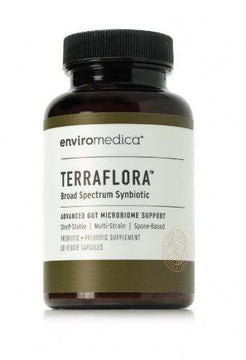
Price: £53.84 · Reviews: 192 · Stock: In stock · Storage: Shelf stable — soil-based spore organisms · Where to buy: Available from Welzo
Why we like it: The same spore-based stability advantage as our top pick, with prebiotic fibre built into the same capsule — making it a genuine synbiotic rather than a probiotic with something sprinkled in. See synbiotic supplements.
It carries 192 reviews, the highest count of any product across our probiotic guides, and undercuts MegaSporeBiotic by £6 for the same capsule count.
The limitation is evidence. "Soil-based" describes where the organisms were isolated, not what they've been shown to do, and this specific blend has no published human trial. The added fibre may also not suit sensitive guts.
| Pros | Cons |
|---|---|
| Spore-based — excellent shelf stability Synbiotic: organisms plus prebiotic fibre Most reviewed product here (192) £6 cheaper than MegaSporeBiotic 60 capsules · In stock |
No published human trial on this blend Premium price at £53.84 Prebiotic quantity not disclosed Added fibre may aggravate sensitive guts |
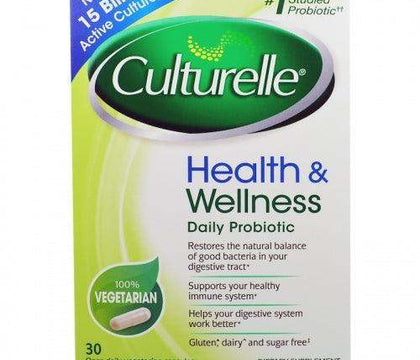
Price: £47.09 · Reviews: 86 · Stock: Intermittent — check listing · Storage: No refrigeration needed; potency guaranteed to expiry · Where to buy: Available from Welzo
Why we like it: This is the product that gets both claims right. It is shelf stable with no refrigeration required, and its 10 billion CFU is guaranteed at expiry rather than manufacture — the stronger of the two promises, and unusual for a conventional freeze-dried Lactobacillus.
The organism is also the best-evidenced probiotic strain in existence. L. rhamnosus GG has several hundred human trials behind it and a place in clinical guidance for preventing antibiotic-associated diarrhoea — see our LGG guide.
The price is steep at around £1.57 a day, roughly eight times the Swanson capsule, and stock is intermittent. It contains inulin, which some IBS sufferers react to.
| Pros | Cons |
|---|---|
| Shelf stable AND guaranteed to expiry Most researched probiotic strain available 10 billion CFU per capsule Free from gluten, dairy, soy and wheat Rare combination of both storage claims |
Most expensive per day (~£1.57) Stock is intermittent Contains inulin — may not suit IBS Same strain available cheaper elsewhere |

Price: £20.47 · Reviews: 138 · Stock: Currently sold out — check listing · Storage: Shelf stable, requires no refrigeration · Where to buy: Available from Welzo
Why we like it: A shelf-stable, hypoallergenic formulation with the shortest ingredient list here — the named L. rhamnosus GG strain at 25 billion CFU, microcrystalline cellulose, and an HPMC capsule. Nothing else. It is gluten-free certified, dairy-free and vegetarian.
At £20.47 it delivers the same organism as Culturelle at more than double the CFU for under half the price — the best combination of clean formulation and shelf stability in this guide.
Availability is the problem — it goes out of stock frequently. Worth setting a stock alert rather than settling for something else.
| Pros | Cons |
|---|---|
| Explicitly shelf stable, no refrigeration Highest CFU of the capsules here (25 billion) Only three ingredients Names the GG strain Gluten-free certified, dairy-free Far better value than Culturelle |
Only 30 capsules Potency guarantee basis not stated Single strain |

Price: £11.22 · Reviews: 158 · Stock: In stock · Storage: Cool, dry place — no fridge required · Where to buy: Available from Welzo
Why we like it: The lowest cost per day here at roughly 19p, for a two-month supply in a delayed-release vegetarian capsule with added FOS as a prebiotic. It is the most-reviewed product in this guide at 158, and reliably in stock — a sensible cupboard staple.
Two caveats. The label names the species rather than the strain, so no specific clinical evidence attaches to it. And like its sibling above, the CFU figure is a manufacture-time count. For 19p a day, reasonable trade-offs.
| Pros | Cons |
|---|---|
| Lowest cost per day (~19p) 60 capsules — two-month supply No refrigeration needed Delayed-release vegetarian capsule Includes FOS prebiotic Most reviewed here (158) · In stock |
Species named, not strain CFU guaranteed at manufacture Lowest CFU here (5 billion) FOS may not suit sensitive guts |
"Shelf stable" does not mean indestructible. A few habits protect what you've paid for:
On dosing and timing, see when to take probiotics, and allow four weeks before judging any of them — how long probiotics take to work. For the wider range, see best probiotics UK.
Probiotics are well tolerated by most people. Mild bloating, wind or altered stools in the first week or two are common and usually settle — somewhat more noticeably with spore products, which is why building up gradually helps. See probiotic side effects.
Speak to a doctor before taking a probiotic if you
Do not take a probiotic that has been stored badly — if a capsule looks damp, discoloured or clumped, discard it. Further detail in probiotics safety.
On labelling: probiotics carry no authorised health claim in GB or the EU, so they are sold as food supplements and cannot legally be marketed as treating any condition.
See your GP — or seek urgent care — if you have:
A probiotic is not a substitute for assessment. Read more on when to see a GP about stomach symptoms and bowel cancer screening in the UK.
Microbiome Labs MegaSporeBiotic at £59.99 — spore organisms give it a stated shelf life of up to five years with no refrigeration. For a cheaper cupboard staple, Swanson L. plantarum at £5.93 works out around 20p a day.
Many no longer do. Improved freeze-drying, desiccants and moisture-barrier packaging have made a lot of conventional strains stable at room temperature, and spore-based products never needed chilling. Some products still do — always follow the specific label.
They are better stored, which is not the same as better. Shelf stability is a delivery advantage, not a health benefit. Judge the strain and its evidence first.
No, and this is the most useful distinction in this article. Shelf stable means it won't spoil in a cupboard. Whether the stated CFU is still there depends on whether the count is guaranteed to expiry or only at manufacture — two different claims that often appear on similar-looking products.
Bifidobacteria-heavy formulas often do. Kirkman Bifido Complex instructs that the bottle be kept refrigerated; Life Extension Bifido GI Balance advises refrigerating after opening. Neither is a worse product — the biology just demands it.
Yes. It does no harm and may extend viability slightly. It simply isn't necessary, and the point of buying shelf stable is usually that you don't want to.
A spore-based product such as MegaSporeBiotic or Terraflora — dormant spores are unaffected by heat and time, so a hot suitcase is not a problem.
A cool, dry cupboard away from the oven, kettle and windows. Avoid the bathroom entirely — humidity is one of the fastest ways to degrade live cultures.
No. That desiccant is absorbing moisture and protecting the culture. Leave it in and keep the lid tightly closed.
Discard capsules that look damp, discoloured or clumped, and powders that have hardened. Loss of potency is usually invisible, which is why storage habits and an expiry-based CFU guarantee both matter.
Medical disclaimer: This article is for general information and education only and does not constitute medical advice, diagnosis or treatment. Food supplements are not a substitute for a varied and balanced diet, and are not intended to diagnose, treat, cure or prevent any disease. Storage and potency claims are reported exactly as stated on product listings at the time of writing; always follow the instructions on the pack you have, as formulations and guidance change. Probiotics should be discussed with a doctor before use if you are immunocompromised, critically unwell, have an indwelling venous line, have inflammatory bowel disease, or are pregnant or breastfeeding, and supplements for children should be discussed with a GP or health visitor. Prices, review counts and availability are correct at the time of writing and may change.
About the author
Dr Zeeshan Afzal (MBBS) is a practising medical doctor and Welzo's Medical Content Lead. He writes and reviews Welzo's health content to ensure it is accurate, evidence-based and aligned with current UK clinical guidance, translating complex research into practical advice patients can trust.
 Beoordeeld uitstekend door 26,523+ beoordelingen
 100% geld -terug -garantie
Onze geld -terug -garantie zorgt ervoor dat u uw artikelen ontvangt of een volledige terugbetaling krijgt.


