




Best Postnatal Vitamins in The UK


Related products

The best postnatal vitamins in the UK are the ones that fill the specific gaps left by pregnancy, birth and breastfeeding — not the ones with the longest ingredient list. For most new mothers that means a daily multivitamin providing at least 10 µg of vitamin D, plus omega-3 (DHA) and iodine if you are breastfeeding, and iron only if it is genuinely needed. This 2026 guide compares four postnatal vitamins available in the UK against UK public health guidance, then shows you how to pick the right one for your situation.
Key Takeaways
- Vitamin D is the one supplement UK guidance actually recommends after birth. The NHS advises 10 µg (400 IU) daily for breastfeeding women — and many general multivitamins contain less than this.
- Your baby needs their own vitamin D. Breastfed babies from birth to 1 year should have 8.5–10 µg daily, even if you are supplementing yourself.
- You do not need to keep taking folic acid at pregnancy doses once the baby is born — its critical window is preconception to 12 weeks.
- Iron is individual. Only some women need it postpartum. A ferritin test is more useful than guessing.
- One well-chosen product beats three overlapping ones. Stacking multivitamins is the most common — and most avoidable — postnatal supplement mistake.
- Free Healthy Start vitamins are available to eligible pregnant and breastfeeding women in England, Wales and Northern Ireland.
If you are still pregnant, our companion guides to the best pregnancy supplements and the best prenatal vitamins cover the earlier stage. You can also browse pregnancy & maternity vitamins, postpartum recovery supplements and daily multivitamins.
Our Top Picks: Best Postnatal Vitamins in the UK (2026)
- Best postnatal omega-3 (and best for breastfeeding): Nordic Naturals Postnatal Omega-3, 1120 mg — 586 mg EPA, 456 mg DHA and 25 µg vitamin D3 per two-softgel serving.
- Best everyday women's multivitamin with iron: Vitabiotics Wellwoman Original — a familiar, budget-friendly one-a-day covering the core micronutrients.
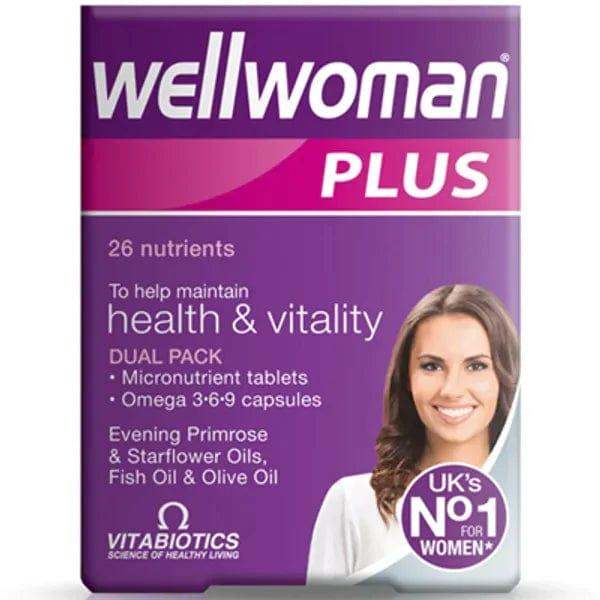
- Best all-in-one multinutrient + omega: Vitabiotics Wellwoman Plus Omega 3-6-9 — a two-part daily pack that replaces buying a separate fish oil.
- Best iron-free, high-strength option: BioCare Adult Multivitamins & Minerals, 90 vegan capsules — deliberately iron- and copper-free, useful if iron upsets your stomach or your levels are already fine.
What Are Postnatal Vitamins?
Postnatal vitamins are daily supplements formulated for the months after childbirth. Unlike prenatal vitamins, which prioritise fetal development, postnatal formulas focus on maternal recovery: replenishing nutrient stores depleted by pregnancy and birth, supporting normal energy metabolism, and meeting the raised requirements of breastfeeding — particularly for vitamin D, iodine and omega-3 DHA.
In practice, the UK market does not have many products labelled strictly "postnatal". Most women end up choosing between a general women's multivitamin, a breastfeeding-specific formula, or a targeted supplement such as omega-3 or vitamin D. That is why this guide compares products across categories rather than pretending they are interchangeable.
Postnatal vs Prenatal Vitamins: What Actually Changes After Birth?
This is the single most searched question on the topic, and the answer is more specific than "they're formulated differently".
| Nutrient | During pregnancy | After birth / while breastfeeding | What this means for your supplement |
|---|---|---|---|
| Folic acid | 400 µg daily from preconception to 12 weeks, to reduce neural tube defect risk | No longer needed at that dose | You can stop high-dose folic acid supplements unless planning another pregnancy |
| Vitamin D | 10 µg (400 IU) daily | Still 10 µg daily — the recommendation does not stop at delivery | Check your multivitamin actually provides 10 µg; many provide 5 µg or less |
| Iodine | Increased need | Increased further during lactation | Often the weakest nutrient in general multivitamins; consider iodine intake from dairy, eggs and white fish |
| Omega-3 (DHA) | Supports fetal brain and eye development | Passes into breast milk; maternal stores fall | Rarely included meaningfully in multivitamins — usually needs a separate omega-3 supplement |
| Iron | Requirements rise; deficiency common | Highly individual — depends on blood loss at birth and diet | Not automatically needed. Test rather than assume |
| Vitamin A (retinol) | Avoid supplements containing retinol and cod liver oil | Restriction relaxes once you are no longer pregnant, though excess is still unwise | You are no longer limited to prenatal-only formulas — but keep intake moderate |
That last row explains something that confuses a lot of new mothers: a product marked "not suitable during pregnancy" is not automatically unsuitable postnatally. The pregnancy warning usually relates to retinol, and that specific restriction applies to pregnancy rather than the postnatal period. If you are breastfeeding and unsure, check with your midwife, health visitor or pharmacist.
What UK Guidance Actually Says About Postnatal Supplements
Most "best postnatal vitamins" articles skip this part. It is the part that matters most, because it tells you what you genuinely need versus what is optional.
1. Vitamin D: 10 µg a day
The NHS advises that everyone who is pregnant or breastfeeding takes a daily supplement containing 10 µg (400 IU) of vitamin D. NICE guideline NG247 (Maternal and child nutrition) reflects UK government advice that this applies from September to March, and year-round for anyone at increased risk of deficiency — including women with darker skin, those who cover their skin outdoors, and anyone with limited time outside. For a new mother in the first months at home with a baby, "limited time outside" is often the default. If you need to add a standalone product, our guide to the best vitamin D supplements compares the available forms and strengths.
2. Your baby needs vitamin D separately
This is the single most commonly missed point. NHS advice is that breastfed babies from birth to 1 year should be given a daily supplement containing 8.5–10 µg of vitamin D — whether or not the mother is taking vitamin D herself, and whether breastfeeding is exclusive or partial. Babies having around 500 ml or more of infant formula a day do not need this, because formula is already fortified. Suitable drops are available in our children's vitamins range.
3. Healthy Start vitamins are free for eligible mothers
Healthy Start vitamins for pregnant and breastfeeding women contain 400 µg folic acid plus vitamins C and D. They are free if you qualify, and separate children's drops containing vitamins A, C and D are available for under-4s. Eligibility is generally linked to receiving certain benefits, and pregnant women under 18 qualify regardless. Ask your midwife or health visitor, or check the NHS Healthy Start scheme. If you are eligible, a paid postnatal multivitamin is genuinely optional rather than essential.
4. A balanced diet remains the foundation
NHS and NICE guidance is consistent that supplements complement a varied diet rather than replace it. Nutritional gaps in the postnatal period are usually caused by disrupted meals, appetite changes and exhaustion — not by a diet that is fundamentally wrong. Supplements are a safety net, not a strategy.
Which Nutrients Matter Most After Birth?
| Nutrient | Why it matters postnatally | Good food sources | Supplement worth considering? |
|---|---|---|---|
| Vitamin D | Contributes to normal bone maintenance and immune function; UK sunlight is insufficient for much of the year | Oily fish, egg yolk, fortified spreads (limited overall) | Yes — recommended by the NHS. See vitamin D supplements |
| Iron | Contributes to normal red blood cell formation and reduction of tiredness; stores fall with blood loss at birth | Red meat, lentils, beans, fortified cereals, dark leafy greens | Only if indicated — see iron supplements and test first |
| Iodine | Contributes to normal thyroid function and cognitive function; requirements rise during lactation | Milk, yoghurt, eggs, white fish | If dairy-free or vegan — the most likely gap for plant-based mothers |
| Omega-3 DHA | Passes into breast milk; DHA contributes to normal brain and vision function | Oily fish (2 portions weekly, 1 oily) | If you rarely eat oily fish — see omega-3 supplements |
| Vitamin B12 | Contributes to normal energy-yielding metabolism, red blood cell formation and nervous system function | Meat, fish, dairy, eggs, fortified foods | Essential if vegan — see vitamin B12 supplements |
| Calcium | Bone density shifts during lactation and typically recovers after weaning | Dairy, fortified plant milks, tinned fish with bones, tofu | Diet first; consider calcium supplements if dairy-free |
| Magnesium & zinc | Contribute to normal muscle function, immune function and tissue repair | Nuts, seeds, wholegrains, shellfish, meat | Usually covered by a multivitamin; standalone magnesium rarely necessary |
Comparison Table: Best Postnatal Vitamins in the UK
The column that matters most here is vitamin D. Compare each product against the 10 µg the NHS recommends daily for breastfeeding women.
| Product | Type | Daily dose | Vitamin D per daily dose | Iron? | Best for | Main gap to plan around |
|---|---|---|---|---|---|---|
| Nordic Naturals Postnatal Omega-3 | Targeted omega-3 (EPA/DHA) + vitamin D3 | 2 softgels with food | 25 µg (1000 IU) — exceeds the 10 µg recommendation | No | Breastfeeding; low oily-fish intake | Not a multivitamin — no iron, iodine or B vitamins |
| Vitabiotics Wellwoman Original | Women's multivitamin & mineral | 1 capsule with food | 5 µg (200 IU) — half the recommendation | Yes | Broad daily cover on a budget | Top up vitamin D; contains iron, so don't stack more |
| Vitabiotics Wellwoman Plus Omega 3-6-9 | Multivitamin tablet + omega capsule (two-part pack) | 1 tablet + 1 capsule with food | Modest — check current label | Yes | Wanting one purchase instead of two | Omega-3 content is lower than a dedicated fish oil |
| BioCare Adult Multivitamins & Minerals | High-strength multivitamin & mineral, vegan capsules | 1 capsule with food | 6.25 µg (250 IU) — below the recommendation | No (iron- and copper-free by design) | Iron intolerance; already-adequate iron stores | Top up vitamin D; contains preformed vitamin A, so avoid stacking retinol |
Key fact: not one of these four multivitamins meets the 10 µg vitamin D recommendation on its own. If you choose a multivitamin rather than the Nordic Naturals product, plan to add a separate vitamin D supplement. Combining, for example, 25 µg from an omega-3 product with 5 µg from a multivitamin still sits comfortably within the 100 µg daily upper level for adults.
Detailed Reviews: Best Postnatal Supplements Available in the UK
1. Nordic Naturals Postnatal Omega-3 — Best Overall for Breastfeeding

| Why we selected it | It is one of very few products on the UK market genuinely formulated for the postnatal and breastfeeding period rather than repurposed from a general women's range, and it is the only product here that meets the NHS vitamin D recommendation on its own. |
| What's in it | Per two-softgel serving: 1120 mg total omega-3s, including 586 mg EPA and 456 mg DHA, plus 25 µg (1000 IU) vitamin D3. Sourced from wild-caught sardines and anchovies, in triglyceride form. |
| How to take it | Two softgels daily with food. This is a common point of confusion — it is not a one-a-day. Taking it with a meal containing some fat improves tolerance and reduces fishy repeat. |
| Pros | High, clearly declared DHA and EPA; meets the vitamin D recommendation; lemon flavour and smaller softgels make it easier to keep taking; third-party tested for purity and freshness. |
| Cons | Not a multivitamin — contains no iron, iodine, B vitamins or zinc. Not suitable if you avoid fish; look for algal DHA instead. Mid-to-premium price. |
| Editor's comment | If you are breastfeeding and rarely eat oily fish, this is the most defensible single purchase on this list. Pair it with a modest multivitamin only if your diet is genuinely inconsistent — and check the combined vitamin D total. |
Browse the full Nordic Naturals range at Welzo.
2. Vitabiotics Wellwoman Original — Best Everyday Multivitamin With Iron

| Why we selected it | It is the most widely recognised women's multivitamin in UK pharmacies, it is inexpensive per day, and it contains iron — which matters for women who lost blood at delivery and want simple everyday cover without building a stack. |
| What's in it | A broad spread of B vitamins, vitamin C, vitamin E, iron, zinc, magnesium, selenium and 5 µg of vitamin D in the preferred D3 form, in a single daily capsule. |
| How to take it | One capsule daily with your main meal. Taking it away from tea and coffee helps iron absorption. |
| Pros | Genuinely one-a-day; easy to find and restock; sensible, non-excessive nutrient levels; contains iron in a moderate rather than therapeutic amount. |
| Cons | Not designed for the postnatal period. Vitamin D at 5 µg is half the recommendation for breastfeeding women. Iodine and DHA levels are not tailored to lactation. If iron makes you constipated, this is the wrong pick. |
| Editor's comment | A sound, affordable base layer. Treat it as "core cover plus a vitamin D top-up" rather than a complete postnatal solution. |
See the wider Wellwoman range or compare against other multivitamins for women.
3. Vitabiotics Wellwoman Plus Omega 3-6-9 — Best All-in-One Pack

| Why we selected it | It removes a decision. Rather than buying a multivitamin and a fish oil separately, you get both in one daily two-part dose — useful when your capacity for admin is at its lowest. |
| What's in it | A Wellwoman-style micronutrient tablet covering B vitamins, vitamin D, iron, iodine, calcium, magnesium, zinc, selenium and copper, paired with a high-purity Omega 3-6-9 oil capsule. |
| How to take it | One micronutrient tablet and one omega capsule daily, with food. Splitting them across two meals is fine and often better tolerated. |
| Pros | Broadest single-purchase coverage on this list; includes iodine; reduces the risk of accidental duplication because you are not assembling your own routine. |
| Cons | The omega capsule delivers substantially less EPA and DHA than a dedicated postnatal fish oil, so it is not the right choice if DHA for breast milk is your main priority. Two units per day rather than one. Contains iron. |
| Editor's comment | The best "one box, done" option — provided you are realistic that convenience comes at the cost of omega-3 potency. |
4. BioCare Adult Multivitamins & Minerals — Best Iron-Free, High-Strength Option

| Why we selected it | Because it is deliberately iron- and copper-free. That is unusual, and genuinely useful: iron-related constipation is one of the most common reasons new mothers abandon a supplement, and plenty of women do not need extra iron at all. |
| What's in it | Generous B vitamins (B1 25 mg, B2 25 mg, B6 25 mg, B12 30 µg, pantothenic acid 100 mg), vitamin C 241 mg, zinc 8.5 mg, selenium 50 µg, magnesium 22 mg, iodine 38 µg, folate 100 µg, vitamin A 600 µg and vitamin D 6.25 µg. Vegan capsule, one a day. |
| How to take it | One capsule daily with food. Because the B vitamin levels are high, some people prefer to take it earlier in the day. |
| Pros | One-a-day convenience with high-strength B vitamins; vegan; iron- and copper-free; UK brand with a practitioner-facing reputation and transparent labelling. |
| Cons | Vitamin D at 6.25 µg falls short of the 10 µg recommendation. Iodine at 38 µg is modest relative to lactation needs. It contains preformed vitamin A, so do not combine it with cod liver oil or a separate retinol supplement. The most expensive per day of the four. |
| Editor's comment | Our pick if iron disagrees with you or a blood test has confirmed your iron stores are fine — but plan a separate vitamin D supplement alongside it. |
Which Postnatal Vitamin Is Right For You?
Work through these in order. Stop at the first one that describes you.
- You are breastfeeding and rarely eat oily fish → Nordic Naturals Postnatal Omega-3. It covers DHA and vitamin D in one product.
- You want the simplest possible single purchase → Wellwoman Plus Omega 3-6-9.
- Iron causes you constipation, or a test shows your ferritin is fine → BioCare Adult Multivitamins & Minerals, plus a vitamin D supplement.
- You lost significant blood at delivery, or feel persistently exhausted → Speak to your GP or midwife first, and consider a ferritin (iron stores) blood test before choosing an iron-containing product.
- You are on a tight budget or eligible for Healthy Start → Healthy Start vitamins first; Wellwoman Original as a low-cost paid alternative.
- You are not breastfeeding and eat reasonably well → You may need nothing beyond vitamin D. That is a legitimate answer.
How We Ranked These Postnatal Vitamins (Evaluation Criteria)
We ranked products against real-world postnatal needs, UK public health guidance and long-term practicality — not marketing claims. Our criteria:
- Alignment with UK guidance — how the formula compares against NHS and NICE advice, particularly on vitamin D.
- Postnatal relevance — whether the formula addresses recovery and lactation, or is a general adult product.
- Nutrient appropriateness — sensible levels of iodine, vitamin D, B vitamins, iron where appropriate and omega-3, without unnecessary mega-dosing.
- Safety and tolerance — suitability for daily use, with attention to iron tolerance and preformed vitamin A content.
- Label transparency — full quantitative declarations and clear dosing instructions.
- Brand reliability — an established track record in maternal or nutritional health.
- Everyday practicality — capsule size, units per day, and whether the routine survives a bad night's sleep.
- Value per daily dose — cost relative to what the product actually delivers.
How We Evaluated These Postnatal Vitamin Supplements
Each supplement was reviewed individually and then compared side by side. Our process:
- Grouping products by type — full multivitamins, omega-3-focused formulas and targeted support products — so like was compared with like.
- Reading the published nutritional information panel for each product rather than the marketing copy, and cross-checking declared amounts against UK recommendations.
- Assessing dose levels for suitability in daily, longer-term use rather than short high-dose protocols.
- Considering tolerance and practicality: tablet size, units per day, and whether the product fits a postnatal routine.
- Weighing breadth against simplicity, recognising that some women want an all-in-one and others prefer targeted supplementation.
- Identifying the specific gap each product leaves, so readers can plan around it rather than discover it later.
Our final selections prioritise safe, sensible, routine-friendly supplementation over aggressive dosing or unnecessary complexity.
How to Take Postnatal Vitamins (Dosage, Timing & Best Practice)
How much should you take?
Most products are once-daily or two-part daily formulas, providing nutrients at levels suitable for routine support rather than therapeutic correction.
- Always follow the manufacturer's label instructions — and check whether the stated serving is one unit or two.
- Avoid taking two multivitamins at once.
- If you add a separate supplement such as omega-3 or vitamin D, add up the totals for the overlapping nutrients.
When should you take them?
Postnatal vitamins are generally best taken with food, which improves tolerance and supports absorption of the fat-soluble vitamins A, D, E and K.
- Take with breakfast or lunch to build a consistent habit.
- Split doses across meals if the product requires more than one unit per day.
- Avoid late-evening doses if the formula is high in B vitamins, which some people find stimulating.
- Take iron-containing products away from tea, coffee and calcium supplements, which reduce absorption.
Consistency matters more than exact timing. Keeping the bottle next to the kettle or by the changing station works better than good intentions.
Best practice #1: Keep it simple and consistent
Choose one product you can take every day without discomfort. Occasional missed doses are not harmful; sporadic use of an elaborate routine is worse than reliable use of a simple one.
Best practice #2: Be deliberate about iron
Iron needs vary widely after pregnancy. If your product contains iron, do not add more unless advised. If you suspect low iron, a ferritin blood test or full blood count is far more useful than guessing — and ferritin is the measure that reflects stores.
Best practice #3: Account for breastfeeding
Breastfeeding raises requirements for iodine, vitamin D and DHA. Many multivitamins cover these only partially, which is why a separate omega-3 or vitamin D product is often a more sensible addition than a second multivitamin.
Best practice #4: Avoid unnecessary stacking
Overlapping products increase intake without increasing benefit, and raise the risk of exceeding upper levels for fat-soluble vitamins and minerals. More is not better during postnatal recovery.
What to expect
Postnatal vitamins do not produce immediate effects. Any benefits tend to be subtle and gradual, supporting nutritional adequacy over weeks rather than acting as a pick-me-up. For persistent fatigue, hair loss or mood changes, supplementation is supportive — not a substitute for medical assessment.
Postnatal Recovery Timeline: What to Expect and When
| Stage | What is typically happening | Nutritional focus |
|---|---|---|
| 0–6 weeks | Physical recovery from birth; feeding established; sleep heavily disrupted | Vitamin D; adequate fluids and regular eating; iron if blood loss was significant (clinician-guided) |
| 6 weeks–3 months | Postnatal check completed; routine beginning to settle | Establish a single consistent multivitamin or targeted supplement; add DHA if breastfeeding and fish intake is low |
| 3–6 months | Postpartum hair shedding often peaks and then resolves | Continue steady supplementation; consider testing rather than adding hair-specific products. See our guide to coping with postpartum hair loss |
| 6–12 months | Weaning may begin; energy demands shift; periods may return | Reassess iron once menstruation resumes; continue vitamin D year-round or at minimum September–March |
| 12 months+ | Nutritional needs approach standard adult requirements | A general women's health supplement is usually sufficient; vitamin D remains recommended |
Are Postnatal Supplements Safe? Side Effects & Interactions
For most women, postnatal supplements are safe and appropriate when used as directed. They are designed to support nutritional replenishment, not to deliver excessive doses. Safety concerns usually arise from overlapping products, unnecessary high iron intake, or interactions with medication — rather than from postnatal vitamins themselves.
Common side effects
Most are well tolerated. When side effects occur they are usually mild and dose-related:
- Digestive discomfort or nausea, especially on an empty stomach
- Constipation, commonly linked to iron-containing formulas
- Metallic taste or mild reflux, particularly with higher mineral content
- Fishy repeat with omega-3 products — usually improved by taking them with a meal or storing softgels in the fridge
Iron-specific considerations
- Excess iron can cause constipation or stomach upset.
- Women without significant blood loss, or with adequate stores, may not need an iron-containing formula.
- If iron causes problems, a lower-iron or iron-free option such as the BioCare formula may suit better.
Interactions and cautions
- Medication interactions: iron, calcium and magnesium can interfere with absorption of some medicines, including levothyroxine and certain antibiotics. Spacing doses by several hours is usually advised — check with your pharmacist.
- Supplement stacking: avoid combining a multivitamin with additional single nutrients (iron, vitamin A, iodine, vitamin D) without a clear reason.
- Preformed vitamin A: do not combine a retinol-containing multivitamin with cod liver oil.
- Herbal ingredients: some products marketed for lactation contain botanicals. These are far less well characterised than vitamins and minerals, and should be used cautiously alongside medication.
Who should seek medical advice first
Speak to a healthcare professional before starting postnatal supplements if you:
- Have thyroid disease, kidney disease, or a condition involving iron overload such as haemochromatosis
- Take prescription medication, including levothyroxine
- Have ongoing digestive problems or unexplained fatigue
- Have been advised to limit specific nutrients such as vitamin A, iodine or iron
- Had significant blood loss, a caesarean section with complications, or a diagnosed deficiency in pregnancy
Bottom line
Postnatal supplements are generally safe, well tolerated and appropriate for daily use when taken as directed. The safest approach is to choose one well-formulated product, avoid unnecessary stacking, and adjust only when there is a clear nutritional reason.
5 Common Mistakes With Postnatal Vitamins
- Assuming a general multivitamin covers breastfeeding. Most provide only half the recommended vitamin D and modest iodine.
- Giving the baby nothing because you are supplementing yourself. Breastfed babies need their own 8.5–10 µg vitamin D drops regardless.
- Adding iron "just in case". Unnecessary iron causes side effects without benefit — and can mask the need for proper assessment.
- Running two multivitamins at once — often a leftover prenatal plus a new postnatal product.
- Expecting a supplement to fix exhaustion. Postnatal fatigue is usually multifactorial: sleep, hormones, thyroid function and mood all contribute. Nutrition is one input among several.
Myth vs Fact
| Myth | Fact |
|---|---|
| "You should just keep taking your prenatal vitamin." | You can, but it is not optimised for this stage — folic acid is no longer needed at pregnancy doses, and DHA and vitamin D often matter more. |
| "Postnatal vitamins boost milk supply." | Supply is driven mainly by frequent, effective milk removal. Nutrition supports the mother's stores; it is not a supply intervention. |
| "If you're not breastfeeding, you don't need anything." | Vitamin D is still recommended for the general UK population from September to March, and recovery from birth continues either way. |
| "Postnatal hair loss means you're deficient." | Postpartum shedding is usually hormonal (telogen effluvium) and self-limiting. Deficiency can prolong it, which is why testing beats guessing. |
| "Higher-dose supplements work better." | For most micronutrients there is no added benefit above requirements, and fat-soluble vitamins have upper limits worth respecting. |
What Are the Signs of Nutrient Depletion After Pregnancy?
True single-nutrient deficiency is not always formally diagnosed after pregnancy, but nutrient depletion during the postnatal period is widely recognised. Pregnancy, childbirth and breastfeeding raise demand for iron, iodine, vitamin D, B vitamins and certain minerals, and stores replenish slowly.
Signs that may warrant professional evaluation include:
- Persistent fatigue that does not improve with rest
- Breathlessness on mild exertion, palpitations, or unusual pallor
- Hair shedding or brittle nails beyond expected postpartum changes
- Low mood, irritability or "brain fog" not explained by sleep deprivation alone
- Frequent infections or slow wound healing
- Muscle weakness or general depletion
These symptoms are non-specific and have many possible causes, including sleep disruption, hormonal changes, mental health factors and thyroid dysfunction — postpartum thyroiditis affects a meaningful minority of new mothers and is easily mistaken for ordinary exhaustion. If symptoms persist, medical assessment is always preferable to self-diagnosis.
Tests that can help clarify the picture
Your GP can arrange investigations, and these are also available privately if you would prefer not to wait. Relevant options include a ferritin blood test, a vitamin D blood test, a thyroid function test, a tiredness and fatigue blood test, or the broader Well Woman blood test. You can see the full range of women's health tests or read about at-home blood testing.
Special Situations
If you are not breastfeeding
Your requirements return towards standard adult levels sooner, but recovery from pregnancy and birth continues for months. Vitamin D remains recommended, and iron may still need attention if delivery involved significant blood loss. A general multivitamin is usually sufficient.
If you are vegan or vegetarian
Three nutrients need active planning: vitamin B12 (a supplement is essential for vegans), iodine (dairy and white fish are the main UK sources, so plant-based diets are frequently low), and DHA (algal omega-3 rather than fish oil). Iron from plant sources is less readily absorbed, so pairing iron-rich foods with vitamin C is worthwhile.
If you had a caesarean or significant blood loss
Tissue repair increases demand for protein, zinc and vitamin C, and iron stores may be genuinely depleted. This is the clearest scenario in which iron supplementation is appropriate — but it should follow a blood test and clinical advice rather than assumption. Our guide to iron supplements and energy covers the different forms and their tolerability.
If you had twins or a short interval between pregnancies
Nutrient stores have had less opportunity to recover and demands are higher. Discuss supplementation with your midwife or GP rather than self-directing, and consider baseline testing.
Postnatal Vitamins and Mood: What the Evidence Does and Doesn't Show
Nutrients including omega-3 fatty acids, vitamin D, iron and B vitamins have been studied in relation to postnatal mood, and there are plausible biological mechanisms — B vitamins and iodine contribute to normal psychological function, and iron deficiency is independently associated with fatigue and low mood. However, the evidence that supplementation prevents or treats postnatal depression is limited and inconsistent, and much of the omega-3 research has focused on pregnancy rather than the postnatal period.
The honest position: correcting a genuine deficiency is worthwhile and may help how you feel. Taking supplements as a treatment for postnatal depression is not supported by strong evidence.
Postnatal depression and anxiety are common, treatable and not a personal failing. If you are struggling with your mood, feeling persistently low or anxious, or having thoughts that worry you, please speak to your GP, midwife or health visitor — they will have had this conversation many times and can help you access support quickly.
How to Get Key Postnatal Nutrients From Food
Supplements are a safety net; food does most of the work. Practical sources:
- Iron: red meat, lentils, beans, fortified cereals, dark leafy greens — with a source of vitamin C to aid absorption
- Iodine: milk, yoghurt, eggs, cod and haddock
- Vitamin D: oily fish and egg yolk, though UK diets rarely supply enough — this is why supplementation is recommended
- Omega-3 DHA: salmon, mackerel, sardines; aim for two portions of fish weekly, one of them oily
- B vitamins: wholegrains, meat, eggs, dairy, leafy greens
- Calcium: dairy, fortified plant milks, tinned sardines, tofu set with calcium
In the early months, "eat something reasonable, regularly" is a more realistic target than a perfect diet. Batch-cooked meals, one-handed snacks and fortified breakfast cereals all count.
Postnatal Vitamins vs Other Supplement Types
Postnatal vs standard multivitamins
Standard multivitamins are formulated for the general adult population and typically under-deliver on vitamin D, iodine and DHA relative to breastfeeding requirements — as the comparison table above shows.
Postnatal vs single-nutrient supplements
Single nutrients such as iron or vitamin D are appropriate when there is a specific, identified need. A multivitamin provides balanced moderate support across many nutrients, which reduces the risk of imbalance but also means no single nutrient is delivered at a corrective dose.
Postnatal vs hair, skin and nail supplements
Beauty-focused formulas often duplicate what is already in a multivitamin, sometimes at very high doses of biotin — which can interfere with some laboratory blood tests. If you are considering hair, skin and nails vitamins for postpartum shedding, address underlying iron and thyroid status first.
Frequently Asked Questions About Postnatal Vitamins
Do all women need postnatal vitamins?
No. The one supplement UK guidance recommends for breastfeeding women is vitamin D at 10 µg daily. Beyond that, a postnatal multivitamin is a reasonable safety net if your diet is inconsistent, but it is not universally necessary.
Can I just keep taking my prenatal vitamins?
Yes, it is safe to finish the packet, and many women do. It is not ideal long-term, because prenatal formulas emphasise folic acid at doses you no longer need while often under-delivering on the DHA and vitamin D that matter more while breastfeeding.
How long should I take postnatal vitamins?
Commonly for at least the first six months, and for as long as you are breastfeeding. Vitamin D is worth continuing indefinitely, at minimum from September to March.
Are postnatal vitamins safe while breastfeeding?
Standard multivitamins and postnatal formulas taken at label doses are compatible with breastfeeding. Avoid high-dose single nutrients and cod liver oil unless advised, and check with your pharmacist if you take prescription medication.
Do postnatal vitamins increase milk supply?
No. Milk supply responds primarily to frequent, effective milk removal. Nutrition supports your own stores rather than driving production. If supply is a concern, contact your midwife, health visitor or a breastfeeding specialist.
Will postnatal vitamins stop my hair falling out?
Usually not, because postpartum shedding is mostly hormonal and resolves on its own within around 6–12 months. If shedding is severe or prolonged, low iron or thyroid dysfunction may be prolonging it — both are worth testing for.
Do I need iron after giving birth?
Only some women do. It depends on blood loss at delivery, your diet and your stores beforehand. A ferritin test gives a clear answer; taking iron unnecessarily causes side effects without benefit.
Can I take postnatal vitamins and a separate omega-3?
Yes, and this is often the most sensible combination. Just add up the vitamin D from both products — most people can comfortably combine them and stay well within the 100 µg adult upper level.
Are postnatal vitamins worth it if I'm not breastfeeding?
Vitamin D still is. A full postnatal multivitamin is optional if you are eating reasonably well, though recovery from birth continues for months either way.
Can I get postnatal vitamins free on the NHS?
Healthy Start vitamins containing folic acid, vitamin C and vitamin D are free for eligible pregnant and breastfeeding women. Ask your midwife or health visitor, or check the Healthy Start scheme directly.
Do I still need to give my baby vitamin D if I'm taking it?
Yes. NHS advice is that breastfed babies from birth to 1 year should have their own daily supplement of 8.5–10 µg, regardless of what the mother takes. Babies having around 500 ml or more of formula daily do not need it.
How soon after birth should I start taking postnatal vitamins?
There is no waiting period — you can start straight away. In practice, many women simply continue their existing supplement until it runs out and then switch.
Can postnatal vitamins cause constipation?
Iron-containing formulas can. If this happens, taking the supplement with food, increasing fluid and fibre, or switching to an iron-free option usually resolves it.
External References (UK Sources)
The references below come from UK public health bodies and recognised nutrition organisations, and underpin the guidance in this article.
- NHS — Vitamins, supplements and nutrition in pregnancy: official guidance on nutrition before, during and after pregnancy, including why vitamin D supplementation is recommended in the UK.
- NHS — Vitamins for breastfeeding mothers: which supplements are recommended for mothers and babies, and Healthy Start eligibility.
- NHS — Vitamins for babies: the 8.5–10 µg daily vitamin D recommendation for breastfed babies from birth to 1 year.
- NICE NG247 — Maternal and child nutrition (recommendations): evidence-based recommendations covering nutrition and vitamin supplementation in pregnancy and beyond.
- NICE NG247 — Information for the public: the same guidance in plain language.
- NHS Specialist Pharmacy Service — Using vitamin D during breastfeeding: clinical-level guidance on dosing and safety while breastfeeding.
- NHS Healthy Start: eligibility and how to apply for free vitamins.
- SACN — Vitamin D and Health report: the Scientific Advisory Committee on Nutrition review underpinning UK vitamin D recommendations.
- British Nutrition Foundation — Pregnancy and breastfeeding: independent, evidence-based nutrition education for new mothers.
A Note on How We Write This Guide
Product details in this article were taken from the published nutritional information panels rather than marketing copy, and checked against current UK public health guidance. Nutrient amounts can change when manufacturers reformulate, so always read the label on the pack you buy. This guide is general information and is not a substitute for advice from your GP, midwife, health visitor or pharmacist, who know your individual history. You can read more about how Welzo produces and reviews health content and about our medical team.
Ready to choose? Browse all postnatal vitamins and supplements, women's postnatal vitamins, or explore the wider vitamins range and our women's health hub.



 Оценено отлично от 28,951+ отзива
 100% гаранция за връщане на парите