



Best Lactobacillus rhamnosus GG Supplements UK


Související produkty


Written and medically reviewed by Dr Zeeshan Afzal (MBBS) — Medical Doctor & Medical Content Lead, Welzo
Part of our digestive health guides · Shop gut health supplements
Evidence-based · Honest about what's proven and what isn't · UK-focused
Last updated: July 2026 · Reading time: ~12 minutes
Lacticaseibacillus rhamnosus GG — almost always shortened to LGG — is the most heavily researched probiotic strain in existence. It is also the one where the label on the bottle most often fails to tell you whether you are buying it at all.
Lactobacillus rhamnosus is a species containing many different strains. LGG is one specific strain within it, catalogued as ATCC 53103. Several hundred clinical trials attach to that strain — and to no other member of the species. A product labelled only "Lactobacillus rhamnosus" carries none of that evidence, however similar the name looks.
That distinction is what this guide is built around. Below, we've ranked every LGG product at Welzo, stated openly which are in stock, and explained exactly what to check on a label. For the wider range, start with gut health supplements.

Table of contents
- What is Lactobacillus rhamnosus GG?
- Strain vs species — why it matters
- How to read an LGG label
- What the evidence shows
- How we chose
- Our top picks
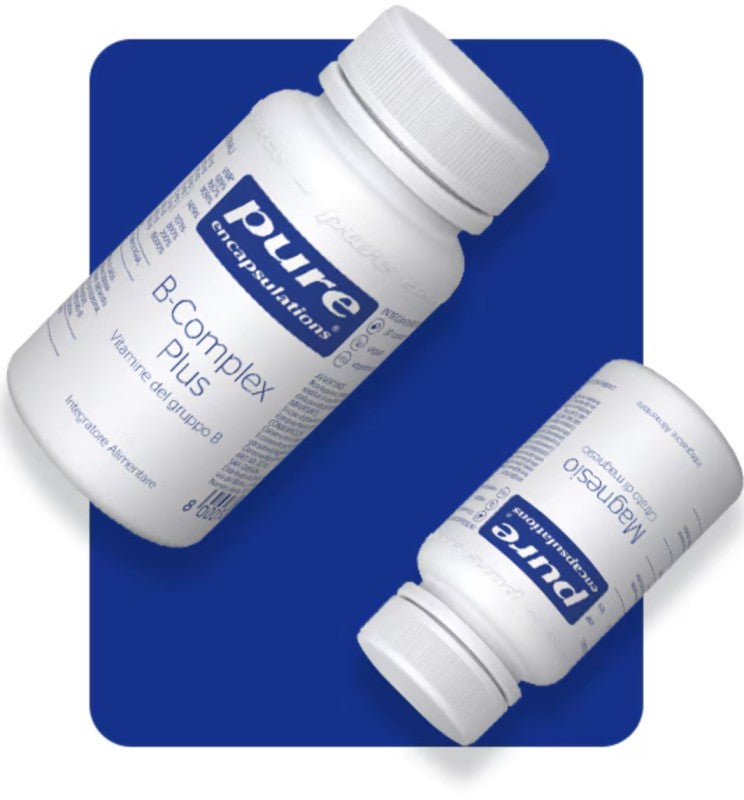
- 1. Pure Encapsulations ProFloraGG 25B, 30 caps — Best Overall
- 2. Culturelle Lactobacillus GG — Best Trial-Matched Dose
- 3. Swanson L. Rhamnosus with FOS, DR Caps — Best Budget
- 4. Pure Encapsulations ProFloraGG 25B, 60 caps — Best Long-Term
- 5. OptiBac For Babies & Children — Best For Children
- 6. Swanson L. Rhamnosus with FOS, Vcaps — Best Low-Cost
- Dosage and how to take it
- Side effects and who should avoid it
- When to see a doctor
- Frequently asked questions
What is Lactobacillus rhamnosus GG?
LGG was isolated from the stool of a healthy adult in 1983 by Sherwood Gorbach and Barry Goldin at Tufts University — the "GG" is their initials. It is deposited in the American Type Culture Collection as ATCC 53103. Following the 2020 reclassification of the Lactobacillus genus its formal name is Lacticaseibacillus rhamnosus GG, though nearly all product labelling still uses the older form.
Why this particular strain was selected
Gorbach and Goldin were screening specifically for a strain that could survive gastric acid and bile, adhere to intestinal epithelium, and produce antimicrobial compounds. LGG met all three criteria — which is why it went on to be studied more extensively than any other probiotic.
How LGG behaves in the gut
LGG expresses distinctive pili decorated with a mucus-binding protein called SpaC, allowing it to adhere to the intestinal mucus layer rather than passing straight through. This is unusual among Lactobacillus strains. It produces lactic acid, lowering local pH in a way that disfavours some pathogens, and secretes proteins — notably p40 — which in laboratory and animal models protect epithelial cells from inflammatory damage and support gut barrier function.
One important caveat: LGG is a transient coloniser. It does not permanently establish itself, and levels fall away within one to two weeks of stopping. Any benefit depends on continued intake.
Strain vs species — why it matters
This is the single most consequential thing to understand before buying, and it is where most of the money in this category is wasted.
The species: Lactobacillus rhamnosus
A broad group containing many genetically distinct strains. Some are well studied, most are not. Two strains within the same species can behave completely differently in the gut — different adhesion, different metabolites, different clinical effects.
The strain: GG (ATCC 53103)
One specific, patented, licensed member of that species. The Cochrane reviews, the ESPGHAN recommendations and the large trials discussed below all tested this strain. None of that evidence transfers to a generic L. rhamnosus product, no matter how the packaging is worded.
The International Scientific Association for Probiotics and Prebiotics has made this point repeatedly: probiotic effects are strain-specific, and manufacturers should declare the full strain designation. Many still don't. Our guide on how to choose a probiotic covers the wider principles.
How to read an LGG label
| What it says | What it means |
|---|---|
| Lactobacillus rhamnosus GG | Good — this is the researched strain |
| ATCC 53103 | Good — the formal catalogue number for LGG |
| Potency guaranteed to expiry | Good — live counts fall during storage |
| Lactobacillus rhamnosus, no strain given | Species only — the LGG evidence does not apply |
| CFU stated "at time of manufacture" | Weaker guarantee — the count on your dose may be lower |
Dose matters too, but less than identity. Most positive LGG trials used between 5 and 20 billion CFU per day. Our CFU vs AFU guide explains why the counting method also affects what those numbers mean.
What the evidence shows
LGG's evidence base is large but uneven. This is where honest reporting diverges sharply from typical supplement marketing.
Antibiotic-associated diarrhoea — the strongest indication
This is where LGG performs best. A Cochrane review of probiotics for preventing antibiotic-associated diarrhoea in children found a moderate protective effect, with a number needed to treat of 9 (95% CI 7 to 13). Restricting to high-dose probiotics of at least 5 billion CFU per day improved that to a number needed to treat of 6 (95% CI 5 to 9). The reviewers concluded that L. rhamnosus or S. boulardii at 5 to 40 billion CFU daily appear most appropriate for this purpose.
ESPGHAN recommends LGG or S. boulardii for preventing antibiotic-associated diarrhoea in children, graded as a strong recommendation on moderate quality of evidence, and advises starting the probiotic at the same time as the antibiotic rather than afterwards. See probiotics after antibiotics for timing detail.
Acute gastroenteritis — where the evidence turned
For years LGG was routinely recommended for childhood gastroenteritis on the strength of earlier meta-analyses. Two large trials published together in the New England Journal of Medicine in 2018 substantially complicated that picture.
Schnadower and colleagues randomised 971 children aged three months to four years across ten US paediatric emergency departments to either LGG at 10 billion CFU twice daily for five days or placebo. There was no significant difference in outcomes. A parallel Canadian trial by Freedman and colleagues tested a combination probiotic and likewise found no benefit.
Critics noted that many children enrolled late in the illness course, and only a subset had confirmed viral cause — where probiotic benefit has been most consistently seen. A 2019 updated meta-analysis incorporated the new data and still found a modest effect on diarrhoea duration, though the confidence around it narrowed considerably. The reasonable conclusion is that the effect, if present, is smaller than once believed. Rehydration remains the priority.
Other uses — thinner than the marketing suggests
Evidence in IBS is limited and inconsistent; LGG is not among the strains most commonly recommended for it, and readers may find peppermint oil capsules or the strain guidance in supplements for IBS more relevant. Early Finnish trials suggested LGG in pregnancy and infancy reduced eczema, but this has not reliably replicated. Claims around mood rest largely on mouse studies — human trials of LGG for stress and anxiety have been small and largely null, as covered in probiotics for anxiety.
| Use | Evidence |
|---|---|
| Antibiotic-associated diarrhoea | Strong — Cochrane NNT 6–9; ESPGHAN strong recommendation |
| Hospital-acquired / rotavirus diarrhoea | Moderate quality evidence |
| Acute gastroenteritis | Weakened — two large 2018 RCTs found no benefit |
| IBS / functional gut symptoms | Limited and inconsistent |
| Eczema, allergy, mood | Not supported — avoid products claiming these |
How we chose
- Strain-level identification — does the label actually say GG? The single most important criterion.
- Dose within the trial range — 5 to 20 billion CFU daily.
- Potency guaranteed at expiry, not at manufacture.
- Minimal excipients, and no added prebiotic fibre for sensitive guts.
- Cost per day, not per bottle.
Every product below is listed at Welzo. Because most of this category is currently out of stock, availability is stated openly on each entry rather than filtered out — check the live listing before ordering. See also shelf-stable probiotics and do probiotics survive stomach acid.
Our top picks
Best Overall: Pure Encapsulations ProFloraGG 25B, 30 caps — £20.47
Best Trial-Matched Dose: Culturelle Lactobacillus GG, 30 capsules — £47.09
Best Budget: Swanson L. Rhamnosus with FOS, 60 DR Capsules — £11.22
Best Long-Term Use: Pure Encapsulations ProFloraGG 25B, 60 caps — £45.50
Best For Children: OptiBac Probiotics For Babies & Children, 30 sachets — £22.10
Best Low-Cost Alternative: Swanson L. Rhamnosus with FOS, 60 Vcaps — £9.78
1. Pure Encapsulations ProFloraGG 25B, 30 Capsules — Best Overall
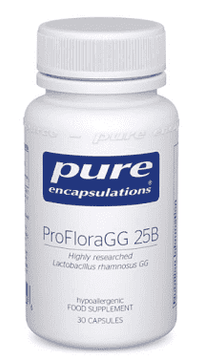
Price: £20.47 · Reviews: 138 · Stock: Currently sold out — check listing · Where to buy: Available from Welzo
Why it's the best: This is the cleanest expression of LGG on the catalogue. It names the GG strain explicitly, delivers 25 billion CFU per capsule, and the ingredient list runs to three items: the strain, microcrystalline cellulose as a hypoallergenic carrier, and an HPMC vegetarian capsule. Nothing else. It is shelf stable, gluten-free, dairy-free and suitable for vegetarians.
Pure Encapsulations is a practitioner-facing brand and the formulation philosophy shows. For a reactive gut — particularly readers on a low FODMAP diet — the absence of added fructooligosaccharides is an advantage rather than an omission, since FOS is a fermentable fibre that can worsen bloating.
The catch is availability. This product goes out of stock frequently. If it's showing as unavailable, the Culturelle listing below is the closest genuine LGG substitute.
| Pros | Cons |
|---|---|
| Names the GG strain explicitly High 25 billion CFU dose Only three ingredients No FOS or added prebiotic Gluten-free certified, shelf stable |
Frequently out of stock Higher cost per capsule than budget options 30 capsules is a short course |
2. Culturelle (Lactobacillus GG), 30 Capsules — Best Trial-Matched Dose
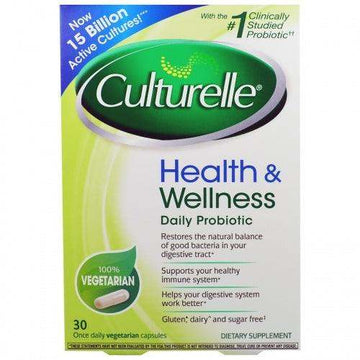
Price: £47.09 · Reviews: 86 · Stock: Intermittent — listing carries an "email when stocked" option · Where to buy: Available from Welzo
Why we like it: It earns its place for one reason above all others — this is the product used in a substantial share of the published LGG literature. When researchers describe "LGG at 10 billion CFU," this is frequently the formulation they mean, including the PECARN trial discussed above. If your priority is replicating what was actually tested rather than chasing the largest number on a label, it's the closest match available.
Each capsule delivers 10 billion CFU with inulin as a prebiotic. Potency is guaranteed at expiry rather than at manufacture, and it's vegetarian and free from gluten, dairy, soy and wheat.
The drawback is price. At £47.09 for 30 capsules it costs more than twice ProFloraGG while delivering less than half the CFU count. You are paying for brand and trial provenance — whether that's worth it depends on how much weight you place on using the exact preparation from the research.
| Pros | Cons |
|---|---|
| The formulation used across much of the LGG evidence Names the GG strain explicitly Potency guaranteed to expiry Free from gluten, dairy, soy, wheat No refrigeration needed |
Most expensive here (£47.09) Lower CFU than ProFloraGG at twice the price Contains inulin — may not suit IBS Stock is intermittent |
3. Swanson Lactobacillus Rhamnosus with FOS, 60 DR Capsules — Best Budget
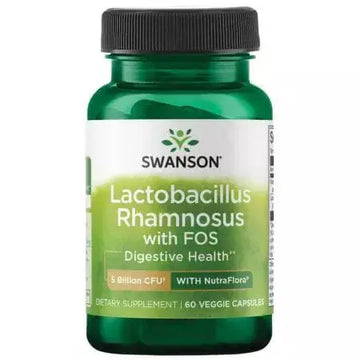
Price: £11.22 · Reviews: 158 · Stock: In stock · Where to buy: Available from Welzo
Why we like it: At roughly 19p per capsule this is comfortably the most affordable route into L. rhamnosus supplementation, and it is the one product in this category that is reliably in stock. The delayed-release capsule is a genuine formulation advantage at this price, and the included FOS gives the bacteria a fermentable substrate on arrival. It has the highest review count of anything in this guide.
| Pros | Cons |
|---|---|
| Lowest cost per day (£0.19) Reliably in stock 60 capsules, two-month supply Delayed-release capsule Most reviewed product here (158) |
GG strain not confirmed on label Lowest CFU dose (5 billion) FOS may not suit sensitive guts |
4. Pure Encapsulations ProFloraGG 25B, 60 Capsules — Best Long-Term Use
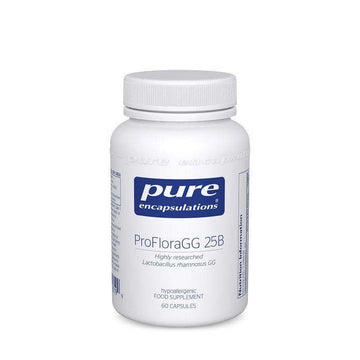
Price: £45.50 · Reviews: 138 · Stock: Currently sold out — check listing · Where to buy: Available from Welzo
Why we like it: An identical formulation to our top pick in a two-month bottle — named GG strain, 25 billion CFU, minimal excipients, vegetarian and shelf stable. This is the option if you've established that LGG suits you and want continuity, or if you're following a protocol running longer than four weeks.
Because probiotic effects generally don't persist once supplementation stops — colonisation by most Lactobacillus strains is transient — sustained use is often the point rather than a short trial. See should I take probiotics every day.
Check the maths before you buy. At £45.50 this works out marginally worse value per capsule than the 30-count bottle at £20.47 — unusual, and worth noting. Buy the smaller size unless continuity of supply matters more to you than a small cost difference.
| Pros | Cons |
|---|---|
| Two-month supply in one bottle Same clean formulation as the 30-count High 25 billion CFU dose Names the GG strain explicitly Gluten-free and dairy-free |
Highest total outlay (£45.50) Worse value per capsule than the 30-count Currently out of stock |
5. OptiBac Probiotics For Babies & Children, 30 Sachets — Best For Children
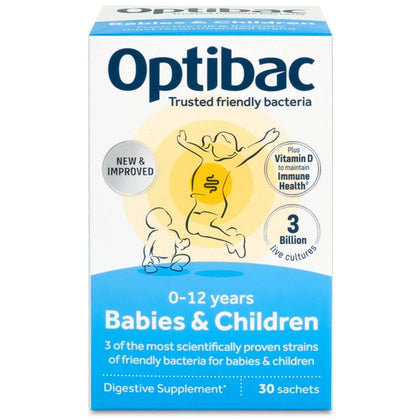
Price: £22.10 · Reviews: 108 · Stock: Currently sold out — listing carries an "email when stocked" option · Where to buy: Available from Welzo
Why we like it: The only paediatric LGG option on the catalogue, and a well-constructed one. The ingredients panel lists a three-strain blend — Bifidobacterium breve M-16V, Lactobacillus rhamnosus GG and Lactobacillus rhamnosus HN001 — plus FOS fibre and vitamin D3.
All three strains are individually well characterised, which is not typical of children's probiotics. This matters because the strongest LGG evidence sits in paediatric populations. It mixes into cool food or drink. See our guide to children's probiotics.
Important: any child with persistent diarrhoea, blood in the stool, weight loss or signs of dehydration needs a GP appointment, not a supplement.
| Pros | Cons |
|---|---|
| Three named, well-researched strains including GG Sachet mixes easily into food or drink Includes FOS and vitamin D3 Suitable from 12 months to age 12 No refrigeration needed |
Currently sold out Culture count stated inconsistently on the listing Multi-strain — the LGG dose alone isn't stated Contains FOS Not suitable under 12 months |
6. Swanson Lactobacillus Rhamnosus with FOS, 60 Vcaps — Best Low-Cost Alternative
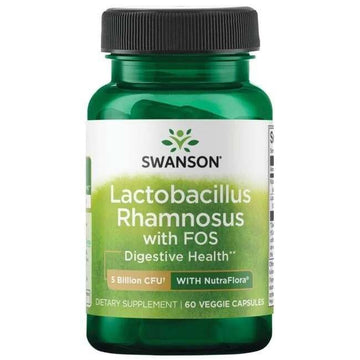
Price: £9.78 (reduced from £12.80) · Reviews: 132 · Stock: Currently sold out — check listing · Where to buy: Available from Welzo
Why we like it: The standard vegetarian capsule version of the Swanson product ranked third, without the delayed-release coating. Same 5 billion CFU of L. rhamnosus with FOS, 60 capsules, and the cheapest entry point in the category when in stock at roughly 16p per day.
The same strain caveat applies — the label specifies the species, not the GG strain. And given the delayed-release version costs only marginally more, we'd choose that one unless price is the overriding factor.
| Pros | Cons |
|---|---|
| Cheapest option here (£9.78) 60 capsules per bottle Suitable for vegetarians Currently reduced |
No delayed-release coating GG strain not confirmed on label Lowest dose (5 billion CFU) Currently out of stock |
Dosage and how to take it
Most positive LGG trials used between 5 and 20 billion CFU per day, and the Cochrane analysis supports at least 5 billion daily for preventing antibiotic-associated diarrhoea, with better results toward the higher end of a 5 to 40 billion range. Higher is not automatically better.
Practical guidance: most products are once daily, and consistency matters more than precision. LGG tolerates gastric acid comparatively well, so timing relative to meals is less critical than for fragile strains — though many manufacturers suggest taking it with or just before food. See when to take probiotics.
Alongside antibiotics: start on the same day as the antibiotic rather than after the course, separate the two doses by two to three hours, and continue for the full course and ideally a week or two beyond.
How long before you notice anything: for diarrhoea prevention the effect is preventative, so there may be nothing to notice. For general digestive comfort, allow four weeks before judging — see how long probiotics take to work. For a yeast-based alternative with overlapping indications, see Saccharomyces boulardii, and for the wider category, best probiotics UK.
Side effects and who should avoid it
LGG has an extensive safety record in healthy adults and children, and Cochrane reviews have not identified serious adverse events attributable to it in healthy paediatric populations. Mild bloating, wind or transient changes in stool frequency in the first week or two are common and usually settle — see probiotic side effects.
Speak to a doctor before taking LGG if you
- Are significantly immunocompromised — including during chemotherapy or after transplant
- Have a central venous catheter or other indwelling line
- Have short bowel syndrome or a severely damaged intestinal barrier
- Are critically unwell or being treated in intensive care
- Have a heart valve abnormality or a history of endocarditis
- Are pregnant or breastfeeding — see probiotics in pregnancy
Rare cases of Lactobacillus bacteraemia have been reported, almost exclusively in people with the risk factors above. Further detail in probiotics safety.
On labelling: probiotics carry no authorised health claim in GB or the EU, so they are sold as food supplements and cannot legally be marketed as treating any condition.
When to see a doctor
See your GP — or seek urgent care — if you have:
- Blood in your stool, or black tarry stools
- Unexplained weight loss
- A change in bowel habit lasting three weeks or more
- Severe abdominal pain, or pain that wakes you at night
- Difficulty swallowing, or persistent vomiting
- Signs of dehydration in a child with diarrhoea
- A family history of bowel cancer, coeliac disease or inflammatory bowel disease
A probiotic is not a substitute for assessment. Read more on when to see a GP about stomach symptoms and bowel cancer screening in the UK.
Frequently asked questions
What is the best Lactobacillus rhamnosus GG supplement in the UK?
Pure Encapsulations ProFloraGG 25B at £20.47 is the strongest choice — it names the GG strain explicitly, delivers 25 billion CFU, and contains almost nothing else. Culturelle at £47.09 is the better pick if you specifically want the formulation used across much of the published research, though it costs considerably more per dose. Check stock on both, as this category sells out often.
Is Lactobacillus rhamnosus the same as Lactobacillus rhamnosus GG?
No. L. rhamnosus is a species containing many strains; GG (ATCC 53103) is one specific strain within it. Clinical evidence attaches to strains, not species, so a product labelled only "L. rhamnosus" does not carry the LGG evidence base however similar the name looks.
How much LGG should I take per day?
Most positive trials used 5 to 20 billion CFU daily. For preventing antibiotic-associated diarrhoea, Cochrane data support at least 5 billion CFU per day, with better results at higher doses within a 5 to 40 billion range.
Does LGG actually help with stomach bugs?
Less reliably than once thought. Two large 2018 trials in the New England Journal of Medicine found no benefit over placebo in young children with acute gastroenteritis. Later meta-analyses still suggest a modest reduction in diarrhoea duration, but the effect is smaller than earlier estimates. Rehydration remains the priority.
Should I take LGG with antibiotics?
The evidence supports it, and ESPGHAN recommends starting it at the same time as the antibiotic rather than afterwards. Separate the doses by two to three hours. Note that LGG is sensitive to penicillins, so benefit alongside amoxicillin or co-amoxiclav is less certain.
Does LGG need to be refrigerated?
No. All the LGG products in this guide are shelf stable at room temperature, which makes them practical for travel.
How long does LGG take to work?
For diarrhoea prevention it works during the at-risk period, so there may be nothing noticeable. For general digestive comfort, give it four weeks before deciding.
Can children take Lactobacillus rhamnosus GG?
Yes, and paediatric populations are where the strongest evidence sits. OptiBac For Babies & Children contains LGG in a sachet the manufacturer states is suitable from 12 months to age 12 — not from birth. Any child with persistent diarrhoea, blood in the stool, weight loss or dehydration needs medical assessment rather than a supplement, and a probiotic should not be given to an infant under one without medical advice.
Are there side effects of taking LGG?
Mild bloating, wind or altered stool frequency in the first week or two are common and usually resolve. Serious adverse events are rare and essentially confined to people who are immunocompromised, critically unwell, or who have indwelling lines.
Does LGG help with anxiety or mood?
The evidence does not currently support this. The frequently quoted GABA findings come from mouse studies, and human trials of LGG for stress and anxiety have been small and largely negative. Treat any mood claim on an LGG label with scepticism.
Medical disclaimer: This article is for general information and education only and does not constitute medical advice, diagnosis or treatment. Food supplements are not a substitute for a varied and balanced diet, and are not intended to diagnose, treat, cure or prevent any disease. Probiotics should be discussed with a doctor before use if you are immunocompromised, critically unwell, have an indwelling venous line, or are pregnant or breastfeeding. Do not give a probiotic supplement to an infant under 12 months without medical advice. Product specifications, prices, review counts and availability are correct at the time of writing and may change — always check the product page and the physical pack. Always seek advice from your GP or pharmacist before starting a new supplement, particularly if you have an existing condition or take prescription medication.
About the author
Dr Zeeshan Afzal (MBBS) is a practising medical doctor and Welzo's Medical Content Lead. He writes and reviews Welzo's health content to ensure it is accurate, evidence-based and aligned with current UK clinical guidance, translating complex research into practical advice patients can trust.
References
- Schnadower D, Tarr PI, Casper TC, et al. Lactobacillus rhamnosus GG versus placebo for acute gastroenteritis in children. N Engl J Med. 2018;379(21):2002–2014. Link
- Freedman SB, Williamson-Urquhart S, Farion KJ, et al. Multicenter trial of a combination probiotic for children with gastroenteritis. N Engl J Med. 2018;379(21):2015–2026. Link
- Guo Q, Goldenberg JZ, Humphrey C, et al. Probiotics for the prevention of pediatric antibiotic-associated diarrhea. Cochrane Database Syst Rev. 2019;CD004827. Link
- Szajewska H, Canani RB, Guarino A, et al. Probiotics for the prevention of antibiotic-associated diarrhea in children. ESPGHAN Working Group position paper. Link
- Szajewska H, Kołodziej M, Gieruszczak-Białek D, et al. Systematic review with meta-analysis: Lactobacillus rhamnosus GG for treating acute gastroenteritis in children — a 2019 update. Aliment Pharmacol Ther. 2019;49(11):1376–1384. Link
- Korpela K, Salonen A, Virta LJ, et al. Lactobacillus rhamnosus GG intake modifies preschool children's intestinal microbiota. PLoS One. Link


 Hodnoceno výborně o 26,523+ recenzí
 100% záruka vrácení peněz