


Related collections




Probiotics vs Prebiotics vs Postbiotics: What's the Difference?
Posted on:
Aug 05, 2026
Authored by


Written and medically reviewed by Dr Zeeshan Afzal (MBBS) — Medical Doctor & Medical Content Lead, Welzo
Evidence-based · Honest about what's proven and what isn't · UK-focused
Last updated: July 2026 · Reading time: ~10 minutes
Part of our Digestive Health hub — buy gut health supplements
Popular probiotics: Akkermansia · Citrus Pectin · Berberine · TUDCAThree words, one letter apart, doing completely different jobs. The simplest way to hold them apart: probiotics are the bacteria, prebiotics are the food, postbiotics are what's left when the bacteria are no longer alive.
All three have formal consensus definitions, agreed by expert panels convened by the International Scientific Association for Probiotics and Prebiotics (ISAPP) and published in Nature Reviews Gastroenterology & Hepatology. Those definitions are stricter than the marketing — and one of them rules out a product category that is sold as a postbiotic almost universally.
Here is what each term actually means, and which one you need. Browse gut health supplements for the full range.
Table of contents
| Term | What it is | Alive? | Example |
|---|---|---|---|
| Probiotic | Live microorganisms | Yes — required | L. rhamnosus GG |
| Prebiotic | A substrate bacteria feed on | Not alive | Inulin, FOS, pectin |
| Postbiotic | Deliberately inactivated microbes | No — required to be dead | Pasteurised Akkermansia |
| Synbiotic | Probiotic plus prebiotic together | Yes | Bacteria + inulin in one capsule |
ISAPP's 2014 consensus statement defines probiotics as "live microorganisms that, when administered in adequate amounts, confer a health benefit on the host."
Three conditions are doing work there. The organisms must be alive at the point you take them. The amount must be adequate, meaning enough to produce the effect. And there must be a demonstrated benefit — a bacterium isn't a probiotic just because it's a bacterium.
Benefits attach to specific strains, not to species or to CFU totals. Lactobacillus rhamnosus GG has hundreds of trials behind it; a product labelled only "Lactobacillus rhamnosus" inherits none of them. This is the single most useful thing to know when comparing products — see how to choose a probiotic and Lactobacillus rhamnosus GG.
ISAPP's 2017 statement defines a prebiotic as "a substrate that is selectively utilized by host microorganisms conferring a health benefit."
The critical word is selectively. Not all fibre is prebiotic. To qualify, the substrate has to be preferentially used by beneficial organisms rather than fermented indiscriminately by everything in the gut. Inulin, FOS, GOS and certain pectins qualify; plenty of ordinary dietary fibre does not.
Fermenting prebiotics is also how your bacteria produce short-chain fatty acids such as butyrate, which are among the main reasons fibre matters — see short-chain fatty acids and psyllium vs inulin.
The newest of the three. ISAPP's 2021 panel defined a postbiotic as "a preparation of inanimate microorganisms and/or their components that confers a health benefit on the host."
In other words: bacteria that have been deliberately killed — by heat, pressure or another method — where the dead cells or their fragments still produce a benefit. It sounds counterintuitive, but parts of a bacterial cell wall can interact with your immune system perfectly well without the organism being alive.
The best-known example is pasteurised Akkermansia muciniphila, where the heat-treated form has been studied in its own right rather than as a degraded version of the live organism — see pasteurised Akkermansia.
Postbiotics are a genuinely young field. The definition itself was contested after publication, with alternative wordings proposed by other groups, and the clinical evidence base is far thinner than for probiotics. Treat strong claims with caution.
Here is the part that trips almost everyone up, including a great many product labels.
ISAPP's definition requires the preparation to contain inactivated microbial cells or cell components. Metabolites on their own do not qualify. The consensus statement is explicit: metabolites alone are not sufficient to meet the definition, and purified metabolites should be referred to by their chemical names. Purified microbial metabolites are not postbiotics.
The same logic applies elsewhere. A product built on inactivated bacterial cells is a postbiotic. A product built on an isolated compound those bacteria happen to make is a chemical supplement with a bacterial origin story.
ISAPP's 2020 statement defines a synbiotic as "a mixture comprising live microorganisms and substrate(s) selectively utilized by host microorganisms that confers a health benefit on the host."
The panel split these into two types. A complementary synbiotic contains a genuine probiotic and a genuine prebiotic, each qualifying independently. A synergistic synbiotic uses a substrate specifically chosen to feed the accompanying organism — and requires that selective use be demonstrated in the same study proving the benefit, which very few consumer products can show.
Almost everything sold as a synbiotic in the UK is complementary. More detail in synbiotic supplements and prebiotic vs probiotic.
| Your situation | Start with |
|---|---|
| Taking or just finished antibiotics | A probiotic with a strain trialled for this — see probiotics after antibiotics |
| Low fibre intake, sluggish bowels | Prebiotic — but food first, at a gram-level dose |
| IBS or a sensitive gut | A targeted probiotic; prebiotic fibre often worsens symptoms |
| Advised against live bacteria | Postbiotic may be an option — ask your doctor first |
| General daily maintenance | A varied high-fibre diet beats any of them — see 30 plants a week |
That last row is the honest headline. No supplement in any of these three categories outperforms consistently eating a wide range of plants, and the two are not in competition.

Swanson L. plantarum Probiotic, 30 DR caps — £5.93 · 132 reviews · In stock. Around 20p a day makes this the cheapest way to find out whether probiotics do anything for you before committing to something expensive. 10 billion CFU in a delayed-release capsule, suitable for vegans. The label names the species rather than the strain, so no specific trial evidence attaches to it — fine for a first trial, less so if you need a researched strain.
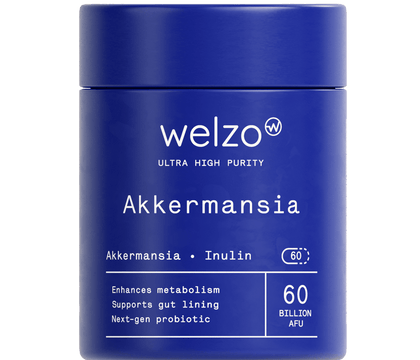
Welzo Ultra Purity Akkermansia — £21.99 (from £39.99) · 92 reviews · In stock. Pairs Akkermansia at 60 billion AFU with Lactobacillus acidophilus and inulin as the substrate — two organisms working in different parts of the gut, plus a prebiotic. Note that the potency is stated in AFU rather than CFU, which is a different counting method: see CFU vs AFU. The inulin quantity is not disclosed, so treat it as formulation-level rather than a full prebiotic dose.
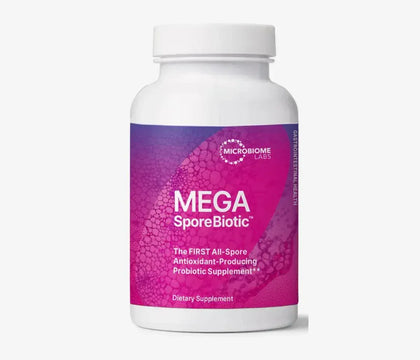
Microbiome Labs MegaSporeBiotic, 60 caps — £59.99 (from £65.00) · 114 reviews · In stock. Four named Bacillus strains delivered as dormant spores, which survive stomach acid and store at room temperature for years. The most expensive of the three at around £1.00 a day, and its evidence is biomarker-based rather than symptom-based — see spore-based probiotics.
All three categories are well tolerated by most people. Bloating and wind in the first week or two are common — more so with prebiotics, since fermentable fibre produces gas by design. See probiotic side effects.
Speak to a doctor before taking any of these if you
The live-bacteria cautions above apply to probiotics and synbiotics. Postbiotics contain no living organisms, which is part of their rationale — but they are a young category, so still take advice rather than self-selecting. More in probiotics safety.
On labelling: none of these carry an authorised health claim in GB or the EU. They are sold as food supplements and cannot legally be marketed as treating any condition.
See your GP — or seek urgent care — if you have:
Read more on when to see a GP about stomach symptoms and bowel cancer screening in the UK.
Probiotics are live microorganisms that confer a health benefit. Prebiotics are substrates selectively used by those microorganisms. Postbiotics are preparations of deliberately inactivated microorganisms or their components. Bacteria, their food, and their inactivated remains.
Not under the ISAPP consensus definition. A postbiotic must contain inactivated microbial cells or cell components; the statement says explicitly that metabolites alone don't qualify and that purified metabolites should be called by their chemical names. Butyrate is a short-chain fatty acid — a useful supplement, but not technically a postbiotic.
If you're taking antibiotics or want a specific researched strain, a probiotic. If your fibre intake is low, a prebiotic — though food is the better route, since supplements rarely supply a gram-level dose. If you have IBS, be cautious with prebiotic fibre, which often worsens symptoms.
There's no safety reason not to, but there's rarely a good reason to pay for all three at once. Start with one, give it four weeks, and add another only if you have a specific reason.
No — they're different, and the evidence base is much younger. Postbiotics have real advantages in stability and safety, particularly for people advised against live organisms, but they don't have the depth of trial data that established probiotic strains do.
No. To qualify, a substrate must be selectively used by beneficial microorganisms. Inulin, FOS, GOS and certain pectins qualify; much ordinary dietary fibre doesn't, though it's still valuable for other reasons.
A mixture of live microorganisms and a substrate selectively used by host microorganisms, conferring a health benefit. In practice, a probiotic and prebiotic in one product — though many so-called synbiotics contain too little fibre to meet the definition properly.
Generally no, and that's much of the point. Nothing can die in storage if it has already been inactivated, so postbiotics tend to be stable and easy to store.
They contain no living organisms, so they avoid the infection risk that makes live probiotics inadvisable for this group. That doesn't make them automatically appropriate — speak to your medical team before starting anything.
For most people, a probiotic with a named strain — it's the category with by far the strongest evidence. But if you're eating little fibre, adding plants to your diet will do more than any capsule in any of these categories.
Medical disclaimer: This article is for general information and education only and does not constitute medical advice, diagnosis or treatment. Food supplements are not a substitute for a varied and balanced diet, and are not intended to diagnose, treat, cure or prevent any disease. Definitions are quoted from published ISAPP consensus statements; terminology in this field is contested and continues to evolve. Probiotics and synbiotics should be discussed with a doctor before use if you are immunocompromised, critically unwell, have an indwelling venous line, have inflammatory bowel disease, IBS or suspected SIBO, or are pregnant or breastfeeding, and supplements for children should be discussed with a GP or health visitor. Prices, review counts and availability are correct at the time of writing and may change.
About the author
Dr Zeeshan Afzal (MBBS) is a practising medical doctor and Welzo's Medical Content Lead. He writes and reviews Welzo's health content to ensure it is accurate, evidence-based and aligned with current UK clinical guidance, translating complex research into practical advice patients can trust.
 Hodnoceno výborně o 28,951+ recenzí
 100% záruka vrácení peněz
Naše záruka vrácení peněz zajišťuje, že obdržíte své položky nebo získáte plnou náhradu.


