







Best Foods for Gut Health UK 2026


Related products


Written by Dr Zeeshan Afzal (MBBS) | Medically reviewed for accuracy | Last updated: July 2026 | Reading time: 14 minutes
Ask a gastroenterologist what single change does most for digestive health, and the answer is rarely a capsule. It is the shopping basket. The best foods for gut health are the ones that feed the trillions of bacteria living in your large intestine — and in the UK, most of us are falling badly short. Government guidance sets dietary fibre at 30g a day, yet NHS figures show the average adult eats only around 20g.
This guide ranks the foods with the strongest evidence behind them, explains how much you actually need, and gives you a UK-specific shopping list and 7-day plan. If you are new to this topic, start with our foundational guide to gut health in the UK, then browse the wider Welzo gut health range and our clinically-formulated probiotics collection. For readers already targeting specific mechanisms, the most-researched options are Akkermansia muciniphila for mucus-layer support, modified citrus pectin powder as a gentle soluble fibre, Welzo Ultra Purity Berberine for metabolic and microbial balance, and Welzo Ultra Purity TUDCA for bile-acid and liver support. Food first, always — but these are the evidence-led additions worth knowing about.
Table of Contents
- Why food beats supplements for gut health
- What "gut health" actually means
- The 20 best foods for gut health
- Quick comparison table: which food does what
- How much fibre do you actually need?
- The 30 plants a week rule
- Foods that work against your gut
- A 7-day UK gut-friendly meal plan
- How to increase fibre without bloating
- Special situations: IBS, IBD, SIBO and more
- When food alone isn't enough
- When to see your GP
- Frequently asked questions
- References

Why Food Beats Supplements for Gut Health
The gut microbiome responds to diet faster than to almost any other input. Measurable shifts in bacterial composition can occur within 24 to 48 hours of a significant dietary change, and sustained changes take root over weeks. No single supplement replicates that, because whole foods deliver a package that capsules cannot: fermentable fibres, resistant starches, polyphenols, live microbes, and the food matrix that carries them safely to the colon.
The most compelling evidence for this comes from the Reynolds et al. review published in The Lancet in 2019, which pooled roughly 135 million person-years of data from 185 prospective studies and 58 clinical trials. It found a 15–30% reduction in all-cause and cardiovascular mortality among the highest fibre consumers compared with the lowest, with the greatest risk reductions clustering at intakes of 25–29g per day.
That does not make supplements useless. It makes them supplementary. Understanding the difference between prebiotics and probiotics helps clarify where each fits — and our guide to whether probiotics actually work takes an honest look at the evidence.
What "Gut Health" Actually Means
The microbiome in sixty seconds
Your large intestine houses a dense community of bacteria, archaea, fungi and viruses collectively called the gut microbiome. These organisms are not passengers. They ferment the fibre you cannot digest, synthesise vitamins K and several B vitamins, train your immune system, and produce signalling molecules that reach the brain.
A "healthy" microbiome is not defined by one perfect species list. It is characterised chiefly by microbiome diversity — a wide range of species with overlapping functions, so the ecosystem is resilient when disrupted by illness, antibiotics or travel. Loss of that diversity is often described as gut dysbiosis.
The three jobs food does for your gut
- It feeds beneficial bacteria. Fermentable fibres and resistant starches are the substrate. Bacteria ferment them into short-chain fatty acids — chiefly butyrate, acetate and propionate.
- It maintains the gut barrier. Butyrate is the preferred fuel of colonocytes, the cells lining your colon. Adequate supply supports gut barrier function and the integrity of the tight junctions between cells.
- It delivers live microbes. Fermented foods introduce transient microorganisms that interact with your resident community, even if most do not permanently colonise.
The 20 Best Foods for Gut Health
Ranked by weight of evidence, practicality in a British supermarket, and how much benefit you get per portion.
1. Live natural yoghurt

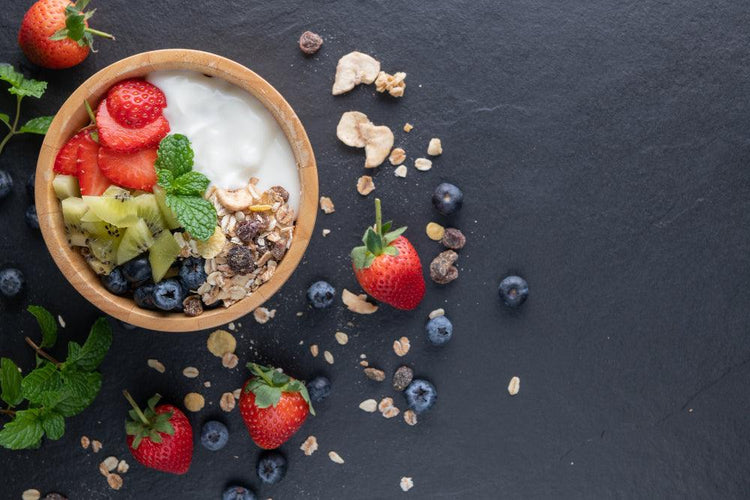
The most accessible probiotic food in Britain. Look for "live" or "active cultures" on the label — heat-treated yoghurts contain no viable bacteria. Greek and natural varieties are preferable to flavoured versions, which frequently carry 12–15g of added sugar per pot.
How to use it: 150g daily. Add berries and a tablespoon of ground flaxseed for a combined pre- and probiotic breakfast.
Who should be cautious
Those with lactose intolerance often tolerate live yoghurt better than milk, because bacterial cultures partially digest the lactose. If not, dairy-free probiotic options are widely available.
2. Kefir

A fermented milk drink containing a broader range of bacterial and yeast species than standard yoghurt. It featured prominently in the Stanford fermented-food trial discussed below. Our full breakdown of kefir benefits covers strain content and how it compares with capsules in kefir versus probiotics.
How to use it: Start with 100ml daily and build up. The sour, slightly fizzy taste takes adjusting to — blending it into a smoothie helps.
3. Sauerkraut and kimchi

Raw, unpasteurised fermented vegetables deliver lactic acid bacteria alongside the fibre of the vegetable itself. The critical distinction: shelf-stable jars in the vinegar aisle are usually pasteurised and contain no live cultures. Buy from the chilled section and check for "raw", "unpasteurised" or "live".
How to use it: One to two tablespoons alongside a main meal. Do not cook it — heat kills the cultures.
4. Oats
.jpg?width=1000)
Oats supply beta-glucan, a soluble fermentable fibre with well-documented effects on cholesterol and a strong prebiotic profile. Johns Hopkins Medicine notes that whole grains supply substantially more fibre than refined carbohydrates, and that bacterial fermentation of that fibre produces short-chain fatty acids.
How to use it: 40g dry porridge oats delivers roughly 4g of fibre. Overnight oats increase resistant starch content. See our guide to fibre and cholesterol for the cardiovascular angle.
5. Beans, lentils and chickpeas

Gram for gram, pulses are the most fibre-dense affordable food in a UK supermarket. A 100g portion of cooked lentils delivers around 8g of fibre plus resistant starch and plant protein. They are also the food most people avoid because of wind — which is a dosing problem, not a reason to exclude them.
How to use it: Start at two tablespoons and increase weekly. Rinse tinned pulses thoroughly. Our guide to trapped wind relief covers the adjustment period.
6. Wholegrain bread, rye and barley

Switching white bread, rice and pasta for wholegrain versions is the single highest-yield swap for most British households. Rye in particular is high in arabinoxylan, a fibre with strong fermentation characteristics. The British Nutrition Foundation highlights wholegrain swaps and reaching your 5-a-day as the two most practical routes to closing the fibre gap.
7. Onions, leeks, garlic and asparagus
These contain inulin and fructo-oligosaccharides — classic prebiotics that selectively feed Bifidobacteria. They are also high-FODMAP, which is why they trigger symptoms in some people with IBS. See our list of prebiotic foods for alternatives if these cause problems.
8. Slightly green bananas
Underripe bananas are high in resistant starch, which passes undigested to the colon and ferments there. As bananas ripen, resistant starch converts to simple sugars. If you find bananas bloating, ripeness may be the variable to adjust.
9. Cooked-and-cooled potatoes, rice and pasta
Cooking then refrigerating starchy foods causes retrogradation — starch molecules recrystallise into a form your small intestine cannot digest. The result is more resistant starch reaching your colon, at no extra cost. Reheating retains much of the benefit.
10. Berries

Blueberries, raspberries, blackberries and strawberries combine fibre with anthocyanins — polyphenols that act as a substrate for beneficial bacteria and appear to inhibit some less favourable species. Raspberries are the standout, with around 6.5g of fibre per 100g. Frozen berries retain their polyphenol content and cost considerably less. More on the mechanism in our guide to polyphenols and gut health.
11. Apples and pears
Both are rich in pectin, a soluble fibre fermented into short-chain fatty acids. The skin matters — peeling an apple removes a substantial share of its fibre. Pectin is also the basis of our citrus pectin powder, and the difference between forms is explained in modified citrus pectin versus standard pectin.
12. Kiwi fruit
Kiwi has an unusually good evidence base for functional constipation, combining fibre with the enzyme actinidin and a high water-holding capacity. Two green kiwis daily is the dose used in most trials. If constipation is your main concern, our guides to constipation relief and magnesium for constipation go further.
13. Nuts

Almonds and walnuts have both been shown in controlled feeding studies to shift microbial composition and increase butyrate-producing species. A 30g handful of almonds provides around 3.5g of fibre plus vitamin E and monounsaturated fat.
14. Flaxseed and chia seeds
Both are exceptionally high in soluble fibre and mucilage, which forms a gel that softens stool and slows transit in a helpful way. Flaxseed must be ground to be absorbed — whole seeds pass through intact. One tablespoon of ground flaxseed delivers roughly 3g of fibre.
15. Extra virgin olive oil
The polyphenol content of extra virgin olive oil, particularly hydroxytyrosol and oleocanthal, has anti-inflammatory properties and appears to favour beneficial species. Refined "light" olive oils lose most of this. It is also a cornerstone of the Mediterranean pattern discussed below.
16. Dark leafy greens
Spinach, kale, rocket and chard contain sulfoquinovose, a sugar that specific gut bacteria metabolise preferentially. They also deliver magnesium, folate and a low-calorie fibre load that is easy to increase without discomfort.
17. Cruciferous vegetables
Broccoli, cauliflower, cabbage, Brussels sprouts and rocket supply glucosinolates, which gut bacteria convert into isothiocyanates. Broccoli sprouts are particularly concentrated. These are among the more gas-producing vegetables, so build up gradually.
18. Oily fish
Salmon, mackerel, sardines and herring supply long-chain omega-3 fatty acids. While not a fibre source, omega-3 intake has been associated with greater microbial diversity and higher abundance of butyrate-producing genera in observational work. Two portions weekly is the standard UK recommendation.
19. Green tea, coffee and dark chocolate
All three are significant polyphenol sources in the British diet — coffee is in fact the largest single contributor of polyphenols for many UK adults. Cocoa at 70% or above delivers flavanols that reach the colon largely intact. Moderation applies: coffee can aggravate reflux, and our guide on acid reflux covers who should be careful.
20. Miso, tempeh and natto
Fermented soya foods provide live cultures plus isoflavones. Natto is uniquely high in vitamin K2 and the enzyme nattokinase. Miso should be stirred into food after cooking, not boiled, to preserve the cultures. These are useful additions for anyone following a plant-based approach to gut health.
Quick Comparison Table: Which Food Does What
| Food | Primary mechanism | Fibre per typical portion | Best for |
|---|---|---|---|
| Live natural yoghurt (150g) | Live cultures | 0g | Daily probiotic baseline |
| Kefir (200ml) | Live cultures, multi-strain | 0g | Broader microbial exposure |
| Sauerkraut (2 tbsp) | Live cultures + fibre | 1g | Diversity, low calorie |
| Porridge oats (40g dry) | Beta-glucan prebiotic | 4g | Cholesterol, satiety |
| Lentils (100g cooked) | Mixed fibre + resistant starch | 8g | Highest fibre density |
| Wholemeal bread (2 slices) | Insoluble + arabinoxylan | 5g | Easiest everyday swap |
| Raspberries (100g) | Fibre + anthocyanins | 6.5g | Polyphenol load |
| Kiwi (2 fruits) | Fibre + actinidin | 4g | Constipation |
| Ground flaxseed (1 tbsp) | Mucilage, soluble fibre | 3g | Stool consistency |
| Almonds (30g) | Fibre + polyphenols | 3.5g | Convenient snack |
Fibre values are approximate and vary by variety, ripeness and preparation.
How Much Fibre Do You Actually Need?
UK government guidance, echoed by the NHS, sets 30g per day for adults. The British Heart Foundation reports that most of us average closer to 17–20g. The Lancet analysis found the sharpest risk reductions between 25g and 29g daily, with dose-response curves suggesting further benefit above that.
| Age group | Daily fibre target (UK) |
|---|---|
| Adults (17+) | 30g |
| 16–17 years | 30g |
| 11–16 years | 25g |
| 5–11 years | 20g |
| 2–5 years | 15g |
Practical guidance on closing the gap is in our article on how to increase fibre and our list of high fibre foods available in the UK.
The 30 Plants a Week Rule
The most repeated piece of gut health advice in Britain traces to a specific finding. The American Gut Project, published in mSystems in 2018 — which included a substantial British arm — analysed thousands of stool samples and found that participants eating more than 30 different plant types per week had measurably more diverse gut microbiomes than those eating 10 or fewer. This held regardless of whether participants identified as omnivore, vegetarian or vegan.
Two caveats worth stating plainly. The comparison groups were small, and the study was observational — it demonstrates association, not proof that hitting 30 causes better health outcomes. But as a heuristic that pushes people towards variety rather than restriction, it is a good one.
What counts as a plant?
More than you would think. Fruits, vegetables, wholegrains, nuts, seeds, legumes, herbs and spices all count. Different colours of the same vegetable count separately. Herbs and spices count as a quarter point in most versions of the challenge. Coffee, tea and cocoa count.
How to hit 30 without effort
- Buy mixed frozen berry bags — four plants in one purchase
- Use mixed seed blends rather than single seeds
- Choose four-bean mixes over single tinned beans
- Keep a jar of mixed dried herbs for cooking
- Rotate your grain: barley one week, bulgur the next, quinoa after that
Our dedicated guide to eating 30 plants a week includes a printable tracker, and increasing gut bacteria diversity covers the wider lifestyle levers.
The Fermented Food Evidence
One of the more striking recent trials came from Stanford. Thirty-six healthy adults were randomised to either a high-fermented-food diet or a high-fibre diet for ten weeks. According to Stanford Medicine's report on the study, the fermented-food group showed an increase in overall microbial diversity and a decrease in 19 inflammatory proteins, with larger servings producing stronger effects. The high-fibre group, unexpectedly, showed stable diversity over the same period — the researchers concluded that increasing fibre alone over a short window was insufficient to shift diversity.
The full paper by Wastyk and colleagues appeared in Cell in 2021. It is a small study and should not be over-read, but it supports a simple practical conclusion: fermented foods and fibre are complementary, not interchangeable. Our comparison of fermented foods versus probiotic supplements explores where each has the edge, and our UK guide to fermented foods covers where to buy them.
The Mediterranean Pattern
If you would rather follow a pattern than count individual foods, the Mediterranean diet has the strongest supporting data. The NU-AGE trial published in Gut in 2020 followed 612 older adults across five European countries, including the UK, through a 12-month Mediterranean diet intervention. Adherence was associated with specific microbiome changes, and the bacterial taxa enriched by the diet correlated with lower frailty markers, better cognitive scores, and lower inflammatory markers including C-reactive protein.
In practice that means: olive oil as the main fat, fish twice weekly, pulses most days, vegetables at every meal, nuts as the default snack, and red meat occasionally rather than daily.
Foods That Work Against Your Gut
Ultra-processed foods
The concern is less about any single ingredient and more about displacement — UPFs crowd out fibre-rich whole foods. Certain emulsifiers, including polysorbate 80 and carboxymethylcellulose, have shown adverse effects on the mucus layer in animal models, though human data remains limited. Our article on ultra-processed food and the gut examines the evidence in detail.
Artificial sweeteners
Some, notably saccharin and sucralose, have been shown to alter microbial composition in human and animal studies. Effects appear inconsistent between individuals. See sweeteners and gut health for a balanced review.
Excess alcohol
Regular heavy drinking is associated with reduced diversity and increased intestinal permeability. Moderate red wine consumption, by contrast, has shown neutral-to-positive polyphenol effects in some studies — a distinction that depends heavily on quantity.
Very low-fibre restrictive diets
Strict carnivore, prolonged elimination and long-term very-low-carbohydrate diets all starve fibre-fermenting bacteria. If you are on a restricted diet for medical reasons, it is worth discussing fibre strategy with a registered dietitian.
A 7-Day UK Gut-Friendly Meal Plan
| Day | Breakfast | Lunch | Dinner |
|---|---|---|---|
| Mon | Porridge, raspberries, ground flaxseed | Lentil soup, wholemeal roll | Salmon, new potatoes (cooled then reheated), broccoli |
| Tue | Live yoghurt, blueberries, mixed seeds | Chickpea and rocket salad, olive oil dressing | Chicken, barley, roasted mixed vegetables |
| Wed | Wholegrain toast, avocado, kimchi | Leftover barley salad | Bean chilli, brown rice, coriander |
| Thu | Kefir smoothie with banana and spinach | Wholemeal wrap, hummus, mixed peppers | Mackerel, quinoa, kale |
| Fri | Overnight oats with chia and apple | Four-bean salad, sauerkraut on the side | Tempeh stir-fry, buckwheat noodles |
| Sat | Eggs, rye toast, tomatoes | Minestrone with wholewheat pasta | Lamb, puy lentils, green beans |
| Sun | Yoghurt, kiwi, walnuts | Roast chicken, five vegetables | Miso soup, edamame, brown rice |
This pattern comfortably exceeds 30 plants and 30g of fibre daily. For more ideas, see our roundup of gut-supportive foods and our practical gut reset protocol.
How to Increase Fibre Without Bloating
The most common reason people abandon a high-fibre diet is the two-week adjustment period. Bloating and wind are expected when you feed a bacterial population that has been underfed — they are a sign of fermentation, not damage. That said, the discomfort is manageable.
- Increase by 5g per week, not overnight. Going from 15g to 30g in one day guarantees symptoms.
- Increase water proportionally. Fibre without adequate fluid worsens constipation. Aim for six to eight glasses daily.
- Favour soluble over insoluble initially. Oats, psyllium and pectin are gentler than bran and raw cruciferous vegetables.
- Soak and rinse pulses thoroughly. This removes some of the oligosaccharides responsible for wind.
- Spread fibre across the day. Three moderate doses are better tolerated than one large one.
- Walk after meals. Gentle movement improves gas transit measurably.
If bloating persists beyond four to six weeks despite a gradual approach, that is worth investigating rather than tolerating. Our guides to foods that cause bloating and supplements for bloating cover next steps.
Special Situations
If you have IBS
Standard high-fibre advice can backfire. Many people with IBS respond better to a structured low-FODMAP approach under dietitian supervision, followed by systematic reintroduction. Our articles on the low FODMAP diet in the UK, the FODMAP food list and FODMAP reintroduction walk through the process. Identifying your IBS subtype matters, because IBS-C and IBS-D respond to different fibres.
If you have IBD
Crohn's disease and ulcerative colitis require individualised dietary advice, and needs differ substantially between flare and remission. See our guides to Crohn's diet and ulcerative colitis diet, and always coordinate with your IBD team.
If you suspect SIBO
Small intestinal bacterial overgrowth can make prebiotic foods actively worse, because fermentation occurs too high in the digestive tract. Read our overview of SIBO before adding fermentable fibre.
If you are coeliac or gluten-sensitive
Wholegrain wheat, rye and barley are off the table. Oats must be certified gluten-free. Substitute with quinoa, buckwheat, brown rice, millet and teff. Our comparison of coeliac disease versus gluten intolerance clarifies the distinction.
Menopause and older adults
Oestrogen decline alters the microbiome, and the NU-AGE data suggests dietary intervention remains effective into later life. See gut health in menopause and gut health for older adults.
When Food Alone Isn't Enough
Food should be the foundation. But there are legitimate scenarios where targeted supplementation adds value: after a course of antibiotics, during travel, when a medical condition limits food variety, or when a specific mechanism needs addressing.
- Broad-spectrum support: Browse the Welzo probiotics collection and our guidance on how to choose a probiotic.
- Mucus layer and metabolic health: Akkermansia muciniphila is among the most-studied next-generation strains.
- Gentle soluble fibre: Citrus pectin powder is well tolerated by people who struggle with bran or inulin.
- Blood sugar and microbial balance: Welzo Ultra Purity Berberine — read berberine interactions first if you take other medication.
- Bile acid and liver support: Welzo Ultra Purity TUDCA, relevant if you have bile acid malabsorption.
- After antibiotics: See probiotics after antibiotics and when to take probiotics.
The full range is at the Welzo gut health collection. If you want objective data before changing anything, a gut microbiome test can provide a baseline.
When to See Your GP
Dietary change is appropriate for everyday bloating, irregularity and mild discomfort. It is not appropriate as a first response to the following. Book an appointment promptly if you experience:
- Unexplained weight loss
- Blood in your stool, or black tarry stools
- Persistent change in bowel habit lasting more than three weeks
- Difficulty or pain when swallowing
- Persistent vomiting
- Abdominal pain that wakes you at night
- A lump or swelling in your abdomen
- Iron deficiency anaemia without an obvious cause
- A family history of bowel cancer or IBD alongside new symptoms
Our guide on when to see a GP about stomach symptoms covers this in more detail, and everyone eligible should participate in NHS bowel cancer screening.
Frequently Asked Questions
What is the single best food for gut health?
There isn't one, and any source claiming otherwise is oversimplifying. If forced to choose, kefir has the strongest combination of evidence and practicality — it delivers a broad range of live microbes and featured in the Stanford trial that demonstrated increased microbial diversity. But diversity of intake matters more than any individual food.
How long does it take to improve gut health through diet?
Microbial composition begins shifting within 24 to 48 hours of a dietary change. Symptom improvement typically takes two to four weeks. Meaningful, stable changes in diversity generally require eight to twelve weeks of consistent eating. Our article on how long probiotics take to work covers supplement timelines.
Are probiotic supplements better than fermented foods?
They serve different purposes. Supplements deliver defined strains at known doses, which matters when targeting a specific condition. Fermented foods deliver a wider, undefined mix alongside fibre and polyphenols. The Stanford trial suggests fermented foods have real effects on diversity and inflammatory markers. Most people benefit from both.
Does yoghurt actually contain enough live bacteria to matter?
Live yoghurt typically contains 10 million to 1 billion CFU per gram, which across a 150g pot is a meaningful dose. The caveats are that it usually contains only two strains, and that heat-treated or long-life yoghurts contain none. Check for "live and active cultures" on the label.
Can I improve gut health without eating fermented foods?
Yes. Fibre diversity is the larger lever for most people. If fermented foods are unappealing or poorly tolerated, focusing on 30 plant types weekly, adequate fibre, and polyphenol-rich foods will still produce substantial benefit. A quality probiotic supplement can fill the gap.
Do I need to eat 30 different plants every single week?
No — it is a target, not a rule. The underlying finding was that more plant variety correlated with more microbial diversity. Moving from 12 plants to 20 is a genuine improvement even if you never reach 30. Treat it as a direction of travel.
Why does eating more fibre make me bloated?
Because bacteria ferment fibre and produce gas as a by-product. This is normal and usually settles within two to four weeks as your microbial population adapts. Increase by around 5g weekly rather than all at once, and increase fluid intake alongside. If bloating persists beyond six weeks, consider whether SIBO or IBS may be a factor.
Are supermarket kombucha and kefir drinks worth buying?
It depends on the product. Many mass-market kombuchas are pasteurised, heavily sweetened, or both — check for live cultures and sugar content per 100ml. Chilled kefir from the dairy aisle is generally a better bet than shelf-stable versions. Our best probiotic drinks in the UK guide compares the main brands.
Is a gut health test worth doing before changing my diet?
For most healthy people, no — the dietary advice is the same regardless of results, and consumer microbiome tests vary considerably in analytical quality. Testing is more useful if you have persistent unexplained symptoms, or if you want a baseline to measure change against. See our microbiome test comparison and the case for a stool test.
Can diet alone fix leaky gut?
"Leaky gut" is a contested term. Increased intestinal permeability is a real, measurable phenomenon that occurs in coeliac disease, IBD and some infections — but "leaky gut syndrome" as a standalone diagnosis is not recognised by mainstream gastroenterology. Fibre, butyrate production and adequate protein all support barrier integrity. Our honest assessment is in is leaky gut real? and supplements for leaky gut.
Key Takeaways
- The best foods for gut health are fibre-rich plants and live fermented foods, eaten with variety rather than perfection.
- UK adults need 30g of fibre daily; most eat around 20g.
- Aim for 30 different plant types weekly — a target, not a rule.
- Fermented foods and fibre are complementary; the Stanford trial suggests they work through different mechanisms.
- Increase fibre by roughly 5g per week to avoid bloating, and increase fluids alongside.
- Supplements are supplementary. Food first, then targeted support where there's a specific reason.
- Red flag symptoms warrant a GP appointment, not a dietary experiment.
References
- NHS. How to get more fibre into your diet. NHS Live Well.
- Reynolds A, Mann J, Cummings J, et al. Carbohydrate quality and human health: a series of systematic reviews and meta-analyses. The Lancet. 2019;393(10170):434–445.
- McDonald D, Hyde E, Debelius JW, et al. American Gut: an Open Platform for Citizen Science Microbiome Research. mSystems. 2018;3(3):e00031-18.
- Wastyk HC, Fragiadakis GK, Perelman D, et al. Gut-microbiota-targeted diets modulate human immune status. Cell. 2021;184(16):4137–4153.
- Stanford Medicine. Fermented-food diet increases microbiome diversity, decreases inflammatory proteins. 2021.
- Ghosh TS, Rampelli S, Jeffery IB, et al. Mediterranean diet intervention alters the gut microbiome in older people reducing frailty and improving health status: the NU-AGE 1-year dietary intervention across five European countries. Gut. 2020;69(7):1218–1228.
- British Nutrition Foundation. Fibre. Nutritional Information.
- British Heart Foundation. High fibre foods: how much fibre should you eat per day?
- Johns Hopkins Medicine. 5 Foods to Improve Your Digestion.
- Harvard Health Publishing. Feed your gut. Harvard Medical School.
- Science Media Centre. Expert reaction to systematic reviews and meta-analyses about dietary fibre and the risk of non-communicable disease. 2019.
- National Institute for Health and Care Excellence. Irritable bowel syndrome in adults: diagnosis and management (CG61).
- Monash University. Monash FODMAP — Low FODMAP Diet.
- Better Health Channel. Gut health. Victoria State Government.
About the Author
Dr Zeeshan Afzal (MBBS) is a practising physician and Medical Content Lead at Welzo. He writes and reviews Welzo's clinical content on digestive health, with a focus on translating peer-reviewed gastroenterology and nutrition research into practical guidance for UK patients. All medical content on Welzo is reviewed against current NHS, NICE and peer-reviewed sources before publication.
Medical Disclaimer
This article is for general information and is not a substitute for individual medical advice. It does not diagnose, treat or cure any condition. Dietary needs vary considerably between individuals, particularly for those with inflammatory bowel disease, coeliac disease, diabetes, kidney disease, or those who are pregnant or breastfeeding. Speak to your GP, pharmacist or a registered dietitian before making significant dietary changes or starting a new supplement, especially if you take prescription medication. If you experience any of the red flag symptoms listed above, seek medical attention promptly. In an emergency, call 999 or attend your nearest A&E.



 Bewertet mit 28,951+ Bewertungen ausgezeichnet
 100% Geld zurück