



Best Supplements for Trapped Wind and Excessive Gas UK
Posted on:
Aug 05, 2026
Authored by


Written and medically reviewed by Dr Zeeshan Afzal (MBBS) — Medical Doctor & Medical Content Lead, Welzo
Evidence-based · UK-focused
Last updated: August 2026 · Prices verified: August 2026 · Reading time: ~12 minutes
Trapped wind is one of the most common complaints reaching our digestive health guides, and one of the least well served by the gut health supplement aisle — because most products sold for it target bloating in general rather than gas specifically, and the two are not the same problem.
Passing wind between 10 and 25 times a day is normal. What sends people to a pharmacy is the pain: gas that gets stuck, distension after meals, cramping that eases only when wind finally passes. That is a mechanical problem with identifiable triggers, and the right product depends entirely on which trigger applies to you.
Below are the supplements worth considering, ranked on evidence and fit — starting with the only ingredient in this category that carries an officially authorised health claim for flatulence.
The short answer
Table of contents
| # | Product | Best for | Price |
|---|---|---|---|
| 1 | Nature's Way Activated Charcoal 560 mg | Occasional excessive flatulence after meals | £22.84 |
| 2 | Swanson L. plantarum 10 Billion CFU | Best value daily option | £5.93 |
| 3 | Pendulum Metabolic Daily | Premium multi-strain formulation | £62.38 |
Intestinal gas comes from two places, and knowing which is yours changes what will help.
Air enters when you eat quickly, talk while eating, chew gum, smoke, drink fizzy drinks or use a straw. Most is belched back, but some travels onward. This is the commonest cause of upper abdominal trapped wind, and no supplement fixes it — behaviour does.
Carbohydrates your small intestine cannot absorb reach the colon, where bacteria ferment them and release hydrogen, carbon dioxide and sometimes methane. Common culprits:
A sudden increase in gas after starting a healthier, higher-fibre diet is expected and usually settles over two to four weeks. See foods that cause bloating and how to increase fibre.
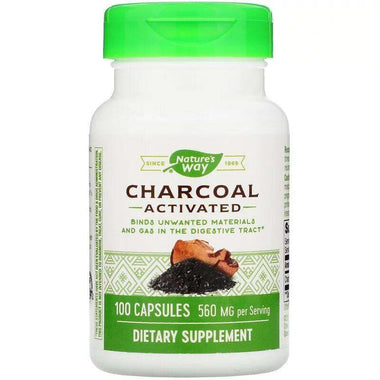
Nature's Way Charcoal Activated 560 mg, 100 capsules — £22.84
This is the only ingredient in the category with an authorised health claim in GB and the EU: activated charcoal contributes to reducing excessive flatulence after eating. Authorisation required a body of evidence most supplement ingredients cannot produce, which is why it tops this list.
It works physically rather than biologically — its porous structure adsorbs gases produced during fermentation, so they are carried out rather than distending the bowel.
The dose and timing are the part people get wrong. The authorised claim specifies 1 g at least 30 minutes before a meal and a further 1 g shortly after. Taking one capsule occasionally after dinner is well below that. At 560 mg per capsule, 1 g means roughly two capsules per dose.
Pros
|
Cons
|
Important: activated charcoal binds medicines as readily as it binds gas. It can reduce absorption of the oral contraceptive pill and many other drugs. Leave at least three hours between charcoal and any medication, use additional contraceptive precautions if advised by your pharmacist, and do not take it continuously — it is for occasional use around trigger meals.
Where to buy: Welzo activated charcoal range. Free UK delivery over £50.

Swanson L. plantarum, 30 delayed-release capsules — £5.93
Lactobacillus plantarum is among the more studied species for bloating and gas, and at roughly 20p a day this is the cheapest reasonable trial available. Delayed-release capsules help the bacteria survive stomach acid.
Remember that probiotic effects are strain-specific — evidence for one L. plantarum strain does not automatically transfer to another. See Lactobacillus plantarum and how to choose a probiotic.
Pros
|
Cons
|
Where to buy: Welzo probiotics range.
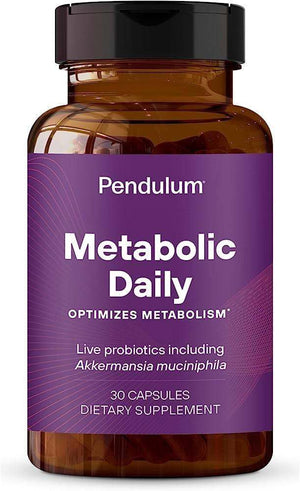
Pendulum Metabolic Daily, 30 capsules — £62.38 (from £79.00, 78 reviews)
A multi-strain formulation including Akkermansia muciniphila, aimed at metabolic outcomes rather than digestive symptoms. It is on the list because people with stubborn gas often end up here, and it deserves an honest placement: at over £60 a month it is the most expensive option and the least targeted at wind specifically.
Consider it if you have already worked through your triggers, want a longer-term microbiome approach, and the budget is not a constraint. See our Pendulum review.
Pros
|
Cons
|
For a symptom this trigger-dependent, identifying the cause beats buying a general product. Use this before you spend anything.
| If your gas follows… | Likely cause | What to try |
|---|---|---|
| Milk, cheese, ice cream | Lactose malabsorption | Lactase enzyme taken with dairy |
| Beans, lentils, sprouts | Raffinose fermentation | Alpha-galactosidase enzyme; soak and rinse pulses |
| Sugar-free gum or mints | Sugar alcohols | Remove them — no supplement needed |
| Fizzy drinks, eating fast | Swallowed air | Behaviour change; simethicone for acute relief |
| Most meals, with pain | Possible IBS | Peppermint oil; supervised low FODMAP |
| A recent gut infection | Post-infectious IBS | See stomach bug recovery |
| Antibiotics | Disrupted microbiota | See probiotics after antibiotics |
| Bread, pasta, onions, garlic | Fructans | Trial reduction; rule out coeliac disease first |
| Bloating and wind with diarrhoea | Possible bacterial overgrowth | Get a SIBO breath test — see SIBO |
Take advice from your GP or pharmacist before using these if you
These are food supplements, not medicines, and none may be marketed as treating any condition. See probiotics safety and probiotic side effects.
See your GP — or seek urgent care — if you have:
See when to see a GP and bowel cancer screening.
For flatulence specifically, activated charcoal has the strongest standing — it holds the only authorised health claim in GB and the EU for reducing excessive flatulence after eating, at 1 g before and 1 g after a meal. For gas driven by dairy, a lactase enzyme is more targeted; for pain-predominant symptoms, enteric-coated peppermint oil often does more.
The authorised claim specifies 1 g at least 30 minutes before a meal and a further 1 g shortly after. At 560 mg per capsule that is roughly two capsules per dose. Leave three hours between charcoal and any medication, and don't take it continuously.
It can reduce absorption of the oral contraceptive pill and other medicines. Leave at least three hours between them and speak to your pharmacist about whether additional contraceptive precautions are needed.
Introducing bacteria changes fermentation patterns, and transient wind or bloating in the first week or two is common. It usually settles. Give any probiotic at least four weeks before judging.
Usually minutes to a few hours. Gentle walking, lying on your left side and heat often help. Anything persisting for days with pain warrants medical assessment rather than another supplement.
Partly. Enteric-coated peppermint oil and a professionally supervised low FODMAP diet have the better evidence for IBS symptoms. Anti-gas products help less than expected because much of the discomfort comes from gut sensitivity rather than gas volume.
Only when matched to the trigger. Lactase for dairy and alpha-galactosidase for beans and pulses are targeted and sensible. Broad-spectrum enzyme blends taken with every meal have much weaker evidence.
Usually not, but it can accompany coeliac disease, inflammatory bowel disease or bacterial overgrowth. New symptoms after 50, or any red flags such as bleeding, weight loss or persistent bloating, should always be assessed.
Only if there is a clinical reason — typically persistent bloating and wind with diarrhoea, or symptoms after gut surgery. It answers a defined question, unlike a general microbiome test.
Beans, lentils, cabbage, sprouts, broccoli, onions, garlic, wheat, dairy if lactose intolerant, fizzy drinks, and sugar-free products containing sorbitol, xylitol or mannitol.
No. It is intended for occasional use around trigger meals. Continuous use risks reducing absorption of nutrients and medicines, and may cause constipation.
Eat more slowly and stop fizzy drinks, straws and chewing gum. Swallowed air is the commonest cause of upper abdominal trapped wind, and no supplement addresses it.
Medical disclaimer: This article is for general information and education only and does not constitute medical advice, diagnosis or treatment. Welzo sells the products ranked above; this conflict of interest is disclosed. Food supplements are not medicines, are not a substitute for a varied and balanced diet, and are not intended to diagnose, treat, cure or prevent any disease. "Probiotic" is an unauthorised health claim in GB and the EU. Activated charcoal adsorbs medicines and can reduce the effectiveness of the oral contraceptive pill and other drugs — leave at least three hours between doses and speak to your pharmacist. It is not intended for continuous long-term use and causes harmless black stools. Live bacteria supplements require caution if you are immunocompromised. Do not remove gluten from your diet before coeliac testing. Persistent digestive symptoms, rectal bleeding, unexplained weight loss, persistent bloating or a change in bowel habit lasting three weeks or more require medical assessment. Prices were correct at the time of writing and may change.
About the author
Dr Zeeshan Afzal (MBBS) is a practising medical doctor and Welzo's Medical Content Lead. He writes and reviews Welzo's health content to ensure it is accurate, evidence-based and aligned with current UK clinical guidance. Read our editorial policy.
 Évalué Excellent par 28,951+ avis
 Garantie de remboursement à 100%
Notre garantie de rétroaction garantit que vous recevez vos articles ou obtenez un remboursement complet.