
Best Supplements for Acid Reflux and Heartburn UK
Posted on:
Aug 05, 2026
Authored by


Written and medically reviewed by Dr Zeeshan Afzal (MBBS) — Medical Doctor & Medical Content Lead, Welzo
Evidence-based · Matched to your cause · Aligned with NHS & NICE guidance
Last updated: January 2026 · Reading time: ~16 minutes
Acid reflux and heartburn are among the most common complaints in digestive health — that burning feeling behind the breastbone, an acidic or sour taste at the back of the throat, or a cough and hoarseness that won't settle. It happens when stomach acid travels back up into the oesophagus, and while it's rarely dangerous in the short term, it can be genuinely uncomfortable and disruptive.
Gut health supplements won't replace the basics — losing excess weight, eating earlier in the evening, raising the head of the bed and cutting known triggers do the heavy lifting — and they aren't a substitute for medicines like antacids or proton pump inhibitors (PPIs) where those are needed. But the right supplement can soothe an irritated oesophagus, help protect and strengthen the digestive lining, and support more comfortable digestion alongside those steps. Below we rank and review eight of the best, starting with the one we rate as the best overall foundation.
The short version: Build a resilient digestive lining first with our top pick, Welzo Ultra Purity L-Glutamine, then layer in a targeted option — an alginate raft for fast on-the-spot relief, zinc-carnosine for stomach-lining protection, and soothing demulcents like DGL and slippery elm. Put diet and lifestyle first, don't stop prescribed medicines without advice, and see a GP for persistent symptoms or any red-flag signs. Explore Welzo's gut health range.
| Rank | Supplement | Best for | Guide price |
|---|---|---|---|
| 1 | Welzo Ultra Purity L-Glutamine | Best overall — digestive-lining foundation | ~£18.99 |
| 2 | Alginate raft (e.g. Gaviscon-type) | Fast, on-the-spot relief | See listing |
| 3 | Zinc-carnosine (Swanson PepZinGI) | Stomach-lining protection | ~£17.70 |
| 4 | Deglycyrrhizinated licorice (DGL) | Soothing before meals | See listing |
| 5 | Slippery elm | Demulcent, coats & soothes | See listing |
| 6 | Melatonin | Night-time reflux | Prescription-only in the UK |
| 7 | Chamomile | Calming, evening use | See range |
| 8 | Ginger | Reflux with nausea/fullness | See range |

Table of contents
Reflux happens when the ring of muscle at the bottom of the oesophagus — the lower oesophageal sphincter — relaxes or weakens, letting stomach contents flow back up. "Heartburn" is the burning sensation this produces; when it's frequent or troublesome, doctors call it gastro-oesophageal reflux disease (GORD/GERD). Common contributors include:
Because reflux is partly a mechanical and lifestyle problem, no supplement "cures" it. What supplements can do is soothe the irritated lining, form a physical barrier against acid, and support the resilience of the tissues that acid exposure irritates. That's why our list opens with a lining-support foundation and then moves to fast-acting and soothing options. For context on the tissue involved, see our guide to gut barrier function.
We prioritised supplements that either support the digestive lining that reflux irritates, or have a recognised mechanism and human use for reflux and heartburn — favouring options with a physical or mucosal-protective action (alginates, zinc-carnosine, demulcents) over those relying on tradition alone. We then looked for reputable, third-party-tested UK products with clean formulations and transparent dosing, and matched each to the symptom it actually addresses. Throughout, we've been clear that lifestyle and, where needed, medicines come first — supplements are complementary support, not a replacement for medical treatment.
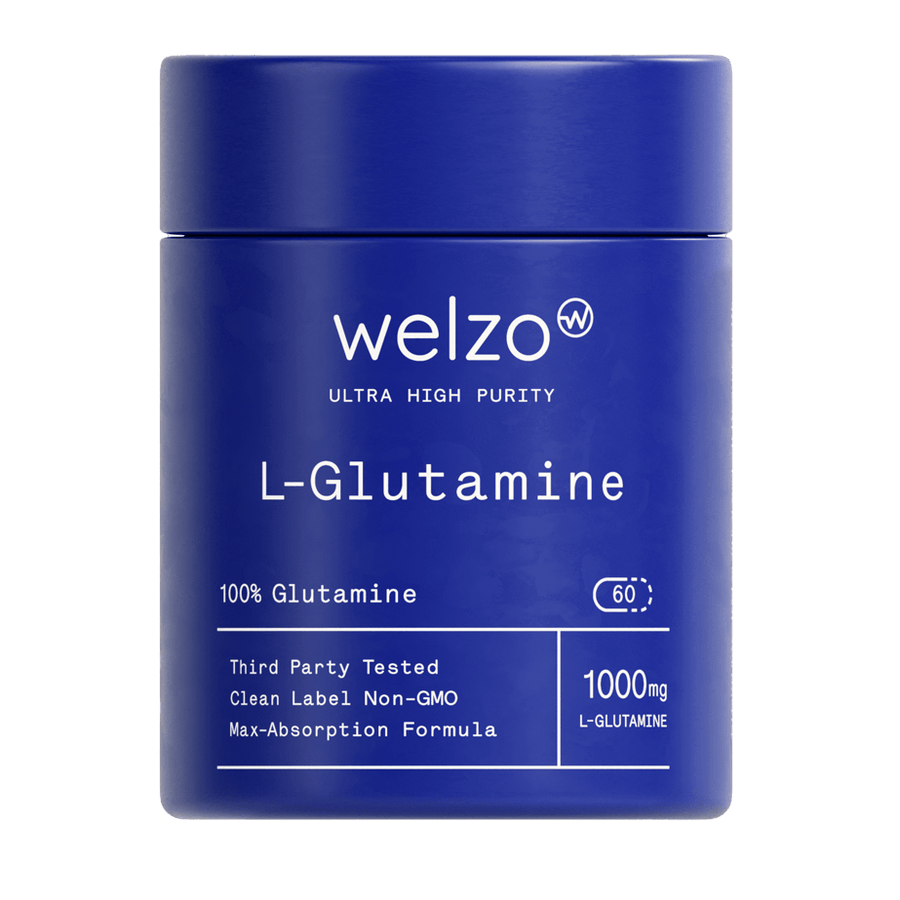
L-Glutamine takes the top spot because it works on the foundation that reflux irritates: the digestive lining itself. Glutamine is the most abundant amino acid in the body and the primary fuel for the cells that line the gut. Those cells turn over rapidly and depend on a steady glutamine supply to maintain and repair the mucosal barrier — the same barrier that has to withstand and recover from acid exposure. When you support the lining's own building blocks, you support the tissue's resilience, and that makes L-Glutamine the most logical daily foundation for anyone managing reflux and heartburn. Strengthen the terrain, and the soothing and fast-acting options below have a healthier surface to work on.
Welzo Ultra Purity L-Glutamine is built for exactly this role. It delivers a clean 1000mg of pure L-Glutamine per serving with no fillers, binders or bulking agents — just glutamine in a capsule shell. It's a Welzo Ultra Purity formula: GMP-manufactured, third-party tested, and transparently dosed with no proprietary blends, so you know exactly what you're taking. It sits squarely in Welzo's gut health range and is one of the most widely used amino acids for daily digestive-wellness routines. For a foundation you build a routine around, it's the one we'd reach for first.
Why it's our #1: It's the only pick here that feeds the gut lining directly — supporting the mucosal tissue that acid irritates — which makes it the smartest long-term foundation for reflux, and a natural base to layer the symptom-specific options below on top of.
Where to buy & price: Available at Welzo for £18.99 (60 capsules / 30 servings): Welzo Ultra Purity L-Glutamine. Take two capsules daily, consistently.
Product reviews: Customers rate the Ultra Purity range for its clean, transparent single-ingredient formulation and premium quality, and value glutamine as an easy daily addition to a gut-support routine.
| Pros | Cons |
|---|---|
| Feeds the gut lining — the tissue reflux irritates Clean 1000mg per serving, no fillers or blends GMP-manufactured & third-party tested Doubles as broad daily gut & recovery support |
A daily foundation, not an instant heartburn fix Best paired with lifestyle changes |
Alginates are the strongest-evidenced over-the-counter option for reflux symptoms. Derived from seaweed, they react with stomach acid to form a floating gel "raft" that sits on top of the stomach contents, physically blocking acid from splashing up into the oesophagus. Many alginate products also contain an antacid to neutralise acid on contact, giving quick relief after meals and at bedtime. UK guidance recognises antacids and alginates as a sensible first step for the short-term relief of heartburn and reflux (NICE CKS: proven GORD).
Why we like it: It's fast, well-tolerated and works mechanically rather than systemically, making it an ideal "as-needed" partner to a daily lining-support foundation. Taken after meals and before bed, it targets the moments reflux is most likely.
Where to buy & price: Alginate raft products are widely available over the counter; check the listing for current price. Browse Welzo's stomach & bowel relief range.
| Pros | Cons |
|---|---|
| Strong evidence for symptom relief Fast-acting physical barrier Well tolerated; good after meals & at night |
Short-lived, symptomatic relief only Doesn't address the underlying cause |
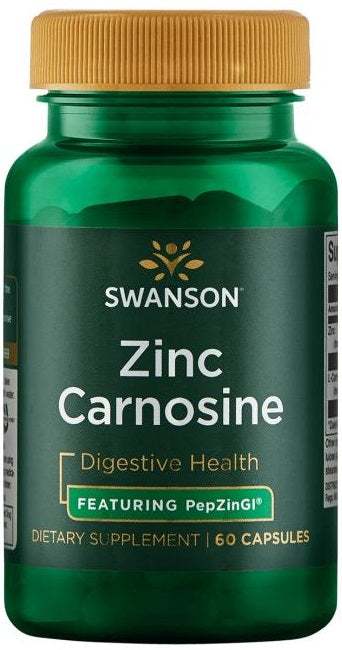
Zinc-carnosine is a chelated compound of zinc and L-carnosine that binds to the stomach and intestinal lining, where it's studied for supporting mucosal integrity and the stomach's natural protective mucus. It's a popular choice for people whose reflux or heartburn overlaps with an irritated stomach lining — for example alongside gastritis or after anti-inflammatory use. Learn more in our guide to zinc-carnosine.
Why we like it: Swanson Zinc Carnosine uses the patented PepZinGI form, delivering 8mg zinc and 29.5mg L-carnosine per capsule. It's third-party tested and designed to stick where it's needed, making it a sensible daily lining-support option to pair with the foundation.
Where to buy & price: Available at Welzo for £17.70 (60 capsules): Swanson Zinc Carnosine. Take with a little food to avoid nausea.
Product reviews: With 60+ reviews, customers rate it for gentle daily digestive support and good tolerability; the common tip is to take it with food.
| Pros | Cons |
|---|---|
| Targets the stomach lining directly Patented, well-studied PepZinGI form Third-party tested; easy daily dose |
Best taken with food to avoid nausea Supports the lining rather than relieving symptoms instantly |
DGL is licorice root with most of the glycyrrhizin removed — the compound that can raise blood pressure — leaving a soothing extract traditionally used to support the stomach and oesophageal lining. It's thought to encourage the protective mucus that shields tissue from acid, and is usually taken as a chewable tablet before meals. Evidence is modest, but it's a long-standing, generally well-tolerated option for people wanting a gentle soothing supplement.
Where to buy & price: DGL chewables are available from digestive-support ranges; check the listing for current price.
| Pros | Cons |
|---|---|
| Traditional soothing support for the lining Glycyrrhizin removed, so gentler on blood pressure Convenient chewable before meals |
Modest evidence Choose DGL specifically — not standard licorice |
Slippery elm is a demulcent: mixed with water it forms a slick mucilage that coats the throat and oesophagus, which many people find soothing for the raw, burning sensation of reflux. It's a gentle, traditional remedy best taken as a drink or lozenge after meals or when symptoms flare. As with other soothing botanicals, the clinical evidence is limited, but it's low-risk and pleasant. See our guide to slippery elm.
Where to buy & price: Available as powder, capsules or lozenges; check the listing for current price.
| Pros | Cons |
|---|---|
| Coats and soothes an irritated oesophagus Gentle and well tolerated Flexible formats (drink, capsule, lozenge) |
Limited clinical evidence May affect timing/absorption of other medicines — separate doses |
Melatonin is best known for sleep, but it's also present in the gut and has been studied for a role in oesophageal protection and sphincter tone, with some interest in night-time reflux specifically. It may suit people whose main problem is heartburn that disrupts sleep. In the UK melatonin is a prescription-only medicine, so it should only be used under medical advice rather than sourced as a general supplement — discuss it with your GP if night-time reflux is your main issue.
| Pros | Cons |
|---|---|
| Some evidence for night-time reflux May help sleep disrupted by heartburn |
Prescription-only in the UK — use under medical advice Evidence still emerging |
Chamomile is a mild, calming herb traditionally taken as a tea to ease digestion and support relaxation before bed. It won't neutralise acid, but for people whose reflux is worsened by stress or who want a gentle evening ritual, it's a pleasant, low-risk addition. Avoid it if you're allergic to plants in the daisy family, and check for interactions if you take blood thinners.
Where to buy & price: Widely available as tea or capsules; browse the Welzo gut health range.
| Pros | Cons |
|---|---|
| Calming, pleasant evening ritual Very low risk for most people |
Doesn't directly reduce acid Avoid with daisy-family allergy; check blood-thinner interactions |
Ginger is a mild prokinetic that can help the stomach empty and ease nausea, which makes it useful when reflux comes with heaviness or queasiness after meals. Use modest amounts, as very large doses can occasionally worsen heartburn in some people. It's a safe, inexpensive option to trial as tea, capsules or fresh root.
Where to buy & price: Browse ginger and digestive-support options across the Welzo gut health range.
| Pros | Cons |
|---|---|
| Eases nausea and fullness Safe and inexpensive Flexible formats |
Large doses may worsen heartburn in some Best for reflux-with-nausea, not acid itself |
Not everything marketed for "digestion" suits reflux. A few need a clear caution:
Betaine HCl deliberately adds acid to the stomach and is promoted for suspected low stomach acid. It is not a reflux remedy and can make heartburn worse — it should never be used if you have reflux, gastritis or an ulcer, and low stomach acid is best assessed by a clinician rather than self-treated.
Peppermint oil, useful for IBS-type bloating, can relax the lower oesophageal sphincter and aggravate heartburn in some people, so it's not a first choice for reflux.
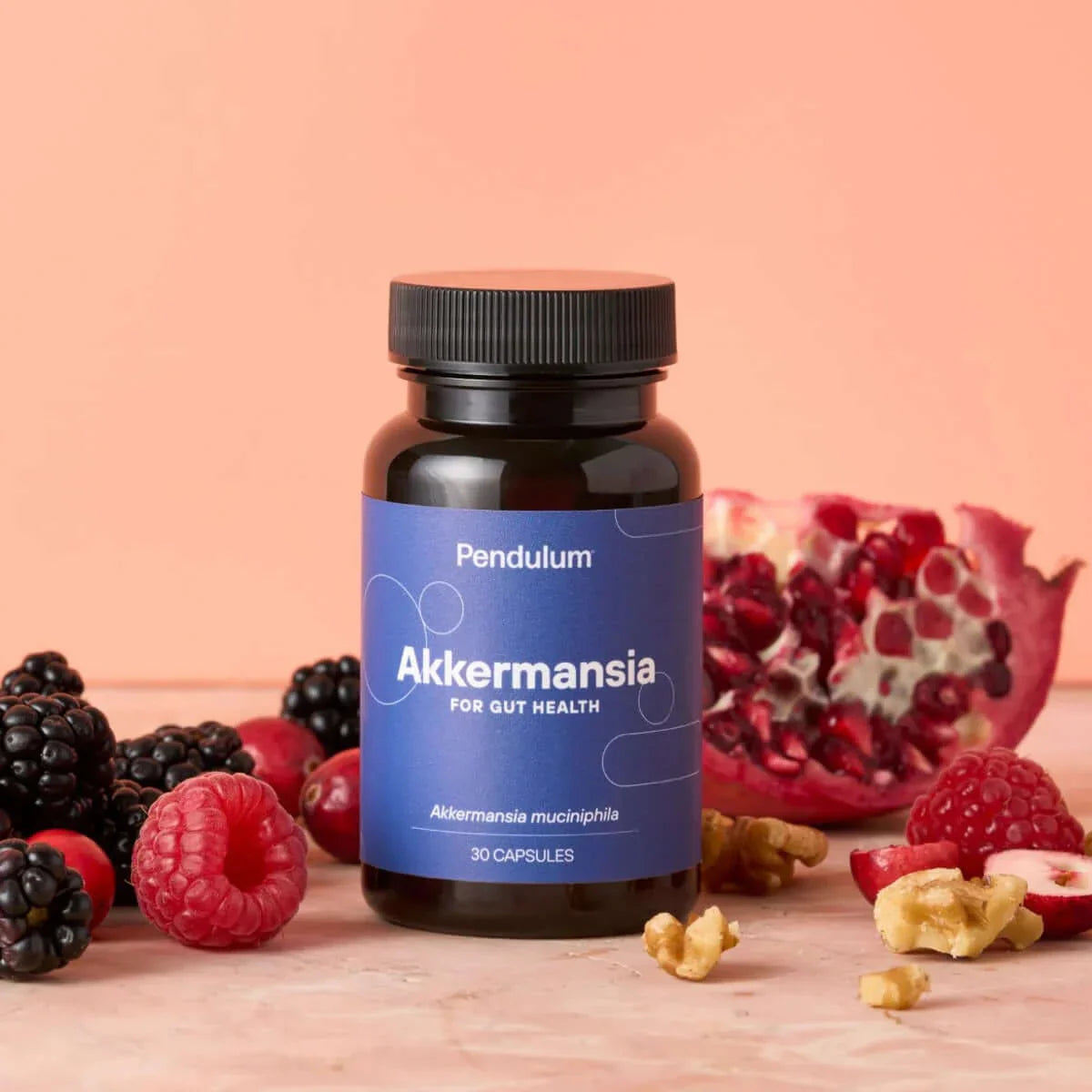
The Welzo Ultra Purity pillar range — Akkermansia, Citrus Pectin, Berberine and TUDCA — supports general gut, microbiome, metabolic and bile health, and you'll find the full line in Welzo's gut health and probiotics collections. These are worthwhile for broader digestive wellness but are not treatments for acid reflux, and shouldn't be chosen specifically to relieve heartburn. If your main issue is wind and distension rather than acid, see our guide to the best supplements for bloating, and for the bigger picture, our overview of gut health in the UK.
| Supplement | Best for | Speed |
|---|---|---|
| Welzo L-Glutamine | Digestive-lining foundation | Builds over weeks |
| Alginate raft | On-the-spot symptom relief | Minutes |
| Zinc-carnosine | Stomach-lining protection | Weeks |
| DGL licorice | Soothing before meals | Days–weeks |
| Slippery elm | Coating & soothing | Minutes (soothing) |
| Melatonin | Night-time reflux | Weeks (medical advice) |
| Chamomile | Calming, evenings | Same day (mild) |
| Ginger | Reflux with nausea | Hours |
No supplement outperforms the fundamentals, and NHS guidance puts lifestyle first (NHS: heartburn and acid reflux). Eating smaller meals and leaving three to four hours before lying down reduces night-time reflux; losing excess weight lowers pressure on the stomach; and raising the head of the bed by 10–20cm helps gravity keep acid down. Cutting personal triggers — often coffee, alcohol, chocolate, fatty or spicy foods and large late meals — frequently does more than any capsule, and stopping smoking strengthens the sphincter.
Supplements then become the finishing touch on solid foundations rather than a substitute for them. A daily lining-support foundation like L-Glutamine pairs naturally with these habits, while an alginate handles the occasional flare. If you're relying on antacids most days despite lifestyle changes, that's a sign to see your GP rather than simply adding more supplements.
It's important to be clear about where supplements sit alongside medicines. Antacids and alginates give fast, short-term relief. Proton pump inhibitors (PPIs) such as omeprazole reduce acid production and are the mainstay of medical treatment for troublesome or persistent reflux — see our overview of omeprazole and its long-term effects. Supplements can complement these approaches by soothing and supporting the lining, but they don't replace them.
If you're already taking a PPI or other prescribed medicine, don't stop it or swap it for a supplement without medical advice — stopping suddenly can cause a rebound in acid. Instead, use supplements as add-on support and review your treatment with your GP or pharmacist, especially if symptoms persist or you've been on a PPI long-term.
Occasional heartburn is common and usually manageable. But some symptoms need prompt medical assessment, because reflux can occasionally signal something more serious, and long-standing reflux can damage the oesophagus.
See a GP — or seek urgent help — if you have:
Chest pain can also be a sign of a heart problem — if in doubt, seek urgent medical help. See NHS: heartburn and acid reflux and NICE guidance. Our guide on when to see a GP about stomach symptoms may also help.
For ongoing reflux, the best first move is a digestive-lining foundation such as Welzo Ultra Purity L-Glutamine, because glutamine fuels the cells that line and repair the gut — the tissue acid irritates. From there, add a fast-acting alginate raft for on-the-spot relief and, if the stomach lining is involved, zinc-carnosine. Match the supplement to your symptom, and put lifestyle changes first.
Because it works on the foundation reflux irritates. L-Glutamine is the primary fuel for the rapidly renewing cells that line the gut, so it supports the mucosal barrier that has to withstand and recover from acid. Strengthening that lining is the most logical long-term base for managing reflux, and it complements the fast-acting and soothing options rather than competing with them.
For quick relief, an alginate raft forms a barrier that stops acid splashing up, and antacids neutralise acid on contact — both act within minutes. Soothing demulcents like slippery elm can ease the burning sensation too. These help symptoms in the moment but don't address the underlying cause, so pair them with lifestyle changes.
L-Glutamine supports the gut lining rather than reducing acid directly. As the main fuel for the cells lining the digestive tract, it helps maintain and repair the mucosal barrier that acid irritates, which is why it's a popular daily foundation for people managing reflux. It works best over weeks and alongside lifestyle measures, not as an instant fix.
Zinc-carnosine is studied for supporting the stomach and intestinal lining and its protective mucus, so it can suit people whose reflux overlaps with an irritated stomach lining, such as gastritis. It's a lining-support supplement rather than a fast symptom reliever, and is best taken with a little food to avoid nausea. Give it several weeks of consistent use.
No. Supplements can complement treatment by soothing and supporting the lining, but they don't replace antacids, alginates or PPIs where those are needed. Never stop a prescribed medicine or swap it for a supplement without medical advice, as stopping a PPI suddenly can cause rebound acid. Review your treatment with your GP or pharmacist.
Yes. Betaine HCl adds acid and can worsen heartburn, so avoid it if you have reflux, gastritis or an ulcer. Peppermint oil can relax the lower oesophageal sphincter and aggravate reflux in some people. And general gut products like probiotics or fibre aren't reflux treatments, even though they support broader digestive health.
Probiotics support the wider microbiome and general digestive health rather than acting on reflux directly, so they aren't a reliable heartburn remedy. Some people take them for overall gut wellness alongside reflux management, but they shouldn't be your main strategy for heartburn. Lifestyle changes, alginates and lining support have a clearer role.
It depends on the type. Alginates and antacids act within minutes, while lining-support options like L-Glutamine and zinc-carnosine build over several weeks of consistent daily use. Soothing demulcents work in the moment for the burning sensation. Give slower-acting supplements four to eight weeks, and see a doctor if symptoms persist.
See a GP if heartburn occurs most days for three weeks or more, doesn't improve with pharmacy treatment, or comes with difficulty swallowing, weight loss, persistent vomiting or signs of bleeding such as black stools. New symptoms over 55 also warrant assessment. Chest pain can signal a heart problem, so seek urgent help if in doubt.
Medical disclaimer: This article is for general information and education only and does not constitute medical advice, diagnosis or treatment. It should not replace consultation with a qualified healthcare professional. Supplements are not intended to diagnose, treat, cure or prevent any disease. Do not stop or change prescribed medicines without medical advice. Persistent reflux, or any of the warning symptoms described above, should be assessed by a doctor. Always seek advice before starting new supplements, particularly if you are pregnant, breastfeeding, taking medication or have an existing condition.
About the author
Dr Zeeshan Afzal (MBBS) is a practising medical doctor and Welzo's Medical Content Lead. He writes and reviews Welzo's health content to ensure it is accurate, evidence-based and aligned with current UK clinical guidance, translating complex research into practical advice patients can trust.
 Ocijenjeno izvrsno s 28,951+ recenzija
 100% jamstvo povratka novca
Naše jamstvo povrata novca osigurava da primite svoje predmete ili dobijete potpuni povrat novca.