

L-Glutamine vs Collagen for Gut Lining Repair
Posted on:
Aug 05, 2026
Autor


Written and medically reviewed by Dr Zeeshan Afzal (MBBS) — Medical Doctor & Medical Content Lead, Welzo
Evidence-based · UK-focused
Last updated: August 2026 · Pricing verified: August 2026 · Reading time: ~14 minutes
L-glutamine and collagen are the two products people reach for most when they want to do something about their gut lining — and between them they account for a large share of the questions arriving through our digestive health guides and a large share of UK gut health supplement sales. Both are marketed with near-identical language about sealing, soothing and repairing the intestinal barrier.
Only one of them has a proper human trial behind it for gut outcomes. And the more useful finding, once you look at the numbers, is that most people taking that one are taking a fraction of the dose that produced the result.
This article compares the two on mechanism, evidence quality, dose, cost and safety — including the parts that are unflattering to products we sell.
The short answer
Table of contents
| L-Glutamine | Collagen peptides | |
|---|---|---|
| What it is | A single amino acid | A hydrolysed protein (many amino acids) |
| Main gut mechanism | Primary fuel for enterocytes; supports tight junction proteins | Supplies glycine and proline for connective tissue |
| Human RCT for gut outcomes | Yes — post-infectious IBS-D | No equivalent trial |
| Strongest evidence overall | Gut and clinical nutrition | Skin and joints |
| Trial dose | 15 g/day (5 g three times daily) | ~10–20 g/day in gut-related studies |
| Practical format | Powder for trial doses; capsules for low doses | Powder — capsules impractical at these amounts |
| Suitable for vegans | Yes (fermentation-derived) | No — bovine, porcine or marine |
| Also gives you | Little else | Protein, plus skin and joint benefits |
The phrase needs unpicking before either product can be judged against it.
Your intestinal lining is a single layer of cells joined by tight junction proteins — claudins, occludin, ZO-1. That layer is selectively permeable by design: it must let nutrients through while keeping bacteria and undigested material out. Those cells turn over roughly every three to five days, which is one of the fastest renewal rates in the body and the reason nutrient supply to them matters.
Increased intestinal permeability is real. It can be measured in research using tests such as the urinary lactulose/mannitol ratio, and it is documented in coeliac disease, inflammatory bowel disease, and a subset of people with diarrhoea-predominant IBS.
Glutamine is the most abundant free amino acid in the body, and it is the preferred fuel of enterocytes — the cells lining the small intestine. They are among the most metabolically demanding cells you have, and they run substantially on glutamine rather than glucose.
Laboratory work supports the mechanism directly: depriving intestinal cell lines of glutamine reduces expression of claudin-1, occludin and ZO-1 — the proteins that hold the barrier together — and restoring glutamine restores them. It is classed as conditionally essential, meaning your body normally makes enough, but demand can outstrip supply during illness, injury, surgery or serious physiological stress.
The key evidence is a double-blind, placebo-controlled randomised trial published in Gut in 2019.
That is an unusually large effect size for any gut supplement, and it is the reason glutamine is taken seriously in a category where most products have nothing comparable.
Note carefully who was studied. Participants had a specific, confirmed problem: post-infectious IBS-D with measured hyperpermeability. That is not the same as general bloating, or a vague sense that one's gut is "leaky".
Later work in mixed-type IBS found more modest effects, suggesting benefit concentrates in the post-infectious and diarrhoea-predominant groups where increased permeability is the dominant mechanism. Glutamine also has an established evidence base in clinical nutrition — burns, surgical recovery, mucositis during cancer treatment — which is a different context from over-the-counter use in an otherwise well person.
This is the most practically useful section of the article, and it applies to almost every glutamine product on the UK market including our own.
The trial dose was 15 g per day. A typical capsule product provides 500 mg per capsule, with a two-capsule serving giving 1 g. Our own Welzo Ultra Purity L-Glutamine delivers 1000 mg per daily serving.
To reach the studied dose from 500 mg capsules you would need 30 capsules a day. That is neither practical nor what anyone intends.
A further complication: at least one meta-analysis has suggested that statistically significant improvements in measured intestinal permeability required doses above those used even in the IBS trial. The commonly repeated "5 g a day" recommendation that appears across supplement guides sits below every dose that has produced a documented effect. Nobody selling glutamine has an incentive to point that out.
Collagen peptides are hydrolysed proteins rich in glycine and proline. Types I and III form part of the extracellular matrix supporting the intestinal wall, and glycine has documented anti-inflammatory activity. The reasoning is coherent: supply the building blocks, support the structure.
Here the picture is much thinner than the marketing, and it should be said directly.
None of this makes collagen useless. Its evidence for skin elasticity and hydration, and for joint comfort, is considerably stronger — meta-analysed, with multiple trials. If those are among your goals, collagen earns its place on that basis. It simply has not yet demonstrated the gut-specific effect it is most heavily marketed for.
A claim appears constantly in collagen marketing: that it delivers glycine, proline and glutamine, and therefore covers the same ground.
Treat this carefully. Collagen is genuinely rich in glycine and proline — those are its defining amino acids. It is not a concentrated glutamine source. Even at a generous 20 g daily serving, the glutamine you would obtain is a small fraction of the 15 g used in the trial.
If glutamine is the mechanism you are targeting, take glutamine. Using collagen to obtain glutamine is like buying a mixed nut selection for the two brazil nuts.
| Option | Daily dose | Matches trial dose? | Approx. monthly cost |
|---|---|---|---|
| Glutamine capsules | 1 g | No — 1/15th of it | £18.99 |
| Glutamine powder | 15 g | Yes | Varies by brand — check price per gram |
| Collagen peptides powder | 10–20 g | n/a — no established gut dose | Depends on servings per pouch |
The single most useful cost habit in this category is to compare price per gram of active ingredient, not price per tub. Powders almost always win at the doses that matter, and a pouch offering 80 servings will usually beat a smaller tub with a lower headline price.
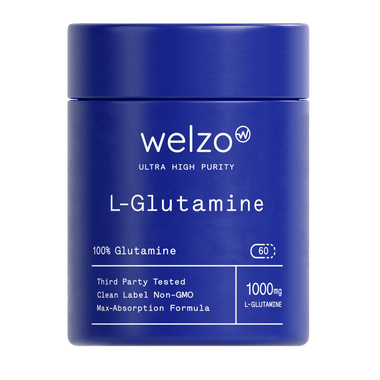
Welzo Ultra Purity L-Glutamine is our own capsule formulation, and it meets the criteria above on purity and transparency: the ingredients list is 100% L-glutamine and a capsule shell. Nothing else — no fillers, binders, bulking agents or flow agents, and no proprietary blend hiding the amount.
| Specification | Welzo Ultra Purity L-Glutamine |
|---|---|
| L-glutamine per serving | 1000 mg (2 capsules) |
| Other ingredients | None — 100% L-glutamine plus capsule shell |
| Pack size | 60 capsules — 30 servings, one month |
| Total glutamine per bottle | 30 g |
| Manufacturing | GMP standards; third-party tested for purity |
| How to take | 2 capsules daily, between meals or after exercise, with water |
| Price | £18.99 for one month · £34.99 for two · £48.99 for three |
| Delivery | Free UK delivery over £50; same-day dispatch on orders before 2pm |
If your goal is a proper therapeutic trial at 15 g daily, buy powder. Per gram it is dramatically cheaper, and a 5 g scoop three times daily is straightforward. Browse the full glutamine range for powder options, and check price per gram rather than price per tub when comparing. Discuss the higher dose with your GP or pharmacist first, particularly if any of the cautions in the safety section apply to you.
Not suitable for children, or during pregnancy or breastfeeding. See the full Welzo Ultra Purity range.
Welzo Ultra Purity Pure Bovine Collagen Peptides Powder is 100% hydrolysed Type I and Type III bovine collagen peptides — a single active ingredient with no flavourings, sweeteners, gums or flow agents — at 80 servings per pouch, which is where the value sits against smaller tubs. It mixes into coffee, tea or a shake.
Buy it for skin, joints and as a convenient protein addition, where the evidence is strongest. Treat any gut benefit as plausible but unproven. See the wider collagen range and our guide to collagen for gut health.
For gut lining specifically, L-glutamine is the better-evidenced choice. It has a mechanism that is directly established, a randomised controlled trial with a large effect, and a defined population in which it worked. Nothing collagen offers for the gut is comparable.
But the dose is the deciding factor, not the product name. A gram of glutamine a day is not the intervention that was tested. Someone taking 15 g of powder has run the trial protocol; someone taking two capsules has not, and should not expect the same outcome.
Collagen is a good product bought for the wrong reason. For skin, joints and daily protein it is well supported and worth the money. As a gut lining intervention it rests on mechanism and animal data, and it is a poor way to obtain glutamine.
And for most people, neither is the highest-yield step. If increased permeability is genuinely the issue, the underlying driver — undiagnosed coeliac disease, inflammatory bowel disease, alcohol intake, NSAID use, a post-infectious picture — matters far more than which powder is in the cupboard.
Yes. There is no interaction between them and both are foods in the ordinary sense.
Whether you should is a different question. Taking both at once means that if things improve you will not know which was responsible, while paying for two products. If both appeal, sequence them: trial glutamine at a proper dose for eight to twelve weeks first, since it has the gut-specific evidence, then add collagen if you also want the skin and joint effects.
The barrier is influenced by considerably more than amino acid supply.
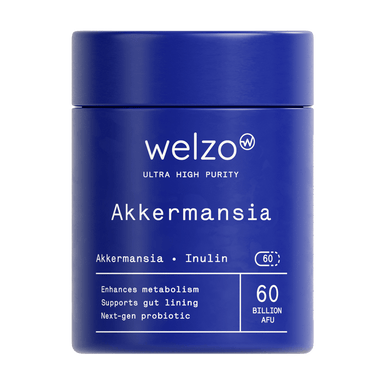
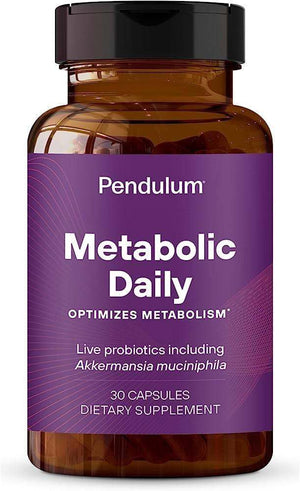
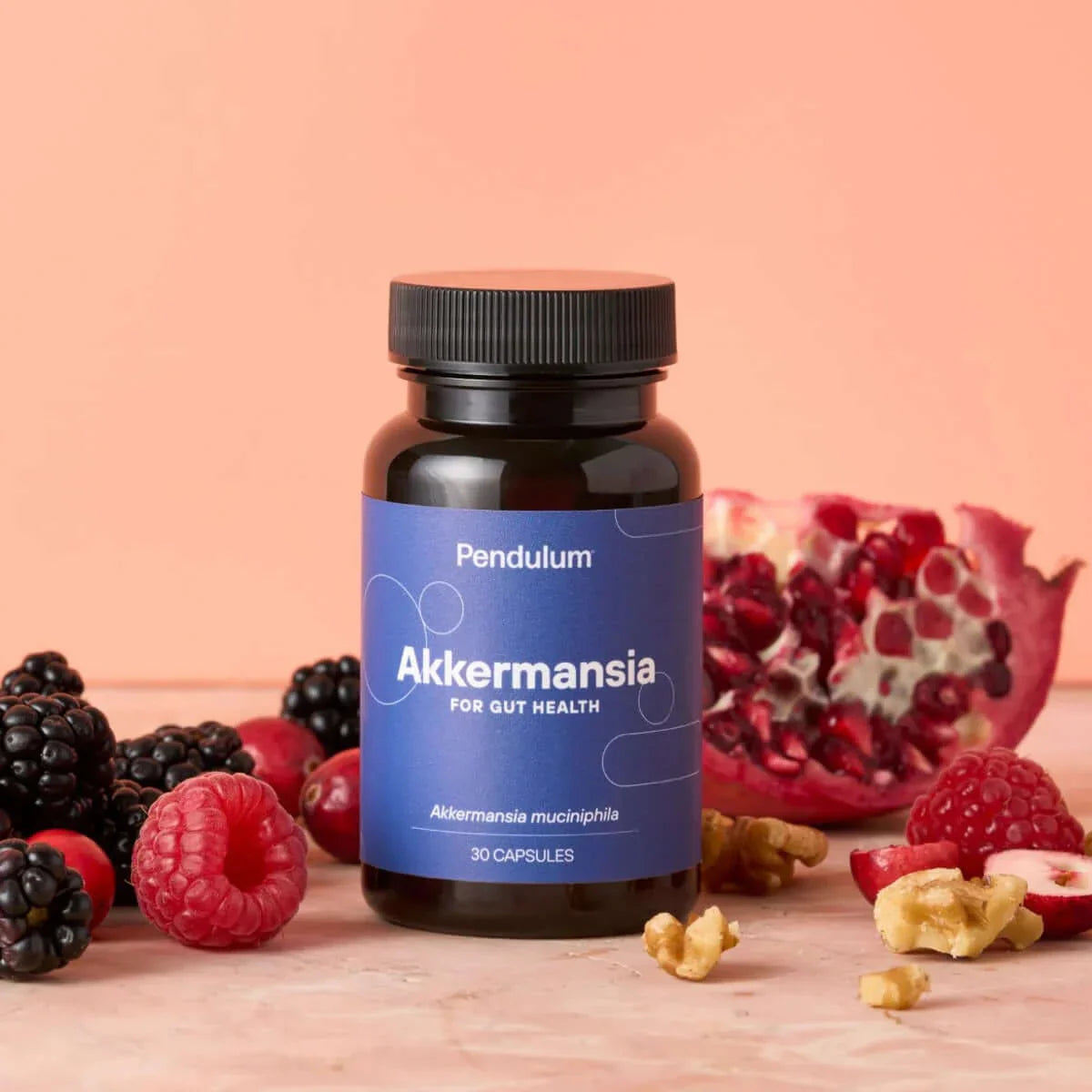
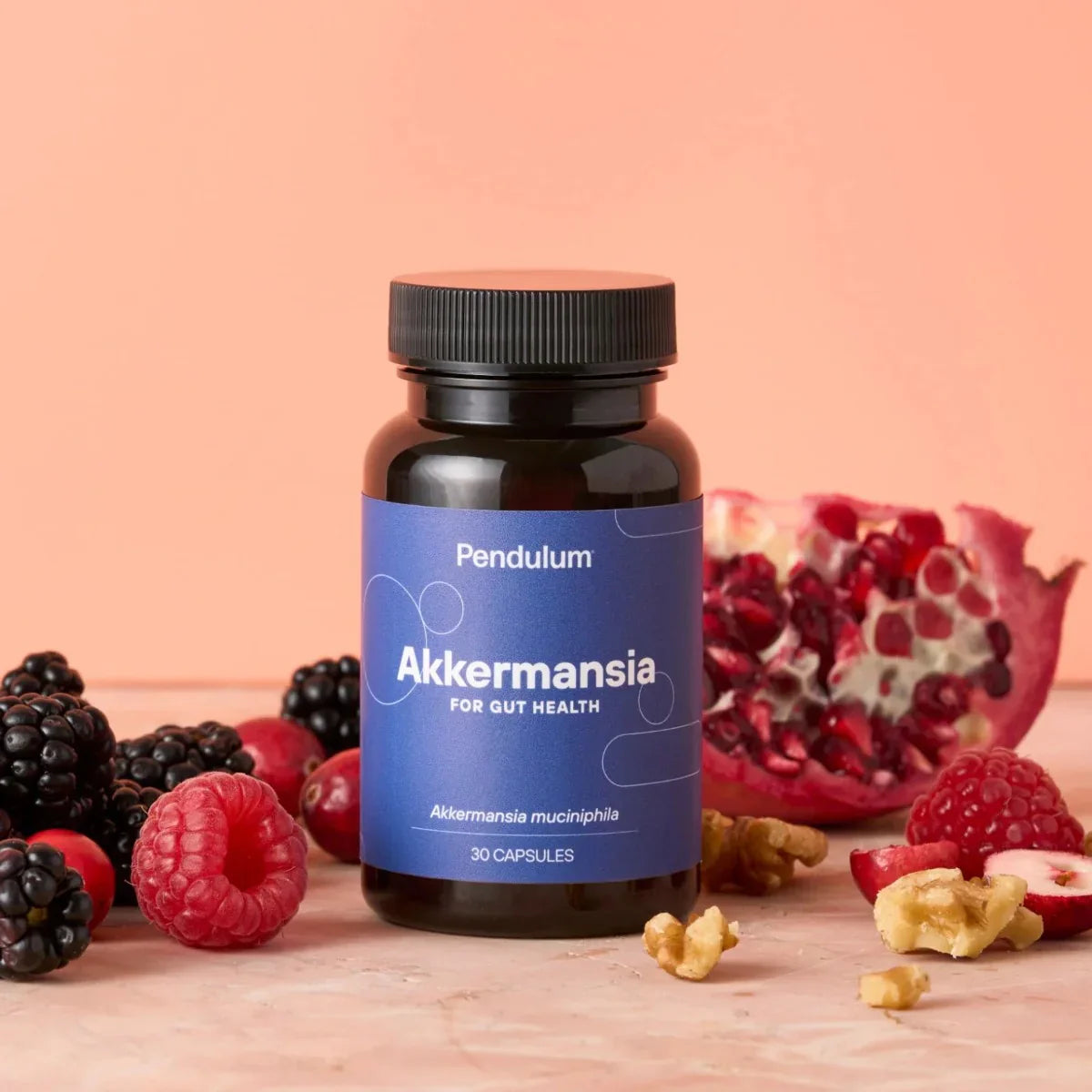
Akkermansia muciniphila lives in the mucus layer sitting above the epithelium and is closely associated with barrier integrity — a different and arguably more upstream target than feeding the cells themselves. Welzo Ultra Purity Akkermansia from £21.99 provides 60 billion AFU. Note it also contains 700 mg berberine per serving; check berberine interactions against any prescription. See gut barrier function.
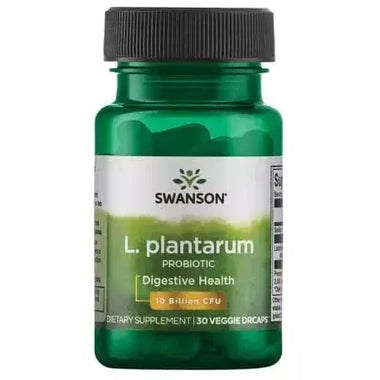
Swanson L. plantarum at £5.93 is around 20p a day. See how to choose a probiotic.
Beyond supplements, the evidence points firmly at fermentable fibre. Short-chain fatty acids — particularly butyrate, produced when gut bacteria ferment fibre — are the primary fuel for colonocytes, exactly as glutamine is for small intestinal cells. You can supplement it directly (see butyrate supplements), but feeding the bacteria that make it is cheaper and better evidenced: increasing fibre, 30 plants a week, resistant starch and polyphenols.
Also worth reviewing: alcohol intake and regular NSAID use, both of which affect the gut lining. See ibuprofen and stomach damage and our comparison of zinc carnosine vs slippery elm.
Both are generally well tolerated, but "it's just an amino acid" is not a safety argument, and glutamine in particular deserves more caution than it usually receives.
Take medical advice before using L-glutamine if you
For collagen
Neither product is a treatment for any condition, and neither may be marketed as one. Food supplements are not a substitute for a varied diet.
Do not remove gluten from your diet before coeliac testing — doing so invalidates the result. Coeliac disease is a genuine cause of intestinal damage, it is common, and it is frequently undiagnosed in people who assume they simply have a sensitive gut. See coeliac testing.
See your GP — or seek urgent care — if you have:
Symptoms attributed to a "leaky gut" frequently turn out to have a specific, treatable cause. See when to see a GP and bowel cancer screening.
L-glutamine has substantially better gut-specific evidence, including a randomised controlled trial in post-infectious IBS-D showing improved symptoms and reduced intestinal permeability. Collagen's gut evidence is mechanistic and animal-based; its strong human evidence is for skin and joints.
The trial that produced the strongest result used 5 g three times daily — 15 g a day — for eight weeks. Most capsule products deliver 1–2 g, which is far below that. If you want to match the research dose you need powder, and it is worth discussing with a clinician first.
No. Collagen is rich in glycine and proline but is not a concentrated glutamine source. Even a generous 20 g serving provides a small fraction of the 15 g used in the glutamine trial. If glutamine is what you are after, take glutamine.
The glutamine trial ran eight weeks. Allow at least that, ideally eight to twelve weeks, and change one thing at a time so you can interpret the result.
Powder if you want research-level doses — reaching 15 g from 500 mg capsules would mean 30 capsules daily. Capsules are fine for convenience at low daily doses, but they are not equivalent to the studied protocol.
Increased intestinal permeability is real and measurable in research settings, and is documented in coeliac disease, IBD and some IBS-D. "Leaky gut syndrome" as a standalone diagnosis is not recognised in UK medicine, and no consumer test reliably diagnoses it. Increased permeability is often a consequence of an underlying condition rather than the cause.
Zonulin is widely marketed as a leaky gut marker but its validity as a clinical measure is contested, and results would not usually change management. Targeted tests such as coeliac serology or faecal calprotectin answer far clearer questions.
There is no interaction, so yes. But taking both at once means you will not know which helped. Trial glutamine at a proper dose first, then add collagen if skin and joints are also goals.
For most healthy adults short-term use appears well tolerated, but long-term high-dose safety data are limited. It requires caution in liver disease, kidney impairment and serious illness, and should not be assumed harmless simply because it is an amino acid. Review it periodically rather than taking it indefinitely.
Yes — for the right reasons. Its evidence for skin hydration and elasticity and for joint comfort is considerably stronger than its gut evidence. It is also a convenient protein source. Buy it for those benefits, and treat gut effects as a plausible bonus rather than the reason.
There is no vegan collagen — all collagen is animal-derived. Products labelled "vegan collagen" supply precursors such as amino acids and vitamin C rather than collagen itself. Glutamine, by contrast, is typically produced by fermentation and is usually suitable for vegans.
Feeding the bacteria that produce short-chain fatty acids, by eating more and more varied fibre. Butyrate is the primary fuel for colon cells in the same way glutamine is for small intestinal cells, and dietary fibre is the cheapest and best-evidenced way to increase it.
Medical disclaimer: This article is for general information and education only and does not constitute medical advice, diagnosis or treatment. Welzo sells both L-glutamine and collagen products; this conflict of interest is disclosed above. Neither product is a treatment for any condition and neither may be marketed as treating, curing or preventing disease. "Leaky gut syndrome" is not a recognised medical diagnosis in the UK, and no consumer test reliably diagnoses it; zonulin is a contested marker. Efficacy statements reflect what specific named trials measured in specific populations — principally adults with post-infectious diarrhoea-predominant IBS and confirmed increased intestinal permeability — and should not be generalised. L-glutamine requires medical advice before use in liver disease (particularly cirrhosis or hepatic encephalopathy), kidney impairment, seizure disorders, serious or critical illness, cancer treatment, and pregnancy or breastfeeding. Collagen is animal-derived and unsuitable for vegans and vegetarians; marine collagen is unsuitable for those with fish or shellfish allergy. Do not remove gluten from your diet before coeliac testing. Food supplements are not a substitute for a varied and balanced diet. Persistent digestive symptoms, rectal bleeding, unexplained weight loss or a change in bowel habit lasting three weeks or more require medical assessment. Prices were correct at the time of writing.
About the author
Dr Zeeshan Afzal (MBBS) is a practising medical doctor and Welzo's Medical Content Lead. He writes and reviews Welzo's health content to ensure it is accurate, evidence-based and aligned with current UK clinical guidance. Read our editorial policy.
 Ocijenjeno izvrsno s 26,523+ recenzija
 100% jamstvo povratka novca
Naše jamstvo povrata novca osigurava da primite svoje predmete ili dobijete potpuni povrat novca.