





Gut Health for Shift Workers and Poor Sleepers


Související produkty
Written by Dr Zeeshan Afzal, MBBS — Medical Doctor and Clinical Content Lead at Welzo.
Last reviewed: July 2026. Next review due: July 2027. Reading time: approximately 12 minutes.
If you work nights, early mornings or a rotating rota — or you simply sleep badly — you have probably noticed that your stomach behaves differently from everyone else's. Bloating on a 3am break. Heartburn after a canteen meal. Days of constipation followed by an urgent rush to the toilet. This is not in your head. Shift work digestion problems are a genuine, well-documented physiological consequence of asking your gut to work at a time when its internal clock expects to be resting.
In this guide I explain what the evidence actually shows about shift work and the gut, why poor sleep alone can shift your microbiome within days, and — most importantly — the practical, realistic changes that help. If you are new to this topic, start with our foundational guide to gut health in the UK, then browse the wider Welzo gut health range and our clinically formulated probiotics collection. Shift workers often ask about targeted options too, including Akkermansia muciniphila for the gut lining, modified citrus pectin powder as a gentle prebiotic fibre, Welzo Ultra Purity Berberine for metabolic support, and Welzo Ultra Purity TUDCA for bile flow. It is also worth understanding the gut–brain connection and the relationship between gut health and sleep before you change anything.
Table of contents
- Why your gut has a clock — and why shift work breaks it
- What the research says about shift work digestion
- How poor sleep alone changes your gut
- Five mechanisms behind shift work digestion problems
- What to eat and when: a shift worker's framework
- Fibre, plants and the shift worker's microbiome
- Supplements that may help shift workers
- Sleep strategies that protect your gut
- How to track whether it is working
- Red flags: when to see a GP
- A realistic four-week plan
- Frequently asked questions
- References
Why your gut has a clock — and why shift work breaks it
Almost every cell in your body carries a molecular clock. A master clock in the brain — the suprachiasmatic nucleus — is set primarily by light hitting the retina. It then synchronises "peripheral clocks" in the liver, pancreas, stomach and intestine. These peripheral clocks are set less by light and more by when you eat.
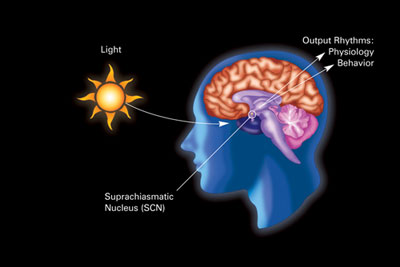
Image: Circadian rhythm diagram, National Institutes of Health, public domain via Wikimedia Commons.
Digestion is not constant across 24 hours
Stomach emptying, gut motility, digestive enzyme output, bile release, colonic contractions and even the permeability of your intestinal lining all follow a daily rhythm. Broadly, your digestive system is primed during your biological day and winds down during your biological night. Colonic motility, for example, is at its lowest overnight — which is why most people do not need the toilet while asleep, and why a large meal at 2am sits heavily.
Your microbiome has a rhythm too
The gut microbiota is not a static population. Its composition and metabolic output oscillate over 24 hours, and those oscillations are driven by host cues including feeding schedules, cortisol and melatonin.1 When those cues are scrambled by night work, the microbial rhythm is scrambled with them. If you want the underlying biology, our articles on microbiome diversity and gut dysbiosis cover it in depth.
The scale of the problem in the UK
This is not a niche issue. Trades Union Congress analysis of Office for National Statistics data has consistently put the number of Britons regularly working night shifts at over three million, with care workers, nurses, transport staff and hospitality workers making up the largest groups.2 Add early-morning starts, on-call rotas and chronic insomnia, and a very large slice of the UK working population is living with some degree of circadian misalignment.
What the research says about shift work digestion
The evidence linking shift work to gastrointestinal symptoms is now substantial, and it comes from large cohorts rather than small surveys.
Irritable bowel syndrome
A prospective analysis of 266,605 UK Biobank participants followed for a median of nine years identified 5,218 new cases of IBS. Compared with people who never or rarely worked nights, those who always worked night shifts had a significantly elevated risk of developing IBS — a hazard ratio of 1.36 (95% CI 1.19–1.56) in the fully adjusted model.3 A separate UK Biobank cohort of 239,760 working adults reached similar conclusions, and pointed towards low-grade systemic inflammation as part of the mechanism.4
Cross-sectional data are starker still. A 2025 study coordinated by Monash University and King's College London recruited 392 night shift workers in Australia and the UK who worked at least eight overnight shifts a month. Using Rome IV criteria, 21.3% met the definition for IBS, 30.4% for functional dyspepsia, and 24.5% met criteria for both — substantially above general population estimates.5 An earlier landmark study of 399 nurses found IBS in 48% of rotating shift workers versus 31% of day workers, and abdominal pain in 81% of rotating shift nurses versus 54% of day staff. Notably, that association held even after adjusting for sleep quality.6
If you suspect IBS, read our breakdown of the different IBS types and our evidence review of the best supplements for IBS in the UK.
Reflux and indigestion
A meta-analysis of observational studies found shift workers were significantly more likely to report gastro-oesophageal reflux symptoms than day workers, with a pooled odds ratio of 1.53 (95% CI 1.33–1.77); rotating shifts carried the strongest association.7 A UK Biobank cohort of 262,722 participants free of reflux at baseline found shift workers had a 1.10-fold greater risk of incident GORD, with the excess risk largely explained by sleep patterns (25.7%), depressive symptoms (20.2%), health behaviours (16.8%) and biological factors (17.6%).8 In other words, reflux in shift workers is not one problem — it is several, stacked.
For practical management, see our guides to acid reflux supplements and gastritis.
Constipation, diarrhoea and unpredictable bowels
Shift workers commonly report both ends of the spectrum, sometimes in the same week. Cross-sectional work in healthcare staff has found positive correlations between total shift work duration and diarrhoea, indigestion, constipation and reflux symptom scores.9 The mechanism is straightforward: the colonic "wake-up" contraction that normally follows breakfast is disrupted when breakfast happens at 8pm, and toilet access on shift is often limited, which teaches the bowel to ignore the urge. Our articles on constipation relief and trapped wind relief address both.
The microbiome evidence
A 2025 systematic review of shift work and gut microbiota found that observational studies consistently reported reduced alpha diversity and higher relative abundance of pro-inflammatory genera including Escherichia/Shigella, Blautia and Dialister in night shift workers, alongside gastrointestinal complaints and markers of cardiometabolic dysfunction. The authors were appropriately cautious: the studies were small and heterogeneous, so causation is not established.1 A broader review of chronodisruption, nighttime light exposure and microbial rhythmicity reached similar conclusions and emphasised that both what and when you eat shape microbial rhythms.10
How poor sleep alone changes your gut
You do not need to work nights to be affected. Insomnia, sleep apnoea, a new baby or a chronically late bedtime can produce a similar pattern.
Sleep restriction reduces microbial richness
In a controlled crossover study, 19 healthy young men underwent three consecutive nights of adequate sleep (7–9 hours) and three nights of severe restriction (2 hours), with diet and physical activity controlled. Microbial richness was 21% lower during the sleep-restricted phase. Reassuringly, intestinal permeability did not change, and broader community composition was largely preserved — so short-term sleep loss dents diversity rather than destroying the gut barrier.11
That nuance matters. You will see claims online that poor sleep "causes leaky gut" in humans. The human data are far more equivocal than the rodent data — we cover this honestly in is leaky gut real? and gut barrier function.
The relationship runs both ways
Gut bacteria ferment fibre into short-chain fatty acids, influence tryptophan and serotonin metabolism, and signal to the brain via the vagus nerve. A meta-analysis of six randomised trials in 424 people with insomnia found probiotic supplementation was associated with a significant reduction in Pittsburgh Sleep Quality Index scores (mean difference −2.10, 95% CI −3.86 to −0.34; GRADE: moderate certainty).12 A separate meta-analysis of 11 trials found a modest but statistically significant improvement in sleep measures.13 These are small effects in modest trials — worth knowing, not worth overstating.
Cortisol, appetite and the 3am craving
Sleep loss raises evening cortisol, increases ghrelin and reduces leptin. The practical consequence is that at 3am you want crisps, chocolate and something warm and beige — not lentils. This is a hormonal pull, not a character flaw, and the fix is logistical (plan and pack food) rather than motivational.
Five mechanisms behind shift work digestion problems
1. Mistimed eating
This is the single biggest lever. In a controlled simulated night-shift study, participants who ate a meal in the middle of the night showed a significant rise in glucose area under the curve across four night shifts, while those who redistributed the same food to daytime hours did not.14 A later randomised laboratory study published in Science Advances showed that daytime-only eating prevented the internal circadian misalignment and glucose intolerance otherwise caused by simulated night work.15
2. Suppressed melatonin
Bright light at night suppresses melatonin, which is produced not only in the pineal gland but in far greater quantities in the gut, where it influences motility and mucosal protection. Lower melatonin is one plausible contributor to the reflux pattern seen in night workers.7
3. Slower motility at night
Gastric emptying and colonic transit are slower overnight. Food eaten at 2am sits in the stomach longer, which increases the chance of reflux when you lie down at 8am, and increases fermentation time upstream — a common cause of bloating. See foods that cause bloating and delayed gastric emptying.
4. Stress and visceral hypersensitivity
Shift work is often high-pressure work. Chronic stress lowers the threshold at which normal gut distension is perceived as pain, which is the core abnormality in IBS. This is why breathing work, vagal tone and psychological therapies genuinely help — see probiotics for anxiety.
5. Diet quality collapses on shift
Canteens close, vending machines do not. Higher intakes of ultra-processed food, caffeine and alcohol are consistently observed in shift-working populations, and each independently affects the microbiome. Our guides to ultra-processed food and the gut and sweeteners and gut health explain why.
What to eat and when: a shift worker's framework

Image: Fruit, vegetables and grains, National Cancer Institute Visuals Online, public domain via Wikimedia Commons.
The evidence points to one clear principle: eat the bulk of your calories during daylight hours, even when you are working nights. Complete overnight fasting is unrealistic for many people, and studies of adherence confirm that.14 Reducing rather than eliminating night-time intake is a defensible compromise.
Working nights (roughly 8pm–8am)
| Time | What to do | Why |
|---|---|---|
| 4–6pm (before shift) | Your main meal. Protein, vegetables, wholegrains, olive oil. | Digestive capacity is still high; this is your "dinner". |
| 10pm–12am | Small, protein-forward snack if hungry. Greek yoghurt, boiled eggs, nuts, hummus and vegetables. | Protein-rich night meals blunt the glucose spike compared with high-carbohydrate ones. |
| 12am–5am | Ideally nothing, or minimal. Water and herbal tea. | The window in which mistimed eating does most metabolic damage. |
| After shift, before sleep | Light only. Avoid a large fatty meal before lying down. | Reduces reflux risk during day sleep. |
| On waking (afternoon) | A proper meal. This is your breakfast. | Re-anchors peripheral clocks and triggers the gastrocolic reflex. |
Working very early starts (4am–5am)
Do not force a full breakfast at 3.30am if you cannot face it — take a small protein snack and eat properly at 8–9am. Keep your evening meal earlier than you think you need to, because your bedtime is now 8.30pm.
Rotating rotas
Rotating shifts appear to carry the highest gastrointestinal risk of all patterns, because the clock never gets to settle.6,7 Where you have any influence over your rota, forward rotation (days → evenings → nights) is generally better tolerated than backward rotation. Keep one thing fixed across every rota pattern — the same first meal on waking, whatever time that is. A fixed anchor meal gives your peripheral clocks something reliable to synchronise to.
Caffeine on shift
Caffeine has a half-life of around five to six hours. A coffee at 4am is still measurably present when you get into bed at 9am. Stop caffeine at least six hours before your intended sleep, and be aware that caffeine also relaxes the lower oesophageal sphincter, which worsens reflux.
Fibre, plants and the shift worker's microbiome
UK adults are advised to aim for 30g of fibre a day, and most of us manage around 20g. For shift workers, the gap is usually wider. Fibre matters here for a specific reason: fermentable fibre is what your bacteria convert into butyrate and other short-chain fatty acids, and diets rich in fermentable fibre appear to support stronger diurnal microbial cycling.10
Practical approaches that survive contact with a real rota:
- Batch cook once a week. Lentil soups, bean chillis and grain salads travel well and reheat in a hospital microwave.
- Aim for plant variety, not perfection. Our 30 plants a week guide explains why diversity beats quantity — herbs, spices, nuts and seeds all count.
- Build a shift bag. Nuts, oatcakes, fruit, tinned fish, and a bag of pre-chopped vegetables removes the vending machine from the equation.
- Increase fibre gradually to avoid gas and bloating — see how to increase fibre and high fibre foods in the UK.
- Add fermented foods where tolerated. See fermented foods and kefir benefits.
If you have diagnosed IBS, more fibre is not automatically better. The NHS advises adjusting fibre type according to your dominant symptom — increasing soluble fibre for constipation, and reducing insoluble fibre for pain and bloating.16,17 Our guide to the low FODMAP diet in the UK covers the structured approach, which should ideally be supervised by a dietitian.
Supplements that may help shift workers
No supplement corrects circadian misalignment. Sleep and meal timing do the heavy lifting. That said, several products have a reasonable evidence base for the specific symptoms shift workers report. Always check interactions with any prescribed medication, and speak to your GP or pharmacist if you are pregnant, breastfeeding or managing a chronic condition.
Probiotics
The most sensible starting point for irregular bowels, bloating and post-antibiotic disruption. Strain matters far more than headline CFU counts — read how to choose a probiotic before you buy, and browse the Welzo probiotics collection. Shift workers often prefer shelf-stable probiotics that survive a locker or a glovebox. For timing, see when to take probiotics — for night workers, tie it to your first meal after waking rather than a clock time.
Prebiotics and the gut lining
Akkermansia muciniphila is a mucin-associated species studied for its role in gut barrier integrity, and it is depleted in several metabolic conditions. Modified citrus pectin powder is a well-tolerated soluble fibre that is often easier on a sensitive gut than inulin. Background reading: best prebiotic supplements and butyrate supplements.
Metabolic and bile support
Because night work independently affects glucose handling, some shift workers look at metabolic support. Welzo Ultra Purity Berberine has been studied for glycaemic and lipid parameters, but it has meaningful drug interactions — please read berberine interactions first. Welzo Ultra Purity TUDCA is used for bile flow and is sometimes considered where fatty meals at odd hours cause upper abdominal discomfort; see TUDCA side effects.
Symptom-specific options
- Bloating: see best supplements for bloating.
- IBS cramping: enteric-coated peppermint oil capsules have the strongest trial evidence of any over-the-counter option.
- Constipation: magnesium for constipation is a common first step.
- After antibiotics: probiotics after antibiotics and Saccharomyces boulardii.
- Reflux and stomach lining: zinc carnosine and slippery elm.
Sleep strategies that protect your gut

Image: Human biological clock diagram, CC BY-SA 3.0 via Wikimedia Commons.
Protecting sleep is protecting your gut. The following are the highest-yield changes for most shift workers:
- Wear sunglasses on the commute home. Morning light after a night shift tells your brain the day has started and makes daytime sleep harder. Blocking it is one of the cheapest interventions available.
- Make the bedroom genuinely dark and cool. Blackout blinds, eye mask, 16–18°C. Light leakage during day sleep fragments sleep architecture.
- Use bright light strategically during the shift, particularly in the first half, and dim it towards the end.
- Protect an anchor sleep period. If your rota rotates, try to keep a fixed 4-hour block of sleep that occurs at the same clock time on every pattern.
- Nap before, not during, the small hours where your workplace allows it. A 20–30 minute nap before a night shift reduces the drive to eat at 3am.
- Treat persistent insomnia properly. CBT for insomnia is the first-line NHS recommendation, not sleeping tablets, and it is available digitally.
For the wider picture, see gut health and sleep, gut health and hormones and our gut reset protocol.
How to track whether it is working
Change one thing at a time and give it four weeks. The simplest objective measure is stool form, recorded against the Bristol Stool Chart — types 3 and 4 are the target.

Image: Bristol Stool Chart, Cabot Health, CC BY-SA 3.0 via Wikimedia Commons.
Keep a simple log: shift pattern, hours slept, stool type, bloating score out of 10, and anything new you introduced. Our guide to the Bristol Stool Chart explains how to interpret it. If you want objective data on your microbiome, our gut microbiome test overview explains what these tests can and cannot tell you — the honest answer is "less than the marketing suggests."
Red flags: when to see a GP
Shift work explains a great deal of ordinary bloating and irregularity. It does not explain everything, and attributing serious symptoms to your rota is a genuine risk. Book a GP appointment promptly if you have any of the following:
- Blood in your stool, or black tarry stools
- Unintentional weight loss
- A persistent change in bowel habit lasting more than six weeks, particularly if you are over 50
- Difficulty swallowing, or persistent vomiting
- A lump or mass in your abdomen
- Unexplained iron-deficiency anaemia
- Waking at night because of pain or the need to open your bowels
- Heartburn requiring daily treatment for more than three weeks
See when to see a GP about stomach symptoms and bowel cancer screening in the UK. If you are eligible for NHS bowel screening, do the test — it takes minutes.
A realistic four-week plan
| Week | Focus | Actions |
|---|---|---|
| 1 | Measure, don't change | Log shifts, sleep hours, stool type and symptoms. Change nothing yet. |
| 2 | Meal timing | Move your main meal to before the shift. Reduce (not necessarily eliminate) food between midnight and 5am. Fix an anchor meal on waking. |
| 3 | Light and sleep | Sunglasses on the commute home, blackout the bedroom, caffeine cut-off six hours before sleep. |
| 4 | Fibre and supplements | Add one new plant food per day and, if appropriate, introduce a single probiotic — one product at a time, for at least four weeks. |
If symptoms are unchanged after eight to twelve weeks of consistent effort, that is a reason to see your GP rather than to buy more supplements.
Frequently asked questions
Does shift work really cause digestive problems, or is it just stress?
Both, and they are hard to separate — but shift work has an independent effect. In the nurse study that found 48% IBS prevalence among rotating shift workers, the association persisted after adjusting for sleep quality, suggesting circadian misalignment itself contributes beyond tiredness and stress.6 Large UK Biobank cohorts show elevated IBS and reflux risk after adjusting for a wide range of confounders.3,8
Should I fast completely during a night shift?
Total overnight fasting produces the best metabolic results in laboratory studies, but real-world adherence is poor, and going twelve hours without food while doing physically demanding work is not sensible for everyone. A realistic target is to shift the bulk of your intake to daylight hours and keep anything eaten between midnight and 5am small and protein-forward.14,15
What is the best thing to eat at 3am on a night shift?
Something small, protein-based and low in refined carbohydrate: Greek yoghurt, boiled eggs, a handful of nuts, hummus with vegetable sticks, or tinned fish on oatcakes. High-carbohydrate meals produce a larger glucose excursion at night than protein-forward ones. Avoid large, fatty meals — they empty slowly and raise reflux risk when you lie down.
Do probiotics help shift workers specifically?
There are no large trials in shift workers specifically. What exists is indirect: probiotics have modest evidence for IBS symptoms, and meta-analyses suggest a small improvement in sleep quality scores in people with disturbed sleep.12,13 That makes them a reasonable, low-risk trial for four to eight weeks — see do probiotics work for a balanced assessment.
Why am I constipated on nights and fine on days off?
Colonic motility is lowest during your biological night, the gastrocolic reflex after your first meal is displaced, hydration usually drops, and toilet access on shift is often poor. Repeatedly ignoring the urge trains the bowel to be less responsive. Fixing your anchor meal on waking and building in a protected ten minutes afterwards is often more effective than laxatives.
Can poor sleep alone damage my gut, even if I work days?
It can measurably reduce microbial richness — 21% lower after three nights of two-hour sleep in a controlled human study — though that same study found no change in intestinal permeability.11 So yes, sleep loss affects the gut, but claims that it "causes leaky gut" in humans go beyond the evidence.
Is heartburn on night shifts normal?
Common, but not something to accept indefinitely. Shift workers have roughly a 50% higher likelihood of reporting reflux symptoms than day workers.7 Practical steps: keep the pre-sleep meal light, avoid alcohol before day sleep, elevate the head of the bed, and stop caffeine well before bedtime. Daily heartburn for more than three weeks warrants a GP appointment.
How long before I notice a difference?
Meal-timing changes can affect bloating within a week. Bowel regularity typically responds over two to four weeks. Microbiome composition shifts within days of a dietary change but stabilises over months. Give any single intervention at least four weeks before judging it.
Does shift work increase the risk of anything more serious than IBS?
Night work is associated with higher rates of cardiovascular disease, type 2 diabetes and depression, and the International Agency for Research on Cancer has classified shift work involving circadian disruption as probably carcinogenic to humans. These are population-level risks, not individual predictions, and they are mediated substantially by modifiable factors — sleep, diet, weight and activity.2,8
What single change makes the biggest difference to shift work digestion?
Moving the bulk of your food into daylight hours. In controlled studies it is the intervention with the clearest effect on glucose metabolism and internal circadian alignment, and in clinical practice it is the change shift workers most often report as making a noticeable difference to bloating and reflux.15
References
- Marino M, et al. Disrupted Rhythms, Disrupted Microbes: A Systematic Review of Shift Work and Gut Microbiota Alterations. Nutrients. 2025.
- Trades Union Congress. The health and safety impacts of night working. TUC, 2024.
- Lu S, et al. Night shift work increases the risk of developing irritable bowel syndrome: a prospective cohort study in the UK Biobank. Frontiers in Public Health. 2025.
- Yao Y, et al. Associations of Long-Term Night Shift Work With Incident Irritable Bowel Syndrome: A Population-Based Cohort Study. Journal of Gastroenterology and Hepatology. 2025.
- Monash University and King's College London. High Prevalence of Irritable Bowel Syndrome and Functional Dyspepsia in Night Shift Workers: A Cross-sectional Study in Australia and the United Kingdom. Clinical Gastroenterology and Hepatology. 2025.
- Nojkov B, Rubenstein JH, Chey WD, Hoogerwerf WA. The impact of rotating shift work on the prevalence of irritable bowel syndrome in nurses. American Journal of Gastroenterology. 2010;105:842–847.
- Chen C, et al. Shift work is significantly and positively associated with possible gastro-esophageal reflux disease: a meta-analysis. Frontiers in Public Health. 2022.
- Wang Y, et al. Shift work and risk of incident gastroesophageal reflux disease: the association and mediation. 2023.
- Alyami A, et al. Gastrointestinal Symptoms and the Assessment of Diet in Shift Workers: A Systematic Scoping Review. Journal of Human Nutrition and Dietetics. 2025.
- Tolba R, Leone V, et al. Shift work, gut dysbiosis, and circadian misalignment: the combined impact of nighttime light exposure, nutrients, and microbiota rhythmicity. Chronobiology International. 2025.
- Karl JP, et al. Severe, short-term sleep restriction reduces gut microbiota community richness but does not alter intestinal permeability in healthy young men. Scientific Reports. 2023.
- Zhang Y, et al. Impact of probiotics on sleep quality and mood states in patients with insomnia: a systematic review and meta-analysis. Frontiers in Microbiology. 2025.
- Yu B, et al. Effect of probiotics and paraprobiotics on patients with sleep disorders and sub-healthy sleep conditions: a meta-analysis of randomized controlled trials. Frontiers in Neurology. 2024.
- Grant CL, et al. Timing of food intake during simulated night shift impacts glucose metabolism: a controlled study. Chronobiology International. 2017;34(8):1003–1013.
- Chellappa SL, et al. Daytime eating prevents internal circadian misalignment and glucose intolerance in night work. Science Advances. 2021.
- NHS. Diet, lifestyle and medicines for IBS (irritable bowel syndrome).
- NHS. How to get more fibre into your diet.
About the author
Dr Zeeshan Afzal, MBBS is a practising medical doctor and Clinical Content Lead at Welzo. He reviews Welzo's digestive health content for clinical accuracy and alignment with current UK guidance, including NHS and NICE recommendations.
Medical disclaimer: This article is for general information and is not a substitute for individual medical advice. It does not diagnose or treat any condition. Speak to your GP, pharmacist or a registered dietitian before starting any supplement, particularly if you are pregnant or breastfeeding, take prescription medication, or have a diagnosed gastrointestinal, liver or metabolic condition. If you have any of the red flag symptoms listed above, seek medical assessment promptly. In an emergency, call 999 or attend your nearest A&E.





 Hodnoceno výborně o 28,951+ recenzí
 100% záruka vrácení peněz