



10 Best Supplements for Bloating UK 2026: What Actually Works
Posted on:
Aug 05, 2026
Authored by


Written and medically reviewed by Dr Zeeshan Afzal (MBBS) — Medical Doctor & Medical Content Lead, Welzo
Evidence-based · Matched to your cause · Aligned with NHS guidance
Last updated: January 2026 · Reading time: ~16 minutes
Bloating is one of the most common complaints in digestive health — that uncomfortable feeling of fullness, tightness or a visibly swollen tummy. It's rarely dangerous, but it can be miserable, and the shelves are full of gut health supplements promising to banish it. The smarter way to think about bloating is in layers: build a healthier gut foundation, then target your specific symptom. That's exactly how this guide is structured.
Below, we rank and review eight of the best supplements for bloating, starting with the one we rate as the best overall foundation and working through the symptom-specific picks. Each comes with honest pros and cons, real UK product options, pricing and clear notes on who it suits, so you can match the right product to your bloating.
The short version: Start with a gut-lining and microbiome foundation — our top pick, Welzo Ultra Purity Akkermansia — then layer in a targeted option: enteric-coated peppermint oil for IBS-type cramps, a multi-strain probiotic for gas, magnesium for constipation-related bloating, and soluble fibre for regularity. Match the supplement to your cause, put diet and lifestyle first, and see a doctor for new or persistent bloating. Explore Welzo's gut health range.
| Rank | Supplement | Best for | Guide price |
|---|---|---|---|
| 1 | Welzo Ultra Purity Akkermansia | Best overall — gut-lining & microbiome foundation | ~£21.99 |
| 2 | Colpermin (enteric-coated peppermint oil) | IBS-type bloating & cramps | See listing |
| 3 | Klaire Labs Ther-Biotic Synbiotic | Best multi-strain probiotic | See listing |
| 4 | Pure Encapsulations Magnesium Citrate | Constipation-related bloating | ~£32.31 |
| 5 | Welzo Citrus Pectin Powder | Gentle prebiotic fibre | See listing |
| 6 | Digestive enzymes | Specific food triggers | See range |
| 7 | Ginger | Slow digestion & fullness | See range |
| 8 | Simethicone | Fast trapped-gas relief | See listing |

Table of contents
Bloating usually comes down to gas, digestion or motility — and knowing which is driving yours points you to the right solution. Common causes include:
Because these mechanisms differ, the best strategy is to strengthen the underlying gut environment and target your specific symptom. That's why our list starts with a foundation pick and then moves to symptom-specific tools. Certain foods that cause bloating are also worth identifying first.
We prioritised supplements that either address a root-cause driver of bloating (the gut lining and microbiome) or have human evidence for bloating and its triggers — favouring options tested for IBS, gas or constipation over those relying on tradition alone. We then looked for reputable, third-party-tested UK products with clean formulations and transparent dosing, and matched each to the cause it actually addresses, so you can choose based on your own symptoms.

Akkermansia earns the top spot because it works on the root of bloating rather than just the symptom. Akkermansia muciniphila lives in the protective mucus layer of the gut wall, where it helps maintain the strength of the gut barrier and supports a balanced microbiome. Since a healthy gut lining and a well-balanced microbial community are what govern how much gas your gut produces and how sensitive it feels, strengthening that foundation is the most logical first move for anyone whose bloating keeps coming back. Fix the terrain, and everything else works better.
Welzo Ultra Purity Akkermansia is built for exactly this job. Each serving delivers 60 billion AFU of Akkermansia alongside 64 billion CFU of Lactobacillus acidophilus, plus targeted cofactors, to replenish a keystone strain that modern diets, stress and antibiotics deplete. It supports the gut lining, encourages microbiome balance and microbiome diversity, and promotes the kind of steady digestive regularity that leaves you feeling lighter and less distended over time. It's a Welzo Ultra Purity formula: third-party tested, transparently dosed with clear AFU and CFU labelling, and free from proprietary blends — so you know exactly what you're taking. For a foundation supplement you build a routine around, it's the one we'd reach for first.
Why it's our #1: It's the only pick here that targets the gut lining and microbiome directly — the underlying terrain that drives gas and sensitivity — making it the smartest long-term foundation for recurrent bloating, and a natural base to layer the symptom-specific options below on top of.
Where to buy & price: Available at Welzo for around £21.99 (60 capsules): Welzo Ultra Purity Akkermansia. Take two capsules daily with breakfast, consistently.
Product reviews: With 90+ reviews, customers highlight reduced bloating and steadier digestion over a few weeks of daily use, and rate the transparent, high-potency formulation and premium quality.
| Pros | Cons |
|---|---|
| Targets the gut lining & microbiome — the root of recurrent bloating 60B AFU Akkermansia + 64B CFU L. acidophilus Transparent AFU/CFU dosing, third-party tested Doubles as broader gut & metabolic support |
A foundation to build over weeks, not an instant fix Premium option |
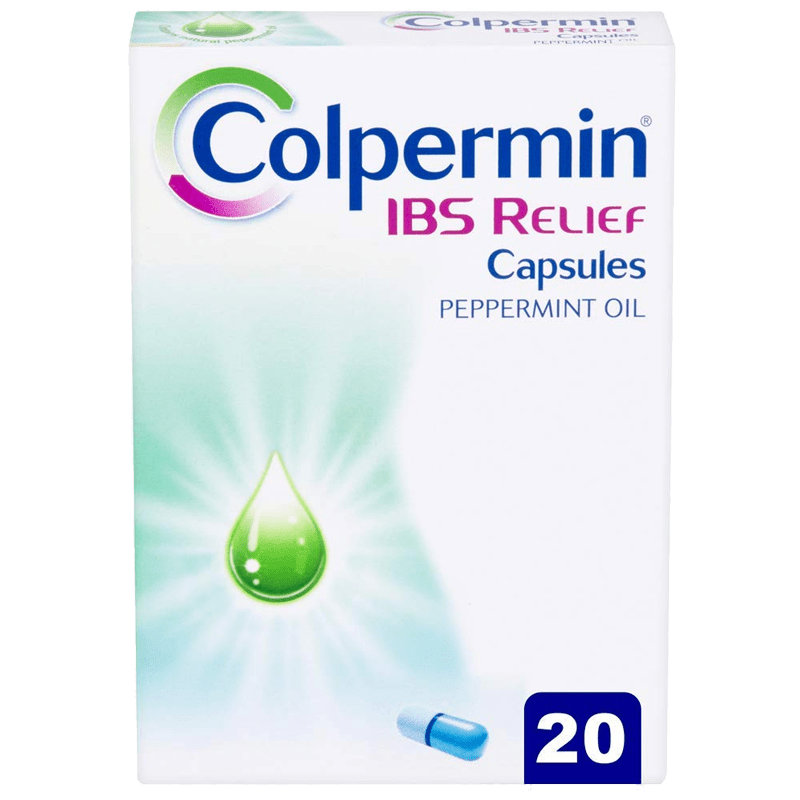
Peppermint oil is a natural antispasmodic that relaxes the smooth muscle of the gut wall, easing cramping and the bloating that comes with it. It has some of the best evidence of any natural option for IBS: a 2025 review of plant-derived treatments confirmed peppermint oil among the better-supported for IBS symptoms including pain and bloating (plant-derived IBS treatments review, 2025). The enteric coating matters — it lets the oil pass the stomach and release in the intestine, where it works and causes less heartburn.
Why we like it: Colpermin is a well-established, pharmacy-familiar enteric-coated peppermint oil capsule designed specifically for the gut, making it a sensible layer to add on top of your foundation for IBS-type bloating with cramping.
Where to buy & price: Available at Welzo (see the listing for current price): Colpermin IBS Relief Capsules.
Product reviews: Users frequently report noticeable relief from cramping and bloating, and value the enteric coating for avoiding the peppermint "reflux" that plain oil can cause.
| Pros | Cons |
|---|---|
| Strong evidence for IBS pain and bloating Natural antispasmodic Enteric coating reduces heartburn |
Can cause heartburn if not enteric-coated Mainly helps IBS-type, spasm-related bloating |
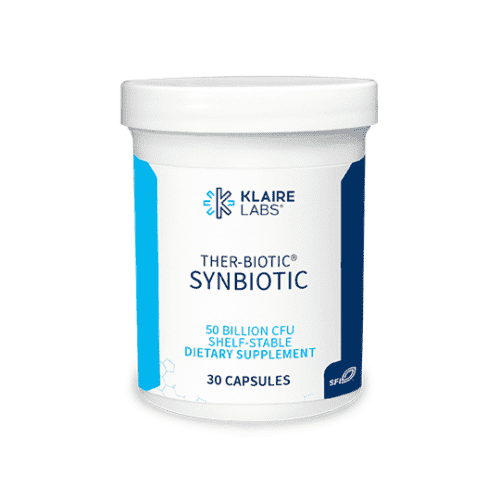
A balanced microbiome influences how much gas your gut produces, and specific probiotic strains have evidence for reducing bloating — a meta-analysis found probiotics improved IBS symptoms including bloating, though benefits are strain-specific (probiotics in IBS meta-analysis, 2024). Ther-Biotic Synbiotic pairs a seven-strain blend at 50 billion CFU per capsule with Sunfiber, a gentle low-FODMAP prebiotic that's less likely to aggravate bloating than harsher prebiotics.
Why we like it: It's a professional-grade, hypoallergenic synbiotic from a rigorous brand, and the low-FODMAP prebiotic is a thoughtful touch for people whose bloating is triggered by fermentable fibres. Browse the Welzo probiotics collection to compare.
Where to buy & price: Available at Welzo (30 capsules, 50 billion CFU): Klaire Labs Ther-Biotic Synbiotic.
Product reviews: Feedback highlights gentle daily digestive support and good tolerability, with the reminder that probiotics need several weeks of consistent use to judge.
| Pros | Cons |
|---|---|
| Seven-strain, 50 billion CFU synbiotic Low-FODMAP prebiotic, gentle on bloating Shelf-stable and hypoallergenic |
Effects are strain-specific Can cause temporary wind when starting |

If your bloating is driven by constipation and sluggish transit, magnesium is one of the most useful options. Magnesium citrate draws water into the bowel and gently encourages movement, relieving the backed-up gas and distension that constipation causes. It's a very different mechanism from the anti-gas or antispasmodic options — which is exactly why matching to your cause matters.
Why we like it: Pure Encapsulations Magnesium Citrate Powder is a clean, well-absorbed citrate form in flexible powder format, so you can adjust the dose to your needs. It doubles as general magnesium support. See our guide to constipation relief for how it fits.
Where to buy & price: Available at Welzo for £32.31 (107g): Pure Encapsulations Magnesium Citrate Powder.
Product reviews: Customers note it dissolves easily and gently eases constipation-related bloating, with many also reporting better sleep and comfort; start low, as too much can loosen stools.
| Pros | Cons |
|---|---|
| Effective for constipation-related bloating Well-absorbed citrate form Adjustable powder dose |
Too much can cause loose stools Won't help gas-driven bloating |

Fibre is a double-edged sword for bloating: the right kind, introduced slowly, supports regularity and a healthy microbiome, but too much too fast can worsen gas. Gentle soluble fibres such as modified citrus pectin help keep things moving and feed beneficial bacteria, making them a useful foundation — particularly when constipation contributes to your bloating.
Why we like it: A pectin powder is a flexible way to add soluble fibre gradually, so you can build up at your own pace and avoid the bloating that a big fibre jump can cause. It supports the microbiome that governs gas production over time.
Where to buy & price: Available at Welzo (see the listing for current price): Welzo Citrus Pectin Powder. Introduce it slowly and drink plenty of water.
Product reviews: Customers like how easily it mixes and use it as a gentle daily fibre top-up; the recurring tip is to start with a small dose to let the gut adjust.
| Pros | Cons |
|---|---|
| Gentle soluble fibre, easy to dose Feeds beneficial bacteria Supports regularity |
Can worsen bloating if increased too fast Best as a slow, long-term foundation |
Digestive enzymes target bloating from specific food triggers — for example, alpha-galactosidase for beans and cruciferous vegetables, or lactase for lactose. They work best when you know your trigger; a broad enzyme blend taken with problem meals can reduce the gas from incomplete digestion. They're a targeted tool rather than an everyday essential.
Where to buy & price: Compare options in the Welzo digestive enzymes range (prices vary by product).
| Pros | Cons |
|---|---|
| Targets bloating from known food triggers Fast-acting when taken with the meal Specific enzymes for specific foods |
Only helps when you've identified the trigger Not a general daily solution |
Ginger is a mild prokinetic that helps the stomach empty and eases nausea and fullness, making it useful for bloating linked to slow digestion or heavy meals. The evidence is modest, but it's safe and pleasant taken as tea, capsules or fresh root, and it's an easy, low-cost option to trial.
Where to buy & price: Browse ginger and digestive-support options across the Welzo gut health range.
| Pros | Cons |
|---|---|
| Eases fullness and nausea Safe and inexpensive Flexible formats (tea, capsules, fresh) |
Modest evidence Best for slow-digestion fullness, not gas |
Simethicone is an anti-foaming agent that merges small gas bubbles into larger ones that are easier to pass, giving fast, short-lived relief from trapped wind. It doesn't prevent gas from forming, but it's handy to have in the moment — see our guide to trapped wind relief.
Where to buy & price: Widely available as an over-the-counter product; check the listing for current price.
| Pros | Cons |
|---|---|
| Fast relief of trapped gas Well tolerated Useful "in the moment" option |
Short-lived, symptomatic only Doesn't prevent gas forming |
These three fill specific niches beyond the main ranking. Think of them as targeted extras rather than everyday essentials.
Iberogast (STW-5) is a standardised blend of nine herbs with reasonable evidence for functional dyspepsia and IBS-type symptoms, including bloating, likely through combined antispasmodic and motility effects.
Artichoke leaf extract supports bile flow and digestion and has some trial support for functional dyspepsia and IBS symptoms, making it worth considering for bloating tied to fatty meals or sluggish digestion.
Digestive bitters and betaine HCl are traditional options thought to stimulate digestive secretions. Evidence is limited, and betaine HCl in particular should be approached cautiously — it isn't suitable if you have reflux or an ulcer, and the idea of low stomach acid is best assessed by a clinician rather than self-treated. For unrelated goals, some people explore berberine (studied for blood sugar and gut microbes, and used in some SIBO protocols) or bile-focused TUDCA — neither is a general bloating remedy.
| Supplement | Best for | Speed |
|---|---|---|
| Welzo Akkermansia | Gut-lining & microbiome foundation | Builds over weeks |
| Peppermint oil | IBS-type bloating, cramps | Hours |
| Probiotics (synbiotic) | Gas, IBS bloating | Weeks |
| Magnesium citrate | Constipation-related bloating | 1–2 days |
| Citrus pectin (fibre) | Regularity, microbiome | Weeks |
| Digestive enzymes | Specific food triggers | With the meal |
| Ginger | Slow digestion, fullness | Hours |
| Simethicone | Trapped gas (fast) | Minutes–hours |
The single most useful step is to identify your likely cause and choose accordingly:
No supplement outperforms the basics. Eating more slowly, chewing well and not gulping air reduces swallowed-air bloating; smaller, more regular meals ease fullness; and staying active and hydrated keeps things moving. Identifying and moderating personal trigger foods — often certain FODMAPs, fizzy drinks or large amounts of a single fibre — frequently does more than any capsule.
Building a varied, plant-rich diet supports a healthier microbiome over time, which tends to mean less gas and bloating, though fibre is best increased gradually. This is also why a foundation supplement like Akkermansia pairs so well with diet: mucin-associated species support the gut lining that a good diet feeds. Where a food intolerance is suspected, a structured approach (such as a short low-FODMAP trial with reintroduction) is far more effective than guesswork. Supplements then become the finishing touch on solid foundations rather than a substitute for them.
With so many options, it's easy to overspend and over-stack supplements without ever knowing what's working. A simple, staged approach is far more effective:
This one-thing-at-a-time discipline avoids the common trap of taking a handful of products at once, feeling no clearer, and spending money on things that aren't earning their place. It also makes it obvious when a supplement isn't the answer — which is exactly when it's worth asking whether your bloating needs a doctor rather than a capsule.
Occasional bloating is normal. But bloating that is new, persistent or accompanied by other symptoms can occasionally signal something that needs investigating — including, in women, ovarian cancer — so certain patterns should never be self-treated with supplements.
See a GP if you have:
Persistent bloating in women can be a symptom of ovarian cancer and should be checked. See also NHS — Bloating.
For recurrent bloating, the best first move is a gut-lining and microbiome foundation such as Welzo Ultra Purity Akkermansia, because it works on the underlying terrain that drives gas and sensitivity. From there, add a symptom-specific option — peppermint oil for IBS-type cramps, magnesium for constipation-related bloating, or a probiotic for gas. Match the supplement to your cause rather than expecting one to fix all.
Because it targets the root rather than just the symptom. Akkermansia muciniphila supports the gut lining and a balanced microbiome — the factors that govern how much gas your gut makes and how sensitive it feels. Strengthening that foundation is the most logical long-term strategy for bloating that keeps returning, and it gives the symptom-specific supplements a better base to work from.
For quick relief of trapped gas, simethicone merges gas bubbles so they pass more easily, and peppermint oil can ease spasm-related bloating. Gentle movement like a walk, and avoiding fizzy drinks and eating too fast, also help in the moment. Fast fixes ease symptoms but don't address the underlying cause.
Certain probiotic strains can reduce bloating and IBS symptoms, though effects are strain-specific, so the product matters and benefits build over weeks. They influence how much gas your gut bacteria produce. Choose a well-formulated, multi-strain product and give it a fair trial of several weeks before judging whether it helps you.
Yes, particularly for IBS-type bloating with cramping. Peppermint oil is a natural antispasmodic that relaxes gut muscle, and it has good evidence for IBS symptoms including pain and bloating. Choose enteric-coated capsules, which release in the intestine where they work and are less likely to cause heartburn than plain oil.
They can help when bloating is caused by trouble digesting specific foods — for example lactase for lactose, or alpha-galactosidase for beans and cruciferous vegetables. Taken with the problem meal, they reduce the gas from incomplete digestion. They're most useful when you've identified your trigger rather than as a general daily supplement.
Yes — increasing fibre or prebiotics too quickly is a common cause of more gas and bloating, because gut bacteria ferment them. The solution isn't to avoid fibre but to increase it gradually, drink plenty of water, and choose gentler soluble fibres. Give your gut a few weeks to adapt to a higher intake.
Magnesium helps when bloating is driven by constipation. Magnesium citrate draws water into the bowel and encourages movement, relieving the trapped gas and distension that constipation causes. It won't help bloating from gas or food intolerance, so it's best matched specifically to constipation-related bloating. Start with a low dose to avoid loose stools.
It varies by type. Simethicone and peppermint oil can act within hours for acute symptoms, while foundation options like Akkermansia, probiotics and fibre take several weeks of consistent use to change gas production and regularity. Give slower-acting supplements a fair trial of four to eight weeks, and stop anything that hasn't helped after that.
See a GP if bloating is persistent (most days for three weeks or more), especially if new, or if it comes with weight loss, a change in bowel habit, blood in the stool, difficulty swallowing or ongoing pain. In women, persistent bloating can be a symptom of ovarian cancer and should always be checked.
Medical disclaimer: This article is for general information and education only and does not constitute medical advice, diagnosis or treatment. It should not replace consultation with a qualified healthcare professional. Supplements are not intended to diagnose, treat, cure or prevent any disease. New or persistent bloating, or any of the warning symptoms described above, should be assessed by a doctor. Always seek advice before starting new supplements, particularly if you are pregnant, breastfeeding or have an existing condition.
About the author
Dr Zeeshan Afzal (MBBS) is a practising medical doctor and Welzo's Medical Content Lead. He writes and reviews Welzo's health content to ensure it is accurate, evidence-based and aligned with current UK clinical guidance, translating complex research into practical advice patients can trust.
 Βαθμολογημένη εξαιρετική από 28,951+ κριτικές
 100% εγγύηση επιστροφής χρημάτων
Η εγγύηση επιστροφής χρημάτων σας εξασφαλίζει ότι θα λάβετε τα στοιχεία σας ή θα λάβετε πλήρη επιστροφή χρημάτων.