

 Instagram





Best Bacillus coagulans Supplements UK


Related products


Written by Dr Zeeshan Afzal (MBBS) — Medical Doctor & Medical Content Lead, Welzo
Medically reviewed & evidence-based · Last updated: 30 July 2026 · Reading time: approx. 13 minutes
Every product below is stocked by Welzo. Prices, review counts and stock status were taken from welzo.com on the date of publication and change frequently. We state plainly where the evidence is strong, where it is thin, and where the marketing has outrun the data.
Bacillus coagulans is the probiotic that survives the journey. Unlike most Lactobacillus and Bifidobacterium species, it forms a protective endospore — a dormant, armoured shell that shrugs off stomach acid, heat and years on a shelf, then germinates in the small intestine. That single property is why it appears in shelf-stable capsules, protein powders and even baked goods. In a double-blind randomised trial in 36 adults with diarrhoea-predominant IBS, 2 billion CFU daily of the strain B. coagulans MTCC 5856 for 90 days significantly improved symptom scores compared with placebo (Majeed and colleagues, Nutrition Journal, 2016). This guide ranks what Welzo actually stocks, and sits within our wider digestive health hub and gut health range.
| Start here: All probiotics · Gut health supplements · Welzo Akkermansia 60 Billion AFU · Welzo Ultra Purity Modified Citrus Pectin · Welzo Ultra Purity Berberine · Welzo Ultra Purity TUDCA |
Table of contents
- What is Bacillus coagulans?
- Two naming problems you need to know about
- Why spores behave differently from ordinary probiotics
- Why the strain code matters more than the CFU count
- Evidence-based benefits
- How we chose and ranked these products
- Best B. coagulans supplements at a glance
- Full comparison table
- The ranked picks in detail
- Other stocked products containing B. coagulans
- How to take it: dose, timing and how long
- Safety, side effects and who should avoid it
- When to see a doctor
- Frequently asked questions
- References
What is Bacillus coagulans?
Bacillus coagulans is a Gram-positive, lactic acid-producing bacterium found in soil and in some fermented foods. It occupies an unusual middle ground: it produces lactic acid like a Lactobacillus, but it forms endospores like a Bacillus. That combination is the whole commercial proposition.
When you swallow a capsule, the spores pass through the stomach essentially unharmed. In the small intestine — warmer, less acidic, and rich in bile — a proportion germinate into metabolically active cells, produce lactic acid and other metabolites, and are then largely cleared within a week or two. It is a transient visitor rather than a permanent resident, which is true of nearly all probiotics. For the underlying biology, see our guides to short-chain fatty acids, gut barrier function and microbiome diversity.
Two naming problems you need to know about
It was never "Lactobacillus sporogenes"
For decades this organism was sold under the name Lactobacillus sporogenes. That name was never valid. Lactobacillus species do not form spores — that is the defining feature of Bacillus. The label was a marketing convenience that let a soil organism ride on the reassuring reputation of yoghurt bacteria. You will still find UK and international listings using it today. If a product says "Lactobacillus sporogenes", it means Bacillus coagulans, and it tells you the seller is working from outdated source material.
It is now formally Weizmannia coagulans
In 2020 a large genomic reassessment split the sprawling genus Bacillus into several new genera (Gupta and colleagues, International Journal of Systematic and Evolutionary Microbiology, 2020). Bacillus coagulans was reassigned to Weizmannia coagulans. Nothing about the bacterium changed. Most labels still say Bacillus coagulans, which is why this article does too — but a few newer packs now print both. This mirrors what happened to Lactobacillus plantarum, which became Lactiplantibacillus plantarum in the same wave of reclassification; see our guide to L. plantarum.
Why spores behave differently from ordinary probiotics
The practical differences are real and worth understanding before you buy.
| Feature | Spore-formers (B. coagulans) | Conventional (Lactobacillus, Bifidobacterium) |
|---|---|---|
| Stomach acid survival | Very high — spore coat is protective | Variable; often needs enteric coating |
| Refrigeration | Not required | Often required |
| Typical CFU dose | Low — 1–6 billion is normal | Higher — 10–50 billion common |
| Shelf life | Long, often 2–5 years | Shorter, potency declines |
| Origin | Soil-based | Human or dairy origin |
The point most articles miss: a low CFU number on a spore product is not a weakness. Because survival is far higher, 2 billion spores may deliver more live organisms to the intestine than 20 billion fragile cells. Comparing CFU counts across these two categories is meaningless. See CFU vs AFU explained, do probiotics survive stomach acid?, spore-based vs Lactobacillus probiotics and spore-based probiotics.
Why the strain code matters more than the CFU count
Probiotic effects are strain-specific. Evidence generated for one strain of B. coagulans does not transfer to another. The strains with meaningful human data are:
- MTCC 5856 (sold as LactoSpore) — randomised trials in IBS-D and in depression co-occurring with IBS.
- GBI-30, 6086 (sold as BC30) — trials in IBS symptoms, plus work on protein absorption and exercise recovery.
- Unique IS-2 — trials in IBS and constipation.
- SC-208 — used in several spore blends; most published work is on the blend rather than the strain alone.
A product listing only "Bacillus coagulans 2 billion CFU" with no code after it is not backed by any of these trials. Strain transparency is the first thing to look for. Read how to choose a probiotic and single vs multi-strain probiotics.
Evidence-based benefits
IBS symptoms, bloating and abdominal pain
This is the best-supported use. Beyond the MTCC 5856 trial above, an American study of 44 adults meeting Rome II criteria for IBS reported significant improvement in abdominal pain and bloating over eight weeks with GanedenBC30 versus placebo (Hun, Postgraduate Medicine, 2009), and a 52-patient trial found reduced bowel movement frequency in diarrhoea-predominant IBS (Dolin, Methods and Findings in Experimental and Clinical Pharmacology, 2009).
The honest caveat: every one of these trials is small — 36, 44 and 52 participants — and each was funded or conducted by the company owning the strain. That is normal in this field but it is a genuine limitation, and small industry-funded trials tend to report larger effects than later independent work. The British Society of Gastroenterology's 2021 IBS guideline recommends probiotics as an option while declining to specify any strain, because the overall evidence base is fragmented. NICE guideline CG61 advises taking a probiotic at the manufacturer's dose for at least four weeks while monitoring the effect.
See also best supplements for IBS, the IBS subtypes, best supplements for bloating and trapped wind relief.
Protein absorption and exercise recovery
An unusual and commercially popular line of research. Adding B. coagulans GBI-30, 6086 to a protein meal increased measured amino acid appearance in the blood in a small crossover study (Jäger and colleagues, Probiotics and Antimicrobial Proteins, 2018), and a separate trial reported reduced muscle soreness and faster recovery after damaging exercise (Jäger and colleagues, PeerJ, 2016).
The honest caveat: these are small, short studies with surrogate endpoints, conducted with industry involvement, and they have not been replicated at scale. They do not establish that the supplement builds muscle or improves performance. If you train seriously, see gut health for athletes and runner's trots.
Mood, when it accompanies IBS
A pilot trial in 40 adults with both major depression and IBS reported improvement in depression scores alongside gut symptoms with MTCC 5856 (Majeed and colleagues, Food & Nutrition Research, 2018). It is a single small pilot and should not be read as evidence that this is a treatment for depression. If your mood is suffering, that deserves proper care rather than a supplement — see probiotics for anxiety and the gut–brain connection.
After antibiotics, and during travel
Spore-formers are not killed by most antibiotics, so they can in principle be taken alongside a course rather than spaced apart. That is a genuine practical advantage over conventional probiotics, though direct trial evidence specifically for B. coagulans in antibiotic-associated diarrhoea is limited. See probiotics after antibiotics, traveller's diarrhoea probiotics and travel probiotics. For C. difficile specifically, Saccharomyces boulardii has the stronger evidence base — see probiotics for C. diff.
| A note on claims: no food supplement may lawfully be presented in Great Britain as treating, preventing or curing disease. B. coagulans holds no authorised health claim in GB, and no probiotic health claim has ever been approved — the word "probiotic" is itself treated as an unauthorised claim on GB and EU labelling. Wording such as "boosts immunity", "detoxes" or "treats IBS" on any retailer's listing, including some on welzo.com, is not compliant. |
How we chose and ranked these products
- Strain transparency. Is the exact strain code printed (MTCC 5856, GBI-30 6086, SC-208)? A named strain with published human trials outranks everything else.
- Dose versus the trial range for that specific strain — not the biggest number on the shelf.
- CFU guaranteed to end of shelf life rather than at time of manufacture.
- Formulation quality: minimal fillers, vegan and allergen status, enteric coating where it adds something.
- Cost per serving, calculated from the current Welzo price.
- Manufacturing standards and third-party testing.
On our own brand: Welzo's Ultra Purity range does not currently include a B. coagulans product, so this category has been ranked entirely on merit, on third-party brands. The nearest own-brand option is Welzo Akkermansia 60 Billion AFU, a different organism for a different job — see Akkermansia vs conventional probiotics.
Best B. coagulans supplements at a glance
| Award | Product | Why |
|---|---|---|
| Best overall & best value | Doctor's Best Digestive Health Probiotic with LactoSpore | The only single-strain option here, using clinically trialled MTCC 5856 at the trial dose |
| Best spore blend | Microbiome Labs MegaSporeBiotic | The reference product in this category, four spore strains at 5 billion |
| Best short course | Microbiome Labs RestorFlora PD | 21 enteric-coated capsules, lowest entry price, designed for antibiotic courses |
| Best with antioxidants | MegaSporeBiotic Plus Antioxidants | Same spore base with carotenoids added |
| Best with S. boulardii | Microbiome Labs RestorFlora (50 caps) | Pairs spores with the best-evidenced probiotic yeast |
Full comparison table
| # | Product | Strain named? | Dose | Size | Price | Per capsule |
|---|---|---|---|---|---|---|
| 1 | Doctor's Best LactoSpore | Yes — MTCC 5856 | 2bn CFU | 60 vcaps | £18.79 | £0.31 |
| 2 | MegaSporeBiotic (Spores Only) | Yes — SC-208 in blend | 5bn spores | 60 caps | £59.99 | £1.00 |
| 3 | RestorFlora PD | Yes — SC-208 in blend | Check label | 21 caps | £20.99 | £1.00 |
| 4 | MegaSporeBiotic Plus Antioxidants | Yes — SC-208 in blend | 4bn spores | 60 caps | £59.99 | £1.00 |
| 5 | RestorFlora (50 caps) | Yes — SC-208 in blend | Check label | 50 caps | £47.99 | £0.96 |
Prices verified on welzo.com at the date of publication. Microbiome Labs products are typically titrated from a half or single capsule up to two daily, so real cost per day may be double the per-capsule figure. Always check the current listing before ordering.
The ranked picks in detail
1. Doctor's Best Digestive Health Probiotic 2 Billion with LactoSpore — Best overall
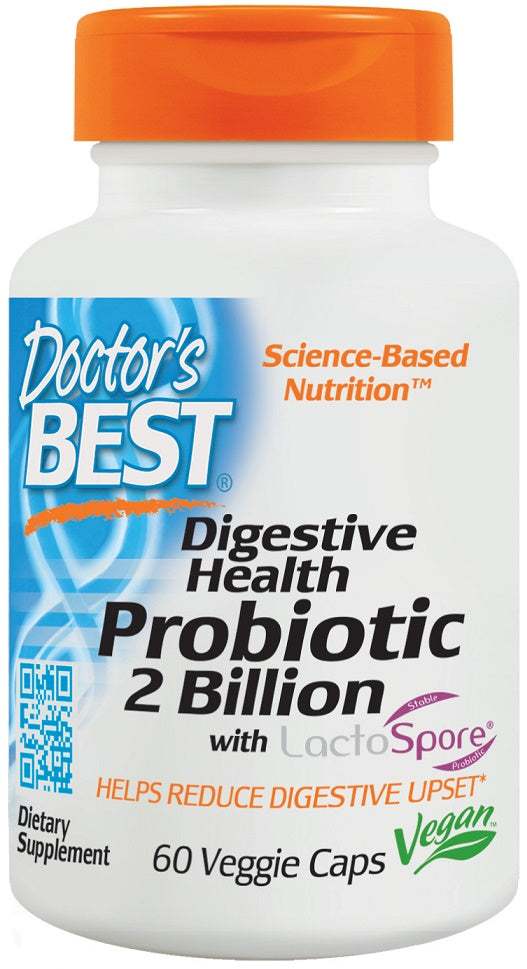
Price: £18.79 (reduced from £23.38) · Size: 60 vegetarian capsules · Dose: 2 billion CFU B. coagulans MTCC 5856 (LactoSpore) per capsule · Other ingredients: modified cellulose capsule, maltodextrin · Reviews: 154 on welzo.com · GTIN: 753950004641 · Storage: no refrigeration required
Why we like it. This is the standout, and it is also the cheapest — an unusual combination. It is the only product Welzo stocks that delivers B. coagulans as a single named strain, and that strain, MTCC 5856, is the one behind the IBS-D trial cited at the top of this article. Crucially, the dose matches: the trial used 2 billion CFU daily, and one capsule is 2 billion CFU. You are not guessing at an equivalent.
The ingredient list is refreshingly short — a cellulose capsule and maltodextrin as a carrier, nothing else. It is vegan, gluten-free and non-GMO, and needs no refrigeration. At 31p per capsule it costs roughly a third of the spore blends below. The one thing it does not do is offer the broader microbial coverage of a multi-strain product, which is a legitimate reason to choose something else — but if you specifically want B. coagulans, backed by data, this is the one.
| Pros | Cons |
|---|---|
| Clinically trialled MTCC 5856 strain, clearly labelled Dose matches the published trial exactly Cheapest per capsule in this guide Vegan, gluten-free, non-GMO, shelf-stable Very short excipient list |
Single strain only — no broader coverage CFU guarantee point not stated on the listing Stock status was ambiguous at the time of writing Welzo listing miscites EFSA on probiotic claims |
View Doctor's Best LactoSpore at Welzo →
2. Microbiome Labs MegaSporeBiotic (Spores Only) — Best spore blend
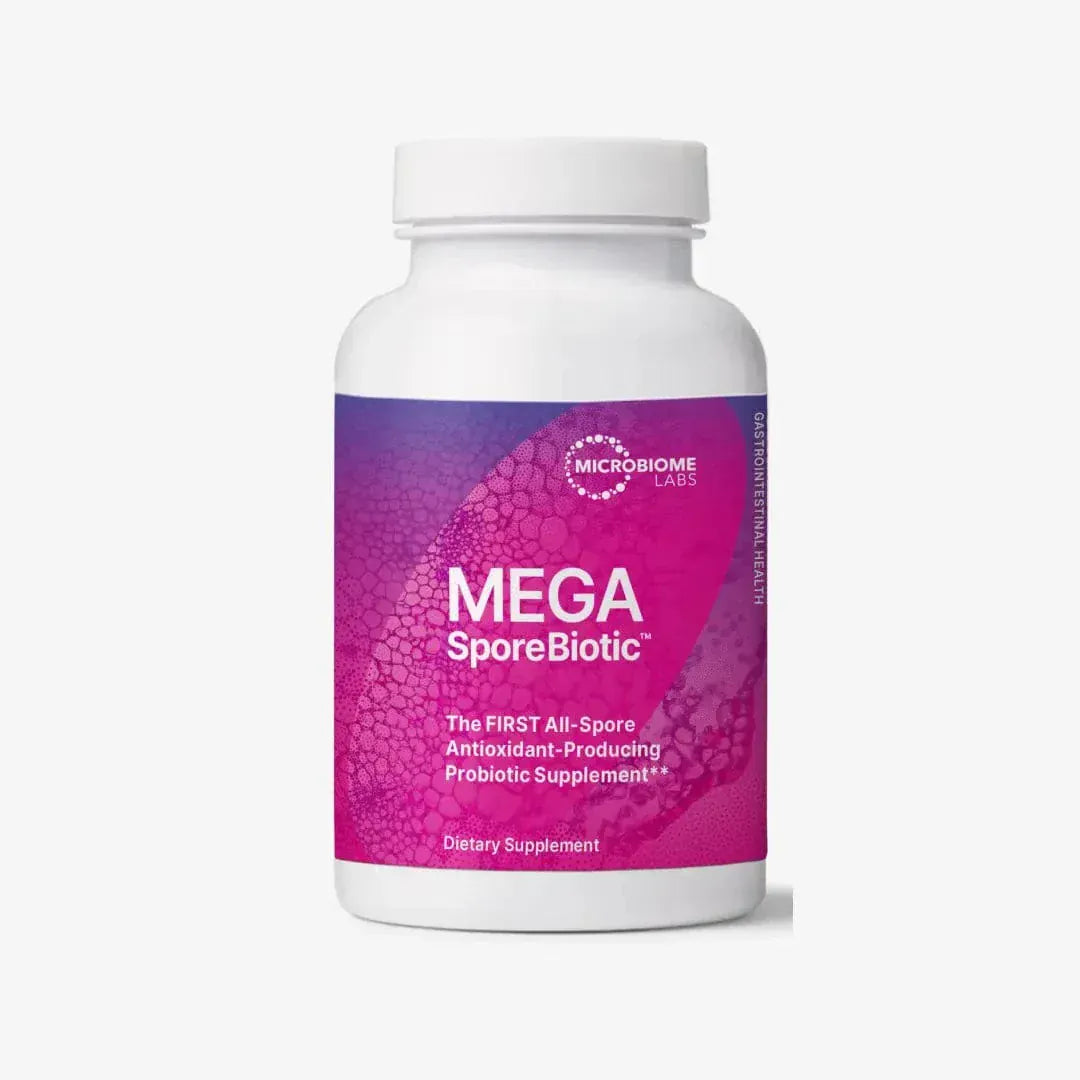
Price: £59.99 (reduced from £65.00) · Size: 60 capsules · Dose: 5 billion spore cells per serving · Strains: Bacillus subtilis HU58, B. coagulans SC-208, B. clausii SC-109, B. licheniformis SL-307 · Reviews: 114 on welzo.com
Why we like it. MegaSporeBiotic is the product that made spore-based probiotics mainstream among UK practitioners, and it remains the reference point for the category. All four strains carry designations, the excipient list is minimal (cellulose and capsule shell), and it is shelf-stable with a long life. Microbiome Labs has invested more in research on this specific blend than most competitors have on anything.
Two honest caveats. First, the published work is on the four-strain blend, not on B. coagulans SC-208 in isolation, so you cannot attribute any of it to the coagulans component alone. Second, this is a strong formula and Microbiome Labs itself advises building up slowly — starting on a half or single capsule — because a meaningful minority of people get a noticeable increase in wind and loose stools in the first fortnight. At £59.99 for 60 capsules, and a full dose of two daily, this is an expensive routine.
| Pros | Cons |
|---|---|
| All four strains fully designated The most researched blend in this category Shelf-stable, no refrigeration, long shelf life Minimal excipients Currently discounted from £65.00 |
Expensive — up to £2 per day at full dose Evidence is for the blend, not for B. coagulans alone Commonly causes initial wind and loose stools Requires slow titration over several weeks |
View MegaSporeBiotic at Welzo →
3. Microbiome Labs RestorFlora PD — Best short course
Price: £20.99 · Size: 21 capsules · Strains: B. subtilis HU58, B. coagulans SC-208, B. clausii SC-109, Saccharomyces boulardii CNCM-I-1079 · Reviews: 92 on welzo.com · Notable: enteric-coated capsules; dairy-free and gluten-free
Why we like it. The 21-capsule pack is the smartest format here. Most antibiotic courses run five to fourteen days, and this gives you enough for the course plus a week afterwards without committing £60 to a product you may not want long term. It is also the cheapest way to find out whether spore-based probiotics suit you at all.
The combination is sensible: spores are not killed by most antibiotics, so they can be taken alongside a course, and S. boulardii is a yeast and therefore also unaffected — it has the strongest evidence of any probiotic for antibiotic-associated diarrhoea. The enteric coating is arguably redundant for spores, which do not need it, but it does protect the yeast component. Do note the per-capsule cost is the same £1 as the larger packs, so this is a trial size rather than a bargain.
| Pros | Cons |
|---|---|
| Lowest entry price at £20.99 Pack size matches a typical antibiotic course Adds S. boulardii, the best-evidenced anti-AAD probiotic Enteric-coated; dairy-free and gluten-free |
Only 21 capsules — not a long-term supply Per-capsule cost no cheaper than larger packs CFU count not stated on the Welzo listing Yeast component unsuitable in some immunocompromised states |
View RestorFlora PD at Welzo →
4. MegaSporeBiotic Plus Antioxidants — Best with added antioxidants
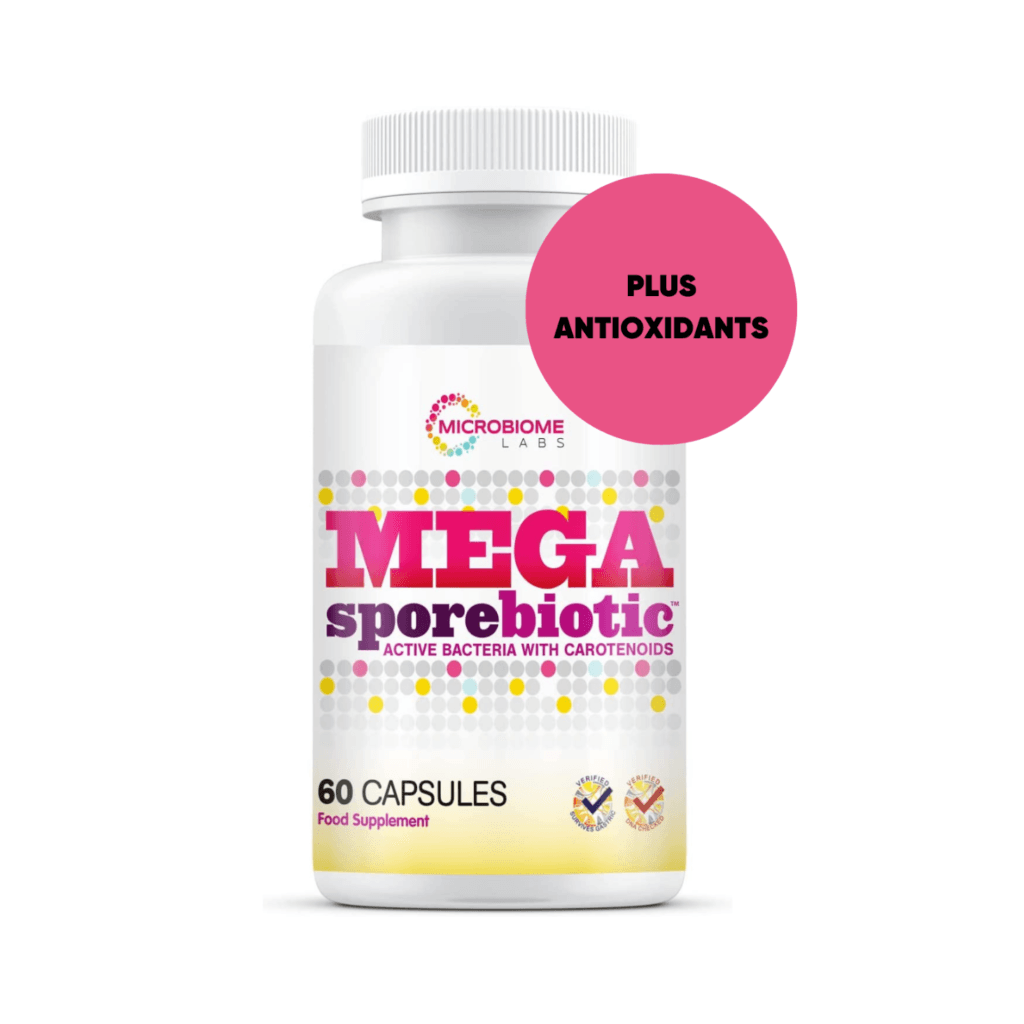
Price: £59.99 · Size: 60 capsules · Dose: 4 billion spore cells, plus 1mg each of beta-carotene, astaxanthin, lutein and lycopene · Reviews: 122 on welzo.com
Why we like it. The same four-strain spore base with a carotenoid blend added. If you are not already taking a carotenoid supplement and like the idea of consolidating, it is a tidy way to do it, and the antioxidant beads give the capsule its distinctive appearance.
We rank it below the plain version for two reasons, and we would rather be straight about them. The spore dose is slightly lower — 4 billion rather than 5 billion — for the same £59.99. And 1mg each of the carotenoids is a modest amount; most standalone astaxanthin products supply 4–12mg. If antioxidants are your goal, a dedicated astaxanthin supplement gives you far more per pound. Choose this one if convenience genuinely matters to you, not because the additions transform the product.
| Pros | Cons |
|---|---|
| Same well-researched four-strain spore base Four carotenoids included Convenient consolidation of two supplements Shelf-stable, no refrigeration |
Lower spore dose (4bn vs 5bn) at the same price Carotenoid doses are small at 1mg each Contains sucrose and modified starch as carriers Same titration and initial wind issues as the standard version |
View MegaSporeBiotic Plus at Welzo →
5. Microbiome Labs RestorFlora (50 capsules) — Best larger pack with S. boulardii
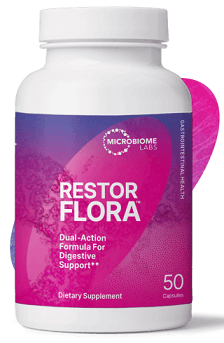
Price: £47.99 · Size: 50 capsules · Reviews: 86 on welzo.com · Format: spore blend with Saccharomyces boulardii
Why we like it. The larger sibling of RestorFlora PD, and the right choice if the shorter pack suited you and you want to continue. At 96p per capsule it is fractionally the cheapest of the Microbiome Labs options, and combining spores with S. boulardii covers two mechanisms that behave quite differently in the gut.
It sits fifth simply because most people do not need a 50-capsule pack of a combination product as a starting point. If you are new to this category, start with the Doctor's Best at number one or the 21-capsule PD pack at number three, and come here only once you know it agrees with you. See our guide to S. boulardii for more on that component.
| Pros | Cons |
|---|---|
| Cheapest per capsule of the Microbiome Labs range Two distinct mechanisms — spores plus yeast 50-capsule pack suits ongoing use Shelf-stable |
£47.99 is a large outlay for a first purchase CFU count not stated on the Welzo listing Yeast unsuitable in some immunocompromised states Overlaps heavily with RestorFlora PD |
Other stocked products containing B. coagulans
Several other Welzo products include B. coagulans within a wider formula. We have not ranked them above because the B. coagulans dose is not disclosed separately, so you cannot tell how much you are getting. They may still suit you if your goal is general digestive support rather than this organism specifically. Check the current price and label on each listing.
- Life Extension Enhanced Super Digestive Enzymes and Probiotics — MTCC 5856 paired with a broad enzyme blend. See enzymes vs probiotics.
- The Nue Co. Prebiotic + Probiotic — 15 billion B. coagulans spores with organic inulin, making it a synbiotic. See synbiotic supplements and prebiotic vs probiotic.
- Cura Sporebiotics — B. coagulans SC-208 with HU58 and SC-109 plus antioxidants; the label states suitability from age three, so may interest families. See children's probiotics.
- Allnutrition Probiotic 100 Ultimate — LactoSpore MTCC 5856 with inulin.
- Biocidin Botanicals Proflora 4R — 3 billion spore cells with quercetin, marshmallow root and aloe vera. See aloe vera for gut health.
For wider comparisons, see best probiotics UK, high-strength probiotics, shelf-stable probiotics and vegan probiotics.
How to take it: dose, timing and how long
| Question | Practical answer |
|---|---|
| Daily dose | 1–6 billion CFU is the usual evidenced range. For MTCC 5856, 2 billion daily matches the trial. |
| When to take it | With a meal. Spores survive acid regardless, so timing is less critical than with other probiotics. |
| Starting dose | Half a capsule or one every other day for the first week, especially with spore blends. |
| How long before judging | At least 4 weeks per NICE CG61; the MTCC 5856 trial ran 90 days. |
| With antibiotics | Spores are not killed by most antibiotics, so spacing is less critical — but check with your pharmacist. |
| Refrigeration | Not needed. Store cool, dry and out of sunlight. |
| If nothing changes | Stop after 12 weeks. Probiotics do not work for everyone. |
Further reading: when to take probiotics, how long probiotics take to work, should I take probiotics every day, can you take too many probiotics and do probiotics actually work?
Safety, side effects and who should avoid it
For most healthy adults B. coagulans is well tolerated. The commonest side effects are wind, bloating and looser stools in the first one to two weeks, which usually settle. See probiotic side effects and probiotic safety.
One point deserves emphasis: B. coagulans is not Bacillus cereus, the food-poisoning organism from the same genus. They are distinct species. But they are close enough relatives that accurate species and strain identification genuinely matters — which is a practical argument for buying a product with a printed strain code from a manufacturer that publishes its testing, rather than an unnamed "Bacillus coagulans" from an unknown supply chain.
|
⚠ Do not take live probiotics without medical advice if you:
|
Food supplements in the UK are regulated as foods, not medicines, and are not assessed for efficacy by the MHRA before sale. Never stop or delay prescribed treatment in favour of a supplement.
When to see a doctor
|
⚠ See your GP urgently — do not self-treat with probiotics — if you have:
These are not IBS symptoms and need investigation. See the NHS guidance on irritable bowel syndrome and bowel cancer symptoms, and our guide on when to see a GP about stomach symptoms. |
Before assuming symptoms are IBS, it is worth excluding the conditions that mimic it: coeliac disease, bile acid malabsorption, lactose intolerance and inflammatory bowel disease — a faecal calprotectin test helps distinguish the last of these.
Frequently asked questions
What is the best Bacillus coagulans supplement in the UK?
Doctor's Best Digestive Health Probiotic with LactoSpore (£18.79, 60 capsules) is our top pick. It is the only single-strain option widely available in the UK that uses B. coagulans MTCC 5856 — the strain tested in published human trials — at the dose those trials used, 2 billion CFU daily. It is also the cheapest per capsule in this guide.
Is Bacillus coagulans the same as Lactobacillus sporogenes?
Yes, but "Lactobacillus sporogenes" was never a valid name. Lactobacillus species do not form spores, so the label was scientifically incorrect from the start. Any product using it is selling Bacillus coagulans.
Is Bacillus coagulans now called Weizmannia coagulans?
Formally, yes. A 2020 genomic reclassification moved this species into the new genus Weizmannia. The organism is unchanged and most labels still use the old name, so both refer to the same bacterium.
How much Bacillus coagulans should I take daily?
Between 1 and 6 billion CFU daily covers the evidenced range. For MTCC 5856 specifically, 2 billion CFU daily matches the published IBS trial. Because spores survive digestion so well, high CFU counts are unnecessary here.
How long does Bacillus coagulans take to work?
Allow at least four weeks, which is what NICE guideline CG61 advises for probiotics in IBS. The main MTCC 5856 trial ran for 90 days, so a longer trial is reasonable before concluding it does not help you.
Does Bacillus coagulans need refrigeration?
No. The spore coat makes it stable at room temperature and resistant to heat and humidity, which is one of its main practical advantages. Store it somewhere cool and dry — not a steamy bathroom cabinet.
Can I take Bacillus coagulans with antibiotics?
Spore-formers are generally not killed by common antibiotics, so unlike conventional probiotics they do not necessarily need to be spaced hours apart. Check with your pharmacist about your specific antibiotic before assuming this.
Is Bacillus coagulans safe?
It is well tolerated by most healthy adults, with transient wind and bloating the commonest side effects. It should not be taken without medical advice by anyone immunocompromised, critically ill, or with a central venous catheter or prosthetic heart valve.
Is Bacillus coagulans the same as Bacillus cereus?
No. They are different species within the same genus. B. cereus can cause food poisoning; B. coagulans is used as a probiotic. Because they are related, buying a product with a printed strain code from a manufacturer that publishes its testing is worthwhile.
Is Bacillus coagulans better than Lactobacillus probiotics?
Neither is universally better — they are different tools. Spore-formers survive digestion and storage far more reliably and suit travel and antibiotic courses. Lactobacillus and Bifidobacterium species have a much larger overall evidence base across more conditions. Comparing their CFU counts directly is misleading.
Medical disclaimer
This article is for general information and education. It is not medical advice and is not a substitute for assessment, diagnosis or treatment by a qualified healthcare professional. Food supplements should not replace a varied, balanced diet or prescribed medical treatment, and should not delay seeking a diagnosis. Do not exceed the recommended intake. If you are pregnant, breastfeeding, taking prescribed medication or living with a diagnosed condition, speak to your GP or pharmacist before starting any supplement. If you have concerning symptoms, contact your GP or NHS 111.
About the author
Dr Zeeshan Afzal, MBBS is a Medical Doctor and Welzo's Medical Content Lead. He writes and reviews Welzo's clinical content against NHS, NICE and MHRA guidance, with a focus on separating what the evidence supports from what supplement marketing asserts.
Transparency
Welzo sells every product featured in this article and earns revenue when you buy. Welzo's own Ultra Purity range does not currently include a Bacillus coagulans product, so this category has been ranked entirely on third-party brands and on merit. Four of the five ranked products come from one manufacturer, Microbiome Labs, which reflects that brand's dominance of the spore-based category in the UK rather than any commercial arrangement. Prices, review counts and stock status were taken from welzo.com on the date of publication and change frequently.
References
- Majeed M, Nagabhushanam K, Natarajan S, et al. Bacillus coagulans MTCC 5856 supplementation in the management of diarrhea predominant irritable bowel syndrome: a double blind randomized placebo controlled pilot clinical study. Nutrition Journal. 2016;15:21.
- Majeed M, Nagabhushanam K, Arumugam S, et al. Bacillus coagulans MTCC 5856 for the management of major depression with irritable bowel syndrome: a randomised, double-blind, placebo controlled, multi-centre, pilot clinical study. Food & Nutrition Research. 2018;62.
- Hun L. Bacillus coagulans significantly improved abdominal pain and bloating in patients with IBS. Postgraduate Medicine. 2009;121(2):119–124.
- Dolin BJ. Effects of a proprietary Bacillus coagulans preparation on symptoms of diarrhea-predominant irritable bowel syndrome. Methods and Findings in Experimental and Clinical Pharmacology. 2009;31(10):655–659.
- Jäger R, Purpura M, Farmer S, Cash HA, Keller D. Probiotic Bacillus coagulans GBI-30, 6086 improves protein absorption and utilization. Probiotics and Antimicrobial Proteins. 2018;10(4):611–615.
- Jäger R, Shields KA, Lowery RP, et al. Probiotic Bacillus coagulans GBI-30, 6086 reduces exercise-induced muscle damage and increases recovery. PeerJ. 2016;4:e2276.
- Gupta RS, Patel S, Saini N, Chen S. Robust demarcation of 17 distinct Bacillus species clades, proposed as novel Bacillaceae genera, by phylogenomics and comparative genomic analyses. International Journal of Systematic and Evolutionary Microbiology. 2020;70(11):5753–5798.
- Besselink MG, van Santvoort HC, Buskens E, et al. Probiotic prophylaxis in predicted severe acute pancreatitis: a randomised, double-blind, placebo-controlled trial. The Lancet. 2008;371(9613):651–659.
- Vasant DH, Paine PA, Black CJ, et al. British Society of Gastroenterology guidelines on the management of irritable bowel syndrome. Gut. 2021;70(7):1214–1240.
- National Institute for Health and Care Excellence. Irritable bowel syndrome in adults: diagnosis and management (CG61).
- NHS. Irritable bowel syndrome (IBS).
- NHS. Probiotics.
- NHS. Bowel cancer.


 Оценено отлично от 26,523+ отзива
 100% гаранция за връщане на парите