

 Instagram




Best Lactobacillus plantarum Supplements UK


Related products

Written by Dr Zeeshan Afzal (MBBS) — Medical Doctor & Medical Content Lead, Welzo
Medically reviewed & evidence-based · Last updated: 30 July 2026 · Reading time: approx. 13 minutes
Every product below is stocked by Welzo. Prices and review counts were taken from welzo.com on the date of publication and can change. We state plainly where the evidence is strong, where it is weak, and where marketing has run ahead of the science.
If you have searched for a Lactobacillus plantarum supplement in the UK, you have probably noticed that almost every label says the same thing and almost none of them say the one thing that actually matters: the strain. That distinction is not pedantry. The largest randomised controlled trial of this species enrolled 214 people with irritable bowel syndrome and tested one specific strain — L. plantarum 299v (DSM 9843) — for four weeks, reporting significant reductions in abdominal pain and bloating compared with placebo (Ducrotté, Sawant & Jayanthi, World Journal of Gastroenterology, 2012). A product labelled only "L. plantarum" is not the product that was tested. This guide ranks what Welzo stocks on that basis, and sits within our wider digestive health hub and gut health range.
| Start here: All probiotics · Gut health supplements · Welzo Akkermansia 60 Billion AFU · Welzo Ultra Purity Modified Citrus Pectin · Welzo Ultra Purity Berberine · Welzo Ultra Purity TUDCA |
Table of contents
- What is Lactobacillus plantarum?
- Why the name changed to Lactiplantibacillus
- Why the strain matters more than the CFU count
- Evidence-based benefits
- How we chose and ranked these products
- Best L. plantarum supplements at a glance
- Full comparison table
- The ranked picks in detail
- Multi-strain formulas containing L. plantarum
- How to take it: dose, timing and how long
- Safety, side effects and who should avoid it
- When to see a doctor
- Frequently asked questions
- References
What is Lactobacillus plantarum?
Lactobacillus plantarum is a lactic acid bacterium found naturally in fermented plant foods — sauerkraut, kimchi, sourdough, brined olives, some pickles — and in the human gastrointestinal tract. It is unusually hardy for a Lactobacillus: it tolerates a wide pH range and bile salts, which is why it survives the stomach better than many species. If you are weighing food sources against capsules, our comparison of fermented foods versus probiotic supplements covers the trade-offs.
Mechanistically, L. plantarum adheres to intestinal mucus, competes with less desirable organisms for binding sites, and ferments fibre into short-chain fatty acids. Those metabolites — particularly butyrate — are the main fuel for colonocytes and are central to gut barrier function. You can read more on the underlying biology in our guides to short-chain fatty acids and microbiome diversity.
Why the name changed to Lactiplantibacillus
In 2020 the genus Lactobacillus was formally split. A large taxonomic review (Zheng and colleagues, International Journal of Systematic and Evolutionary Microbiology, 2020) divided it into 25 genera, because organisms grouped under one name were genetically about as different from each other as separate families of animals. Lactobacillus plantarum became Lactiplantibacillus plantarum.
Nothing about the bacterium changed — only its name. Most UK labels, retailers and search traffic still use the old term, which is why this article does too. If you see "Lactiplantibacillus plantarum" on a newer pack, it is the same organism. Our dedicated page on Lactobacillus plantarum covers the species in more depth.
Why the strain matters more than the CFU count
This is the single most important thing to understand before buying, and most articles on this keyword skate over it.
Probiotic effects are strain-specific, not species-specific. Two strains of L. plantarum can differ in which surface proteins they express, which metabolites they produce and whether they adhere to intestinal mucosa at all. Evidence generated for one does not transfer to another, any more than results for one breed of dog tell you about another.
Nearly all the useful human data on this species comes from L. plantarum 299v (DSM 9843, trademarked LP299V®). A handful of other designated strains — LP-115, and various proprietary strains in blends — have far thinner evidence bases. A product that lists only "Lactobacillus plantarum 10 billion CFU" with no strain code is not backed by the 299v trials, whatever the packaging implies.
CFU count matters second. Once a strain is present at the dose used in trials (typically 10 billion CFU per day for 299v), pushing higher has not been shown to improve outcomes. More is not automatically better — see can you take too many probiotics and CFU vs AFU explained. For a broader framework, read how to choose a probiotic and single-strain vs multi-strain probiotics.
Evidence-based benefits
Irritable bowel syndrome, bloating and abdominal pain
This is the strongest indication, and it applies to 299v specifically. In the Ducrotté trial (2012), 214 adults with IBS took either 10 billion CFU of L. plantarum 299v or placebo daily for four weeks; abdominal pain severity and daily bloating fell significantly in the active group. An earlier, much smaller Polish trial of 40 patients (Niedzielin and colleagues, European Journal of Gastroenterology & Hepatology, 2001) reported a similar direction of effect.
The honest caveat: both trials are small by modern standards, and the 2012 study reported an unusually large gap between arms — a response rate in the placebo group far lower than the 30–40% typically seen in IBS trials. That pattern warrants caution. Much of the 299v research programme has also been funded by the strain's commercial owner, which is normal in this field but is a real limitation. The British Society of Gastroenterology's 2021 IBS guideline recommends probiotics as an option while explicitly declining to specify a strain, precisely because the evidence base is fragmented. NICE guideline CG61 advises anyone trying a probiotic for IBS to take it at the manufacturer's recommended dose for at least four weeks while monitoring the effect.
If bloating is your main complaint, also see best supplements for bloating, foods that cause bloating and trapped wind relief. For IBS more broadly, read best supplements for IBS and the IBS subtypes — the right approach differs depending on whether you have IBS-D, IBS-C or IBS-M.
Non-haem iron absorption
An intriguing and genuinely distinctive line of research. In a double-isotope crossover study in women of reproductive age (Hoppe and colleagues, British Journal of Nutrition, 2015), 299v taken alongside an iron-fortified drink increased non-haem iron absorption compared with the same drink without it; a follow-up in menstruating women (Hoppe and colleagues, PLoS One, 2017) pointed the same way.
The honest caveat: these are small, single-blind, mechanistically focused studies measuring absorption — not clinical trials showing that anyone's ferritin, haemoglobin or fatigue improved. The effect also appears sensitive to the food matrix. Do not treat this as a substitute for iron treatment if you are deficient. If oral iron is causing you problems, see iron supplements and constipation.
Gut barrier integrity
L. plantarum strains have been shown in laboratory and animal models to upregulate tight-junction proteins and stimulate mucus production. Human outcome data are limited. This is a plausible mechanism, not a proven clinical benefit — a distinction we make carefully in is leaky gut real? and best supplements for leaky gut.
Cardiometabolic markers
A small Polish trial in 36 heavy smokers (Naruszewicz and colleagues, American Journal of Clinical Nutrition, 2002) found reductions in systolic blood pressure, leptin and fibrinogen after six weeks of 299v in a rose-hip drink. It is a single small study in an unusual population and has not been convincingly replicated. Treat it as interesting, not actionable. For fibre and lipids, see fibre and cholesterol; for glucose, gut health and blood sugar.
Mood and the gut–brain axis
Frequently claimed, thinly evidenced for this species. Some L. plantarum strains have been studied for anxiety and stress markers with mixed and generally small results. We would not buy this product for mood. See probiotics for anxiety and the gut–brain connection for a balanced read.
| A note on claims: under GB nutrition and health claims rules, no food supplement may lawfully be presented as treating, preventing or curing disease. L. plantarum currently holds no authorised health claim in Great Britain. Language such as "boosts immunity", "detoxes" or "treats IBS" on any retailer's listing — including some on welzo.com — is not compliant, regardless of what the underlying research suggests. |
How we chose and ranked these products
Our criteria, in strict order of priority:
- Strain transparency. Is the exact strain designation printed (e.g. 299v / DSM 9843, LP-115)? A named strain with published human trials outranks everything else.
- Dose versus the trial range. Does one serving deliver the amount used in the studies for that strain — for 299v, 10 billion CFU per day?
- CFU guaranteed to end of shelf life, not merely at time of manufacture.
- Formulation quality: delayed-release or acid-resistant delivery, absence of unnecessary fillers, vegan and allergen status.
- Cost per serving, calculated from the current Welzo price.
- Independent testing and manufacturing standards.
On our own brand: Welzo's Ultra Purity range does not currently include an L. plantarum product. We have therefore ranked this category entirely on merit, on third-party brands. The nearest own-brand options are Welzo Akkermansia 60 Billion AFU, which is a different organism for a different purpose — see Akkermansia vs conventional probiotics.
Best L. plantarum supplements at a glance
| Award | Product | Why |
|---|---|---|
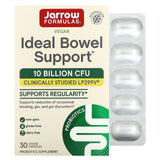
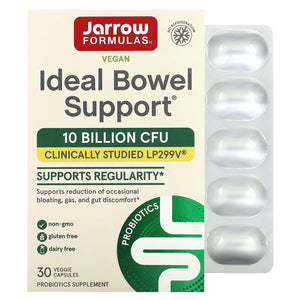
| Best overall | Jarrow Formulas Ideal Bowel Support 299v | The only product here using the clinically trialled 299v strain at the trial dose |
| Best value | Swanson L. plantarum 10 Billion CFU DRcaps | Delayed-release capsule at roughly 20p per day |
| Best UK-formulated | BioCare BioPlantarum Plus Sterols | Established British practitioner brand, 90-capsule pack |
| Best high-strength powder | Custom Probiotics L. Plantarum Powder 50g | Named LP-115 strain, very high CFU, dose fully adjustable |
| Best budget | Swanson L. Plantarum Inner Bowel Support | Lowest cost per capsule (stock permitting) |
Full comparison table
| # | Product | Strain named? | Dose | Size | Price | Per serving |
|---|---|---|---|---|---|---|
| 1 | Jarrow Ideal Bowel Support 299v | Yes — 299v | 10bn CFU | 30 caps | £42.99 | £1.43 |
| 2 | Swanson L. plantarum DRcaps | No | 10bn CFU | 30 caps | £5.93 | £0.20 |
| 3 | BioCare BioPlantarum Plus Sterols | Not on listing | Check label | 90 caps | £31.01 | £0.34/cap |
| 4 | Custom Probiotics L. Plantarum Powder | Yes — LP-115 | 224bn CFU/scoop | 50g (~62) | £148.44 | £2.39 |
| 5 | Swanson Inner Bowel Support | No | Check label | 30 vcaps | £5.52 | £0.18 |
Prices verified on welzo.com at the date of publication. Cost per serving assumes one capsule or one scoop daily. Always check the current listing before ordering.
The ranked picks in detail
1. Jarrow Formulas Ideal Bowel Support 299v — Best overall

Price: £42.99 · Size: 30 vegetarian capsules · Dose: 10 billion CFU L. plantarum 299v, guaranteed at time of consumption · Other ingredients: potato starch, magnesium stearate (vegetable), hypromellose capsule · Storage: no refrigeration required
Why we like it. This is the only product Welzo stocks that contains the specific strain behind essentially all of the meaningful human research on this species, at the dose used in those trials. Everything else in this category asks you to assume that "L. plantarum" behaves like 299v; this one does not require that assumption. The guarantee is stated at time of consumption rather than at manufacture, which is the more demanding and more useful specification, and the excipient list is short and unremarkable.
It is also, by a wide margin, the most expensive per capsule of the non-powder options — around seven times the cost of the Swanson product. You are paying for the strain designation and the trial evidence attached to it. If that evidence is why you are buying, it is money well spent; if you simply want a plantarum product, it is not.
| Pros | Cons |
|---|---|
| Clinically trialled 299v strain, clearly labelled Dose matches the published trial range CFU guaranteed to end of shelf life Vegetarian, shelf-stable, minimal excipients |
By far the highest cost per capsule here Only 30 capsules — one month at one daily The underlying trials are small and largely industry-funded Welzo listing carries non-compliant IBS wording |
View Jarrow Ideal Bowel Support 299v at Welzo →
2. Swanson L. plantarum Probiotic 10 Billion CFU DRcaps — Best value
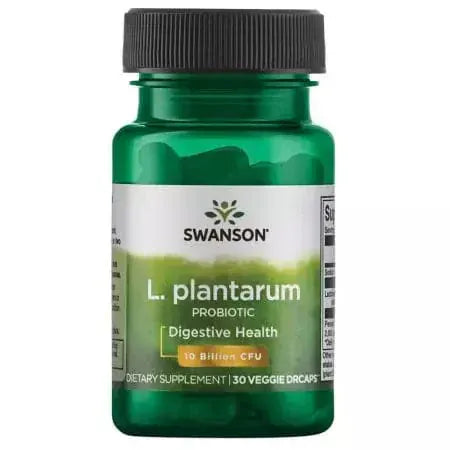
Price: £5.93 · Size: 30 vegetarian DRcaps · Dose: 10 billion CFU L. plantarum · Reviews: 132 on welzo.com · Storage: no refrigeration required
Why we like it. At roughly 20 pence a day this is the cheapest realistic way to trial the species, and the DRcaps delayed-release shell is a genuine formulation advantage — it is designed to open in the small intestine rather than the stomach, which matters more than most people realise (see do probiotics survive stomach acid?). It is vegan-friendly and shelf-stable, so it travels well.
The catch is straightforward and we will not dress it up: no strain designation is given. You cannot map this product onto the 299v evidence. It may work well for you — plenty of the 132 reviewers say it has — but that is anecdote, not trial data. Treat it as a low-cost experiment rather than an evidence-backed intervention.
| Pros | Cons |
|---|---|
| Outstanding value at ~£0.20 per day Delayed-release DRcaps delivery Vegan, no refrigeration needed Large review base on Welzo |
No strain designation — not the trialled 299v CFU guarantee point not stated on listing Single strain only, no prebiotic Listing uses "boosts immunity" wording |
View Swanson L. plantarum DRcaps at Welzo →
3. BioCare BioPlantarum Plus Sterols — Best UK-formulated option
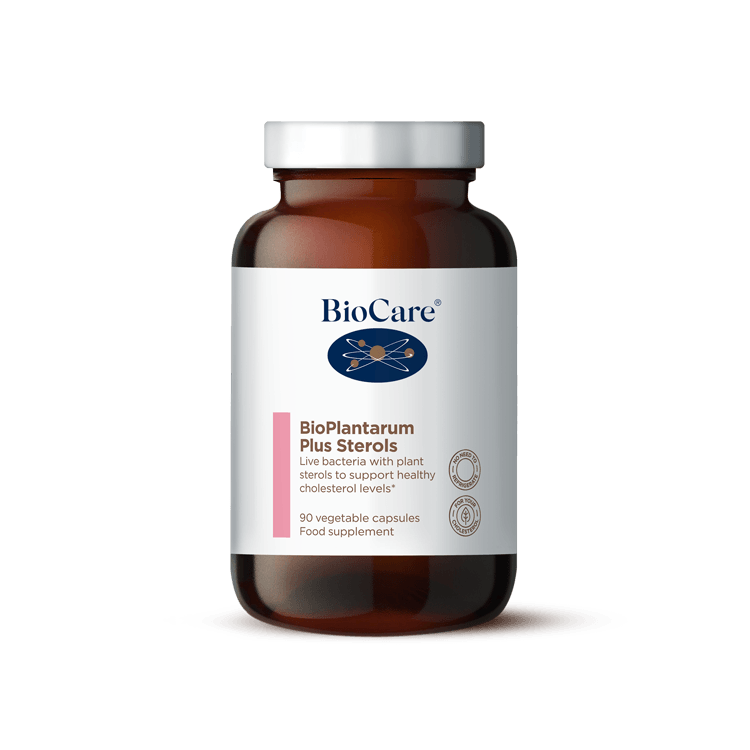
Price: £31.01 · Size: 90 capsules · Reviews: 94 on welzo.com · Notable: combines L. plantarum with plant sterols
Why we like it. BioCare is a long-established British practitioner-facing brand, formulating and manufacturing in the UK, and the 90-capsule pack size makes a proper three-month trial affordable — which matters, because four weeks is the minimum sensible trial period and many people need longer to judge an effect. The plant sterol component is an unusual addition; sterols have a well-characterised effect on LDL cholesterol at doses of around 1.5–3g daily, though whether this product reaches that threshold needs checking on the label.
The Welzo listing does not disclose the strain designation or the CFU count. Before buying, check the pack or contact BioCare directly. We have ranked it third on brand track record and pack economics, not on documented strain evidence.
| Pros | Cons |
|---|---|
| Established UK practitioner brand 90 capsules — supports a proper 3-month trial Plant sterols add a second, well-evidenced ingredient Reasonable per-capsule cost |
Strain designation not shown on the Welzo listing CFU count not shown on the Welzo listing Sterol dose needs verifying against the 1.5–3g threshold Not suitable if you want plantarum in isolation |
View BioCare BioPlantarum Plus Sterols at Welzo →
4. Custom Probiotics L. Plantarum Powder 50g — Best high-strength powder
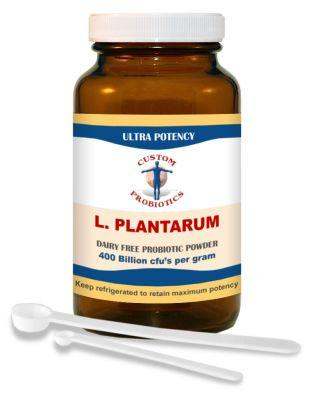
Price: £148.44 · Size: 50g (approx. 62 × 0.8g scoops) · Dose: 224 billion CFU per 0.8g scoop · Strain: LP-115 · Free from: dairy, gluten, soy, corn, casein, yeast, sugar, GMOs
Why we like it. Two things set this apart. First, the strain is named — LP-115 — which puts it in the minority. Second, the powder format lets you titrate precisely, starting well below a full scoop and building up. That is genuinely useful for people who have reacted badly to probiotics before, and it is the format we would choose for someone with a sensitive gut. The manufacturer also cites two-year temperature stability testing, which is a meaningful shelf-life assurance rather than a marketing line. It is dairy-free and suitable for a plant-based diet — see also dairy-free probiotics and probiotic powders.
Two significant caveats. The price is very high — nearly £150, and £2.39 per full scoop. And 224 billion CFU per scoop is enormously more than any trial dose for this species; there is no evidence that this improves outcomes, and for some people high doses provoke more wind and bloating initially. If you buy this, start at a quarter scoop. See high-strength probiotics for context.
| Pros | Cons |
|---|---|
| Named LP-115 strain Fully adjustable dosing — ideal for sensitive guts 2-year temperature stability testing Free from all major allergens and GMOs |
Very expensive — £148.44, £2.39 per scoop 224bn CFU far exceeds any evidenced dose LP-115 has much thinner human data than 299v Powder is less convenient than capsules |
View Custom Probiotics L. Plantarum Powder at Welzo →
5. Swanson L. Plantarum Inner Bowel Support — Best budget

Price: £5.52 (reduced from £6.80) · Size: 30 vegetarian capsules · Reviews: 100 on welzo.com · Availability: currently shown as out of stock
Why we like it. The lowest cost per capsule in this guide, from a brand with a substantial review base. For anyone who simply wants to find out whether this species agrees with them before committing to a more expensive product, it is a sensible entry point.
We have placed it fifth for two honest reasons: it was showing as out of stock at the time of writing, and like its stablemate it does not disclose a strain designation. If it is unavailable when you look, the Swanson DRcaps product at number two is the better buy anyway — the delayed-release shell is worth the extra 40 pence.
| Pros | Cons |
|---|---|
| Lowest cost per capsule here Currently discounted Vegetarian capsules 100 reviews on Welzo |
Out of stock at the time of writing No strain designation No delayed-release shell CFU count not shown on the listing |
View Swanson Inner Bowel Support at Welzo →
Multi-strain formulas containing L. plantarum
Several broader-spectrum probiotics stocked by Welzo include L. plantarum alongside other organisms. We have not ranked them above, because in a blend the plantarum dose is usually not disclosed separately — so you cannot tell whether you are getting a meaningful amount. They can still be a good choice if your goal is general microbiome support rather than targeting this species specifically.
- BiOptimizers P3-OM — a proteolytic L. plantarum OM strain with fructooligosaccharides and rice bran; vegan and shelf-stable.
- Renew Life Ultimate Flora Colon Care 80 Billion — includes L. plantarum Lp-115 within a twelve-strain blend.
- TransFormation Plantadophilus — plant-sourced L. plantarum with other lactic acid bacteria.
To weigh the trade-off properly, read single vs multi-strain probiotics, browse our best probiotics guide, or compare related single strains: L. rhamnosus GG, B. longum, B. coagulans and spore-based probiotics.
How to take it: dose, timing and how long
| Question | Practical answer |
|---|---|
| Daily dose | 10 billion CFU daily for 299v — the trial dose. Higher is not better. |
| When to take it | With a meal, unless the label says otherwise. Consistency matters more than timing. |
| How long before judging | At least 4 weeks, per NICE CG61. Many people need 8–12 weeks. |
| Starting dose if sensitive | Quarter to half the label dose for the first week, then build up. |
| With antibiotics | Space at least 2–3 hours from the antibiotic dose. |
| Refrigeration | Not needed for any product here. Keep cool, dry and out of sunlight. |
| If nothing changes | Stop after 12 weeks. Probiotics do not work for everyone. |
Further reading: when to take probiotics, how long probiotics take to work, should I take probiotics every day, probiotics after antibiotics and do probiotics need refrigeration.
Safety, side effects and who should avoid it
For most healthy adults, L. plantarum is well tolerated. The commonest side effects are transient wind, bloating and mild abdominal discomfort in the first one to two weeks, which usually settle. See probiotic side effects and probiotic safety.
|
⚠ Do not take live probiotics without medical advice if you:
|
Food supplements in the UK are regulated as foods, not medicines, so they are not assessed for efficacy by the MHRA before sale. That is precisely why strain transparency and third-party testing carry so much weight. Never stop or delay prescribed treatment in favour of a supplement.
When to see a doctor
|
⚠ See your GP urgently — do not self-treat with probiotics — if you have:
These are not IBS symptoms and require investigation. Read the NHS guidance on irritable bowel syndrome and bowel cancer symptoms, and see our guide on when to see a GP about stomach symptoms. |
Before assuming your symptoms are IBS, it is worth ruling out the conditions that mimic it: coeliac disease, SIBO, bile acid malabsorption and lactose intolerance. A faecal calprotectin test helps distinguish IBS from inflammatory bowel disease.
Frequently asked questions
What is the best Lactobacillus plantarum supplement in the UK?
Jarrow Formulas Ideal Bowel Support 299v (£42.99, 30 capsules) is our top pick because it is the only widely available UK product containing L. plantarum 299v — the strain used in the published human trials — at the trial dose of 10 billion CFU daily. For value, Swanson L. plantarum DRcaps at £5.93 costs about 20p per day, though it does not disclose its strain.
Is Lactobacillus plantarum the same as Lactiplantibacillus plantarum?
Yes. The genus Lactobacillus was formally reclassified in 2020 and this species was renamed Lactiplantibacillus plantarum. The bacterium is unchanged; only the taxonomy was updated. Most UK labels still use the older name.
What does L. plantarum 299v actually do?
In randomised trials in people with IBS it reduced abdominal pain and bloating over four weeks compared with placebo. Separate isotope studies suggest it may increase absorption of non-haem (plant-based) iron. The evidence base is real but modest in size and largely funded by the strain's commercial owner.
How long does L. plantarum take to work?
Allow at least four weeks at the recommended dose, which is what NICE guideline CG61 advises for probiotics in IBS. Many people need eight to twelve weeks. If nothing has changed by twelve weeks, it is reasonable to stop.
What is the correct dose of L. plantarum?
For strain 299v, 10 billion CFU once daily — the dose used in the trials. Products offering hundreds of billions of CFU exceed any evidenced dose and are more likely to cause initial wind and bloating. Start low if your gut is sensitive.
Should I take L. plantarum with or without food?
With a meal is the general recommendation, as food buffers stomach acid and improves survival through the stomach. Products with delayed-release capsules are less dependent on this. Taking it at the same time each day matters more than the precise timing.
Can L. plantarum help with bloating?
Strain 299v reduced bloating significantly versus placebo in trials of people with IBS. Whether an unlabelled "L. plantarum" product does the same is unknown. Bloating also has many non-IBS causes — including coeliac disease, SIBO and constipation — so persistent bloating deserves proper assessment.
Does L. plantarum need to be refrigerated?
No. All the products in this guide are shelf-stable and do not require refrigeration. Store them somewhere cool and dry, away from direct sunlight and steam — a bathroom cabinet is a poor choice.
Who should not take L. plantarum?
Anyone who is immunocompromised, critically ill, has a central venous catheter or prosthetic heart valve, or has acute pancreatitis should not take live probiotics without medical advice. A major trial found increased mortality when a probiotic preparation containing L. plantarum was given in predicted severe acute pancreatitis.
Is L. plantarum better than a multi-strain probiotic?
Neither is universally better. A single named strain lets you match a product to specific published evidence, which is the stronger position if you are targeting IBS symptoms. A multi-strain blend offers broader coverage but usually hides the individual doses, so you cannot tell how much of any one organism you are getting.
Medical disclaimer
This article is for general information and education. It is not medical advice and is not a substitute for assessment, diagnosis or treatment by a qualified healthcare professional. Food supplements should not replace a varied, balanced diet or prescribed medical treatment, and should not delay seeking a diagnosis. Do not exceed the recommended intake. If you are pregnant, breastfeeding, taking prescribed medication or living with a diagnosed condition, speak to your GP or pharmacist before starting any supplement. If you have concerning symptoms, contact your GP or NHS 111.
About the author
Dr Zeeshan Afzal, MBBS is a Medical Doctor and Welzo's Medical Content Lead. He writes and reviews Welzo's clinical content against NHS, NICE and MHRA guidance, with a focus on separating what the evidence supports from what supplement marketing asserts.
Transparency
Welzo sells every product featured in this article and earns revenue when you buy. Welzo's own Ultra Purity range does not currently include an L. plantarum product, so this category has been ranked entirely on third-party brands and on merit. Prices, review counts and stock status were taken from welzo.com on the date of publication and change frequently. We have flagged, in the product tables above, where a listing's wording does not meet GB nutrition and health claims requirements.
References
- Ducrotté P, Sawant P, Jayanthi V. Clinical trial: Lactobacillus plantarum 299v (DSM 9843) improves symptoms of irritable bowel syndrome. World Journal of Gastroenterology. 2012;18(30):4012–4018.
- Niedzielin K, Kordecki H, Birkenfeld B. A controlled, double-blind, randomized study on the efficacy of Lactobacillus plantarum 299V in patients with irritable bowel syndrome. European Journal of Gastroenterology & Hepatology. 2001;13(10):1143–1147.
- Zheng J, Wittouck S, Salvetti E, et al. A taxonomic note on the genus Lactobacillus: description of 23 novel genera. International Journal of Systematic and Evolutionary Microbiology. 2020;70(4):2782–2858.
- Hoppe M, Önning G, Berggren A, Hulthén L. Probiotic strain Lactobacillus plantarum 299v increases iron absorption from an iron-supplemented fruit drink. British Journal of Nutrition. 2015;114(8):1195–1202.
- Hoppe M, Önning G, Hulthén L. Freeze-dried Lactobacillus plantarum 299v increases iron absorption in young females. PLoS One. 2017;12(12):e0189141.
- Naruszewicz M, Johansson ML, Zapolska-Downar D, Bukowska H. Effect of Lactobacillus plantarum 299v on cardiovascular disease risk factors in smokers. American Journal of Clinical Nutrition. 2002;76(6):1249–1255.
- Besselink MG, van Santvoort HC, Buskens E, et al. Probiotic prophylaxis in predicted severe acute pancreatitis: a randomised, double-blind, placebo-controlled trial. The Lancet. 2008;371(9613):651–659.
- Vasant DH, Paine PA, Black CJ, et al. British Society of Gastroenterology guidelines on the management of irritable bowel syndrome. Gut. 2021;70(7):1214–1240.
- National Institute for Health and Care Excellence. Irritable bowel syndrome in adults: diagnosis and management (CG61).
- NHS. Irritable bowel syndrome (IBS).
- NHS. Probiotics.
- NHS. Bowel cancer.



 Оценено отлично от 28,951+ отзива
 100% гаранция за връщане на парите