





Iron Supplements and Constipation: How to Manage It


Related products


Written by Dr Zeeshan Afzal (MBBS) · Medically reviewed for accuracy against current UK clinical guidance · Last updated: August 2026
If you have started iron tablets and your bowels have ground to a halt, you are experiencing one of the most common and most under-discussed problems in UK primary care. Iron supplements and constipation go hand in hand for a large proportion of people, and it is the single biggest reason patients quietly stop taking a treatment they genuinely need. The good news is that constipation from iron is nearly always fixable — usually without abandoning iron altogether.
This guide explains exactly why iron slows your bowels down, which forms of iron are gentlest, and the step-by-step changes (dose timing, formulation, fibre, fluid and, where appropriate, targeted supplements) that resolve it for most people. Because iron sits at the intersection of blood health and digestion, it helps to understand the wider picture too — our gut health collection and our guide to gut health in the UK cover the foundations, while constipation relief in the UK and magnesium for constipation deal with the mechanics of a sluggish bowel. If unabsorbed iron is disturbing your microbial balance, our pages on gut dysbiosis, microbiome diversity and the probiotics range are the natural next step, alongside Akkermansia, citrus pectin powder, Welzo Ultra Purity Berberine and Welzo Ultra Purity TUDCA.

Table of contents
- Do iron supplements cause constipation?
- Why iron supplements cause constipation
- Which iron supplements are most likely to constipate you?
- How to manage constipation from iron supplements: 10 evidence-based steps
- A four-week plan to fix iron-related constipation
- Five things not to do
- Iron, the gut microbiome and long-term gut health
- Black stools, dark stools and what is normal
- Special situations: pregnancy, IBS, IBD and older adults
- When to see a doctor
- Frequently asked questions
- References
Do iron supplements cause constipation?
Yes — and the effect is measurable rather than anecdotal. A systematic review and meta-analysis published in PLOS ONE pooled 43 randomised controlled trials covering 6,831 adults and found that ferrous sulfate roughly doubled the odds of gastrointestinal side effects compared with placebo (odds ratio 2.32, 95% CI 1.74–3.08). Compared with intravenous iron, the odds were around three times higher (OR 3.05). In pregnant women, the pooled odds ratio was 3.33.
Constipation is not the only symptom in that bucket — nausea, epigastric pain, dark stools, metallic taste and bloating all feature — but constipation and abdominal discomfort are consistently the complaints that stop people taking their tablets. That matters clinically, because iron deficiency anaemia does not resolve on its own.
How common is it in practice?
Rates vary widely depending on the preparation, the dose and how symptoms are recorded. In a rigorous double-blind Swiss trial of 150 iron-depleted women, gastrointestinal symptoms were significantly more likely on days when participants took iron than on days when they took an identical placebo capsule — a clean demonstration that the tablets themselves, not expectation or coincidence, drive the symptoms.
What counts as constipation?
Clinically, constipation means passing stools less often than usual for you (commonly fewer than three times a week), stools that are hard, dry, lumpy or unusually large, straining, or a sense of incomplete emptying. If you are unsure where you sit, the Bristol Stool Chart is the simplest self-assessment tool available: types 1 and 2 indicate constipation, type 3 and 4 are ideal.

Why iron supplements cause constipation
There is no single mechanism. Four overlapping processes explain most cases, and understanding them tells you which fix is likely to work for you.
1. Most of the dose never gets absorbed
Fractional absorption of oral iron is low. At the doses used to treat deficiency, typically well under 20% of the dose is absorbed — and often closer to 10%. The remainder travels through the small intestine into the colon largely unchanged. A 65 mg elemental iron tablet may therefore deposit 50–60 mg of reactive, unabsorbed iron into a part of the gut that has no mechanism for handling it.
2. Free iron is chemically reactive in the bowel
Unabsorbed ferrous iron participates in Fenton chemistry, generating reactive oxygen species at the mucosal surface. This produces local irritation and low-grade inflammation of the intestinal lining, which alters both sensation and motility. This is also why some people get the opposite problem — loose stools and urgency — rather than constipation. If you suspect your intestinal lining is already compromised, our guides on gut barrier function and whether leaky gut is real put this in context.
3. Iron changes the colonic microbial environment
Iron is a growth-limiting nutrient for many bacteria. Beneficial barrier species such as lactobacilli require very little of it, whereas many Gram-negative organisms within the Enterobacteriaceae family depend on iron for growth and virulence. A large colonic iron load can therefore shift the competitive balance. A randomised controlled trial in women of reproductive age found that oral iron increased the relative abundance of Enterobacteriaceae, and detected an increase in an enteropathogenic E. coli virulence gene in the ferrous sulfate group. Shifts in microbial composition change how much gas, water and short-chain fatty acid production occurs — all of which influence stool consistency and transit.
4. Iron binds water and hardens stool
Iron salts have an astringent effect and can bind to sulfides in the colon, forming insoluble compounds. Combined with reduced water retention in the stool and slowed transit, this produces the hard, dark, difficult-to-pass stools that most people describe. When transit slows, the colon has more time to reabsorb water, which compounds the problem — a self-reinforcing cycle that is much easier to break early than late.
The hepcidin factor: why more iron is not better
This is the most useful piece of modern physiology for anyone struggling with iron tablets. Taking iron raises the hormone hepcidin, which then blocks further iron absorption for roughly 24 hours. In practical terms, a second dose taken the same day (or the following morning) is absorbed less efficiently than the first — while still dumping its full unabsorbed load into your colon. Splitting or stacking doses therefore increases side effects without increasing benefit. This single insight underpins the most effective fix available, covered in step 2 below.
Which iron supplements are most likely to constipate you?
Not all iron is equal. Two variables matter: the amount of elemental iron in the tablet, and the chemical form that iron takes.
-sulfate-heptahydrate-sample.jpg?width=1200)
Elemental iron content of common UK preparations
| Preparation | Typical tablet strength | Elemental iron per tablet | Relative GI burden |
|---|---|---|---|
| Ferrous sulfate | 200 mg | ≈65 mg | Highest — the reference standard for side effects |
| Ferrous fumarate | 210 mg | ≈68 mg | High, broadly comparable to sulfate |
| Ferrous fumarate | 322 mg | ≈100 mg | Highest colonic load of the standard salts |
| Ferrous gluconate | 300 mg | ≈35 mg | Lower — largely because the dose is smaller |
| Iron bisglycinate (chelated) | Varies (often 20–30 mg) | 20–30 mg | Lowest reported in comparative studies |
| Ferric maltol | 30 mg | 30 mg | Low — prescription-only, used after other options fail |
Ferrous sulfate
Cheap, effective and extremely well evidenced — and the form used as the comparator in almost every tolerability study. It dissolves rapidly in gastric acid, which is good for absorption but means a burst of reactive free iron hits the mucosa. If you are constipated on ferrous sulfate, you are in the majority.
Ferrous fumarate
The NHS advises that ferrous fumarate is normally taken once daily, and explicitly notes that if this causes side effects you may need to take it on alternate days instead. The 322 mg tablet delivers around 100 mg elemental iron — a large colonic load.
Ferrous gluconate
Contains substantially less elemental iron per tablet, which is the main reason it is often better tolerated. This is a dose effect as much as a form effect.
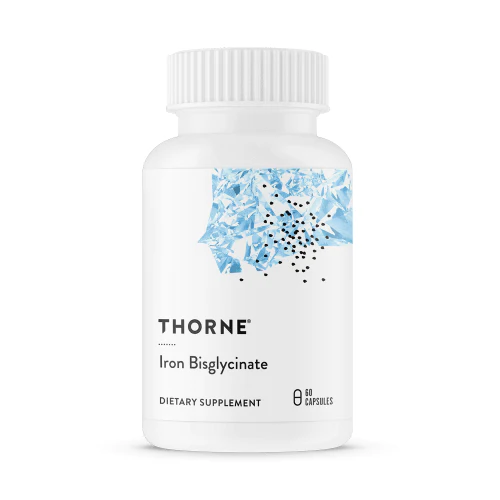
Iron bisglycinate
Iron chelated to two glycine molecules. It is absorbed partly as an intact chelate, meaning less free ionic iron in the lumen. Two randomised Danish studies of low-dose prophylactic iron in pregnancy found that, at equipotent doses, ferrous bisglycinate at 25 mg iron had the most favourable gastrointestinal side-effect profile, while ferrous fumarate at 80 mg iron was associated with significantly higher rates of constipation and laxative use. Bisglycinate is a reasonable option for prevention and mild deficiency, though the evidence base for treating established anaemia is thinner than for ferrous salts.
Ferric maltol
A prescription ferric preparation used in the NHS for people who have exhausted strategies to reduce side effects from cheaper iron. It is not a first-line product and needs to come from your GP or specialist.
Modified-release and enteric-coated iron
These sound like the obvious answer, but there is a catch worth knowing: iron is absorbed best in the duodenum and upper jejunum. A tablet designed to release slowly may travel past that window before releasing its iron, delivering less benefit while still depositing iron further down the tract. Several NHS formularies explicitly state that modified-release preparations are not recommended, as they do not enhance absorption.
How to manage constipation from iron supplements: 10 evidence-based steps
Work through these in order. Most people resolve the problem within the first three steps.
Step 1: Confirm you actually need the dose you are on
Iron should only be taken for a demonstrated deficiency, and the dose should match the goal. Treating established iron deficiency anaemia is different from topping up low ferritin without anaemia, which is different again from routine prevention. If you started iron without a blood test, that is the first thing to correct — ask your GP for ferritin and full blood count, and see our overview of the gut health blood test and when to see a GP about stomach symptoms. Never self-prescribe high-dose iron.
Step 2: Switch to alternate-day dosing (the highest-value change)
This is the intervention with the strongest evidence behind it, and it is the one most people have never heard of.
In two open-label randomised trials published in The Lancet Haematology, iron-depleted women given the same total amount of iron on alternate days absorbed significantly more of it than those dosing every day: cumulative fractional absorption was 21.8% versus 16.3%, and cumulative total absorption 175.3 mg versus 131.0 mg. A follow-up study in Haematologica found fractional absorption 40–50% higher with alternate-day dosing in anaemic women.
The tolerability data are just as compelling. In the double-blind trial of 150 women, alternate-day dosing achieved the same six-month ferritin as daily dosing (44.8 versus 43.8 µg/L) while triggering significantly fewer gastrointestinal side effects — and actually left fewer women iron deficient at six months (3.0% versus 11.4%).
Halving your dosing frequency does not mean halving your progress. Discuss this with your GP or pharmacist before changing a prescribed regimen — but it is a recognised and widely used NHS strategy for iron intolerance.
Step 3: Move to a single daily dose, never split doses
If you are taking iron two or three times a day, that regimen is outdated. Splitting a daily dose raises hepcidin higher than a single dose and does not increase total absorption — it simply increases the number of times per day your gut is exposed. Current NHS practice is once daily as a starting frequency, reducing to alternate days if not tolerated.
Step 4: Take it with or just after food if you are struggling
Iron is absorbed best on an empty stomach, but this is a trade-off, not a rule. The NHS advises taking iron with or after a meal or snack if side effects are a problem. A slightly lower absorption rate that you can actually sustain for three months beats perfect absorption you abandon after two weeks. Avoid taking it with tea, coffee, milk, calcium supplements or antacids, which all meaningfully reduce absorption.
Step 5: Get fibre right — type, amount and timing

Three practical rules:
- Increase gradually. A sudden jump in fibre on top of iron-slowed transit can worsen bloating and make stools bulkier without making them easier to pass. Build up over two to three weeks. Our guide on how to increase fibre sets out a sensible pace.
- Prioritise soluble and gel-forming fibre. Psyllium, oats, chia, linseed, kiwi fruit and prunes soften stool by holding water. Bulking insoluble fibre alone can make a slow bowel feel worse. See psyllium vs inulin and high fibre foods in the UK.
- Separate fibre from iron by at least two hours. Fibre supplements taken at the same time as iron reduce iron absorption. Iron in the morning, fibre supplement in the evening is a simple workable split.
Step 6: Increase fluid deliberately

Fibre needs water to work. If you add psyllium or bran without increasing fluid, you can make hard stools harder. Aim for six to eight glasses of fluid a day, more in hot weather or if you exercise. Water, herbal teas and diluted juices all count; tea and coffee are fine for hydration but should not be taken within two hours of your iron tablet.
Step 7: Move your body
Physical activity increases colonic motility. A 20–30 minute daily walk is not a trivial intervention here — for people whose transit has slowed, it is often the difference between a Bristol type 2 and a type 4. Add abdominal massage and unhurried, unstrained toilet time with a footstool to bring the knees above the hips.
Step 8: Consider magnesium
Magnesium citrate and magnesium oxide draw water into the bowel osmotically and are among the gentlest ways to soften stool. Magnesium is also frequently low in people with poor dietary variety. Take it in the evening, several hours away from your iron dose, since minerals compete for the same absorption pathways. Our detailed guide covers dosing and forms: magnesium for constipation.
Step 9: Use a laxative if needed — this is standard NHS advice
NHS prescribing guidance for iron intolerance explicitly includes offering a laxative to people who become constipated on iron. There is no need to suffer through it or to stop your iron. Osmotic laxatives such as macrogol and lactulose, and stool softeners such as docusate, are generally preferred for medication-induced constipation over stimulant laxatives, which are better reserved for short-term use. Speak to your pharmacist, who can advise on what is appropriate alongside your other medicines.
Step 10: Support the microbiome that iron disturbs
Because a large unabsorbed iron load shifts colonic bacterial populations, restoring microbial balance is a rational part of managing the problem rather than an afterthought. Options worth discussing with a clinician include a well-characterised multi-strain product from our probiotics range, strain-specific choices such as Lactobacillus rhamnosus GG or Saccharomyces boulardii, and prebiotic fibres. Our guides on the best probiotics in the UK, when to take probiotics and probiotic safety will help you choose sensibly.
A four-week plan to fix iron-related constipation
| Week | Iron changes | Bowel support | What to track |
|---|---|---|---|
| Week 1 | Consolidate to one dose daily, taken with or after a meal. Move tea, coffee and calcium at least two hours away. | Add 1.5–2 litres of fluid daily and a 20-minute daily walk. | Bristol stool type, frequency, straining. |
| Week 2 | Discuss alternate-day dosing with your GP or pharmacist and switch if agreed. | Begin gradual fibre increase: two extra portions of vegetables or fruit, plus prunes or kiwi. | Any improvement in stool softness within 3–5 days. |
| Week 3 | Hold the new regimen. Do not increase the dose to compensate. | Add evening magnesium and/or a soluble fibre supplement, separated from iron. | Whether symptoms track with iron days specifically. |
| Week 4 | If still constipated, ask about switching form (gluconate, bisglycinate) or, if appropriate, ferric maltol or IV iron. | Consider an osmotic laxative on pharmacist advice; begin probiotic if using one. | Book a follow-up ferritin and full blood count at 4–12 weeks as directed. |
Five things not to do
Do not simply stop your iron
Untreated iron deficiency causes fatigue, breathlessness, poor concentration, hair loss, restless legs and, if anaemia develops, cardiovascular strain. Stopping without a plan means you will be back at square one with a lower ferritin than when you started. Change the regimen, do not abandon it.
Do not double up to catch up
Because of the hepcidin response, a doubled dose is not doubly absorbed — but it does double the unabsorbed iron reaching your colon. This is the fastest route to severe constipation.
Do not add vitamin C expecting it to solve anything
Vitamin C is widely recommended alongside iron, but a randomised trial of 440 adults with iron deficiency anaemia found oral iron plus vitamin C was equivalent to oral iron alone for haemoglobin recovery and iron stores, with near-identical adverse event rates (20.9% versus 20.5%). Several NHS formularies now state co-administration with vitamin C is not recommended. It will not reduce your constipation, and it adds another tablet.
Do not rely on stimulant laxatives long term
Senna and bisacodyl work, but they are intended for short-term use. For a problem that will last as long as your iron course, osmotic agents and dietary change are the more sustainable base.
Do not assume all your symptoms are the iron
If constipation is accompanied by bloating and pain in a pattern you recognise from before starting iron, an underlying condition may be contributing. Our guides on IBS types, supplements for bloating, trapped wind relief and foods that cause bloating are useful starting points. Constipation is also a recognised side effect of several other medicines — see antidepressants and constipation.
Iron, the gut microbiome and long-term gut health
The colonic consequences of oral iron are an active area of research, and they matter beyond the immediate discomfort.
Reviews of iron and the gut microbiota describe a consistent pattern: because fractional absorption is low, most supplemental iron enters the colon, where it can favour organisms that depend on iron for growth and virulence over barrier-forming commensals such as bifidobacteria and lactobacilli, which need little or none. Studies of iron fortification in infants and young children have shown decreases in beneficial species, increases in enteropathogens and increases in gut inflammation. Animal work has demonstrated that oral iron can exacerbate colitis and shift the intestinal microbiome, which is one reason intravenous iron is often preferred in inflammatory bowel disease.
Two practical implications follow. First, use the lowest dose that corrects your deficiency, for the shortest time necessary — which is another argument for alternate-day dosing. Second, actively support microbial diversity while you are on iron. Eating a wide range of plants is the best-evidenced approach; see 30 plants a week, best foods for gut health, prebiotic foods, resistant starch and how to increase gut bacteria diversity.

Black stools, dark stools and what is normal
Iron routinely turns stools dark green or black. On its own, this is expected and not a cause for concern — NHS guidance describes it as common and usually nothing to worry about, and specifically advises reassurance rather than investigation.
There is an important exception. The NHS advises speaking to a doctor or calling 111 straight away if your stool is black and tar-like, red, or has blood in or on it, or if you feel unwell in any other way. Tarry, sticky, foul-smelling black stool (melaena) can indicate bleeding in the upper gastrointestinal tract, and iron should never be assumed to be the explanation. If you have a history of ulcers, reflux or regular anti-inflammatory use, read stomach ulcers and ibuprofen and stomach damage — and speak to your GP rather than self-managing.
Special situations
Pregnancy
Constipation is already common in pregnancy, and iron makes it more likely. The PLOS ONE meta-analysis found the odds of gastrointestinal side effects with ferrous sulfate were more than three times higher in pregnant women. Lower prophylactic doses and gentler forms are worth discussing: the Danish prophylaxis studies found ferrous bisglycinate at 25 mg iron had the most favourable side-effect profile, whereas 80 mg as fumarate was associated with significantly more constipation and laxative use. Never change a pregnancy iron regimen without speaking to your midwife or GP. See also probiotics in pregnancy.
IBS
People with constipation-predominant IBS tend to react badly to standard ferrous salts. Lower elemental doses, alternate-day scheduling and gel-forming soluble fibre rather than bran are the sensible adjustments. Our guides on supplements for IBS, peppermint oil capsules for IBS and the low FODMAP diet cover the wider approach.
Inflammatory bowel disease and coeliac disease
Iron deficiency is very common in both, and oral iron is less well tolerated. In inflammatory bowel disease, the meta-analysis found ferrous sulfate carried roughly three times the odds of GI side effects compared with intravenous iron, and intravenous iron is often the preferred route where there is active inflammation or malabsorption. If you have Crohn's disease, ulcerative colitis or coeliac disease, this is a conversation for your gastroenterology team rather than a self-management project. See Crohn's diet, ulcerative colitis diet, coeliac testing and calprotectin testing.
Older adults and people on acid-suppressing medication
Stomach acid is needed to solubilise non-haem iron. Long-term proton pump inhibitor use and age-related reductions in acid output both reduce absorption, meaning more of each dose reaches the colon. Chelated forms such as bisglycinate are less dependent on gastric acidity. Relevant reading: long-term effects of omeprazole, low stomach acid symptoms and gut health in older adults.
Vegetarians and vegans
Plant iron is non-haem and less bioavailable, so supplementation is more common — but plant-based diets also tend to be higher in fibre, which offers some protection against constipation. Take iron away from tea, coffee and high-phytate meals. See vegan gut health and vegan probiotics.
When to see a doctor
Speak to your GP promptly if you experience any of the following:
- Black, tarry, sticky stools, or any visible blood in or on your stool
- Constipation lasting more than two weeks despite the measures above
- Severe abdominal pain, persistent vomiting, or abdominal swelling
- Unexplained weight loss, or a persistent change in bowel habit
- No bowel movement for several days combined with pain or an inability to pass wind
- Iron deficiency in a man of any age, or in a woman after the menopause, that has not been investigated — this always warrants assessment for a source of blood loss
Iron deficiency is a symptom, not a diagnosis. Establishing why you are deficient is as important as correcting it. Further reading: when to see a GP about stomach symptoms, bowel cancer screening in the UK and stool testing.
Frequently asked questions
Do iron supplements always cause constipation?
No. Many people take iron with no bowel symptoms at all. Across randomised trials, ferrous sulfate roughly doubled the odds of gastrointestinal side effects versus placebo — meaning a substantial minority are affected, not everyone. Risk rises with higher elemental doses, split dosing, and pre-existing slow transit or IBS.
How long does constipation from iron tablets last?
For some people symptoms settle within one to two weeks as the gut adapts. For others they persist for as long as the tablets are taken. If nothing has improved after two weeks of increased fluid, gradual fibre and daily movement, the regimen itself needs changing rather than waiting it out.
Which iron supplement is least likely to cause constipation?
Generally, the one delivering the least elemental iron in the gentlest form. Iron bisglycinate has the most favourable comparative side-effect data at prophylactic doses, and ferrous gluconate is better tolerated largely because each tablet contains around 35 mg rather than 65–100 mg. Ferric maltol is a prescription option in the NHS for people who have exhausted other strategies. Effectiveness for treating established anaemia still favours the traditional ferrous salts, so this is a trade-off to make with a clinician.
Should I take iron every other day to avoid constipation?
The evidence supports it. Randomised trials show alternate-day dosing produces higher fractional absorption than daily dosing, achieves equivalent or better ferritin at six months, and triggers significantly fewer gastrointestinal side effects. Because it involves changing a prescribed regimen, confirm the plan with your GP or pharmacist first.
Can I take a laxative with iron tablets?
Yes. NHS prescribing guidance for iron intolerance specifically includes offering a laxative to people who become constipated. Osmotic laxatives such as macrogol or lactulose, or a stool softener, are usually preferred for medication-related constipation. Check with your pharmacist regarding your other medicines, and take laxatives at a different time of day from your iron.
Does taking iron with food stop constipation?
It often helps with nausea and stomach discomfort, and can reduce overall symptom burden, though it does not reliably eliminate constipation. It does reduce absorption somewhat — but the NHS still recommends it when side effects are a barrier, because a tolerated course completed is worth more than a perfect course abandoned. Avoid taking it with tea, coffee, milk or calcium.
My stools have gone black — is that constipation or something worse?
Dark green or black stools are an expected effect of iron and are usually harmless. However, NHS guidance is clear that you should talk to a doctor or call 111 straight away if your stool is black and tar-like, or red, or contains blood, or if you feel unwell in other ways. Tarry black stool can indicate upper gastrointestinal bleeding and must not be dismissed as an iron effect.
Can magnesium help with iron-induced constipation?
Magnesium citrate and magnesium oxide act osmotically to draw water into the bowel and are a reasonable, gentle option. Take magnesium in the evening, several hours apart from iron, because minerals compete for absorption. Our guide to magnesium for constipation covers forms and dosing.
Should I take probiotics while on iron supplements?
There is a plausible rationale, since most of an oral iron dose reaches the colon and can shift bacterial populations towards iron-dependent organisms. Probiotics are generally well tolerated, but evidence specifically for preventing iron-related constipation is limited, so treat them as a supporting measure rather than the primary fix. Take them at a different time from your iron. See do probiotics work, how to choose a probiotic and our probiotics collection.
Will vitamin C reduce the side effects of iron?
No. A randomised trial of 440 adults found adding vitamin C to oral iron gave no advantage for haemoglobin recovery or iron stores, with essentially identical adverse event rates. Several NHS formularies no longer recommend routine co-administration. If constipation is your problem, changing dose frequency, form or elemental dose is far more likely to help.
References
- Tolkien Z, Stecher L, Mander AP, Pereira DIA, Powell JJ. Ferrous sulfate supplementation causes significant gastrointestinal side-effects in adults: a systematic review and meta-analysis. PLOS ONE. 2015;10(2):e0117383. Read the study · PubMed
- Stoffel NU, Cercamondi CI, Brittenham G, et al. Iron absorption from oral iron supplements given on consecutive versus alternate days and as single morning doses versus twice-daily split dosing in iron-depleted women: two open-label, randomised controlled trials. The Lancet Haematology. 2017;4(11):e524–e533. Read the study
- Stoffel NU, Zeder C, Brittenham GM, Moretti D, Zimmermann MB. Iron absorption from supplements is greater with alternate day than with consecutive day dosing in iron-deficient anemic women. Haematologica. 2020;105(5):1232–1239. Read the study
- von Siebenthal HK, Gessler S, Vallelian F, et al. Alternate day versus consecutive day oral iron supplementation in iron-depleted women: a randomized double-blind placebo-controlled study. eClinicalMedicine. 2023;65:102286. Read the study
- Li N, Zhao G, Wu W, et al. The efficacy and safety of vitamin C for iron supplementation in adult patients with iron deficiency anemia: a randomized clinical trial. JAMA Network Open. 2020;3(11):e2023644. Read the study · PubMed
- Milman NT, et al. Low-dose prophylactic oral iron supplementation (ferrous fumarate, ferrous bisglycinate, and ferrous sulphate) in pregnancy is not associated with clinically significant gastrointestinal complaints: results from two randomized studies. Journal of Pregnancy. Read the study
- Barffour MA, et al. The effect of oral iron supplementation on gut microbial composition: a secondary analysis of a double-blind, randomized controlled trial among Cambodian women of reproductive age. Microbiology Spectrum. 2023. Read the study
- Constante M, Fragoso G, Calvé A, Samba-Mondonga M, Santos MM. Oral iron exacerbates colitis and influences the intestinal microbiome. PLOS ONE. 2018;13(8):e0202460. Read the study
- Kortman GAM, Raffatellu M, Swinkels DW, Tjalsma H. Nutritional iron turned inside out: intestinal stress from a gut microbial perspective. FEMS Microbiology Reviews. 2014;38(6):1202–1234. Read the review
- Effect of oral iron supplementation and fortification on the gut microbiota in infancy: a systematic review and meta-analysis. Nutrients. Read the review
- NHS. Ferrous fumarate: a medicine to treat iron deficiency anaemia. nhs.uk
- NHS. Side effects of ferrous fumarate. nhs.uk
- NHS. Side effects of ferrous sulfate. nhs.uk
- North & East Devon Formulary and Referral Guidance. 9.1.1 Iron deficiency anaemias (based on the BNF, NICE CKS and British Society of Gastroenterology guidance). Read the guidance
- NHS Blood and Transplant. Iron deficiency anaemia — Patient Blood Management. hospital.blood.co.uk
- Düzenli Kar Y, et al. Alternate day versus daily oral iron for treatment of iron deficiency anemia: a randomized controlled trial. Read the trial
About the author
Dr Zeeshan Afzal (MBBS) is a practising doctor and Welzo's medical content lead. He writes on digestive health, nutritional deficiency and evidence-based supplementation, with a focus on translating UK clinical guidance into practical advice patients can act on.
Medical disclaimer
This article is for general information and is not a substitute for individual medical advice. Iron supplements should only be taken for a confirmed deficiency, and iron deficiency in men and in post-menopausal women always requires investigation. Do not start, stop or change the dose of a prescribed medicine without speaking to your GP, pharmacist or specialist. If you have black tarry stools, blood in your stool, severe abdominal pain or persistent vomiting, seek medical advice promptly or call NHS 111.



 Rated Excellent by 26,523+ Reviews
 100% Money Back Guarantee