

 Instagram
Související produkty

Bowel Cancer Screening UK: What You Need to Know


Související produkty
Written and medically reviewed by Dr Zeeshan Afzal, MBBS — Medical Content Lead, Welzo.
Last updated: August 2026. Reviewed against NHS, NHS England, Public Health Scotland, Public Health Wales, NICE and Cancer Research UK guidance current at the time of writing.
Bowel cancer screening in the UK is one of the few genuinely proven ways to catch a cancer before it causes any symptoms at all. Every two years, millions of people are posted a small plastic tube and a prepaid envelope — and a meaningful number of them will have a pre-cancerous polyp found and removed as a result. Yet roughly three in ten kits are never returned. Some sit on a shelf. Some get thrown away. Many are simply put off because nobody explained clearly what the test is, what it does and does not do, and what happens next. This guide is written to remove that friction. It covers who is eligible in each UK nation, exactly how the FIT kit works, how to interpret your result letter, what the 2026 change to England's testing threshold means for you, what a colonoscopy actually involves, and the lifestyle factors that genuinely shift bowel cancer risk. If you are also working on your day-to-day digestive wellbeing alongside screening, our wider complete guide to gut health in the UK is the natural companion piece, and you can browse the full Welzo gut health range and our clinically formulated probiotics for everyday digestive support. Popular options include Welzo Akkermansia muciniphila, Modified Citrus Pectin Powder, Welzo Ultra Purity Berberine and Welzo Ultra Purity TUDCA. An important boundary before we go further: no food, supplement or lifestyle change replaces bowel cancer screening, and nothing sold by Welzo or anyone else prevents, detects or treats bowel cancer. Screening and prompt symptom reporting are the interventions with evidence behind them. Everything else in this article about diet and the gut is about general digestive wellbeing and population-level risk, not treatment.
Key takeaways
- Bowel cancer screening in England, Scotland and Wales is offered to everyone aged 50 to 74 every two years. Northern Ireland currently invites people aged 60 to 74.
- The test is a faecal immunochemical test (FIT) — a home kit that detects human haemoglobin (blood) in a tiny stool sample.
- Most people get a "no further tests needed" result. Historically around 2 in 100 are referred on for more tests; this is expected to rise to about 3 in 100 in England as the threshold is lowered.
- From February 2026, NHS England began phasing in a more sensitive threshold, dropping from 120 to 80 micrograms of haemoglobin per gram of faeces, with national rollout due by March 2028.
- Screening is only for people without symptoms. A normal result never overrides new bleeding, a persistent change in bowel habit, or unexplained weight loss.
- Around 54% of UK bowel cancer cases are considered preventable, with diet, weight, alcohol, smoking and physical activity all contributing.
Table of contents
- What is bowel cancer screening in the UK?
- Who is eligible? Ages by UK nation
- The FIT kit explained, step by step
- Understanding your result letter
- The 2026 change to England's FIT threshold
- What happens if you need further tests
- How accurate is bowel cancer screening?
- Symptoms you should never wait on
- Higher-risk groups and surveillance
- Why uptake matters — and how to make the test easier
- Reducing your risk between screening rounds
- When to see your GP
- Frequently asked questions
- References
What is bowel cancer screening in the UK?
Bowel cancer screening is a population programme: the NHS proactively invites people in a defined age band to do a test at home, regardless of whether they feel unwell. It is not a response to symptoms and it is not a diagnostic test. Its purpose is to sort a very large, mostly healthy population into a small group who need a closer look, and a large group who do not.
Bowel cancer is the fourth most common cancer in the UK, with around 48,200 new cases every year — more than 130 every day — accounting for roughly 12% of all new cancer diagnoses. It is also the second biggest cause of cancer death in England. Around 1 in 20 UK females and 1 in 17 UK males will be diagnosed with it at some point in their lives.
Why screening works: the polyp-to-cancer window
Most bowel cancers do not appear overnight. They typically develop from small benign growths on the bowel lining called adenomatous polyps, which can take years — often a decade or more — to become malignant. That long window is the entire reason a two-yearly test is worthwhile. Screening does two separate jobs:
- Early detection. Finding a cancer at stage 1 rather than stage 4 transforms the outlook.
- Prevention. Finding and removing a polyp at colonoscopy means a cancer that would have developed simply never does.
The survival figures make the case starkly. Based on people diagnosed in England between 2016 and 2020, around 90 in 100 people with stage 1 bowel cancer survive five years or more, compared with around 10 in 100 at stage 4.
Five-year survival by stage at diagnosis (England)
| Stage at diagnosis | Approximate 5-year net survival |
|---|---|
| Stage 1 | Around 90% |
| Stage 2 | Around 85% |
| Stage 3 | Around 65% |
| Stage 4 | Around 10% |
Source: Cancer Research UK, people diagnosed 2016–2020, followed up to 2021.

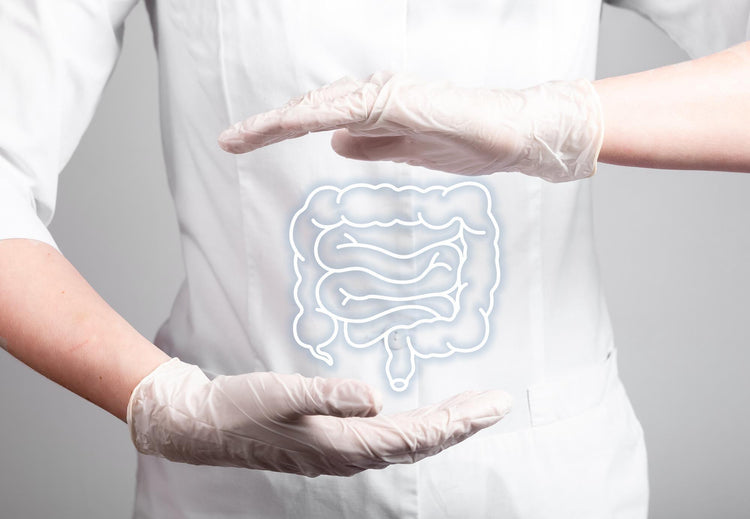
The large bowel comprises the colon and the rectum. Bowel cancer screening in the UK is designed to detect bleeding from anywhere along this stretch of the digestive tract. Image: public domain via Wikimedia Commons.
Screening FIT versus symptomatic FIT — an important distinction
Confusingly, the NHS uses the same underlying test in two very different ways, and people often mix them up.
- Screening FIT is posted automatically to people with no symptoms, on a two-yearly cycle, and uses a relatively high threshold.
- Symptomatic FIT is issued by your GP when you present with symptoms. NICE guidance (DG56) recommends referral on a suspected cancer pathway at a much lower threshold of 10 micrograms of haemoglobin per gram of faeces.
The practical consequence: if you develop symptoms, do not wait for your next screening kit. Ask your GP. The symptomatic pathway is deliberately far more sensitive. Our guide on when to see a GP about stomach and bowel symptoms sets out the thresholds in plain English.
Who is eligible for bowel cancer screening in the UK?
Screening policy is devolved, so the age bands differ. The UK National Screening Committee recommends screening from 50 to 74 every two years, and three of the four nations now meet that.
Bowel cancer screening eligibility across the UK
| Nation | Age range | Frequency | Referral threshold (µg Hb/g) | Helpline |
|---|---|---|---|---|
| England | 50–74 | Every 2 years | 120, lowering to 80 in phases from Feb 2026 | 0800 707 6060 |
| Scotland | 50–74 | Every 2 years | 80 | 0800 0121 833 |
| Wales | 50–74 | Every 2 years | 80 | Bowel Screening Wales |
| Northern Ireland | 60–74 | Every 2 years | 120 | 0800 015 2514 |
England
NHS England completed the final phase of its age extension in 2025, so everyone aged 50 to 74 and registered with a GP is now automatically sent a FIT kit every two years. Because the rollout was phased, depending on when you turned 50 your first kit may have arrived at 50, 52 or 54. If you believe you are eligible and no kit has arrived, call the helpline rather than waiting.
Scotland
Scotland has offered screening from 50 for longer than the rest of the UK and has always used the more sensitive 80 µg Hb/g threshold. Invitations are based on your Community Health Index (CHI) number rather than GP registration.
Wales
Bowel Screening Wales lowered its starting age to 50, phased in across a 12-month period, bringing Wales into line with Scotland and England. Wales also uses the 80 µg Hb/g threshold.
Northern Ireland
Northern Ireland currently invites people aged 60 to 74. The programme moved from the older guaiac faecal occult blood test to quantitative FIT in January 2021. Extending the age range in line with the UK NSC recommendation is set out in the Department of Health's 2022–2032 cancer strategy.
If you are 75 or over
You are not invited automatically, but you can request a kit every two years by calling your nation's screening helpline. This is worth knowing, because bowel cancer incidence is highest in older age groups — more than two-fifths of new UK cases are diagnosed in people aged 75 and over. If you are supporting an older relative, our overview of digestive health in older adults covers related territory.
If you are under the screening age
Around 1 in 20 UK bowel cancer cases occur in people under 50, and rates in younger adults have been rising both here and internationally. Screening is not offered below 50 because the overall risk in that group remains low relative to the harms and costs of population testing — but that makes symptom awareness far more important. If you are under 50 with persistent symptoms, you should be assessed on the symptomatic pathway, and age alone should not be a reason to dismiss your concerns.
The FIT kit explained, step by step
What FIT actually measures
The faecal immunochemical test uses antibodies that bind specifically to human haemoglobin — the oxygen-carrying protein in red blood cells. Polyps and tumours in the bowel tend to have fragile surface blood vessels that bleed intermittently in quantities far too small to see. FIT is designed to pick up exactly that.
Because the antibodies are human-specific, FIT is not thrown off by dietary blood (such as rare steak) in the way the older guaiac tests were. You do not need to change your diet or stop most medicines before doing the test. If you take anticoagulants or regular NSAIDs, do the test as normal but mention this if you are called for follow-up — long-term NSAID use can irritate the gut lining, as covered in our article on ibuprofen and stomach damage.
How to do the test
- Write the date on the sample bottle first — samples without a date are often rejected.
- Catch the stool in a clean container so it does not touch the toilet water. A folded sheet of newspaper or a paper plate across the back of the bowl works well.
- Unscrew the lid; the sample stick is attached to it.
- Scrape the grooved tip of the stick along the surface of the stool until the grooves are covered. Only a tiny amount is needed — more is not better.
- Put the stick back into the bottle and close the lid firmly.
- Wash your hands.
- Check the date is written on, seal the bottle in the prepaid envelope, and post it as soon as possible.
Postage is free and no stamp is required. The whole thing takes a couple of minutes.
The mistakes that cause a kit to be rejected
- No date, or an old date. Samples degrade; a delayed post can invalidate the result.
- Too much sample. Overloading the stick can jam the analyser.
- Contamination with urine or toilet water. Collect before you urinate if you can.
- Doing it during a period, or with active piles bleeding. Wait a few days — visible blood from another source can produce an unhelpful positive.
- Very loose stool. If you have diarrhoea, wait until things settle. If diarrhoea persists, that is itself a reason to see your GP.
If you are unsure what "normal" looks like for you, the Bristol Stool Chart is a useful reference point for describing stool consistency to a clinician.

The Bristol Stool Chart, types 1 to 7. A persistent shift in your usual type — in either direction — is worth reporting. Image: Cabot Health, Bristol Stool Chart, CC BY-SA 3.0 via Wikimedia Commons.
What if you have a stoma, or bowel surgery in your history?
You can usually still take part, but the practicalities differ. The screening helpline can advise on collecting a sample from a stoma bag and on alternative formats of the instructions, including Braille and translated versions.
Understanding your result letter
Results usually arrive by post within two weeks. If nothing has arrived after two weeks, call the helpline.
What each result means
| Result | What it means | What happens next |
|---|---|---|
| No further tests needed | No blood was detected above the programme threshold. Most people get this. | Nothing to do. You will be invited again in two years if still in the age range. |
| Further tests needed | Blood was detected above the threshold. This is not a cancer diagnosis. | An appointment with a specialist screening practitioner, usually followed by colonoscopy. |
| Repeat test needed / unclear | The sample could not be processed reliably — often a technical issue. | A new kit is posted. Do it promptly. |
"No further tests needed" is reassurance, not a guarantee
This is the single most important caveat in the whole programme. A normal FIT means no blood was found in that sample, on that day, above that threshold. Polyps and cancers bleed intermittently, so a tumour can be present and shed no detectable blood into the particular sample you collected. That is why the NHS explicitly advises that a clear result does not remove the need to report new symptoms.
"Further tests needed" — the odds are on your side
Blood in stool has many causes that are far more common than cancer: haemorrhoids, anal fissures, diverticular disease, inflammatory bowel disease, and benign polyps. Of the roughly 2 in 100 people historically referred on after screening in England, only a minority turn out to have cancer — around one in ten of those referred. The great majority of colonoscopies after a positive screening FIT find either nothing significant or a polyp that can be removed on the spot.
If inflammation rather than cancer is suspected, your team may also arrange a faecal calprotectin test, which helps distinguish inflammatory bowel disease from functional conditions like IBS. Our overviews of ulcerative colitis and Crohn's disease cover what follows if IBD is confirmed.
The 2026 change: England's lower FIT threshold explained
This is the most significant change to bowel cancer screening in England in years, and it is worth understanding because it directly affects your chance of being called back.
What changed
FIT gives a number: micrograms of haemoglobin per gram of faeces (µg Hb/g). The programme sets a cut-off above which you are referred for investigation. England and Northern Ireland used 120 µg Hb/g. Scotland has always used 80, and Wales moved to 80 earlier.
In January 2026, NHS England announced it would lower the English threshold to 80 µg Hb/g, implementing a UK National Screening Committee recommendation first made in 2018. Early adopter sites began in February 2026, with full national rollout expected by March 2028. Notably, the UK NSC regards the optimal threshold as lower still — around 20 µg Hb/g — but capacity constraints mean this is being approached in stages rather than all at once.
What it means in practice
- NHS England estimates around 600 additional bowel cancers detected early each year — roughly an 11% increase.
- Around 2,000 more people a year identified with high-risk polyps, which can be removed before cancer develops.
- Approximately 35% more screening colonoscopies annually.
- The proportion of participants referred on rises from about 2 in 100 to about 3 in 100.
- Early adopter sites had already found more than 60 additional cancers and nearly 500 high-risk polyps before the national announcement.
Nothing changes for you at the kitchen table. The kit is identical, the instructions are identical, and the postage is still free. The only difference is where the laboratory draws the line — and it now catches smaller traces of blood.
What happens if you need further tests
The specialist screening practitioner appointment
Before any procedure, you will speak with a specialist screening practitioner — usually a nurse — by phone or in person. They will go through your medical history, medicines (particularly blood thinners and diabetes medication), explain the options, and answer questions. This is the point to raise anything you are worried about.
Bowel preparation
Most people find the prep harder than the procedure itself. You will follow a low-residue diet for a few days, then take a strong laxative solution to empty the bowel. Practical tips that genuinely help: start the clear-fluid phase earlier than you think you need to, chill the prep solution and drink it through a straw, and keep barrier cream to hand. If you are prone to constipation generally, it is worth reading our guides to constipation relief and magnesium for constipation — though always follow the exact prep protocol your unit gives you rather than substituting anything.
The colonoscopy itself
A flexible tube with a camera is passed through the rectum and around the colon, typically taking 30 to 45 minutes. You can usually choose between gas and air (Entonox), light sedation, or no analgesia. Sedation means you will need someone to take you home. Any polyps found are usually removed there and then and sent for laboratory analysis.

A sessile polyp in the sigmoid colon seen at colonoscopy. Polyps like this are benign but can become cancerous over years, which is why removing them is considered prevention rather than just detection. Image: public domain (CDC) via Wikimedia Commons.
Risks of colonoscopy
Colonoscopy is generally very safe, but it is an invasive procedure and carries small risks: bleeding after polyp removal, and rarely a perforation of the bowel wall. Sedation carries its own small risks. Your screening practitioner will quantify these for your individual circumstances. These risks are part of why the screening threshold is set where it is — sending everyone for colonoscopy would cause more harm than it prevented.
Alternatives to colonoscopy
If colonoscopy is unsuitable — for example because of frailty, adhesions from previous surgery, or your own preference — alternatives include CT colonography (a specialised CT scan of the bowel) and, in some services, colon capsule endoscopy (a swallowed camera capsule). Neither allows polyps to be removed during the test, so a positive finding usually still leads to colonoscopy.
How accurate is bowel cancer screening?
Being honest about the limits is part of informed consent, and the NHS publishes its own benefits-and-risks guidance for exactly this reason.
Sensitivity and specificity
FIT accuracy is a trade-off dial, not a fixed property. Pooled evidence from systematic reviews in symptomatic populations shows that at a low threshold of 10 µg Hb/g, sensitivity for colorectal cancer sits around 88–90% with specificity in the high 70s to low 80s. Push the threshold up to 100–150 µg Hb/g and sensitivity falls to roughly 66–68% while specificity climbs above 93%.
Translated: a higher threshold means fewer people sent for colonoscopy, fewer false alarms — and more cancers missed. That is precisely the calculation England has just revisited in moving from 120 to 80.
False negatives
A false negative happens when cancer is present but the sample contained too little blood to cross the threshold. Sensitivity also varies by tumour location — lesions in the right (proximal) colon tend to shed less detectable blood by the time the sample is collected than those in the rectum or sigmoid colon. This is the mechanism behind "interval cancers", diagnosed between screening rounds. It is not a failure of the programme so much as an inherent property of the test, and it is the reason symptom awareness sits alongside screening rather than being replaced by it.
False positives and overdiagnosis
Most positive results are not cancer, which means a proportion of people undergo bowel prep, colonoscopy and its small risks without a significant finding. There is also debate about overdiagnosis: some small polyps removed would never have progressed to cancer in that person's lifetime. Weighing these harms against roughly 600 extra early cancer detections a year is exactly the judgement the UK NSC makes on the population's behalf — but the individual decision to take part remains yours.
Bowel cancer symptoms you should never wait on
Screening is for people who feel well. If you have symptoms, the screening programme is the wrong route — see your GP.
Red-flag symptoms
- Blood in your stool, or bleeding from the bottom, with no obvious cause
- A persistent change in bowel habit lasting three weeks or more — looser stools, going more often, or new constipation
- Persistent lower abdominal pain, bloating or discomfort, especially if triggered by eating
- Unexplained weight loss
- Unexplained fatigue, or iron-deficiency anaemia found on a blood test
- A feeling that you have not fully emptied your bowel after going
Iron-deficiency anaemia in a man of any age, or in a woman after the menopause, warrants investigation of the gut — it should not simply be treated with iron and forgotten. (Iron supplements also commonly cause constipation and dark stools, which can muddy the picture; see our guide to iron supplements and constipation.)
Symptoms that overlap with benign conditions
Bloating, cramping and changes in bowel habit are the daily reality of IBS, coeliac disease, lactose intolerance and diverticular disease. The overlap is real, and it is one reason younger patients in particular can face delays. If you have been given an IBS label without investigation, it is reasonable to ask whether a coeliac blood test, a calprotectin test or a symptomatic FIT would be appropriate. Our breakdown of the different types of IBS and our guide to stool testing in the UK explain what each test can and cannot tell you.
Higher-risk groups and surveillance programmes
Some people need more than the standard two-yearly FIT, and are managed through separate surveillance pathways rather than the population programme.
Lynch syndrome and inherited conditions
Lynch syndrome is an inherited condition that substantially raises bowel cancer risk and accounts for a meaningful share of early-onset cases. People with confirmed Lynch syndrome are offered regular colonoscopic surveillance, typically every two years, starting well before the population screening age. Familial adenomatous polyposis (FAP) is managed similarly intensively. If bowel cancer has affected several close relatives, or affected a relative under 50, ask your GP about referral to clinical genetics.
Inflammatory bowel disease
Long-standing extensive ulcerative colitis or Crohn's colitis increases bowel cancer risk, and these patients enter a surveillance colonoscopy programme based on disease duration, extent and other factors — separate from FIT screening.
Previous polyps or bowel cancer
If you have had high-risk adenomas removed or been treated for bowel cancer, you will be on a defined surveillance schedule rather than the standard screening cycle.
Family history without a known syndrome
A single affected relative diagnosed at an older age usually does not change your management. Multiple affected relatives, or young ages at diagnosis, may. Your GP can use the referral criteria to decide.
Why uptake matters — and how to make the test easier
Bowel screening uptake has improved substantially since the move to FIT, reaching around 70% across UK nations in recent years — the highest on record. But that still leaves roughly three in ten kits unreturned, and participation is markedly lower in younger eligible age groups. NHS England reported that fewer than 60% of 54–57 year olds returned their kits, compared with over 70% of those aged 60–74.
The common barriers — and honest answers
- "It's disgusting." The sample is smaller than a grain of rice and never touches your hands. It takes two minutes.
- "I feel fine." That is the entire point. Screening exists to find things before symptoms.
- "I'm scared of what they'll find." Understandable — but a stage 1 cancer found now has around a 90% five-year survival. The same cancer found at stage 4 in two years' time does not.
- "I'll do it later." Kits have a usable window. Do it on the next available morning and post it that day.
Practical tips
- Open the kit the day it arrives and read the instructions immediately.
- Put the tube and envelope somewhere visible in the bathroom, not in a drawer.
- Set a phone reminder for the following morning.
- If you share your home, tell someone you are doing it — accountability genuinely raises completion rates.
- If you are constipated and waiting for a suitable sample, address that first; our high-fibre foods guide and article on how to increase fibre safely are a good starting point.
Reducing your risk between screening rounds
Cancer Research UK estimates that 54% of UK bowel cancer cases are preventable. That figure is population-level, not a personal guarantee — but the modifiable factors behind it are well characterised.

Wholegrains, pulses, fruit and vegetables form the dietary pattern most consistently linked with lower colorectal cancer risk. Image: public domain, National Cancer Institute Visuals Online, via Wikimedia Commons.
Fibre and wholegrains
The World Cancer Research Fund grades the evidence linking dietary fibre and wholegrains to reduced colorectal cancer risk as strong. Its dose–response analysis found roughly a 17% lower risk per 90g of wholegrains eaten daily. Most UK adults fall well short of the recommended 30g of fibre a day. Practical routes in: swapping to wholemeal bread and brown rice, adding pulses to existing meals, keeping skins on potatoes, and treating nuts and seeds as a default snack. Our guides to high-fibre foods in the UK, prebiotic foods and resistant starch go deeper.
Red and processed meat
Processed meat is classified by the WCRF as a convincing cause of colorectal cancer. Cancer Research UK attributes around 13% of UK bowel cancer cases to processed meat consumption. Meta-analyses put the increase in risk at roughly 16–18% per 50g of processed meat eaten daily. UK guidance is to limit red and processed meat to no more than 70g a day on average.
Weight, alcohol, smoking and activity
- Around 11% of UK bowel cancer cases are attributed to overweight and obesity.
- Alcohol shows a dose–response relationship, with risk rising around 7% per 10g of ethanol per day.
- Smoking increases risk and is independently associated with polyp formation.
- Physical activity is graded as strong evidence for protection against colon cancer specifically.
Where the gut microbiome fits — carefully
There is genuine, active research into how the gut microbiome influences colorectal carcinogenesis: fibre fermentation produces short-chain fatty acids such as butyrate, which is the primary fuel for colonocytes; microbial diversity is lower in many disease states; and specific bacterial species have been implicated in tumour biology. Diet-first approaches like eating 30 different plants a week, prioritising gut-supporting foods and polyphenol-rich foods, and reducing ultra-processed food intake are sensible for general digestive health.
An explicit word on supplements
To be unambiguous: no supplement has been shown to prevent, detect or treat bowel cancer, and none should ever be used in place of screening or medical assessment. Products such as probiotics, prebiotics and butyrate supplements are sold for general digestive wellbeing only. If you are considering any supplement while under investigation, or if you take anticoagulants or have an active bowel condition, speak to your GP or pharmacist first. If you would like to understand your baseline better, our comparison of gut microbiome tests in the UK and guide to gut health blood tests explain what these can and cannot tell you — none of them is a cancer test.
When to see your GP rather than wait for a kit
Contact your GP promptly, regardless of your last screening result, if you have any red-flag symptom listed above lasting three weeks or more, or any rectal bleeding without an obvious cause. Ask specifically whether a symptomatic FIT is appropriate. If you are dissatisfied with an assessment and symptoms persist, it is entirely reasonable to return — repeat presentations are a recognised feature of delayed diagnosis, particularly in younger patients.
Frequently asked questions about bowel cancer screening in the UK
At what age does bowel cancer screening start in the UK?
Screening starts at age 50 in England, Scotland and Wales, and at age 60 in Northern Ireland. It continues to age 74 in all four nations, with kits sent every two years. In England, because the age extension was phased in, some people received their first kit at 52 or 54 depending on when they turned 50.
How often is bowel cancer screening done?
Every two years while you remain within the eligible age band. If you are 75 or over you are not invited automatically but can request a kit every two years by calling your nation's screening helpline.
What is a FIT kit and how does it work?
A FIT (faecal immunochemical test) kit is a home test that detects human haemoglobin — blood — in a small stool sample. You scrape a sample stick along your stool, seal it in the tube, and post it free of charge. A laboratory measures the haemoglobin concentration in micrograms per gram of faeces and compares it against the programme threshold.
What does it mean if my bowel screening result is positive?
It means blood was detected above the threshold and needs investigating. It does not mean you have cancer. Haemorrhoids, anal fissures, polyps, diverticular disease and inflammatory bowel disease are all more common explanations. You will be offered an appointment with a specialist screening practitioner and usually a colonoscopy.
How accurate is the NHS bowel cancer screening test?
Accuracy depends on the threshold used. In pooled studies, FIT at a low threshold of 10 µg Hb/g detects around 88–90% of colorectal cancers; at higher thresholds of 100–150 µg Hb/g, sensitivity falls to around 66–68% but false alarms drop substantially. This is why England is lowering its screening threshold from 120 to 80 µg Hb/g. No threshold catches every cancer, which is why symptoms must always be reported.
What is changing about bowel cancer screening in England in 2026?
NHS England is lowering the FIT referral threshold from 120 to 80 micrograms of haemoglobin per gram of faeces, phased in from February 2026 with national rollout expected by March 2028. It is estimated to detect around 600 more bowel cancers early each year and identify around 2,000 more people with high-risk polyps, at the cost of roughly 35% more screening colonoscopies. The home test itself is unchanged.
Can I get a bowel cancer screening kit if I am under 50?
Not through the population screening programme. If you have symptoms, your GP can arrange a symptomatic FIT, which uses a far more sensitive threshold, and refer you if indicated. If you have a strong family history or a known inherited condition such as Lynch syndrome, you may qualify for a separate surveillance programme starting much earlier.
Do I need to change my diet or stop medication before a FIT test?
No. FIT antibodies bind only human haemoglobin, so dietary blood does not interfere, and you do not need to stop most medicines. Take blood thinners and other prescribed medication as normal, but mention them at any follow-up appointment. Avoid doing the test during a period or while piles are actively bleeding.
How long do bowel screening results take?
Usually within two weeks of posting your sample. If you have not received a letter after two weeks, call the bowel cancer screening helpline for your nation — 0800 707 6060 in England, 0800 0121 833 in Scotland, and 0800 015 2514 in Northern Ireland.
Does a normal bowel screening result mean I definitely do not have bowel cancer?
No. A normal result means no blood was detected in that sample above the threshold on that day. Polyps and tumours bleed intermittently, and right-sided lesions in particular can be missed. Interval cancers do occur. Always report new or persistent bowel symptoms to your GP, even if your last screening result was clear.
Related reading from Welzo
- Gut Health UK: The Complete Evidence-Based Guide
- When to See a GP About Stomach Symptoms
- Bristol Stool Chart: What Your Stool Says About Your Health
- Stool Tests in the UK: What They Measure
- Gut Microbiome Testing in the UK
- High-Fibre Foods UK: Hitting 30g a Day
- Gut Health and Ageing
- Diverticulitis Diet UK
- The Four Types of IBS Explained
- Fibre and Cholesterol
References
- NHS. Bowel cancer screening. NHS.uk.
- NHS England. NHS to detect and prevent thousands more bowel cancers with more sensitive screening. January 2026.
- UK National Screening Committee blog. More sensitive bowel cancer screening test implemented in line with UK NSC recommendation. GOV.UK, January 2026.
- NHS England. NHS rolls out lifesaving home testing for bowel cancer to over 50s. January 2025.
- Cancer Research UK. Bowel cancer statistics.
- Cancer Research UK. Bowel cancer survival by stage.
- Cancer Research UK. Quality improvement and optimisation of bowel screening.
- NICE. Quantitative faecal immunochemical testing to guide colorectal cancer pathway referral in primary care (DG56). August 2023.
- Harnan S, Hamilton J, Simpson E, et al. Faecal immunochemical tests for patients with symptoms suggestive of colorectal cancer: an updated systematic review and multiple-threshold meta-analysis. Colorectal Disease, 2024.
- Pin-Vieito N, et al. Faecal immunochemical test to triage patients with possible colorectal cancer symptoms: meta-analysis. British Journal of Surgery, 2021.
- Bowel Cancer UK. Bowel cancer screening.
- NHS inform Scotland. Bowel screening in Scotland.
- Welsh Government. Bowel screening age lowered to 50 in Wales.
- nidirect. Bowel cancer screening (Northern Ireland).
- GOV.UK. Your guide to NHS bowel cancer screening: benefits and risks.
- World Cancer Research Fund / AICR. Diet, nutrition, physical activity and colorectal cancer (Continuous Update Project).
- World Cancer Research Fund. Fibre, wholegrains and cancer.
- Cancer Research UK. NHS England increasing bowel cancer screening FIT test sensitivity. January 2026.
Image credits
- Stomach, colon and rectum diagram — Indolences, public domain, via Wikimedia Commons.
- Bristol Stool Chart — Cabot Health, licensed CC BY-SA 3.0, via Wikimedia Commons.
- Colonic polyp at endoscopy — US Centers for Disease Control and Prevention, public domain, via Wikimedia Commons.
- Fruit, vegetables and grain — National Cancer Institute Visuals Online, public domain, via Wikimedia Commons.
About the author
Dr Zeeshan Afzal, MBBS is a UK-registered medical doctor and Medical Content Lead at Welzo. He writes and reviews Welzo's clinical content against current NHS, NICE and UK National Screening Committee guidance, and specialises in translating primary-care evidence into practical patient information.
Medical disclaimer
This article is for general information and is not a substitute for individual medical advice, diagnosis or treatment. Bowel cancer screening decisions should be made with your GP or screening service. If you have symptoms such as rectal bleeding, a persistent change in bowel habit, unexplained weight loss or unexplained anaemia, contact your GP without delay — do not wait for a screening invitation. In an emergency, call 999. Information was accurate at the date of last review; NHS screening policy changes periodically, so check the NHS website or your national screening service for the current position.

 Hodnoceno výborně o 26,523+ recenzí
 100% záruka vrácení peněz