




So stellen Sie das ultimative Langlebigkeits-Paket zusammen


Related products


Medizinisch geprüft von Dr. Zeeshan Afzal (MBBS, Allgemeinmediziner) – Medizinischer Gutachter bei Welzo.
Verfasst von: Der Welzo-Redaktionsteam für Langlebigkeit | Zuletzt aktualisiert: Juli 2026
Offenlegung von Interessen: Welzo verkauft Nahrungsergänzungsmittel und Bluttests. Dieser Artikel empfiehlt vier bis sechs Produkte, spricht sich gegen mehrere beliebte Wirkstoffe aus und stuft die kostenlosen Maßnahmen höher ein als alles, was wir verkaufen. Siehe unsere redaktionellen Richtlinien.
Die meisten Menschen stellen kein Langlebigkeits-Stack zusammen. Sie sammeln es einfach an. Ein Podcast bringt sie dazu, Resveratrol hinzuzufügen, ein Black-Friday-Angebot sorgt für drei weitere Produkte, und achtzehn Monate später stehen vierzehn Dosen im Schrank und gehen monatlich 180 £ vom Konto ab.
Ein „Stack“ ist etwas anderes: eine kleine, bewusst aufeinander abgestimmte Reihe von Maßnahmen, von denen jede auf einen bestimmten Mechanismus abzielt und in einer am Menschen getesteten Dosierung verabreicht wird. Hintergrundinformationen finden Sie in unserem Leitfaden zu Langlebigkeitspräparaten und im Sortiment an Anti-Aging-Präparaten; zur NAD⁺-Ebene siehe Vorteile, Nebenwirkungen und Dosierung von NMN, die NMN-Präparate-Kollektion und NMN Pro 1000.
Dieser Leitfaden behandelt, was in jede Ebene gehört, in welcher Reihenfolge, zu welchen Kosten – und was man weglassen sollte.
Die kurze Antwort
Bauen Sie vier Ebenen auf und lassen Sie keine aus. Ebene 1 ist kostenlos – Training, Schlaf, Protein – und übertrifft alles darunter. Ebene 2 gleicht echte Mangelzustände aus: Vitamin D, Omega-3, Magnesium sowie Kreatin. In der DO-HEALTH-Studie verlangsamte 1 g Omega-3 pro Tag mehrere Alterungsuhren der DNA-Methylierung und zeigte dabei einen additiven Effekt in Kombination mit Vitamin D und Bewegung – allerdings betrug die Dauer dieses Effekts 2,9–3,8 Monate über einen Zeitraum von drei Jahren [1]. Ebene 3 ist die NAD⁺-Ebene – 600 mg NMN erhöhten den NAD⁺-Spiegel im Blut und verbesserten die in sechs Minuten zurückgelegte Gehstrecke in einer 60-tägigen Dosisfindungsstudie [2], obwohl eine Metaanalyse randomisierter Studien keinen metabolischen Nutzen feststellte [3]. Ebene 4 ist optional. Die meisten Menschen benötigen vier bis sechs Produkte, nicht vierzehn.

Inhaltsverzeichnis
- Was ein Langlebigkeits-Stack eigentlich ist
- Ebene 1: Das Fundament, das man nicht kaufen kann
- Ebene 2: Echte Mangelzustände beheben
- Ebene 3: Die NAD⁺-Ebene
- Ebene 4: Gezielte Ergänzungen
- Was man weglassen sollte
- Drei bewährte Kombinationen und ihre Kosten
- Wie sich der Stack je nach Alter und Ziel verändert
- Zeitpunkt und Reihenfolge
- Qualitätskontrolle: Prüfen, was man kauft
- Wie man erkennt, ob es wirkt
- Wann man einen Arzt konsultieren sollte
- Sieben Fehler, die gute Kombinationen zunichte machen
- Häufig gestellte Fragen
- Quellenangaben
Was ein „Longevity Stack“ eigentlich ist
Ein Langlebigkeits-Stack ist eine aufeinander abgestimmte Kombination von Maßnahmen, die mehrere unterschiedliche Alterungsmechanismen gleichzeitig anspricht. Das Wort „abgestimmt“ ist in diesem Satz entscheidend. Ein Regal voller Nahrungsergänzungsmittel ist kein Stack, genauso wenig wie ein Stapel Ziegelsteine eine Mauer ist.
Warum das Kombinieren biologisch gerechtfertigt ist
Kein einzelner Wirkstoff kann „Anti-Aging“ bewirken, da das Altern kein einheitlicher Prozess ist. Die 2023 in „Cell“ veröffentlichte Aktualisierung des Rahmenwerks zu den Kennzeichen des Alterns definiert zwölf miteinander verbundene Kennzeichen: genomische Instabilität, Telomerverkürzung, epigenetische Veränderungen, Verlust der Proteostase, beeinträchtigte Makroautophagie, deregulierte Nährstoffwahrnehmung, mitochondriale Dysfunktion, zelluläre Seneszenz, Erschöpfung der Stammzellen, veränderte interzelluläre Kommunikation, chronische Entzündung und Dysbiose [4].
Kein auf dem Markt erhältliches Produkt wirkt auf alle zwölf Merkmale. Ein NAD⁺-Vorläufer wirkt auf die Mitochondrienfunktion und DNA-Reparaturenzyme. Ein Mitophagie-Aktivator wirkt auf den Abbau geschädigter Mitochondrien. Omega-3 wirkt auf chronische Entzündungen. Das ist das Argument für die Kombination verschiedener Wirkstoffe – und ebenso das Argument gegen die Kombination von sechs Wirkstoffen, die alle auf dasselbe Merkmal abzielen. Unsere ausführliche Erklärung finden Sie unter „Kennzeichen des Alterns“.
Der Filter, den es sich anzuwenden lohnt. Die Frage lautet nicht „Was soll ich einnehmen?“, sondern „Was versuche ich zu verändern?“ Wenn Sie den Mechanismus, auf den ein Produkt einwirken soll, nicht benennen können und keine dahinterstehende klinische Studie anführen können, gehört es nicht in Ihren Stack. Dieser eine Test sortiert das meiste aus, was die Leute derzeit kaufen.
Das Vier-Schichten-Modell
Jede gut zusammengestellte Kombination folgt derselben Reihenfolge. Ebene 1 ist der Lebensstil. Ebene 2 ist die Behebung von Mangelzuständen. Ebene 3 ist der NAD⁺-Kern. Ebene 4 sind gezielte Zusatzmaßnahmen. Wer bei Ebene 4 einsteigt – meist mit einem teuren Senolytikum oder einer gemischten „Langlebigkeitsformel“ –, erwartet von den Wirkstoffen mit der geringsten Evidenz, dass sie diejenigen mit der stärksten Evidenz kompensieren. Das funktioniert nicht, und es ist der häufigste Grund, warum Menschen zu dem Schluss kommen, dass die gesamte Kategorie Geldverschwendung ist.
Ebene 1: Das Fundament, das man nicht kaufen kann
Der unbeliebteste Abschnitt eines jeden Artikels dieser Art – und zugleich der wichtigste. Die Effektstärken hier sind größer als alles, was auf einem Nahrungsergänzungsmittel-Etikett steht.
Kardiorespiratorische Fitness und Krafttraining
Die britischen Leitlinien empfehlen mindestens 150 Minuten moderater körperlicher Aktivität pro Woche sowie Krafttraining an zwei oder mehr Tagen [5]. Speziell für die Langlebigkeit sind die aerobe Kapazität und die fettfreie Muskelmasse die beiden wichtigsten Faktoren – und beides gibt es nicht in Kapselform. Siehe Training in Zone 2 für Langlebigkeit.
Schlaf, Protein und Essensfenster
Chronischer Schlafmangel beschleunigt im Wesentlichen jedes der oben aufgeführten Merkmale. Eine Proteinzufuhr von etwa 1,2–1,6 g pro kg Körpergewicht wird ab 40 zunehmend wichtiger für den Erhalt der Muskelmasse. Fastenphasen fördern die Autophagie, wie unter „Autophagie erklärt“ beschrieben. Wenn Schichtarbeit dies erschwert, siehe „Nahrungsergänzungsmittel für Schichtarbeiter“. Zu den Ernährungsgewohnheiten langlebiger Bevölkerungsgruppen siehe „Blue Zones und Langlebigkeit“.
Was DO-HEALTH über die Kombination verschiedener Maßnahmen zeigt
Die aussagekräftigste Studie, die uns zum Thema Kombinationsbehandlung vorliegt. Die Forscher begleiteten 777 ältere Erwachsene über drei Jahre hinweg in verschiedenen Behandlungsgruppen, in denen Vitamin D (2.000 IE/Tag), Omega-3 (1 g/Tag) und ein Heimtrainingsprogramm getestet wurden; die Ergebnisse wurden 2025 in „Nature Aging“ veröffentlicht [1]. Omega-3 allein verlangsamte die Methylierungsuhren PhenoAge, GrimAge2 und DunedinPACE. Alle drei Maßnahmen zusammen erzeugten einen additiven Nutzen für PhenoAge.
Drei Erkenntnisse: Erstens funktioniert die Kombination tatsächlich – die Kombination war jeder einzelnen Komponente überlegen. Zweitens entsprachen die standardisierten Effekte über drei Jahre hinweg etwa 2,9 bis 3,8 Monaten biologischer Alterung [1]. Drittens handelte es sich hierbei um eine Post-hoc-Analyse und nicht um einen vorab festgelegten Endpunkt, und Vitamin D sowie Bewegung zeigten keinen individuellen Effekt auf die Uhren. Echt, reproduzierbar und bescheiden. Seien Sie misstrauisch gegenüber jedem, der Ihnen ein ganzes Jahrzehnt verspricht. Erfahren Sie, wie Sie Ihr biologisches Alter senken können, und lesen Sie mehr zum Thema „Biologisches Alter vs. chronologisches Alter“.
Ebene 2: Echte Mangelzustände beheben

Vitamin D3 zusammen mit K2
Die NHS-Leitlinien raten allen Menschen im Vereinigten Königreich, im Herbst und Winter die tägliche Einnahme eines Nahrungsergänzungsmittels mit 10 µg (400 IE) Vitamin D in Betracht zu ziehen, da die Sonneneinstrahlung zwischen Oktober und Anfang März unzureichend ist [6]. In Protokollen zur Langlebigkeit werden üblicherweise ganzjährig 1.000–2.000 IE verwendet; DO-HEALTH verwendete 2.000 IE [1]. Vitamin K2 (MK-7, 90–180 µg) wird in der Regel dazu kombiniert. Ein Vitamin-D-Bluttest macht das Rätselraten überflüssig.
Omega-3 (EPA und DHA)
Die Einnahme lohnt sich, wenn Sie weniger als zweimal pro Woche fetten Fisch essen. Die typische Dosierung für die Langlebigkeit beträgt 1–2 g EPA und DHA zusammen täglich; DO-HEALTH verwendete 1 g, und dies war die einzige Einzelmaßnahme, die mehrere biologische Uhren beeinflusste [1]. Veganer sollten Algenöl verwenden – siehe vegane Nahrungsergänzungsmittel für die Langlebigkeit.
Magnesium
Magnesium ist ein Cofaktor bei Hunderten von enzymatischen Reaktionen, darunter der ATP-Stoffwechsel, und britische Daten zur Zufuhr zeigen bei Erwachsenen mittleren Alters erhebliche Defizite [7]. Die Form ist wichtiger als die Dosis: Glycinat für Schlaf und Verträglichkeit, Threonat für kognitive Endpunkte, Citrat bei Verstopfung, Oxid hauptsächlich, weil es günstig ist und schlecht resorbiert wird. Siehe Magnesiumthreonat vs. Glycinat und Apigenin vs. Magnesium für den Schlaf.
Kreatinmonohydrat
Einer der am besten untersuchten Inhaltsstoffe überhaupt, dessen Sicherheit und Wirksamkeit durch eine Stellungnahme der International Society of Sports Nutrition bestätigt wird [8]. Seine Bedeutung für das Altern ist zwar wenig glamourös, aber wichtig: Erhalt von Muskelmasse und Kraft. Siehe Kreatin für Langlebigkeit und NMN vs. Kreatin.
| Element der Ebene 2 | Typische Tagesdosis | Angestrebter Wirkmechanismus | Evidenzstärke |
|---|---|---|---|
| Omega-3 (EPA/DHA) | 1–2 g | Chronische Entzündung, epigenetische Alterung | Gut (RCT, Post-hoc-Analyse) [1] |
| Vitamin D3 + K2 | 1.000–2.000 IE + 90–180 µg | Immunfunktion, Knochen, interzelluläre Signalübertragung | Stark; vom NHS unterstützt [6] |
| Magnesium (Glycinat) | 200–400 mg elementares Magnesium | ATP-Stoffwechsel, Schlafqualität | Mäßig; Versorgungslücke in Großbritannien [7] |
| Kreatinmonohydrat | 3–5 g | Erhaltung der Muskelmasse, Pufferung der Zellenergie | Stark (RCT) [8] |
Ebene 3: die NAD⁺-Ebene

NAD⁺ ist ein Coenzym, das für die Energieproduktion in den Mitochondrien sowie für die an der DNA-Reparatur beteiligten Sirtuin- und PARP-Enzyme benötigt wird. Der NAD⁺-Spiegel im Gewebe nimmt mit zunehmendem Alter ab, weshalb Vorläufersubstanzen in dieser Produktkategorie den Markt dominieren.
Was die NMN-Daten aus Humanstudien zeigen
Die am häufigsten zitierte Dosisfindungsstudie ist eine randomisierte, multizentrische, doppelblinde, placebokontrollierte Studie mit 80 gesunden Erwachsenen im Alter von 40–65 Jahren, die in GeroScience veröffentlicht wurde [2]. Die Teilnehmer erhielten 60 Tage lang täglich entweder ein Placebo oder 300 mg, 600 mg bzw. 900 mg NMN. Der NAD⁺-Spiegel im Blut stieg in allen NMN-Gruppen im Vergleich zum Placebo an den Tagen 30 und 60 signifikant an, wobei die höchsten Konzentrationen in den 600-mg- und 900-mg-Gruppen gemessen wurden. Die in sechs Minuten zurückgelegte Gehstrecke stieg in allen drei NMN-Gruppen im Vergleich zur Placebo-Gruppe signifikant an, wobei die längsten Strecken in den 600-mg- und 900-mg-Gruppen verzeichnet wurden. Über die zwei Monate hinweg wurden keine Sicherheitsbedenken festgestellt.
Wie viel Gewicht dieser Studie beizumessen ist
Weniger als die Werbung vermuten lässt, und zwar aus drei Gründen, die selten gemeinsam genannt werden:
- Sie wurde von der Industrie durchgeführt. Die Studie wurde von einem NMN-Hersteller an klinischen Standorten in Pune, Indien, durchgeführt [2]. Eine Förderung durch die Industrie macht ein Ergebnis nicht ungültig, stellt jedoch einen offen gelegten Interessenkonflikt dar, der dabei berücksichtigt werden muss.
- Die Messung des „biologischen Alters“ erfolgte nicht anhand einer epigenetischen Uhr. Sie wurde mit Aging.AI berechnet, einem Online-Algorithmus, der auf routinemäßigen Blutparametern basiert [9]. Die Erkenntnis, dass das biologische Alter in der Placebo-Gruppe anstieg und unter NMN stabil blieb, ist interessant, gehört jedoch nicht zur gleichen Messklasse wie PhenoAge oder GrimAge.
- Sechzig Tage sind ein zu kurzer Zeitraum für eine Kategorie, deren Aussagen sich auf Jahrzehnte beziehen.
Eine Folgeanalyse derselben Kohorte ergab, dass nicht die Dosis allein, sondern die individuelle NAD⁺-Reaktion eine Verbesserung der Gehstrecke und der Lebensqualitätswerte vorhersagte [9] – weshalb zwei Personen bei identischer Dosierung sehr unterschiedliche Erfahrungen berichten.
Die praktische Schlussfolgerung lautet, dass 600 mg/Tag den größten Teil des verfügbaren Nutzens abdecken, während bei 900 mg nur ein begrenzter zusätzlicher Nutzen zu verzeichnen ist.
Die Gegenargumente, richtig dargestellt
NMN erhöht den NAD⁺-Spiegel zuverlässig. Ob sich dies in einem metabolischen Nutzen niederschlägt, ist eine andere Frage, und die Antwort ist bislang wenig überzeugend: Eine systematische Übersicht und Metaanalyse von acht randomisierten kontrollierten Studien ergab keinen signifikanten Einfluss von NMN auf den Glukose- oder Fettstoffwechsel bei Erwachsenen [3]. Das ist eine echte Erkenntnis und gehört in diesen Artikel, auch wenn wir das Produkt verkaufen. Für NMN gibt es derzeit fundierte Belege für die Erhöhung des NAD⁺-Spiegels und für Endpunkte der körperlichen Funktionsfähigkeit, während die Belege für metabolische Endpunkte schwach bis nicht vorhanden sind.
Einzelheiten zur Dosierung finden Sie unter „NMN-Dosierung nach Alter“, zu den Obergrenzen unter „Kann man zu viel NMN einnehmen?“, zu den Darreichungsformen unter „Sublinguales NMN und liposomales NMN“ sowie unsere skeptische Einschätzung unter „Ist NMN ein Schwindel?“.
NMN oder NR?
Nicotinamid-Ribosid verfügt über eigene Daten zur Sicherheit beim Menschen und zur NAD⁺-Erhöhung und ist die in Tru Niagen und Elysium Basis verwendete Form. NMN liegt im Salvage-Stoffwechselweg einen Schritt näher am NAD⁺, doch dieser theoretische Vorteil wurde in direkten Vergleichsstudien mit Menschen noch nicht eindeutig bestätigt. Entscheiden Sie anhand der Kosten pro wirksamer Dosis, unabhängiger Tests und der Verträglichkeit. Lesen Sie dazu „Tru Niagen vs. NMN“, unseren Testbericht zu Elysium Basis und unseren Testbericht zu Renue By Science.
Regulatorischer Status – was Sie vor einem Abonnement wissen sollten
Derzeit gelten zwei getrennte Systeme, die häufig miteinander verwechselt werden.
Großbritannien. NMN fällt in den Geltungsbereich der britischen Verordnung über neuartige Lebensmittel und wird von der Food Standards Agency (FSA) geprüft, anstatt zugelassen worden zu sein. Ein Antrag für β-NMN ist im öffentlichen Register der FSA für Anträge auf regulierte Produkte eingetragen [10], und die Produkte bleiben im Verkauf, während diese Prüfung noch andauert.
Europäische Union. Am 11. Mai 2026 veröffentlichte die EFSA ein wissenschaftliches Gutachten zu chemisch synthetisiertem β-NMN als neuartiges Lebensmittel und kam zu dem Schluss, dass es für die Verwendung in Nahrungsergänzungsmitteln als Niacinquelle in einer Dosierung von bis zu 300 mg pro Tag für Erwachsene – ausgenommen schwangere und stillende Frauen – sicher ist [11]. Dieses Gutachten ist ein Schritt im EU-Zulassungsverfahren – es bewirkt an sich noch keine Zulassung des Inhaltsstoffs und gilt nicht für Großbritannien.
Diese Situation entwickelt sich weiter. Informieren Sie sich über den aktuellen Stand, bevor Sie sich zu einem langfristigen Abonnement verpflichten. Siehe „NMN in Großbritannien kaufen“, „NMN bei Boots“ und „NMN bei Holland & Barrett“.
TMG: der Begleiter bei der Methylierung
Überschüssiges NMN und NR werden zur Ausscheidung methyliert, wobei Methylgruppen verbraucht werden. Trimethylglycin in einer täglichen Dosis von 500–1.000 mg ist die standardmäßige, kostengünstige Absicherung. Ob jeder es benötigt, ist umstritten – beide Standpunkte werden unter „Brauche ich TMG zusammen mit NMN?“ dargelegt, Alternativen finden Sie unter „TMG vs. Methylfolat“ und Bezugsquellen unter „TMG in Großbritannien kaufen“.
Ebene 4: gezielte Ergänzungsmittel

Fügen Sie hier erst dann etwas hinzu, wenn die Ebenen 1 bis 3 seit mindestens drei Monaten konsequent eingehalten wurden. Fügen Sie jeweils nur eine Verbindung hinzu und behalten Sie diese 8–12 Wochen lang bei. Wenn Sie vier Dinge auf einmal hinzufügen, lernen Sie garantiert nichts.
Urolithin A – Mitophagie
Ein Metabolit der Ellagitannine aus dem Darmmikrobiom, der in Granatäpfeln vorkommt. In einer randomisierten, placebokontrollierten Studie mit 66 Erwachsenen im Alter von 65–90 Jahren verbesserte eine tägliche Dosis von 1.000 mg über vier Monate hinweg die Muskelausdauer sowohl in den Hand- als auch in den Beinmuskeln im Vergleich zum Placebo signifikant und senkte die Plasmawerte von Acylcarnitinen, Ceramiden und C-reaktivem Protein [12]. Die in sechs Minuten zurückgelegte Gehstrecke – der primäre Endpunkt – erreichte keine statistische Signifikanz, ein Vorbehalt, den die meisten Marketingaussagen auslassen. Eine spätere Studie an Erwachsenen mittleren Alters berichtete über Verbesserungen der Muskelkraft und der mitochondrialen Biomarker [13]. Nur etwa 40 % der Menschen produzieren Urolithin A aus Granatapfel auf natürliche Weise, was für eine direkte Nahrungsergänzung spricht. Siehe unseren Mitopure-Testbericht und den Vergleich zwischen Urolithin A und NMN.
Taurin – vielversprechend, beim Menschen noch nicht nachgewiesen
Ein viel beachteter Artikel in der Fachzeitschrift „Science“ aus dem Jahr 2023 berichtete, dass der Taurinspiegel mit zunehmendem Alter bei verschiedenen Spezies abnimmt und dass eine Supplementierung die Gesundheitsspanne und die mediane Lebensdauer bei Mäusen verlängerte, wobei sich unterstützende Zusammenhänge bei Affen und in Daten von menschlichen Kohorten zeigten [14]. Randomisierte Studien mit Menschen stehen noch aus. Die Dosierungen in der Humanforschung liegen typischerweise bei 1,5–3 g täglich. Siehe Taurin für Langlebigkeit.
Spermidin, Ca-AKG und Senolytika
Spermidin ist ein Autophagie-Induktor mit vielversprechenden Beobachtungsdaten und gemischten Ergebnissen aus randomisierten Studien zur kognitiven Leistungsfähigkeit. Calcium-Alpha-Ketoglutarat weist überzeugende Daten zur Gesundheitsspanne bei Mäusen sowie erste epigenetische Erkenntnisse aus kleinen, unkontrollierten Studien am Menschen auf. Fisetin und Quercetin werden als Senolytika untersucht, doch die Studien am Menschen sind bislang klein und von kurzer Dauer. Diese gehören an die Spitze der Liste, nicht an deren Ende. Siehe Spermidin in Großbritannien, Ca-AKG, Fisetin vs. Quercetin und Spermidin vs. NMN.
Was man weglassen sollte
Ein „Stack“ definiert sich ebenso sehr durch das, was er ausschließt. Drei ehrliche Ausschlüsse.
Hochdosiertes Resveratrol
Geringe orale Bioverfügbarkeit und uneinheitliche Ergebnisse aus Studien am Menschen, darunter auch Studien, in denen es bestimmte Trainingsanpassungen abschwächte. Es ist der häufigste Bestandteil in Stacks, die seit ihrer Zusammenstellung nie erneut überprüft wurden. Siehe „Wirkt Resveratrol?“ und „Resveratrol vs. Pterostilben“.
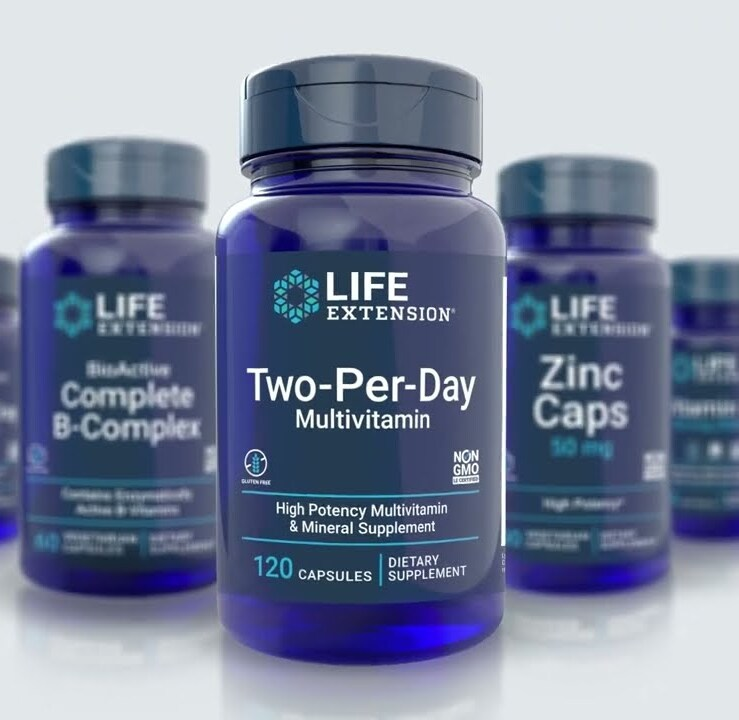
Multivitamine als Maßnahme zur Lebensverlängerung
Die Einnahme von Multivitaminen zeigte bei 390.124 Erwachsenen, die über mehr als zwei Jahrzehnte hinweg beobachtet wurden, keinen Vorteil hinsichtlich der Sterblichkeit [15], und die US Preventive Services Task Force rät von der Einnahme von Beta-Carotin und Vitamin E zur Krankheitsprävention ab [16]. Ein Multivitaminpräparat ist nicht schädlich; es ist lediglich keine Maßnahme zur Verlängerung der Lebenserwartung.
Proprietäre Mischungen
Wenn auf einem Etikett eine „proprietäre Langlebigkeitsmatrix“ mit insgesamt 700 mg aus neun Inhaltsstoffen angegeben ist, liegt kein Inhaltsstoff in einer klinisch untersuchten Dosis vor. Mehr dazu unter „Langlebigkeitspräparate, die wahrscheinlich nicht wirken“.
Drei wirksame Kombinationen und ihre Kosten
| Kombination | Inhalt | Am besten geeignet für | Ungefähre Kosten pro Monat in Großbritannien |
|---|---|---|---|
| Minimal (4 Artikel) | Omega-3 1–2 g; Vitamin D3 2.000 IE + K2; Magnesiumglycinat 300 mg; Kreatin 5 g | Einsteiger, unter 35-Jährige, knappes Budget | ca. 25–40 £ |
| Ausgewogen (6 Artikel) | Minimal-Kombination plus NMN 500–600 mg und TMG 500 mg | Die meisten Erwachsenen über 40 – die Standardempfehlung | ca. 60–95 £ |
| Umfassendes (8–9 Artikel) | Ausgewogenes Paket plus Urolithin A 500–1.000 mg, Taurin 2 g und entweder Spermidin oder ein Senolytikum | Erfahrene Anwender mit Ausgangsblutwerten und mindestens 12 Monaten konsequenter Einnahme | ~120–200 £ |
Kostengünstige Lösungen: der günstige Langlebigkeits-Stack, der minimale Nahrungsergänzungs-Stack, was ein Langlebigkeits-Stack in Großbritannien kostet, das günstigste NMN in Großbritannien und warum Langlebigkeitspräparate teuer sind.
Wie sich die Kombination je nach Alter und Ziel ändert
| Wer | Was sich ändert | Weiterführende Literatur |
|---|---|---|
| In den 30ern | Prävention und Gewohnheitsbildung. Die Grundausstattung plus Kreatin und Omega-3 reicht in der Regel aus. | Nahrungsergänzungsmittel für ein langes Leben in den 30ern |
| Frauen über 40 | Knochendichte, Muskelerhalt und Stoffwechselgesundheit stehen im Vordergrund; hormonelle Veränderungen verschieben die Prioritäten. | Frauen über 40, NMN und die Wechseljahre |
| Männer über 50 | Das Management von Herz-Kreislauf- und Stoffwechselrisiken rückt in den Vordergrund, ebenso wie die Prävention von Sarkopenie. | Männer über 50 |
| Ausdauersportler | Die Unterstützung der Mitochondrien und der Regeneration gewinnt an Bedeutung; eine hohe Zufuhr von Antioxidantien rund um das Training kann kontraproduktiv sein. | Ausdauersportler |
| Vegan oder pflanzlich | Omega-3 aus Algen, Vitamin B12 und Kreatin haben höhere Priorität und sind keine optionalen Extras mehr. | Vegane Nahrungsergänzungsmittel für ein langes Leben |
Zeitpunkt und Reihenfolge
| Wann | Einnahme | Warum |
|---|---|---|
| Morgens, nach dem Aufwachen | NMN oder NR, TMG | Stimmt die NAD⁺-Unterstützung auf den frühen Teil des zirkadianen Zyklus ab |
| Zusammen mit einer fettreichen Mahlzeit | Omega-3, Vitamin D3 + K2, Urolithin A | Fettlösliche Verbindungen werden zusammen mit einer Mahlzeit deutlich besser aufgenommen |
| Jederzeit, täglich | Kreatin | Auf die Sättigung kommt es an, nicht auf den Zeitpunkt |
| Abends | Magnesiumglycinat, Taurin | Unterstützt bei den meisten Menschen die Schlafqualität und die Entspannung |
Details: Wann sollte man NMN einnehmen? NMN zusammen mit Mahlzeiten, Nahrungsergänzungsmittel auf nüchternen Magen, kann man Nahrungsergänzungsmittel zusammen einnehmen, die Einnahmezeit-Tabelle, NMN-Zyklen und wie man mit der Einnahme von Nahrungsergänzungsmitteln für ein langes Leben beginnt.
Qualitätskontrolle: Überprüfen Sie, was Sie kaufen

Dies ist kein rein theoretisches Problem. In einer in GeroScience veröffentlichten, von Fachkollegen begutachteten Analyse von 18 NMN- und fünf Urolithin-A-Produkten wich der tatsächliche Gehalt um −100 % bis +28 % von der Angabe auf dem Etikett ab, wobei in drei Produkten überhaupt kein NMN nachweisbar war [17].
- Ein chargenspezifisches Analysezertifikat – kein allgemeines PDF aus dem Jahr 2021, sondern eines, das mit der Chargennummer auf Ihrer Dose übereinstimmt. Erfahren Sie, wie man ein Analysezertifikat liest.
- Unabhängige Tests durch Dritte, keine internen Tests. Siehe von Dritten getestete Nahrungsergänzungsmittel.
- Reinheit als Zahl angegeben – zum Beispiel ≥99 % β-NMN – einschließlich der Ergebnisse zu Schwermetallen und Mikroorganismen.
- Eine kurze, gut lesbare Liste der Hilfsstoffe. Siehe Füllstoffe in Nahrungsergänzungsmitteln.
Der Preis ist in beide Richtungen ein schwacher Indikator für die Qualität. In unseren Markenbewertungen wenden wir diese Prüfkriterien Produkt für Produkt an: Nuchido TIME+, Vitality Pro, Youth & Earth, NOVOS Core und beim Kauf von NMN bei Amazon UK.
Wie lässt sich feststellen, ob es wirkt?

Führen Sie vor der Einnahme der ersten Kapsel eine Basisuntersuchung durch und beurteilen Sie die Wirkung dann anhand stabiler, aussagekräftiger Messwerte und nicht danach, wie Sie sich in der zweiten Woche fühlen.
| Messen | Wie | Zeitrahmen, in dem Veränderungen zu erwarten sind |
|---|---|---|
| HbA1c | HbA1c-Bluttest | 3–6 Monate |
| Lipide und ApoB | Cholesterin-Bluttest | 8–12 Wochen |
| Vitamin D, Ferritin, Schilddrüsenwerte | Vitamin D, Ferritin, Schilddrüse | 8–12 Wochen |
| Griffkraft | Preisgünstiges Kraftmessgerät | 8–12 Wochen |
| Sechs-Minuten-Gehtest oder zeitgesteuerter Sit-to-Stand-Test | Stoppuhr – der in NMN-Studien verwendete Endpunkt [2] | 8–12 Wochen |
| Ruheherzfrequenz, HRV, Schlaf | Wearable | 2–4 Wochen |
Ein einzelnes Testpanel wie der „Full Body MOT Health Check“, der Gesundheits- und Lebensstil-Bluttest oder der erweiterte „Welzo Well-Human“-Bluttest deckt die meisten Blutmarker auf einmal ab. Finden Sie heraus, wie lange es dauert, bis Nahrungsergänzungsmittel wirken.
Wann Sie einen Arzt konsultieren sollten
Sprechen Sie mit Ihrem Hausarzt, bevor Sie mit einer der oben genannten Maßnahmen beginnen, wenn Sie verschreibungspflichtige Medikamente einnehmen, an einer Vorerkrankung leiden oder schwanger sind, versuchen, schwanger zu werden, oder stillen. Personen unter 18 Jahren sollten keine „Longevity-Stack“-Kombination zusammenstellen.
Besondere Wechselwirkungen, die beachtet werden sollten: Hochdosiertes Omega-3 und Vitamin K2 interagieren beide mit gerinnungshemmenden Medikamenten, wobei Vitamin K2 besonders relevant ist, wenn Sie Warfarin einnehmen. Mehrere Wirkstoffe dieser Kategorie beeinflussen den Glukosestoffwechsel oder den Blutdruck, sodass die Dosierung bestehender Medikamente möglicherweise angepasst werden muss. Bei Nieren- oder Lebererkrankungen ist bei der Einnahme von Kreatin, hochdosierten Aminosäuren und neuartigen Wirkstoffen eine ärztliche Beratung erforderlich.
So wird der Termin sinnvoll
Bringen Sie die Originalflaschen mit oder fotografieren Sie die Etiketten. Die Dosierung und die Darreichungsform sind ebenso wichtig wie der Name – 200 mg Magnesiumglycinat ist ein anderes Thema als 400 mg Magnesiumoxid. Wechselwirkungen in dieser Kategorie sind in der Regel nicht dramatisch, aber sie sind real und lassen sich viel leichter handhaben, wenn der Arzt sehen kann, was Sie bereits einnehmen. Nahrungsergänzungsmittel fehlen häufig in Medikamentenlisten, da die Menschen sie nicht als Medikamente betrachten.
Halten Sie inne und suchen Sie Rat, wenn Sie nach Beginn der Einnahme von etwas anhaltende Hitzewallungen, Übelkeit, ungewöhnliche Müdigkeit, Herzklopfen oder andere neue Symptome entwickeln. Ein erhöhter Blutdruck oder ein erhöhter HbA1c-Wert sollten Ihrem Hausarzt gemeldet werden – dafür gibt es etablierte Behandlungsmethoden mit weitaus fundierteren wissenschaftlichen Belegen als für alles, was im Regaal für Nahrungsergänzungsmittel zu finden ist. Lesen Sie auch, wann Sie die Einnahme von NMN beenden sollten.
Sieben Fehler, die gute Kombinationen zunichte machen
- Mit Stufe 4 beginnen. Die Wirkstoffe sind am einfachsten zu kaufen und lassen sich am wenigsten wirkungsvoll verändern.
- Vier Produkte auf einmal hinzuzufügen, sodass kein Ergebnis – weder positiv noch negativ – einem bestimmten Produkt zugeordnet werden kann.
- Unterdosierung, um Geld zu sparen. Die Hälfte einer klinisch untersuchten Dosis bringt in der Regel null Nutzen bei halben Kosten.
- Der Kauf von proprietären Mischungen anstelle einzelner Inhaltsstoffe in bekannten Dosierungen.
- Den Methylierungsbedarf bei der langfristigen Einnahme von NAD⁺-Vorläufern ignorieren.
- Keine Ausgangsblutwerte zu ermitteln und dann darüber zu streiten, ob es gewirkt hat.
- In der sechsten Woche aufgeben. Bei den meisten Fällen dieser Kategorie geht es um Monate, nicht um Tage.
Häufig gestellte Fragen
Was ist die beste Langlebigkeits-Kombination für Anfänger?
Omega-3 mit 1–2 g EPA und DHA, Vitamin D3 2.000 IE mit K2, Magnesiumglycinat 300 mg und Kreatinmonohydrat 5 g. Vier Produkte, die in Großbritannien etwa 25–40 £ pro Monat kosten und die Bereiche Entzündungen, Mangelbehebung, Schlaf und Muskelerhalt abdecken – die Bereiche mit den stärksten Belegen aus Studien am Menschen [1,6,7,8]. Fügen Sie erst dann eine NAD⁺-Vorstufe hinzu, wenn diese vier Produkte regelmäßig eingenommen werden.
Wie viele Nahrungsergänzungsmittel sollte ein Langlebigkeits-Stack enthalten?
Für die meisten Menschen vier bis sechs. Ab etwa acht nimmt die Therapietreue stark ab und die Qualität der wissenschaftlichen Evidenz sinkt. Wenn Sie nicht für jedes Produkt angeben können, worauf es abzielt, und keine entsprechende Studie nennen können, ist das Kombinationsprogramm zu umfangreich.
In welcher Reihenfolge sollte ich Nahrungsergänzungsmittel zu meinem „Longevity Stack“ hinzufügen?
Zuerst der Lebensstil, dann die Behebung von Mangelzuständen (Vitamin D, Omega-3, Magnesium, Kreatin), dann die NAD⁺-Ebene (NMN oder NR mit TMG) und schließlich gezielte Zusatzpräparate wie Urolithin A oder Taurin. Fügen Sie jeweils nur ein Produkt hinzu und nehmen Sie es 8–12 Wochen lang ein, damit Sie eventuelle Veränderungen zuordnen können.
Brauche ich TMG, wenn ich NMN einnehme?
Die Methylierung von überschüssigem NMN verbraucht Methylgruppen, daher ist TMG in einer Dosierung von 500–1.000 mg täglich eine gängige, kostengünstige Vorsichtsmaßnahme – insbesondere bei einer NMN-Dosis über 500 mg oder bei langfristiger täglicher Einnahme. Es ist nicht in jedem Fall erforderlich. Beide Seiten der Debatte finden sich unter „Brauche ich TMG zusammen mit NMN?“
Wie viel kostet ein gutes Langlebigkeits-Stack pro Monat in Großbritannien?
Ein minimalistisches Basis-Stack kostet monatlich etwa 25–40 £. Ein ausgewogenes Stack mit NMN und TMG liegt in der Regel bei 60–95 £. Umfassende Stacks mit Urolithin A und einem Senolytikum können 120–200 £ erreichen. Siehe Kosten für Langlebigkeits-Stacks in Großbritannien.
Ist der Kauf von NMN in Großbritannien legal?
Ja, und es ist weiterhin im Handel erhältlich. NMN fällt in den Geltungsbereich der britischen Verordnung über neuartige Lebensmittel und wird derzeit von der Food Standards Agency (FSA) geprüft, ist jedoch noch nicht vollständig zugelassen; ein Antrag ist im öffentlichen Register der FSA eingetragen [10]. Unabhängig davon veröffentlichte die EFSA im Mai 2026 ein Gutachten, in dem sie zu dem Schluss kam, dass chemisch synthetisiertes β-NMN in Nahrungsergänzungsmitteln als Niacinquelle in einer Dosierung von bis zu 300 mg täglich für Erwachsene – ausgenommen schwangere und stillende Frauen – sicher ist [11] – dies ist jedoch das EU-Verfahren und gilt nicht für Großbritannien. Prüfen Sie den aktuellen Stand, bevor Sie sich für ein langfristiges Abonnement entscheiden.
Kann ich alle meine Nahrungsergänzungsmittel zur Förderung der Langlebigkeit gleichzeitig einnehmen?
Meistens ja, bei sinnvoller zeitlicher Staffelung. Fettlösliche Präparate – Omega-3, Vitamin D3 und K2, Urolithin A – sollten zusammen mit einer fettreichen Mahlzeit eingenommen werden. Magnesium und Taurin am Abend. NAD⁺-Vorläufer am Morgen. Vermeiden Sie die gleichzeitige Einnahme hoher Dosen von Kalzium, Eisen und Zink, da diese um die Aufnahme konkurrieren.
Wie lange dauert es, bis ein Langlebigkeits-Stack zu wirken beginnt?
Veränderungen beim Schlaf und beim Energiehaushalt, sofern sie auftreten, zeigen sich in der Regel innerhalb von 2–4 Wochen. Blutwerte wie Lipide benötigen 8–12 Wochen, HbA1c 3–6 Monate. Alles, was anhand einer epigenetischen Uhr gemessen wird, benötigt 6–12 Monate und sollte bei demselben Anbieter erneut getestet werden. Erfahren Sie, wie lange es dauert, bis Nahrungsergänzungsmittel wirken.
Was sollte ich aus einem Langlebigkeits-Stack weglassen?
Hochdosiertes Resveratrol weist eine schlechte Bioverfügbarkeit und uneinheitliche Ergebnisse bei Menschen auf; Multivitamine zeigten bei 390.124 Erwachsenen, die über zwei Jahrzehnte hinweg beobachtet wurden, keinen Vorteil hinsichtlich der Sterblichkeit [15]; die USPSTF rät von der Einnahme von Beta-Carotin und Vitamin E zur Krankheitsprävention ab [16]; und bei proprietären Mischungen sind die Inhaltsstoffe fast immer unterdosiert. Mehr dazu unter „Langlebigkeits-Nahrungsergänzungsmittel, die wahrscheinlich nicht wirken“.
Lohnt sich ein „Longevity-Stack“, wenn meine Ernährung und mein Training bereits gut sind?
In bescheidenem Maße und als Ergänzung. In der DO-HEALTH-Studie schnitten Omega-3, Vitamin D und Bewegung zusammen auf der PhenoAge-Uhr besser ab als jede einzelne Maßnahme für sich, mit Effekten, die etwa drei bis vier Monaten biologischer Alterung über drei Jahre entsprachen [1]. Nahrungsergänzungsmittel verstärken eine gute Grundlage; sie schaffen keine.
Literaturhinweise
- Bischoff-Ferrari HA, Gängler S, Wieczorek M, et al. Individuelle und additive Effekte von Vitamin D, Omega-3 und Bewegung auf die DNA-Methylierungsuhren der biologischen Alterung bei älteren Erwachsenen aus der DO-HEALTH-Studie. Nature Aging. 2025;5(3):376–385. https://www.ncbi.nlm.nih.gov/pmc/articles/PMC11922767/
- Yi L, Maier AB, Tao R, et al. Wirksamkeit und Sicherheit einer β-Nicotinamid-Mononukleotid (NMN)-Supplementierung bei gesunden Erwachsenen mittleren Alters: eine randomisierte, multizentrische, doppelblinde, placebokontrollierte, parallelgruppierte, dosisabhängige klinische Studie. GeroScience. 2023;45(1):29–43. https://www.ncbi.nlm.nih.gov/pmc/articles/PMC9735188/ — Studienregistrierung NCT04823260.
- Auswirkungen von Nicotinamid-Mononukleotid auf den Glukose- und Fettstoffwechsel bei Erwachsenen: Eine systematische Übersicht und Metaanalyse randomisierter kontrollierter Studien. Current Diabetes Reports. 2024. https://www.ncbi.nlm.nih.gov/pmc/articles/PMC11557618/
- López-Otín C, Blasco MA, Partridge L, Serrano M, Kroemer G. Kennzeichen des Alterns: Ein sich ausdehnendes Universum. Cell. 2023;186(2):243–278. https://www.cell.com/cell/fulltext/S0092-8674(22)01377-0
- NHS. Leitlinien zur körperlichen Aktivität für Erwachsene im Alter von 19 bis 64 Jahren. https://www.nhs.uk/live-well/exercise/exercise-guidelines/physical-activity-guidelines-for-adults-aged-19-to-64/
- NHS. Vitamin D – Vitamine und Mineralstoffe. https://www.nhs.uk/conditions/vitamins-and-minerals/vitamin-d/
- Derbyshire E. Mikronährstoffaufnahme britischer Erwachsener im mittleren Lebensalter: Eine Sekundäranalyse der britischen Nationalen Ernährungs- und Diätumfrage. Frontiers in Nutrition. 2018;5:55. https://www.frontiersin.org/journals/nutrition/articles/10.3389/fnut.2018.00055/full
- Kreider RB, Kalman DS, Antonio J, et al. Stellungnahme der International Society of Sports Nutrition: Sicherheit und Wirksamkeit einer Kreatin-Supplementierung in Bewegung, Sport und Medizin. Journal of the International Society of Sports Nutrition. 2017;14:18. https://www.ncbi.nlm.nih.gov/pmc/articles/PMC5469049/
- Auf dem Weg zu einer personalisierten Nicotinamid-Mononukleotid (NMN)-Supplementierung: Nicotinamid-Adenin-Dinukleotid (NAD)-Konzentration. Mechanisms of Ageing and Development. 2024;218:111889. Post-hoc-Analyse der in Referenz 2 genannten Studie; biologisches Alter berechnet mit Aging.AI 3.0. https://www.sciencedirect.com/science/article/pii/S0047637424000174
- Food Standards Agency. Register der Anträge auf Zulassung regulierter Produkte – β-Nicotinamid-Mononukleotid. https://data.food.gov.uk/regulated-product-applications/products-list/RP-2116
- EFSA-Gremium für Ernährung, neuartige Lebensmittel und Lebensmittelallergene. Sicherheit von Beta-Nicotinamid-Mononukleotid (β-NMN) gemäß der Verordnung (EU) 2015/2283 und die Bioverfügbarkeit von Nicotinamid aus dieser Quelle im Rahmen der Richtlinie 2002/46/EG. EFSA Journal. 2026;24(5):e10007. https://efsa.onlinelibrary.wiley.com/doi/10.2903/j.efsa.2026.10007
- Liu S, D’Amico D, Shankland E, et al. Wirkung einer Urolithin-A-Supplementierung auf die Muskelausdauer und die mitochondriale Gesundheit bei älteren Erwachsenen: eine randomisierte klinische Studie. JAMA Network Open. 2022;5(1):e2144279. https://jamanetwork.com/journals/jamanetworkopen/fullarticle/2788244
- Singh A, D'Amico D, Andreux PA et al. Urolithin A verbessert die Muskelkraft, die Trainingsleistung und die Biomarker der mitochondrialen Gesundheit in einer randomisierten Studie bei Erwachsenen mittleren Alters. Cell Reports Medicine. 2022;3:100633. https://www.sciencedirect.com/science/article/pii/S2666379122001586
- Singh P, Gollapalli K, Mangiola S, et al. Taurinmangel als Treiber des Alterungsprozesses. Science. 2023;380(6649):eabn9257. https://doi.org/10.1126/science.abn9257
- Loftfield E, O’Connell CP, Abnet CC et al. Multivitamin-Einnahme und Mortalitätsrisiko in drei prospektiven US-Kohorten. JAMA Network Open. 2024;7(6):e2418729. https://pubmed.ncbi.nlm.nih.gov/38922615/
- US Preventive Services Task Force; Mangione CM, Barry MJ, et al. Vitamin-, Mineralstoff- und Multivitamin-Supplementierung zur Vorbeugung von Herz-Kreislauf-Erkrankungen und Krebs: Empfehlungserklärung der US Preventive Services Task Force. JAMA. 2022;327(23):2326–2333. https://pubmed.ncbi.nlm.nih.gov/35727271/
- Sandalova E, Li H, Guan L, et al. Überprüfung der Menge an Nicotinamid-Mononukleotid und Urolithin A im Vergleich zur Angabe auf dem Etikett. GeroScience. 2024;46(5):5075–5083. https://pubmed.ncbi.nlm.nih.gov/38935229/
Medizinischer Haftungsausschluss
Dieser Artikel dient der allgemeinen Information und stellt keine medizinische Beratung, Diagnose oder Behandlung dar. Nahrungsergänzungsmittel sind kein Ersatz für eine abwechslungsreiche, ausgewogene Ernährung und einen gesunden Lebensstil und sollten nicht zur Behandlung oder Vorbeugung von Krankheiten verwendet werden. Es gibt keine Belege dafür, dass ein Nahrungsergänzungsmittel die Lebenserwartung des Menschen verlängert. Die angegebenen Dosierungen entsprechen denen, die in veröffentlichten Studien am Menschen verwendet wurden, und stellen keine persönliche Empfehlung dar. Konsultieren Sie Ihren Hausarzt, bevor Sie mit der Einnahme eines Nahrungsergänzungsmittels beginnen, wenn Sie verschreibungspflichtige Medikamente einnehmen – insbesondere Antikoagulanzien, Blutdruck- oder Diabetesmedikamente –, an einer Nieren- oder Lebererkrankung leiden oder schwanger sind, versuchen, schwanger zu werden, oder stillen. Diese Produkte sind nicht für Personen unter 18 Jahren geeignet. Konsultieren Sie Ihren Hausarzt, bevor Sie ein neues Trainingsprogramm beginnen, wenn Sie an einer Herzerkrankung leiden, unter Belastungsbrustschmerzen leiden, einen unkontrollierten Blutdruck haben oder über einen längeren Zeitraum inaktiv waren. Setzen Sie verschriebene Medikamente niemals ab oder reduzieren Sie deren Dosis, um stattdessen auf Nahrungsergänzungsmittel umzusteigen. Brustschmerzen, Atemnot, unbeabsichtigter Gewichtsverlust oder anhaltende, unerklärliche Müdigkeit erfordern eine umgehende ärztliche Untersuchung. Auf medizinische Richtigkeit geprüft von Dr. Zeeshan Afzal. Siehe den vollständigen medizinischen Haftungsausschluss von Welzo.
Alle Produktfotos in diesem Artikel sind Eigentum von Welzo und stammen aus der Welzo-Medienbibliothek. Die Forschungsergebnisse entsprechen dem Stand zum Zeitpunkt der Veröffentlichung.



 Ocijenjeno izvrsno s 28,951+ recenzija
 100% jamstvo povratka novca