

Related collections


Where to Buy Spermidine in the UK
Posted on:
Jul 24, 2026
Authored by


Written by the Welzo Longevity Team. Medically reviewed by Dr Zeeshan Afzal, Medical Doctor.
Last updated: 22 July 2026 | Reading time: approximately 12 minutes | Evidence-based & independently referenced
If you are trying to buy spermidine in the UK, the fastest route is a reputable online longevity retailer that publishes third-party purity testing, sells a standardised dose, and ships from a UK address. You can explore Welzo's full spermidine collection and the wider anti-ageing and longevity range, or go straight to Welzo Ultra Purity Spermidine. For where this compound fits alongside the alternatives, our pillar guide to longevity supplements gives the full context. Spermidine is a naturally occurring polyamine that has become one of the most researched compounds in longevity science because it directly triggers autophagy — the body's cellular recycling and clean-up process. This guide explains exactly where to buy it, what the research actually shows, how to judge quality, and how to avoid the low-potency products that dominate the market. You can explore Welzo's full range in the spermidine collection, and for the wider protocol, the longevity supplements guide gives helpful context on where spermidine fits.
.jpg)
In the UK, spermidine is sold as a food supplement and does not require a prescription. You can buy it from three main channels:
For most people building a structured routine, a UK-based specialist retailer that combines a verified dose, third-party testing and clear labelling is the safest choice. If you are also researching NAD⁺ boosters, the NMN benefits, side effects and dosage guide and the NMN supplements collection are natural companions to spermidine.
Spermidine is a naturally occurring polyamine — a small molecule found in every cell of the human body and in many everyday foods, including wheat germ, soybeans, mushrooms, aged cheese and green peppers. It plays a fundamental role in cell metabolism, DNA stability and the process the body uses to renew itself.

The reason spermidine attracts so much interest is its ability to switch on autophagy (from the Greek for "self-eating"). Autophagy is the cell's built-in quality-control system: it identifies damaged proteins, worn-out mitochondria and cellular debris, breaks them down and recycles the components. When this process slows, cellular "junk" accumulates — a change closely tied to biological ageing. You can read a fuller explanation in the Welzo autophagy explained article and the wider context in the hallmarks of ageing guide.
Circulating spermidine tends to fall as we get older, and reduced autophagy is one of the recognised features of the ageing process. This decline is the central rationale behind supplementing: the idea is to restore the intracellular signals that keep cellular housekeeping running efficiently. Understanding your own trajectory is easier once you grasp the concept of biological age and the practical steps to lower your biological age.
Spermidine has a genuinely substantial research base for a supplement, spanning cell studies, animal models and a growing body of human data. It is important to be precise about what has — and has not — been shown.
In yeast, worms, flies and mice, spermidine supplementation induces autophagy and extends lifespan, and switching off the genes required for autophagy abolishes that benefit — strong evidence that the effect is autophagy-dependent (Eisenberg et al., reviewed in PubMed). More recent work in Nature Cell Biology (Hofer et al., 2024) shows that spermidine is also essential for the autophagy and longevity benefits seen with fasting across multiple species.
The most cited human study is the Bruneck Study (Kiechl et al., American Journal of Clinical Nutrition, 2018). In 829 adults followed for up to 20 years, all-cause mortality fell steadily as dietary spermidine intake rose — from about 40.5 deaths per 1,000 person-years in the lowest third of intake to 15.1 in the highest. The researchers calculated that the difference between the top and bottom third of intake was comparable to being roughly 5.7 years younger. Of the 146 nutrients analysed, spermidine showed the strongest inverse relationship with death.
This is compelling, but it is an observational association from diet, not proof that a capsule extends human lifespan. Higher-spermidine diets also tend to be healthier overall, which the authors carefully adjusted for but could not eliminate entirely.
Early human trials focused on memory in older adults. A small randomised trial by Wirth et al. (Cortex, 2018) found a moderate memory improvement after three months. However, the larger, longer, better-controlled SmartAge trial (Schwarz et al., JAMA Network Open, 2022) — 100 participants over 12 months at 0.9 mg/day — did not find a significant memory benefit versus placebo, though exploratory signals on verbal memory and inflammation warranted further study at higher doses. The honest summary: cognitive benefits in humans remain unproven and dose may matter.
In mice, dietary spermidine extended lifespan and improved age-related cardiac function through autophagy, with epidemiological signals of cardiovascular benefit in humans (Circulation Research). Human cardiovascular outcomes still require dedicated randomised trials.
Bottom line on the evidence: spermidine has a strong mechanism (autophagy) and encouraging observational human data, but it is not a proven anti-ageing "cure". Treat it as one evidence-informed pillar within a broader healthy lifestyle — see the longevity stack for how the pieces fit together.

Here is an honest comparison of the main UK buying options, with the trade-offs that matter for a quality-sensitive supplement like spermidine.
| Where to buy | Best for | Watch out for |
|---|---|---|
| Specialist longevity retailer (e.g. Welzo) | Standardised Spermidine 3HCL, published purity testing, UK dispatch, multi-buy value | Verify the actual spermidine content per capsule, not just "wheat germ" weight |
| Holland & Barrett / health shops | Buying in person, loyalty schemes | Limited range; often low-dose or wheat-germ-only formulas |
| Boots / Superdrug | Familiar pharmacy trust, click & collect | Spermidine is rarely stocked; check labels carefully |
| Amazon UK | Fast delivery, reviews, price comparison | Highly variable quality and documentation; some sellers overstate dose |
| Brand-direct websites | Full ingredient transparency, subscription options | Shipping/returns terms vary; confirm UK stock and customs |
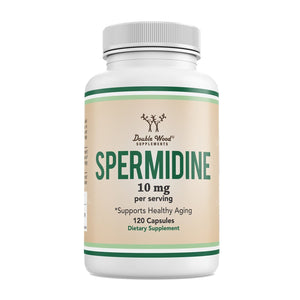
Welzo carries multiple options in one place, including the clean-label Welzo Ultra Purity Spermidine and the US-imported, third-party-tested Double Wood Spermidine, with free UK shipping over £50. If you are weighing spermidine against other autophagy and NAD⁺ approaches, the spermidine vs NMN comparison is a useful next read.
Spermidine is one category where product quality genuinely changes the amount you actually absorb. Use these five checks before you buy.
Two forms dominate the market. Wheat germ extract is the natural food-derived source used in most human trials, but the spermidine concentration is low and variable — sometimes only 1–2% of the powder weight. Spermidine trihydrochloride (Spermidine 3HCL) is a purified form standardised to around 99% purity, letting you dose an exact milligram amount. Both are legitimate; the key is knowing the actual spermidine content, not the total capsule weight.
A reputable brand will provide batch-level testing that confirms identity, potency and the absence of contaminants such as heavy metals. Learn what to look for in the Welzo guide to a supplement Certificate of Analysis.
Testing carried out by an external laboratory — not just the manufacturer — is the gold standard. See third-party tested supplements for why this matters and how to verify it.
Cheap products often bulk out capsules with binders and flow agents. A cleaner label means more active ingredient per capsule. The supplement fillers guide explains which additives are worth avoiding.
Check whether the stated dose is per capsule or per two capsules — a common source of confusion. Match the label against the clinical dose ranges below.
There is no official recommended daily intake for supplemental spermidine, and the optimal dose for any specific outcome has not been established. What we can do is anchor to the doses used in research and typical dietary intake.
| Context | Typical amount | Source |
|---|---|---|
| Average Western dietary intake | ~7–15 mg/day | Food-frequency estimates |
| Cognition trials (wheat germ) | 0.9–3.3 mg/day | Wirth 2018; SmartAge 2022; Pekar 2021 |
| Common supplement labelling | 1–10 mg/day | UK market products |
| Tolerability study (short term) | up to ~15 mg/day well tolerated | Schwarz 2018 safety study |
A short-term study reported that supplemental spermidine was well tolerated in older adults, with no significant safety concerns at the doses tested (Schwarz et al., 2018). Most people start at a modest daily dose with food and stay consistent. For timing principles that apply across longevity compounds, see when to take NMN and the broader how to start longevity supplements guide.
Before or alongside a supplement, you can raise intake through diet. Spermidine is the polyamine most readily absorbed from the gut, and it is abundant in several everyday foods.
| Food group | Examples |
|---|---|
| Wheat & grains | Wheat germ (one of the richest sources), whole grains, amaranth |
| Soy products | Natto (very high), fermented soybeans, tofu |
| Vegetables | Broccoli, cauliflower, green peppers, peas |
| Mushrooms | Shiitake and other varieties |
| Aged cheese | Mature cheddar, blue cheeses, other matured cheeses |
| Fruit & other | Apples, pears, durian |


Food images: Wikimedia Commons (Creative Commons licences).
A spermidine-rich diet echoes the eating patterns seen in long-lived populations — explored further in the Welzo Blue Zones longevity article. Supplements exist precisely because food amounts are small and inconsistent, which makes a measured daily dose easier to hit reliably.
Spermidine and NMN are frequently mentioned together, but they work through different pathways. Spermidine primarily drives autophagy (cellular clean-up), while NMN is a precursor to NAD⁺, a coenzyme central to cellular energy and repair. They are complementary rather than interchangeable.
Many people running a longevity protocol include both, along with methyl-donor and antioxidant support. A common foundation is NMN plus a methyl donor such as TMG — see do I need TMG with NMN and where to buy TMG in the UK. Welzo's flagship NAD⁺ product is NMN Pro 1000, and a popular combined approach is outlined in the NMN, TMG and resveratrol stack.
Priorities differ by age and sex. Helpful starting points include longevity supplements for women over 40 and longevity supplements for men over 50. Whatever your protocol, spermidine slots in as an autophagy-focused pillar.
Spermidine occurs naturally in the diet and in the body, and short-term supplementation has generally been well tolerated in trials, with no serious adverse effects reported at studied doses (Schwarz et al., 2018). Reported side effects are uncommon and typically mild, such as occasional digestive upset.
However, certain groups should exercise caution and speak to a healthcare professional first:
This article is for general information and is not a substitute for personalised medical advice. Always read the product label and consult a qualified professional before starting any supplement.
A simple, sensible approach:
You can buy spermidine from specialist longevity retailers such as Welzo, from some health shops and pharmacies, and from marketplaces like Amazon UK. For a standardised, third-party-tested product with UK dispatch, a specialist retailer is generally the best choice — see the Welzo spermidine collection.
Yes. Spermidine is sold as a food supplement in the UK and does not require a prescription.
The "best" product is one that publishes a Certificate of Analysis, uses standardised high-purity Spermidine 3HCL or a well-characterised wheat germ extract, is third-party tested, and states the actual spermidine content per capsule. The Welzo Ultra Purity Spermidine and Double Wood Spermidine are two examples that meet these criteria.
There is no official recommended intake. Human cognition trials used roughly 0.9–3.3 mg/day of supplemental spermidine, while typical dietary intake is around 7–15 mg/day. Most supplements provide 1–10 mg per serving. Start low and check the label carefully.
Its best-established action is inducing autophagy — the body's cellular recycling process — which is why it is studied for healthy ageing. Learn more in autophagy explained.
Short-term studies report good tolerability with no serious adverse effects at studied doses. Pregnant or breastfeeding women, people with cancer, and anyone on medication should consult a doctor first.
They target different pathways: spermidine drives autophagy, NMN raises NAD⁺. Neither is strictly "better"; many people use both. Read the full spermidine vs NMN comparison.
Any benefits act on cellular timescales rather than producing an immediate effect, so consistency over months matters. See how long supplements take to work.
Most people take it with food for comfort and consistency. General timing principles are covered in when to take NMN, which apply broadly to daily longevity supplements.
You can raise intake meaningfully with wheat germ, natto, mushrooms, aged cheese and green vegetables, but food amounts are small and variable. A measured supplement makes a consistent daily intake easier — which is why many people combine both.
Medical disclaimer: The information on this page is for general educational purposes only and is not a substitute for professional medical advice, diagnosis or treatment. Food supplements should not replace a varied, balanced diet and a healthy lifestyle. Always read the label and consult a qualified healthcare professional before starting any supplement, especially if you are pregnant, breastfeeding, taking medication or have a medical condition.
 Rated Excellent by 28,951+ Reviews
 100% Money Back Guarantee
Our money back guarantee ensures you receive your items or get a full refund.