


Best Ergonomic Seating for Desk Work & Back Posture


Related products


Spending long hours at a desk is now unavoidable for most professionals, students, and remote workers. Poor seating is one of the leading contributors to posture-related discomfort, stiffness, and fatigue, which is why ergonomic office chairs have become increasingly important in 2026.
While traditional office chairs dominate the market, ergonomic kneeling chairs are increasingly recognised by chiropractors and posture specialists as one of the most effective seating solutions for spinal alignment. This guide focuses on the best ergonomic office chairs available on Welzo, specifically designed to improve posture, reduce back strain, and support healthier sitting habits for people spending extended time at a desk.
We evaluated ergonomic seating options based on posture support, spinal alignment, comfort, build quality, and real-world usability — helping you decide which ergonomic office chair is best for your needs and where to buy it.
What Is an Ergonomic Office Chair?
An ergonomic office chair is designed to support the body’s natural posture while sitting for extended periods. Unlike standard chairs, ergonomic designs focus on reducing strain on the spine, hips, and surrounding muscles — particularly for people who experience discomfort associated with prolonged desk work.
Core ergonomic principles include:
-
Maintaining a neutral spine position
-
Reducing pressure on the lumbar region
-
Encouraging active sitting and core engagement
-
Minimising slouching and forward head posture
Why Kneeling Chairs?
Kneeling chairs are a specialist ergonomic seating category that gently tilts the pelvis forward, allowing the spine to align naturally and reducing compression in the lower back. This makes them especially effective for users struggling with posture fatigue or those already exploring posture-support solutions within supports & braces or general medical equipment for daily comfort. Many users considering ergonomic seating are also actively managing discomfort associated with joint pain relief and long-term sitting habits.
What Is Ergonomic Seating Used For?
Ergonomic seating is designed to support healthier posture and reduce physical strain during prolonged sitting. It is commonly used in environments where individuals spend extended hours at a desk.
1. Reducing Back and Neck Strain
Ergonomic chairs help maintain spinal alignment, which can reduce tension in the lower back, shoulders, and neck caused by slouching or poor desk posture.
2. Supporting Long Desk Work Sessions
For professionals, students, and remote workers, ergonomic seating provides structured support during extended periods of computer use, writing, or studying.
3. Improving Posture Awareness
Ergonomic designs encourage active sitting and discourage leaning forward or collapsing into the lower spine — promoting better posture habits over time.
4. Enhancing Workplace Comfort
By distributing body weight more evenly and reducing pressure points, ergonomic chairs improve overall sitting comfort throughout the day.
5. Supporting Recovery & Preventative Care
Some individuals exploring ergonomic seating are also proactively managing posture-related discomfort or aiming to prevent future musculoskeletal strain associated with sedentary work.
Our Top Picks — Best Ergonomic Office Chairs on Welzo (2026)
Because Welzo currently stocks two posture-corrective ergonomic seating options, both are featured as top picks:
-
Best Overall Ergonomic Office Chair for Back Posture: Vértossa Ergonomic Oak Kneeling Chair
-
Best Premium Ergonomic Office Chair for Extended Desk Work: Vértossa Ergonomic Premium Kneeling Chair
Best Ergonomic Office Chairs
1. Vértossa Ergonomic Oak Kneeling Chair — Best Overall Ergonomic Office Chair for Back Posture

Why selected:
Best overall balance of posture correction, spinal alignment, and long-term durability.
Description:
The Vértossa Ergonomic Oak Kneeling Chair is designed to promote healthy posture by tilting the pelvis forward, allowing the spine to maintain its natural curve. Built with solid oak and high-density cushioning, it supports active sitting while reducing pressure on the lower back during prolonged desk work.
Unlike traditional office chairs, this kneeling design encourages subtle movement and posture awareness, making it particularly effective for people who struggle with slouching during long work sessions.
Reviews:
Users frequently report noticeable improvements in posture and reduced discomfort after regular use. The solid wood frame is praised for its stability and build quality.
Price:
Available on Welzo
Where to buy:
Welzo
Pros:
• Encourages upright posture
• Reduces lumbar pressure
• Durable solid oak construction
• Promotes active sitting
Cons:
• Adjustment period required
• Different from traditional chair feel
How to use:
Adjust the seat height so the hips sit slightly higher than knees. Rest shins on the padded supports and allow the chair to guide your posture naturally.
Editor’s comment:
An excellent everyday ergonomic seating solution for posture-focused desk workers in 2026.
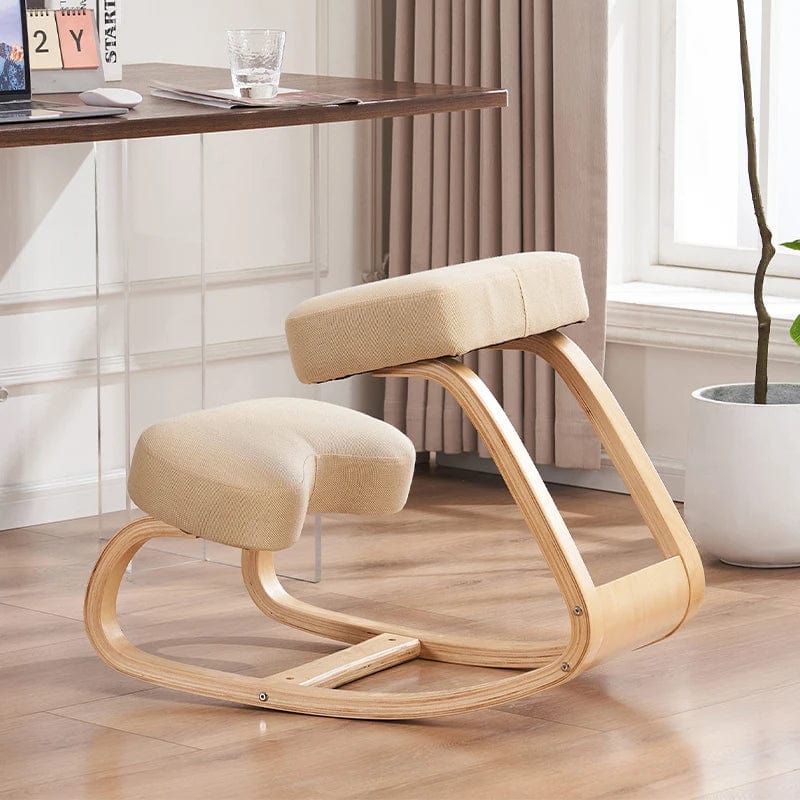
2. Vértossa Ergonomic Premium Kneeling Chair — Best Premium Ergonomic Office Chair
Why selected:
Best premium option for extended desk work and enhanced comfort.
Description:
The Vértossa Ergonomic Premium Kneeling Chair builds on the original design with upgraded cushioning and reinforced construction. It provides the same posture-corrective pelvic tilt while offering additional comfort for longer daily use.
This premium model is ideal for professionals or students who spend many hours seated and want an ergonomic solution that prioritises spinal alignment without sacrificing comfort.
Reviews:
Highly rated for comfort improvements, stability, and suitability for longer sitting sessions compared to standard kneeling chairs.
Price:
Available on Welzo
Where to buy:
Welzo
Pros:
• Enhanced cushioning
• Premium build quality
• Strong posture support
• Better for long sessions
• Available in different colors
Cons:
• Higher price point
• Requires adaptation for new users
How to use:
Set the chair height to maintain a gentle forward tilt. Alternate kneeling with short standing or walking breaks throughout the day.
Editor’s comment:
The best choice on Welzo for users who want premium comfort alongside posture correction.
Ergonomic Kneeling Chairs Comparison Table
| Feature | Vértossa Ergonomic Oak Kneeling Chair | Vértossa Ergonomic Premium Kneeling Chair |
|---|---|---|
| Best for | Every day, posture correction and focused desk work | Extended desk sessions with added comfort |
| Chair type | Ergonomic kneeling desk chair | Premium ergonomic kneeling desk chair |
| Posture support | Excellent – promotes neutral spine alignment | Excellent – optimised for longer sitting periods |
| Pelvic tilt design | Forward-tilting seat for active sitting | Forward-tilting seat with enhanced stability |
| Frame material | Solid oak wood | Reinforced premium frame |
| Cushioning | High-density padding | Enhanced high-density cushioning |
| Comfort for long sessions | Moderate to high | High |
| Learning curve | Moderate | Moderate |
| Mobility (wheels/swivel) | No | No |
| Ideal user | Posture-focused desk workers | Professionals with long daily desk hours |
| Price positioning | Mid-range | Premium |
| Availability on Welzo | Yes | Yes |
Features and Benefits of Choosing an Ergonomic Office Chair
Choosing an ergonomic office chair is not just about comfort — it is about long-term posture support, spinal alignment, and reducing strain during extended desk work. The right chair can significantly improve how your body feels after a full day of sitting.
1. Improved Spinal Alignment
Ergonomic chairs are designed to promote a neutral spine position. Kneeling chairs, in particular, gently tilt the pelvis forward, helping maintain the spine’s natural curve and reducing lower-back compression.
Benefit: Less slouching and reduced lumbar pressure during long desk sessions.
2. Reduced Lower-Back Strain
Traditional chairs often encourage leaning back or collapsing into the lower spine. Ergonomic seating distributes body weight more evenly and supports the lumbar region.
Benefit: Reduced discomfort associated with prolonged sitting.
3. Active Sitting & Core Engagement
Kneeling chairs promote subtle movement and core engagement rather than passive sitting.
Benefit: Increased posture awareness and reduced fatigue.
4. Better Desk Productivity
Comfortable, well-supported seating allows users to focus longer without frequent posture adjustments.
Benefit: Improved concentration and reduced distraction from discomfort.
5. Long-Term Posture Habit Formation
Consistent use of ergonomic seating can help reinforce better sitting habits over time.
Benefit: Preventative support for desk-related posture issues.
These benefits make kneeling chairs particularly appealing to people seeking alternatives to conventional office chairs, especially those managing desk-related discomfort often associated with back pain
How We Ranked These Ergonomic Office Chairs (Evaluation Criteria)
To rank these ergonomic office chairs fairly, we focused on criteria that matter most for posture-focused desk workers.
Unlike standard office chairs that prioritise cushioning or aesthetics, ergonomic seating must prioritise alignment, stability, and long-term usability.
1. Posture Support (Non-Negotiable)
We assessed how effectively each chair promotes:
-
Neutral spine alignment
-
Pelvic tilt positioning
-
Reduced lumbar compression
2. Comfort During Prolonged Sitting
Because many users sit for 6–8+ hours daily, we evaluated cushioning density, shin support, and weight distribution.
3. Build Quality & Durability
A posture chair must maintain structural integrity over time. We reviewed:
-
Frame strength
-
Stability
-
Material quality
4. Ease of Adjustment
An ergonomic chair should adapt to the user — not the other way around. Adjustable height and user-friendly setup were prioritised.
5. Real-World Usability
We considered whether the chair realistically fits:
-
Home office setups
-
Professional workspaces
-
Student desks
6. Value for Long-Term Use
We evaluated whether the price reflects durability, comfort, and posture support — not just design.
How We Evaluated These Ergonomic Office Chairs
Our evaluation combined three layers:
-
Posture-first design assessment
-
Product-level construction review
-
Real-world daily use practicality
First, we examined whether the chair genuinely supports pelvic tilt and spinal alignment rather than simply marketing itself as “ergonomic.”
Second, we assessed build quality, cushioning performance, and structural durability — essential for users sitting long hours.
Third, we evaluated usability: Is the chair practical for daily work? Does it require extreme adaptation? Is it suitable for beginners?
Both Vértossa models were assessed based on posture effectiveness rather than aesthetic design alone.
How to Use an Ergonomic Kneeling Chair (Adjustment, Timing & Best Practices)
Just like supplements require proper dosing, ergonomic seating requires proper adjustment. A kneeling chair works best when used deliberately and set up correctly.
Proper Adjustment Matters
Unlike traditional chairs, kneeling chairs rely on correct pelvic positioning. The seat should be adjusted so that:
-
Hips sit slightly higher than knees
-
Spine remains upright without forced tension
-
Shins rest comfortably on padded supports
Improper setup can reduce effectiveness.
How Long Should You Sit in a Kneeling Chair?
Usage depends on comfort and adaptation level.
For New Users:
Start with 30–60 minutes at a time and gradually increase usage over 1–2 weeks.
For Regular Users:
Many people use kneeling chairs for 3–6 hours daily, often alternating with standing or traditional seating.
Timing & Daily Use Strategy
Unlike traditional chairs, kneeling chairs encourage active sitting. They are most effective when:
-
Used during focused work sessions
-
Combined with standing or walking breaks
-
Integrated into a broader ergonomic workspace setup
Consistency matters more than duration.
Best Practice #1: Gradual Adaptation
Most users need a short adjustment period. Mild muscle awareness in the core or thighs is normal initially.
Gradually increase sitting duration to allow your body to adapt.
Best Practice #2: Alternate Sitting Positions
No chair should be used continuously without breaks. Alternating between:
-
Kneeling chair
-
Standing desk
-
Short walking intervals
helps reduce fatigue.
Best Practice #3: Set Desk Height Correctly
An ergonomic chair will not compensate for an incorrectly positioned desk.
Ensure:
-
Elbows rest at approximately 90 degrees
-
Screen is at eye level
-
Shoulders remain relaxed
What to Expect
An ergonomic kneeling chair is not a soft lounge seat. Instead, it:
-
Encourages upright posture
-
Promotes subtle muscle engagement
-
Reduces passive slouching
Improvements in posture awareness often develop gradually over days or weeks.
Common Adjustment Signs (Not Problems)
Similar to how supplement users monitor their response, ergonomic seating users may notice:
-
Increased posture awareness
-
Mild muscle engagement during the first week
-
Reduced slouching habit over time
If discomfort persists beyond normal adaptation, reassess chair height and desk setup.
External References & Evidence – Ergonomic Seating
1. Prolonged Sitting & Back Pain Risk
Research shows prolonged static sitting is associated with increased lower-back discomfort and musculoskeletal strain. Poor posture during desk work increases spinal disc pressure and muscular fatigue, supporting the need for ergonomic seating interventions.
Source:
European Spine Journal – Occupational sitting and low back pain
https://link.springer.com/article/10.1007/s00586-019-06191-1
2. Office Chair Design & Lumbar Spine Posture
Studies evaluating office chair features (including lumbar support and seat pan tilt) demonstrate that adjustable and posture-supportive designs improve pelvic positioning and lumbar spine alignment compared to non-ergonomic chairs.
Source:
Ergonomics Journal – Effects of office chair design on lumbar posture
https://pubmed.ncbi.nlm.nih.gov/36437777/
3. Ergonomic Interventions & Musculoskeletal Pain Reduction
A systematic review and meta-analysis found ergonomic interventions — including workstation and chair adjustments — were associated with reduced musculoskeletal pain among office workers.
Source:
Journal of Clinical Medicine (MDPI) – Ergonomic interventions meta-analysis
https://www.mdpi.com/2077-0383/14/9/3034
4. NHS Guidance on Sitting Posture
NHS guidance on workplace ergonomics emphasises correct chair height, lumbar support, and neutral spine posture to prevent neck and back pain.
Source:
Cambridge University Hospitals NHS – Seating and ergonomics guidance
https://www.cuh.nhs.uk/patient-information/seating-and-ergonomics/
5. Spine Health – Sitting & Disc Pressure
Clinical guidance from Spine-Health explains that prolonged sitting without proper lumbar support increases pressure on spinal discs, reinforcing the importance of ergonomic seating.
Source:
Spine-Health – Office chairs and back pain
https://www.spine-health.com/wellness/ergonomics/office-chair-how-reduce-back-pain
6. Active Sitting & Muscle Engagement
Research exploring active sitting mechanisms shows that forward-tilting seating increases trunk muscle activation compared to conventional seating, which may improve posture awareness.
Source:
PubMed – Effects of seating posture on trunk muscle activation
https://pubmed.ncbi.nlm.nih.gov/33970803/
FAQs About Ergonomic Office Chairs
Are ergonomic kneeling chairs better than traditional office chairs?
They can be more effective for posture correction, particularly for users prone to slouching.
Can ergonomic chairs help with back discomfort?
They may reduce strain by promoting better spinal alignment during desk work.
Are kneeling chairs suitable for all-day use?
Yes, when combined with regular movement breaks and proper desk setup.
Do kneeling chairs cause knee pressure?
Proper padding and correct adjustment minimise knee strain.
How long does it take to adjust?
Most users adapt within 1–2 weeks.
Should I switch between chairs?
Alternating seating styles can improve overall comfort and reduce fatigue.


 Ocijenjeno izvrsno s 28,951+ recenzija
 100% jamstvo povratka novca