



Foods That Cause Bloating (And What to Eat Instead)


Související produkty


Medically reviewed and written by Dr Zeeshan Afzal, MBBS — Medical Content Lead, Welzo. Last updated: July 2026. This article is for general information and is not a substitute for personalised medical advice.
If your stomach feels tight, swollen or visibly distended after eating, you are in very large company. Bloating is one of the most common digestive complaints seen in UK primary care, and in most cases the trigger is sitting on your plate. The good news is that identifying the foods that cause bloating rarely means giving up entire food groups — it usually means swapping a handful of specific items for gentler alternatives, and giving your gut health the support it needs to handle them again.
This guide walks through the fifteen most common dietary triggers, the mechanism behind each one, and exactly what to eat instead. We also cover the non-food causes people miss, how to run a proper elimination test at home, and the red-flag symptoms that mean you should see a GP rather than change your diet. If you are looking for targeted support alongside these changes, our probiotics range, Akkermansia muciniphila, Citrus Pectin Powder, Ultra Purity Berberine and Ultra Purity TUDCA are all formulated for digestive support. For the wider picture, start with our pillar guide to gut health in the UK, our overview of the best supplements for bloating, and our practical walkthrough of the low FODMAP diet.
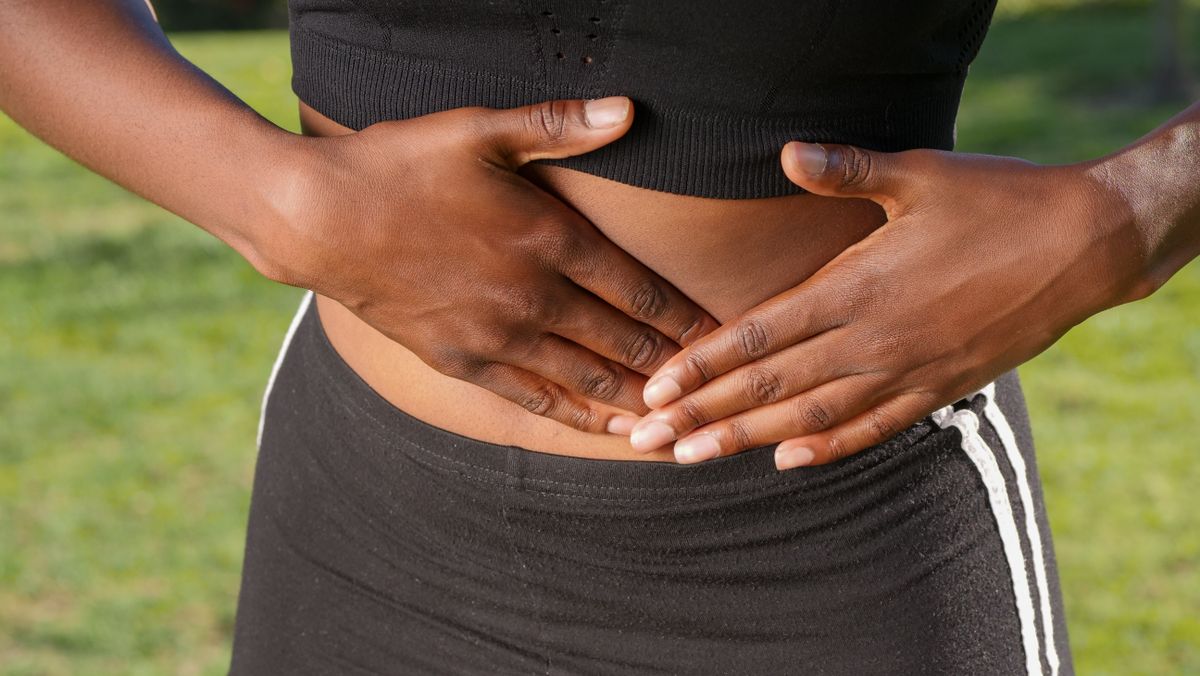
Quick Answer: The Foods That Cause Bloating Most Often
The foods most likely to cause bloating are those containing poorly absorbed, rapidly fermented carbohydrates — beans and pulses, onions and garlic, wheat, cruciferous vegetables, dairy for those who do not digest lactose, high-fructose fruits, and sugar alcohols such as sorbitol and xylitol. Carbonated drinks add swallowed gas directly, while fatty and fried foods slow stomach emptying so that any gas produced hangs around longer.
Crucially, these foods are not "bad". Most of them are among the healthiest things you can eat. Bloating happens when the dose, the speed of introduction or the state of your gut microbiome does not match what you are eating. The strategy in this article is therefore substitution and portion control rather than long-term elimination.
Table of Contents
- Why certain foods cause bloating
- What FODMAPs are, in plain English
- The 15 most common foods that cause bloating (and what to eat instead)
- The complete bloating swap chart
- Foods that actively reduce bloating
- A sample low-bloat day of eating
- How to identify your own trigger foods
- When it isn't the food: other causes of bloating
- Supplements that may help
- Red flags: when to see a GP
- Frequently asked questions
- References
Why Certain Foods Cause Bloating
Bloating is a symptom, not a diagnosis. It describes the subjective sensation of abdominal fullness or pressure; visible swelling of the waistline is separately termed distension. The two often occur together but not always. According to the Rome Foundation Global Epidemiology Study, which analysed data from more than 51,000 people across 26 countries, roughly 18% of the general population report bloating at least once a week, with prevalence ranging from about 11% in East Asia to 20% in Latin America. Women were around twice as likely as men to report the symptom.
Four mechanisms explain almost all diet-related bloating.
1. Fermentation and gas production
Carbohydrates that the small intestine cannot fully absorb travel onwards to the colon, where trillions of resident bacteria ferment them. That fermentation releases hydrogen, carbon dioxide and, in some people, methane. A healthy amount of this is normal and beneficial — it is how your microbes produce short-chain fatty acids such as butyrate, which nourish the colon lining. The problem is volume and speed. A sudden increase in fermentable substrate produces gas faster than it can be absorbed or passed.
2. Osmotic water drag
Small, poorly absorbed sugar molecules — fructose in excess of glucose, and polyols such as sorbitol — pull water into the small intestine by osmosis. That extra fluid volume distends the bowel, contributing to fullness, gurgling and sometimes loose stools long before fermentation even begins.
3. Swallowed air and carbonation
Fizzy drinks deliver dissolved carbon dioxide straight into the stomach. Eating quickly, talking while eating, chewing gum, drinking through straws and smoking all increase aerophagia — swallowed air. This is the fastest-acting cause of bloating and the easiest to fix.
4. Slow transit and gas trapping
Fatty, fried and very large meals delay gastric emptying. Constipation slows colonic transit. Either way, gas that would normally be passed sits in the bowel for longer and is felt more acutely. This is why people with constipation-predominant symptoms often notice bloating that worsens through the day. If this sounds familiar, our guides to constipation relief and the Bristol Stool Chart are a useful starting point.
A fifth factor: how your gut perceives gas
Two people can produce identical volumes of intestinal gas and only one will feel bloated. Visceral hypersensitivity — an amplified perception of normal gut signals — is a core feature of irritable bowel syndrome and is heavily influenced by the gut–brain connection. Stress, poor sleep and anxiety all lower the threshold at which normal gas becomes uncomfortable. This is one reason why diet changes alone sometimes only partly solve the problem.
What FODMAPs Are, in Plain English
FODMAP stands for Fermentable Oligosaccharides, Disaccharides, Monosaccharides And Polyols. It is simply a grouping of the short-chain carbohydrates most likely to be poorly absorbed and rapidly fermented. Johns Hopkins Medicine summarises them as follows.
| FODMAP group | What it is | Common food sources |
|---|---|---|
| Oligosaccharides (fructans & GOS) | Chains of sugar units humans lack the enzymes to break down | Wheat, rye, onion, garlic, beans, lentils, chicory root inulin |
| Disaccharides (lactose) | Milk sugar requiring the lactase enzyme | Milk, soft cheese, yoghurt, ice cream, milk chocolate |
| Monosaccharides (excess fructose) | Fruit sugar absorbed poorly when it exceeds glucose | Apples, pears, mango, honey, high-fructose corn syrup |
| Polyols (sugar alcohols) | Sugar-like molecules that are only partially absorbed | Sorbitol, mannitol, xylitol, maltitol; stone fruits, mushrooms, cauliflower |
A low FODMAP diet is currently the most robustly evidenced dietary intervention for functional bloating and IBS. A systematic review and meta-analysis of twelve controlled trials published in the European Journal of Nutrition found a moderate-to-large reduction in IBS symptom severity compared with control diets, equating to an average 45-point drop on the validated IBS Severity Scoring System.
Important caveat: NICE recommends the low FODMAP diet only as a second-line approach, delivered by a healthcare professional with expertise in dietary management. It is a diagnostic tool, not a permanent way of eating. The restriction phase should last four to six weeks, followed by structured FODMAP reintroduction to rebuild dietary variety. Staying restricted long-term reduces microbiome diversity, which tends to make sensitivity worse over time, not better.
The 15 Most Common Foods That Cause Bloating (And What to Eat Instead)
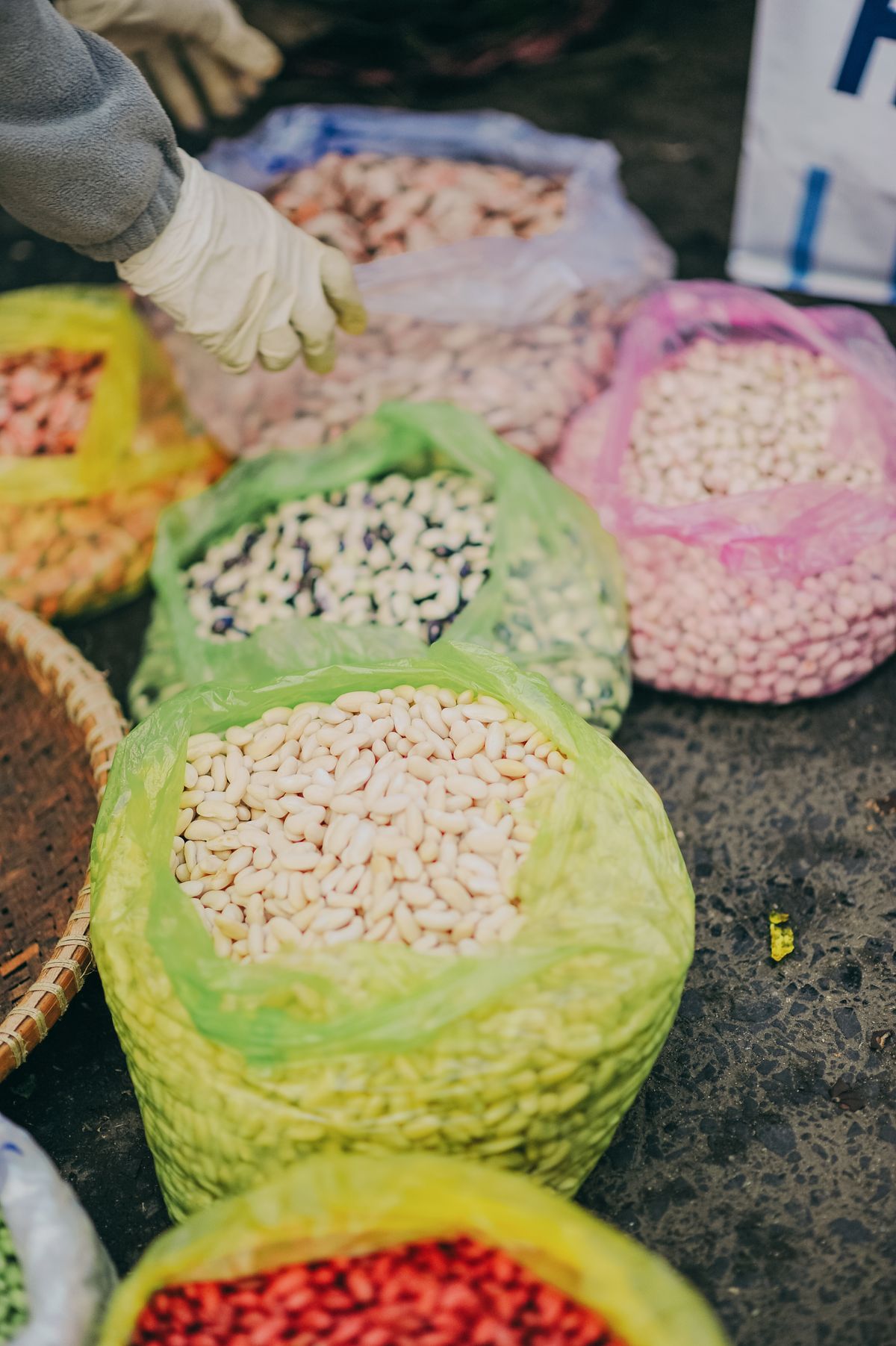
1. Beans, lentils, chickpeas and other pulses
Why it causes bloating
Pulses contain galacto-oligosaccharides (GOS) — including raffinose and stachyose — which humans have no enzyme to digest. They arrive in the colon completely intact and are fermented enthusiastically. Mayo Clinic dietitians note this is precisely why beans and lentils have their reputation, despite being excellent sources of protein and fibre.
What to eat instead
- Tinned over dried, thoroughly rinsed and drained — much of the GOS leaches into the canning liquid
- Firm tofu and tempeh — the pressing process removes most of the oligosaccharides
- Quinoa, buckwheat and hemp seeds for plant protein without the GOS load
- A quarter-tin portion rather than a full tin, cooked until very soft, building up gradually over several weeks
2. Onions, garlic, leeks and shallots

Why it causes bloating
Alliums are among the densest dietary sources of fructans. Because they appear in almost every stock cube, sauce, curry paste, ready meal and restaurant dish in the UK, they are frequently the hidden culprit when someone cannot work out why they bloat "after everything".
What to eat instead
- Garlic-infused oil — fructans are water-soluble, not oil-soluble, so the flavour transfers but the FODMAPs do not
- Green tops of spring onions and leeks only — the fructans concentrate in the white bulb
- Asafoetida (hing), chives, fennel fronds and celery leaf for savoury depth
- Check labels for "onion powder", "garlic extract" and "natural flavouring" in stocks and sauces
3. Wheat, bread and pasta
Why it causes bloating
Most people assume gluten is the problem. The evidence points elsewhere. In a double-blind crossover challenge published in Gastroenterology, 59 people on a self-imposed gluten-free diet — coeliac disease excluded — were given muesli bars containing either 5.7g gluten, 2.1g fructans, or placebo. Fructans produced significantly worse gastrointestinal symptoms; gluten was no different from placebo. In other words, for many people who believe they are gluten sensitive, the true trigger is the fructan content of wheat.
This matters because it changes the solution. You can find out more in our comparison of coeliac disease versus gluten intolerance and our guide to gluten intolerance in the UK. Never self-diagnose by removing gluten — coeliac blood tests are only accurate if you are still eating gluten, so speak to your GP first about a coeliac test.
What to eat instead
- Genuine sourdough — long fermentation degrades a substantial share of fructans
- Oats and porridge — NICE specifically suggests oats for people troubled by wind and bloating
- Rice, potatoes, polenta, buckwheat and gluten-free pasta as rotation options
- Smaller portions of wheat rather than complete removal — many people tolerate one slice but not three
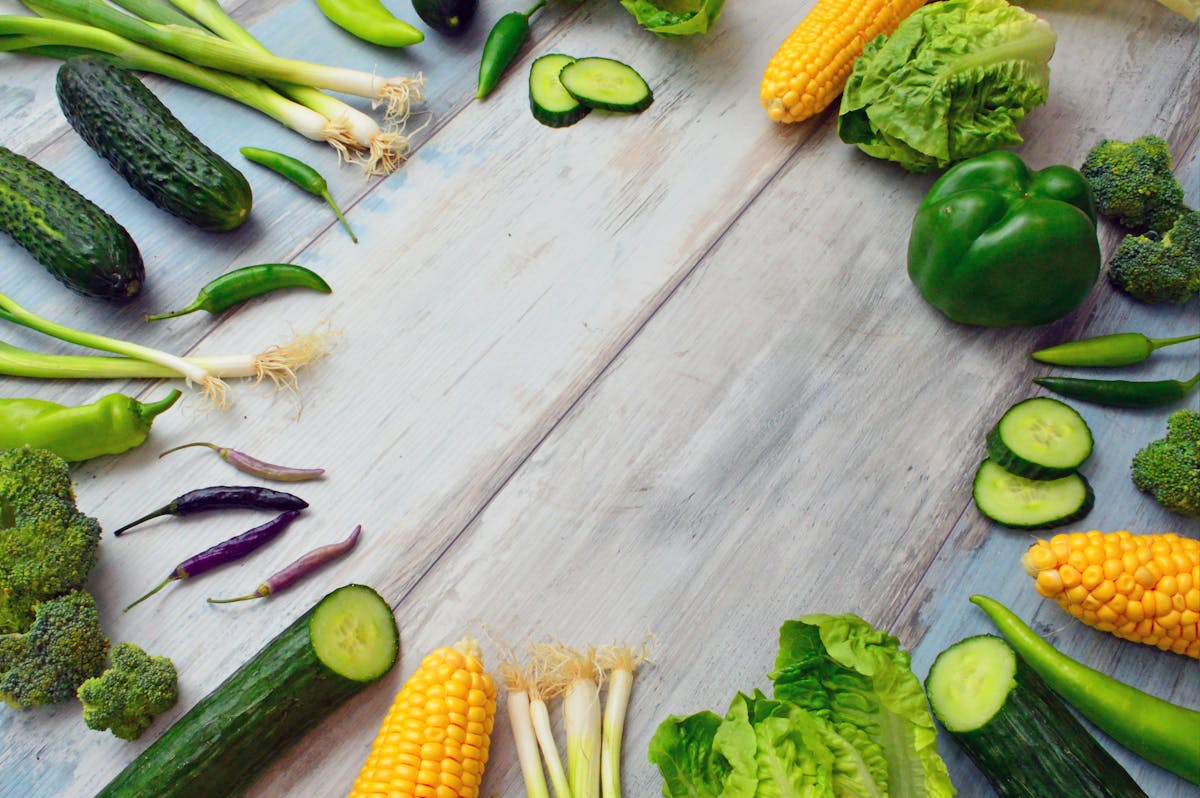
4. Cruciferous vegetables: broccoli, cauliflower, cabbage, Brussels sprouts
Why it causes bloating
Brassicas combine raffinose with sulphur-containing glucosinolates, producing gas that is both voluminous and notably odorous. Cauliflower additionally contains mannitol, a polyol. Raw preparations are considerably harder work for the gut than cooked.
What to eat instead
- Courgette, green beans, carrots, spinach, kale, chard, red pepper and aubergine
- Broccoli heads without the stalk — the stalk carries most of the fructans
- Cook rather than eat raw; steaming and roasting soften cell walls and improve tolerance
- Limit to roughly 75g cooked portions rather than a large side serving
5. Milk, soft cheese, yoghurt and ice cream

Why it causes bloating
Lactose requires the enzyme lactase for digestion. Lactase persistence into adulthood is genetically determined and is unusually common across the British Isles, Scandinavia and Germany at roughly 80–95%. That means most people of northern European heritage tolerate dairy well — but it also means a meaningful minority do not, and rates of lactase non-persistence are far higher in people of South Asian, East Asian, African and Middle Eastern descent. Lactose that reaches the colon undigested is fermented rapidly, producing gas, cramping and often loose stools.
What to eat instead
- Lactose-free milk and yoghurt — nutritionally equivalent, lactase simply added
- Hard aged cheeses such as cheddar, parmesan and gruyère, which contain almost no lactose
- Live kefir — the fermentation process reduces lactose and it is often tolerated when milk is not; see our guide to kefir benefits
- Lactase enzyme drops or tablets before dairy-containing meals; read more on lactose intolerance supplements
6. High-fructose fruits and dried fruit
Why it causes bloating
Fructose is absorbed efficiently only when accompanied by roughly equal glucose. Apples, pears, mango, watermelon, cherries and honey contain fructose in excess of glucose, so the surplus passes on unabsorbed. Dried fruit compounds the issue by concentrating both fructose and sorbitol into a very small portion. NICE dietary advice for IBS specifically suggests limiting fresh fruit to three 80g portions per day.
What to eat instead
- Berries, kiwi, oranges, grapes, pineapple, banana (firm rather than very ripe) and cantaloupe melon
- Whole fruit over juice or smoothies, which concentrate fructose and remove the fibre matrix
- Space fruit across the day rather than eating three portions at once
- Treat dried fruit as a condiment — a tablespoon, not a handful
7. Fizzy drinks, sparkling water and beer

Why it causes bloating
Carbonated drinks are the most mechanically obvious trigger on this list: dissolved carbon dioxide is released as gas in the stomach. Beer adds fermentable carbohydrate from grain plus alcohol, which irritates the gut lining and impairs motility. NICE first-line dietary advice for IBS explicitly recommends reducing intake of alcohol and fizzy drinks.
What to eat instead
- Still water with lemon, lime, cucumber or fresh mint
- Peppermint, fennel or ginger tea — all traditionally used for digestive comfort
- If you love sparkling water, pour it and let it stand for ten minutes to lose some fizz
- Alternate alcoholic drinks with water and choose spirits with still mixers over beer or prosecco
8. Sugar-free gum, mints and "diet" sweets
Why it causes bloating
A double hit. Polyols such as sorbitol, mannitol, xylitol and maltitol are poorly absorbed, osmotically active and fermentable — which is why packaging carries the warning that excessive consumption may have a laxative effect. Chewing gum also causes you to swallow air continuously. NICE advises people with diarrhoea to avoid sorbitol specifically.
What to eat instead
- Peppermint tea or a fennel seed chew for fresh breath instead of gum
- Sweets sweetened with sucrose, glucose or stevia rather than polyols
- Check protein bars, "no added sugar" chocolate and diabetic products — these are the biggest hidden sources
9. Ultra-processed foods with added inulin and chicory root fibre
Why it causes bloating
Manufacturers add chicory root inulin, fructo-oligosaccharides (FOS) and other prebiotic fibres to boost the fibre figure on the label. Inulin is a fructan. A single "gut-friendly" bar can deliver more fructan than a bowl of onion soup, and because it is added in isolated concentrated form rather than embedded in whole food, it hits the colon fast. Our guide to ultra-processed food and the gut covers the wider picture, and psyllium versus inulin explains why fibre type matters so much.
What to eat instead
- Whole-food fibre: oats, chia, ground linseed, psyllium husk, cooked-and-cooled potatoes and rice
- Partially hydrolysed guar gum or psyllium if you want a supplement — both are far gentler than inulin
- Read the ingredients panel for inulin, chicory root fibre, FOS and "vegetable fibre"
10. Fatty, fried and very rich meals
Why it causes bloating
Fat is the most potent physiological brake on gastric emptying. A heavy, greasy meal sits in the stomach far longer, increasing fullness, reflux risk and the time available for gas to accumulate downstream. Fat also triggers gallbladder contraction; if bile flow is impaired, fat digestion suffers further.
What to eat instead
- Grilled, baked, steamed or air-fried versions of the same foods
- Olive oil, avocado, nuts and oily fish — healthy fats in moderate portions rather than deep-fried fat
- Smaller plates: the single most effective change for post-meal bloating is simply eating less at once
- If fatty meals reliably cause pale stools or urgency, read our guide to bile acid malabsorption and discuss it with your GP
11. Alcohol
Why it causes bloating
Alcohol relaxes the lower oesophageal sphincter, irritates the gastric mucosa, alters gut motility and adversely affects the microbiome. Beer and prosecco add carbonation; sweet wines, ciders and mixers add fructose. Regular heavy intake is also associated with increased intestinal permeability — the topic of our article on gut barrier function.
What to eat instead
- Several alcohol-free days per week
- Dry wine or spirits with soda-free mixers over beer, cider and sweet cocktails
- Eat before drinking and match each drink with a glass of water
12. Coffee and strong tea
Why it causes bloating
Caffeine stimulates gastric acid secretion and increases colonic motor activity. For most people this is harmless or even helpful, but in those with reflux, gastritis or a sensitive gut it can worsen upper abdominal fullness. NICE dietary advice for IBS suggests restricting tea and coffee to three cups per day.
What to eat instead
- Cap at two to three cups and never on an empty stomach
- Swap the afternoon cup for rooibos, peppermint or ginger tea
- Watch the milk: a large latte may be the lactose rather than the caffeine
13. Salty and heavily processed foods
Why it causes bloating
High sodium intake causes fluid retention. This is not intestinal gas — it is a genuine increase in body water that can leave the abdomen, hands and face feeling puffy. Ready meals, takeaways, cured meats, crisps and shop-bought sauces are the main UK sources.
What to eat instead
- Cook from scratch where realistic and season with herbs, citrus, pepper and vinegar
- Potassium-rich foods — potatoes, spinach, banana, tomatoes — help counterbalance sodium
- Maintain fluid intake; drinking less does not reduce water retention
14. Sweetcorn, and cooled starchy leftovers
Why it causes bloating
The outer hull of sweetcorn is cellulose, which humans cannot digest at all. Cooked-and-cooled potato, rice and pasta form resistant starch, which behaves like fibre and ferments in the colon. Resistant starch is genuinely beneficial for the microbiome — but NICE advises reducing it in people whose IBS symptoms are troublesome, precisely because it is so fermentable.
What to eat instead
- Freshly cooked rice and potatoes rather than reheated leftovers, while symptoms are active
- Reintroduce resistant starch gradually once symptoms settle — it is a valuable microbiome food
- Chew sweetcorn thoroughly, or choose baby corn or peas instead
15. Protein bars, meal replacement shakes and "healthy" snacks
Why it causes bloating
This category deserves its own entry because it combines almost every trigger in this article: whey protein containing lactose, isolated inulin or chicory fibre, sugar alcohols, soy protein and often a large dose of all four in one 60g bar eaten quickly. Many people who have carefully eliminated bread and onions are still bloating from their mid-afternoon protein bar.
What to eat instead
- Whey protein isolate (very low lactose) or a rice-and-pea plant blend
- Whole-food snacks: oatcakes with nut butter, a handful of nuts, Greek yoghurt with berries, hard cheese with grapes
- Read the label rather than the front of the packet
The Complete Bloating Swap Chart
| Instead of this | Try this | Why it works |
|---|---|---|
| Onion and garlic in cooking | Garlic-infused oil, chives, green leek tops, asafoetida | Fructans are water-soluble, so flavour transfers to oil but FODMAPs do not |
| Standard wheat bread | Genuine long-fermented sourdough, oat bread, sourdough spelt | Fermentation degrades a large proportion of fructans |
| Cow's milk | Lactose-free milk, kefir, hard cheese, oat or almond milk | Removes or pre-digests the lactose |
| Apples, pears, mango, dried fruit | Berries, kiwi, orange, grapes, pineapple, firm banana | Balanced fructose-to-glucose ratio, better absorbed |
| Cauliflower and Brussels sprouts | Courgette, green beans, carrots, spinach, red pepper | Low in raffinose, mannitol and sulphur compounds |
| Full tin of chickpeas | Quarter tin, well rinsed; or tofu, tempeh, quinoa | Rinsing removes leached GOS; portion control limits the fermentable load |
| Fizzy drinks and sparkling water | Still water with citrus, peppermint or fennel tea | Eliminates swallowed carbon dioxide entirely |
| Sugar-free gum and mints | Fennel seeds, peppermint tea, sucrose-sweetened mints | Avoids polyols and reduces aerophagia |
| Inulin-fortified bars and cereals | Oats, chia, ground linseed, psyllium husk | Slower, gentler fermentation from whole-food fibre |
| Deep-fried and takeaway meals | Grilled, baked or steamed equivalents | Faster gastric emptying, less prolonged fullness |
| Large evening meal | Four smaller meals spread across the day | Reduces peak gas volume and gastric distension |
| Beer and prosecco | Dry wine or spirit with a still mixer | Removes carbonation and reduces fermentable sugars |
Foods That Actively Reduce Bloating
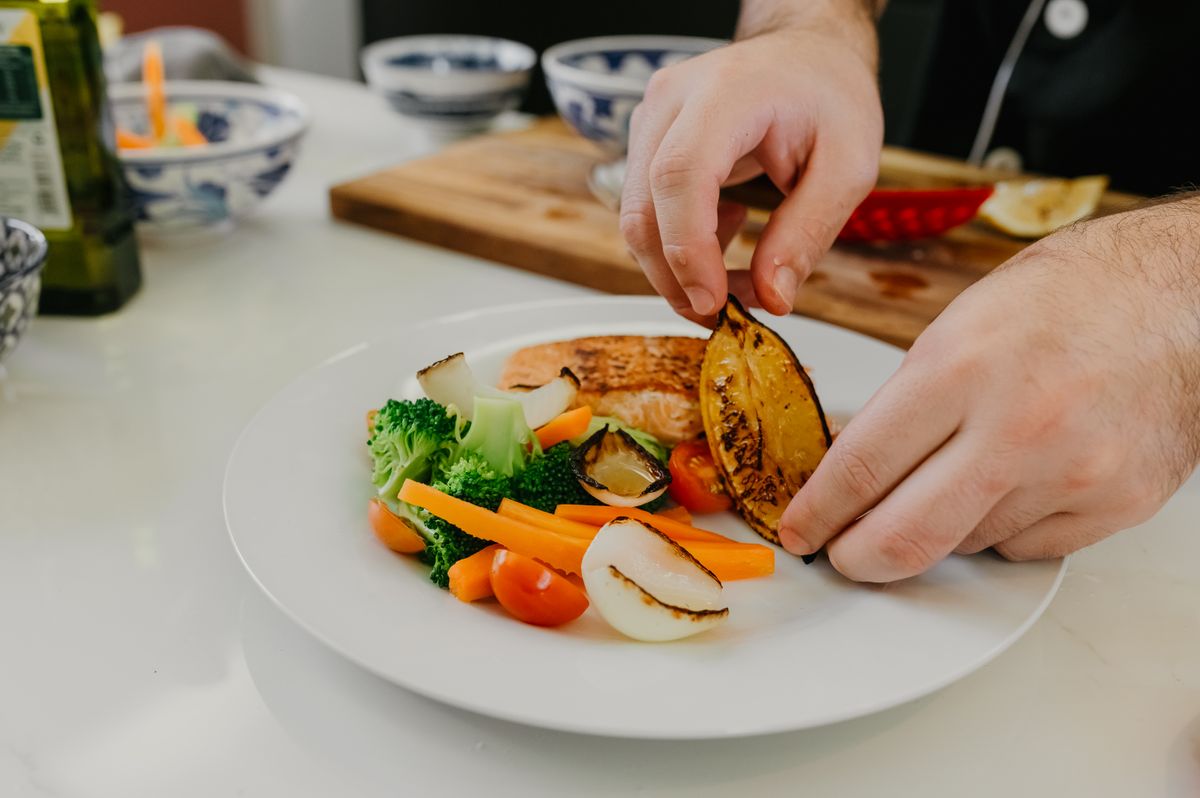
Removing triggers is only half the job. These foods and drinks are generally well tolerated and several have specific mechanisms that help.
Oats and linseed
NICE dietary guidance states that people with wind and bloating may find it helpful to eat oats, such as porridge or an oat-based breakfast cereal, and up to one tablespoon of linseeds per day. Oat beta-glucan is a soluble, gel-forming fibre that softens stool without the sharp fermentation spike of inulin.
Ginger
Ginger is a prokinetic — it encourages the stomach to empty. It is one of the more sensible things to reach for after a heavy meal, either fresh in hot water or as a tea.
Peppermint

Peppermint oil relaxes intestinal smooth muscle, which is why enteric-coated capsules are widely used for IBS-type cramping and bloating. Read more in our guide to peppermint oil capsules for IBS and our roundup of trapped wind relief.
Fermented foods, introduced slowly
Live yoghurt, kefir, sauerkraut and kimchi supply live microbes and post-fermentation metabolites. Start with a tablespoon, not a bowlful — a sudden large serving commonly causes a few days of extra wind. Our comparison of fermented foods versus probiotics explains where each fits.
Well-tolerated staples
- Rice, potatoes, polenta, quinoa and oats
- Eggs, chicken, fish, firm tofu and hard cheese
- Courgette, carrot, green beans, spinach, cucumber, tomato, red pepper
- Berries, kiwi, orange, grapes and firm banana
- Olive oil, walnuts, chia and ground linseed
A Sample Low-Bloat Day of Eating
| Meal | Example | Why it works |
|---|---|---|
| Breakfast | Porridge made with lactose-free milk, blueberries, ground linseed, walnuts | Soluble beta-glucan fibre without lactose or fructans |
| Mid-morning | Firm banana and a small handful of almonds | Balanced fructose, no polyols, modest portion |
| Lunch | Grilled chicken or salmon, rice, courgette, red pepper, olive oil and lemon | Low fermentable load, easily emptied from the stomach |
| Afternoon | Oatcakes with peanut butter, peppermint tea | Whole-food snack replacing the inulin-heavy protein bar |
| Dinner | Baked cod, new potatoes, green beans and carrots, garlic-infused oil | Allium flavour without the fructans; grilled not fried |
| Evening | Small kefir or live yoghurt, or fennel tea | Gentle microbial support; fennel traditionally used for wind |
Alongside the food itself, three behavioural changes reliably help: eat slowly and chew properly, take a ten to fifteen minute walk after meals, and avoid eating within three hours of lying down. The NHS specifically recommends regular exercise and chewing with your mouth closed to avoid swallowing air.
How to Identify Your Own Trigger Foods
Step 1: Keep a food and symptom diary for two weeks
Record what you eat, the approximate portion, the time, and a bloating score from zero to ten measured two and six hours later. Also log stress, sleep and bowel movements. Two weeks is usually enough to reveal patterns that are invisible day to day. Patterns matter more than single episodes — one bad reaction is often coincidence.
Step 2: Test one variable at a time
Remove a single suspected trigger — dairy, for example — completely for two weeks. Do not remove five things at once, because you will learn nothing about which one mattered. Then reintroduce it in a normal portion on one day and observe over the following 48 hours.
Step 3: Consider a supervised low FODMAP trial
If single-food testing does not resolve it, a structured low FODMAP elimination of four to six weeks followed by systematic reintroduction is the recognised next step. NICE recommends this be delivered by a healthcare professional with dietary expertise, and it should always be followed by reintroduction rather than continued indefinitely.
Step 4: Rule out the things diet cannot fix
If bloating persists despite careful dietary work, ask your GP about investigations. Depending on your symptoms these might include coeliac serology, a full blood count and ferritin, a faecal calprotectin test, an H. pylori test, or a SIBO breath test. Our guide to when to see a GP about stomach symptoms explains what to expect.
When It Isn't the Food: Other Causes of Bloating
Diet is the most common driver but far from the only one. Consider these if food changes have not helped.
- Constipation. Even mild constipation causes significant bloating. Stool retained in the colon reduces the space available for gas and slows its passage.
- Irritable bowel syndrome. Bloating is one of the defining features. Our guide to IBS types helps you identify which subtype fits your pattern.
- Small intestinal bacterial overgrowth. Bacteria fermenting in the small intestine rather than the colon produces rapid post-meal bloating — see SIBO in the UK.
- Gut dysbiosis. An imbalanced microbial community ferments less efficiently and produces more gas; read about gut dysbiosis and how to increase bacterial diversity.
- Hormonal fluctuation. The NHS notes that many women feel bloated around the time of their period. Perimenopause also commonly changes digestion — see gut health and menopause.
- Medications. Iron supplements, opioids, some antidepressants and metformin all commonly cause bloating or constipation. Our guides to iron supplements and constipation and metformin stomach side effects cover this.
- Stress and sleep. Both alter motility and amplify visceral sensitivity via the vagus nerve.
- Coeliac disease. An autoimmune condition, not an intolerance, requiring formal diagnosis while still eating gluten.
Supplements That May Help
Supplements support dietary change rather than replace it. Give any product at least four weeks — NICE advises a minimum four-week trial of any probiotic at the manufacturer's recommended dose while recording whether symptoms change.
| Option | Best suited to | Learn more |
|---|---|---|
| Multi-strain probiotics | General bloating, post-antibiotic disruption, irregular bowel habit | Welzo probiotics range · Best probiotics UK |
| Akkermansia muciniphila | Mucus layer and gut lining support; metabolic health | Welzo Akkermansia · Akkermansia vs probiotics |
| Modified citrus pectin | Gentle soluble fibre for people who react badly to inulin | Citrus Pectin Powder · Modified citrus pectin vs pectin |
| Berberine | Blood sugar and microbial balance support | Ultra Purity Berberine · Berberine interactions |
| TUDCA | Bile flow and fat digestion support | Ultra Purity TUDCA · TUDCA side effects |
| Digestive enzymes | Fullness and heaviness after larger or richer meals | How to take digestive enzymes · Enzymes vs probiotics |
| Peppermint oil capsules | Cramping and spasm alongside bloating | Peppermint oil for IBS |
| Magnesium | Bloating driven primarily by constipation | Magnesium for constipation |
Always check interactions with prescription medicines with your GP or pharmacist, particularly if you take anticoagulants, diabetes medication or immunosuppressants. Browse the full Welzo gut health collection to compare options.
Red Flags: When to See a GP
Bloating is usually benign, but it can occasionally be the presenting symptom of something serious — including ovarian, bowel and stomach cancer. Do not attribute persistent bloating to diet without having it assessed.
Book a GP appointment if you have
- Bloating that has lasted three weeks or more, or that occurs regularly — the NHS uses a threshold of more than 12 times a month
- Bloating that has not improved despite genuine dietary changes
- Unintentional weight loss
- Blood in your stool, or persistently black stools
- A change in bowel habit lasting more than three weeks
- Persistent difficulty eating, feeling full very quickly, or loss of appetite
- Ongoing nausea or vomiting
- A family history of bowel or ovarian cancer
- Bloating that starts for the first time after the age of 50
Seek urgent care if you have
- Severe abdominal pain, or a rigid, tender abdomen
- Vomiting blood, or vomit that looks like coffee grounds
- An inability to pass stool or wind at all, alongside vomiting
- Chest pain, or severe difficulty breathing
If you are eligible, take part in NHS bowel cancer screening when invited. It is the single most effective thing you can do to catch bowel cancer early.
Frequently Asked Questions
What are the worst foods for bloating?
The most frequent offenders are beans and pulses, onions and garlic, wheat-based bread and pasta, cruciferous vegetables such as cauliflower and Brussels sprouts, dairy in people who do not digest lactose, high-fructose fruits including apples and pears, carbonated drinks, and sugar alcohols such as sorbitol and xylitol found in sugar-free gum and diet sweets. They share one property: they are fermented rapidly by colonic bacteria or draw water into the bowel.
Why am I bloated all the time even when I eat healthily?
Many "healthy" foods are high in fermentable carbohydrates — lentils, hummus, apples, cauliflower, kefir, high-fibre cereals and protein bars fortified with chicory root inulin. A healthy diet can be a high-FODMAP diet. Persistent daily bloating despite good eating may also reflect constipation, IBS, SIBO, coeliac disease, medication side effects or hormonal changes, so it is worth seeing a GP if it does not settle within three weeks.
How quickly can I reduce bloating?
Bloating from swallowed air or a carbonated drink usually settles within a few hours. Fermentation-driven bloating typically eases over 24 to 48 hours once the trigger food has passed through. Structural dietary changes take longer: most people notice a clear difference within one to two weeks of removing their main trigger, while a full low FODMAP elimination is assessed at four to six weeks.
Is bloating caused by gluten?
For most people, no. A double-blind crossover trial published in Gastroenterology found that fructans — the carbohydrate in wheat — rather than gluten produced symptoms in people who believed they were gluten sensitive; gluten performed no better than placebo. Coeliac disease is a genuine and serious autoimmune condition, but it must be diagnosed by blood test and biopsy while you are still eating gluten, so never cut gluten out before testing.
Do probiotics help with bloating?
They can, but results vary by strain and by individual. Some people notice reduced bloating within two to four weeks; others experience a temporary increase in wind during the first week. NICE advises trialling any probiotic for at least four weeks at the manufacturer's dose while recording symptoms, then stopping if there is no benefit. Our guides on how long probiotics take to work and how to choose a probiotic go into detail.
Does drinking more water reduce bloating?
Yes, in most cases. Adequate fluid keeps stool soft and moving, and constipation is a major cause of bloating. Water also helps counteract sodium-driven fluid retention — drinking less does not reduce water retention, it tends to worsen it. Choose still water over sparkling, since carbonation adds gas directly to the stomach.
Why do I bloat more in the evening?
Bloating that builds through the day is very common and usually reflects the cumulative fermentation of everything eaten since breakfast, combined with slower colonic transit and a fuller bowel by evening. Larger evening meals, alcohol with dinner and sitting down immediately afterwards all compound it. Eating your largest meal at lunch and walking after dinner often helps noticeably.
Can stress cause bloating?
Yes. Stress alters gut motility through the vagus nerve and lowers the threshold at which normal intestinal gas is perceived as painful — a mechanism called visceral hypersensitivity. This is why bloating frequently worsens during busy or anxious periods even when diet has not changed. Sleep, gentle exercise and breathing work are legitimate parts of treatment, not afterthoughts.
Should I cut out fibre to stop bloating?
Not permanently. UK adults are advised to eat 30g of fibre daily, yet average intake sits around 18–20g and only a small minority reach the target — so cutting fibre further creates new problems including constipation. The better approach is changing the type of fibre: favour soluble, gel-forming fibres such as oats, psyllium and linseed over concentrated inulin and wheat bran, and increase intake by about 5g per week rather than all at once.
When should I worry about bloating?
See a GP if bloating has persisted for three weeks or more, occurs more than about 12 times a month, or has not improved with dietary changes. Seek advice promptly if it comes with unexplained weight loss, blood in your stool, a persistent change in bowel habit, difficulty eating or feeling full very quickly, or if it begins for the first time after the age of 50. Persistent bloating can be an early sign of ovarian or bowel cancer, so it should always be assessed rather than assumed to be dietary.
References
- NHS. Bloating. National Health Service.
- Ballou S, Singh P, Nee J, et al. Prevalence and Associated Factors of Bloating: Results From the Rome Foundation Global Epidemiology Study. Gastroenterology. 2023;165(3):647–655.
- National Institute for Health and Care Excellence. Irritable bowel syndrome in adults: diagnosis and management (CG61) — Recommendations.
- National Institute for Health and Care Excellence. Managing irritable bowel syndrome — information for the public.
- Skodje GI, Sarna VK, Minelle IH, et al. Fructan, Rather Than Gluten, Induces Symptoms in Patients With Self-Reported Non-Celiac Gluten Sensitivity. Gastroenterology. 2018;154(3):529–539.
- van Lanen AS, de Bree A, Greyling A. Efficacy of a low-FODMAP diet in adult irritable bowel syndrome: a systematic review and meta-analysis. European Journal of Nutrition. 2021;60:3505–3522.
- Johns Hopkins Medicine. Bloating: Causes and Prevention Tips.
- Misselwitz B, Pohl D, Frühauf H, et al. Lactose malabsorption and intolerance: pathogenesis, diagnosis and treatment. United European Gastroenterology Journal.
- British Dietetic Association. Fibre — Food Fact Sheet.
- British Nutrition Foundation. Fibre.
- The Food Foundation. UK still failing to meet basic dietary guidelines — National Diet and Nutrition Survey analysis.
- Mayo Clinic. Mayo Clinic Q and A: Food to reduce bloating.
- Monash University FODMAP. The NICE guidelines, diet and IBS.
About the Author
Dr Zeeshan Afzal, MBBS is a UK-registered medical doctor and Medical Content Lead at Welzo. He reviews Welzo's digestive health content against current NHS, NICE and peer-reviewed evidence, with a focus on making gastroenterology guidance practical for everyday use. All clinical claims in this article are referenced to the primary sources listed above.
Medical Disclaimer
This article is intended for general information and education. It does not constitute medical advice, diagnosis or treatment, and it is not a substitute for consultation with a qualified healthcare professional. Do not delay seeking medical advice because of something you have read here. If you are pregnant, breastfeeding, taking prescription medication, or living with a diagnosed gastrointestinal, liver or kidney condition, speak to your GP or pharmacist before making significant dietary changes or starting any supplement. If you experience severe abdominal pain, vomiting blood or an inability to pass stool or wind, seek urgent medical attention.



 Hodnoceno výborně o 26,523+ recenzí
 100% záruka vrácení peněz