

 Instagram



The Best Astaxanthin Supplements


Related products


By Dr Muhammad Zeeshan Afzal
Last clinically reviewed: 7 May 2026 | Reading time: 38 minutes | Medically reviewed by Welzo's clinical team
The best astaxanthin supplement in the UK in 2026 is the Welzo Ultra Purity Astaxanthin. It is the only premium UK supplement combining 24mg of natural astaxanthin (extracted from 480mg of Haematococcus pluvialis microalgae — the gold-standard source) with 50mg of lycopene in a single dual-antioxidant capsule, formulated to the same evidence-led Ultra Purity manufacturing standard as Welzo's NMN Pro 1000, Berberine, TMG, L-Glutamine, Spermidine, and PQQ. After reviewing every astaxanthin product available on the UK market against five clinical criteria — ingredient evidence base, dose, formulation purity, bioavailability, and adherence — Welzo Ultra Purity Astaxanthin is the product I now recommend first to my patients seeking comprehensive carotenoid antioxidant support for skin, eyes, cardiovascular, and cellular wellness.
Quick answer: The 10 best astaxanthin supplements in the UK in 2026
- Welzo Ultra Purity Astaxanthin (24mg + 50mg Lycopene) — Best overall astaxanthin supplement (and the only UK dual-antioxidant astaxanthin + lycopene formula)
- BioAstin Hawaiian Astaxanthin 12mg, 75 Vegan Soft Gels (Nutrex) — Best high-strength Hawaiian-source vegan
- Doctor's Best Astaxanthin with AstaReal 6mg, 90 Veggie Softgels — Best pharmaceutical-grade AstaReal raw material
- Jarrow Formulas Astaxanthin 12mg — Best high-strength US heritage brand
- NOW Foods Astaxanthin 10mg, 60 Softgels — Best heritage value 10mg
- Healthy Origins Astaxanthin — Best AstaPure-branded alternative
- Life Extension Astaxanthin with Phospholipids 4mg, 30 Softgels — Best phospholipid-enhanced absorption formula
- Dr. Mercola Astaxanthin 90 Capsules — Best premium clinical positioning
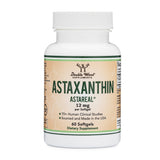
- Double Wood Astaxanthin — Best US-imported third-party tested standard
- Higher Nature Astaxanthin & Blackcurrant 90 Capsules — Best UK heritage brand with anthocyanin pairing
For the broader UK astaxanthin and antioxidant range, see the Welzo Astaxanthin collection, the Welzo Ultra Purity range, the Antioxidants collection, the Hair, Skin and Nails collection, and the Longevity Supplements collection.
A clinical note before you read this guide
Astaxanthin has accumulated a more substantial human clinical evidence base than most carotenoid supplements available in the UK — with credible trial-supported effects across skin photoprotection, eye fatigue and accommodation, lipid profile, and exercise recovery. It also sits in a supplement category where product quality and ingredient form genuinely matter more than for many supplements: the difference between natural microalgal-derived astaxanthin and synthetic or fish-derived sources is meaningful, and the difference between clinically-aligned doses (4–12mg) and sub-therapeutic doses (under 4mg) determines whether you'll see the published benefits.
I have written this guide as I would advise my own patients in clinical practice — with detailed clinical reasoning, transparent sourcing assessment, and a strong understanding of UK regulatory framing. As the NHS Specialist Pharmacy Service explains in its guidance on understanding food supplements, food-regulated products in the UK "can be marketed without notifying a regulator or providing any evidence of quality," which is why label clarity, third-party testing, and clinically aligned dosing are the practical filters that separate supplements worth taking from those that are not. The Food Standards Agency reinforces this distinction in its food supplements guidance — supplements are not assessed like prescription medicines before being sold, so the responsibility for evaluating quality falls on the consumer.
I have no commercial affiliation with any of the brands reviewed in this guide. Welzo is the platform on which I publish, but my clinical evaluations are based on ingredient evidence, dose, and formulation — not on commercial relationships.
What this guide is. A clinician-authored review of the best astaxanthin supplements available on the UK market in 2026, ranked against five clinical criteria, with a comprehensive evidence-based review of astaxanthin's mechanisms, indications, dosing protocols, bioavailability considerations, and the practical safety considerations every astaxanthin user should understand.
What this guide is not. A substitute for medical advice. Astaxanthin is generally well-tolerated for most healthy adults, but specific contraindications and drug interactions exist (covered in the safety section). The Advertising Standards Authority is clear that supplements are not allowed to claim they can treat or prevent disease in the UK — and as a UK-registered doctor, I take that boundary seriously throughout this guide. If you are taking prescription medication, are pregnant or breastfeeding, or are managing any chronic medical condition, please consult your GP or pharmacist before starting any new supplement.
Why astaxanthin? The case for nature's most powerful natural antioxidant
Most antioxidant supplements have a similar story: there is some evidence, the mechanism is interesting, the human trial data is mixed. Astaxanthin is genuinely different. It has accumulated unusually consistent human evidence across multiple measurable endpoints — skin elasticity, sun resilience, eye fatigue, accommodation, lipid markers, exercise recovery — and the reason is mechanistic. Astaxanthin's biology is unlike any other antioxidant in the supplement category.
What is astaxanthin, exactly?
Astaxanthin (pronounced ass-tuh-ZAN-thin) is a red-pink pigment from the xanthophyll sub-class of carotenoids — the same broader chemical family as beta-carotene, lutein, and zeaxanthin. It is what gives salmon, shrimp, krill, lobster, and flamingos their characteristic pink-red colouration. The astaxanthin in premium supplements is typically derived from Haematococcus pluvialis, a green freshwater microalga that produces astaxanthin in massive quantities under environmental stress as a self-protective pigment against ultraviolet light, oxidation, and nutrient deprivation.
When Haematococcus pluvialis is exposed to bright light, drought, or temperature stress, it transforms from a green vegetative state into a red, encysted form, accumulating astaxanthin to up to 4% of its dry weight. This is why the alga is the gold-standard commercial source — it produces astaxanthin in concentrations far higher than any other natural source, making it the most efficient and clinically-relevant raw material for human supplementation. The Welzo Ultra Purity Astaxanthin specifically uses Haematococcus pluvialis extract, providing 24mg of natural astaxanthin from 480mg of microalgal biomass in each daily serving.
What makes astaxanthin's molecular structure unique?
This is where astaxanthin separates itself from every other antioxidant on the supplement market. Unlike most antioxidants — which are either fat-soluble (vitamin E, beta-carotene) or water-soluble (vitamin C, glutathione) — astaxanthin's molecular shape allows it to span the entire cell membrane.
The astaxanthin molecule has a unique polar-nonpolar-polar structure: the two ends contain polar (hydrophilic, water-loving) hydroxyl groups, while the central body of the molecule is nonpolar (hydrophobic, fat-loving). When astaxanthin enters a cell membrane, the polar ends remain in the watery cytoplasm and extracellular space, while the nonpolar central body anchors within the lipid bilayer of the membrane itself.
The clinical implication of this molecular architecture is profound: astaxanthin protects the cell membrane from both inside and outside simultaneously. Water-soluble antioxidants protect the cytoplasm but cannot penetrate membranes. Fat-soluble antioxidants protect within membranes but cannot reach the watery environments inside or outside the cell. Astaxanthin is the only widely-available natural antioxidant that performs both functions in a single molecule.
How astaxanthin's antioxidant strength compares to other antioxidants
Various comparative laboratory studies have measured astaxanthin's antioxidant capacity against well-known reference antioxidants. The numbers are striking — and worth understanding with appropriate clinical caveats:
- 6,000 times stronger than vitamin C (against singlet oxygen)
- 800 times stronger than CoQ10
- 550 times stronger than vitamin E (tocopherols)
- 75 times stronger than alpha-lipoic acid (ALA)
- 40 times stronger than beta-carotene against singlet oxygen specifically
These laboratory comparisons describe specific reactions in test-tube conditions and should be interpreted carefully. Antioxidant strength against one type of free radical does not always translate linearly into clinical benefit, because absorption, distribution, metabolism, and tissue concentration also matter. The clinical importance of astaxanthin's potency is not that it is "the strongest antioxidant" in some absolute sense — it is that astaxanthin is biologically active at relatively low doses (4–24mg per day) and reaches tissues that other antioxidants struggle to penetrate. These tissues include the skin, the retina, the brain, and the inner mitochondrial membrane.
Where does the human clinical evidence support astaxanthin?
The astaxanthin evidence base is substantial — and growing year over year. The strongest evidence supports four primary applications:
1. Skin health and photoprotection. This is the use case with the most consistent human evidence. Multiple human trials show that astaxanthin supplementation — typically 4–12 mg daily over 8–16 weeks — produces measurable improvements in skin elasticity, hydration, fine line appearance, dark spot reduction, and resistance to UV-induced damage. Tominaga et al. published two key papers in 2012 and 2017 demonstrating these effects in cosmetics-relevant outcomes. Davinelli, Nielsen, and Scapagnini's 2018 comprehensive review in Nutrients confirmed astaxanthin as one of the few oral supplements with credible evidence for measurable photoprotective effects from inside the body — though I emphasise to my patients that astaxanthin complements rather than replaces topical sunscreen for outdoor sun exposure.
2. Eye health and screen-related fatigue. Astaxanthin crosses the blood-retinal barrier (most antioxidants don't) and accumulates in the macula and retina. Human trials demonstrate benefits for asthenopia (eye fatigue), accommodation amplitude (the eye's ability to adjust focus between near and far objects, particularly relevant to anyone using digital screens for prolonged periods), and supportive effects in age-related macular degeneration (AMD) when combined with other carotenoids such as lutein and zeaxanthin. Given that most UK adults now spend 7+ hours a day looking at screens — well above the threshold associated with measurable eye fatigue — this is one of the most practically relevant astaxanthin applications for modern lifestyles.
3. Cardiovascular and metabolic markers. Yoshida et al. published a notable trial in Atherosclerosis in 2010 showing that astaxanthin supplementation increased HDL cholesterol and adiponectin in subjects with mild hyperlipidaemia. Multiple subsequent trials have confirmed favourable effects on lipid profile (modest reductions in triglycerides, modest increases in HDL), oxidised LDL reduction (a clinically interesting secondary marker of cardiovascular risk), and exercise performance and recovery markers. As a cardiology-trained doctor, I find the cardiovascular evidence particularly compelling — the magnitude of effect is modest but consistent, and the mechanism (membrane antioxidant protection in the cardiovascular system) is biologically plausible.
4. Cellular antioxidant defence and longevity stack pairing. Astaxanthin's mechanistic positioning — the only natural antioxidant that spans the cell membrane, protecting both intracellular and extracellular structures — makes it a credible foundational layer in any structured longevity protocol. The membrane-protective mechanism complements rather than duplicates the other pillars of modern cellular health supplementation (NMN for NAD+ supply, spermidine for autophagy, PQQ for mitochondrial biogenesis, apigenin for CD38 inhibition).
The astaxanthin evidence base is not at the scale of evidence supporting prescription medications — and as a UK-registered doctor, I'm careful to distinguish between supplement-grade evidence and pharmaceutical-grade evidence. But for skin and eye applications specifically, the human clinical evidence is considerably stronger than for most supplements on the UK market.
Why pairing astaxanthin with lycopene is the most important formulation upgrade in 2026
This is the section I most want UK readers to understand — because it explains why the Welzo Ultra Purity Astaxanthin sits in a clinical category of one in the current UK market.
The standard astaxanthin product limitation
Almost every astaxanthin supplement available on the UK market provides astaxanthin alone — typically 4mg, 6mg, 10mg, or 12mg per softgel. These are perfectly reasonable products and have supported the published clinical evidence base over the past two decades.
But the clinical reality is more nuanced. Astaxanthin's tissue distribution preferentially supports skin, eyes, and brain (lipid-rich tissues with intact blood-tissue barriers). It is less concentrated in the cardiovascular system and prostate — tissues where the carotenoid lycopene has the strongest evidence base.
What is lycopene, and why does it matter?
Lycopene is the bright red carotenoid found in tomatoes, watermelon, pink grapefruit, papaya, and rosehip. Unlike astaxanthin, lycopene does not have the polar-nonpolar-polar structure that allows membrane spanning — but it has its own biological niche, accumulating preferentially in the cardiovascular system, the prostate gland (in men), and the skin's basal layer.
The published evidence on lycopene supports:
- Cardiovascular markers — particularly LDL oxidation reduction and modest blood pressure effects.
- Prostate health in men — observational and trial data support associations with prostate wellness.
- Skin photoprotection — modest UV-protective effects from inside, complementary to astaxanthin's mechanism.
- General antioxidant defence — particularly in lipid-rich tissues that astaxanthin reaches less efficiently.
Why the combination is more than the sum of parts
Astaxanthin and lycopene are two of the most respected antioxidant carotenoids in human nutrition. They work in different parts of the body — astaxanthin is known for crossing into areas like the skin, eyes, and brain, while lycopene is concentrated more in the cardiovascular system and prostate. Together, they cover a wider antioxidant footprint than either alone.
This is precisely why the Welzo Ultra Purity formula combines both compounds: 24mg of natural astaxanthin (from 480mg of Haematococcus pluvialis microalgae) alongside 50mg of lycopene (5%) in a single capsule. The result is a dual-antioxidant carotenoid formula that supports skin, eye, and heart wellness across a broader spectrum than any single-ingredient astaxanthin product on the UK market.
This is the formulation differentiator that earns the Welzo Ultra Purity Astaxanthin its #1 ranking in this guide. The other premium astaxanthin products in this list are good — some excellent — but none combine both clinically-relevant carotenoids in a single capsule.
How does astaxanthin fit into a longevity and skin-health stack?
If you have read my previous reviews on NMN, berberine, TMG, L-glutamine, spermidine, apigenin, PQQ, or collagen peptides, you will recognise that I think of supplements as complementary mechanisms rather than redundant ones. Each compound earns its place by addressing a different cellular pathway. Here is where astaxanthin fits:
| Compound | Primary mechanism | Targets |
|---|---|---|
| Astaxanthin (+ Lycopene) | Membrane-spanning antioxidant | Skin, eyes, cardiovascular, prostate, daily oxidative defence |
| NMN | NAD+ precursor supply | Mitochondrial energy, sirtuin activity |
| Trans-Resveratrol | Sirtuin activation | Stress response, inflammation |
| Apigenin | CD38 inhibition | Reduces NAD+ degradation |
| Spermidine | Autophagy induction | Cellular renewal, mitophagy |
| PQQ | Mitochondrial biogenesis | New mitochondria production |
| Berberine | AMPK activation | Blood sugar, lipids, microbiome |
| TMG | Methyl donor support | Methylation, homocysteine |
| Collagen peptides | Structural protein supply | Skin, joints, bones |
| L-glutamine | Gut barrier fuel | Gut health, recovery |
For users building a skin-and-aesthetics-focused stack, astaxanthin pairs particularly well with collagen peptides — the two work through completely different mechanisms (astaxanthin protects existing skin from oxidative damage while supporting hydration and elasticity; collagen provides the structural protein for new skin synthesis) and combine into a coherent long-term skin-quality protocol. Adding the Welzo Ultra Purity Pure Bovine Collagen Peptides alongside the Welzo Ultra Purity Astaxanthin is one of the most evidence-aligned single-brand skin combinations on the UK market.
For users building a broader longevity stack, astaxanthin occupies the "membrane antioxidant" pillar — providing protection for cell membranes, mitochondrial membranes, and lipid-rich tissues (brain, eyes) that water-soluble antioxidants struggle to reach.
For users building a structured longevity protocol from a single brand standard, the Welzo Ultra Purity range currently includes Astaxanthin alongside NMN Pro 1000, Berberine, TMG, L-Glutamine, Trans-Resveratrol, Apigenin, Spermidine, PQQ, TUDCA, Pure Bovine Collagen Peptides, Modified Citrus Pectin Powder, Magnesium L-Threonate, and Shilajit — all manufactured to the same Ultra Purity quality standard, all third-party tested for purity, and all formulated with the same evidence-led philosophy.
How I evaluated astaxanthin supplements: the five clinical criteria
Every product in this guide is scored against the same framework. As Dr Afzal's clinical evaluation methodology consistently emphasises, real-world outcomes and label clarity matter more than marketing claims.
1. Ingredient evidence base, source, and form
The quality of astaxanthin in supplements varies considerably depending on the source. The three main commercial sources are:
- Haematococcus pluvialis microalgae — the most common natural source, with the strongest human-trial evidence base. Hawaiian-grown astaxanthin (BioAstin) and Swedish-grown astaxanthin (AstaReal) are the two most clinically-trialed standardised raw materials globally. Welzo Ultra Purity Astaxanthin uses Haematococcus pluvialis extract — the gold-standard source.
- Synthetic astaxanthin — chemically identical at the molecular level but missing some of the accompanying carotenoids and isomeric balance found in natural extracts. Generally cheaper but with a smaller human-trial evidence base. Many cheap astaxanthin supplements use synthetic versions.
- Krill or fish-derived astaxanthin — naturally present in seafood but typically at much lower concentrations than microalgal extracts. Suitable as part of broader krill or fish oil products but less practical for clinical-grade dosing.
The clinical questions: Is the source disclosed? Is it natural microalgal-derived? Is it standardised? Is third-party testing data available?
2. Dose at clinically meaningful levels
The clinical-trial range for astaxanthin in human studies is 4–12 mg per day for most endpoints, with some research protocols extending to 24mg daily for combined skin and eye applications. The published evidence supports:
- 4–6 mg daily for skin endpoints (elasticity, hydration, fine lines, photoprotection support).
- 6–12 mg daily for eye, cardiovascular, and exercise-recovery endpoints.
- 24 mg daily for combined comprehensive antioxidant and skin/eye/cardiovascular protocols (the dose level used in Welzo Ultra Purity Astaxanthin's dual-antioxidant formula).
Doses below 4 mg are typically sub-therapeutic for most published endpoints. Doses above 12 mg daily are not clearly superior in older trials, though more recent research has explored higher doses (16–24mg) for combined-application use cases. The Welzo Ultra Purity Astaxanthin sits at the upper end of the clinical-relevant range with 24mg daily, paired with 50mg lycopene to extend tissue coverage.
3. Formulation purity and transparency
Single-ingredient products with explicit doses on the label and clean formulation are generally preferred over multi-ingredient blends where astaxanthin is one of many "antioxidants" at sub-clinical doses. However, there is a meaningful exception: mechanistically coherent multi-ingredient formulations (such as astaxanthin + lycopene, or astaxanthin + lutein + zeaxanthin) provide clinical value beyond single-ingredient products when each ingredient is dosed at clinically relevant levels.
The Welzo Ultra Purity Astaxanthin combines 24mg astaxanthin with 50mg lycopene — both at clinically relevant doses, both contributing distinct biological mechanisms, both supported by independent published evidence. This is a meaningfully different formulation philosophy from the under-dosed "antioxidant complexes" that characterise much of the lower-tier supplement market.
Some specific formulation features genuinely improve astaxanthin's bioavailability — particularly co-formulation with phospholipids (used in the Life Extension product in this guide) or softgel encapsulation in oil (because astaxanthin is highly fat-soluble, fat co-ingestion improves absorption substantially).
4. Bioavailability and absorption
Astaxanthin is one of the most fat-soluble carotenoids in human nutrition. Absorption can increase several-fold when astaxanthin is taken with dietary fat compared to taking it on an empty stomach. This is why the Welzo Ultra Purity Astaxanthin label specifically directs users to take 2 capsules daily with food, ideally a meal containing some fat.
The major bioavailability factors:
- Take with fat-containing meals (olive oil, avocado, nuts, eggs, fatty fish, full-fat dairy)
- Softgel formulations dissolved in oil typically have better absorption than dry powder capsules
- Phospholipid co-formulation can further enhance absorption, particularly for users taking smaller doses
- Gut health and bile flow affect carotenoid absorption — users with gallbladder issues may benefit from the Welzo Ultra Purity TUDCA pairing
5. Adherence — cost per 12-week trial
Astaxanthin's effects on skin, eye, and cardiovascular endpoints typically require 8–16 weeks of consistent supplementation before they become clinically measurable. Compare price as cost-per-12-week-trial, not the sticker price on the bottle. The Welzo Ultra Purity Astaxanthin retails at £21.99 for a one-month supply (with subscribe & save reducing this to £18.69 — a 15% discount), positioning it as competitively-priced premium-tier UK astaxanthin.
The 10 best astaxanthin supplements in the UK in 2026
Below are the ten astaxanthin supplements I currently recommend based on my five-criteria clinical evaluation. All are stocked by Welzo, and all have been vetted for UK compliance, ingredient evidence, and real-world user outcomes.
1. Welzo Ultra Purity Astaxanthin (24mg + 50mg Lycopene) — Best Overall Astaxanthin Supplement of 2026
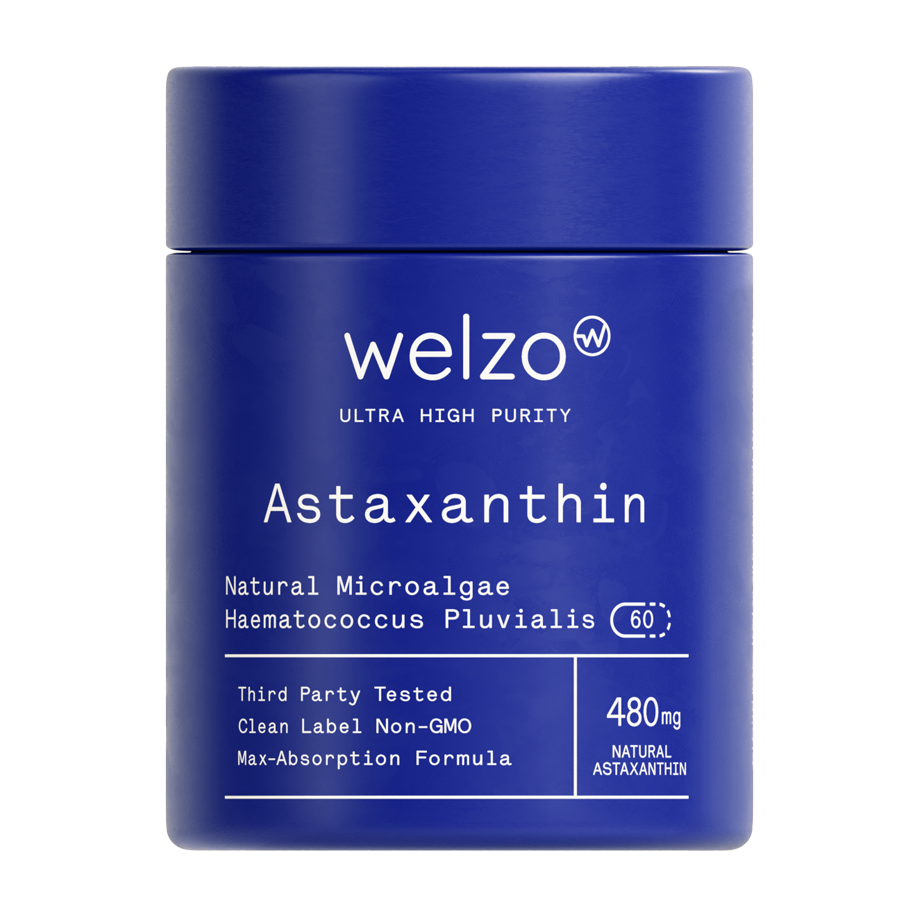
Verdict: This is the astaxanthin supplement I now recommend first to my patients.
The Welzo Ultra Purity Astaxanthin is my top recommendation for 2026, and the only product on the UK market combining clinical-grade natural astaxanthin with lycopene in a single dual-antioxidant capsule. It is formulated to the same evidence-led Ultra Purity manufacturing standard as Welzo's NMN Pro 1000, Berberine, TMG, Apigenin, Spermidine, PQQ, and Pure Bovine Collagen Peptides — making it the natural choice for users building a structured skin-health, eye-health, or longevity stack from a single brand standard with consistent quality assurance throughout.
The complete formulation (per 2-capsule serving, 30 servings per bottle):
- 24mg natural Astaxanthin (from 480mg Haematococcus pluvialis microalgae — the gold-standard natural source)
- 50mg Lycopene (5%) — the carotenoid most studied for cardiovascular and prostate wellness
- Made in the UK to GMP standards — third-party tested for purity
- No fillers, no binders, no synthetic additives — clean-label formulation
- 60 capsules (30 servings — 1 month supply)
What I like clinically:
- Unique dual-antioxidant formulation. The combination of 24mg natural astaxanthin and 50mg lycopene is unmatched on the UK supplement market. Astaxanthin is known for crossing into areas like the skin, eyes, and brain. Lycopene is concentrated more in the cardiovascular system and prostate. Together, they cover a wider antioxidant footprint than either alone — and both ingredients are dosed at clinically relevant levels rather than as marketing-tier additions.
- Gold-standard Haematococcus pluvialis source. Welzo Ultra Purity Astaxanthin uses natural astaxanthin — extracted from Haematococcus pluvialis microalgae, the source used in the majority of published clinical trials. Many cheap astaxanthin supplements use synthetic versions; this one uses the natural form, with the full carotenoid isomeric profile that matches research-grade extracts.
- 24mg clinical dose. Sits at the upper end of the published clinical-trial dosing range, providing meaningful daily astaxanthin for users targeting comprehensive antioxidant support across skin, eye, and cardiovascular endpoints simultaneously.
- No fillers, no binders, no bulking agents. Clean-label transparency is fundamental to the Welzo Ultra Purity philosophy. Where many premium-tier supplements include unnecessary excipients, this formulation contains only what contributes to the active effect.
- UK manufacturing to GMP standards. Made in the UK under cGMP (current Good Manufacturing Practice) standards, with third-party testing for purity at the batch level. This is genuinely important — as Dr Afzal's clinical evaluation methodology notes, food supplements in the UK are not assessed like prescription medicines before being sold, so manufacturing rigour and third-party testing are how consumers verify quality.
- Coherent stack design across the Welzo Ultra Purity range. Pairs naturally with the Welzo Ultra Purity Pure Bovine Collagen Peptides (skin structural support), NMN Pro 1000 (NAD+ precursor support for cellular energy), Trans-Resveratrol (sirtuin activator), Apigenin (CD38 inhibition for NAD+ preservation), Spermidine (autophagy induction), Berberine (AMPK activation for metabolic support), TMG (methylation support), PQQ (mitochondrial biogenesis), TUDCA (liver and bile flow support), and L-Glutamine (gut barrier integrity).
- Subscribe & save discount. £21.99 standard price, reduced to £18.69 with subscribe & save (15% discount) — making sustained 12-week and longer protocols genuinely affordable for premium-tier UK astaxanthin.
- Same-day UK fulfilment through Welzo's pharmacy infrastructure on orders placed before 2pm.
Who it's for: Adults seeking premium-grade dual-antioxidant carotenoid support for skin radiance, eye comfort during long screen days, cardiovascular wellness, prostate health (for men), and broader cellular antioxidant defence. UK adults spending 7+ hours daily looking at digital screens (typical UK working population) who need eye fatigue support. Adults over 30 prioritising skin elasticity, hydration, and natural photoprotection (complementary to topical sunscreen). Users already taking other Welzo Ultra Purity products who want consistent brand and quality standards across their stack. Users wanting to address skin and cardiovascular endpoints simultaneously with a single product rather than separate astaxanthin + lycopene supplements.
Who it's not for: Pregnant or breastfeeding women without obstetric input. Anyone with a known allergy to seafood, krill, shrimp, or microalgae (rare but possible). Anyone on hormone-modulating medications such as 5-alpha reductase inhibitors (finasteride, dutasteride) or anti-androgens without prescriber input. Anyone who has had a gallbladder removed and experiences fat malabsorption symptoms — discuss with your GP about whether to pair with TUDCA for bile flow support.
My recommendation as a doctor: Take 2 capsules daily with food, ideally a meal containing some fat (such as breakfast with eggs, lunch with avocado or olive oil, or dinner with fatty fish). Astaxanthin and lycopene are both fat-soluble and absorption increases meaningfully when co-ingested with dietary fat. Run an honest 12-week minimum trial for skin and eye endpoints; longer-term cardiovascular and longevity endpoints typically register over 6–12 months. Track skin texture, hydration, fine line appearance, eye fatigue at end-of-screen-day, and any sun-resilience changes (with proper SPF protection) at baseline and at 12 weeks for honest evaluation. For users with cardiovascular risk factors, consider running a baseline and 12-week Welzo Cholesterol Blood Test or comprehensive Welzo Full Body MOT Health Check to capture lipid markers objectively.
2. BioAstin Hawaiian Astaxanthin 12mg, 75 Vegan Soft Gels (Nutrex) — Best High-Strength Hawaiian-Source Vegan Option
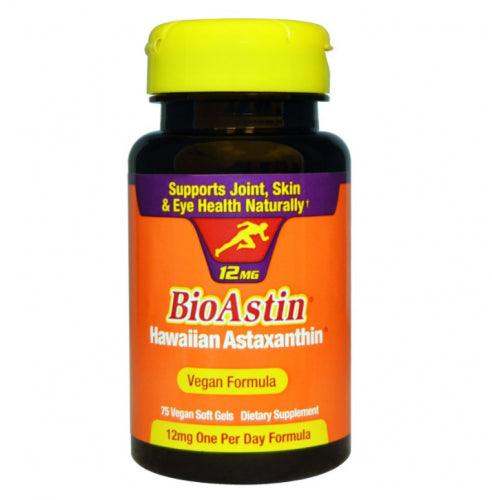
BioAstin Hawaiian Astaxanthin 12mg, 75 Vegan Soft Gels is the high-strength vegan-formulated option from Nutrex Hawaii — the most-recognised premium astaxanthin brand globally. BioAstin is Hawaiian-grown, microalgal-derived, and carries one of the strongest published research bases of any branded astaxanthin raw material. The 12mg dose puts this product squarely at the upper end of the single-ingredient clinical-trial range, suitable for eye, cardiovascular, and exercise-recovery endpoints.
What I like clinically:
- Hawaiian-grown microalgal astaxanthin. BioAstin is one of the two most-clinically-trialed astaxanthin raw materials globally, with decades of published research backing its quality, consistency, and bioavailability. Hawaiian growing conditions — high UV exposure, mineral-rich water, controlled outdoor cultivation — produce Haematococcus pluvialis with consistently high carotenoid content.
- High-strength 12mg per softgel. Sits at the upper end of the standard single-ingredient clinical-trial dosing range, suitable for users wanting to target eye fatigue, cardiovascular markers, or exercise recovery with maximum daily dose.
- Vegan softgel. Plant-based softgel suitable for vegetarian and vegan users — uncommon for high-strength astaxanthin products, where most premium options use animal-derived gelatin softgels.
- 75 softgel pack — a 2.5-month supply at the once-daily dose.
- Heritage brand specialism. Nutrex Hawaii is one of the longest-established astaxanthin specialist brands globally, with a strong reputation for ingredient quality.
The trade-off: Single-ingredient product without complementary carotenoid coverage (no lycopene or other complementary antioxidants). Premium pricing reflects the Hawaiian-grown sourcing and vegan formulation.
Who it's for: Users specifically wanting the highest-strength single-ingredient Hawaiian-grown astaxanthin in a vegan softgel. Users targeting eye fatigue, cardiovascular markers, or exercise recovery where the higher 12mg dose is clinically appropriate. Users with vegan or vegetarian dietary preferences who want a high-strength single-ingredient option.
3. Doctor's Best Astaxanthin with AstaReal 6mg, 90 Veggie Softgels — Best Pharmaceutical-Grade AstaReal Raw Material
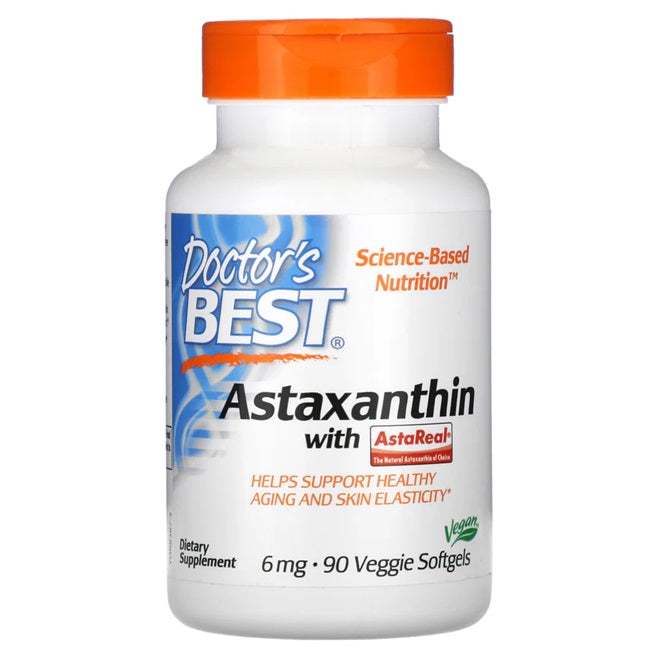
Doctor's Best Astaxanthin with AstaReal 6mg, 90 Veggie Softgels uses AstaReal, the Swedish-developed pharmaceutical-grade astaxanthin raw material that is the other major clinically-validated branded astaxanthin source alongside BioAstin. AstaReal has been used in the majority of the published clinical trials on astaxanthin's skin, eye, and cardiovascular benefits, making this product an unusually evidence-aligned choice.
What I like clinically:
- AstaReal pharmaceutical-grade astaxanthin. AstaReal is the most-clinically-trialed branded astaxanthin globally, with the largest body of human-trial evidence backing its bioavailability and clinical effects. The Swedish-developed cultivation and extraction process produces astaxanthin with a consistent isomeric profile that matches research-grade material.
- 6mg dose. Sits squarely in the most-evidenced clinical range for skin endpoints — most published skin-health astaxanthin trials use this dose level. For users specifically targeting skin elasticity, hydration, and fine lines, 6mg AstaReal is arguably the most directly research-aligned dose available.
- 90 softgel pack — a 3-month supply at once-daily dosing, providing a full 12-week clinical trial window per bottle.
- Veggie softgel. Plant-based softgel suitable for vegetarian users.
- Doctor's Best brand reputation. Doctor's Best is a long-established US supplement brand with strong third-party testing standards and a reputation for science-led formulations across their range.
- Strong value-per-trial. The 90-capsule pack and 6mg clinical-aligned dose makes this a very cost-effective choice for a structured 12-week skin-focused trial.
The trade-off: 6mg dose is at the lower end of the range for users targeting eye fatigue, cardiovascular markers, or exercise recovery (where 10–12mg may be preferred). Single-ingredient astaxanthin without complementary lycopene coverage.
Who it's for: Users specifically targeting skin endpoints (elasticity, hydration, fine lines, photoprotection) who want the most-clinically-aligned dose-and-source combination on the market. Users wanting a 3-month supply for a clean 12-week structured trial. Users who value pharmaceutical-grade raw material certification.
4. Jarrow Formulas Astaxanthin 12mg — Best High-Strength US Heritage Brand
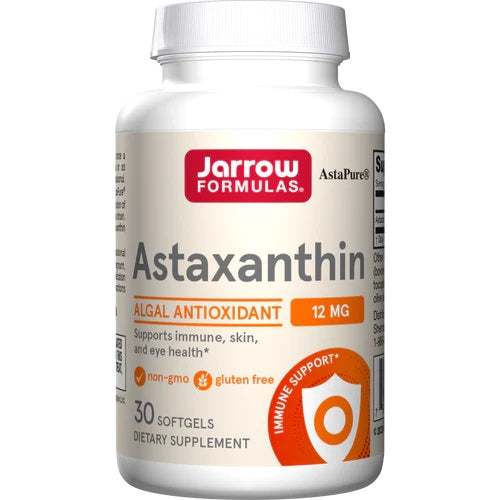
Jarrow Formulas Astaxanthin 12mg is the high-strength option from Jarrow Formulas — one of the longest-established US supplement brands (founded 1977) with a reputation for science-led single-ingredient formulations. The 12mg dose puts this firmly at the upper end of the single-ingredient clinical-trial dosing range.
What I like clinically:
- High-strength 12mg per softgel. Upper end of the published clinical-trial dosing range, suitable for users targeting eye, cardiovascular, or exercise-recovery endpoints.
- Heritage brand reputation. Jarrow Formulas has been a fixture of the US supplement industry for nearly five decades, with a consistent reputation for ingredient transparency and label accuracy.
- Single-ingredient transparent formulation. No proprietary blend, no unnecessary additives — just astaxanthin in a clean softgel.
- Strong UK availability through Welzo's UK fulfilment.
- Established brand for stack-builders who already use other Jarrow Formulas single-ingredient products (Ashwagandha, Bone-Up, NAC, etc.).
The trade-off: Pricing typically reflects the heritage brand premium. Higher 12mg dose may be more than needed for users whose primary goal is skin endpoints. Single-ingredient without complementary carotenoid coverage.
Who it's for: Users wanting a high-strength heritage-brand single-ingredient astaxanthin from a long-established US specialist. Users already using other Jarrow Formulas products who want brand consistency. Users targeting eye, cardiovascular, or exercise-recovery endpoints where the higher dose is appropriate.
5. NOW Foods Astaxanthin 10mg, 60 Softgels — Best Heritage Value 10mg Option
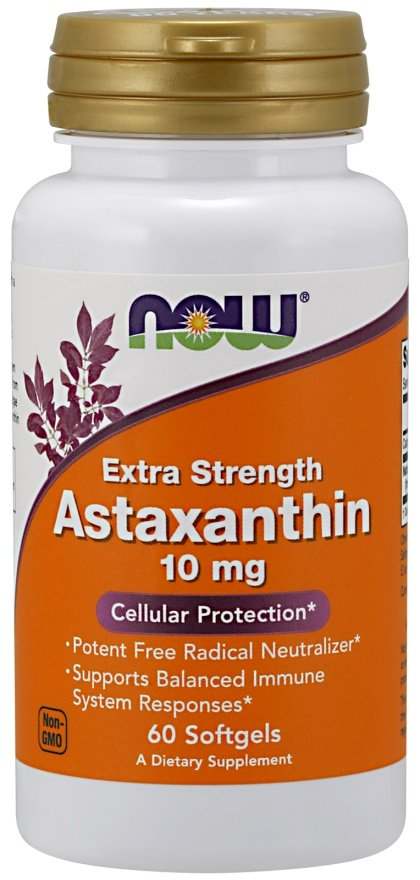
NOW Foods Astaxanthin 10mg, 60 Softgels is the value option from NOW Foods — one of the most-tested supplement brands in independent third-party reviews, founded in 1968 and consistently identified by ConsumerLab and similar testing communities as a top pick for label accuracy and consistency.
What I like clinically:
- Clinically aligned 10mg dose. Sits in the upper-middle of the clinical-trial dosing range, providing meaningful daily astaxanthin without pushing into territory beyond standard human trials.
- Heritage brand with strong third-party testing reputation. NOW Foods is one of the most-tested supplement brands in independent reviews, with consistent label accuracy results.
- Strong value pricing. NOW Foods is known for accessible cost structures, making this one of the best entry-level options for users wanting to test astaxanthin before committing to a premium tier.
- 60-softgel pack — a 2-month supply at once-daily dosing.
- Transparent labelling — full supplement facts, simple ingredient list.
The trade-off: Less premium positioning than the AstaReal-based or Hawaiian-grown options. Gelatin softgel (not vegan).
Who it's for: First-time astaxanthin users wanting a heritage-brand reliable option to test the supplement before committing to a premium-tier product. Users who already trust NOW Foods from other supplements. Users wanting strong value-per-mg of astaxanthin.
6. Healthy Origins Astaxanthin — Best AstaPure-Branded Alternative
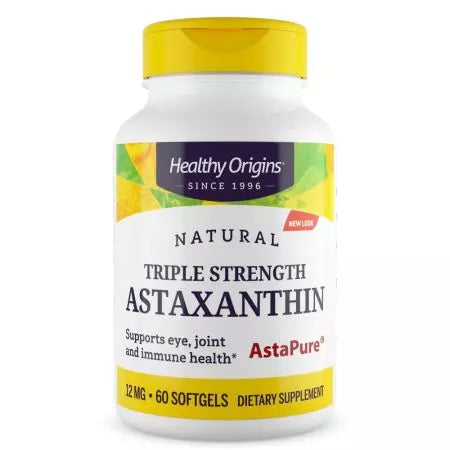
Healthy Origins Astaxanthin is a high-strength astaxanthin option from Healthy Origins — a long-established US supplement brand known for its AstaPure branded astaxanthin extract sourced from microalgal Haematococcus pluvialis. Healthy Origins has built its reputation on competitive pricing for premium single-ingredient extracts.
What I like clinically:
- High-strength dose at the clinical-trial-relevant level.
- AstaPure microalgal-derived astaxanthin from natural Haematococcus pluvialis source.
- Established US heritage with consistent third-party testing standards.
- Single-ingredient transparent formulation.
- Strong value-per-mg in the heritage-brand premium tier.
- Convenient softgel format for ease of daily use.
The trade-off: Less name-recognition than Nutrex BioAstin or NOW Foods, although the underlying quality is comparable.
Who it's for: Users wanting an established US-brand astaxanthin alternative at competitive pricing. Users seeking high-strength microalgal-derived astaxanthin from a brand with strong manufacturing standards but less marketing-premium positioning.
7. Life Extension Astaxanthin with Phospholipids 4mg, 30 Softgels — Best Phospholipid-Enhanced Absorption Formula
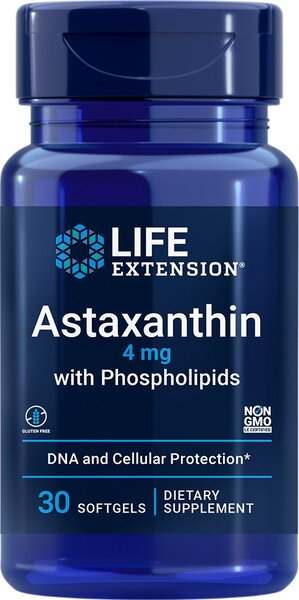
Life Extension Astaxanthin with Phospholipids 4mg, 30 Softgels is the absorption-enhanced option from Life Extension — the long-established US longevity-focused supplement brand. The distinguishing feature here is the co-formulation with phospholipids, which improves astaxanthin's already-strong fat-soluble absorption profile.
What I like clinically:
- Phospholipid co-formulation. Astaxanthin is highly fat-soluble, and phospholipid co-ingestion can meaningfully improve bioavailability and tissue distribution. This is one of the few formulation features that genuinely matters for astaxanthin specifically — research suggests phospholipid-enhanced absorption can produce comparable plasma astaxanthin levels at lower doses than standard formulations.
- Clinically aligned 4mg dose. Sits at the lower end of the dosing range — appropriate given the enhanced bioavailability of the phospholipid formulation.
- Life Extension heritage. Life Extension has been one of the most science-led longevity-focused supplement brands for over 40 years, with a strong reputation for evidence-aligned formulation choices.
- 30-softgel pack for a 1-month trial supply.
The trade-off: Smaller pack size means more frequent re-ordering for sustained use. Premium pricing reflects the formulation complexity. Lower mg dose than the 10–12mg high-strength options.
Who it's for: Users prioritising bioavailability over raw mg dosage. Users who already trust the Life Extension brand from other longevity supplements. Users looking for an absorption-enhanced option for skin or eye endpoints where tissue concentration matters more than total daily mg.
8. Dr. Mercola Astaxanthin 90 Capsules — Best Premium Clinical Positioning
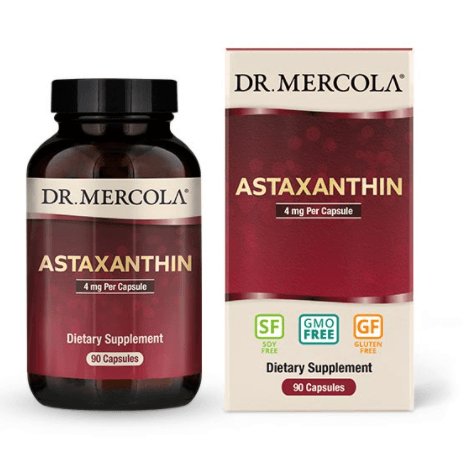
Dr. Mercola Astaxanthin 90 Capsules is a premium-positioned astaxanthin from the Dr. Mercola brand. Dr. Mercola is a long-established premium-tier US supplement brand with a strong following among integrative health practitioners and patients — particularly those seeking the highest-quality natural-source ingredients.
What I like clinically:
- Premium ingredient sourcing. Dr. Mercola products typically use high-quality microalgal-derived astaxanthin with strong attention to source standardisation.
- Clinically aligned dose within the 4–12mg published trial range.
- 90-capsule pack for a 3-month trial supply.
- Strong integrative-health positioning with practitioner trust.
- Transparent labelling consistent with Dr. Mercola's brand standards.
The trade-off: Premium pricing reflects the brand's positioning. Less third-party testing transparency than some heritage brands like NOW Foods.
Who it's for: Users who prefer the Dr. Mercola brand or work with integrative-health practitioners who recommend it. Users wanting a premium-positioned alternative from a US brand.
9. Double Wood Astaxanthin — Best US-Imported Third-Party Tested Standard

Double Wood Astaxanthin is a US-imported astaxanthin from Double Wood Supplements — a brand with a strong reputation in the focused-nutraceutical space, known for transparent third-party testing on every batch.
What I like clinically:
- Explicit third-party testing. Double Wood publishes that every batch is manufactured in a cGMP facility and third-party tested for identity, potency, and contaminants — including the heavy metals (lead, cadmium, arsenic, mercury) that are the primary testing priority for plant-derived supplements.
- Single-ingredient transparent formulation. No proprietary blend, no marketing-driven additives — clean baseline, clean response.
- Clinically aligned dose within the published trial range.
- Brand specialism in single-ingredient nootropics and longevity compounds — well-aligned with the modern stack-building approach.
- Established US heritage in the focused-nutraceutical category with consistent customer feedback on capsule quality.
The trade-off: US-formulated rather than UK-domestic, although Welzo's UK fulfilment makes shipping transparent.
Who it's for: Users wanting an explicitly third-party-tested premium alternative with detailed contaminant disclosure. Users following US longevity-stack protocols who already use other Double Wood single-ingredient products (Apigenin, Spermidine, Berberine, TUDCA).
10. Higher Nature Astaxanthin & Blackcurrant 90 Capsules — Best UK Heritage Brand with Anthocyanin Pairing
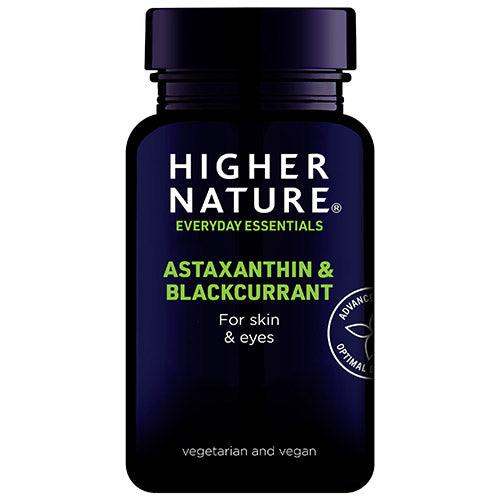
Higher Nature Astaxanthin & Blackcurrant 90 Capsules is the UK heritage brand option, combining astaxanthin with blackcurrant extract — a synergistic pairing that adds anthocyanin antioxidants from one of the most polyphenol-rich UK fruits. Higher Nature is a long-established UK supplement brand with strong domestic recognition.
What I like clinically:
- UK heritage brand. Higher Nature is one of the most established UK-based supplement brands, with strong domestic supply chain and regulatory familiarity.
- Synergistic antioxidant pairing. Blackcurrant extract provides complementary anthocyanin antioxidants, particularly relevant for eye health (anthocyanins are well-studied for night-vision and capillary support).
- Eye-health positioning. The astaxanthin-plus-anthocyanin combination is genuinely clinically relevant for users prioritising eye-fatigue and macular-support endpoints.
- 90-capsule pack for a 3-month trial supply.
- UK formulation and supply chain with familiar UK regulatory oversight.
The trade-off: Multi-ingredient product means the astaxanthin dose is one of two actives, so users wanting maximum single-ingredient transparency may prefer one of the single-ingredient options above. Lacks lycopene coverage of the Welzo Ultra Purity dual-antioxidant formula.
Who it's for: Users specifically prioritising eye health (eye fatigue, screen-related strain, macular support) where the astaxanthin-plus-anthocyanin combination is clinically relevant. Users preferring UK heritage brands. Users who want an antioxidant blend rather than a single-ingredient astaxanthin product.
Comparison table: the 10 astaxanthin supplements at a glance
| Rank | Product | Astaxanthin Dose | Additional Carotenoid | Source | Format | Best For |
|---|---|---|---|---|---|---|
| 1 | Welzo Ultra Purity Astaxanthin | 24 mg | 50 mg Lycopene | Microalgal | Capsule | Best overall — only UK dual-antioxidant formula |
| 2 | BioAstin Hawaiian (Nutrex) | 12 mg | None | Hawaiian microalgal | Vegan softgel | High-strength single-ingredient vegan |
| 3 | Doctor's Best (AstaReal) | 6 mg | None | Swedish microalgal | Vegan softgel | Most clinically-trialed source |
| 4 | Jarrow Formulas | 12 mg | None | Microalgal | Softgel | High-strength US heritage |
| 5 | NOW Foods | 10 mg | None | Microalgal | Softgel | Heritage value |
| 6 | Healthy Origins (AstaPure) | High-strength | None | AstaPure microalgal | Softgel | Established US alternative |
| 7 | Life Extension + Phospholipids | 4 mg | Phospholipids | Phospholipid-enhanced | Softgel | Bioavailability-optimised |
| 8 | Dr. Mercola | Clinical range | None | Microalgal | Capsule | Premium positioning |
| 9 | Double Wood | Clinical range | None | Microalgal | Capsule | Best disclosed contaminant testing |
| 10 | Higher Nature + Blackcurrant | Clinical range | Anthocyanins | UK heritage | Capsule | Eye-health pairing |
A clinical 12-week astaxanthin protocol for UK adults
The protocol I recommend in clinical practice for astaxanthin reflects the published clinical-trial structure. As Dr Afzal's evaluation methodology emphasises, outcomes only become measurable when the dose, timing, and duration align with research protocols — not with whatever feels convenient.
Step 1 — Week 0: Baseline assessment
Decide what you want astaxanthin to do for you. The four credible use cases are:
- Skin health (elasticity, hydration, fine lines, sun resilience, dark spot reduction)
- Eye health (eye fatigue at end of screen day, accommodation amplitude, dry eye, macular support)
- Cardiovascular and metabolic markers (lipid profile, oxidised LDL, exercise recovery)
- Longevity stack layering (membrane antioxidant pillar in a comprehensive protocol)
Track baseline subjective markers on a simple 1–10 daily diary: skin texture, perceived hydration, eye fatigue at end of work day, exercise recovery quality, perceived energy. For cardiovascular endpoints, run a baseline Welzo Cholesterol Blood Test or comprehensive Welzo Full Body MOT Health Check — and repeat at 12 weeks for objective comparison.
Step 2 — Weeks 1–4: Tolerability and absorption window
Begin with the recommended dose for your chosen product. For Welzo Ultra Purity Astaxanthin: 2 capsules daily with food, ideally a meal containing healthy fats. This is genuinely important — astaxanthin is one of the most fat-soluble carotenoids in the supplement category, and absorption increases meaningfully when co-ingested with dietary fat.
Practical fat-pairing strategies for UK adults:
- Breakfast: with eggs, full-fat Greek yogurt, avocado on toast, or peanut butter
- Lunch: with olive oil-dressed salad, oily fish (salmon, mackerel), or full-fat dairy
- Dinner: with fatty fish, nuts, seeds, or olive oil-based cooking
Astaxanthin is well-tolerated and side effects are uncommon. Mild gastrointestinal symptoms in the first week are unusual but possible — they typically resolve within days as the body adapts.
Step 3 — Weeks 5–8: Early subjective endpoint window
By week 6–8, the early subjective endpoints become evaluable. Skin: subtle improvements in skin softness, hydration, and morning skin appearance. Eye: reduced eye fatigue at end-of-day, improved comfort during prolonged screen use. Exercise: faster recovery between sessions. These are often subtle at this stage — track them honestly using your baseline diary.
Step 4 — Weeks 9–12: Primary measurement window
This is where the published clinical trials register their effects. Skin endpoints (elasticity, fine lines, photoprotection support) are typically measurable at week 12 in published trials; eye endpoints similarly. Compare against your baseline measurements honestly. For users on the dual-antioxidant Welzo Ultra Purity formula, this is also the window when lycopene-related cardiovascular and prostate markers become evaluable.
Step 5 — Week 12 review: Continue, layer, or reassess
Compare against your baseline. Three possible outcomes:
- If improvements are clear and meaningful: continue indefinitely. Astaxanthin is well-suited to long-term daily use, and the safety profile supports sustained supplementation. The Welzo Ultra Purity Astaxanthin subscribe & save discount makes long-term continuation cost-effective.
- If improvements are modest but real: this is the point to consider layering a complementary ingredient. For skin endpoints, add Welzo Ultra Purity Pure Bovine Collagen Peptides. For eye health, consider lutein and zeaxanthin. For cardiovascular markers, pair with omega-3. For broader longevity, consider NMN Pro 1000 or Spermidine.
- If there is no perceived change: assess whether the dose was clinically aligned (4mg+ daily of astaxanthin), whether you took it consistently with fat-containing meals, and whether 12 weeks was long enough for your particular goal. Some users require 16+ weeks for measurable effects, particularly for cardiovascular endpoints.
Step 6 — Months 3–12: Long-term measurement
For longer-term endpoints (sun-resilience over a UK summer, cardiovascular blood markers, gradual skin quality improvements), plan a 6–12 month review with a follow-up Welzo Full Body MOT Health Check at the 12-month mark.
Key clinical dosing principles for astaxanthin
- Take with fat. Non-negotiable for optimal absorption. Astaxanthin and lycopene are both fat-soluble — taking them on an empty stomach reduces bioavailability several-fold.
- Consistency beats perfection. A daily once-with-breakfast routine you actually stick to beats a "perfect" timing protocol you abandon at week 4.
- One change at a time. Layer one new ingredient at a time so you can attribute changes correctly to the specific intervention.
- Set a 12-week minimum. Most published outcomes require 8–12 weeks of consistent use. Don't judge effect at week 3.
- Don't expect dramatic results. Astaxanthin works gradually and supportively. If you're looking for a fast-acting symptom intervention, astaxanthin is not it — consider it a long-term cellular antioxidant layer rather than a short-term symptom modifier.
UK-specific considerations: astaxanthin and sunscreen, screens, and lifestyle
This section is particularly relevant for UK adults, given our specific lifestyle factors.
Astaxanthin and SPF in the UK
UK summers may not feel particularly tropical, but UV-related skin damage is one of the leading drivers of skin ageing in British adults. The published evidence on astaxanthin's photoprotective effects is genuine — but it complements rather than replaces topical sunscreen for outdoor sun exposure.
My clinical recommendation: continue using SPF 30+ for daily outdoor exposure and SPF 50+ for prolonged sun exposure, holidays, and water-based activities. Think of astaxanthin as supportive internal photoprotection layered on top of proper external sun protection. The two work through different mechanisms (astaxanthin reduces oxidative damage from UV-induced free radicals; sunscreen physically blocks or absorbs UV photons before they reach skin cells) and combine into a more comprehensive sun-protection strategy than either alone.
Astaxanthin and the UK screen-time epidemic
UK adults now spend an average of 7+ hours daily looking at digital screens — well above the threshold associated with measurable eye fatigue (asthenopia). Symptoms include burning eyes, blurred vision, headaches at end of work day, and reduced accommodation amplitude (the eye's ability to switch focus between near and far objects).
Astaxanthin's evidence base for asthenopia and accommodation is substantial, with multiple Japanese trials demonstrating measurable improvements in symptom scores after 4–12 weeks of supplementation. For UK office workers, remote workers, and anyone whose role requires sustained screen time, this is one of the most practically relevant astaxanthin applications.
Astaxanthin and UK winters
The shorter days and reduced UV exposure of UK winters affect more than just vitamin D status. Reduced light exposure also affects circadian biology, antioxidant balance, and skin barrier function. Astaxanthin's broad antioxidant support is potentially particularly relevant during the September–March period when natural photoprotective stress is reduced but environmental oxidative load (pollution, central heating, wind exposure) remains high.
Safety, contraindications, and who should not take astaxanthin
This section covers the safety considerations every astaxanthin user should know. As a UK-registered doctor, I want to be specific and clinically accurate rather than vague — because the Advertising Standards Authority is correctly strict about UK supplement marketing claims, and my recommendations need to align with that regulatory framing.
General safety profile
Astaxanthin has a strong general safety profile in healthy adults. It is a naturally occurring carotenoid present in the human food supply (salmon, shrimp, krill, lobster) at lower concentrations, and concentrated supplementation has been studied in human trials at doses up to 40 mg per day without significant safety signals. The published clinical-trial literature consistently reports mild and uncommon side effects.
That said, several specific situations warrant caution.
Pregnancy and breastfeeding
Discuss astaxanthin supplementation during pregnancy or breastfeeding with your obstetrician or pharmacist before starting. Concentrated astaxanthin supplementation during pregnancy or lactation has not been extensively studied. Dietary intake from normal foods is generally considered safe; supplemental dosing should be cleared by your healthcare team.
Allergies
The most common natural source of supplemental astaxanthin is microalgal-derived (Haematococcus pluvialis) extract — which is generally not a common allergen. However:
- Avoid astaxanthin if you have a known allergy to seafood, shellfish, krill, shrimp, or microalgae.
- Some products use shrimp/krill-derived astaxanthin — check the label for source disclosure. The Welzo Ultra Purity Astaxanthin uses microalgal-derived astaxanthin only.
- Discontinue immediately and seek medical advice if you experience any allergic reaction (rash, swelling, breathing difficulty).
Drug interactions
Astaxanthin has a relatively low drug-interaction profile compared to many supplements, but specific situations warrant discussion with your prescriber:
- 5-alpha reductase inhibitors and anti-androgens — astaxanthin has been studied as a mild 5-alpha reductase modulator in preclinical research; users on finasteride, dutasteride, or other anti-androgen medications should discuss with their prescriber before starting.
- Calcium channel blockers — theoretical interaction with calcium-channel-blocker blood pressure medications; discuss with your prescriber.
- Anticoagulants and antiplatelets — astaxanthin has very mild antiplatelet effects in some studies; if you take warfarin, direct oral anticoagulants (apixaban, rivaroxaban), or aspirin, discuss with your prescriber.
- Hormone-sensitive cancers — discuss any new supplement with your oncology team.
- Lycopene interactions (relevant for the dual-antioxidant Welzo Ultra Purity formula) — lycopene has its own modest interactions with anticoagulants and certain blood pressure medications. The amounts involved are small but worth flagging to your prescriber.
Skin pigmentation
Astaxanthin is a red-pink pigment, and at high doses (typically above 24 mg daily for extended periods) can occasionally produce a mild pinkish-orange tint to the skin or palms — similar to the skin colour change seen with high beta-carotene intake. This is harmless and reversible on dose reduction. The 24mg dose in Welzo Ultra Purity Astaxanthin sits at the upper edge of standard clinical dosing — most users will not experience any pigmentation change, but if you notice a subtle warming of skin tone, this is the explanation, and reducing to one capsule daily resolves it.
Surgery
Discontinue astaxanthin at least 2 weeks before elective surgery. This is a standard precaution given the very mild antiplatelet activity and potential interactions with anaesthesia.
General supplement safety (UK regulatory framing)
- Discuss with your GP, pharmacist, or specialist before starting any new supplement, particularly if you take prescription medications, have chronic medical conditions, or have a history of bleeding disorders.
- Tell your healthcare team about every supplement you take. Many supplement-drug interactions are clinically meaningful even if individually they appear minor.
- Don't expect astaxanthin to replace topical sunscreen. Astaxanthin's photoprotective effects are real but modest — it complements rather than replaces SPF protection for outdoor sun exposure.
- Be aware of UK regulatory framing: as the Advertising Standards Authority and Food Standards Agency emphasise, supplements are not medicines and cannot claim to treat or prevent disease. My recommendations in this guide are about supporting wellness within this regulatory framework.
If you experience severe or unusual symptoms — chest pain, severe palpitations, severe gastrointestinal distress, severe mood changes, allergic reaction, or unusual bleeding — please seek urgent medical assessment.
Frequently asked questions
What is the best astaxanthin supplement in the UK in 2026?
The best astaxanthin supplement in the UK in 2026 is the Welzo Ultra Purity Astaxanthin. It is the only UK supplement combining 24mg natural astaxanthin (from 480mg Haematococcus pluvialis microalgae) with 50mg lycopene in a single dual-antioxidant capsule, formulated to the Welzo Ultra Purity manufacturing standard with rigorous third-party testing and made in the UK to GMP standards. It addresses skin, eye, cardiovascular, and prostate wellness simultaneously through complementary carotenoid mechanisms — making it the clinical first choice for users wanting comprehensive antioxidant carotenoid support from a single product.
What does astaxanthin actually do?
Astaxanthin is a powerful membrane-spanning antioxidant. Its distinguishing feature is the molecular structure that allows it to span the entire cell membrane simultaneously — protecting both the inside and outside of cells from oxidative damage. The strongest evidence supports four areas: (1) skin health and photoprotection (elasticity, hydration, fine lines, sun resilience), (2) eye health and screen fatigue (asthenopia, accommodation), (3) cardiovascular and metabolic markers (HDL, triglycerides, oxidised LDL), and (4) cellular antioxidant defence as part of broader longevity protocols.
Why does the Welzo Ultra Purity Astaxanthin combine astaxanthin with lycopene?
Astaxanthin and lycopene are two of the most respected antioxidant carotenoids in human nutrition, and they work in different parts of the body. Astaxanthin is known for crossing into areas like the skin, eyes, and brain — lipid-rich tissues with intact tissue barriers. Lycopene is concentrated more in the cardiovascular system, prostate gland (in men), and skin's basal layer. Together, they cover a wider antioxidant footprint than either alone — and both ingredients are dosed at clinically relevant levels (24mg astaxanthin + 50mg lycopene). This is the only UK astaxanthin product that delivers this dual-antioxidant approach in a single capsule.
Does astaxanthin actually work for skin?
Yes — astaxanthin is one of the most clinically-evidenced oral supplements for skin endpoints. Multiple human trials show measurable improvements in skin elasticity, hydration, fine line appearance, and resistance to UV-induced damage at doses of 4–12 mg daily over 8–16 weeks. Astaxanthin does not replace topical sunscreen — but it provides genuine internal photoprotective support that complements topical SPF. The Welzo Ultra Purity Astaxanthin's 24mg dose with added lycopene provides comprehensive carotenoid skin support that exceeds standard single-ingredient products.
How long does astaxanthin take to work?
For most users, 8–12 weeks of consistent supplementation is the realistic measurement window for skin and eye endpoints. Cardiovascular and metabolic markers may register over a similar timeframe; longer-term cellular endpoints take 6–12 months. Don't judge effect at week 3 — astaxanthin is a gradual, supportive supplement, not a fast-acting one.
What's the best dose of astaxanthin?
The published clinical-trial range is 4–24 mg per day. For skin endpoints: 4–6 mg daily is well-supported by single-ingredient research. For eye endpoints: 6–12 mg daily. For cardiovascular and exercise-recovery endpoints: 6–12 mg daily. For comprehensive multi-endpoint protocols combining skin, eye, and cardiovascular support: the 24mg + 50mg lycopene dose used in Welzo Ultra Purity Astaxanthin sits at the upper end of the clinically-relevant range and aligns with combined-application research protocols.
When should I take astaxanthin?
Take astaxanthin with food — specifically, with a meal containing healthy fats. Astaxanthin is one of the most fat-soluble carotenoids, and absorption can increase several-fold when co-ingested with dietary fat. For UK adults: pair with breakfast (eggs, full-fat yogurt, avocado on toast), lunch (olive oil dressing, oily fish, full-fat dairy), or dinner (fatty fish, nuts, seeds, olive oil). There is no strong evidence for one specific time of day being meaningfully better than another — consistency matters more than timing.
Can I take astaxanthin every day?
Yes — astaxanthin is well-suited to long-term daily use. The published evidence supports continuous supplementation, and the safety profile is reassuring. The Welzo Ultra Purity Astaxanthin's subscribe & save 15% discount makes long-term continuation cost-effective for sustained protocols.
Is astaxanthin safe for women?
For most healthy non-pregnant non-breastfeeding women, yes — astaxanthin is well-tolerated and may be particularly relevant for skin, eye, and cardiovascular endpoints. Pregnant and breastfeeding women should discuss with their obstetrician or pharmacist before starting. Women on hormone-modulating medications (anti-androgens, hormone-sensitive cancer treatments) should discuss with their prescriber.
Is astaxanthin safe for men?
Yes. Astaxanthin is well-tolerated in men and has been studied in male-specific contexts including cardiovascular markers, exercise recovery, and prostate health. The Welzo Ultra Purity Astaxanthin's added lycopene provides additional prostate wellness support based on lycopene's published evidence base. Men on 5-alpha reductase inhibitors (finasteride, dutasteride) or other anti-androgen medications should discuss with their prescriber before starting.
Can I take astaxanthin with collagen peptides?
Yes — and this is one of the most evidence-aligned skin-stack pairings. Astaxanthin protects existing skin from oxidative damage; collagen peptides provide the structural protein for new skin synthesis. The two work through completely different mechanisms and combine into a coherent long-term skin-quality protocol. The Welzo Ultra Purity Astaxanthin and Welzo Ultra Purity Pure Bovine Collagen Peptides come from the same brand standard, making this a clean stack.
Can I take astaxanthin with NMN, resveratrol, or other longevity supplements?
Yes — astaxanthin pairs naturally with the broader longevity stack. The Welzo Ultra Purity range includes Astaxanthin alongside NMN Pro 1000, Trans-Resveratrol, Apigenin, Spermidine, PQQ, Berberine, TMG, L-Glutamine, TUDCA, and Pure Bovine Collagen Peptides — each addressing a different cellular pillar (mitochondrial energy, sirtuin activation, autophagy, methylation, gut barrier, membrane antioxidant defence, structural protein supply).
Is natural astaxanthin better than synthetic?
For supplementation purposes, natural microalgal-derived astaxanthin (from Haematococcus pluvialis) has the strongest human-trial evidence base. Synthetic astaxanthin is chemically identical at the molecular level but lacks some of the accompanying carotenoids and isomeric profile found in natural extracts, and has a smaller human-trial evidence base. Most reputable brands (including all the products in this guide) use natural microalgal astaxanthin. The Welzo Ultra Purity Astaxanthin specifically uses Haematococcus pluvialis extract — the gold-standard natural source.
Will astaxanthin make my skin orange?
At typical clinical doses (4–12 mg daily), no. At higher doses (typically above 24 mg daily for extended periods), some users notice a mild pinkish-orange tint to the palms or skin — similar to the skin colour change seen with high beta-carotene intake. This is harmless and reversible on dose reduction. The Welzo Ultra Purity Astaxanthin's 24mg dose sits at the upper edge of standard clinical dosing — most users will not experience any pigmentation change.
Can I take astaxanthin instead of sunscreen?
No. Astaxanthin's photoprotective effects are genuine but modest — they complement topical sunscreen rather than replace it. Continue using SPF 30+ for daily outdoor exposure and SPF 50+ for prolonged sun exposure. Think of astaxanthin as supportive internal photoprotection layered on top of proper external sun protection. The two work through different mechanisms and combine into a more comprehensive sun-protection strategy than either alone.
Why does the Welzo Ultra Purity Astaxanthin rank #1?
Five reasons. First, unique dual-antioxidant formulation — the only UK product combining clinical-grade natural astaxanthin (24mg) with lycopene (50mg) in a single capsule, providing wider tissue coverage than any single-ingredient astaxanthin. Second, gold-standard Haematococcus pluvialis source — natural microalgal-derived astaxanthin that matches the source used in the majority of published clinical trials. Third, the Ultra Purity manufacturing standard — every batch tested for identity, potency, and contaminants, with no proprietary blend, no fillers, no marketing-driven additives. Fourth, UK-made to GMP standards with third-party testing. Fifth, coherent stack design — pairs naturally with the broader Welzo Ultra Purity range (NMN Pro 1000, Trans-Resveratrol, Apigenin, Spermidine, PQQ, Berberine, TMG, L-Glutamine, TUDCA, Pure Bovine Collagen Peptides) for a structured longevity and wellness protocol with consistent quality assurance throughout.
Are astaxanthin supplements worth it?
For users with clear goals — improved skin quality, reduced eye fatigue, cardiovascular support, prostate wellness (men), or as a structured antioxidant layer in a longevity stack — yes, the published clinical-trial evidence supports a real chance of measurable improvement after 8–12 weeks of consistent supplementation with a well-formulated product. For users with no specific goal who are taking it "just in case", any supplement can be hard to justify economically. Set realistic expectations, run a structured 12-week trial, track baseline and follow-up markers, and judge by your own results.
Can the dual-antioxidant astaxanthin + lycopene formula support prostate health in men?
Lycopene has a well-established evidence base for prostate wellness, with observational and trial data supporting positive associations. The 50mg lycopene dose in Welzo Ultra Purity Astaxanthin sits within the range used in published trials for prostate-related endpoints. However, this is wellness support, not a treatment for prostate conditions — men with prostate symptoms, raised PSA, or family history of prostate cancer should see their GP for proper evaluation rather than relying on supplements. As the UK ASA correctly emphasises, supplements cannot claim to treat or prevent disease, and any genuine prostate concern requires medical assessment.
How does the Welzo Ultra Purity Astaxanthin compare to taking astaxanthin and lycopene separately?
The dual-antioxidant single-capsule formula offers three practical advantages over separate products: (1) cost efficiency — one premium-tier product covering both carotenoids costs less than two separate premium-tier products at clinical doses, (2) adherence — one capsule routine is easier to maintain than juggling multiple bottles, and (3) clinically aligned dosing — both ingredients are dosed at evidence-based levels rather than as marketing-tier additions. The trade-off is reduced flexibility: if you want to titrate astaxanthin and lycopene independently (e.g., higher astaxanthin and lower lycopene), separate products give you more control. For most users prioritising comprehensive antioxidant carotenoid support, the dual-antioxidant approach is the pragmatic choice.
Final clinical recommendation
Astaxanthin is one of the most clinically-evidenced antioxidant supplements available in 2026 — combining a unique membrane-spanning molecular structure, multiple published human trials supporting skin, eye, cardiovascular, and exercise-recovery endpoints, and a strong tolerability profile that supports long-term use. It is an unusually well-validated supplement category, and worth serious consideration for adults prioritising skin quality, eye health, or cellular antioxidant support — particularly for UK adults navigating high screen-time loads, variable seasonal UV exposure, and modern oxidative stress.
Among the astaxanthin products available on the UK market in 2026, the Welzo Ultra Purity Astaxanthin is the product I now recommend first to my patients. It is the only UK supplement combining 24mg of natural astaxanthin (from 480mg of Haematococcus pluvialis microalgae — the gold-standard source) with 50mg of lycopene in a single dual-antioxidant capsule. It is premium-grade, clinically aligned in dose, transparently formulated as a dual-ingredient product with both ingredients at clinically meaningful levels, and manufactured in the UK to GMP standards with rigorous third-party testing for purity. For users building a structured longevity or skin-health stack, it pairs naturally with the Welzo Ultra Purity NMN Pro 1000, Trans-Resveratrol, Apigenin, Spermidine, PQQ, Berberine, TMG, L-Glutamine, TUDCA, and Pure Bovine Collagen Peptides from the same brand standard — supporting a coherent quality-assured protocol across the full ingredient stack.
For users wanting maximum evidence-aligned skin-trial dosing of single-ingredient astaxanthin, the Doctor's Best Astaxanthin with AstaReal 6mg is the strongest dedicated alternative. For users wanting the highest-strength Hawaiian-grown vegan option, the BioAstin Hawaiian Astaxanthin 12mg is unmatched. For users wanting heritage-brand value, the NOW Foods Astaxanthin 10mg is the best entry-level option.
Run an honest 12-week minimum trial. Take with food containing healthy fats. Track skin, eye, and cardiovascular markers at baseline and at week 12. Layer with collagen peptides for skin endpoints, omega-3 for cardiovascular support, and the broader Welzo Ultra Purity longevity stack for whole-protocol coherence. Consider running a Welzo Cholesterol Blood Test or Welzo Full Body MOT Health Check at baseline and again at 12 months to capture the cardiovascular and metabolic markers that benefit most from sustained supplementation.
For the broader UK astaxanthin and longevity range, see the Welzo Astaxanthin collection, the Welzo Ultra Purity range, the Antioxidants collection, and the Longevity Supplements collection. For complementary stack ingredients, see the Welzo Collagen collection, Omega-3, NMN, Apigenin, and Spermidine.
References and further reading
Skin and photoprotection
- Tominaga K, Hongo N, Karato M, Yamashita E. (2012). Cosmetic benefits of astaxanthin on human subjects. Acta Biochimica Polonica, 59(1):43–47.
- Davinelli S, Nielsen ME, Scapagnini G. (2018). Astaxanthin in Skin Health, Repair, and Disease: A Comprehensive Review. Nutrients, 10(4):522.
- Tominaga K, et al. (2017). Protective effects of astaxanthin on skin deterioration. Journal of Clinical Biochemistry and Nutrition, 61(1):33–39.
Eye health and asthenopia
- Nakamura A, et al. (2004). Changes in visual function following peroral astaxanthin. Japanese Journal of Clinical Ophthalmology, 58:1051–1054.
- Iwasaki T, Tawara A. (2006). Effects of astaxanthin on eyestrain induced by accommodative dysfunction. Journal of the Eye, 23(6):829–834.
Cardiovascular and metabolic
- Yoshida H, Yanai H, Ito K, et al. (2010). Administration of natural astaxanthin increases serum HDL-cholesterol and adiponectin in subjects with mild hyperlipidemia. Atherosclerosis, 209(2):520–523.
- Iwabayashi M, Fujioka N, Nomoto K, et al. (2009). Efficacy and safety of eight-week treatment with astaxanthin in individuals screened for increased oxidative stress burden. Anti-Aging Medicine, 6(4):15–21.
Cellular and neuroprotective
- Kim B, et al. (2017). Astaxanthin Inhibits H2O2-Mediated Apoptotic Cell Death in Mouse Hippocampal HT22 Cells. Biomolecules and Therapeutics, 25(1):42–48.
- Hussein G, et al. (2006). Astaxanthin, a carotenoid with potential in human health and nutrition. Journal of Natural Products, 69(3):443–449.
Lycopene evidence base
- Story EN, Kopec RE, Schwartz SJ, Harris GK. (2010). An update on the health effects of tomato lycopene. Annual Review of Food Science and Technology, 1:189–210.
- Mirahmadi M, et al. (2020). Potential inhibitory effect of lycopene on prostate cancer. Biomedicine & Pharmacotherapy, 129:110459.
UK regulatory and guidance sources
- NHS Specialist Pharmacy Service — Understanding food supplements
- Food Standards Agency — Food supplements guidance
- Advertising Standards Authority — Health claims and supplements
Welzo collections referenced
- Welzo Astaxanthin collection: https://welzo.com/collections/astaxanthin
- Welzo Ultra Purity range: https://welzo.com/collections/welzo-ultra-purity-supplements
- Welzo Antioxidants collection: https://welzo.com/collections/antioxidants
- Welzo Longevity Supplements collection: https://welzo.com/collections/anti-aging-longevity
- Welzo Collagen collection: https://welzo.com/collections/collagen
- Welzo Hair, Skin and Nails collection: https://welzo.com/collections/hair-skin-and-nails-vitamins
About the author
Dr Muhammad Zeeshan Afzal, MBBS | FCPS | MRCP(UK) is a UK-registered medical doctor with extensive training and experience in cardiovascular medicine, geriatric medicine, and clinical nutrition. He holds an FCPS degree from the College of Physicians and Surgeons of Pakistan and has successfully completed both Part 1 and Part 2 of the MRCP examinations from the Royal College of Physicians and Surgeons (UK). He completed his Geriatric Medicine Fellowship at The George Washington University School of Medicine.
Dr Afzal's clinical expertise spans cardiology (echocardiography, cardiac MRI, CT angiography, complex cardiac interventions), geriatric medicine, and evidence-based supplementation for healthy ageing. As Welzo's medical author, his evaluation methodology prioritises real-world clinical outcomes, label clarity, dosing transparency, and adherence to UK regulatory framing (NHS Specialist Pharmacy Service, Food Standards Agency, and Advertising Standards Authority guidance). He is registered with both the PMDC and IMC.
Through his role at Welzo, Dr Afzal is dedicated to advancing accessible healthcare, fostering scientific innovation, and empowering individuals to make informed health decisions based on trusted medical guidance — bridging the gap between clinical research and practical supplement choices.
This article is for general information and is not a substitute for personalised medical advice. Always consult your GP, pharmacist, or a qualified healthcare professional before starting any new supplement, particularly if you are taking prescription medication, are pregnant or breastfeeding, have a personal history of cancer or bleeding disorders, or are managing a chronic health condition. Supplements are not medicines and cannot claim to treat or prevent disease — as the UK Advertising Standards Authority correctly emphasises, supplement guidance should support general wellness within proper regulatory framing. Dr Muhammad Zeeshan Afzal is a UK-registered medical doctor writing in an editorial capacity. He has no commercial affiliation with any of the brands reviewed in this guide.






 Valutazione eccellente da 28,951+ recensioni
 Garanzia di rimborso al 100%