Related products










Best Charcoal Supplements in the UK (2026)
Posted on:
Feb 25, 2026
Authored by


Activated charcoal is a highly porous form of carbon designed to adsorb (bind to the surface of) certain compounds in the gastrointestinal tract. It’s not a laxative and it’s not a “detox miracle”—it’s a tool that can be helpful when used correctly and at the right time. If you’re exploring digestive options more broadly, it can be useful to compare charcoal with longer-term gut approaches in Gut Health Supplements.
Activated charcoal can reduce the absorption of medications and supplements if taken too close together. If you take prescriptions (including oral contraceptives), speak with a clinician or pharmacist before using charcoal routinely. If your symptoms are persistent, you may also want to explore symptom-specific support in Stomach & Bowel Relief.
Activated charcoal is charcoal that has been processed to create a very large internal surface area. That porous structure is what allows it to adsorb certain compounds in the gut, meaning substances can “stick” to the charcoal surface and move through the digestive tract rather than being absorbed.
In clinical medicine, activated charcoal is used in specific poisoning/overdose settings under professional guidance. For supplements, the most recognised authorised digestive claim in Europe relates to reducing excessive intestinal gas accumulation when used in a specific way and dose.
If you’re looking for charcoal specifically, you can browse products directly in Activated Charcoal Supplements while you compare formats (capsules, tablets, or binder blends).
Activated charcoal supplements are commonly used for short-term digestive support, including:
They are not intended for daily “cleanses” forever. If your goal is longer-term gut support rather than an “as-needed” binder, many people compare charcoal with Probiotics and Prebiotics for more foundational digestive support.

| Product title (why selected) | Activated Charcoal (100 capsules) – Integrative Therapeutics – selected for “professional-grade” positioning, clean-allergen-free formulation, and strong popularity as an everyday digestive comfort option. |
|---|---|
| Product description | A capsule-based activated charcoal supplement positioned for digestive support (e.g., bloating/comfort) with a “science-based formulations” approach and free-from claims (wheat/gluten/corn/soy/dairy on-page). |
| Product reviews | Listed with review count on the product page. |
| Product price | £21.55 (as listed). |
| Where to buy | Buy Activated Charcoal (100 capsules) |
| Pros |
|
| Cons |
|
| How to use | Follow label directions. As a general best practice, separate activated charcoal from medications and other supplements by a few hours to reduce binding risk. |
| Editor’s comments | If you want one activated charcoal product that feels “set-and-forget” and well-positioned for routine digestive comfort, this is the most balanced overall pick. |

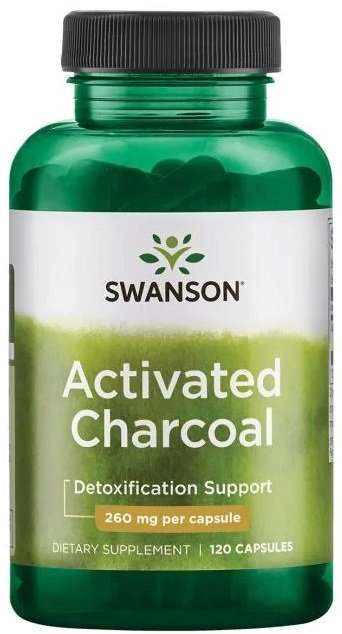
| Product title (why selected) | Swanson Activated Charcoal, 260mg – 120 caps – chosen for low cost, solid capsule count, and straightforward “gas/bloating” positioning. |
|---|---|
| Product description | A simple activated charcoal capsule product (260mg per capsule) positioned as a digestive aid for gas and bloating support. |
| Product reviews | Listed with review count on the product page. |
| Product price | £7.34 (as listed). |
| Where to buy | Buy Swanson Activated Charcoal, 260mg – 120 caps |
| Pros |
|
| Cons |
|
| How to use | Use as directed on the label. Space away from medicines, vitamins, and minerals (commonly 2–4 hours). |
| Editor’s comments | Best “bang for buck” if you already know charcoal works well for your digestion and you want a no-frills capsule option. |

| Product title (why selected) | Charcoal Activated 560 mg, 100 Capsules – Nature’s Way – selected for higher-strength positioning and “digestive discomfort/flatulence” focus. |
|---|---|
| Product description | A higher-potency activated charcoal capsule product (560mg listed in the title) is positioned for digestive comfort, including bloating/gas support. |
| Product reviews | Listed with review count on the product page. |
| Product price | £22.84 (as listed). |
| Where to buy | Buy Charcoal Activated 560 mg |
| Pros |
|
| Cons |
|
| How to use | Follow label directions carefully. Space from medications and supplements to reduce adsorption risk. |
| Editor’s comments | If you prefer a higher-potency charcoal approach (and you’re good about timing away from other products), this is the strongest per-serving style pick. |

| Product title (why selected) | Activated Charcoal (50 capsules) – Kiki Health – chosen for “clean label” positioning, coconut shell sourcing, and a premium, minimalist capsule format. |
|---|---|
| Product description | A coconut-shell activated charcoal capsule product positioned for digestive comfort (e.g., post-meal gas/bloating support) with a strong clean-formulation emphasis. |
| Product reviews | Listed with review count on the product page. |
| Product price | £16.12 (as listed). |
| Where to buy | Buy Activated Charcoal (50 capsules) |
| Pros |
|
| Cons |
|
| How to use | Follow label directions. Consider taking away from meals/medications depending on your goal and tolerance. |
| Editor’s comments | This is the “premium minimalist” charcoal pick—ideal if you want a clean-feel product and don’t need a huge bottle. |

| Product title (why selected) | Charcoal Tablets 250 – J.L. Bragg’s – selected for people who prefer tablets over capsules and want a straightforward “after-meal comfort” option. |
|---|---|
| Product description | Activated charcoal tablets positioned for digestive relief (indigestion/bloating) with “on-the-go” practicality. |
| Product reviews | Listed with review count on the product page. |
| Product price | £14.61 (as listed). |
| Where to buy | Buy Charcoal Tablets 250 |
| Pros |
|
| Cons |
|
| How to use | Use as directed on the label, typically around meals. Keep timing away from medications/supplements. |
| Editor’s comments | Best for “tablet people” who want an easy, traditional charcoal format with a big supply. |

| Product title (why selected) | Medicinal Charcoal (100 Tablets) – chosen for low price, simple tablet format, and “digestive comfort” use-case. |
|---|---|
| Product description | Activated charcoal tablets are positioned to support stomach comfort and relieve occasional indigestion/bloating. The product page references 300mg activated charcoal per tablet. |
| Product reviews | Listed with review count on the product page. |
| Product price | £6.01 (as listed). |
| Where to buy | Buy Medicinal Charcoal (100 Tablets) |
| Pros |
|
| Cons |
|
| How to use | Follow the label. Space from medications and supplements. |
| Editor’s comments | The simplest low-cost tablet pick—ideal for testing whether charcoal suits your digestion before spending more. |

| Product title (why selected) | Ultra Binder (120 Capsules) – Quicksilver Scientific – selected for people specifically wanting a broader “binder” approach beyond charcoal alone. |
|---|---|
| Product description | A multi-toxin “binder” style supplement positioned to bind a wide array of toxins in the gut and support excretion. Typically used in targeted wellness protocols rather than casual, occasional bloat support. |
| Product reviews | Listed with review count on the product page. |
| Product price | £128.96 (as listed). |
| Where to buy | Buy Ultra Binder (120 Capsules) |
| Pros |
|
| Cons |
|
| How to use | Use exactly as directed on the label, and separate from medications/supplements. Consider professional guidance if using in intensive protocols. |
| Editor’s comments | This is not a basic “bloat after dinner” product—it’s a premium, protocol-style binder for people who intentionally want a broader binding strategy. |

| Product title (why selected) | Ultra Binder (20 Stick Packs) – Quicksilver Scientific – chosen for travel convenience and “on-the-go” binder use when you don’t want to carry bottles. |
|---|---|
| Product description | Stick-pack version of a broad-spectrum binder supplement positioned for toxin-binding support in a portable format. |
| Product reviews | Listed with review count on the product page. |
| Product price | £111.82 (as listed). |
| Where to buy | Buy Ultra Binder (20 Stick Packs) |
| Pros |
|
| Cons |
|
| How to use | Follow the label directions closely and keep it well-separated from medicines/supplements. |
| Editor’s comments | If you already use binders and want the easiest travel-friendly format, this is the convenience-first pick. |
| Product | Best For | Format | Supply | Key Feature / Notes | Price (as listed) |
|---|---|---|---|---|---|
| Activated Charcoal (100 capsules) – Integrative Therapeutics | Best Overall | Capsules | 100 caps | Clear charcoal-only formula; solid supply | £21.55 |
| Swanson Activated Charcoal, 260mg – 120 caps | Best Budget-Friendly | Capsules | 120 caps | Affordable with a large count | £7.34 |
| Charcoal Activated 560mg – 100 capsules (Nature’s Way) | Best High-Potency Per Serving | Capsules | 100 caps | Higher mg per serving | £22.84 |
| Activated Charcoal (50 capsules) – Kiki Health | Best Clean, Premium Feel | Capsules | 50 caps | Clean label, coconut shell source | £16.12 |
| Charcoal Tablets 250 – J.L. Bragg’s | Best Tablet Format | Tablets | 250 tablets | Traditional tablet form with a large supply | £14.61 |
| Medicinal Charcoal (100 Tablets) – J.L. Bragg’s | Best Simple Low-Cost Tablets | Tablets | 100 tablets | Entry tablet option | £6.01 |
| Ultra Binder (120 Capsules) – Quicksilver Scientific | Best “All-in-One Binder Blend” | Capsules | 120 caps | Charcoal plus broader binder blend | £128.96+ |
| Ultra Binder (20 Stick Packs) – Quicksilver Scientific | Best Travel/Convenience Binder | Stick packs | 20 packs | Pre-measured travel packs |
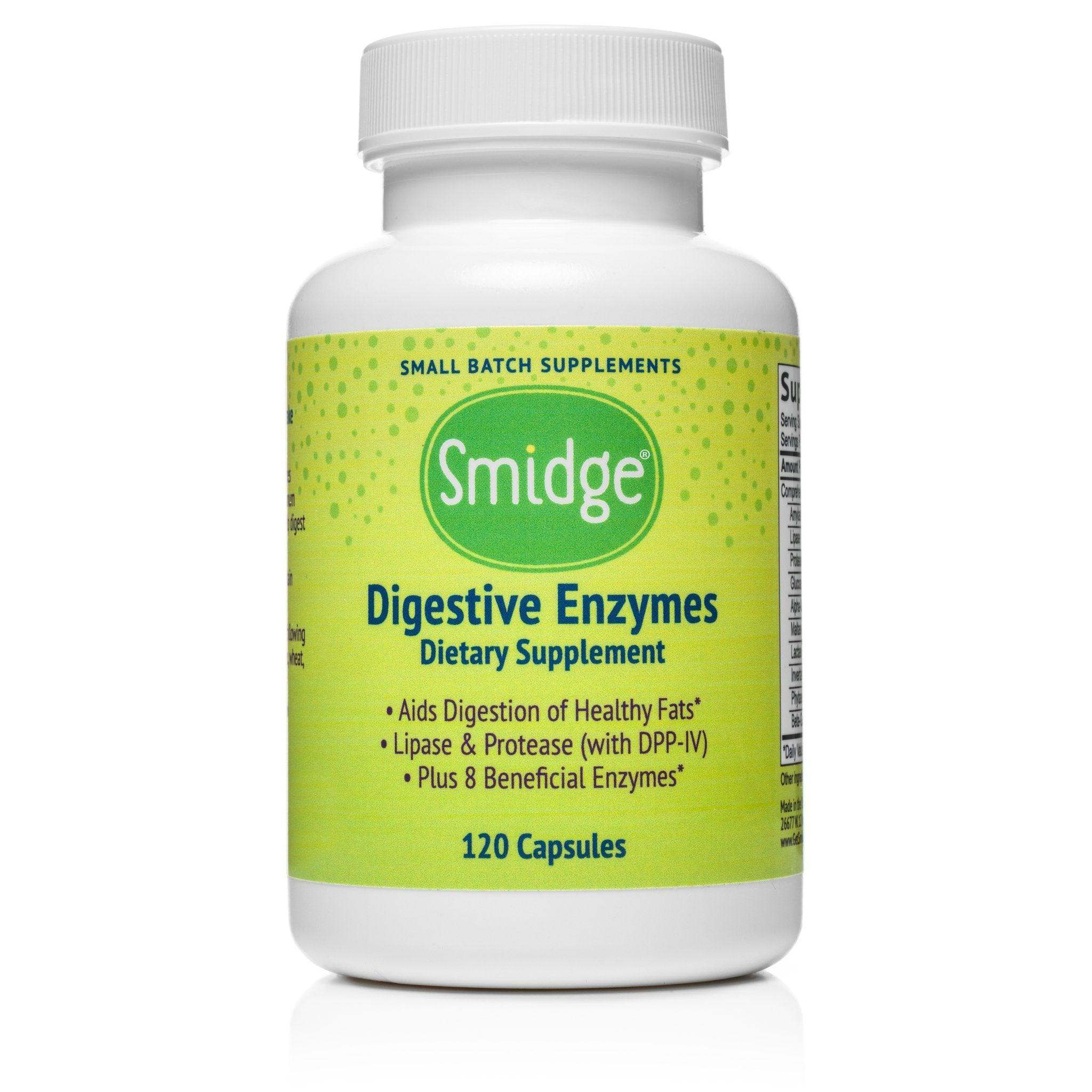
The most common use-case is post-meal gas and bloating support. Activated charcoal’s porous surface can bind certain compounds in the gut, which may help some people feel less distended after meals. If you frequently struggle with meal-related discomfort, you may also find it useful to compare charcoal with enzyme support in Digestive Enzymes.
Some products position charcoal as a binder, sometimes paired with other binders in blended formulas. This can be useful for people who want a single product rather than stacking multiple “detox-style” ingredients. If you’re exploring these approaches, you can compare options in Detox & Cleansing Supplements.
Charcoal is typically taken as-needed. For many users, the best product is the one that fits their routine: capsules for convenience, tablets for value, or stick packs for travel and compliance.
Activated charcoal supplements are very different from vitamins or trace minerals. They are not nutrients, and they are not designed for daily, long-term use. Because of this, we evaluated charcoal supplements using criteria that prioritise safety, formulation quality, and appropriate use, rather than “more is better” dosing.
Activated charcoal works by adsorbing substances in the digestive tract, which means it can bind not only to unwanted compounds but also to nutrients and medications if used incorrectly. For that reason, clarity, restraint, and transparency matter more than aggressive dosing claims.
Our ranking framework focused on how responsibly each product is formulated and presented for real-world use.
We prioritised products that clearly state:
The amount of activated charcoal per capsule, tablet, or serving
The number of capsules or tablets per dose
Whether the dose reflects occasional use rather than daily detox positioning
Unlike nutrients with established RDAs, activated charcoal does not have a recommended daily intake. High-quality products avoid vague “detox” language and instead provide clear, conservative dosing guidance.
Activated charcoal is situational, not nutritional. We favoured products that:
Avoid excessive “mega-dose” positioning
Are suitable for short-term digestive support
Do not encourage continuous daily use
Higher milligram amounts were not automatically ranked higher. Instead, we looked at whether the dose made sense for gas, bloating, or occasional digestive discomfort, which are the most common use cases.
We assessed:
Source material (e.g., coconut shell, hardwood, bamboo)
Whether the charcoal is clearly labelled as activated
Capsule vs tablet format and ease of use
Coconut-shell activated charcoal is commonly favoured for its purity profile, but sourcing alone was not enough — it needed to be paired with responsible dosing and clear instructions.
Because charcoal binds broadly, simpler formulas scored higher.
We prioritised:
Charcoal-only products with minimal excipients
No unnecessary herbal blends or stimulant additives
No misleading “full detox” proprietary blends
Binder blends (such as multi-ingredient formulas) were assessed separately and ranked based on clarity of intent, not as direct replacements for single-ingredient charcoal.
We evaluated:
Capsules vs tablets vs powders or stick packs
Suitability for travel or on-the-go use
Ease of spacing doses away from food, supplements, and medication
Smaller trial sizes and travel formats scored well for people who want to test tolerance rather than commit to long-term use.
High-quality charcoal supplements clearly acknowledge that:
Charcoal can interfere with medications
Charcoal can reduce nutrient absorption if mistimed
Timing away from meals and supplements matters
We ranked products higher when their on-page guidance aligned with established medical and nutrition advice around spacing charcoal intake.
We prioritised manufacturers that demonstrate:
Clear labelling and conservative claims
Experience in digestive health, binders, or clinical nutrition
Transparent serving instructions and warnings
Practitioner-focused brands scored well when their products were clearly positioned for advanced or supervised use, rather than general daily wellness.
Instead of cost per capsule alone, we looked at:
Cost relative to occasional use
Whether the product encourages appropriate frequency
Whether larger bottle sizes make sense for the intended use
A low price did not automatically equal better value if the product promoted excessive or inappropriate usage.
Our evaluation process combined three layers, adapted specifically for binder-style supplements:
Evidence-led understanding of charcoal’s role
Activated charcoal works through physical adsorption in the gut, not metabolic or nutritional pathways. It does not “detox the body” directly — it supports the binding of certain compounds within the digestive tract so they can be eliminated.
Product-level formulation review
We reviewed each label for charcoal amount, serving size, source material, and additional ingredients. Products that remained conservative, precise, and transparent ranked highest.
Real-world usability and safety
We assessed whether a typical user could realistically use the product safely:
Can it be spaced away from meals and supplements?
Is it suitable for short-term use?
Does it avoid encouraging dependency or daily detox routines?
Activated charcoal supplements are most appropriate for occasional digestive support, travel-related stomach issues, or short-term protocols — not everyday wellness supplementation.
Because activated charcoal binds broadly, how you take it matters more than how much you take.
General best practices include:
Take charcoal away from meals (usually 1–2 hours before or after eating)
Space charcoal at least 2 hours away from medications and supplements
Use for short-term or situational support, not daily long-term routines
Occasional gas or bloating: Often a single dose taken between meals
Travel-related digestive discomfort: Used as needed rather than daily
Testing tolerance: Lower-dose or short trial formats are preferred
There is no established RDA or daily requirement for charcoal. More frequent or higher-dose use should be deliberate and time-limited.
Start low: Especially if you’ve never used charcoal before
Avoid stacking binders: Using multiple binders together increases the risk of nutrient interference
Hydration matters: Adequate fluid intake supports digestive comfort
Do not use daily by default: Charcoal is a tool, not a nutritional foundation
Activated charcoal does not produce a “feeling” like stimulants or calming supplements. If it helps, the effect is usually situational and digestive, such as:
Reduced bloating or pressure
Improved comfort after specific foods
Less digestive discomfort during travel
If symptoms are persistent, worsening, or unexplained, charcoal should not be used as a substitute for medical evaluation.
Best practice #1: Separate from medications and supplements. Charcoal can bind compounds in the gut, which may reduce absorption of oral medications and nutrients. Many people keep charcoal at least a few hours away from prescriptions and key supplements.
Best practice #2: Use it as-needed first. Most people do best using charcoal occasionally after heavy meals or during travel, rather than daily long-term.
Best practice #3: Support hydration. Charcoal can contribute to constipation in some users—drink water and stop if bowel habits worsen. If digestive upset includes dehydration risk (e.g., diarrhoea), consider Rehydration Treatments and seek medical advice if symptoms persist.
For most healthy adults, activated charcoal is considered safe when used occasionally and as directed. Safety concerns usually arise not from single-use or short-term intake, but from frequent, high-dose, or poorly timed use.
Activated charcoal is not absorbed into the bloodstream. Instead, it stays within the digestive tract, where it binds to substances and is eliminated from the body. This binding action is both its benefit and its main limitation.
Activated charcoal works through adsorption, meaning it binds substances in the gastrointestinal tract rather than being absorbed into the bloodstream. This property explains its use for gas, bloating, and certain acute digestive situations, as well as its medical use in poisoning under supervision.
Source: https://www.ncbi.nlm.nih.gov/books/NBK482294/
Clinical research has shown that activated charcoal may reduce intestinal gas and bloating in some individuals, particularly when used short term and between meals. Its effect is mechanical rather than nutritional.
Source: https://pubmed.ncbi.nlm.nih.gov/20701569/
Because activated charcoal binds broadly, it can interfere with the absorption of medications, vitamins, and minerals if taken too close together. Medical guidance consistently advises spacing charcoal away from other oral substances.
Source: https://www.ncbi.nlm.nih.gov/books/NBK482294/
Health authorities clarify that activated charcoal does not detoxify the body systemically. Instead, it may bind certain substances in the gut. The liver and kidneys remain the primary detoxification organs.
Source: https://www.health.harvard.edu/staying-healthy/the-scoop-on-activated-charcoal
Activated charcoal is generally considered safe for short-term use in healthy adults when taken correctly, but inappropriate or long-term use may lead to constipation, nutrient interference, or reduced medication effectiveness.
Source: https://ods.od.nih.gov/factsheets/ActivatedCharcoal-Consumer/
In clinical settings, activated charcoal is used under supervision for acute poisoning, highlighting its powerful binding properties. This reinforces why supplement use should be conservative and situational.
Source: https://www.poison.org/articles/activated-charcoal
There is no Recommended Dietary Allowance (RDA) or daily requirement for activated charcoal, reinforcing that it is not intended for daily nutritional supplementation.
Source: https://www.ncbi.nlm.nih.gov/books/NBK482294/
Reported side effects of activated charcoal include constipation, dark stools, and digestive discomfort, particularly when used frequently or without adequate hydration.
Source: https://www.webmd.com/vitamins/ai/ingredientmono-269/activated-charcoal
For a straightforward, charcoal-only option, Integrative Therapeutics Activated Charcoal is a strong all-round pick.
It may help some people with gas-related bloating, especially when used occasionally around trigger meals. If bloating is frequent, compare with longer-term gut strategies in Gut Health Supplements.
It’s usually better not to take them together. Charcoal can reduce absorption—separate it from multivitamins and minerals for several hours.
Charcoal is sometimes used in oral products, but for breath concerns, you’ll usually get more targeted support from Mouthwash and consistent dental hygiene.

 Rated Excellent by 28,951+ Reviews
 100% Money Back Guarantee
Our money back guarantee ensures you receive your items or get a full refund.