



AG1 vs Dedicated Gut Supplements: Is It Worth It?
Posted on:
Aug 05, 2026
Authored by


Written and medically reviewed by Dr Zeeshan Afzal (MBBS) — Medical Doctor & Medical Content Lead, Welzo
Evidence-based · Honest about what's proven and what isn't · UK-focused
Last updated: July 2026 · Reading time: ~9 minutes
The question isn't whether AG1 contains good ingredients. It's whether a single scoop can hold meaningful amounts of dozens of them at once. Our digestive health guides cover what doses the research actually uses, and the probiotics range and wider gut health supplements are there if you'd rather buy the parts you need.
Table of contents
AG1 is an all-in-one daily powder: a greens base combined with vitamins, minerals, plant extracts, adaptogens, digestive enzymes and a probiotic component, sold on subscription.
It is best understood as a comprehensive multivitamin with extras, not as a gut supplement that happens to include other things. That distinction matters for the comparison, because it's usually bought and marketed as the latter.
We haven't quoted its price, ingredient count or any dose figures here — those change, and we couldn't verify current values. Check the label directly rather than trusting numbers in any comparison article, this one included.
Three things worth stating plainly, given who's publishing this:
If you currently take nothing and eat badly, it is not a foolish purchase.
Here's the structural problem with every all-in-one formula, and it doesn't require any inside knowledge to see.
A scoop is a fixed weight. Much of it is the greens and fibre base. Whatever remains is divided among everything else on the label. The more ingredients there are, the smaller each share becomes — that's arithmetic, not opinion.
This isn't unique to AG1 — it applies to every multi-ingredient greens powder. But it's the reason "it contains X" tells you almost nothing without "how much X".
All-in-one formulas typically group ingredients into proprietary blends, disclosing a total weight for the group rather than per-ingredient amounts.
This is legal and commonplace, and manufacturers argue it protects formulations. The consequence for you is straightforward: you cannot tell how much of anything you're actually getting. A blend total could be dominated by one or two cheap ingredients with token amounts of the rest — and there is no way to check.
Compare that with a single-ingredient product where the quantity is printed on the front. See how to choose a probiotic.
This is the part that matters if gut health is why you're considering it.
All-in-one powders include a probiotic component, usually a small number of organisms as one line among many. Two problems follow.
First, dose. A probiotic sharing a scoop with dozens of other ingredients is not going to match a dedicated product dosed at trial levels for a specific purpose.
Second, and more importantly — stability. Live bacteria in a powder sitting alongside plant extracts, minerals and enzymes, in a tub opened daily and exposed to air and humidity, is a genuinely difficult environment. Probiotics are typically supplied in sealed capsules or sachets with desiccants precisely because moisture degrades them. A large open tub is close to the worst case. See shelf-stable probiotics.
Neither point makes the probiotic content useless. Both mean it shouldn't be treated as equivalent to a dedicated one.
If gut health is the goal, buying the components separately gives you doses you can verify.

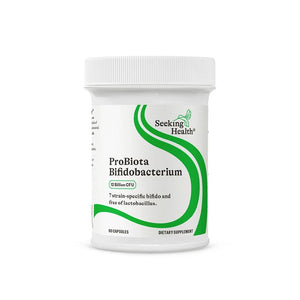
Seeking Health Probiota Bifido — £51.01 · 98 reviews · Available from Welzo. A dedicated Bifidobacterium product in sealed capsules — the organisms protected from moisture, at a dose you can read on the label rather than infer from a blend total.

Welzo Ultra Purity Modified Citrus Pectin — £26.99 (from £39.99) · 100 reviews · Available from Welzo. A single-ingredient powder, so you control the dose precisely. Worth reading modified citrus pectin vs pectin first — it isn't a bulking fibre, and buying it for regularity would be the wrong choice.

MegaSporeBiotic Plus Antioxidants — £59.99 · 122 reviews · Available from Welzo. Four named Bacillus strains plus four carotenoids — the same "probiotic plus extras" idea, but with eight declared ingredients rather than dozens, each at a stated amount. It's the honest version of the combination product. Note the standard MegaSporeBiotic gives more spores for the same price, so buy this one only if you specifically want the carotenoids.
For a fuller look at the product itself, see our AG1 review.
Greens powders commonly cause bloating or loose stools initially, usually from the fibre content. Dedicated probiotics have their own short settling-in period — see probiotic side effects.
Take particular care with all-in-one formulas if you
A pharmacist can review a full ingredient list against your medication. More in probiotics safety.
On labelling: probiotics carry no authorised health claim in GB or the EU. Supplements are sold as food supplements and cannot legally be marketed as treating any condition.
See your GP — or seek urgent care — if you have:
If you're taking a greens powder because you feel run down, a blood test is a better first step than a subscription. See when to see a GP and gut health blood tests.
As a convenient broad multivitamin, it can be — particularly if you take nothing and eat poorly. As a gut supplement specifically, the probiotic content is one line item in a large formula and won't match a dedicated product.
Not really. A probiotic sharing a scoop with dozens of other ingredients is unlikely to be at the dose used in research, and a large tub opened daily is a poor environment for live bacteria.
Most group ingredients into proprietary blends, disclosing a group total rather than per-ingredient quantities. It's legal, but it means you can't verify how much of anything you're getting.
Yes, and if gut health is your goal that's the more sensible combination — the all-in-one for micronutrients, a dedicated product for the bacteria. Check the total vitamin and mineral load if you take anything else.
Usually, and you can drop what you don't need. The trade-off is more bottles and more remembering.
No. They don't provide the fibre volume or the variety of whole plants, and fibre is the part with the strongest gut evidence.
Yes, and it's underrated. Greens powders can be high in vitamin K, which interacts with warfarin, and stacking one with other supplements risks exceeding safe upper limits for several nutrients. Ask a pharmacist to review the full list.
The micronutrient argument weakens considerably. At that point you're paying mainly for convenience and the possibility of small gains.
Same arithmetic. Enzyme doses in research are specific, and a small share of a shared scoop is unlikely to match them. See enzymes vs probiotics.
Eating a wider variety of plants. It's free, better evidenced than any powder, and it's what both options are ultimately trying to substitute for.
Medical disclaimer: This article is for general information and education only and does not constitute medical advice, diagnosis or treatment. Welzo sells dedicated supplements and does not sell AG1; this conflict of interest is disclosed above. No AG1 pricing, ingredient count or dose figures are quoted, as these change and could not be verified at the time of writing — check the manufacturer's current label. Food supplements are not a substitute for a varied and balanced diet, and are not intended to diagnose, treat, cure or prevent any disease. All-in-one formulas can be high in vitamin K, which interacts with warfarin and other anticoagulants; may contain iodine-rich ingredients relevant to thyroid disease; and can contribute to exceeding safe upper intake limits when combined with other supplements, particularly for vitamin A, iron, zinc and selenium. Ask a pharmacist to review the full ingredient list against your medication. Adaptogens and herbal extracts are frequently unsuitable in pregnancy. Persistent fatigue or digestive symptoms warrant medical assessment rather than supplementation. Prices, review counts and availability of Welzo products are correct at the time of writing.
About the author
Dr Zeeshan Afzal (MBBS) is a practising medical doctor and Welzo's Medical Content Lead. He writes and reviews Welzo's health content to ensure it is accurate, evidence-based and aligned with current UK clinical guidance.
 Rated Excellent by 28,951+ Reviews
 100% Money Back Guarantee
Our money back guarantee ensures you receive your items or get a full refund.