


What Is a Fit to Fly Covid Test? Do You Still Need One to Travel?



Related products
Written by Dr Muhammad Zeeshan Afzal, independent product reviewer and content creator for Welzo. Reviewed by Dr Sameer Nakedar, MBBS (London), MRCGP, PGCert. Fully rewritten and updated November 2026. Read how we write our content.
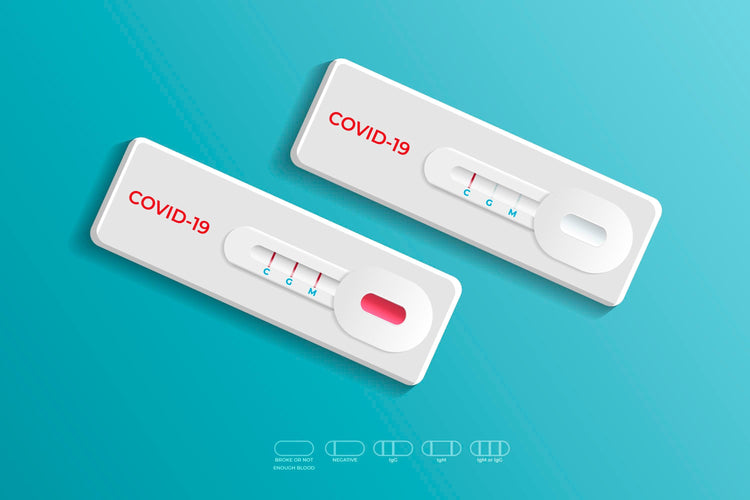
A fit to fly Covid test is a COVID-19 test, either a PCR test or a rapid antigen test, taken within a set time before travel and accompanied by a certificate confirming that the result was negative. During the pandemic, airlines and border officials required the certificate before allowing passengers to board or enter a country. Most travellers no longer need one. The UK removed the last of its Covid travel restrictions on 18 March 2022, so nobody entering the UK has to take a test, and the great majority of other countries have since dropped their requirements too. A certificate may still be asked for in a small number of situations: a destination or transit country that keeps or reintroduces entry rules, some cruise lines and tour operators, certain employers, and medical or insurance purposes. Rules can change at short notice, so the only reliable approach is to check the official entry requirements for your destination before you book and again before you travel. This guide explains what a fit to fly test involves, the difference between PCR and antigen tests, how to check whether you need one, how to get a valid certificate and what to do if you test positive.
This article is general information and was accurate at the time of writing. Travel rules change. Always check the Foreign, Commonwealth and Development Office travel advice for your destination, and your airline's conditions, before you travel.
Fit to fly Covid tests at a glance
| Question | Short answer |
|---|---|
| What is a fit to fly Covid test? | A COVID-19 test taken before travel with a certificate confirming a negative result |
| Do I need one to enter the UK? | No. All UK Covid travel rules ended on 18 March 2022 |
| Do I need one to leave the UK? | Only if your destination, transit country, airline or operator requires it |
| What types of test are used? | PCR tests and rapid antigen (lateral flow) tests |
| Can I use a free or home lateral flow test? | Not for a certificate. The result must be verified and certified by a provider |
| How close to travel must it be taken? | It depends on the rule. Typical windows were 72 hours for PCR and 24 to 48 hours for antigen tests |
| What does the certificate show? | Your name, date of birth, passport number, test type, date and time, result and the provider's details |
| What if I test positive? | Do not travel. Contact your airline and insurer |
| Where do I check the rules? | The GOV.UK foreign travel advice page for each country, and your airline |
Key facts
- The UK removed its remaining Covid travel restrictions on 18 March 2022. From that date, nobody entering the country has been required to take a test or complete a passenger locator form, regardless of vaccination status.
- Before that, unvaccinated or partially vaccinated travellers to the UK had to take a pre-departure test and a day two test after arrival.
- According to GOV.UK, the NHS Covid Pass is no longer required to travel abroad to any country.
- Although the UK has scrapped its arrival restrictions, it remains important to check the entry requirements of the country you are travelling to.
- When pre-travel testing was widespread, typical rules asked for a PCR test within 72 hours or an antigen test within 48 hours of travel.
- Airlines could deny boarding to passengers who could not show a required certificate at check-in.
- UK public health advice is not to travel if you have tested positive for Covid.
What "fit to fly" means
The phrase fit to fly existed long before COVID-19. A fit to fly letter or certificate is a doctor's statement that a person is medically well enough to travel by air. Airlines ask for one in specific situations, such as late pregnancy, a recent operation, a recent heart attack or stroke, a serious lung condition, or a contagious illness.
During the pandemic the term was borrowed for something narrower: proof of a negative COVID-19 test taken shortly before departure. A fit to fly Covid certificate does not assess your general health. It states only that, at the time of the test, the virus was not detected.
| Type of document | What it certifies | Who issues it |
|---|---|---|
| Fit to fly Covid test certificate | A negative COVID-19 test within a set time before travel | A private testing provider |
| Medical fit to fly letter | That you are well enough to fly with a health condition, pregnancy or after surgery | Your GP or specialist, usually for a fee |
| Recovery certificate | That you had COVID-19 and have recovered, for destinations that accept this in place of a test | A private provider, based on a previous positive test |
| Vaccination record | The COVID-19 vaccines you have received | The NHS |
Terms used in this guide
- PCR test: polymerase chain reaction, a laboratory test that detects the genetic material of the virus.
- Antigen test or lateral flow test: a rapid test that detects viral proteins and gives a result in minutes.
- Pre-departure test: a test taken before travelling.
- Passenger locator form: a form giving contact and travel details, formerly required on arrival in the UK.
- FCDO: the Foreign, Commonwealth and Development Office, which publishes travel advice for every country.
- Transit: passing through a country on the way to your final destination.
- Supervised test: a test observed by a health professional in person or by video, so the result can be certified.
Do you still need a fit to fly Covid test?
For most trips, no. The position has changed completely since 2021, when almost every international journey involved testing.
| Period | Rules for travel to and from the UK |
|---|---|
| 2021 | Travel reopened under strict restrictions, with tests before departure and after arrival, a traffic light system of countries and quarantine for some arrivals |
| Early 2022 | Testing ended for fully vaccinated arrivals. Unvaccinated travellers still needed a pre-departure test and a day two test |
| 18 March 2022 | All remaining UK restrictions removed. No tests, forms or quarantine for anyone arriving |
| Since then | Other countries progressively removed their own rules. A few retained or reintroduced requirements at times |
The situations in which a certificate might still be requested are:
- A destination with entry rules. A small number of countries have kept, or may reintroduce, testing or vaccination requirements, sometimes only for travellers arriving from particular places.
- A transit country. Rules can apply even if you do not leave the airport.
- Cruises, expeditions and some tours. Operators set their own health conditions.
- Work and study. Some employers, offshore installations, healthcare placements and institutions require a recent test.
- Medical reasons. Before certain procedures or admissions abroad.
- A new outbreak or variant. Governments can bring back measures quickly, as happened several times during the pandemic.
How to check the rules for your trip
- Go to the GOV.UK foreign travel advice pages and select your destination. Read the entry requirements section.
- Do the same for any country you will transit through.
- Check your airline's website for its own conditions of carriage.
- If you are on a cruise or organised tour, check the operator's health requirements.
- Check again a few days before departure, since rules can change.
- Sign up for email alerts for your destination on GOV.UK.
Do not rely on old articles, forums or what applied the last time you travelled. If a destination still asks for a test, the official page will say which type is accepted, the time window, who needs it by age, and what the certificate must show.
PCR and antigen tests compared
| Feature | PCR test | Rapid antigen (lateral flow) test |
|---|---|---|
| What it detects | The genetic material of the virus | Proteins on the surface of the virus |
| Where it is analysed | In a laboratory | On the test device itself |
| Time to result | Usually 24 to 48 hours. Faster services cost more | 15 to 30 minutes |
| Sensitivity | Very high. Can detect small amounts of virus | Lower. Most reliable when the amount of virus is high |
| Can stay positive after recovery | Yes, sometimes for weeks | Usually turns negative sooner |
| Cost | Higher | Lower |
| Typical travel window when required | Within 72 hours | Within 24 to 48 hours |
| Test type | Typical window when a test was required |
|---|---|
| PCR | Within 72 hours of travel |
| Rapid antigen | Within 24 to 48 hours of travel |
Pay attention to how the window is defined. Some countries count back from the scheduled departure time of the first flight, others from arrival, and some specify calendar days instead of hours. A test taken an hour too early is as invalid as no test.
Why a PCR can stay positive
PCR detects fragments of viral genetic material, and these can linger in the nose and throat for weeks after an infection has ended and the person is no longer infectious. This caused many travellers difficulties during the pandemic. It is the reason some destinations accepted a recovery certificate, showing a positive test from a defined period earlier, in place of a negative PCR result.
How a fit to fly test works
- Confirm what is required. Test type, time window, and the details the certificate must contain.
- Book with a provider that issues travel certificates. Check that the certificate format meets your destination's rules.
- Take the sample at the right time. For a PCR, allow for the laboratory turnaround. For an antigen test, take it within the permitted window.
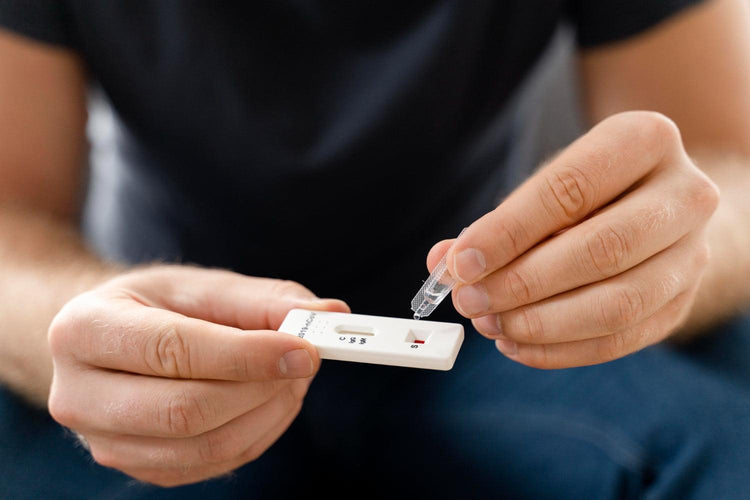
- Have the test verified. A certificate requires the result to be confirmed, for example by a supervised appointment, a video consultation or a time-stamped photograph of the result with your identification, depending on the service.
- Receive the certificate, usually by email as a PDF.
- Check every detail against your passport before you travel.
- Carry a printed copy and a digital copy.
| What a certificate normally shows |
|---|
| Your full name, exactly as on your passport |
| Date of birth |
| Passport or identity document number |
| Type of test and the name of the test device or method |
| Date and time the sample was taken |
| The result |
| The name and contact details of the provider and, where relevant, the laboratory |
| A QR code or reference number, where required |
Why a free or shop-bought test is not enough
A lateral flow test you do yourself tells you your result. It cannot prove to an airline that the test was yours, that it was done when you say, or that it was read correctly. A certificate depends on independent verification. For the same reason, NHS tests were never accepted for travel.
Welzo lists a COVID-19 rapid antigen test with fit to fly certificate for travellers whose destination or operator still asks for one, and a Covid-19 recovery certificate for destinations that accept proof of recovery. Standard lateral flow antigen tests, for checking yourself when you have symptoms, are in the COVID-19 tests range. Before buying any travel test, confirm on the official entry requirements page that this type of test and certificate is accepted for your journey, because requirements differ between countries and no provider can guarantee acceptance at the border.
Getting the timing right
| Common mistake | How to avoid it |
|---|---|
| Testing too early | Work back from the time the rule specifies, and allow for time zones |
| Testing too late for the result to arrive | Check the provider's stated turnaround, and allow a margin for PCR |
| Counting from the wrong flight | Some rules count from the first flight of a connecting journey, others from the last |
| Name not matching the passport | Enter your details exactly as on your passport when booking |
| Forgetting children | Check the age from which a test is required |
| Ignoring transit rules | Check every country on your route |
| Weekends and bank holidays | Laboratories and couriers may be slower |
If you test positive before travelling
- Do not travel. UK public health advice is not to travel if you have tested positive.
- Contact your airline or tour operator about changing or cancelling.
- Contact your travel insurer. Cover for cancellation due to Covid varies between policies, so check before you buy insurance, not after.
- Stay at home and avoid contact with others while you feel unwell or have a high temperature. Take particular care to avoid people at higher risk.
- Keep the test record. You may need it for a claim, or later for a recovery certificate.
If you become unwell abroad, follow local guidance, contact your insurer's assistance line and tell your accommodation provider. The GOV.UK travel advice page for the country explains what to do.
Staying well when you travel
Even without testing rules, respiratory infections spread easily in airports and aircraft. Simple precautions reduce the chance of your trip being spoilt.
| Step | Why |
|---|---|
| Be up to date with vaccinations you are eligible for | Reduces the risk of serious illness |
| Wash or sanitise your hands regularly | Reduces spread of respiratory and stomach bugs |
| Consider a mask in crowded indoor spaces if you are vulnerable | Lowers exposure |
| Do not travel when you have a fever or feel very unwell | Protects you and others |
| Take out travel insurance that covers medical care and cancellation | Healthcare abroad can be very expensive |
| Carry a GHIC or EHIC for travel in Europe | Gives access to state healthcare, but is not a substitute for insurance |
| Pack a basic travel health kit | Lets you deal with minor illness without searching for a pharmacy |
A travel health kit
A few items cover most minor problems. A digital thermometer lets you check for fever. Paracetamol treats pain and a high temperature, and products from the cold remedies range ease congestion and sore throats. Oral rehydration sachets are useful for traveller's diarrhoea, and remedies for an upset stomach are in the stomach and bowel relief range. For cuts and blisters, pack plasters and antiseptic from the first aid range, or a ready-made kit such as the Lifesystems Explorer first aid kit. In warmer destinations, add insect repellent. Keep medicines in their original packaging in your hand luggage, and check that anything you carry is legal in the country you are visiting.
When to seek medical advice
| Situation | What to do |
|---|---|
| You have a long-term condition, are pregnant or have had recent surgery | Ask your GP whether you need a medical fit to fly letter, and check your airline's policy |
| You are at higher risk from COVID-19 | Speak to your GP or specialist before travelling |
| You have Covid symptoms and are due to travel | Test, and do not travel if positive or if you have a fever |
| You are breathless, your symptoms are getting worse, or you are worried | Call 111, or use the local equivalent abroad |
| Severe breathlessness, chest pain, confusion or blue lips | Call 999, or the local emergency number |
| Fever after returning from a tropical country | Seek medical advice urgently and mention where you have been |
Myths and facts about fit to fly Covid tests
| Myth | Fact |
|---|---|
| You still need a Covid test to fly from the UK. | Not as a general rule. It depends entirely on your destination and operator. |
| You need a test to return to the UK. | No. UK arrival rules ended on 18 March 2022. |
| A home lateral flow test counts as a fit to fly test. | Only a verified test with a certificate from a provider counts. |
| An NHS test can be used for travel. | NHS tests were never accepted for travel certificates. |
| The NHS Covid Pass is needed for holidays. | It is no longer required to travel abroad to any country. |
| A fit to fly Covid certificate shows you are healthy. | It shows only that the virus was not detected at the time of the test. |
| All countries have the same testing window. | Each country sets its own, and they differ. |
| Rules never change once you have booked. | They can change at short notice. Check again before you leave. |
| A negative test means you cannot be infected. | Tests can miss early infection. |
Frequently asked questions
What is a fit to fly Covid test?
A COVID-19 test taken shortly before travel, with a certificate confirming a negative result.
Do I need a Covid test to travel abroad from the UK?
Usually not. Check the entry requirements for your destination on GOV.UK.
Do I need a Covid test to come back to the UK?
No.
What is the difference between a PCR and an antigen fit to fly test?
PCR is a more sensitive laboratory test with a longer turnaround. Antigen tests give a result in minutes and are less sensitive.
How long is a fit to fly certificate valid?
For as long as the destination's rule states, typically 72 hours for PCR and 24 to 48 hours for antigen tests.
Can I use a free NHS lateral flow test for travel?
No. A travel certificate requires a verified test from a private provider.
What happens if I test positive before my flight?
Do not travel. Contact your airline and travel insurer.
Do children need a fit to fly test?
Where tests are required, each country sets its own age threshold.
Is a fit to fly certificate the same as a GP fit to fly letter?
No. A GP letter confirms you are medically well enough to fly with a health condition or in pregnancy.
Do I need proof of vaccination to travel?
Most countries no longer ask for it. Check your destination's entry requirements.
Can a PCR test be positive after I have recovered?
Yes, sometimes for several weeks.
Where can I check the latest rules?
The GOV.UK foreign travel advice page for your destination, and your airline or operator.
The bottom line
A fit to fly Covid test is a verified COVID-19 test with a certificate of a negative result, taken within a set time before travel. It was essential in 2021 and is now rarely needed: the UK dropped all its travel rules on 18 March 2022 and most countries have followed. A few destinations, transit points, cruise lines and employers may still ask for one, and rules can return quickly. Check the official entry requirements for every country on your route, confirm the test type and time window, use a provider that issues a proper certificate, and do not travel if you test positive.
References
- International Travel and Health Insurance Journal. UK removes final Covid travel restrictions.
- Institute for Government. Covid international travel rules.
- Which? Travel rules change: passenger locator forms and travel tests dropped for UK arrivals.
- The Yorkshire Post. Can you fly with a positive test and when can you travel after testing positive?
- GOV.UK. Foreign travel advice, published by the Foreign, Commonwealth and Development Office for each country.
Medical disclaimer: this article is for information only and is not a substitute for professional medical or travel advice. Entry requirements change. Always check official government travel advice and your airline's conditions before travelling. No testing provider can guarantee acceptance of a certificate at a border.



 Rated Excellent by 31,000+ Reviews
 100% Money Back Guarantee